2027 Online Christian Ministry Doctorate Programs for Experienced Professionals Without Research Backgrounds

Co-Founder and Chief Data Scientist
An online Christian Ministry doctorate can be realistic even if your career has centered on preaching, counseling, chaplaincy, nonprofit leadership, or church administration rather than formal research. Many practitioner-focused doctorates teach research methods inside the program and use ministry-based projects instead of lab-style research.
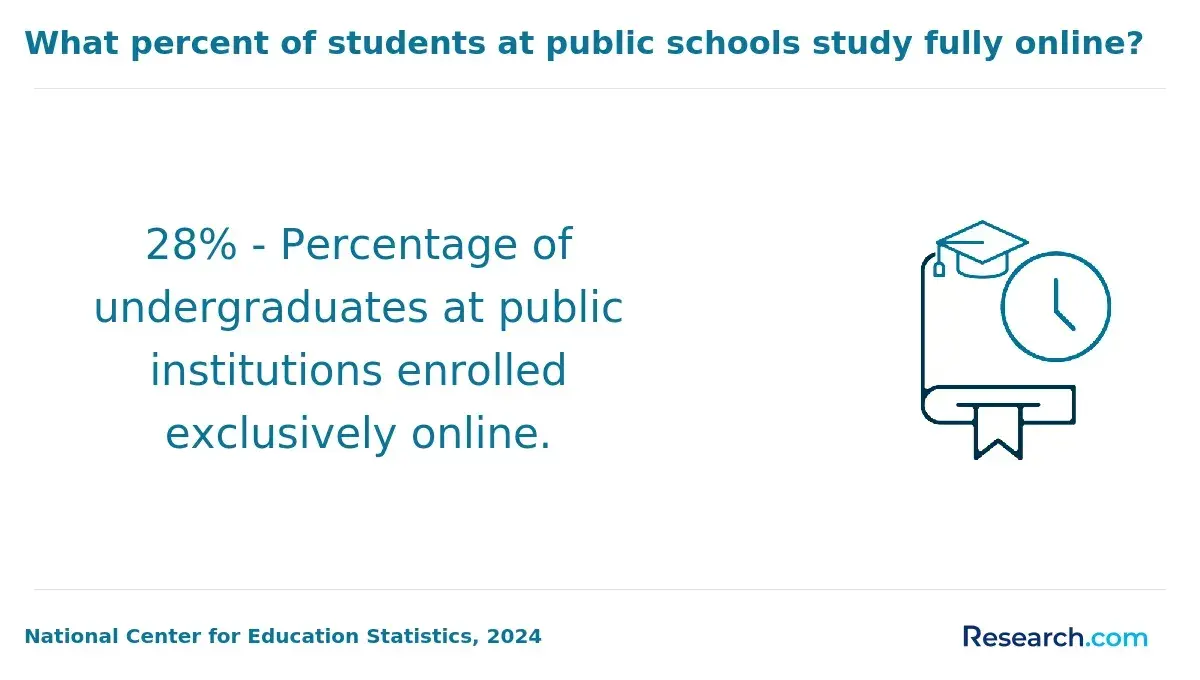
NCES distance education data released in 2024 shows graduate students continue to use online learning heavily, which matters for working adults who cannot relocate. This guide explains admissions, curriculum, research expectations, program fit, and practical ways to decide whether the degree supports your ministry or leadership goals.
Key Things to Know About Christian Ministry Doctorates for Professionals with No Research Background
- Admission is usually possible without prior formal research experience if you have a relevant master's degree, substantial ministry or leadership experience, strong references, and a clear applied problem you want to address.
- The best fit for non-researchers is usually a practitioner doctorate, such as a Doctor of Ministry or applied leadership doctorate, because research methods are taught around real ministry problems rather than abstract academic theory.
- Use labor-market data carefully: BLS May 2024 wage data places clergy median annual pay at about $60,260, while postsecondary education administrator roles show a much higher median of $103,960, so ROI depends heavily on your target role rather than the degree alone.
Can you get into Christian Ministry doctorate programs without a research background?
Yes, many online Christian Ministry doctorate programs admit experienced professionals who have not completed a thesis, published academic research, or worked in a formal research role. The key distinction is that most ministry doctorates are designed for advanced practice, not for training full-time academic researchers. A Doctor of Ministry, often called a DMin, typically focuses on reflective leadership, biblical and theological integration, and an applied project connected to a real ministry context.
Admissions committees usually look for evidence that you can succeed at doctoral-level reading, writing, analysis, and self-directed work. They may not require a research résumé, but they will expect you to explain a ministry problem, leadership challenge, or community need with enough clarity to support doctoral study.
The table below summarizes common admissions requirements and how they affect applicants who are strong practitioners but new to formal research.
| Admissions factor | What programs usually look for | What it means if you lack research experience |
| Graduate degree | Master of Divinity, ministry master's, theology master's, counseling-related master's, or another relevant graduate degree | Your previous graduate writing may matter more than whether you completed a thesis |
| Professional experience | Several years of ministry, chaplaincy, nonprofit, pastoral, education, counseling, or leadership work | Experience can show readiness for applied doctoral work when it is well documented |
| Statement of purpose | A clear reason for doctoral study and a ministry issue worth investigating | This is where you show practical insight even if you lack academic research history |
| Writing sample | Evidence of graduate-level argument, theological reflection, and source use | A strong sample can offset limited formal research exposure |
| References | Academic, denominational, ministry, or professional endorsements | Supervisors can speak to leadership maturity, discipline, and problem-solving ability |
If you are coming from pastoral counseling, family ministry, chaplaincy, or congregational care, your background may also overlap with counseling-focused graduate pathways. Readers comparing ministry preparation with clinical routes may find the guide to best online MFT programs useful for understanding how ministry care and licensed therapy training differ.
A strong applicant without research experience should avoid pretending that research will be easy. Instead, explain how your professional work has required disciplined observation, ethical judgment, documentation, evaluation, and problem-solving. Those habits are not the same as doctoral research, but they are a strong foundation for learning it.
Can you substitute work experience for research experience in Christian Ministry doctorate admissions?
Work experience can often strengthen your application, but it does not fully replace the need to learn research skills. Admissions committees may view sustained ministry leadership as evidence that you can identify meaningful problems, gather contextual information, communicate with stakeholders, and apply theological reasoning. However, doctoral programs still need proof that you can use sources, evaluate evidence, and write at an advanced level.
The strongest substitution happens when your work experience is directly connected to the kind of applied research the program requires. For example, a pastor who has led a multi-year congregational renewal effort, a chaplain who has developed patient-support practices, or a nonprofit director who has measured program outcomes may already have practical experience that resembles applied inquiry.
Use the following checklist to decide whether your experience is likely to help in admissions.
- Your professional role required you to diagnose ministry, organizational, educational, or care-related problems rather than only perform routine duties.
- You have led programs, teams, congregations, departments, or community initiatives with measurable goals or documented outcomes.
- You can describe a problem you want to study in a specific setting, such as rural church leadership, trauma-informed pastoral care, discipleship retention, or ministry staff development.
- You have written sermons, reports, curricula, policy documents, training materials, grants, or theological reflections that show organized thinking.
- You can identify what you still need to learn, especially academic citation, research design, qualitative methods, and ethical handling of participant data.
A common mistake is assuming that years of experience automatically equal doctoral readiness. Experience matters most when you can translate it into a focused question, a credible project, and a plan for learning research methods. If you cannot yet explain the problem you want to investigate, waiting a few months to clarify your goals may be wiser than rushing into applications.
What are the best online Christian Ministry doctorate programs for professionals without research experience?
The best online Christian Ministry doctorate for a non-researcher is not simply the most famous, cheapest, or fastest program. It is the program whose structure teaches research methods clearly, offers faculty mentorship, accepts applied ministry projects, and matches your theological, professional, and scheduling needs.
Because program names and requirements vary by school, compare programs by design features rather than reputation alone. The table below shows the types of doctorate formats that usually work best for experienced professionals entering without a research background.
| Program type | Best for | Research fit for non-researchers | Possible caution |
| Online Doctor of Ministry | Pastors, chaplains, ministry directors, missionaries, and church leaders | Often the strongest fit because the project is usually applied to a ministry context | Some programs still require rigorous field research and theological methodology |
| Online Doctor of Educational Ministry | Discipleship leaders, Christian educators, curriculum directors, and formation specialists | Good fit if your project involves teaching, learning, formation, or program evaluation | May require comfort with education research and assessment language |
| Online Doctor of Strategic Leadership with Christian emphasis | Executives, nonprofit leaders, denominational leaders, and organizational consultants | Good fit for applicants studying leadership systems, change management, or organizational culture | May be less ministry-specific than a DMin |
| Online PhD in theology, ministry, or biblical studies | Future scholars, researchers, and some faculty-track applicants | Usually less ideal for non-researchers unless you want academic research training | Often requires more theory, languages, comprehensive exams, and a traditional dissertation |
For non-researchers, the most supportive programs tend to include a required research methods course before the project phase, staged project milestones, proposal coaching, library support, and faculty feedback early in the process. Low-residency formats can also help because short intensives give online students direct interaction with faculty and peers.
If your career goal leans toward pastoral counseling or church-based care, compare ministry doctorates with counseling degrees before committing. Some readers may discover that accelerated mental health counseling programs online better match licensure-oriented goals, while a ministry doctorate better fits pastoral leadership, theological reflection, or congregational transformation.
Red flags include vague project descriptions, unclear faculty advising structures, no explanation of research-methods support, and admissions staff who cannot tell you whether students without prior research training commonly succeed. A program does not need to be easy, but it should be transparent about how it teaches the skills it expects.
What does the curriculum look like for an online Christian Ministry doctorate?
An online Christian Ministry doctorate usually combines advanced theological study, leadership formation, ministry analysis, research methods, and a final project. The curriculum is intended to help experienced professionals examine ministry practice with deeper biblical, theological, historical, cultural, and organizational insight.
Most practitioner doctorates use coursework to move students from reflection to investigation to application. Instead of asking you to become a detached researcher, the program teaches you to study your own ministry setting responsibly and use evidence to improve practice.
The table below outlines common curriculum areas and how each supports students who are new to research.
| Curriculum area | Typical content | How it helps non-researchers |
| Theology and biblical interpretation | Advanced exegesis, ecclesiology, pastoral theology, ethics, or spiritual formation | Builds the theological framework for your applied project |
| Leadership and organizational change | Church systems, conflict, strategic leadership, nonprofit management, cultural analysis | Connects ministry problems to practical leadership decisions |
| Contextual ministry studies | Community analysis, mission, preaching, discipleship, chaplaincy, pastoral care, or education | Helps you define a problem in a real setting rather than in abstract terms |
| Research methods | Qualitative inquiry, surveys, interviews, literature review, ethics, and project design | Provides the formal research foundation many applicants lack |
| Project or dissertation sequence | Proposal, implementation, evaluation, writing, defense, or presentation | Breaks the final requirement into manageable stages |
Students who want counseling-oriented ministry should check whether a doctorate builds pastoral care skills or whether a separate counseling credential is more appropriate. For a broader comparison of counseling pathways, Research.com's guide to online masters programs for counseling can help clarify when a counseling master's, rather than a ministry doctorate, is the required next step.
Program length varies, but many online ministry doctorates are designed for part-time completion over several years. The biggest curriculum question for non-researchers is not whether the courses sound interesting. It is whether the sequence gives you enough time and feedback to develop a credible project before you enter the final writing phase.
How much research will you need to do in an online Christian Ministry doctorate program?
You should expect meaningful research, even in a practitioner-focused Christian Ministry doctorate. The difference is that the research is usually applied, contextual, and tied to ministry improvement rather than designed primarily to produce new academic theory. You may still conduct a literature review, collect qualitative or quantitative data, analyze findings, and defend your conclusions.
A non-researcher should understand the main research tasks before enrolling. These tasks are manageable when taught in stages, but they can become overwhelming if you enter the project phase without preparation.
- Literature review: You will read scholarly theology, ministry, leadership, education, or social-science sources and explain how they relate to your problem.
- Research question or ministry problem: You will narrow a broad concern into a focused question that can be studied within your time, access, and ethical limits.
- Method selection: You may use interviews, focus groups, surveys, document analysis, case study, program evaluation, or mixed methods depending on the project.
- Ethics review: If people are involved, you may need institutional approval, informed consent, privacy protections, and careful data handling.
- Analysis and interpretation: You will connect what you find to theology, ministry practice, leadership theory, and the needs of your setting.
The amount of research depends on degree type. A DMin project may study a ministry intervention in one church or organization, while a PhD dissertation may require a broader original contribution to scholarship. If you do not want an academic research career, an applied doctorate is usually a better match than a research-intensive PhD.
AI tools are also changing the research-learning curve, but they do not eliminate the need for judgment. They can help organize notes, brainstorm search terms, or summarize your own drafts, but programs may restrict their use and will still expect original analysis, accurate citation, ethical data practices, and theological discernment.
Can applied research projects replace traditional dissertations in Christian Ministry doctorates?
In many practitioner-focused Christian Ministry doctorates, yes. Applied research projects often replace traditional dissertations, especially in Doctor of Ministry programs. These projects still require doctoral rigor, but the final product is usually built around a real ministry problem, an intervention or analysis, and practical recommendations for a church, organization, school, or community.
This option is often better for experienced professionals without a research background because it lets them build on what they already know: ministry context, people, leadership dynamics, and theological practice. The trade-off is that applied projects still demand clear methods, documentation, and disciplined writing.
The table below compares applied projects with traditional dissertations so you can decide which format aligns with your goals.
| Requirement type | Applied ministry project | Traditional dissertation |
| Main purpose | Improve, evaluate, or address a problem in a ministry setting | Make an original contribution to academic scholarship |
| Best fit | Practitioners, pastors, chaplains, educators, and ministry leaders | Future researchers, scholars, and some faculty-track candidates |
| Research style | Often qualitative, contextual, evaluative, or action-oriented | Often theory-driven, discipline-specific, and broader in scholarly scope |
| Final outcome | Project report, implementation analysis, model, curriculum, or ministry evaluation | Dissertation manuscript and defense |
| Risk for non-researchers | Underestimating the documentation and methods requirements | Underestimating the independence and scholarly depth required |
An applied project makes sense if your goal is to lead better, design stronger ministries, evaluate a program, or address a concrete problem in a specific setting. A traditional dissertation makes more sense if your goal is university teaching, publishing, or academic research. Before enrolling, ask whether the final requirement is called a project, dissertation, thesis, portfolio, or capstone, and then ask what students actually produce.
How can you gain research skills to prepare for a Christian Ministry doctorate?
You do not need to become a seasoned researcher before applying, but you should build enough confidence to read scholarly work, frame a problem, and write with evidence. A modest preparation plan can reduce stress and help you choose programs more intelligently.
Start with the research skills most likely to appear in a ministry doctorate. The goal is not to master every method; it is to remove the biggest barriers before coursework begins.
- Read three recent doctoral projects or dissertations in your ministry area and note how each author defines the problem, reviews literature, explains methods, and presents findings.
- Take a short research methods refresher through a seminary, university extension program, library workshop, or graduate-level continuing education option.
- Practice building a literature review by collecting 10 to 15 scholarly sources on one ministry problem and grouping them by theme rather than summarizing them one by one.
- Learn basic qualitative methods, especially interviews, focus groups, coding themes, consent forms, and confidentiality, because these appear often in ministry projects.
- Ask a mentor, former professor, or experienced doctoral graduate to review a sample problem statement before you use it in applications.
If your long-term goal overlaps with counseling education or pastoral counseling scholarship, you may also want to compare ministry doctorates with counseling doctorates. Cost-conscious readers can review Research.com's guide to the cheapest online PhD in counseling to understand how counseling doctoral pathways differ from ministry doctorates in research expectations, licensure relevance, and career use.
One practical trend is that libraries and online programs now provide more embedded academic support for graduate students, including database tutorials, citation-management help, and writing-center feedback. Use those resources early. Waiting until the project proposal is due is one of the most common mistakes non-researchers make.
What challenges will non-researchers face in Christian Ministry doctorate programs?
The biggest challenge is usually not intelligence or ministry experience. It is learning a new way of thinking. Doctoral work asks you to slow down, define terms, engage opposing viewpoints, justify methods, and support claims with evidence. For professionals used to making fast leadership decisions, that shift can feel frustrating at first.
Non-researchers commonly face several predictable challenges. Knowing them in advance helps you choose the right program and prepare before the workload increases.
- Academic reading volume: Doctoral courses often require dense theological, historical, leadership, and research-methods texts that take longer to process than professional books.
- Scholarly writing expectations: Programs expect clear argumentation, citation discipline, synthesis of sources, and careful claims rather than devotional or sermon-style writing alone.
- Methodology anxiety: Terms such as qualitative design, validity, coding, sampling, and ethics review can feel unfamiliar until they are practiced.
- Project narrowing: Many ministry professionals begin with a problem that is too broad, such as revitalizing the church, improving discipleship, or strengthening pastoral care.
- Role conflict: Studying your own ministry setting can create ethical and relational complexity, especially when participants are congregants, employees, volunteers, or clients.
The best way to reduce these risks is to choose a program with strong advising and staged project development. Ask whether students receive feedback before the formal proposal stage, whether methods courses are taught by faculty familiar with ministry settings, and whether the program provides examples of successful projects.
Also be cautious about programs that market the doctorate as primarily a title or status credential. A legitimate doctorate should deepen your judgment, strengthen your practice, and require serious work. If you only need continuing education, a certificate, coaching program, or denominational leadership training may be a better investment.
Is it possible to balance the demands of online Christian Ministry doctorates with work responsibilities?
Yes, but balance depends on program structure, job flexibility, family support, and your ability to protect weekly study time. Online delivery helps working professionals avoid relocation, but it does not make doctoral work light. Asynchronous courses can be flexible, while synchronous seminars and residencies may create fixed commitments.
BLS May 2024 data shows that education administrators at the postsecondary level had a median annual wage of $103,960, a useful comparison point for readers considering ministry doctorates for higher education, seminary administration, or leadership roles. That figure should not be treated as a promise of income, but it shows why some professionals evaluate doctorates as part of a broader leadership pathway.
Before enrolling, test whether your schedule can absorb doctoral study. Use a realistic workload plan rather than assuming you will "find time" later.
- Block 10 to 15 hours in a sample week for reading, writing, discussion posts, research tasks, and faculty communication.
- Identify your heaviest ministry seasons, such as Advent, Lent, budget planning, camps, conferences, or denominational meetings, and compare them with academic calendars.
- Ask the program how many courses students usually take while working full time and whether stopping out affects tuition, advising, or project approval.
- Discuss the degree with your employer, board, congregation, or organization if your project will involve your workplace or ministry setting.
- Create a writing routine before the first term, because doctoral completion depends more on consistent progress than occasional long study sessions.
The right time to start is when your ministry role is stable enough to support sustained study and your project idea is connected to work you can realistically access. If you are in a major job transition, family crisis, or organizational conflict, delaying enrollment may protect both your wellbeing and your academic progress.
How can you select the best Christian Ministry doctorate program for your career goals?
Start with the career outcome, then work backward to the degree. A Christian Ministry doctorate can support advanced pastoral leadership, chaplaincy leadership, denominational service, nonprofit leadership, seminary teaching in some contexts, consulting, publishing, or specialized ministry development. It is less likely to be the right stand-alone credential for licensed mental health practice, tenure-track research roles, or careers where a different professional license is required.
Your shortlist should compare both academic quality and practical fit. Accreditation matters, but so do theological alignment, project support, faculty expertise, online format, total cost, and whether the final project fits your goals.
Ask admissions advisors and faculty direct questions before applying. Their answers will reveal whether the program is built for experienced non-researchers or simply offered online.
- What percentage of the program is coursework, research methods, project development, and final writing?
- Do students without thesis or research experience commonly enroll, and what support do they receive in the first year?
- Can I complete an applied project in my church, nonprofit, school, chaplaincy site, or ministry organization?
- Who supervises the final project, and when is an advisor assigned?
- Are there required residencies, synchronous meetings, intensives, or travel costs beyond tuition?
- What is the total estimated cost, including fees, books, technology, travel, continuation credits, and project expenses?
- What happens if my ministry context changes before I finish my project?
- Can graduates use the degree for the specific role I want, or would another credential be more appropriate?
The table below can help you match common goals with program features that matter most.
| Career goal | Best-fit program features | Degree-fit warning |
| Senior pastoral leadership | DMin, preaching, leadership, spiritual formation, congregational systems, applied project | A doctorate will not compensate for weak leadership experience or poor denominational fit |
| Chaplaincy leadership | Pastoral care, ethics, trauma-informed ministry, institutional leadership, qualitative research | Board certification and employer requirements may matter more than the doctorate alone |
| Christian education or discipleship | Educational ministry, curriculum design, formation, assessment, program evaluation | Choose a project-based program with strong education methods support |
| Nonprofit or denominational leadership | Strategic leadership, organizational change, community research, governance, finance | A business, public administration, or leadership doctorate may sometimes fit better |
| Academic teaching | Research depth, publishing support, theology or biblical studies faculty expertise | Some institutions prefer PhD holders for full-time faculty roles |
ROI should be evaluated broadly. Consider not only salary, but also whether the doctorate expands leadership responsibility, credibility, teaching opportunities, consulting potential, denominational service, or ministry effectiveness. Avoid choosing on tuition alone; a slightly more expensive program with better advising may be the better investment if it helps you complete the project and apply the learning well.
Other Things You Should Know About Christian Ministry
Some do and some do not. Fully online programs may have no travel requirements, while low-residency programs may require short intensives, retreats, or project seminars. Always ask about travel, lodging, and missed-work costs before comparing tuition.
No. A Doctor of Ministry is usually a professional doctorate focused on advanced ministry practice. A PhD is usually a research doctorate focused on original scholarship. Both can be rigorous, but they serve different career goals.
Usually not by itself. Ministry doctorates may support pastoral care, chaplaincy leadership, or education, but counseling, therapy, social work, and psychology licensure have separate degree, clinical-hour, exam, and state requirements.
Explain the practical problem you plan to address, the leadership skills you will build, and how the final project may benefit the organization. Avoid presenting the degree only as a title; focus on measurable ministry, teaching, or leadership value.
References
- All Doctor of Ministry (DMin) Programs - TheologyDegree.org https://www.theologydegree.org/programs/doctor-of-ministry/
- Practical Advice Before you Pursue a Doctor of Ministry Degree https://danieldisgrigg.com/2023/11/04/advice-doctor-of-ministry/
- Online Doctor of Ministry (D.Min.) Program | Northeastern Seminary https://www.nes.edu/doctorofministry
- Doctorate Application | Pentecostal Online Seminary https://www.bcc.edu/doctorate-application
- Doctor of Ministry - Manna University https://manna.edu/programs/ministry/doctor-of-ministry/
- Why Pursuing a Degree in Christian Ministry Is Worthwhile https://christianministryedu.org/blog/5-reasons-why-pursuing-a-degree-in-christian-ministry-is-worthwhile/
- Doctor of Ministry - Evangel University https://www.evangel.edu/programs/doctor-of-ministry-seminary/
- Midwestern Seminary announces Doctor of Ministry degree now offered fully online https://www.mbts.edu/article/midwestern-seminary-announces-doctor-of-ministry-now-fully-online/
- Overview of the DMin Degree - United Theological Seminary https://united.edu/overview-of-the-dmin-degree/
- US Distance Learning Ph.D. Programs in Leadership, Ministry, Bible, and Theology https://www.calebkaltenbach.com/post/distance-learning-ph-d-programs-in-the-united-states