2027 Easiest Online Christian Ministry Doctorate Programs to Get Into: Admission Requirements, GPA, and Workarounds

Co-Founder and Chief Data Scientist
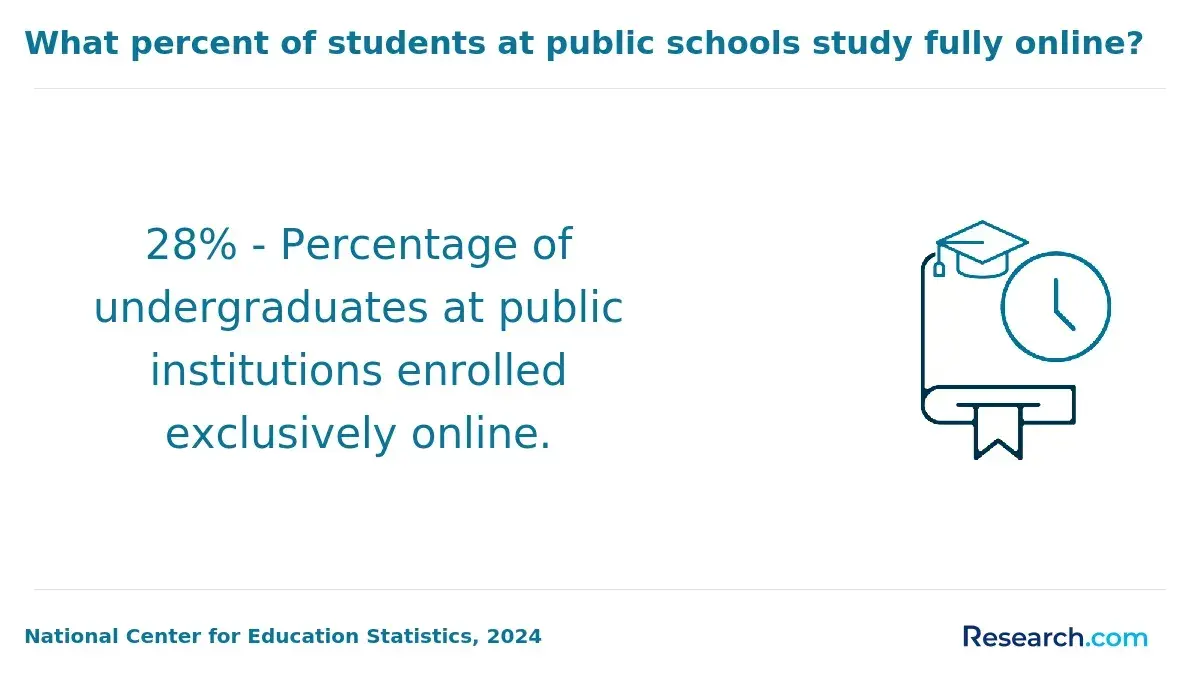
Online Christian Ministry doctorates are becoming more accessible as seminaries redesign doctoral study for working pastors, chaplains, nonprofit leaders, and ministry educators. NCES data released in 2024 show more than 1.4 million U.S. postbaccalaureate students enrolled exclusively online, which explains why flexible doctoral formats now matter.
This guide is for applicants worried about low GPAs, strict testing, degree mismatch, or competitive admissions. You will learn which program features lower barriers, what workarounds are realistic, and how to choose a credible doctorate without sacrificing fit, accreditation, or long-term ministry value.
Key Things About the Easiest Online Christian Ministry Doctorate Programs
- The easiest online Christian Ministry doctorate programs are usually professional doctorates such as the Doctor of Ministry, not research PhD programs; many publish minimum GPAs around 2.5 to 3.0, review applicants holistically, and may offer conditional admission when the rest of the file is strong.
- GRE and GMAT scores are uncommon in online Doctor of Ministry admissions, and applicants often bypass testing by showing a completed master's degree, ministry experience, ordination, chaplaincy credentials, or senior leadership responsibility.
- Programs with applied ministry projects, capstones, portfolios, or dissertation-in-practice models are often more accessible for working professionals than traditional dissertation-heavy research doctorates, especially when they allow transfer credit, bridge coursework, or prior learning documentation.
Are online Christian Ministry doctorate programs competitive?
Online Christian Ministry doctorate programs can be competitive, but they are usually not competitive in the same way as funded PhD programs. A PhD in theology, biblical studies, practical theology, or religious studies may admit a small cohort because faculty supervision, research fit, language preparation, and funding are limited.
A professional Doctor of Ministry or applied Christian leadership doctorate is often built for experienced practitioners, so the admissions review tends to focus on readiness for advanced ministry practice rather than narrow research specialization.
The biggest challenge is that acceptance rates are rarely transparent. Federal datasets such as IPEDS do not publish admit rates by doctoral major and online delivery mode, and many seminaries do not disclose program-level admissions rates. For applicants, this means "easy to get into" should not be judged by a single acceptance number.
It is better to compare visible barriers: GPA minimum, degree prerequisites, required ministry experience, test policy, cohort limits, writing sample expectations, and whether bridge coursework is allowed.
The table below shows how different types of Christian Ministry doctorates typically compare on selectivity. Use it to decide whether you should target an applied professional doctorate or a more traditional research pathway:
| Program type | Typical competitiveness | Why it may be easier or harder | Best fit |
| Online Doctor of Ministry | Moderate to accessible | Often designed for working ministry leaders and may use holistic review, no GRE, and applied projects | Pastors, chaplains, missionaries, ministry directors, and church leaders |
| Doctor of Christian Leadership or Doctor of Strategic Leadership with ministry focus | Accessible to moderate | May accept broader professional experience and non-ministry master's degrees with leveling courses | Christian nonprofit, church administration, denominational, and organizational leaders |
| Doctor of Educational Ministry | Moderate | Usually expects ministry or teaching experience and may require evidence of educational leadership | Discipleship, Christian education, curriculum, and formation leaders |
| PhD in Theology, Practical Theology, or Ministry Studies | More competitive | Research fit, academic writing, languages, dissertation supervision, and faculty capacity matter more | Future scholars, research faculty, and academically focused theologians |
Online formats may also feel more accessible because they are built around flexible scheduling, asynchronous coursework, short residencies, and national recruiting. However, accessible does not mean low rigor. A credible online doctorate still requires advanced reading, research, theological reflection, ministry assessment, and a final project that contributes to a real ministry context.
What are the easiest online Christian Ministry doctorate programs to get into?
The easiest online Christian Ministry doctorate programs to get into are usually those that publish flexible admissions language rather than rigid cutoffs. Look for programs that use terms such as "holistic review," "conditional admission," "equivalent ministry experience," "MDiv equivalency," "no GRE required," "applied project," and "bridge coursework." These features do not guarantee admission, but they create more routes for applicants whose academic history is uneven.
The comparison below summarizes common low-barrier program models. Because requirements change, applicants should verify the current catalog, accreditation status, and doctoral admissions page before applying:
| Low-barrier option | Common admission features | Potential advantage | Trade-off to check |
| Online Doctor of Ministry | Master of Divinity or equivalent, ministry experience, statement of purpose, references, no GRE in many programs | Strong fit for experienced ministry practitioners | Some schools require substantial prior theological credits |
| Online Doctor of Christian Leadership | Master's degree in ministry, leadership, theology, counseling, education, or related field | Often friendlier to non-MDiv applicants | May be less appropriate for academic theology careers |
| Online Doctor of Educational Ministry | Ministry or Christian education background, graduate degree, writing sample, references | Good for discipleship, teaching, and formation roles | May require a clear educational ministry context for the capstone |
| Hybrid or low-residency DMin | Mostly online coursework with short campus intensives | Can offer stronger faculty interaction while preserving flexibility | Travel costs and residency dates may reduce convenience |
| Competency-based or mentor-guided ministry doctorate | Portfolio, ministry context, mentor approval, individualized learning plan | May value professional evidence more than standardized metrics | Requires strong self-direction and careful accreditation review |
A high-acceptance or low-barrier doctorate can be worth considering if your goal is applied ministry leadership, pastoral effectiveness, chaplaincy advancement, denominational leadership, nonprofit management, or teaching in practice-oriented settings.
It may not be the best route if your main goal is a tenure-track research position, a highly specialized academic theology career, or doctoral work that requires extensive language training and archival research.
Before you apply, separate "easy to enter" from "easy to finish." A responsible shortlist should include programs that are accessible, accredited, affordable, and aligned with your vocation.
Applicants who are also considering pastoral counseling or family ministry pathways may want to compare ministry doctorates with adjacent preparation such as best online MFT programs, especially if their long-term goal involves counseling licensure rather than church leadership alone.
What is the minimum GPA requirement for online Christian Ministry doctorate programs?
The most common minimum GPA range for online Christian Ministry doctorate programs is roughly 2.5 to 3.0 on a 4.0 scale, with 3.0 often used as the preferred benchmark for full admission. Some schools set a firm cutoff, while others allow applicants below the benchmark to be reviewed conditionally if they show strong ministry experience, a strong writing sample, or recent graduate-level success.
The important distinction is between the published minimum and the competitive profile. A program may list 2.5 as the minimum, but applicants closer to 3.0 usually have fewer hurdles. A program may list 3.0 as preferred but still admit a lower-GPA applicant if the admissions committee sees evidence that the old GPA does not reflect current doctoral readiness.
The table below shows how GPA thresholds usually affect your application strategy. It is not a substitute for a school's catalog, but it can help you interpret what an admissions page is really signaling:
| Graduate GPA profile | Likely admissions interpretation | What to emphasize | Risk level |
| 3.3 or higher | Academically strong for many applied ministry doctorates | Research interests, ministry leadership, project fit | Lower |
| 3.0 to 3.29 | Meets the common full-admission benchmark | Writing sample, recommendations, ministry context | Moderate to lower |
| 2.75 to 2.99 | May require holistic or conditional review | Recent coursework, leadership outcomes, GPA explanation | Moderate |
| 2.5 to 2.74 | Possible at some schools but often not automatic | GPA addendum, post-master's credits, professional achievements | Higher |
| Below 2.5 | Unlikely without a formal exception or additional academic repair | New graduate coursework, certificate completion, direct advisor consultation | Highest |
Applicants should also ask which GPA the program calculates. Some schools look at the completed master's GPA, some emphasize the last 60 credits, and others review only graduate theological coursework. If your cumulative GPA is weak but your later academic record is stronger, that distinction can matter.
Can you get accepted into an online Christian Ministry doctorate program with a low GPA?
Yes, you can sometimes get accepted into an online Christian Ministry doctorate program with a low GPA, but you need to make the committee comfortable with your current academic readiness.
A low GPA is rarely overcome by enthusiasm alone. The strongest applications show that the applicant has changed circumstances, stronger recent performance, and a ministry context suitable for doctoral-level work.
Use the following workarounds when your GPA is below the preferred threshold. Each step should reduce the perceived risk of admitting you:
- Write a concise GPA addendum that explains the specific cause of the low GPA, what changed, and why the issue is unlikely to affect your doctoral performance.
- Complete one or two recent graduate-level theology, ministry, leadership, research, or writing courses and earn strong grades before applying.
- Ask whether the school recalculates GPA using only graduate credits, the last 60 credits, or upper-division coursework.
- Submit a stronger-than-required writing sample that demonstrates theological reasoning, source integration, ministry analysis, and clear academic style.
- Choose recommenders who can speak directly to your discipline, reliability, leadership maturity, and ability to complete long projects.
- Request conditional admission if available, especially if the program allows students to prove readiness by earning a minimum grade in the first doctoral courses.
A GPA addendum should not sound defensive. It should be brief, factual, and forward-looking. For example, an applicant might explain that earlier grades were affected by a documented family crisis, then show that recent master's coursework, ministry leadership, and continuing education demonstrate stronger preparation now.
The table below compares common low-GPA repair options. Use it to decide whether to apply now or strengthen your record first:
| Workaround | Best when | Time investment | Admissions value |
| GPA addendum | The GPA issue has a clear, limited explanation | Low | Helps interpret the record but rarely fixes it alone |
| Post-master's coursework | You need fresh evidence of academic ability | Moderate | Strong if grades are high and courses are relevant |
| Graduate certificate | You need both academic repair and subject preparation | Moderate to high | Useful if credits may transfer or meet prerequisites |
| Conditional admission | The school is open to probationary entry | Low at application stage | Can create access but usually requires high first-term grades |
| Professional portfolio | Your ministry achievements are stronger than your transcripts | Moderate | Helpful for applied doctorates, less useful for research PhDs |
The biggest mistake is hoping the committee will overlook the GPA without explanation. If your academic record raises a question, answer it directly and professionally before the committee has to guess.
Do online Christian Ministry doctorate programs require GRE or GMAT scores?
Most online Christian Ministry doctorate programs, especially Doctor of Ministry programs, do not emphasize GRE or GMAT scores. The GRE is more common in some research-focused humanities or social science PhD programs, while the GMAT is generally associated with business programs rather than ministry.
For applied Christian Ministry doctorates, schools usually care more about graduate theological preparation, ministry experience, references, writing ability, and fit with the program's project model.
This trend reflects a broader shift in graduate admissions toward test-optional review, but applicants should still verify each school's policy. Some universities waive tests automatically for applicants with a completed master's degree, while others simply do not require tests for the program at all.
The table below shows common test policies and what they mean for applicants trying to avoid standardized exams:
| Testing policy | What it means | Applicant impact |
| No GRE or GMAT required | The program does not use standardized test scores for admission | Best option for applicants with strong professional experience but weak test profiles |
| Test optional | Scores may be submitted but are not required | Submit only if scores strengthen the file |
| Waiver available | Applicants can request exemption based on prior degree, GPA, experience, or credentials | Good option if the rest of the file is strong |
| Required for some applicants | Testing may be required if GPA is low or degree preparation is unclear | Ask whether post-master's coursework can substitute |
| Required for all applicants | Scores are mandatory | Usually less attractive for applicants seeking low-barrier admission |
If a test waiver is not automatic, prepare a short request before submitting the application. The strongest waiver requests point to concrete evidence of readiness rather than general dislike of exams:
- Reference your completed master's degree and graduate GPA if it meets or approaches the preferred threshold.
- List ministry leadership roles, ordination, chaplaincy credentials, nonprofit leadership, teaching roles, or denominational responsibilities.
- Attach or mention recent graduate coursework, continuing education, or published ministry writing if available.
- Ask whether a writing sample, interview, or conditional first term can replace test scores.
Do not submit weak GRE or GMAT scores just because the option exists. In test-optional review, scores should clarify your strength, not create a new concern.
Is prior professional experience required for Christian Ministry doctorate programs?
Prior professional experience is commonly required or strongly preferred in Christian Ministry doctoral programs, especially Doctor of Ministry programs. Many DMin programs are intentionally designed for people already serving in ministry, so committees want to know that you have a real context where doctoral learning can be applied. That context may be a church, chaplaincy setting, campus ministry, mission organization, Christian school, nonprofit, counseling-related ministry, or denominational office.
The experience requirement varies by school. Some programs expect at least several years of post-master's ministry experience, while others review leadership maturity more flexibly. If you have not held a traditional pastor title, you may still qualify by showing sustained responsibility, spiritual formation work, program leadership, teaching, caregiving, administration, or community impact.
The table below explains how different types of experience may be interpreted in an applied Christian Ministry doctorate application:
| Experience type | How admissions committees may view it | How to document it |
| Pastoral ministry | Directly aligned with many DMin outcomes | Role description, ordination record, supervisor letter, ministry project history |
| Chaplaincy | Strong fit for pastoral care, ethics, and spiritual formation tracks | Credential records, supervisor letter, service setting, board certification progress if applicable |
| Christian nonprofit leadership | Relevant for leadership, justice, mission, and organizational ministry tracks | Program outcomes, budget scope, staff supervision, board responsibilities |
| Teaching or Christian education | Relevant for educational ministry and discipleship doctorates | Curriculum samples, teaching evaluations, course or program design evidence |
| Lay ministry leadership | Potentially relevant if sustained and substantial | Volunteer leadership scope, pastoral recommendation, measurable ministry responsibilities |
Applicants whose ministry overlaps with counseling, family systems, or pastoral care should be careful about career goals. A ministry doctorate can strengthen pastoral practice, but it normally does not replace the academic and supervised clinical requirements for licensure. If your goal is a licensed counseling pathway, compare ministry options with accelerated mental health counseling programs online before committing to a doctorate.
Can non-Christian Ministry majors qualify for a doctorate in the discipline?
Yes, non-Christian Ministry majors can qualify for some doctorate programs in the discipline, but the route depends on the type of doctorate. A traditional Doctor of Ministry usually expects a Master of Divinity or substantial theological graduate coursework.
A Christian leadership, educational ministry, or interdisciplinary ministry doctorate may be more open to applicants with master's degrees in counseling, education, nonprofit leadership, social work, organizational leadership, or related fields.
The key question is whether the program requires a specific prior degree or accepts "equivalency." MDiv equivalency usually means the applicant has completed enough graduate credits in Bible, theology, church history, pastoral care, preaching, formation, mission, or ministry practice to function at the same level as an MDiv graduate.
The table below compares common pathways for applicants whose prior major does not line up neatly with Christian Ministry:
| Applicant background | Likely pathway | Main issue to resolve | Best-fit program type |
| Master's in counseling or psychology | Bridge theology courses or pastoral care track | Enough graduate Bible and theology preparation | DMin in pastoral care or Christian leadership doctorate |
| Master's in education | Educational ministry bridge or discipleship focus | Ministry context and theological foundation | Doctor of Educational Ministry |
| MBA or organizational leadership master's | Christian leadership bridge coursework | Biblical and theological literacy | Doctor of Christian Leadership |
| Social work or human services master's | Pastoral care, community ministry, or nonprofit ministry route | Doctrinal and ministry formation preparation | Applied ministry doctorate |
| Master's unrelated to ministry | Leveling courses before doctoral admission | Both academic and vocational fit | Program with formal bridge policy |
Applicants with a degree mismatch should not hide it. Instead, ask admissions advisors exactly which deficiencies must be resolved and whether those credits can be completed before admission, during the first year, or through an approved bridge program:
- Request a transcript review before applying so the school can identify missing Bible, theology, ministry, or pastoral care credits.
- Ask whether prior graduate courses from counseling, education, leadership, or nonprofit management can count toward prerequisites.
- Prepare a ministry portfolio showing sermons, teaching, caregiving, leadership projects, discipleship work, or organizational outcomes.
- Clarify whether Prior Learning Assessment can reduce leveling requirements or only support admission review.
If your long-term goal is pastoral counseling or church-based care rather than a doctorate immediately, it may be practical to compare doctoral prerequisites with online masters programs for counseling. That comparison can prevent you from choosing a ministry doctorate when a licensure-aligned master's would better match your career plan.
Are online Christian Ministry doctorate programs less competitive than on-campus programs?
Online Christian Ministry doctorate programs are often more accessible than on-campus programs, but not because the academic standards are automatically lower. They may be easier to enter because they recruit nationally, serve working adults, offer multiple start dates, use part-time pacing, and do not require relocation.
On-campus programs may have smaller cohorts, more residency expectations, and a stronger preference for applicants who can participate in local academic life.
NCES distance education data released in 2024 confirm that online graduate study is no longer a niche format. For Christian Ministry applicants, this matters because seminaries and universities are competing for adult learners who need flexibility, which can lead to more accommodating admissions processes such as rolling review, test waivers, and conditional entry.
The table below summarizes the practical differences between online and on-campus Christian Ministry doctorates from an admissions standpoint:
| Factor | Online doctorate | On-campus doctorate | Admissions takeaway |
| Geographic reach | National applicant pool and remote participation | Often more tied to local or residential participation | Online programs may offer more seats across distributed cohorts |
| Schedule | Part-time, asynchronous, or low-residency formats are common | More fixed schedule expectations | Online formats fit working ministers better |
| Faculty fit | Important, especially for capstone supervision | Often very important for research-heavy study | Research PhD applicants face tighter fit requirements |
| Testing | GRE and GMAT often not central in applied ministry doctorates | Varies by university and department | Online professional programs may be friendlier to test avoiders |
| Residency | None, virtual, or short intensives | Regular campus presence may be expected | Online programs reduce relocation barriers |
The trade-off is that online students must be more self-directed. If you need daily campus structure, frequent in-person faculty interaction, or access to specialized research libraries, a more competitive on-campus or hybrid program may be worth the extra admissions challenge.
Are there online Christian Ministry doctorate programs that do not require a traditional dissertation?
Yes, many online Christian Ministry doctorate programs do not require a traditional dissertation in the same format as a research PhD. The most common alternative is an applied ministry project, doctoral capstone, portfolio, dissertation-in-practice, or project thesis.
These models still require research, writing, theological reflection, and evaluation, but the final product is usually tied to a real ministry problem rather than a purely theoretical research question.
This distinction matters for admissions. Applicants who have strong ministry experience but limited interest in academic research may be better suited to a capstone-based professional doctorate. Applicants who want to publish scholarly research, pursue tenure-track roles, or specialize in academic theology may need a dissertation-based PhD instead.
The table below compares common final-project models in online Christian Ministry doctorates:
| Completion model | Typical final product | Best for | Admissions implication |
| Applied ministry project | Research-based intervention in a church, chaplaincy, nonprofit, or ministry setting | Practitioners solving a ministry problem | Requires a clear ministry context |
| Doctoral capstone | Practice-focused project with written analysis and presentation | Working professionals who want applied outcomes | May be more accessible than a traditional dissertation path |
| Portfolio model | Collection of competencies, artifacts, reflections, and evaluated ministry work | Experienced leaders with substantial evidence of practice | Requires strong documentation habits |
| Dissertation-in-practice | Applied research study focused on organizational or ministry improvement | Leadership and educational ministry applicants | Balances research skill with practical impact |
| Traditional dissertation | Original scholarly research contribution | Academic and research-focused applicants | Usually requires stronger research fit and writing preparation |
Capstone pathways can reduce the mismatch between doctoral expectations and a working minister's daily responsibilities. They are not shortcuts, however. A strong capstone still needs a researchable problem, ethical care for participants, a theological framework, measurable outcomes, and clear writing.
If your interests are closer to clinical counseling research or counselor education than ministry practice, a ministry capstone may not be the right doctoral structure. In that case, comparing options such as the cheapest online PhD in counseling can help you understand how research doctorates differ in cost, dissertation expectations, and career alignment.
How can students increase their chances of getting into a Christian Ministry doctorate program?
The best way to increase your admission chances is to apply like a low-risk doctoral student. That means proving you can write, research, lead, persist, and use the degree in a real ministry setting. Admissions committees are not only asking whether you meet the minimum requirements; they are asking whether you are likely to finish and represent the institution well.
Use this sequence before applying. It is especially useful if you have a low GPA, nontraditional background, weak writing sample, or unclear ministry title:
- Verify regional or institutional accreditation first, then check whether theological accreditation or seminary recognition matters for your denomination, employer, or teaching goal.
- Choose the right doctorate type before choosing the easiest school, because a DMin, Christian leadership doctorate, educational ministry doctorate, and PhD serve different career outcomes.
- Request an unofficial transcript review to confirm GPA calculation, MDiv equivalency, bridge courses, transfer credit, and conditional admission options.
- Build a one-page ministry impact summary that lists leadership roles, communities served, programs launched, teaching responsibilities, pastoral care duties, and measurable outcomes.
- Write a focused statement of purpose that connects your ministry problem, doctoral track, faculty strengths, and final project idea.
- Select recommenders who can discuss your academic discipline, spiritual maturity, leadership reliability, and ability to complete a long independent project.
- Ask whether the GRE or GMAT is required, waived, optional, or irrelevant for your specific program and applicant profile.
- Submit a GPA addendum or degree-mismatch explanation when needed instead of leaving weaknesses unexplained.
Applicants should also avoid common mistakes that make an otherwise accessible program risky. The table below highlights errors that can cost time, money, or admission opportunities:
| Common mistake | Why it hurts | Better approach |
| Applying without checking accreditation | The degree may not be accepted by employers, denominations, or future schools | Confirm institutional accreditation and relevant theological recognition |
| Assuming easy admission means easy completion | Doctoral writing, research, and capstone work remain demanding | Ask about completion support, advising, and project milestones |
| Ignoring GPA weaknesses | The committee may assume the issue still exists | Submit a brief addendum and evidence of recent readiness |
| Choosing by acceptance ease alone | The program may not match your ministry, teaching, or leadership goal | Compare curriculum, faculty, final project model, and career fit |
| Forgetting total cost | Online programs can still include fees, books, residencies, and project costs | Calculate tuition, fees, travel, technology, and transfer credit value |
| Confusing ministry doctorates with licensure degrees | A DMin usually does not qualify someone for counseling licensure by itself | Check state board and employer requirements before enrolling |
Before committing, ask admissions advisors direct questions. The answers will tell you whether the program is truly accessible for your profile:
- What GPA is required for full admission, and is conditional admission available below that threshold?
- Do you calculate GPA from all college work, graduate work only, the last 60 credits, or theological coursework?
- Is an MDiv required, or can applicants complete MDiv equivalency through bridge courses?
- Are GRE or GMAT scores required, optional, waived, or not considered?
- How many credits can transfer into the doctorate, and are prior learning or ministry portfolios reviewed?
- What final project models are available, and does the student need an approved ministry site?
- What is the expected time to completion for part-time working professionals?
- What support is available for doctoral writing, research methods, and capstone design?
An easy online Christian Ministry doctorate is a smart investment when it is accredited, affordable, aligned with your calling, and realistic for your schedule. It is a poor investment when it is chosen only because admission seems simple.
Other Things You Should Know About Christian Ministry
Many professional ministry doctorates take about three to five years part time, depending on credit load, transfer credit, residency requirements, and the final project timeline. Research PhD programs often take longer because dissertation research and faculty supervision are more extensive.
They can be respected if they are properly accredited, academically rigorous, and aligned with recognized ministry or leadership outcomes. The word "easy" should refer to flexible admissions, not low standards.
Eligible students at accredited U.S. institutions may be able to use federal aid, institutional scholarships, employer support, denominational funding, military benefits, or payment plans. Availability depends on the school, program status, enrollment level, and student eligibility.
In 2027, many of the easiest online Christian Ministry doctorate programs require a minimum GPA of 2.5 to 3.0. However, some programs may provide additional pathways or provisional admission options for applicants with lower GPAs.
References
- What is a Doctoral Scholarship? Definition, Benefits, Degrees, and Key Differences https://www.unicaf.org/doctoral-scholarship/
- Educational Funding https://phdproject.org/educational-funding/
- Admissions Requirements | University of Fairfax https://ufairfax.edu/admissions/admissions-requirements/
- All Doctor of Ministry (DMin) Programs - TheologyDegree.org https://www.theologydegree.org/programs/doctor-of-ministry/
- A Doctor of Ministry Degree Online to Deepen Your Impact https://www.thebibleseminary.edu/post/a-doctor-of-ministry-degree-online-to-deepen-your-impact
- Institutional vs Program Accreditation: What You Should Look For | Articles | Unimy https://www.unimy.com/article/institutional-vs-program-accreditation-what-you-should-look-for
- The Significance of Accreditation for Universities - ELQN https://elqn.org/the-significance-of-accreditation-for-universities/
- Accreditation vs Recognition vs Affiliation: Key Differences Explained https://www.ieac.org.uk/79-Accreditation-vs-Recognition-vs-Affiliation-Key-Differences-Explained-blog.php
- Are Scholarships Available for Doctoral Students? | ScholarshipOwl https://scholarshipowl.com/blog/find-scholarships/are-scholarships-available-for-doctoral-students/
- Doctorate Application | Pentecostal Online Seminary https://www.bcc.edu/doctorate-application