
2027 Online Child Development Education Doctorate Programs with No Dissertation Requirement

Co-Founder and Chief Data Scientist
If you want a doctorate in child development education but do not want to spend years on a traditional dissertation, the key question is whether an applied doctoral pathway will still support your goals. This matters for educators, early childhood leaders, curriculum specialists, and administrators pursuing advancement while working.
The U. S. Bureau of Labor Statistics reported a May 2024 median salary of $104,070 for elementary, middle, and high school principals, showing why doctoral-level leadership preparation can be valuable. This guide explains dissertation alternatives, legitimacy, costs, timelines, and career trade-offs.
Key Things You Should Know
- Yes, some online EdD-style pathways related to child development, early childhood education, curriculum, leadership, or human development replace the traditional dissertation with a capstone, dissertation-in-practice, applied doctoral project, or portfolio, but students must verify the exact final requirement before enrolling.
- No-dissertation does not mean no research: legitimate programs still require doctoral writing, data analysis, applied inquiry, ethics training, and a final project tied to a real educational problem.
- Career value depends more on accreditation, degree type, employer expectations, and professional goals than on the word "dissertation"; BLS May 2024 data shows related leadership roles such as principals had a $104,070 median salary, while instructional coordinators had a $74,720 median salary.
Which Online Child Development Education Doctorate Programs Do Not Require a Dissertation?
The short answer is that true "no traditional dissertation" options are most commonly found in professional doctorates, especially the Doctor of Education, rather than in PhD programs. In child development education, the exact degree title may vary: some programs use "early childhood education," "child and adolescent development," "curriculum and instruction," "educational leadership," "learning and development," or "human development" rather than the exact phrase "child development education."
Because schools change catalog language, the safest way to identify qualifying programs is to look for the final doctoral requirement, not just the marketing phrase "no dissertation." The table below summarizes the program types most likely to fit the search and what students should verify.
| Program pathway | How it may relate to child development education | Typical final requirement | Best fit | What to verify |
| Online EdD in Early Childhood Education | Focuses on early learning, child development, family engagement, assessment, equity, and program leadership | Capstone, dissertation-in-practice, applied project, or sometimes a traditional dissertation | Early childhood administrators, PreK leaders, curriculum directors, teacher educators | Whether the final project is explicitly non-dissertation and whether field-based research is required |
| Online EdD in Curriculum and Instruction with early childhood or child development electives | Connects learning theory, instructional design, assessment, and age-appropriate curriculum | Applied capstone, improvement project, or dissertation-in-practice | Curriculum specialists, instructional coaches, district-level education leaders | Whether electives are enough to support child development career goals |
| Online EdD in Educational Leadership with early childhood focus | Prepares leaders for schools, childcare systems, nonprofits, and education agencies serving young learners | Leadership capstone, problem-of-practice project, or portfolio | Principals, directors, program managers, policy leaders | Whether state administrator licensure is included, optional, or unavailable |
| Online EdD in Learning, Human Development, or Educational Psychology | Explores learning science, developmental theory, behavior, motivation, and educational systems | Applied inquiry project, portfolio, or doctoral project | Learning specialists, program evaluators, consultants, nonprofit leaders | Whether the curriculum is education-focused rather than clinical psychology-focused |
| Online professional doctorate in education with individualized concentration | Allows students to design a child development or early learning emphasis through projects and electives | Capstone, portfolio, or applied doctoral study | Working professionals with a defined workplace problem to investigate | Whether faculty expertise aligns with child development education |
Students should be especially careful with terminology. A "dissertation-in-practice" may not be a traditional five-chapter dissertation, but it is still a major doctoral research project. Similarly, a capstone may require literature review, data collection, stakeholder analysis, implementation, and a defense.
If speed is a major factor, compare completion structures carefully rather than choosing by name alone. Some 1-year EdD programs online may be faster because of transfer credit, accelerated terms, or prior graduate work, but a short timeline still requires substantial doctoral-level writing and project execution.
What Replaces the Dissertation in an Online Child Development Education Doctorate?
In a dissertation-free online doctorate, the traditional dissertation is usually replaced by an applied scholarly product. The goal shifts from producing original academic research for the research literature to solving, evaluating, or improving a real problem in an educational setting.
The table below compares the most common dissertation alternatives so students can understand the workload and research expectations behind each label.
| Final requirement | What it usually involves | Research intensity | Typical output | Common student misconception |
| Capstone project | Identifying a practical problem, reviewing research, designing an intervention or improvement plan, and evaluating implications | Moderate to high | Written report, presentation, portfolio, or implementation plan | Assuming it is only a long paper |
| Dissertation-in-practice | Studying a problem of practice in a school, district, childcare organization, or community setting | High | Applied research study with recommendations for practice | Assuming "in practice" means easier than a dissertation |
| Applied doctoral project | Using evidence to improve a program, policy, training model, assessment process, or learning environment | Moderate to high | Project report, evaluation, toolkit, or professional product | Assuming no original inquiry is required |
| Portfolio defense | Collecting doctoral artifacts that demonstrate leadership, research literacy, professional growth, and applied competence | Moderate | Curated portfolio plus oral or written defense | Assuming coursework alone completes the degree |
| Consultancy or improvement project | Working with an organization to diagnose a problem and recommend evidence-based changes | Moderate to high | Consulting report, implementation framework, or evaluation plan | Assuming it is less rigorous because it is workplace-based |
For child development education students, an applied project might examine kindergarten readiness practices, trauma-informed classroom supports, family engagement in early childhood programs, inclusive curriculum design, developmental screening workflows, or professional development for childcare educators.
Before enrolling, ask the school to show you the doctoral handbook or final project rubric. Catalog language can be vague, and the handbook is often where you will find details about proposal approval, institutional review board requirements, data collection, committee review, revisions, and defense expectations.
Are Online Child Development Education Doctorate Programs Without Dissertations Legitimate and Accredited?
Yes, a no-dissertation online doctorate can be legitimate if it is offered by an institution with recognized accreditation and includes a rigorous doctoral completion requirement. Accreditation matters because it affects federal financial aid eligibility, transferability, employer recognition, licensure review, and whether the credential is likely to be taken seriously.
For U.S. students, the first checkpoint is institutional accreditation by an accreditor recognized by the U.S. Department of Education or the Council for Higher Education Accreditation. Programmatic accreditation may also matter depending on the career target, especially for educator preparation, school leadership, school psychology, counseling, or clinical roles.
Use the following checklist before treating a dissertation-free online doctorate as a serious option:
- Confirm the institution's accreditation status directly through the accreditor or the U.S. Department of Education database, not only through the school's website.
- Read the current academic catalog and doctoral handbook to confirm whether the final requirement is a capstone, dissertation-in-practice, applied project, portfolio, or traditional dissertation.
- Ask whether the program is designed for educator licensure, administrator licensure, professional advancement, or non-licensure leadership development.
- Verify residency requirements, synchronous class expectations, field placements, project site rules, and in-person defenses before assuming the program is fully online.
- Ask how faculty expertise aligns with child development, early childhood education, learning science, family systems, special education, or developmental assessment.
Licensure is a major caution area. A doctorate in child development education usually does not automatically qualify someone for school psychologist, counselor, principal, or teacher licensure. For example, students interested in school psychology should compare requirements separately and may need to review school psychology programs online accredited by NASP rather than assuming an education doctorate will meet that pathway.
Red flags include unclear accreditation, unavailable faculty credentials, pressure to enroll quickly, unrealistic completion promises, vague final project descriptions, and refusal to provide a catalog or handbook. A legitimate no-dissertation doctorate should be transparent about workload, research expectations, review committees, and academic standards.
Are No-Dissertation Online Child Development Education Doctorate Programs Easier to Complete?
They may be more practical for working professionals, but they are not automatically easier. A dissertation-free doctorate often reduces the risk of being stuck for years on a large independent dissertation, but it replaces that requirement with structured applied research, project design, analysis, implementation planning, and extensive writing.
The main difference is the type of difficulty. A traditional dissertation often requires a more independent contribution to scholarly research. A capstone or applied project usually requires connecting research to a real education problem, managing stakeholders, interpreting evidence, and creating usable recommendations.
Students often find dissertation-free programs more manageable when the final project is embedded across courses. This can help prevent the "all-but-dissertation" problem, where students finish coursework but struggle to complete the final research stage. However, a compressed or highly structured format can also feel intense because major project milestones may begin early in the program.
Common mistakes to avoid include the following:
- Choosing a program because it says "no dissertation" without reading the final project requirements.
- Assuming an applied project will require less writing, fewer revisions, or no research methods training.
- Waiting until the final year to identify a project site, data source, or problem of practice.
- Ignoring whether the final project requires permission from an employer, school district, childcare center, or institutional review board.
- Selecting a topic that is too broad, such as "improving early childhood education," instead of a specific, measurable problem.
The better question is not whether the program is easier, but whether the format matches how you work. Students who prefer structured milestones, workplace-based inquiry, and practical deliverables may find the capstone model more achievable. Students who want to build a research agenda for academia may be better served by a traditional dissertation.
How Long Does It Take to Complete an Online Child Development Education Doctorate Without a Dissertation?
Most online EdD-style programs connected to child development education take about three to five years, though accelerated formats may be shorter for students with significant transfer credit or a closely aligned master's degree. The absence of a traditional dissertation can shorten the final stage, but only if the capstone or applied project is integrated into the curriculum and completed on schedule.
The table below shows how timelines typically differ by doctoral structure. These are planning ranges, not guarantees, because actual pace depends on credit load, transfer policy, project approvals, residency rules, and whether the student remains continuously enrolled.
| Doctoral pathway | Typical completion time | Why the timeline varies | Best for |
| Accelerated online EdD with capstone | About 1 to 3 years | Often depends on transfer credits, shorter terms, and early capstone integration | Experienced educators with a focused project idea and strong writing skills |
| Standard online EdD with applied project | About 3 to 4 years | Coursework, research methods, project design, and final defense are usually sequenced | Working professionals balancing study with full-time employment |
| Online EdD with dissertation-in-practice | About 3 to 5 years | The project may require proposal approval, data collection, analysis, and revisions | Leaders investigating a complex problem in a real education setting |
| Traditional PhD or dissertation-based doctorate | Often 4 years or more | Independent research design and dissertation completion can extend the timeline | Students pursuing research, tenure-track faculty roles, or scholarly specialization |
Working professionals should pay close attention to pacing. A program with eight-week courses may look faster on paper, but it can require frequent writing deadlines and limited breaks. A longer program with steady milestones may be more realistic for students managing school leadership, teaching, childcare administration, or family responsibilities.
Ask admissions advisors how many students complete the final doctoral project within the advertised timeframe and what happens if a project site, data access, or committee approval is delayed. Completion time is often shaped less by coursework and more by the final project process.
How Much Do Online Child Development Education Doctorate Programs Without Dissertations Cost?
Costs vary widely because tuition depends on institution, credit count, transfer policy, residency requirements, fees, and whether the program charges by credit, term, or subscription period. Students should calculate total program cost, not just tuition per credit, because doctoral programs often include technology fees, dissertation or capstone continuation fees, graduation fees, travel costs, and project-related expenses.
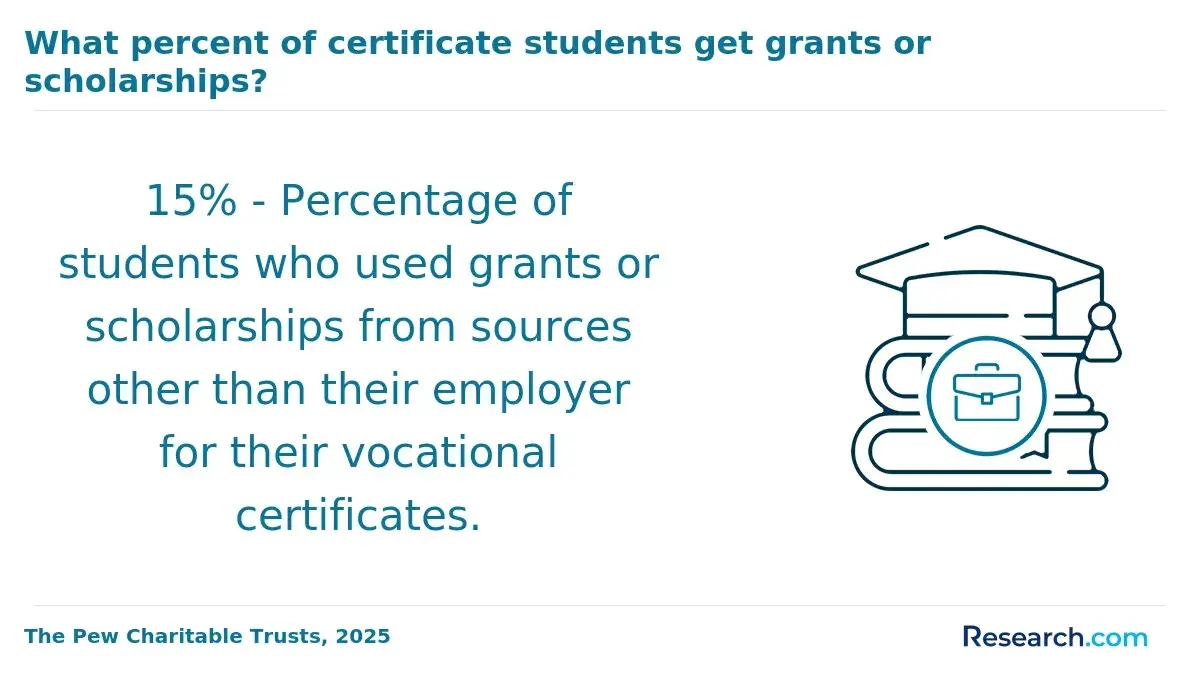
For context, federal student aid data released by the U.S. Department of Education in 2024 continued to show that graduate borrowers often take on larger loan balances than undergraduate borrowers. That matters because a doctorate should be evaluated against realistic career advancement, employer tuition assistance, and the student's ability to manage repayment without assuming a specific salary outcome.
Use the following cost categories when comparing programs:
- Tuition per credit or per term, multiplied by the number of required credits after transfer evaluation.
- Mandatory fees, including technology, student services, graduation, assessment, and doctoral project fees.
- Residency or intensive costs, including travel, lodging, meals, and time away from work if any in-person component is required.
- Books, software, research tools, transcription, survey platforms, background checks, or project materials.
- Continuation tuition if the capstone, dissertation-in-practice, or portfolio takes longer than planned.
- Opportunity cost, including reduced work hours, unpaid leave, or limits on outside consulting while enrolled.
The table below can help students compare the total cost logic behind different pricing structures. It does not replace a school-specific financial aid estimate, but it shows which questions affect the real price of the degree.
| Cost factor | Why it matters | Question to ask |
| Credit count | A lower tuition rate can still be expensive if the program requires many credits | How many credits will I need after official transfer evaluation? |
| Transfer credits | Accepted doctoral or post-master's credits can reduce both cost and time | What is the maximum transfer allowance and what courses qualify? |
| Project continuation fees | Students who need extra time may pay additional terms | What will I pay if my capstone or applied project is delayed? |
| Residency requirements | "Online" programs may still require campus visits or intensives | Are any travel-based experiences required? |
| Employer reimbursement | Many education employers reimburse only approved programs or job-related coursework | Will my employer cover this doctorate, and under what conditions? |
A dissertation-free doctorate can be worth the cost when it supports a clear advancement path, leadership role, salary lane movement, consulting goal, or organizational impact. It is harder to justify financially if the student has no defined career use for the credential or is choosing the program only to avoid a dissertation.
Who Benefits Most From an Online Child Development Education Doctorate Without a Dissertation?
The strongest fit is usually a working professional who wants advanced leadership preparation and applied expertise rather than a research-intensive academic pathway. These students often want to improve child-serving systems, lead early learning programs, design curriculum, train educators, evaluate interventions, or influence policy.
A dissertation-free online doctorate may be especially useful for the following groups:
- Early childhood program directors who want to strengthen leadership, compliance, family engagement, staff development, and quality improvement practices.
- Teachers or instructional coaches who want to move into curriculum leadership, professional learning, or district-level roles focused on child development.
- School or district leaders who want to address early literacy, kindergarten transition, developmental supports, inclusion, or family-school partnerships.
- Nonprofit and community program leaders working in child advocacy, early intervention coordination, after-school programming, or family services.
- Education consultants who need doctoral-level credibility for training, program evaluation, curriculum design, or organizational improvement work.
The pathway may be less appropriate for students whose primary goal is tenure-track faculty work, high-level research employment, or a career that explicitly expects a traditional dissertation or PhD. Some universities and research organizations may value a dissertation-based record because it signals experience with independent scholarly research.
Students who are still exploring child development careers may want to consider whether a master's degree is enough before committing to a doctorate. For example, child psychology master's programs may be a better fit for learners who want developmental knowledge but are not yet seeking doctoral-level education leadership roles.
How Does a No-Dissertation Online Child Development Education Doctorate Affect Career Opportunities?
A no-dissertation doctorate can support career advancement when employers value applied leadership, program improvement, and advanced education credentials. The degree is most relevant in education systems, early childhood organizations, school districts, higher education support units, nonprofits, government agencies, curriculum companies, and consulting settings.
According to BLS May 2024 wage data, instructional coordinators had a median annual wage of $74,720. For readers, this figure is useful as a role-based benchmark, not a promise: actual pay varies by state, district, employer type, experience, union contract, and whether the doctorate changes salary placement.
Common career directions include the following:
- Early childhood education director or multi-site program leader, focusing on staffing, compliance, quality improvement, family partnerships, and curriculum implementation.
- Instructional coordinator or curriculum specialist, developing age-appropriate learning frameworks, teacher training, assessment systems, and intervention supports.
- Education administrator, using doctoral work to support leadership in schools, districts, childcare networks, or child-serving agencies.
- Professional development specialist, designing training for teachers, childcare workers, paraprofessionals, and family engagement teams.
- Program evaluator or education consultant, helping organizations assess outcomes, improve services, and implement evidence-based practices.
- Higher education instructor or faculty member in practice-oriented programs, depending on institutional hiring standards and prior experience.
Technology is also changing the skill mix for these roles. AI-supported assessment tools, learning analytics, adaptive curriculum platforms, and digital family engagement systems are becoming more common in education settings. Doctoral students should look for programs that teach ethical data use, evaluation methods, digital learning leadership, and evidence-based decision-making rather than treating technology as a separate add-on.
Career outcomes vary significantly. A doctorate may help with promotion, consulting credibility, salary schedule movement, or leadership eligibility, but it rarely works alone. Experience, licensure, state rules, employer policies, and demonstrated results in child-serving environments often matter just as much as the credential.
How Do No-Dissertation Online Child Development Education Doctorates Compare With Traditional Doctorates?
The core difference is purpose. A no-dissertation online EdD-style pathway is usually designed for experienced professionals who want to apply research to educational practice. A traditional dissertation-based PhD or EdD is usually better for students who want to conduct original research, publish scholarship, or compete for research-heavy academic roles.
The table below compares the two structures across the factors that most often affect student decisions.
| Factor | No-dissertation applied doctorate | Traditional dissertation doctorate |
| Primary purpose | Improve practice, leadership, programs, or systems | Generate original scholarly research |
| Common degree type | EdD or other professional doctorate | PhD or dissertation-based EdD |
| Final requirement | Capstone, applied project, dissertation-in-practice, or portfolio | Traditional dissertation with original research contribution |
| Best fit | Practitioners, administrators, consultants, curriculum leaders | Researchers, future tenure-track faculty, scholarly specialists |
| Workplace connection | Often directly tied to a school, district, childcare center, or organization | May be less directly tied to the student's current workplace |
| Potential challenge | Requires access to a practical problem, site, stakeholders, or organizational data | Requires sustained independent research, committee feedback, and scholarly contribution |
| Employer perception | Strong when the role values applied leadership and accredited doctoral preparation | Strong when the role values research production and academic specialization |
Neither pathway is universally better. A no-dissertation doctorate may offer the best balance of flexibility, structure, and career relevance for a working education leader. A traditional doctorate may offer stronger preparation for research careers, academic publishing, and faculty roles where dissertation experience is expected.
Students comparing education technology or curriculum-focused alternatives may also consider adjacent graduate pathways before committing to a doctorate. For example, the best online instructional design master's programs may be more practical for professionals who want to build digital learning, training, and curriculum design skills without a doctoral commitment.
How Should Students Choose an Online Child Development Education Doctorate Without a Dissertation?
The smartest way to choose is to start with the outcome you need, then work backward to the degree type, accreditation, curriculum, faculty expertise, cost, and final project structure. A no-dissertation doctorate is a major investment, so the program should match both your career goal and your preferred way of doing doctoral work.
Use this step-by-step process to evaluate programs before applying:
- Define your career goal clearly, such as early childhood leadership, curriculum administration, program evaluation, higher education teaching, consulting, or policy work.
- Confirm whether the role requires a doctorate, prefers a doctorate, accepts a master's degree, or depends more on licensure and experience.
- Verify institutional accreditation and, when relevant, programmatic approval for educator preparation, administrator licensure, school psychology, counseling, or related professional pathways.
- Request the current catalog, doctoral handbook, final project guide, and sample capstone or applied project descriptions.
- Ask whether the final requirement is truly non-dissertation or simply a dissertation with different terminology.
- Compare the curriculum for child development content, including early learning, developmental theory, assessment, inclusion, family engagement, trauma-informed practice, and education systems leadership.
- Review faculty biographies to confirm expertise in child development education, early childhood systems, curriculum, special education, or applied educational research.
- Calculate total cost using required credits, transfer credits, fees, residency expenses, project continuation costs, and employer tuition benefits.
- Ask about online format details, including synchronous sessions, cohort structure, residencies, fieldwork, project site requirements, and defense format.
- Speak with admissions, financial aid, faculty, and if possible current students or alumni before making a final decision.
Admissions requirements often include a master's degree from an accredited institution, graduate GPA minimum, resume, professional experience in education or a child-serving field, statement of purpose, writing sample, recommendation letters, and sometimes an interview. GRE requirements are less common in many professional online EdD programs than they once were, but policies vary by school.
The most important red flag is a program that sells "no dissertation" as if it means minimal doctoral work. A credible program should be able to explain exactly how students demonstrate doctoral-level research, analysis, leadership, and professional contribution without a traditional dissertation.
Before enrolling, students should ask admissions advisors these direct questions:
- What is the exact name of the final doctoral requirement on the transcript, catalog, and handbook?
- Does the final project require original data collection, program evaluation, intervention design, or institutional review board approval?
- When do students begin planning the capstone, applied project, or dissertation-in-practice?
- How many committee members review the final project, and is an oral defense required?
- What happens if my employer will not allow data collection or project implementation at my workplace?
- Can I see examples of recent approved project topics related to child development, early childhood education, or learning systems?
A strong program will answer these questions clearly. If a school cannot explain the final requirement, cost structure, accreditation, online expectations, and career alignment, keep looking.
Other Things You Should Know About Child Development Education
Not exactly. Child development education focuses on how children grow, learn, behave, and interact across developmental stages. Early childhood education is more specifically focused on teaching and program design for young children, often from birth through age eight.
Not always. Some programs are designed for licensed educators, while others admit professionals from childcare, nonprofits, family services, curriculum, policy, or community programs. If your goal involves public school teaching or administration, check state licensure rules before enrolling.
It can help, especially for practice-based teaching roles, adjunct instruction, or faculty positions in applied education programs. Research universities and tenure-track roles may prefer or require a PhD, dissertation experience, publications, and a stronger research record.
Important skills include developmental theory, curriculum evaluation, assessment literacy, family engagement, inclusive practice, ethical data use, staff coaching, program evaluation, grant or policy awareness, and the ability to translate research into practical improvements.
References
- 90+ Online Ed.D. Programs With No Dissertation in 2026 https://www.eddprograms.org/schools/no-dissertation/
- The Rewards of a Doctorate in Early Childhood Education - Graduate Programs for Educators https://www.graduateprogram.org/blog/the-rewards-of-a-doctorate-in-early-childhood-education/
- Ed.D. in Early Childhood Education | ACE https://ace.edu/degree-programs/doctoral-degrees/doctoral-education/doctor-of-education-in-early-childhood-education/
- Selecting an EdD program https://www.cpedinitiative.org/selecting-an-edd-program
- Shortest EdD Programs Online: How to Fast-Track Your Doctorate https://www.phds.me/online-programs/education-doctorate-edd/fastest/
- 2026 Online EdD Programs No Dissertation Required (Applied Capstone Projects) https://www.onlineeddprograms.com/faqs/edd-programs-no-dissertation
- 2025 Most Affordable Online Doctorates in Education https://www.onlineu.com/most-affordable-colleges/education-doctoral-degrees
- Online Ed.D. in Early Childhood Education | Doctorate in ECE Online https://www.pacificoaks.edu/academic-programs/edd-in-early-childhood-education/
- What Is a Non-Dissertation Doctorate, and Is It Right for You? https://www.snu.edu/blog/what-is-a-non-dissertation-doctorate-and-is-it-right-for-you
- Average Cost of a Doctorate Degree [2026]: Ph.D., Psy.D. & More https://educationdata.org/average-cost-of-a-doctorate-degree


