2027 Online BS in Business Administration Admissions with A Low High School GPA but Strong Recent College Grades: What to Check
Audited and Verified:
Our Editorial and Data Verification Process
Research.com uses government datasets, official education statistics and primary institutional information to support its career and degree guides. Our review process checks factual accuracy, occupational definitions, source dates and the requirements associated with the credentials discussed.
How This Article Was Fact-Checked
Our editorial team verifies salary estimates, employment projections, education requirements and program information against original data providers and official organizations. Salary figures are checked against the relevant occupational definitions and reporting periods. Information about licensure, accreditation and required in-person training is reviewed separately.
Fact-checked and verified on:

Co-Founder and Chief Data Scientist
A low high school GPA may not reflect the student you are now. If you have since earned strong college grades, the important question is how an online BS in Business Administration program evaluates applicants with prior college work. Some schools assess them under transfer-student rules; others still require high school records or separate admission to the business major.
This guide shows you which policies to check, what evidence to gather, and how to compare programs without mistaking admission for a promise that your credits will count toward graduation.
Key Things You Should Know
- Recent grades can help, but policy controls: Ask when the school evaluates you as a transfer applicant and whether high school GPA still affects admission.
- Check three separate decisions: Admission to the university, admission to the business major, and application of transfer credits to degree requirements.
- Request a written evaluation: Strong grades do not establish your remaining courses, completion time, or cost until the school reviews your transcripts.
What Is an Online Bachelor's in Business Administration?
An online BS in Business Administration is an undergraduate degree covering several business functions rather than training for only one occupation. It commonly combines general education with accounting, finance, marketing, management, operations, and quantitative coursework. "Online" describes delivery, not a separate admissions standard: the institution may use the same academic rules as its campus program or publish rules specific to online applicants.
Check the exact degree title and catalog. A BS in Business Administration, a BBA, and a specialized business degree may have different prerequisites and transfer requirements. If you are returning to school while employed, business administration programs for advancement while working can provide comparison points, but confirm attendance and course requirements directly with each school.
Can Strong College Grades Offset a Low High School GPA?
Yes, at some schools—but not automatically. The decisive policy is whether your completed college coursework qualifies you for transfer admission and how the institution calculates academic standing. A school may emphasize your college record, still request your high school transcript, or apply a separate standard for entry to the business major. Strong recent grades are most persuasive when they come from graded, transferable courses and show sustained performance, especially in subjects relevant to business study.
These distinctions help you interpret an admissions page before assuming its published GPA rule applies to you:
| Policy to distinguish | Why your recent grades may—or may not—matter |
| First-year versus transfer classification | The school may require a specified amount of completed college work before using transfer-admission criteria. |
| Overall versus recent college GPA | Recent improvement may strengthen an application without replacing a cumulative-GPA requirement. |
| University versus business-major admission | Admission to the institution may precede a separate business-core prerequisite or GPA review. |
| Exception or conditional admission | A school may offer individual review, but only its stated policy or admissions office can confirm that option. |
Ask admissions which courses count toward the applicable GPA, whether all colleges attended must be included, and whether a low secondary-school GPA remains disqualifying. Then ask the business department whether your recent mathematics, statistics, accounting, or other relevant courses meet its own standards. If your goal is specifically HR, and admission to the business major remains uncertain, you can compare credit acceptance at online HR schools while checking each school’s admission rules separately, rather than assuming another major is easier to enter.
What Admission Requirements Apply to Online Business Programs?
Requirements vary by institution and applicant category. Expect to verify the required application, official transcripts from every college attended, proof of secondary-school completion if requested, and any minimum college GPA or business-major prerequisites. Do not assume an essay, recommendation, test score, or prerequisite is required unless that program says so.
For an applicant whose grades improved after high school, the most useful preparation is a short evidence trail. Gather your official college transcript history, identify the terms showing improvement, and retain course descriptions for classes that may satisfy business or quantitative requirements. If the school permits a personal statement or individual review, explain the change in your academic performance with specific, supportable facts rather than asking reviewers to disregard earlier grades.
Ask whether admission is direct to the BS program, conditional on completing prerequisites, or initially to the institution as an undeclared student. If you are comparing shorter formats, check application windows and eligibility as carefully as pacing; online colleges offering accelerated bachelor's may differ in both. An accelerated calendar does not waive academic requirements.
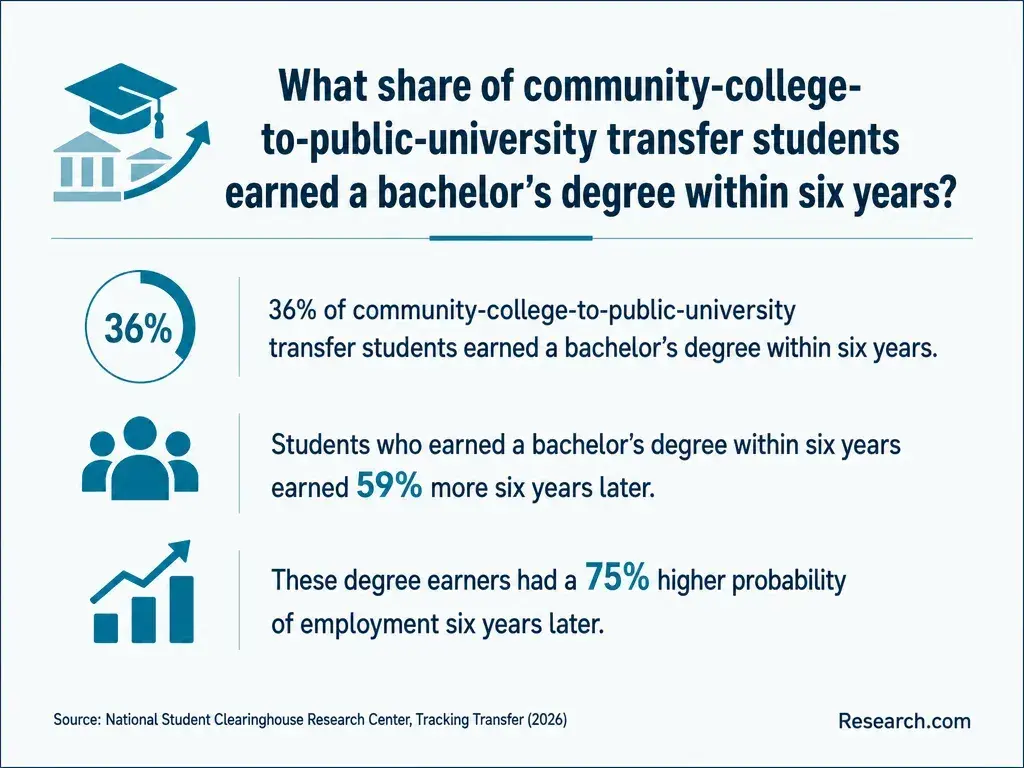
College credits can affect both your applicant classification and your graduation plan, but those are separate evaluations. A transcript may contain enough coursework for transfer admission while leaving substantial general education or business requirements unfinished. Likewise, a school can accept a course as elective credit without allowing it to replace required accounting, statistics, or another business-core course.
After admissions reviews your record, request an official transfer evaluation and degree audit. Check where each course applies, whether a grade or course-recency rule affects a prerequisite, which courses must be taken at the awarding institution, and whether required classes are offered when you expect to enroll. The registrar or transfer office determines equivalencies under school policy; a business adviser can explain their effect on the major. If you are also considering a different field, colleges accepting coursework toward project management bachelor's study illustrate why credit applicability must be compared degree by degree.
First, confirm that the institution holds accreditation from an accreditor recognized by the U.S. Department of Education. Use the accreditor's directory and the school's official accreditation information, checking the institution's current status and the location or entity awarding the degree. This matters when evaluating credit transfer, financial-aid eligibility, and the credibility of the credential, although accreditation alone does not guarantee any of those outcomes at another institution or employer.
Next, determine whether the business school or specific program holds additional accreditation, such as AACSB, ACBSP, or IACBE, and verify the accreditor's actual scope. Do not infer that every online business degree is covered because an institution advertises business accreditation. When reviewing online business administration degrees at lower prices, make accreditation and the exact degree-awarding institution part of the comparison—not a detail to check after applying.
Expect a broad business core, with the precise courses set by the school's catalog. For this admissions scenario, the most consequential curriculum question is often whether your recent college success also prepared you for the next required course. A strong grade in college algebra, for example, may demonstrate academic progress, but it satisfies a statistics or business math requirement only if the program approves that equivalency.
Review prerequisite sequences for accounting, economics, finance, and analytics before choosing your first term. If a concentration interests you, confirm that it is formally offered online, when its courses run, and whether your prior work applies to it. Interest may warrant supply chain program length and value comparisons, but a specialized program can apply the same transfer credits differently from a general business BS.
Your remaining requirements—not the number of college credits printed on your transcript—determine your likely completion time. A degree audit should show which general education, business core, elective, and institution-residency requirements remain. Course sequencing and whether required online classes run in your preferred terms can extend the calendar even when relatively few courses are left.
For a meaningful cost comparison, obtain each school's tuition basis and mandatory fees, then price the remaining required courses identified by its evaluation. Include books, software, possible proctoring charges, and any travel requirement. Ask financial aid how your enrollment level and prior coursework affect eligibility. You can compare business administration tuition and completion time to identify options to investigate, but do not treat an advertised program length or price as your personal estimate before the audit.
Online study may be a better fit if commuting would interfere with work or other responsibilities. Campus study may offer a more useful routine or easier access to in-person services. Neither format changes the need to meet admission and business-major standards, and "online" does not necessarily mean self-paced.
Before committing, ask for a sample course schedule: Are live sessions required? When are deadlines? How do group projects, exams, presentations, and advising work? Confirm any campus visits and how often required courses are available online. If format or speed matters more to you than the exact major, organizational leadership degrees with faster completion options provide an alternative to assess against your career goal and transfer audit—not a substitute to choose solely from an advertised timeline.
A business administration BS can support applications for roles such as operations coordinator, marketing coordinator, HR specialist, or project coordinator, depending on your courses and experience. Your recent college work helps establish academic readiness; employers will also want evidence of relevant skills, such as spreadsheet analysis, clear communication, customer or stakeholder work, and completed projects.
Use the degree plan to close a gap tied to a realistic target role. Someone aiming for HR, for instance, should assess HR-specific coursework and experience alongside HR education costs and career planning. A general business degree does not itself confer a professional credential or qualify a new graduate to manage staff or budgets.
What Salary and Job Outlook Can Business Graduates Expect?
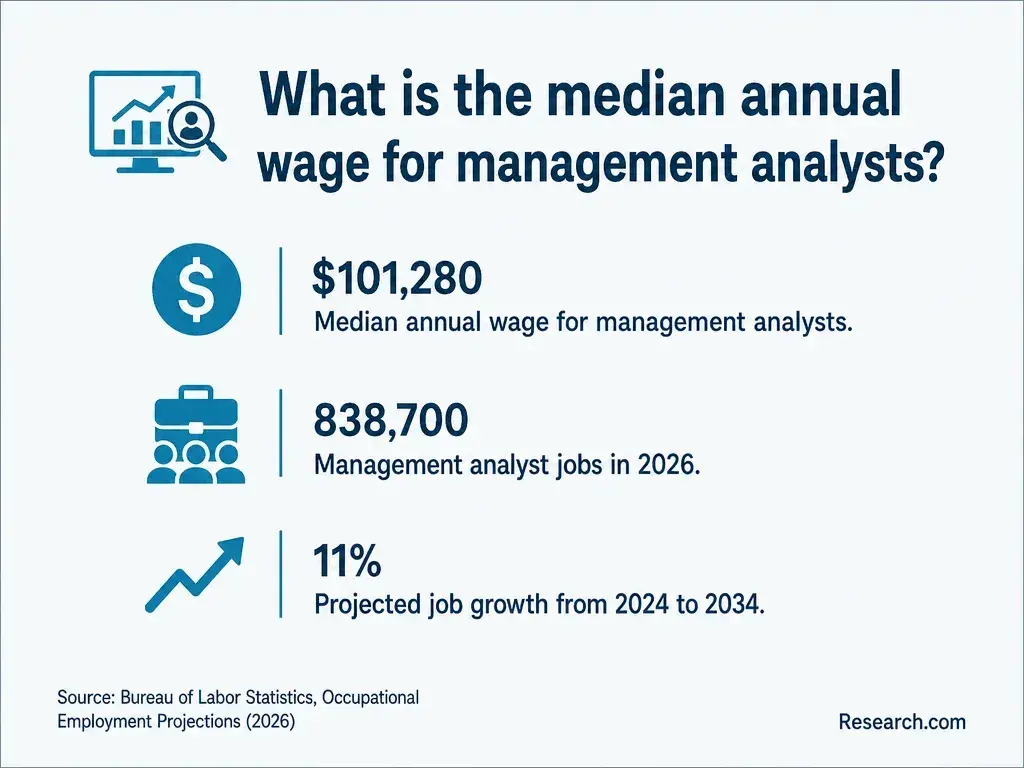
There is no single salary or employment projection for BS in Business Administration graduates: labor-market figures describe occupations, not degrees or starting offers. For example, the U.S. Bureau of Labor Statistics reports a May 2025 median annual wage of $75,940 for human resources specialists and projects 6% employment growth for that occupation from 2025 to 2035. The median includes workers at different experience levels, so it is not a prediction of what a newly admitted student—or a new graduate—will earn.
Choose a target occupation before using salary figures to judge the degree's value. Then compare its typical hiring requirements with your experience and the school's actual remaining cost. Lower-priced college options for business majors may improve the financial comparison, but only if their admission rules, credit evaluation, and required courses work for you.
Other Things You Should Know About Business Administration
Not necessarily. Academic renewal policies differ, and an admissions office may still review the underlying transcript. Ask how renewal affects its admission-GPA calculation.
Ask whether the school will review an application with courses in progress and when it needs the final official transcript. Pending grades may not count toward an admission decision.
Work experience may add context if the school offers holistic review, but it does not automatically replace a published academic requirement. Ask whether an exception process exists.
It might, if the course addresses a stated prerequisite or strengthens the college record the school evaluates. Get guidance on course choice and transferability before paying for it.
- Admissions Eligibility | Colorado Department of Higher Education Home https://cdhe.colorado.gov/admissions-eligibility
- College GPA Calculation - California Student Aid Commission http://www.csac.ca.gov/post/college-gpa-calculation
- BS in Business Administration | Online Bachelor's Degree | Capella University https://www.capella.edu/online-business-degrees/bs-business-program/bachelors-business-administration/
- Lombardo College of Business Online Bachelor's in Business Administration Degree. | Millersville University https://www.millersville.edu/mgmtmktg/general-business-admin-online.php
- Online Business Administration Major | Illinois State University https://illinoisstate.edu/academics/online-business-administration/
- Business Administration - UF Online - University of Florida https://ufonline.ufl.edu/degrees/undergraduate/business-administration/
- Transfer GPA | UC Admissions - University of California https://admission.universityofcalifornia.edu/admission-requirements/transfer-requirements/preparing-to-transfer/transfer-gpa.html
- Transfer Coursework, Minimum Grade and GPA Calculation | KU https://services.ku.edu/TDClient/818/Portal/KB/Article/21421/Transfer-Coursework-Minimum-Grade-and-GPA-Calculation
- Grades and Grade Point Average (GPA) Calculation | University of Arizona Office of the Registrar https://registrar.arizona.edu/records-enrollment/enrollment/grades/grades-and-grade-point-average-gpa-calculation
- Online B.S. in Business Administration for Transfer Students | sonoma.edu https://business.sonoma.edu/programs/undergraduate/bachelors-online-degree-completion-program