2027 Online BA in Psychology - Addictions: How to Evaluate a Digital Portfolio Instead of a Traditional Final Exam
Audited and Verified:
Our Editorial and Data Verification Process
Research.com uses government datasets, official education statistics and primary institutional information to support its career and degree guides. Our review process checks factual accuracy, occupational definitions, source dates and the requirements associated with the credentials discussed.
How This Article Was Fact-Checked
Our editorial team verifies salary estimates, employment projections, education requirements and program information against original data providers and official organizations. Salary figures are checked against the relevant occupational definitions and reporting periods. Information about licensure, accreditation and required in-person training is reviewed separately.
Fact-checked and verified on:

Co-Founder and Chief Data Scientist
A digital portfolio can show what you learned about addiction psychology more clearly than a final exam - but only if its assignments, feedback, and grading standards are credible. If you are considering an online BA, the assessment format also affects your workload and what you can safely share with employers or graduate programs. This guide explains what a strong portfolio contains, how to compare programs that use one, and where the degree fits - and does not fit - in addiction-related careers.
Key Things You Should Know
- A strong portfolio assesses research reasoning, evidence-based writing, ethical judgment, and revision - not just the appearance of finished files.
- Ask for the actual capstone rubric, sample assignment prompts, feedback schedule, and rules for using placement or client information before enrolling.
- An addictions-focused psychology BA may support nonclinical work, but its portfolio does not substitute for state-required addiction counselor education, supervised experience, or credentials.
What Is an Online BA in Psychology-Addictions Degree?
It is a bachelor of arts degree in psychology with coursework focused on substance use, addiction, prevention, recovery, or related service systems. "Addictions" may be a formally designated concentration, a track, or simply a group of electives. Check the catalog and transcript description rather than relying on the program's marketing name.
The degree usually combines broad psychology study with general education and addiction-related courses. It is different from a program specifically designed around a state's substance-use counseling requirements. If your goal is a counseling credential, compare the BA's required courses with addiction counseling education options online and the rules of the state where you intend to work. An online BA does not, by itself, authorize diagnosis or treatment.
How Does a Digital Portfolio Replace a Traditional Psychology Final Exam?
A traditional final exam samples what a student can recall or apply at one point in time. A digital portfolio collects selected work across a course or capstone and asks the student to explain what each artifact demonstrates. It replaces an exam only when the program formally uses it to assess the relevant learning outcomes; a collection of uploads without evaluation is not an equivalent assessment.
The comparison below shows what each format can reveal about learning. Neither is inherently more rigorous; the quality of the questions or rubric matters.
| Assessment | What it can show well | What to check |
| Final exam | Individual understanding under consistent conditions | Whether questions assess application and evidence, not only recall |
| Digital portfolio | Development over time, revision, and explanation of applied work | Whether authorship, feedback, and achievement of each learning outcome are assessed |
For an addictions-focused BA, an appropriate portfolio might contain a literature-based prevention brief, an evidence table comparing studies, a proposed nonclinical program-evaluation tool, and a reflection explaining revisions and limitations. These are academic artifacts, not proof that a prevention program worked or that the student provided counseling. A student interested in working in substance use recovery support could use a clearly labeled referral-resource brief to demonstrate communication skills without presenting it as clinical advice.
A useful portfolio makes the student's reasoning visible: the question addressed, sources and methods chosen, ethical constraints, instructor feedback, and what changed after revision. Its intended readers may include faculty grading the capstone and, later, an employer reviewing a permitted work sample. Those audiences need not see the same files.
How Do You Evaluate an Online Psychology-Addictions Program?
Start with the capstone policy, not a screenshot of a polished student website. Request the catalog requirements and an anonymized assignment prompt or rubric for your intended entry term. These questions test whether the portfolio measures learning and whether you can realistically complete it:
- Alignment: Which psychology and addictions learning outcomes does each required artifact assess, and are research methods and ethical reasoning explicitly graded?
- Feedback: Who reviews drafts, when can students revise, and how is individual work distinguished from group work?
- Feasibility: Are live presentations, group meetings, software, agency access, or approved placements required despite online delivery?
- Evidence and privacy: Can projects use published research or approved public information instead of client records? What may students retain or share after grading?
- Graduation rules: Is the portfolio mandatory, can a course substitute for it, and what happens if an artifact does not meet the rubric?
For a working student, a portfolio spread across several courses may be easier to revise than a single high-stakes exam, but deadlines and scheduled presentations can reduce that flexibility. Compare the remaining degree requirements, tuition and fees, transfer-credit application, and actual weekly commitments alongside the capstone. A guide to evaluating online bachelor's study in addiction psychology can help frame the broader comparison; the school's current catalog and written answers must settle program-specific questions.
Check that the institution holds recognized institutional accreditation and that the online BA is offered by that institution under its current catalog. Verify the accreditor and institutional status through the accreditor or the U.S. Department of Education's accreditation database. Accreditation does not certify that a particular portfolio is rigorous or that the degree meets an addiction counselor licensing board's requirements.
Do not look for APA accreditation as a seal for an undergraduate addictions psychology BA: APA's professional accreditation does not cover general bachelor's psychology programs. Program-specific recognition becomes relevant when comparing a distinct professional pathway. For example, accredited clinical mental health counseling completion pathways involve a different degree and credential decision. Before enrolling for a regulated career, ask the relevant state board which educational requirements this exact BA satisfies, if any.
Expect the catalog to distinguish required psychology courses from addictions electives. Relevant foundations often include research methods, statistics, development, social psychology, biological or health psychology, and the academic study of psychological disorders. Addictions coursework may examine substance-use research, prevention, recovery systems, and cultural or community factors. Course titles alone do not establish the depth of methods training or preparation for counseling.
For portfolio purposes, look for a sequence that teaches students to locate evidence, assess study limitations, propose an appropriately scoped project, and revise a written product. If a later specialty changes your plans - for example, toward the distinct coursework in one-year online forensic psychology master's options - check that program's prerequisites rather than assuming an addictions concentration covers them. Graduate study is not required simply to produce a strong undergraduate portfolio.
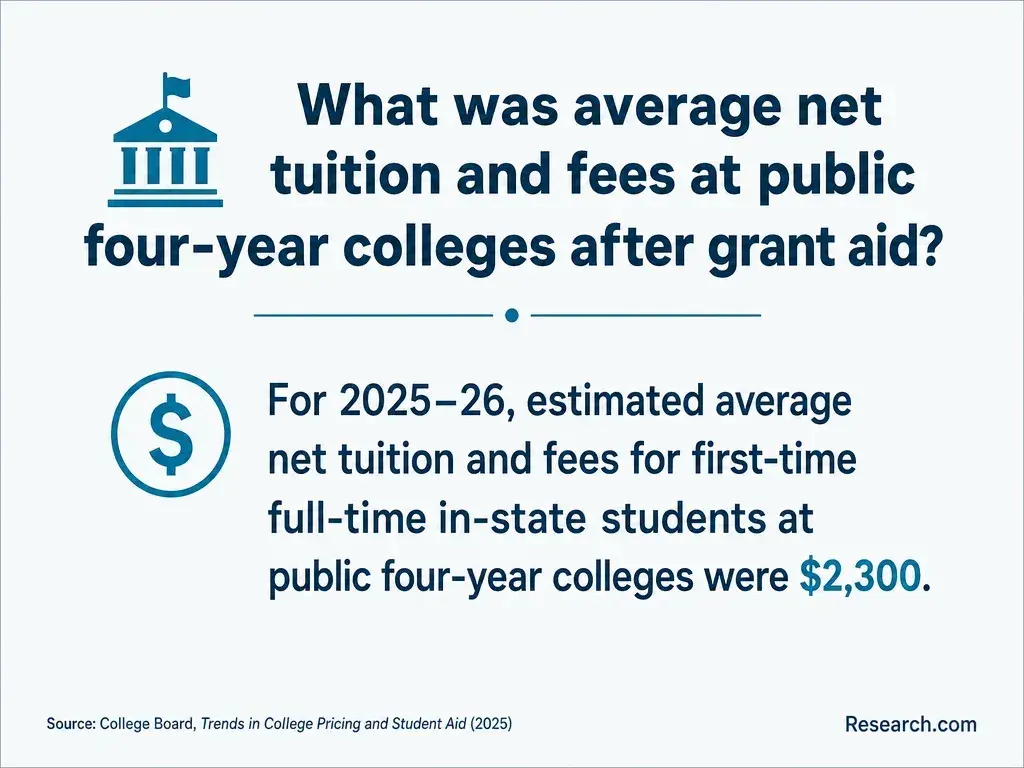
Requirements vary by institution and by whether you enter as a first-year or transfer student. Schools typically request prior academic records; some have separate major-entry or minimum-grade rules. Ask admissions which documents it needs, then ask the registrar or transfer office for a degree audit showing not just credits accepted, but which general education, statistics, methods, and major requirements they satisfy.
Do not confuse bachelor's admission with admission to a later graduate program. Even an accelerated master's has its own eligibility rules, costs, and purpose. If graduate study becomes your goal, assess graduate psychology tuition and program value against that specific goal rather than treating it as a required next step after the BA.
Completion time depends on accepted credits that actually satisfy requirements, enrollment pace, course availability, and the capstone sequence. An online course may be asynchronous while its portfolio requires scheduled feedback meetings or a live presentation. Ask for a term-by-term plan based on your written degree audit, including the first term you can take each prerequisite and capstone course.
Faster completion can be useful, but speed is not evidence of stronger assessment. When comparing faster online forensic psychology degree completion with an addictions-focused BA, compare the actual remaining requirements and capstone workload - not the advertised timeline of a different concentration.
The BA and a well-documented portfolio may help demonstrate readiness for nonclinical roles such as recovery-program support, outreach assistance, intake coordination, referral support, or research and program-assistance work. Employers may also require experience, training, background checks, or a specific credential. In a portfolio, an evidence brief can show research literacy; an approved resource guide can show clear communication. Neither establishes competence to diagnose or treat a substance-use disorder.
Choose further education by the job you want. A graduate route such as under-two-year forensic psychology graduate program options addresses a different specialization and should not be assumed to advance addiction counseling eligibility. For many support roles, relevant supervised experience or targeted employer training may be more direct than another degree.
Requirements depend on the state, job title, and permitted duties. Addiction counselor credentials can specify approved coursework, supervised experience, examinations, and renewal conditions; peer-support credentials follow different rules. A psychology BA with an addictions focus is not automatically a qualifying counseling degree, and a class assignment is not license-supervised practice.
Before choosing a program, identify your intended state and exact job title. Ask its licensing or certification authority whether the BA's required courses count, what supervised work must follow, and whether an online program or local placement creates additional conditions. A clinical mental health counseling master's is another distinct investment; mental health counseling master's investment and pay outlook should be weighed against the credential you actually seek, not treated as interchangeable with an addiction-specific route.
What Are the Salary and Job Outlook for Addiction-Related Psychology Careers?
Use occupation-specific labor data, not a salary advertised for "psychology graduates." The U.S. Bureau of Labor Statistics groups substance abuse, behavioral disorder, and mental health counselors in one Occupational Outlook Handbook occupation and projects employment growth faster than average. That outlook concerns the whole occupation, including workers with qualifications beyond this BA; it does not predict openings or pay for new graduates in recovery-support jobs.
Pay and eligibility also vary by employer, location, duties, and credential. Before estimating a return on the BA, compare local postings for the exact role you could qualify for with the program's total cost and any additional training. Likewise, forensic psychology master's education and job earning prospects describe a different educational and occupational comparison, not an earnings forecast for an addictions-focused BA.
Other Things You Should Know About Psychology
Follow the course's stated AI and authorship policy. Disclose permitted assistance, verify every source and claim yourself, and never enter confidential client information into an unapproved tool.
Include a brief, accurate contribution statement describing your tasks and revisions. Obtain any required permission before displaying material created jointly with classmates or a partner organization.
Ask the school's accessibility office and instructor early about an accessible way to demonstrate the same learning outcomes. Do not assume that a video or live presentation is the only acceptable format.
Platform access and file-ownership rules vary. Check the school's policy, export permitted work before access ends, and remove any material you are not authorized to retain or publish.
- Certified Addiction Counselor (CAC) clinical training program | colorado.gov https://bha.colorado.gov/for-service-providers/learning-and-development/certified-addiction-counselor-cac-clinical-training
- Best practice assessment methods for the undergraduate psychology program: a narrative review of the literature - PMC https://pmc.ncbi.nlm.nih.gov/articles/PMC12218498/
- Preparing to Use Your Bachelor's Degree in Psychology | apa.org https://www.apa.org/education-career/guide/bachelors
- Using Portfolios in Program Assessment | Assessment and Curriculum Support Center https://manoa.hawaii.edu/assessment/resources/using-portfolios-in-program-assessment/
- Principles of good assessment and feedback | jisc.ac.uk https://www.jisc.ac.uk/guides/principles-of-good-assessment-and-feedback
- Portfolio Assessment: An Alternative to Traditional Performance Evaluation Methods in the Area Studies Programs | ku.edu https://cte.ku.edu/omelicheva/2012
- Applied Psychology: Addictions Studies, B.S. - CPS, CPSO | University of New Hampshire https://www.unh.edu/program/bachelor-science/applied-psychology-addictions-studies
- Creating Effective Rubrics | Illinois State https://prodev.illinoisstate.edu/instructional-resources/feedback/rubrics/
- What is CAC Certification? | ufl.edu https://addiction-certificate.psychiatry.ufl.edu/home/what-is-cac-certification/
- Confidentiality at IU School of Social Work https://socialwork.iu.edu/professional-standards/confidentiality.html