
2027 Online Adult Gerontology Acute Care Nurse Practitioner Master's Programs Under $20,000: Total Tuition and Required Fees

Co-Founder and Chief Data Scientist
An online Adult-Gerontology Acute Care Nurse Practitioner (AGACNP) master's degree can be a major investment even when a school advertises a low per-credit rate. Programs must include advanced clinical preparation, which can add fees and affect completion time. The U.S. Bureau of Labor Statistics reported a $129,210 median annual wage for nurse practitioners in 2024, while projecting 40% job growth from 2023 to 2033.
This guide helps registered nurses determine whether an under-$20,000 AGACNP pathway is genuinely affordable, professionally appropriate, and worth pursuing.
Key Things You Should Know
- A credible online AGACNP master's program below $20,000 is uncommon because the curriculum generally requires roughly 40 or more graduate credits plus supervised clinical education; a $20,000 ceiling usually requires an all-in rate near or below $500 per required credit.
- Compare total tuition and mandatory charges, not advertised tuition alone: application, technology, clinical, graduation, proctoring, background-check, and compliance costs can move a seemingly affordable program above the target.
- Cost should come after eligibility: confirm institutional and nursing-program accreditation, state authorization, national-certification alignment, clinical-placement expectations, and whether the degree supports your intended acute-care NP role.
How Much Does an Online Adult Gerontology Acute Care Nurse Practitioner Master's Degree Under $20,000 Cost in Total?
The total cost of an online AGACNP master's degree is the sum of tuition for every required credit and every unavoidable institutional or program fee. It does not usually include optional living costs, travel to clinical sites, lost work time, or personal equipment. Because schools can change rates and requirements by cohort, applicants should treat a published figure as a planning estimate until they receive a written program-specific cost breakdown.
For a program to stay below $20,000 before books and personal expenses, its combined tuition and required fees must fit within a narrow per-credit budget. The calculation below shows why total credits matter as much as the published rate.
| Required program credits | Maximum all-in average per credit to remain at $20,000 | What to verify |
| 40 credits | $500 | Whether required fees are already included |
| 42 credits | $476.19 | Whether clinical-course fees are charged separately |
| 45 credits | $444.44 | Whether tuition changes after enrollment |
| 48 credits | $416.67 | Whether residency pricing applies |
A lower advertised tuition rate can still cost more overall if the curriculum has additional credits, repeated enrollment charges, or required intensives. Conversely, a program near the $20,000 threshold may be the better value if it includes clinical coordination, certification-focused coursework, and transparent flat-rate pricing.
Applicants who still need a baccalaureate nursing credential should calculate that prerequisite separately; these RN to BSN programs can help illustrate pathways that may precede graduate NP admission. An AGACNP master's normally requires an active RN license and a BSN or equivalent nursing preparation, subject to each school's admissions rules.
What Required Fees Can Increase the Cost of an Online Adult Gerontology Acute Care Nurse Practitioner Master's Degree Beyond $20,000?
Required fees are charges a student cannot reasonably avoid in order to enroll, participate in clinical education, or graduate. They matter because a school may describe tuition as below $20,000 while excluding several mandatory costs. Ask for fees for the full projected enrollment period, not just the first term.
The following charges commonly affect the final budget. Whether a charge applies, and its amount, varies by institution, state, and clinical partner.
| Potential required cost | Why it may apply | How to evaluate it |
| Application and enrollment fees | Processing admission or confirming a seat | Ask whether the fee is refundable or credited to tuition |
| Technology and distance-learning fees | Learning platform, online services, or remote testing | Confirm whether charged per term, course, or credit |
| Clinical education fees | Clinical tracking, site coordination, evaluation, or placement support | Determine whether they apply to every practicum course |
| Compliance costs | Background check, drug screen, immunizations, CPR, and health requirements | Separate school charges from costs paid to outside vendors |
| Residency or intensive travel | Skills validation, orientation, or simulation experiences | Estimate travel, lodging, meals, and time away from work |
| Graduation and certification-preparation costs | Graduation processing, review products, or exam readiness tools | Ask which items are mandatory versus optional |
A frequent mistake is adding only tuition and a general student fee. A more reliable comparison uses the school's financial-aid cost-of-attendance document, the nursing department's clinical-compliance checklist, and a term-by-term billing example. If a school cannot identify required clinical and distance-learning fees in writing, do not assume the program will remain below $20,000.
How Does Per-Credit Tuition Affect the Total Cost of an Online Adult Gerontology Acute Care Nurse Practitioner Master's Degree Under $20,000?
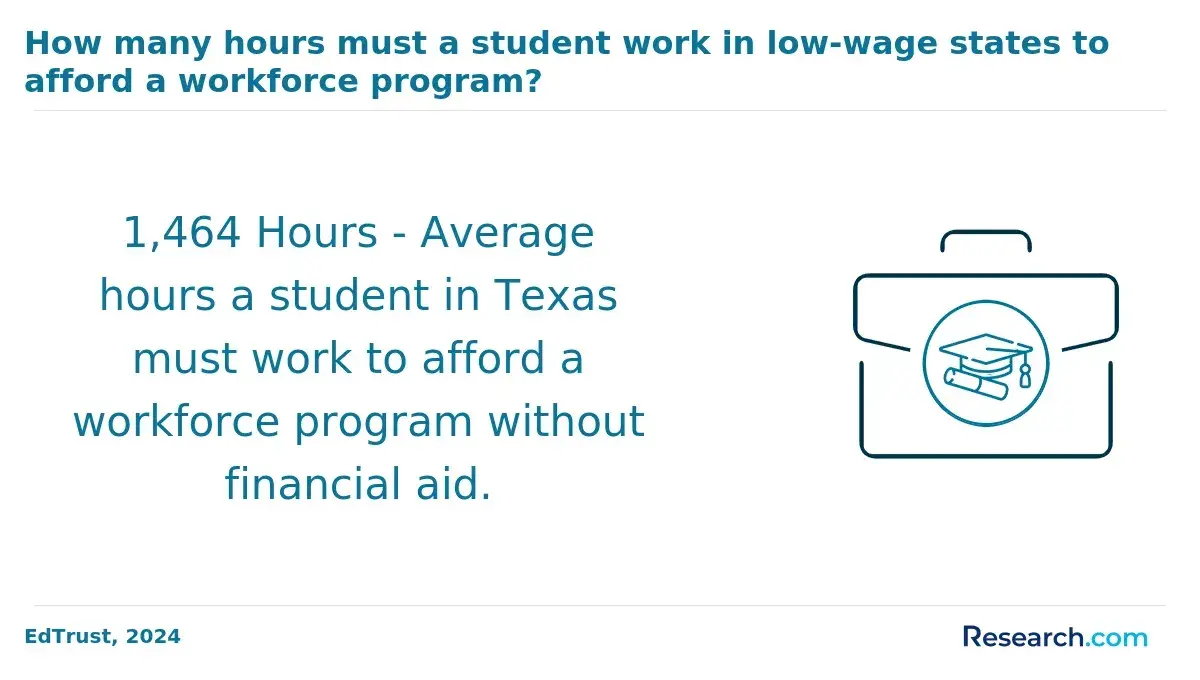
Per-credit tuition affects total cost only when it is multiplied by the exact number of credits required for the student's entry point. An MSN AGACNP curriculum is different from a post-master's certificate: a certificate may appear inexpensive but is not a master's degree and may require a prior graduate nursing degree.
This comparison shows how a small change in rate or credit load can materially change the tuition-only total.
| Example calculation | Tuition-only total | Position relative to $20,000 before fees |
| 40 credits × $450 | $18,000 | Leaves $2,000 for required fees |
| 42 credits × $475 | $19,950 | Any meaningful required fee exceeds the target |
| 45 credits × $425 | $19,125 | Leaves $875 for required fees |
| 48 credits × $500 | $24,000 | Exceeds the target before fees |
Use the rate guaranteed for your anticipated start term, not an old catalog or a rate intended for a different degree. Also check whether the institution bills graduate nursing courses at a distinct rate, whether clinical credits carry a premium, and whether part-time enrollment triggers term-based fees.
Students comparing graduate-school readiness may find that completing a lower-cost BSN online first is more economical than applying to a master's program before meeting its undergraduate nursing prerequisites. That pathway does not reduce AGACNP graduate credits automatically, but it may satisfy an admissions requirement.
How Long Does It Take to Complete an Online Adult Gerontology Acute Care Nurse Practitioner Master's Degree Under $20,000?
Most online AGACNP master's programs are not fully self-paced. Didactic coursework may be asynchronous, but clinical practicum hours, preceptor schedules, simulation requirements, and occasional campus visits create fixed commitments. Full-time students commonly need multiple academic terms to complete graduate coursework and required clinical experiences; part-time enrollment generally extends the timeline.
Program length should be evaluated alongside work capacity and clinical logistics. The comparison below highlights the practical trade-off.
| Enrollment approach | Potential advantage | Potential cost or scheduling trade-off |
| Full-time | Fewer terms and faster entry into the certification pathway | May require reduced work hours and more concentrated clinical scheduling |
| Part-time | More manageable alongside RN employment and family responsibilities | More term-based fees and longer exposure to tuition increases |
| Mostly asynchronous | Flexible completion of lectures and assignments | Does not eliminate real-time clinical, simulation, or examination obligations |
| Hybrid with intensives | Hands-on skills assessment and faculty interaction | Can create travel and lodging costs |
Do not assume that accelerated nurse practitioner formats are interchangeable. A 12-month FNP program online serves the family nurse practitioner population focus, whereas AGACNP education prepares nurses for adult and older-adult patients with acute, complex, or critical conditions. The population focus, clinical experiences, and certification pathway must fit the job you intend to pursue.
Before enrolling, obtain a sample plan of study and identify the clinical terms, any synchronous sessions, maximum time to completion, and conditions that can delay progression. A low tuition figure is less valuable if limited clinical access forces extra terms or prevents timely completion.
How Can Students Verify Accreditation for an Online Adult Gerontology Acute Care Nurse Practitioner Master's Degree Under $20,000?
Students should verify both institutional accreditation and nursing-program accreditation. Institutional accreditation supports federal financial-aid eligibility and credit recognition, while programmatic nursing accreditation indicates that the nursing education program meets standards set by a recognized nursing accreditor. For AGACNP preparation, employers, certifying bodies, and boards of nursing may also examine the curriculum and clinical preparation.
Use this verification sequence before paying a deposit. It reduces the risk of relying on a school's marketing language alone.
- Find the institution in the U.S. Department of Education's accreditation database and confirm its current institutional accreditor.
- Check the nursing school directly with the Commission on Collegiate Nursing Education or the Accreditation Commission for Education in Nursing, including the accreditation status and review dates.
- Read the AGACNP curriculum to confirm graduate-level advanced pathophysiology, advanced pharmacology, advanced health assessment, population-focused preparation, and supervised clinical education.
- Ask the school which national AGACNP certification examination its graduates are academically prepared to pursue and whether any state-specific restrictions apply.
- Confirm with your intended state board of nursing that the planned education and certification route supports the licensure or authorization you seek.
Accreditation is necessary but not a complete value test. Confirm clinical-placement support, faculty access, progression policies, and state authorization separately. Students considering nonclinical healthcare information roles should also recognize that a CAHIIM accredited health information management degree online is a distinct credential path, not preparation for nurse practitioner licensure.
Do Out-Of-State Students Pay More for an Online Adult Gerontology Acute Care Nurse Practitioner Master's Degree Under $20,000?
Out-of-state students may pay more, the same, or occasionally less than in-state students depending on the school's pricing model. Many online graduate nursing programs advertise one distance-learning rate, but public institutions may still use residency-based tuition, charge different fees, or limit enrollment in particular states. "Online" does not automatically mean "in-state price for everyone."
Ask admissions or the bursar for a written estimate based on your legal residence and intended start term. The questions below reveal whether a listed price truly applies to you.
- Is the graduate nursing tuition rate flat for all online students, or is it based on residency?
- Are online learners charged campus-based, distance-learning, or clinical fees that differ by state?
- Is the institution authorized to enroll and place AGACNP students in your state?
- Can the program arrange clinical experiences where you live, and are there location-related travel requirements?
- Will a move to another state during enrollment change tuition, eligibility, or clinical placement?
State authorization and clinical placement are as important as the tuition rate. A resident-rate program is not a practical bargain if it cannot support required clinical education in your location or if you must travel repeatedly to complete intensives.
Can Transfer Credits Keep the Total Cost of an Online Adult Gerontology Acute Care Nurse Practitioner Master's Degree Under $20,000?
Transfer credits can reduce total tuition only when the receiving school accepts prior graduate nursing coursework that matches its curriculum and remains within its age limit. Most AGACNP students entering with a BSN should expect to complete the core population-focused curriculum at the new institution. Schools commonly restrict the number of transferred credits and may require a minimum number of credits to be earned in residence.
Transfer review is especially useful for nurses with prior graduate coursework in the three advanced nursing core areas: pathophysiology, pharmacology, and health assessment. It is less likely to replace AGACNP specialty courses or required clinical experiences because those courses must align closely with program outcomes.
Before accepting admission, request an official transfer evaluation that identifies accepted credits, waived requirements, remaining credits, and the revised clinical plan. Do not make a cost decision based on an informal statement that credits are "likely" to transfer.
Career changers should not confuse entry-level progression with graduate credit transfer. A cCMA to LPN bridge program can be relevant to an earlier nursing-entry pathway, but it does not replace the RN licensure, BSN-level preparation, or graduate AGACNP curriculum generally required for nurse practitioner education.
Can Financial Aid Bring the Cost of an Online Adult Gerontology Acute Care Nurse Practitioner Master's Degree Below $20,000?
Financial aid can reduce what a student pays from savings or current income, but it does not automatically reduce the program's published price. Grants and scholarships lower net cost; federal Direct Unsubsidized Loans and Graduate PLUS Loans generally finance costs that must later be repaid with interest. Eligibility, award amounts, and borrowing limits depend on federal rules and the student's circumstances.
For context, the National Center for Education Statistics reported that average graduate tuition and required fees at public institutions were $12,596 for the 2022-23 academic year, the latest broadly comparable national figure available in recent federal reporting. Specialized graduate nursing programs can differ substantially from that average because their credit requirements and clinical infrastructure are distinct. Use the statistic as market context, not as a forecast of an AGACNP program's bill.
Take these steps to estimate your net cost rather than relying on a scholarship headline.
- Submit the FAFSA early and review the school's graduate financial-aid offer.
- Separate gift aid from loans, employer reimbursement, and payment plans.
- Confirm whether scholarships renew automatically and whether enrollment, grade, or work-commitment conditions apply.
- Calculate the cost after grants and employer funding, then add required fees, clinical compliance, and travel.
- Compare the amount you would need to borrow with your expected repayment obligations before committing.
Employer tuition assistance can be valuable for hospital nurses, but reimbursement may require continued employment, advance approval, or a limited course load. Read the policy closely before assuming an employer benefit will cover clinical terms or fees.
Is an Online Adult Gerontology Acute Care Nurse Practitioner Master's Degree Under $20,000 Worth the Cost for Career Advancement?
An under-$20,000 AGACNP master's degree can be worth the investment when it provides recognized nursing education, aligns with the student's state and certification route, and prepares the nurse for the acute-care positions they actually want. AGACNPs assess and manage adult and older-adult patients with acute, critical, and complex conditions in settings such as hospitals, specialty services, and intensive care environments, subject to state scope-of-practice rules and employer policies.
The U.S. Bureau of Labor Statistics projects 40% employment growth for nurse practitioners from 2023 to 2033, much faster than the average for all occupations. That projection covers the NP occupation broadly, not AGACNP graduates alone, and it does not guarantee an individual job offer, specialty placement, or salary. It does indicate sustained national demand for advanced-practice nursing roles.
Career value depends on fit, not price alone. An economical program is more likely to make sense for an experienced acute-care RN who can obtain appropriate clinical experiences, intends to seek AGACNP certification, and values a lower borrowing burden. A program above the threshold may be justified when it provides reliable clinical-placement support, a schedule compatible with employment, state eligibility, strong specialty preparation, or resources that reduce the risk of delayed completion.
Evaluate return on investment by comparing the full education cost, expected borrowing, time away from work, local demand, employer preferences, and the scope of roles available in your state. Avoid treating national wage data as a personal salary prediction; compensation varies by region, shift, specialty, experience, and organization.
How Should Students Choose the Best-Value Flat-Rate Online Adult Gerontology Acute Care Nurse Practitioner Master's Program?
The best-value flat-rate online AGACNP program is not simply the least expensive one. Flat-rate tuition can make budgeting easier when it clearly covers the full curriculum, but students still need to confirm mandatory fees, clinical support, progression requirements, and the practical ability to complete the degree where they live.
Use the following comparison process to choose between programs with similar advertised totals.
- Request an itemized estimate for the entire degree, including tuition, recurring fees, clinical charges, intensives, and graduation costs.
- Verify the exact credit count and determine whether the quoted rate is locked for your cohort or may rise during enrollment.
- Confirm accreditation, state authorization, national-certification alignment, and clinical-placement responsibilities before comparing price.
- Review the plan of study for asynchronous coursework, live sessions, campus requirements, clinical sequencing, and maximum completion time.
- Compare faculty access, advising, clinical coordination, certification support, and withdrawal or repeat-course policies.
- Choose the least costly option that still meets your professional, geographic, scheduling, and clinical-preparation needs.
A red flag is a "flat-rate" claim that excludes practicum fees, requires substantial travel, or offers unclear answers about securing qualified preceptors. Another is selecting an affordable general MSN that does not provide the AGACNP population focus needed for your intended acute-care role.
Students whose goals are more operational than clinical may benefit from comparing adjacent healthcare education routes, but they should not substitute them for NP preparation. For example, health information management focuses on data, systems, and records rather than advanced diagnosis and treatment. The right investment is the credential that matches the work you plan to perform after graduation.
Other Things You Should Know About Adult Gerontology Acute Care Nurse Practitioner
An Adult-Gerontology Acute Care Nurse Practitioner provides advanced care for adults and older adults with acute, complex, or critical health needs. Duties may include assessment, diagnosis, treatment planning, ordering and interpreting tests, prescribing within applicable authority, and coordinating care with physicians and other clinicians.
Possibly. Employment depends on the department's patient population, acuity, state scope-of-practice rules, hospital credentialing, and employer preference. AGACNP preparation is designed for acute care of adults and older adults; it is not pediatric acute-care preparation.
Graduates generally pursue an adult-gerontology acute care nurse practitioner national certification route after completing an eligible graduate program. Confirm the current examination eligibility requirements directly with the relevant certification organization before enrolling or applying for an exam.
Requirements vary. Some schools prefer or require recent acute-care RN experience, while others admit qualified BSN-prepared RNs from a broader range of settings. Even when not required for admission, acute-care experience can help students evaluate whether the role, clinical environment, and patient population fit their goals.
References
- Types of student financial aid | USAGov https://www.usa.gov/student-aid
- Qualified Ed expenses | Internal Revenue Service https://www.irs.gov/credits-deductions/individuals/qualified-ed-expenses
- MSN Adult-Gerontology Acute Care Nurse Practitioner | WCU https://westcoastuniversity.edu/online-programs/msn/agacnp
- Graduate Certificate | Cedar Crest College https://www.cedarcrest.edu/program/nursing-adult-gerontology-acute-care-nurse-practitioner/graduate-certificate/
- Are You Considering a Career as an Adult-Gerontology Acute Care Nurse Practitioner? https://www.aanp.org/news-feed/are-you-considering-a-career-as-an-acute-care-nurse-practitioner
- ACNPC-AG Certification - AACN https://www.aacn.org/certification/get-certified/acnpc-ag
- Texas Woman's University ACNP Programs - Nurse Practitioner https://www.acnpprograms.com/acnp-programs/texas-womans-university-acnp-programs/
- Adult Gerontology Acute Care Nurse Practitioner (AG-ACNP) https://nursinglicensemap.com/advanced-practice-nursing/nurse-practitioner/adult-gerontology-acute-care-np/
- Paying for college https://www.commonapp.org/plan/paying-for-college/


