2027 Most Recession-Resistant Careers You Can Pursue With an Educational Policy Degree
Audited and Verified:
Our Editorial and Data Verification Process
Research.com uses government datasets, official education statistics and primary institutional information to support its career and degree guides. Our review process checks factual accuracy, occupational definitions, source dates and the requirements associated with the credentials discussed.
How This Article Was Fact-Checked
Our editorial team verifies salary estimates, employment projections, education requirements and program information against original data providers and official organizations. Salary figures are checked against the relevant occupational definitions and reporting periods. Information about licensure, accreditation and required in-person training is reviewed separately.
Fact-checked and verified on:

Co-Founder and Chief Data Scientist
Graduates with an educational policy degree often face uncertainty in a fluctuating job market where budget cuts and shifting priorities threaten stability. With 30% of education-related roles projected to grow despite economic downturns, targeting recession-resistant careers becomes crucial.
Positions in policy analysis, program evaluation, and compliance monitoring tend to maintain demand as institutions continually adapt to federal and state mandates. Staying competitive requires a strong grasp of data analytics and regulatory frameworks. This article explores the most recession-proof career paths available to educational policy graduates and offers strategies to strengthen marketability in these resilient fields.
Key Points About Recession-Resistant Educational Policy Careers
- Educational policy graduates often secure roles in government agencies where demand remains stable despite economic downturns, ensuring consistent employment through policymaking and program evaluation.
- Expertise in educational data analysis is crucial-47% of policymakers prefer candidates who can leverage data to improve school systems, a skill that protects jobs during budget cuts.
- Careers in nonprofit education advocacy grow as social equity efforts expand, offering recession-resistant positions focused on policy reform and community engagement within the educational sector.
What is the employment outlook for graduates of Educational Policy?
Job growth for graduates with an educational policy degree is expected to increase by about 8% over the next decade, surpassing the national average across all occupations. Roles such as education administrators, policy analysts, and curriculum coordinators remain in steady demand.
Here are key reasons supporting the strong employment outlook for educational policy graduates:
- Ongoing reforms: Continuous efforts to improve public education drive the need for experts who can craft and implement effective policies.
- Focus on accountability: Increased emphasis on equity and accountability demands skilled professionals to ensure educational institutions meet evolving standards.
- Technological adaptation: Schools require leaders who can navigate changes induced by technological advances and societal shifts, making this expertise indispensable.
- Job security: Unemployment among educational policy professionals remains below the national average, even during economic downturns, due to the specialized nature of their skills.
Those exploring job market trends for educational policy degree holders will find continuous investment in education and government mandates foster stable, long-term opportunities. Moreover, prospective students can explore reputable options via online master's programs to advance their qualifications in this resilient career path.
What are the most recession-resistant careers for Educational Policy degree graduates?
Certain roles within the field of educational policy and adjacent industries tend to be naturally shielded from economic volatility due to their essential or regulatory nature. Labor reports indicate that employment for policy-related education positions is expected to grow by approximately 7%- outpacing the national average.
Below are some of the best recession-proof jobs for educational policy graduates that offer stability and ongoing demand.
- Education Administrator: These professionals manage schools or educational programs, ensuring compliance with state and federal regulations. Their leadership is vital to keeping schools operational, making their roles essential even during budget cuts and economic downturns.
- Education Policy Analyst: Analysts research and evaluate educational policies and programs at district, state, or federal levels. Governments depend on accurate data and well-informed policy adjustments during recessions, securing the position's resilience.
- Compliance Officer: These officers ensure that schools meet legislative and accreditation requirements. Since noncompliance risks loss of funding or legal issues, their work is highly prioritized to avoid costly penalties during uncertain financial times.
- Grant Coordinator and Manager: Responsible for securing alternative funding, these professionals keep educational programs afloat when public budgets shrink. Their ability to access external sources of funding makes them indispensable in maintaining revenue channels.
- Curriculum Developer: Curriculum professionals update and align educational content with mandated standards. Because maintaining compliance and quality education is non-negotiable-even in tight financial conditions-demand for these experts remains steady.
Those interested in enhancing their expertise may also explore related programs such as an MLIS degree online, which can broaden career options within educational administration and policy environments. For individuals seeking stable career paths with an educational policy degree, these roles represent some of the top options that blend meaningful impact with economic stability.
In which industries can Educational Policy degree holders find work?
Graduates with an educational policy degree have opportunities beyond traditional education roles-they can adapt their expertise across various sectors that maintain stability despite economic fluctuations. Nearly 40% of policy graduates entering tech-related fields report consistent or growing job demand.
The following industries commonly employ educational policy professionals and value their skills:
- Government and public administration: Professionals in this sector develop and enforce education-related policies at different government levels to improve outcomes and funding distribution. Roles like policy analyst and program coordinator emphasize long-term stability tied to public education's essential services.
- Nonprofit and advocacy organizations: These groups focus on equity, access, and reform, hiring specialists for research, grant writing, and community engagement. The consistent philanthropic support many nonprofits receive helps buffer them from economic downturns.
- Higher education: Colleges and universities employ policy graduates as research analysts, accreditation specialists, and program evaluators to navigate funding and compliance demands, offering reliable career paths impacted less by recessions.
- Educational technology: Growing quickly, this sector needs policy professionals to guide product standards, ensure regulatory compliance, and promote digital inclusion. Steady demand here reflects the increasing integration of technology in learning environments.
Speaking with a professional who earned a degree in educational policy online revealed the real-world application of such skills. He described moments of uncertainty when shifting between sectors but emphasized that the analytical and communication abilities gained allowed smooth adaptation.
"Initially, navigating organizational cultures in government versus nonprofits was challenging," he shared, "but understanding policy frameworks helped me align projects with each employer's goals." His experience shows that flexibility coupled with deep policy insight can open doors across diverse, stable industries.
Roles in the public sector for educational policy graduates generally offer greater job stability than those in the private sector. Public positions within government agencies, academic institutions, and non-profit organizations benefit from steady funding and protections that help maintain employment during economic downturns.
For example, many government education departments allocate consistent budgets to support policy development over time, resulting in about 78% of professionals retaining their roles even amid major recessions.
By contrast, private sector opportunities-such as those in educational technology startups or consulting firms-often involve more frequent workforce adjustments due to market changes or venture capital availability. However, these environments tend to foster faster career advancement fueled by innovation and dynamic projects, often accompanied by higher salaries but fewer job protections and a greater risk of layoffs.
The choice between sectors hinges on what graduates prioritize: public sector roles provide stability, benefits like pensions, and job security, but slower professional growth and lower salary ceilings; private sector careers offer rapid professional development and potentially greater earnings but with increased job insecurity.
Ultimately, a graduate's tolerance for risk and desire for either security or accelerated advancement should guide their decision in selecting between public and private paths within educational policy.
Where Educational Policy graduates choose to work greatly affects their job stability-certain states act as pivotal centers with more enduring opportunities. Below are three key states with strong, recession-resistant demand for these professionals.
- California: With a location quotient above 1.3, California boasts a higher concentration of educational policy roles than most states. Its extensive public school network and ongoing commitment to equity and technology integration create steady demand for experts in educational reform.
- New York: The state's large urban education workforce and noted research institutions drive steady growth in educational policy jobs. Focused efforts on bilingual education, equity, and urban school improvement contribute to its approximately 7% projected employment increase, outpacing the national average.
- Texas: Rapid population growth and expanding school districts fuel demand for those skilled in educational policy, especially around STEM initiatives and charter school systems. Its diverse economy supports innovation funding, strengthening the state's resilience to economic downturns.
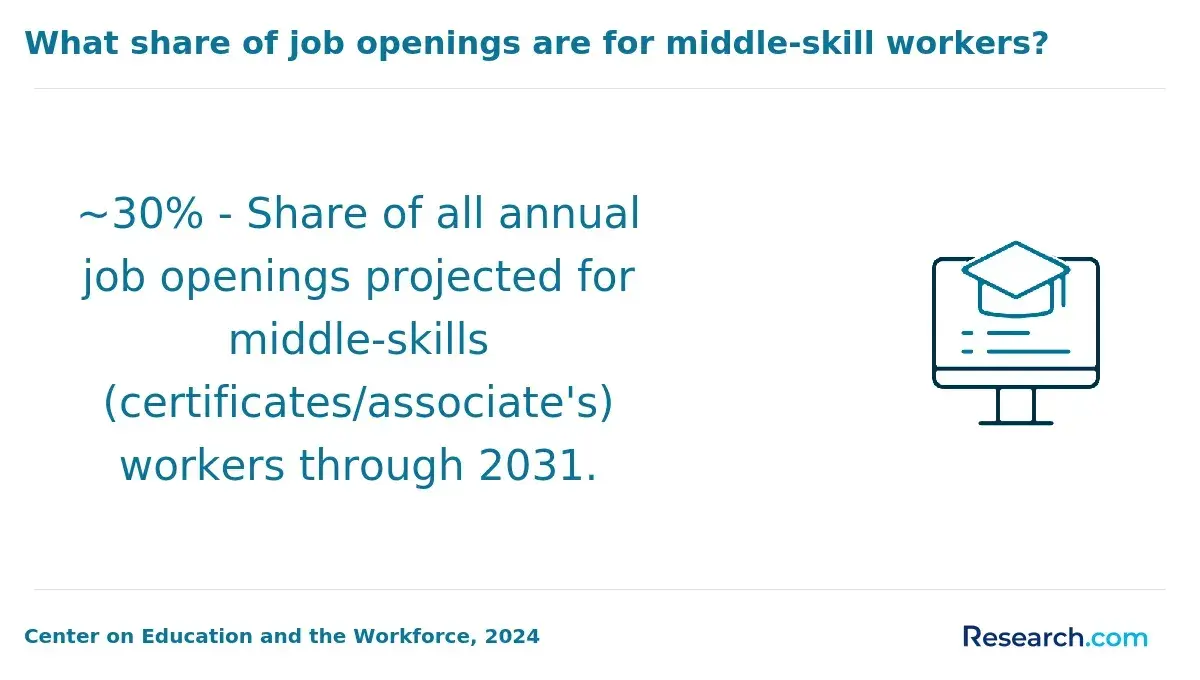
Post-graduate credentials and continuing education serve as a protective layer during layoffs by showcasing specialized expertise that remains in demand. Labor market studies indicate that professionals with targeted certifications experience 15% less employment disruption during economic downturns.
Below are several certifications that can make careers in educational policy more recession-proof.
- Certified Educational Planner (CEP): This credential emphasizes policy implementation and advising students and institutions on educational pathways. CEP holders often find stable roles in school districts and policy think tanks despite economic challenges.
- Project Management Professional (PMP): As educational policy increasingly involves managing complex programs, PMP certification highlights leadership capabilities in government agencies or nonprofits focused on education reform, skills crucial when budgets tighten.
- Data Analysis Certifications: Credentials like the Google Data Analytics Certificate or the Certified Data Analyst teach skills in interpreting large datasets critical to data-driven decision-making in education. Demand for data-savvy professionals in school systems and government departments is projected to grow by over 8% during recessions.
- Certified Public Manager (CPM): This certification enhances credibility for those aiming for public sector leadership roles, showcasing expertise in efficient management of public resources valued amid recession-driven scrutiny.
- Grant Writing and Fundraising Certifications: Training from the Grant Professionals Association equips professionals for stable roles in educational nonprofits or district initiatives that rely on securing external funding, which often becomes more important during recessions.
Securing these top educational policy certifications to boost job security can be an integral part of career planning. For individuals contemplating further education to complement such certifications, exploring options like the cheapest online MBA no GMAT programs may offer valuable flexibility and a competitive edge.
Continuously updating skills makes professionals more indispensable during economic reorganizations-an essential factor for career longevity in educational policy. Below are key competencies that help educational policy graduates strengthen job security and adapt to changing roles.
- Data Analysis: Mastering educational data interpretation allows graduates to assess program impacts and guide decision-making. This skill is critical for analysts and policy advisors seeking to influence effective resource distribution.
- Program Evaluation: Expertise in designing and reviewing educational initiatives ensures programs meet goals and funding requirements. This ability supports roles focused on enhancing learning outcomes and securing stakeholder confidence.
- Grant Writing: The capacity to write compelling funding proposals is valuable for sustaining educational projects reliant on external support. Policy professionals with this skill boost their prospects in nonprofit and governmental sectors.
- Stakeholder Communication: Clear, persuasive engagement with teachers, administrators, and legislators amplifies policy impact. Strong communicators excel in roles demanding collaboration and advocacy.
- Technology Integration: Familiarity with digital education tools positions graduates for emerging responsibilities in remote and tech-enhanced learning environments. This proficiency aligns with roles adapting to ongoing technological transformations in education.
Acquiring these skills enhances career resilience by aligning with employer demands for versatile educational policy professionals. Those interested in expanding their expertise might also explore essential certifications for educational policy careers to complement their practical abilities.
Additionally, exploring options such as online construction management courses can diversify a graduate's qualifications and open opportunities in related fields.
Institutional reputation often plays a significant role in securing stable jobs for educational policy graduates. Employers may favor candidates from prestigious programs, associating their degrees with rigorous training and higher-quality education.
This perception can provide graduates with an initial advantage when entering a competitive job market that values institutional pedigree.
Graduating from a well-regarded school also opens doors to robust professional networks. Alumni connections and access to exclusive job fairs or internships can lead to better opportunities and mentorship, enhancing career prospects in educational policy fields.
This networking advantage often gives graduates a leg up in securing positions that offer greater job security and growth potential.
However, graduates from any accredited program can remain competitive by demonstrating proven performance and relevant experience. Success in educational policy relies heavily on skills and accomplishments-strong portfolios and effective outcomes can outweigh the prestige of one's alma mater, ensuring resilience in recession-resistant careers.
Proactive career preparation is crucial for aligning academic learning with the shifting demands of the educational policy field. This approach not only enhances employability but also improves job stability in competitive and uncertain economic conditions.
Below are key strategies students can implement to strengthen their readiness:
- Practical Internships: Seek internships or fellowship opportunities within governmental education departments or policy-focused organizations to gain hands-on experience in developing and assessing educational programs.
- Research Participation: Get involved in projects that explore issues like educational equity, funding allocation, or reform efforts to refine analytical skills and produce data-informed insights.
- Technical Competence: Build proficiency with policy assessment tools and software for qualitative and quantitative data analysis, as these skills set candidates apart in job markets.
- Communication Skills: Hone abilities to present policy recommendations clearly and persuasively through written briefs and oral advocacy, allowing effective engagement with diverse stakeholders.
- Professional Networking: Engage actively in conferences, workshops, and associations related to educational policy to connect with experts, stay updated on trends, and discover employment opportunities.
When asked about how educational policy students can meet today's job market expectations, a professional who completed an online bachelor's degree shared insights about his journey. He noted the overwhelming challenge of balancing studies with family and work commitments, but emphasized that adopting a disciplined schedule helped him stay on track.
He recalled, "It wasn't just about coursework but finding ways to apply what I learned through volunteering and small contract projects, which made me more confident during interviews." He also mentioned the mental strain of entering a competitive field, but reinforced that constant learning and networking were the keys to opening doors.
"Early on, I underestimated the value of professional associations. Once I got involved, opportunities started appearing." His experience highlights that, beyond academic achievement, adaptability and persistence are vital to securing stable roles in educational policy.
Careers in educational policy that are considered recession-resistant typically offer competitive salaries, with professionals earning between $65,000 and $85,000 annually on average. Positions such as policy analysts and education program managers-often found in government agencies, policy think tanks, or higher education administration-tend to provide lucrative income, especially when supplemented by specialized certifications that can increase pay by 5% to 10%.
This range reflects the average income for recession-proof educational policy jobs, balancing both earning potential and job security.
While some recession-resistant educational policy careers offer higher pay, others prioritize stable employment without the top-tier salaries. Roles in non-profits or smaller government units may offer lower upfront compensation but maintain steady demand with an annual growth rate of about 3.5%, surpassing the national average for all occupations.
Additional financial incentives, such as performance-based bonuses linked to policy outcomes, also contribute to total earnings in this sector.
Income for educational policy professionals can vary significantly depending on factors like industry, company size, and geographic location. Advanced academic credentials and continuous learning, particularly in data analysis, can boost earnings potential by up to 15%.
For those interested in accelerating their educational policy career, pursuing the fastest online masters can be a strategic option that enhances both expertise and marketability.
What Graduates Say About Their Career After Getting a Degree in Educational Policy
- Grant: "Pursuing a degree in educational policy was a deliberate choice for me to understand the systemic challenges in our school systems. The program taught me how to analyze data and design reforms that truly impact student outcomes. This foundation has been critical in landing a stable role in government education services, which remains in demand regardless of economic shifts."
- Harlan: "Looking back, choosing educational policy felt like the best investment for a career with longevity and purpose. The curriculum's blend of theory and practical application helped me navigate complex regulatory environments. Thanks to this degree, I now hold a leadership position in a nonprofit that continues to thrive even during recessions."
- Archer: "My passion for equity in education drove me to complete a degree in educational policy, which equipped me with skills in strategic planning and advocacy. These have been invaluable in securing a stable job as a policy analyst, where I influence funding decisions that affect schools nationwide. The degree's reputation and my hands-on experience made all the difference when entering this recession-resistant field."
Other Things You Should Know About Educational Policy Degrees
The U.S. Department of Education, the Congressional Research Service, the Government Accountability Office, and state education agencies hire educational policy graduates for budget, accountability, and program-analysis work. Jobs usually require a bachelor’s or master’s degree, and federal analyst roles often use USAJOBS hiring rules.
Educational policy experts play a key role in shaping workforce development initiatives and retraining programs during recoveries. By aligning educational systems with labor market needs, they help prepare individuals for emerging job opportunities. Their input is essential in crafting policies that promote equitable access to education and skill-building.
In 2027, educational policy careers that adapt to changing demographic trends are more likely to withstand economic downturns. As diverse student populations grow, professionals who address equity, inclusion, and resource allocation within educational systems will be vital, ensuring stable roles despite recessions.
Yes, interdisciplinary skills such as data analysis, economics, and public administration enhance career sustainability. Educational policy professionals who can interpret data, evaluate program effectiveness, and communicate across sectors are more valuable. These skills enable them to contribute broadly to policy discussions and remain competitive in tight job markets.
- 5 Best Industries for College Graduates https://bhsg.com/resources/5-best-industries-for-college-graduates
- Top 5 Recession-Proof Jobs That Don’t Require a Degree https://sundancecollege.com/blog/recession-proof-jobs/
- Jobs in Education Policy: Career and Salary Information | Resilient Educator https://resilienteducator.com/teaching-careers/education-policy-analyst/
- 4 Career Planning Steps to Recession-Proof Your Career https://sopa.tulane.edu/blog/4-career-planning-steps-recession-proof-your-career
- Recession-Proof Plans Study: Professionals Consider Grad School https://online.aurora.edu/recession-proof-with-graduate-school-study/
- How To Recession-Proof Your Career https://junocollege.com/blog/how-to-recession-proof-your-career/
- Which States Help Their College Grads Land Good Jobs? | Washington Monthly https://washingtonmonthly.com/2024/04/04/which-states-help-their-college-grads-land-good-jobs/
- The Education Sector: A Recession-Resistant Enterprise for You - UCMAS Canada https://ucmas.ca/education-sector-a-recession-resistant-enterprise/
- 4 Recession-Proof, Essential Job Skills to Learn https://straighterline.com/blog/essential-job-skills-during-recession
- Recession-Proof Skills: What to Learn When Job Markets Become Uncertain https://ciiskills.in/blog/recession-proof-skills-for-uncertain-job-markets