2027 Most Affordable Master's Degrees for Flexible Careers

Co-Founder and Chief Data Scientist
A low-tuition master's degree can become expensive if it requires extra prerequisites, campus travel, or time away from work. The U.S. Bureau of Labor Statistics (BLS) projects 34% employment growth for data scientists from 2024 to 2034, illustrating why some fields attract interest, but growth does not make every degree a good investment.
This guide is for working adults and career changers comparing graduate fields that may support flexible schedules and varied career paths. You'll learn how to compare total cost, scheduling, credentials, and realistic career options before choosing a program.
Key Things You Should Know
- Business, IT, and analytics degrees can offer broad career options. Counseling, nursing, and education programs may have less flexible placement or licensing requirements.
- Compare the full degree price, not just per-credit tuition, including required credits, fees, prerequisites, travel, and lost work hours.
- BLS projects 34% growth for data scientists from 2024 to 2034, but the occupation does not universally require a master's degree; test whether graduate study adds value beyond your existing skills.
Top 10 Most Affordable Master's Degrees for Flexible Careers
Business / MBA Programs
A Master of Business Administration (MBA) can suit professionals seeking broader management, operations, or finance skills. An MS in a business specialty may cost less if its narrower curriculum better matches your goal. Look for public-university or employer-supported options, then compare required credits, differential tuition, and any in-person team projects.
Online classes may fit a work schedule, but leadership roles generally require experience as well as a degree. If you need only one skill, a graduate certificate may be the less expensive choice.
Healthcare Administration & Management Programs
A Master of Healthcare Administration (MHA), healthcare-focused MBA, or related MS can prepare experienced workers for organizational and operational responsibilities. These are generally management degrees, not clinical licenses. Compare public-sector tuition with program fees and any internship or residency requirements, which can affect both cost and scheduling.
Healthcare employers may value prior clinical or administrative experience; a low-priced degree alone is unlikely to secure a management position. Choose the curriculum that matches your intended setting, such as a hospital, insurer, or community health organization.
Information Technology Programs
An MS in Information Technology typically emphasizes systems, cloud services, enterprise technology, or IT leadership. It can work well for professionals who want technical breadth without a computer science research focus. Compare prerequisite courses carefully: a lower graduate tuition rate may not offset additional foundation classes.
Online projects are often easier to schedule around work than fixed-site placements, though group meetings may still be required. Experienced IT workers should compare the degree's added value with targeted certifications before enrolling.
Computer Science Programs
An MS in Computer Science can support deeper study in software, algorithms, or specialized computing; thesis options may also serve research goals. Applicants without substantial programming and mathematics preparation may face prerequisite coursework that raises the total price and extends completion time.
Compare a practice-oriented capstone with a thesis before choosing the cheapest advertised option. For a career changer seeking an initial software role, a master's is not automatically more cost-effective than building relevant skills and experience through other routes.
Cybersecurity Programs
An MS in Cybersecurity may emphasize security engineering, risk, policy, or digital forensics. Its flexibility depends on the curriculum: virtual labs can fit around work, while scheduled exercises or specialized facilities may not. Compare program fees and prerequisite requirements alongside tuition.
Many security roles value hands-on experience, and a master's alone does not qualify someone for every position. Choose technical coursework for engineering goals or governance coursework for risk and compliance goals; the least expensive program is poor value if it teaches the wrong specialty.
Data Science / Analytics Programs
An MS in Data Science or Business Analytics can develop statistical, programming, and decision-making skills. Business analytics may fit professionals applying data in an existing industry; data science programs can demand stronger mathematics and coding preparation.
Check whether foundation courses, software access, and a substantial capstone add costs. The work can sometimes be performed remotely, but remote hiring is employer-dependent. Applicants who already use analytics at work should compare the master's with a shorter graduate certificate or a focused project portfolio.
Education / Educational Leadership Programs
A Master of Education (MEd), MA in Education, or educational leadership degree may support teaching specialization or school administration. Public-university tuition and district assistance can improve affordability, but certification rules and required fieldwork may limit flexibility.
An online leadership degree does not automatically qualify a graduate for a principal credential; state rules and professional experience matter. Verify that the track serves your intended state and role before choosing a low-priced program, especially if you plan to change states.
Counseling / Psychology Programs
A clinical mental health counseling master's can be a route toward counselor licensure, subject to state education, supervised-practice, and examination rules. A general MA or MS in Psychology is not interchangeable with a licensure-track counseling degree.
Online coursework may be convenient, but practica and internships require substantial scheduled time. Compare placement support, supervision costs, and required credits, not tuition alone. Choose a nonclinical psychology program only if its research or career purpose matches your goal.
Nursing Programs
A Master of Science in Nursing (MSN) can support education, administration, or an advanced practice pathway, depending on the concentration. Entry requirements often include nursing preparation and an active RN license; clinical tracks also require placements that constrain scheduling.
Compare clinical-site arrangements, fees, and time away from paid shifts before treating an online MSN as flexible or inexpensive. Advanced practice roles have separate state licensure and certification requirements. Nurses seeking management should compare an MSN leadership track with less clinically intensive alternatives.
Engineering Management Programs
An MS in Engineering Management combines technical project, operations, and business coursework. It can suit engineers seeking broader responsibility without pursuing an MBA's general-management curriculum. Prerequisites may make it less accessible to applicants outside technical fields.
Compare employer tuition assistance, team-project schedules, and any campus-based laboratories or residencies. A degree can strengthen management preparation, but employers commonly expect substantial engineering experience for senior roles. If a particular technical license is your goal, verify those requirements separately.
What are the most affordable master's degrees for flexible careers?
The most affordable master's degree is the one with the lowest realistic cost for your career goal, not necessarily the lowest advertised tuition.
Business, IT, analytics, and some education programs can offer multiple career directions and may be easier to fit around employment. Licensure-oriented counseling and clinical nursing programs can be worthwhile, but mandatory placements make them harder to schedule and budget.
This comparison shows where each field may offer flexibility and where a low sticker price can be misleading. These are degree-field comparisons, not a ranking of individual schools.
| Degree field | Potentially cost-conscious route | Expense or flexibility check |
| Business, IT, or analytics | Public program or employer-supported study aligned with an existing job | Specialty fees, prerequisites, and scheduled projects |
| Computer science, cybersecurity, or engineering management | Program matching current technical preparation | Foundation courses, labs, and concentration fit |
| Healthcare administration or education | Program aligned with the intended employer or state | Fieldwork, residency, and credential rules |
| Counseling or nursing | Licensure-aligned program with workable local placements | Clinical time, supervision, and additional credential costs |
If your goal is one specific skill, compare a certificate or employer training first. If your goal requires a graduate-level license, paying less for a degree that does not meet eligibility rules is not a saving.
How much do affordable master's degrees cost online and on campus?
Online programs can remove commuting and relocation costs, but they are not automatically cheaper than campus programs. Published tuition is the charge for instruction; the total program cost also includes mandatory fees and other required expenses.
Your net price depends on aid and employer support. Because institutions price graduate programs differently, request an individualized estimate rather than relying on a national average or per-credit rate.
The cost components below help reveal why two programs with similar tuition can produce different final bills. Include only expenses that apply to your enrollment plan.
| Cost component | Why it changes the comparison |
| Tuition and required graduate credits | A higher-credit degree can cost more even at a lower per-credit rate. |
| Mandatory, technology, and program fees | These may differ by field or delivery format. |
| Residency classification and travel | Nonresident rates or required campus visits can erase online savings. |
| Prerequisites and experiential work | Extra courses, placement travel, or reduced work hours add expense. |
| Grants, assistantships, and employer assistance | Available support can change what you actually pay. |
Ask each school for the tuition and mandatory fees for all remaining required credits, including prerequisites. Check federal aid eligibility and scholarship conditions, and confirm when employer assistance is paid. Eligible prior graduate coursework may lower costs only if the program accepts it and applies it to degree requirements.
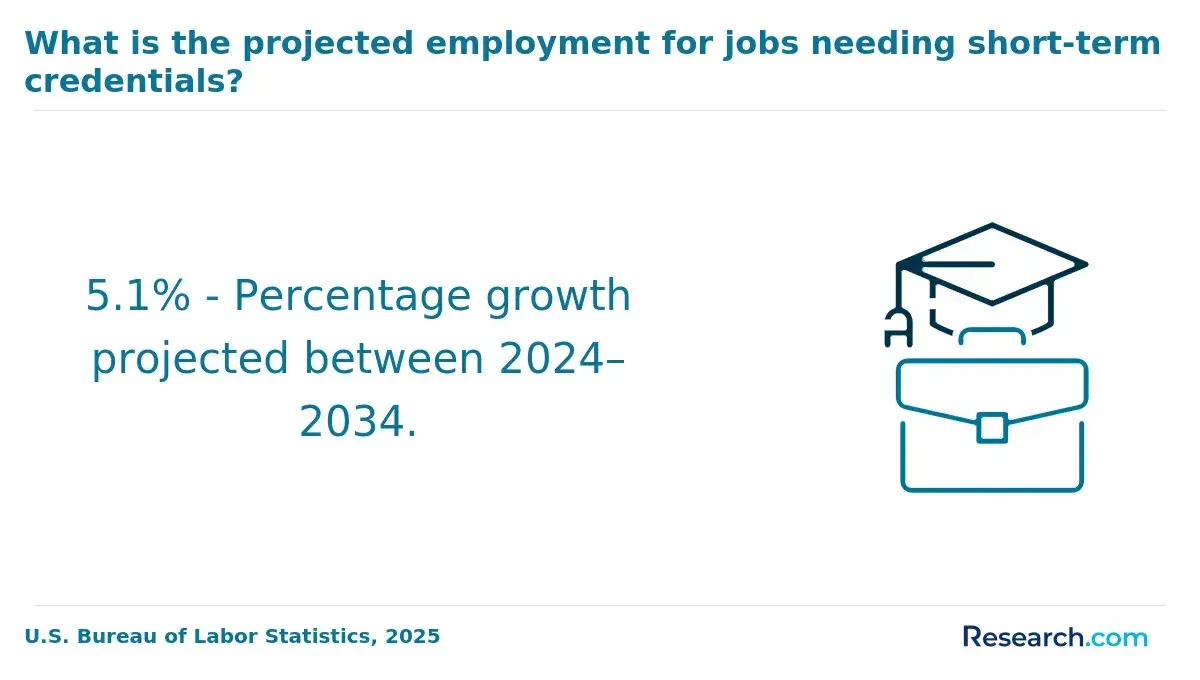
Which affordable master's degrees offer the strongest career outcomes?
The strongest outcome depends on the job you want and what you already bring to it. An experienced analyst may gain more from a focused analytics degree than from a general MBA; an aspiring licensed counselor needs an appropriate licensure-track program, not merely a psychology master's with attractive electives.
Judge incremental value: the likely benefit beyond your bachelor's degree, experience, and less expensive training options. Ask programs for role-specific graduate outcomes, how those outcomes were measured, and whether participants already worked in the field.
Do not interpret an occupation's salary as the salary caused by a degree. In business and technology, experience and demonstrated work may matter more for some openings; in licensed fields, the correct degree can be a necessary step but is not sufficient by itself.
Research-oriented students should compare a thesis track with their longer-term plans; some may eventually consider doctoral programs online no dissertation, while recognizing that doctoral requirements and career purposes differ from those of a professional master's.
How can you verify accreditation for an affordable master's program?
Start with institutional accreditation: check the school in the U.S. Department of Education's accreditation database or the accreditor's own directory, and confirm that its status covers your enrollment period. Then check whether your intended field, state board, employer, or certification body requires or prefers a particular programmatic accreditation.
For counseling, nursing, education, and other regulated paths, ask the relevant state licensing board whether the specific program and track satisfy its education rules. A school's institutional accreditation does not establish licensure eligibility for every degree it offers. Also confirm the rules for the state where you expect to practice, particularly when an online program is based elsewhere.
What admission requirements apply to affordable master's degree programs?
Most master's programs require a completed bachelor's degree, transcripts, and an application. Requirements may also include a minimum GPA, recommendations, a statement of purpose, an interview, or GRE or GMAT scores; test waivers and conditional admission vary by program. A school's general graduate policy may not cover a selective specialty.
Preparation matters as much as admission. Computer science and analytics programs may require mathematics or programming; MSN tracks generally require nursing qualifications; licensure-oriented fields may have specific undergraduate coursework.
Ask whether missing prerequisites can be completed after admission, what they cost, and whether they count toward the master's. Previous undergraduate coursework ordinarily serves as preparation, not transferable graduate credit.
How long do affordable master's degrees take to complete?
Completion time depends on required credits, course availability, and your course load, not simply whether classes use short terms. A full-time student in a nonclinical program may finish sooner than a part-time student, while a thesis, sequential courses, or placements can extend either schedule. Ask for a term-by-term plan based on the hours you can actually commit.
Combined bachelor's/master's pathways, stackable graduate certificates, and accepted graduate transfer credit can shorten a particular student's remaining requirements. Before relying on an advertised timeline, confirm eligible credits, grade and age limits, degree applicability, residency-credit rules, and whether the school will evaluate prior work before enrollment.
An accelerated pathway may also have separate admission requirements; it is not necessarily the cheapest or most manageable option.
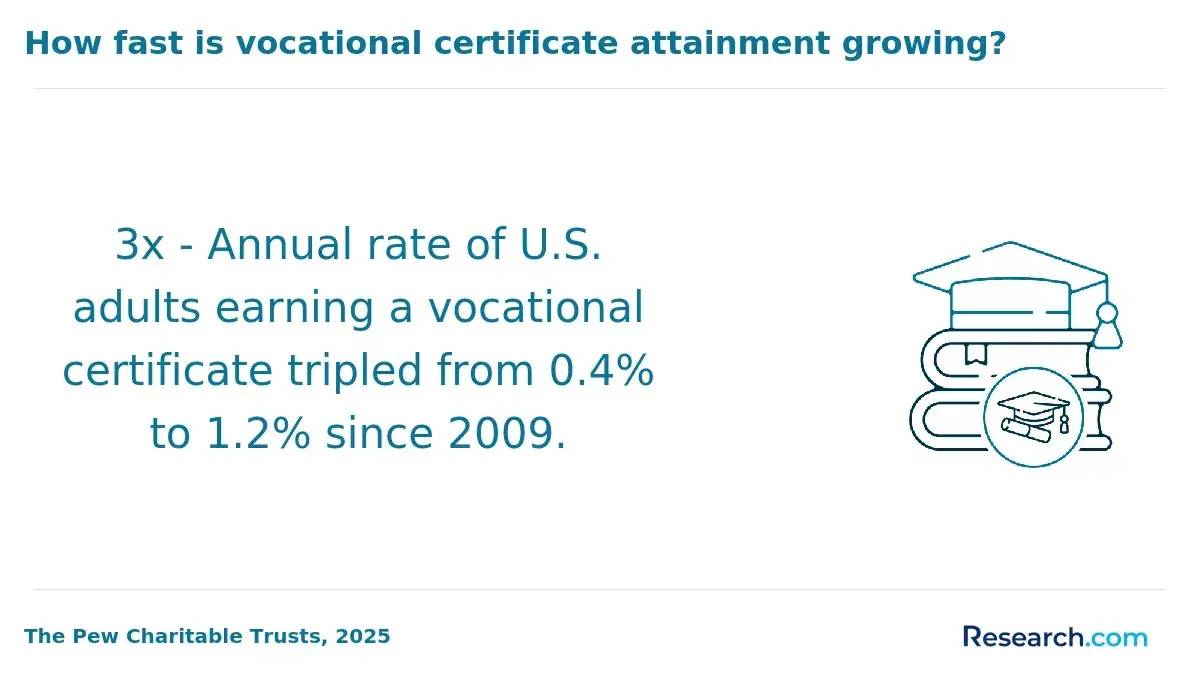
Which online master's programs best support working professionals?
The best format for a working professional is one whose required activities fit a real weekly schedule. Asynchronous lectures allow more control over when to study, but fixed deadlines still apply.
Scheduled online classes may offer useful interaction but can conflict with shifts or caregiving. Part-time availability and reliable course rotation are often more important than an "online" label.
Before applying, obtain a sample course schedule and ask about live attendance, group meetings, exam arrangements, campus visits, and local placements. Confirm whether part-time students can take required courses when needed and whether employer assistance covers the format.
If your main goal is a shorter credential rather than graduate specialization, compare quick online degrees without assuming that a shorter path produces the same career options.
What salaries and job outlooks can graduates expect?
Occupational wages are useful for comparing career possibilities, not predicting a master's graduate's pay. BLS May 2024 median annual wages provide a U.S. benchmark; individual pay depends on location, experience, industry, and duties.
These examples pair related fields with occupations, but neither wage is evidence that completing the corresponding master's degree causes that salary.
| Occupation | BLS May 2024 median annual wage | Important qualification |
| Data scientist | $112,590 | Employers may accept bachelor's-level preparation; substantial analytical skill is essential. |
| Information security analyst | $124,910 | Relevant IT experience and skills often matter; a master's is not universally required. |
BLS projects particularly strong growth for data scientists, but a growing occupation can still have competitive openings. Compare job postings in your target region with your current qualifications, then weigh the degree's full cost against the specific opportunities it could help you pursue.
Lists of the highest paying jobs can suggest alternatives, but pay alone should not determine your graduate field.
Which certifications or licenses do these master's careers require?
Requirements differ sharply by role. Counseling licensure generally involves an eligible degree, supervised practice, examinations, and state approval. Advanced practice nursing requires the applicable RN preparation plus additional certification and state requirements.
School leadership credentials can require teaching experience and state approval. By contrast, many business, analytics, and IT roles have no single government license; employers may instead seek experience or job-specific certifications.
Before paying an enrollment deposit, identify the credential named in relevant job postings and check its requirements with the state board or certifying organization. Compare the cost and scope of certifications for jobs when a full master's is optional.
Avoid the common mistake of assuming that a degree's title, online delivery, or school accreditation independently establishes eligibility for a professional license.
Other Things You Should Know About Master's Degrees
Sometimes. Check for live sessions, campus visits, labs, exams, and local clinical or internship placements before enrolling.
It may be if it provides skills or advancement opportunities you cannot obtain more economically. Compare the full price with relevant experience, certificates, and employer-funded training.
Only if the school accepts the credits and applies them to your specific degree requirements. Request an evaluation and a revised total-cost estimate.
Not without comparing required credits, fees, prerequisites, aid, scheduling, and career or licensure fit. The lowest rate may not produce the lowest total cost.
References
- What Financial Aid Offers Don't Tell You About the Cost of College | U.S. GAO https://www.gao.gov/blog/what-financial-aid-offers-dont-tell-you-about-cost-college
- Accreditation in the U.S. | ed.gov http://www.ed.gov/laws-and-policy/higher-education-laws-and-policy/college-accreditation/accreditation-in-the-us
- Employer-offered educational assistance programs can help pay for college | Internal Revenue Service https://www.irs.gov/newsroom/employer-offered-educational-assistance-programs-can-help-pay-for-college
- Occupation Finder: Occupational Outlook Handbook | bls.gov https://www.bls.gov/ooh/occupation-finder.htm
- Fast Facts: Tuition costs of colleges and universities (76) | ed.gov https://nces.ed.gov/fastfacts/display.asp
- Types of Financial Aid: Grants, Work-Study, and Loans | studentaid.gov https://studentaid.gov/understand-aid/types
- Why Is Accreditation Important? | ACE Blog https://ace.edu/blog/why-is-accreditation-important/
- How much should college cost students? | Brookings https://www.brookings.edu/articles/how-much-should-college-cost-students/
- The Major Payoff: Evaluating Earnings and Employment Outcomes Across Bachelor's Degrees - CEW Georgetown https://cew.georgetown.edu/cew-reports/major-payoff/
- Average Cost of a Master's Degree: 2025 Analysis | Education Data Initiative https://educationdata.org/average-cost-of-a-masters-degree