2027 Most Affordable Associate Degrees for Transferable Skills

Co-Founder and Chief Data Scientist
The cheapest associate degree is not necessarily the least expensive path to your goal: fees, required supplies, and credits that do not apply to a bachelor's degree can change the final bill. The College Board reported average published tuition and fees of $4,050 for in-district students at public two-year colleges in 2024-25.
That benchmark makes community colleges worth comparing, but it is not a program price. This guide helps cost-conscious students compare six fields, identify broadly useful skills, and check what they will actually pay, and what will transfer, before enrolling.
Key Things You Should Know
- Business, IT, and transfer-oriented psychology or criminal justice programs can build skills useful across industries; the most affordable choice is the one whose required credits also serve your next goal.
- Public two-year colleges averaged $4,050 in published in-district tuition and fees in 2024-25, according to the College Board; residency, program charges, and aid can substantially change your cost.
- An AA or AS may offer a clearer bachelor's pathway than an AAS, but no degree label guarantees transfer. Nursing and some healthcare paths also require separate admission, hands-on training, and credentials.
Top 10 Most Affordable Associate Degrees for Transferable Skills
Business Programs
An AA or AS in business can be a cost-conscious choice if accounting, economics, communication, and spreadsheet courses apply to a planned bachelor's degree. Those skills also support entry-level office and customer-facing work.
An AAS may offer more job-specific classes but fewer transferable credits. Compare the complete course map - not just tuition - and ask the destination university whether each course meets a major or general education requirement. An associate degree alone does not typically qualify someone for management roles.
Healthcare Programs
Healthcare administration, health information, and allied-health associate programs develop recordkeeping, communication, and data skills. A transfer-oriented AS may suit someone planning a bachelor's degree; an AAS may better support preparation for a specific occupation.
Clinical placements, background checks, immunizations, equipment, and certification exams can increase costs. Before choosing the lowest-priced option, confirm whether its courses transfer and whether its graduates meet the relevant credential's eligibility rules. A general healthcare associate degree does not confer a clinical license.
Information Technology Programs
IT associate programs can teach troubleshooting, networking, databases, and documentation - skills used across sectors. Compare an AS built for transfer with an AAS emphasizing hands-on technical work. Software, equipment, certification exams, and courses that a bachelor's program counts only as electives can affect value.
Look for projects or internships that demonstrate practical ability, and check whether the curriculum reflects the tools employers currently request. A degree can support an entry-level application; it does not replace demonstrated technical skills.
Nursing / Pre-Nursing Programs
These are different paths. A pre-nursing AS generally supplies prerequisites for a later nursing application; it does not itself qualify a student for registered-nurse licensure. An approved associate degree in nursing combines coursework with clinical training and may prepare eligible graduates to seek licensure after meeting state requirements and passing the required exam.
Admission is often selective even when the college admits students broadly. Compare prerequisite attempts, clinical travel, testing fees, and any bridge-to-bachelor's agreement before judging affordability.
Criminal Justice Programs
A criminal justice AA or AS can build writing, research, ethics, and public-policy skills while supporting transfer into a related bachelor's program. An AAS may emphasize occupation-specific coursework instead. Check the destination school's course equivalencies, especially for specialized electives.
Police and other public-safety positions can have separate academy, background, physical, and agency requirements; the degree alone is not a job qualification. Students seeking broad flexibility should compare this major's elective space with business or a general transfer degree.
Psychology / Counseling Programs
A psychology AA or AS commonly develops research literacy, statistics, communication, and an understanding of behavior. It can be an affordable foundation for transfer if its courses satisfy the intended bachelor's major.
Counseling and clinical practice generally require substantially more education and, for licensed roles, state-specific supervised experience and examinations. Ask whether statistics and laboratory science courses fulfill the next school's requirements. If immediate employment is the priority, compare this transfer path with a career-focused human-services program and its practicum costs.
What Are the Most Affordable Associate Degrees for Transferable Skills?
The most affordable field depends on both the price of completing its associate degree and how much of that investment advances your next step. No field is uniformly cheapest across colleges: a low-cost transfer program can become expensive if a bachelor's institution accepts its credits only as electives.
This comparison shows the main cost and transfer trade-off for each field. Use it to narrow your options, then compare actual program requirements at colleges you could attend:
| Field | Potential cost advantage | Expense or transfer risk to check |
| Business | Courses may serve multiple bachelor's majors | Whether accounting and economics satisfy major requirements |
| Healthcare | A targeted program may lead toward a defined occupation | Clinical expenses and credential eligibility |
| IT | Projects can demonstrate skills alongside the degree | Equipment, exams, and technical-credit transfer |
| Nursing / pre-nursing | A clear pathway when admission and licensure goals align | Selective entry, clinical costs, and possible repeat coursework |
| Criminal justice | A transfer-oriented option for public-service interests | Specialized electives that do not apply to the next major |
| Psychology / counseling | A foundation for several further-study paths | Additional education needed for counseling careers |
For maximum flexibility at a modest price, start by comparing in-district business or general-transfer AA and AS programs. Choose a more specialized healthcare or nursing path when you have confirmed its admission requirements, credential route, and full cost.
How Much Do Affordable Associate Degrees Cost?
Published tuition is the advertised charge; net price reflects grants and scholarships, while total program cost also includes required fees, books, supplies, transportation, and any credits you must repeat.
The College Board's $4,050 public two-year in-district average for 2024-25 is a useful benchmark, not a quote for every student or major. Out-of-district rates and clinical or technology expenses can make a seemingly inexpensive program cost more.
Request a term-by-term estimate based on your residency and expected course load. Complete the FAFSA to assess aid eligibility, then compare grants, employer assistance, and payment plans against the remaining bill.
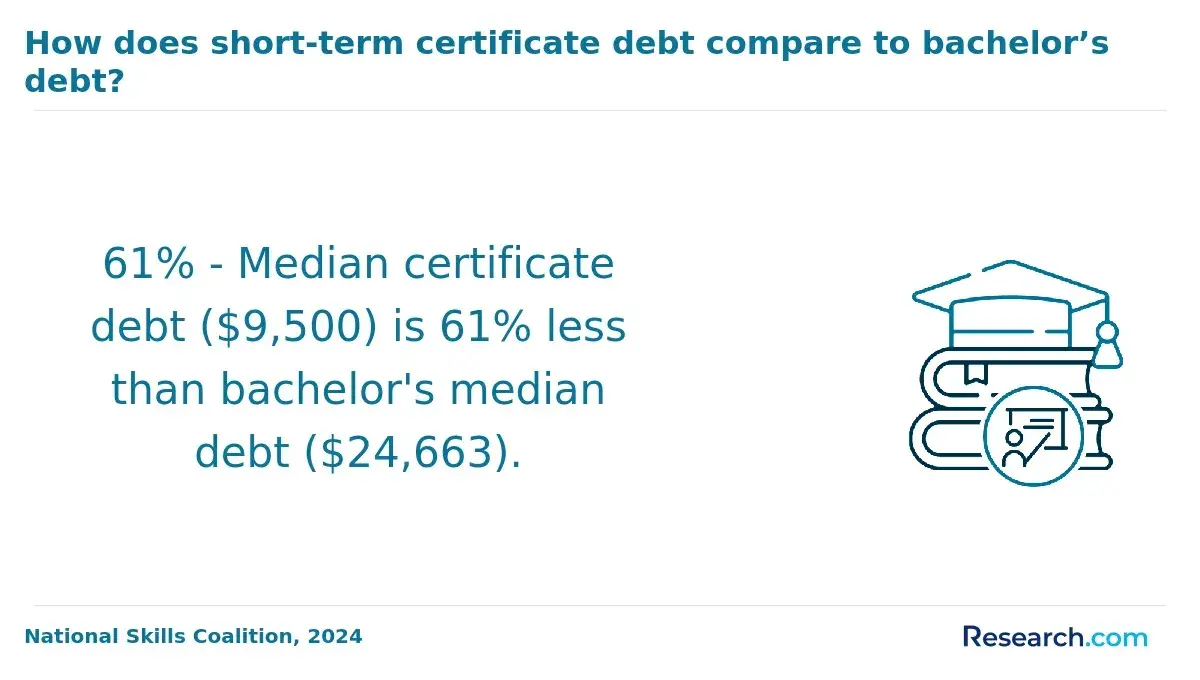
If a shorter credential meets your immediate goal, compare its scope and aid eligibility with the associate degree; this guide to FAFSA-approved online certificate programs offers another starting point. Confirm any specific school and program's current eligibility before relying on aid.
Which Associate Degrees Offer the Best Career and Salary Potential?
For direct entry into a defined occupation, an approved nursing program or an eligible allied-health program may offer a clearer route than a broad transfer degree - but admission, placements, exams, and licensure add hurdles.
The U.S. Bureau of Labor Statistics reported a May 2024 median annual wage of $93,600 for registered nurses and projected 5% employment growth from 2024 to 2034. Those figures describe the occupation, not associate-degree graduates' expected pay; registered nurses must meet licensing requirements.
Business and IT offer broader skill sets, but entry-level roles, employers, and pay vary widely. Psychology is usually a stronger choice for planned further education than for immediate counseling practice. If your target is one of the highest paying careers, compare the cost of the entire education path - not just its associate-degree starting point.
Are Online Associate Degrees as Valuable as Campus-Based Programs?
An accredited online associate degree can be valuable when its curriculum, transfer treatment, and credential eligibility fit your goal. Delivery format alone does not establish quality or guarantee that credits will apply to a bachelor's major.
Online classes may also have live meetings, fixed deadlines, proctored exams, or required local placements. Nursing and other clinical programs require supervised hands-on experiences even when some coursework is online.
Ask for a schedule of every in-person and synchronous requirement before enrolling. If predictable independent study matters, compare course calendars rather than relying on an "online" label; listings of best online self paced colleges can help frame that search, but verify the format of the specific associate program.
What Accreditation Should You Verify Before Choosing an Associate Degree?
Verify that the institution holds accreditation recognized by the U.S. Department of Education or the Council for Higher Education Accreditation. Then ask the intended bachelor's institution for a written course-by-course or program-to-program transfer evaluation.
Institutional accreditation supports credit review, but it does not require another school to accept a course or apply it to your major.
For nursing and other regulated healthcare fields, also check the applicable state board's approval and any programmatic accreditation relevant to licensure, certification, or future study. A warning sign is a program that promises transfer or license eligibility without identifying the receiving institution or governing requirements.
What Courses Build Transferable Skills in an Associate Degree Program?
Composition, public speaking, mathematics or statistics, and introductory computing build skills useful well beyond one job. Major courses add context: accounting develops financial literacy; psychology and criminal justice emphasize evidence evaluation; IT develops technical problem-solving; healthcare programs add documentation and privacy practices.
Choose courses with two tests in mind: Will they build a skill you can demonstrate, and will they fulfill a specific requirement at your intended next school?
Save syllabi for transfer review and use projects, presentations, or internships to show what you learned. A transferable credit that applies only as an elective may save less money than one that satisfies a required course.
What Are the Admission Requirements for Affordable Associate Degrees?
Many community colleges admit students with a high school diploma or equivalent and use placement measures to recommend starting courses. Requirements vary, and admission to a college does not mean admission to a selective major.
Nursing and some allied-health programs may require prerequisites, minimum grades, testing, background checks, and separate application deadlines.
Before paying an application fee, confirm the major's requirements - not only the college's general admissions page. Ask how prior college courses will be evaluated and whether a prerequisite must be completed before applying. This prevents an unexpected extra term from increasing the total cost.
How Long Do Affordable Associate Degree Programs Take to Complete?
Associate programs commonly require about 60 semester credits, but specific programs may require more. A full-time student may finish a well-sequenced program in roughly two years; part-time attendance, prerequisites, limited course availability, or clinical schedules can extend that timeline. Accepted transfer credit may shorten it, depending on which requirements the credit fulfills.
Compare a semester-by-semester course map with your work and family schedule. Accelerated classes are shorter individual courses, not proof that the entire degree is accelerated. Finishing sooner can reduce living or commuting costs, but a course load that forces withdrawals may cost more than a manageable part-time plan.
Which Certifications or Licenses Can Associate Degree Graduates Earn?
Credentials depend on the field and the credentialing body, not merely on possessing an associate degree. Eligible nursing graduates may pursue registered-nurse licensure through their state's process and required examination.
IT students may choose vendor or industry certifications; some healthcare occupations require a separate certification or license. Confirm exam eligibility, fees, and renewal rules before treating a credential as part of a program's value.
When a specific skill gap matters more than an entire degree, compare shorter training options, including 6 week online courses with certificates. A short course can supplement skills, but it does not replace a required associate degree, accredited clinical preparation, or professional license.
Other Things You Should Know About
No degree label determines price or credit acceptance. AA and AS programs are often designed for transfer, while AAS programs are often career-focused; compare each program's total cost and the receiving school's degree audit.
Some career-focused programs can prepare students to pursue entry-level roles, but employer requirements vary. Regulated occupations may also require exams, certification, or licensure.
Not necessarily. A university may accept a credit without counting it toward your intended major. Obtain a course-level transfer evaluation before enrolling when possible.
Compare eligible in-district programs using the same expected course load. Include mandatory fees and supplies, subtract grants you qualify for, and check whether every required credit advances your career or bachelor's plan.
References
- Education pays: U.S. Bureau of Labor Statistics https://www.bls.gov/emp/chart-unemployment-earnings-education.htm
- Employer-offered educational assistance programs can help pay for college | Internal Revenue Service https://www.irs.gov/newsroom/employer-offered-educational-assistance-programs-can-help-pay-for-college
- Fast Facts: Tuition costs of colleges and universities (76) | ed.gov https://nces.ed.gov/fastfacts/display.asp
- Definitions - Transfer Credit Ohio https://transfercredit.ohio.gov/educational-partners/educational-partner-initiatives/articulation-transfer-policy-policy/articulation-transfer-policy-definitions
- Your financial path to graduation | consumerfinance.gov https://www.consumerfinance.gov/paying-for-college/your-financial-path-to-graduation/
- How Credits Transfer - The City University of New York - CUNY https://www.cuny.edu/about/administration/offices/undergraduate-studies/pathways/credits-tranfer/
- Articulated Credit Agreements | Eastern Florida State College https://www.easternflorida.edu/registrar/credit-evaluation/leap/articulation-agreements/index.php
- Tuition & Fees | National University https://www.nu.edu/admissions/tuition/
- From College to Career Success | AAC&U https://www.aacu.org/liberaleducation/articles/from-college-to-career-success-how-educators-and-employers-talk-about-skills