2027 Military-Friendly Online Health Policy Doctorate Programs: Benefits, Accreditation, and Career Outcomes

Co-Founder and Chief Data Scientist
Choosing an online health policy doctorate while serving, transitioning, or using veteran benefits is a high-stakes decision because the wrong format can create cost, deployment, and accreditation problems. The need is real: the U. S. Bureau of Labor Statistics projects medical and health services manager employment to grow 29% from 2023 to 2033, much faster than average.
This guide is for active-duty service members, veterans, Guard and Reserve members, and military spouses comparing doctoral programs. You will learn how to verify benefits, accreditation, flexibility, costs, and career value before enrolling.
Key Things You Should Know
- A military-friendly label is not enough; verify institutional accreditation, programmatic accreditation when relevant, deployment policies, residency requirements, and whether the school participates in the specific benefit you plan to use.
- Federal Tuition Assistance is commonly capped at $250 per semester hour, while the Post-9/11 GI Bill private-school tuition and fee cap for the 2024-2025 academic year is $28,937.09, so doctoral cost gaps can still remain.
- Career value depends on the role: BLS reports a $117,960 median annual wage for medical and health services managers in May 2024, but health policy doctorate outcomes vary by experience, employer, location, and whether the degree is a PhD, DrPH, DHA, or DHSc.
Which Military-Friendly Online Health Policy Doctorate Programs Offer the Best Benefits for Service Members?
The best military-friendly online health policy doctorate is usually the one that combines recognized accreditation, predictable online scheduling, clear benefit processing, and doctoral-level policy or leadership training that matches your career goal. In this field, "health policy doctorate" may refer to a PhD in health policy or health services, a DrPH with a health policy or leadership focus, a Doctor of Health Administration, or a Doctor of Health Science with policy, systems, or population health coursework.
The table below compares program types and examples that military-connected students commonly evaluate. It is not a ranking; instead, it shows how to interpret "best benefits" based on the practical issues that affect service members.
| Program type or example | Best fit for military-connected students | Military-friendly strengths to verify | Accreditation signals to check | Potential watch-outs |
| Online or hybrid DrPH in health policy, public health leadership, or public health practice | Public health officers, veterans moving into policy leadership, population health professionals, and health system leaders | GI Bill processing, Yellow Ribbon participation if private, veteran services office, asynchronous coursework, deployment leave policy | Institutional accreditation and CEPH accreditation for schools or programs of public health when applicable | Some DrPH programs require campus institutes, practicum hours, or live sessions that can conflict with duty schedules |
| Online PhD in health services or health policy | Students seeking research, policy analysis, think tank, academic, or senior evaluation roles | Doctoral advising continuity, research methods support, remote dissertation supervision, transfer review for prior graduate work | Institutional accreditation; programmatic accreditation may vary because PhD health policy programs are not always separately accredited | Research-heavy programs may take longer and may be less flexible during deployment or high-tempo assignments |
| Online Doctor of Health Administration | Military health administrators, hospital operations leaders, TRICARE-adjacent professionals, and executives seeking applied leadership roles | Military tuition discounts, prior graduate transfer credit, online dissertation or capstone support, flexible enrollment pacing | Institutional accreditation; confirm whether any healthcare management accreditation applies to the specific degree level | A DHA may be less policy-research focused than a PhD or DrPH, depending on curriculum |
| Online Doctor of Health Science with policy, leadership, or population health concentration | Clinicians, allied health leaders, and experienced service members who want applied doctoral training without a traditional research PhD | Military admissions counseling, veteran disability accommodations, asynchronous courses, credit transfer from relevant graduate coursework | Institutional accreditation and any field-specific recognition tied to the student's professional goals | Some DHSc programs are broad; confirm that policy coursework is deep enough for your target role |
A strong program should be able to answer military-specific questions in writing. Ask whether benefits are handled by a dedicated military education office, whether leaves of absence protect academic standing during deployment, and whether dissertation or practicum milestones can be completed from another state or country.
What Military Benefits Can Students Use for an Online Health Policy Doctorate?
Military-connected doctoral students may combine several forms of support, but each benefit has eligibility rules, school participation requirements, and limits. The most useful strategy is to map benefits to the entire doctoral timeline, not just the first term.
The main benefits to review are listed below because they affect cost, enrollment pace, and whether out-of-pocket borrowing is necessary.
- Post-9/11 GI Bill: Often the most valuable benefit for veterans and eligible active-duty students because it can cover tuition and fees up to the applicable public or private-school limit, plus other eligible payments based on entitlement and enrollment status.
- Yellow Ribbon Program: Can help cover costs above the Post-9/11 GI Bill private-school cap when both the student and institution qualify.
- Military Tuition Assistance: Typically used by active-duty, Guard, and Reserve students while serving, but doctoral eligibility and annual limits vary by branch.
- Veteran Readiness and Employment: May support education for eligible veterans with service-connected disabilities when the degree is tied to an approved employment plan.
- Institutional military scholarships or tuition discounts: Can reduce remaining tuition, but confirm whether the discount stacks with GI Bill, Yellow Ribbon, TA, or employer reimbursement.
- Transferred benefits for spouses or dependents: May apply if Post-9/11 GI Bill transfer rules were met while the service member was eligible to transfer benefits.
Doctoral study is not always the first or best credential for every goal. If you primarily want hospital or clinic administration roles rather than research or policy leadership, compare the doctoral pathway with a masters in healthcare administration before using limited benefits.
How Does Military Tuition Assistance Work for Online Health Policy Doctorate Programs?
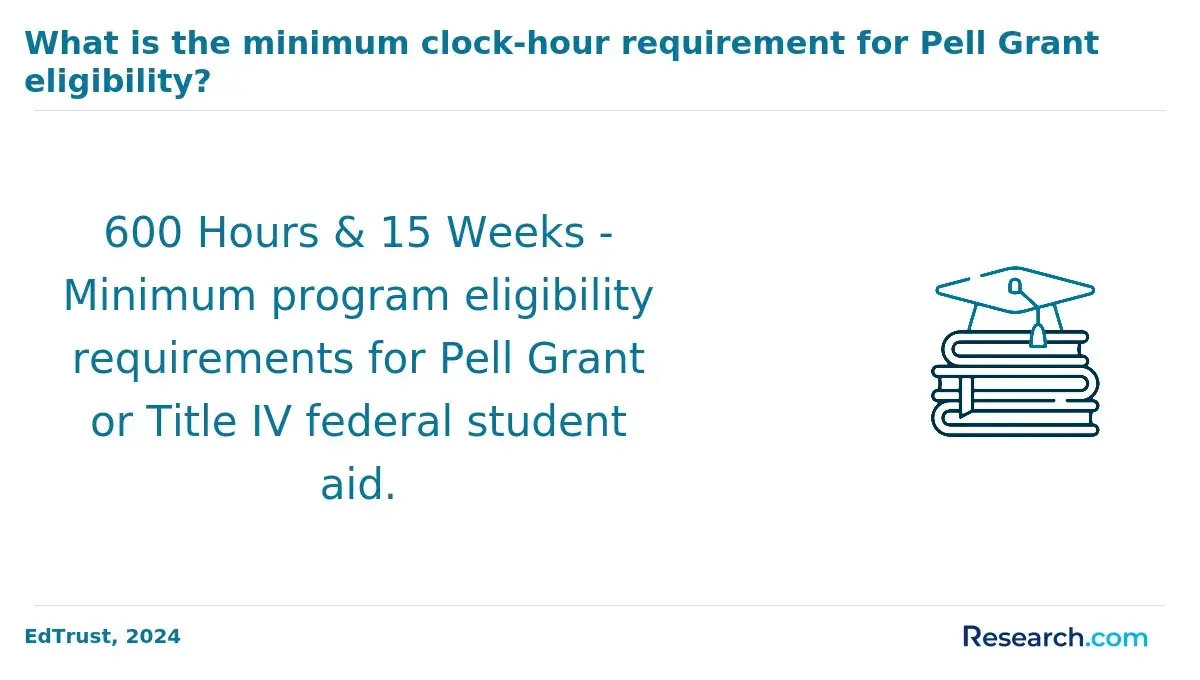
Military Tuition Assistance can be helpful for online doctoral coursework, but it rarely makes a doctorate free on its own. The widely used benchmark is $250 per semester hour, and many branches also apply annual or fiscal-year limits, course approval rules, grade requirements, and service-specific education plans.
Use this sequence before enrolling so you do not start a term and later discover that a course is ineligible.
- Confirm your branch's current doctoral-level TA policy, including whether the branch funds doctoral coursework and whether you need an education plan before requesting funds.
- Ask the school whether it has a signed Department of Defense Voluntary Education Partnership Memorandum of Understanding and whether it processes TA through the correct military portal.
- Compare the school's per-credit tuition with the TA cap, then calculate the remaining balance for each course before registration.
- Check whether fees, residencies, dissertation continuation credits, and technology charges are covered, partially covered, or excluded.
- Submit TA requests before the branch deadline and before the course starts because retroactive approvals are often not allowed.
- Keep copies of approvals, degree plans, invoices, and grade reports because failed or withdrawn courses may create repayment obligations.
The biggest mistake is assuming TA works like an open scholarship. It is a pre-approval benefit tied to branch rules, academic progress, and school participation, so the safest approach is to build your term schedule only after your education office and school certifying official confirm coverage.
Accreditation is one of the most important filters for a military-friendly online health policy doctorate because it affects federal aid eligibility, transferability, employer recognition, and the credibility of the credential. At minimum, the institution should hold recognized institutional accreditation from an accreditor accepted by the U.S. Department of Education.
Programmatic accreditation depends on the degree. A DrPH housed in a school or program of public health may fall under CEPH accreditation, while health administration and health science doctorates may not have a single universal doctoral accreditor. That does not automatically make them weak programs, but it means you must evaluate curriculum, faculty expertise, employer recognition, and doctoral outcomes more carefully.
The table below shows what to verify before relying on accreditation claims. It helps separate meaningful quality indicators from vague marketing language.
| Accreditation or recognition item | Why it matters | What to ask the school |
| Institutional accreditation | Supports federal aid eligibility and basic institutional legitimacy | Which accreditor recognizes the university, and is the status current? |
| CEPH accreditation for public health programs | Important for many DrPH programs and public health employers | Is the specific school or program covered by CEPH accreditation? |
| State authorization for online learning | Determines whether the school can enroll students in your state | Can I remain enrolled if I relocate due to PCS orders? |
| Professional or licensure alignment | Matters when the degree is used alongside clinical, public health, or administrative credentials | Does the doctorate meet any professional requirements tied to my target role? |
| Military benefit participation | A school can be accredited but still not participate in every benefit | Do you process GI Bill, Yellow Ribbon, TA, and military spouse benefits for doctoral students? |
A common red flag is a school that emphasizes being "military-friendly" but gives vague answers about accreditation, state authorization, or benefit processing. Ask for links to the accreditor listing, the program page, and the school's veterans office policy before applying.
Real military student support is more than a tuition discount. For doctoral students, the most valuable support usually involves scheduling flexibility, knowledgeable benefit certification, research advising, and policies that recognize deployments, training rotations, family responsibilities, and medical transition needs.
Look for support features that reduce administrative friction and protect academic progress. The following items are especially important for active-duty and veteran students in doctoral programs.
- Dedicated military or veteran advising: Advisors should understand GI Bill certification, TA portals, Yellow Ribbon rules, and the timing of doctoral billing.
- Deployment and leave policies: The program should explain how military orders affect withdrawals, incompletes, course extensions, dissertation milestones, and reentry.
- Accessible faculty mentoring: Doctoral students need consistent guidance for research design, policy analysis, practicum work, and dissertation or capstone completion.
- Disability and transition support: Veterans may need accommodations, mental health resources, career transition services, or help navigating civilian academic expectations.
- Career services for experienced professionals: Strong programs support executive resumes, federal hiring pathways, consulting portfolios, academic job searches, and policy networking.
The best test is to contact the military education office and the doctoral program separately. If they give conflicting answers about benefits, leave policies, or residency requirements, resolve those differences before paying an application fee.
Military training and experience can strengthen an application, but it usually does not convert directly into large blocks of doctoral credit. Doctoral programs tend to grant transfer credit for prior graduate coursework that is recent, relevant, completed with strong grades, and aligned with the program's learning outcomes.
Military experience may still matter in three ways. First, leadership in military medicine, logistics, public health, readiness, or health administration can make your statement of purpose stronger. Second, operational experience can become the foundation for a policy dissertation, applied doctoral project, or practicum. Third, prior graduate-level military education may be reviewed if it appears on an official transcript and matches doctoral coursework.
Before assuming credit will transfer, ask the program to review these items in writing.
- Maximum doctoral transfer credits allowed and whether credits reduce tuition, time, or only elective requirements.
- Whether prior credits must come from a completed graduate degree or can come from standalone graduate courses.
- How old transferred credits may be and whether research methods, statistics, or policy courses expire faster than other courses.
- Whether Joint Services Transcript entries, ACE recommendations, or military school credits are considered at the doctoral level.
- Whether dissertation, capstone, practicum, or doctoral seminar credits can ever be waived.
A frequent mistake is choosing a program because it advertises generous transfer credit at the undergraduate level. Doctoral transfer policies are usually more restrictive, so focus on the exact doctorate, not the university's general transfer page.
Online health policy doctorates can be a strong fit for service members, but flexibility varies widely. "Online" may mean asynchronous weekly coursework, live evening seminars, low-residency campus visits, field placements, or dissertation meetings during business hours.
The table below compares common format features that affect active-duty students, Guard and Reserve members, and veterans balancing work and family obligations.
| Format feature | Why it matters for military students | Lower-risk option | Higher-risk option |
| Asynchronous coursework | Allows students to complete weekly work around shifts, time zones, and duty schedules | Recorded lectures, flexible discussion windows, predictable deadlines | Frequent mandatory live classes with limited makeup options |
| Residency requirements | Travel may be difficult during deployment cycles or PCS moves | Optional or short residencies with long advance notice | Multiple required campus visits with fixed dates |
| Enrollment pace | Service tempo may change unexpectedly | Part-time pacing, stop-out options, and clear reentry rules | Lockstep cohorts with limited leave options |
| Dissertation or capstone structure | Research access can change when students relocate | Remote advising and projects that can use accessible data or approved professional settings | Projects tied to one local site without relocation alternatives |
| State authorization | PCS moves can affect online enrollment eligibility | School confirms authorization across likely duty locations | School cannot confirm enrollment after relocation |
If speed is your main concern, compare the doctorate with shorter or stackable options such as accelerated healthcare programs. A faster credential may be more practical if you need a near-term promotion or transition outcome rather than a research-intensive doctoral path.
The cost after military benefits depends on tuition, fees, residency travel, dissertation continuation charges, benefit eligibility, enrollment intensity, and whether the school participates in Yellow Ribbon or offers military discounts. Doctoral programs can also become expensive when students extend dissertation work beyond the standard timeline.
Use the following cost figures as planning anchors, then request a program-specific estimate from the school's military certifying official and financial aid office.
- $250 per semester hour: Common Military Tuition Assistance cap used by many service branches, subject to branch rules and annual limits.
- $28,937.09: Post-9/11 GI Bill private-school tuition and fee cap for the 2024-2025 academic year for eligible students at the 100% benefit level.
- $0 to variable remaining balance: Possible out-of-pocket cost after GI Bill, Yellow Ribbon, institutional aid, employer reimbursement, scholarships, or TA, depending on the school and student eligibility.
- Variable residency and travel costs: Online programs may still require campus visits, intensives, conference attendance, or practicum travel that benefits may not fully cover.
A practical cost comparison should include the entire degree, not only the advertised per-credit rate. Ask for tuition by credit, required credits, fees, dissertation continuation costs, residency costs, books, expected time to completion, and the school's refund policy for military withdrawals.
Military-connected students who are unsure about committing to doctoral debt may want to compare lower-cost healthcare education pathways first, including a cheapest online healthcare administration degree option if they still need foundational administration credentials.
An online health policy doctorate can support senior leadership, policy, research, consulting, teaching, and population health roles, especially for military-connected students who already have healthcare, public administration, operations, clinical, or command experience. The degree is usually most valuable when it builds on a strong professional record rather than replacing one.
The labor market context is favorable for healthcare leadership. BLS reports that medical and health services managers had a median annual wage of $117,960 in May 2024 and projects 29% employment growth from 2023 to 2033, but those figures cover a broad occupation and do not guarantee outcomes for doctoral graduates.
The table below shows common career directions and how different doctorate types may align with them.
| Career direction | Typical responsibilities | Doctorate fit | Military experience that may translate well |
| Health policy analyst or policy director | Evaluate policy options, interpret regulations, brief leaders, and design health system improvements | PhD, DrPH, or policy-focused DHSc | Medical readiness, public health planning, interagency coordination, and strategic briefing |
| Healthcare executive or administrator | Lead departments, manage budgets, oversee quality, and align operations with policy requirements | DHA, DrPH, or applied DHSc | Command experience, logistics, personnel management, compliance, and military treatment facility operations |
| Population health or public health leader | Design community health programs, manage surveillance or prevention initiatives, and evaluate outcomes | DrPH or PhD with public health focus | Force health protection, epidemiology support, disaster response, and preventive medicine experience |
| Faculty or doctoral-level educator | Teach, conduct research, mentor students, and publish or present scholarship | PhD is often strongest; DrPH or DHA may fit applied faculty roles | Training leadership, curriculum development, subject-matter expertise, and research experience |
| Consultant or federal health contractor | Advise agencies, evaluate programs, support compliance, and improve healthcare delivery systems | PhD, DrPH, DHA, or DHSc depending on specialization | Federal systems knowledge, security clearance eligibility, program management, and operational credibility |
Students interested in health data leadership rather than policy leadership should compare doctoral options with informatics and records-focused roles; reviewing health information management salary information can help clarify whether a doctorate is necessary for that path.
How Should Military Students Choose the Best Online Health Policy Doctorate Program?
The best online health policy doctorate for a military student is the one that fits the mission schedule, benefit eligibility, academic goal, and career target at the same time. A prestigious program that cannot accommodate deployment may be a poor fit, while a flexible program with weak accreditation or thin doctoral advising may also be risky.
Use this decision process to compare programs before applying.
- Define the career outcome first: research, executive leadership, public health practice, federal policy, teaching, consulting, or healthcare administration.
- Choose the doctorate type that fits the outcome: PhD for research, DrPH for applied public health leadership, DHA for healthcare administration, or DHSc for applied health science leadership.
- Verify institutional accreditation and any programmatic accreditation relevant to public health or your professional field.
- Ask the veterans office to confirm GI Bill, Yellow Ribbon, TA, VR&E, spouse benefit, and institutional scholarship rules for the specific doctorate.
- Request a full cost estimate covering credits, fees, residencies, travel, dissertation continuation, and expected time to completion.
- Review online format details, including live attendance, time zones, proctored exams, residency dates, practicum requirements, and dissertation meeting expectations.
- Confirm policies for deployment, PCS relocation, military withdrawal, incompletes, leaves of absence, and reentry into a cohort.
- Ask how many doctoral credits may transfer and whether prior military education is reviewed at the doctoral level.
- Evaluate faculty expertise by looking for health policy, public health systems, healthcare finance, ethics, regulation, and research methods experience.
- Compare career support for military-connected students, including federal resumes, executive leadership positioning, academic career preparation, and networking.
Watch for red flags. These include pressure to enroll before benefit eligibility is confirmed, unclear accreditation language, no written deployment policy, mandatory residencies that are not disclosed early, vague dissertation support, unusually broad promises about transfer credit, and claims that the doctorate will automatically lead to a specific job or salary.
A good final question is simple: "If I deploy, relocate, or need to pause for military reasons, exactly what happens to my funding, course progress, cohort status, and dissertation timeline?" If the school cannot answer clearly, keep comparing programs.
Other Things You Should Know About Health Policy
A PhD is usually strongest for research and academic roles, while a DrPH is often better for applied public health leadership. A DHA fits healthcare administration, and a DHSc can fit applied health science or leadership roles depending on the curriculum.
Some programs accept applicants with related graduate degrees in healthcare administration, public administration, nursing, medicine, business, or public policy. Others require an MPH or specific prerequisite coursework, so admissions requirements must be checked program by program.
Many do, especially PhD programs. Applied doctorates may use a dissertation, doctoral project, capstone, or practice-based research project, but students should still expect advanced research, writing, and committee review.
Employers are more likely to respect an online doctorate when it comes from an accredited institution, has a rigorous curriculum, includes strong faculty mentorship, and aligns with the role. The delivery format matters less than credibility, relevance, and demonstrated expertise.
- What Are the Job Prospects for an HIM Graduate? - Healthcare Administration Degree Programs https://www.healthcare-administration-degree.net/faq/what-are-the-job-prospects-for-an-him-graduate/
- Doctorate of Health Administration (DHA) Online Degree https://www.trident.edu/doctoral-online/dha-health-administration-degree/
- Top Online Degree Programs: Veterans U.S. Veterans Magazine https://usveteransmagazine.com/usvm/top-online-degree-programs-for-veterans/
- We Serve Too: Addressing the Needs and Challenges of Military Families - American Academy of Nursing https://aannet.org/page/military-families-2024
- Best Online Doctorates in Healthcare Administration 2026 https://www.onlineu.com/degrees/doctoral-healthcare-administration
- Doctor of Health Administration (DHA) | Doctor of Healthcare | University of Phoenix https://www.phoenix.edu/online-healthcare-degrees/health-administration-doctoral-degree.html
- Online Education Challenges Veterans Face and How to Overcome Them https://www.militaryeduadvisors.com/overcoming-online-education-challenges-for-veterans/
- Best Online Doctor of Healthcare Administration Programs https://www.phds.me/online-programs/doctorate-healthcare-administration-dha/
- Who Accredits MHA Programs? https://www.mhaonline.com/faq/who-accredits-online-mha-programs