
2027 LPN-to-BSN Pathways for Nurses in Wisconsin: Direct Bridges and RN-to-BSN Alternatives
Audited and Verified:
Our Editorial and Data Verification Process
Research.com uses government datasets, official education statistics and primary institutional information to support its career and degree guides. Our review process checks factual accuracy, occupational definitions, source dates and the requirements associated with the credentials discussed.
How This Article Was Fact-Checked
Our editorial team verifies salary estimates, employment projections, education requirements and program information against original data providers and official organizations. Salary figures are checked against the relevant occupational definitions and reporting periods. Information about licensure, accreditation and required in-person training is reviewed separately.
Fact-checked and verified on:

Co-Founder and Chief Data Scientist
Wisconsin LPNs seeking a BSN have two decisions to make: where to complete the education required for RN licensure, and whether to earn the bachelor's degree before or after becoming an RN. A direct LPN-to-BSN bridge may combine those goals, while an LPN-to-ADN program followed by RN-to-BSN completion may offer more scheduling or cost flexibility.
This guide explains the routes, identifies a direct-bridge option to investigate, and shows what to verify before committing to a school or leaving an LPN job.
Key Things You Should Know
- A direct LPN-to-BSN program prepares an LPN for initial RN licensure and awards a BSN; an RN-to-BSN program generally requires an RN license first.
- The alternative is a two-stage route: complete an LPN-to-ADN program, qualify for RN licensure, then finish an RN-to-BSN program.
- Before enrolling, verify three separate matters: Wisconsin approval for prelicensure RN education, the accreditation applicable to the program, and a written evaluation of credits that actually count toward graduation.
What Is an LPN-to-BSN Pathway in Wisconsin?
An LPN-to-BSN pathway is a prelicensure RN program that recognizes some prior practical-nursing education while leading to a bachelor of science in nursing. Its nursing coursework and supervised clinical preparation must still meet the school's requirements for RN-level practice. After completing an eligible program, a graduate must satisfy Wisconsin's licensing requirements, including the NCLEX-RN; the BSN alone is not an RN license.
The term "bridge" does not guarantee a fixed number of advanced-standing credits or a shorter clinical sequence. A school may accept LPN coursework as transfer credit yet apply little of it to the nursing major. Ask for a degree audit showing remaining sciences, nursing courses, clinical experiences, and the first available start in the nursing sequence.
An LPN who also holds a bachelor's degree in another field can ask whether an accelerated prelicensure BSN would be more practical than an LPN-specific bridge. These ABSN programs with flexible admission requirements are a separate route; prior LPN education does not automatically satisfy their prerequisites.
Which Wisconsin Schools Offer Direct LPN-to-BSN Programs?
Herzing University is a direct LPN-to-BSN option to investigate in Wisconsin. Confirm with Herzing which Wisconsin campus or enrollment option currently admits LPN-to-BSN students, where labs and clinicals take place, and whether the specific track qualifies graduates to seek Wisconsin RN licensure. Program availability and campus offerings can change, so an institution-wide nursing page is not enough to establish an available seat in your intended track.
Do not mistake a school's standard prelicensure BSN, accelerated BSN, or RN-to-BSN listing for a direct LPN-to-BSN bridge. If a school says it accepts LPN applicants into a standard BSN, ask whether they receive defined advanced standing and how many semesters of the RN nursing sequence remain. Request the answer in writing before comparing it with an advertised bridge.
Entrance testing is another school-specific difference, not a feature of every bridge. Readers exploring nursing admission without these entrance exams should confirm the policy for the particular LPN-to-BSN track and entry term rather than relying on a university-wide admissions description.
What Are the RN-to-BSN Alternatives for Wisconsin LPNs?
An LPN cannot ordinarily enter a postlicensure RN-to-BSN track on an LPN license alone. The usual alternative is to earn an associate degree in nursing through a Wisconsin technical college or another eligible prelicensure program, become licensed as an RN, and then apply to an RN-to-BSN program. Wisconsin RN-to-BSN options to compare include offerings associated with the University of Wisconsin system; confirm each program's current admission, format, and transfer policies.
The comparison below separates the point at which each route provides RN preparation from the point at which it awards the BSN.
| Route | Who enters | Degree and RN sequence | Best reason to consider it |
| Direct LPN-to-BSN | Eligible LPN | BSN and prelicensure RN preparation in one program | One planned route to both goals, if the schedule and credit evaluation work |
| LPN-to-ADN, then RN-to-BSN | LPN, then licensed RN | Associate-degree RN preparation first; bachelor's completion later | Potential to seek RN employment before finishing the BSN |
| Standard prelicensure BSN with LPN credit | Applicant meeting BSN admission rules | BSN and prelicensure RN preparation | Useful if no dedicated bridge is available and meaningful credit applies |
For the two-stage route, compare the combined ADN and RN-to-BSN requirements. An ADN-to-MSN bridge is not a substitute for initial RN preparation: associate-to-master's nursing pathways generally concern nurses who have already reached the RN stage and want graduate study.
Wisconsin LPN licensure does not convert to RN licensure through work experience or a BSN admission offer. The LPN must complete an RN-qualifying prelicensure education route, apply for RN licensure through the Wisconsin Department of Safety and Professional Services, meet the applicable application requirements, and pass the NCLEX-RN. The state makes the licensing decision; the school determines whether its graduate has completed the program requirements.
Before enrolling, ask the program to identify the exact RN-qualifying track and confirm that its graduates are eligible to apply for Wisconsin RN licensure. If you might practice elsewhere, check that jurisdiction's rules too. Passing the NCLEX-RN is necessary for initial RN licensure, but it does not itself issue a license or authorize advanced practice.
That distinction still matters years later. Budget-conscious NP education pathways are graduate options for eligible RNs, not shortcuts that allow an LPN to bypass initial RN education and licensure.
Check three different forms of oversight. First, verify the institution's accreditation. Second, check whether the specific nursing program and degree are accredited by a recognized nursing accreditor, such as ACEN or CCNE, and whether that accreditation covers the relevant campus or track. Third, confirm the prelicensure RN program's status with Wisconsin's nursing regulator. Institutional accreditation, nursing-program accreditation, and state approval serve different purposes.
Ask the school for its exact program name and current status, then verify those details with the institution, accreditor, and Wisconsin Department of Safety and Professional Services. This matters particularly if a university advertises several nursing degrees: accreditation of one degree should not be assumed to cover another.
Prospective graduate students considering accessible entry routes to DNP study should make the same program-specific check rather than relying on a school's general accreditation statement.
A prelicensure LPN-to-BSN curriculum builds beyond practical-nursing preparation into RN-level assessment, clinical judgment, pharmacology, care coordination, and supervised care across required patient populations. BSN study may also include population health, evidence appraisal, leadership, and quality improvement. The exact courses and clinical sequence depend on the school's approved curriculum and its evaluation of the applicant's prior work.
Expect a distinction between classroom instruction, simulation, and supervised clinical care. Existing LPN employment can strengthen clinical understanding, but it does not automatically replace faculty-approved RN clinical experiences. Ask who arranges placements, whether sites are near home, how far ahead schedules are released, and whether an employer-based placement is permitted.
BSN-level quality-improvement work can introduce skills used in later leadership education, but it is not the same as leadership DNP education after a nursing master's. A DNP is not needed to complete an LPN-to-BSN bridge or seek initial RN licensure.
Requirements vary by school and track. Applicants commonly need to document their LPN license, practical-nursing education, transcripts, and completion of required general education and science courses. A school may also set minimum grades or GPA, require an entrance assessment, and impose clinical-site eligibility requirements such as a background check and health documentation. Admission to the university may be separate from selection for a limited-capacity nursing cohort.
For a useful application comparison, obtain each school's written answers to four questions: Which of my courses fulfill degree requirements? Are any science courses too old or missing an acceptable lab? When could I actually start the nursing sequence? What conditions must I meet before clinical placement? These answers matter more than a general statement that the school "accepts transfer credits."
Do not use graduate-program advertising to judge bridge eligibility. For example, a guide to accelerated family nurse practitioner study addresses a later, RN-based educational goal; it does not establish admission to a Wisconsin prelicensure bridge.
There is no reliable statewide completion time or price for an individual LPN. Remaining prerequisites, awarded credit, cohort start dates, required clinical terms, and full- or part-time enrollment determine the timeline. A direct bridge may avoid a second degree application, while an ADN-first route may let a nurse pursue RN earnings before paying for bachelor's completion. Neither advantage is guaranteed.
Compare total remaining cost to the BSN, not one program's advertised tuition rate against another's first-stage ADN price. Ask both routes for a term-by-term estimate covering tuition and mandatory fees, books and equipment, clinical travel, testing and licensing expenses, and any reduction in paid work. Include the RN-to-BSN stage in an ADN-first estimate, and check employer reimbursement rules before counting it as funding.
Advertised speed in a later degree does not repair delays in initial RN preparation. Online DNP completion time options address a different stage of nursing education; the relevant dates here are your first available bridge cohort, clinical sequence, RN eligibility, and BSN graduation.
An RN-to-BSN may offer substantial online coursework, but a prelicensure LPN-to-BSN cannot be assumed to be entirely remote. Initial RN preparation includes assessed skills and supervised clinical experiences. Even when lectures are online, labs, simulation, exams, and clinical shifts may require attendance at specified times and places.
Working LPNs should request a sample weekly schedule for the nursing sequence - not just the general education courses. Confirm synchronous meetings, campus visits, clinical-shift length and location, weekend requirements, and whether placements can change. For an ADN-first plan, ask separately about the ADN's in-person obligations and the later RN-to-BSN's practice or project requirements.
Postlicensure options can differ substantially: a guide to BSN completion pathways with alternative practice experiences concerns nurses who are already RNs and should not be read as eliminating supervised clinical preparation for initial RN licensure.
What Careers, Salaries, and Job Outlook Follow a Wisconsin BSN?
After obtaining RN licensure, a BSN graduate can seek RN positions in settings such as hospitals, clinics, home health, and community care, subject to each employer's hiring and orientation requirements. A BSN may help meet requirements for particular roles or future education, but it does not replace unit-specific training, guarantee a promotion, or authorize advanced practice.
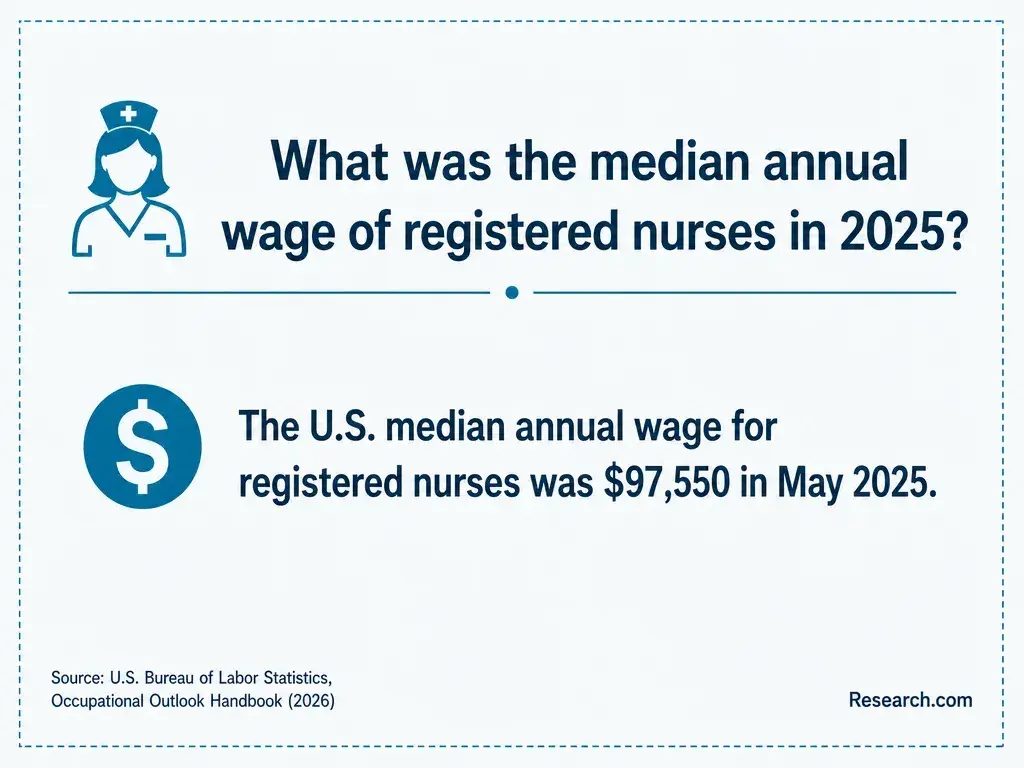
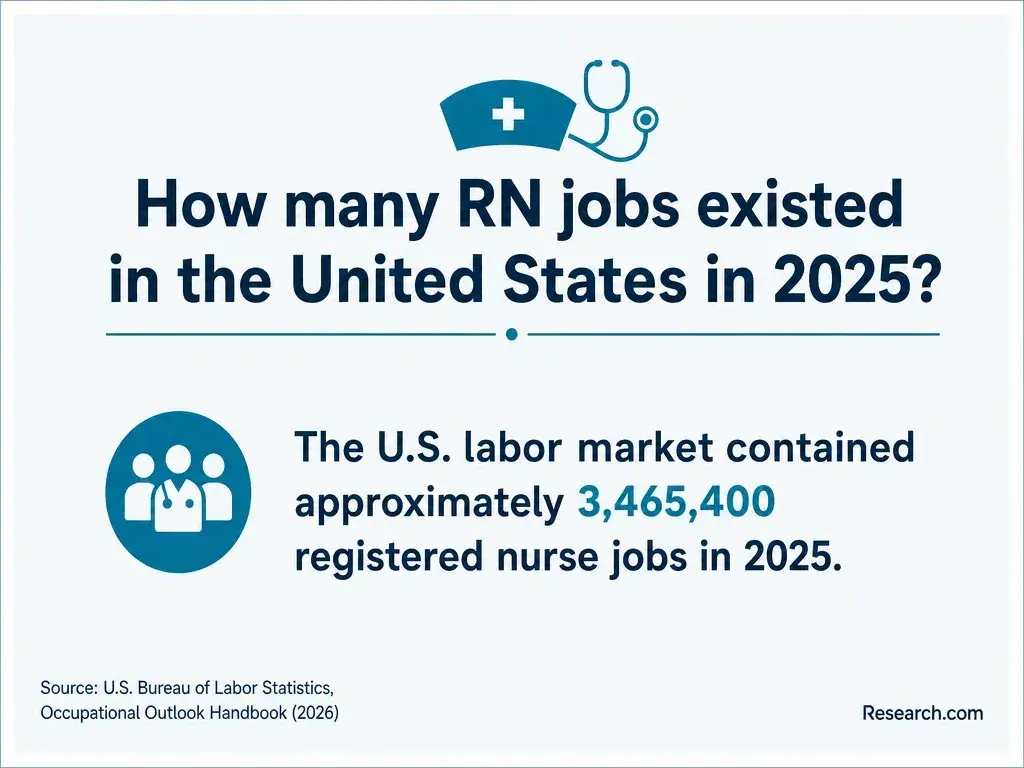
Use wage data carefully. The U.S. Bureau of Labor Statistics reports earnings and projected employment for the registered nurse occupation, not a separate salary promised to BSN graduates. Wisconsin offers will also vary by setting, shift, location, experience, and employer. When weighing the ADN-first route, compare actual RN job opportunities and employer BSN-completion policies with the direct bridge's full cost and time away from work.
Graduate specialties are separate career decisions. An online PMHNP certificate program guide, for example, concerns advanced psychiatric-mental health preparation for applicants who meet that program's graduate-level requirements; an initial BSN does not itself qualify someone to practice as a nurse practitioner.
Other Things You Should Know About Nursing
Often, if you maintain your LPN license and can meet program requirements. Check the clinical schedule before promising an employer fixed availability, especially during intensive nursing terms.
Do not assume either license's status changes automatically. Check your Wisconsin license records and renewal obligations, and ask the Department of Safety and Professional Services how holding both credentials applies to you.
You can apply, but the receiving school decides which courses and clinical work satisfy its curriculum. Request a written nursing-major evaluation and a realistic cohort start date before withdrawing.
Ask early. Employers may limit eligible schools, require advance approval, reimburse only completed courses, or require continued employment afterward. Include those conditions when comparing routes.
- NCLEX Annual Pass Rate - Nursing - DSPS - Wisconsin.gov https://dsps.wi.gov/a-z-boards-and-councils-list/nursing/nclex-pass-rate/
- RN to BSN Program | BSN@Home - School of Nursing - UW-Madison https://nursing.wisc.edu/bsn/online/
- Online LPN to BSN Program | Wilson College https://online.wilson.edu/programs/bachelors-degrees/lpn-to-bsn/
- UW-Superior's new online RN to BSN program is now enrolling - UW-Superior https://uwsuper.edu/about/news/uw-superiors-new-online-rn-to-bsn-program-is-now-enrolling/
- NCLEX & Licensure - Nursing Students - UW-Madison https://students.nursing.wisc.edu/undergraduate-certification-licensure/
- Online BSN Nursing Degree - UW Flexible Option https://flex.wisconsin.edu/degrees-programs/online-nursing-program/
- Nursing, RN to BS Program | UW-Milwaukee Academic Catalog https://catalog.uwm.edu/health-professions-sciences/nursing/rn-bs-program/
- Nursing Completion Program - LPN to ADN | Madison College https://madisoncollege.edu/academics/programs/associate-degree-nursing-lpn-completion
- BSN Bridge Option - Practical Nurses (LPN) - Madison | Herzing University https://www.herzing.edu/nursing/lpn-rn/wisconsin/madison
- RN to BSN Requirements: What You Need Before You Apply | MDC Online https://online.mdc.edu/blog/rn-to-bsn-requirements/


