
2027 LPN-to-BSN Pathways for Nurses in New Mexico: Direct Bridges and RN-to-BSN Alternatives
Audited and Verified:
Our Editorial and Data Verification Process
Research.com uses government datasets, official education statistics and primary institutional information to support its career and degree guides. Our review process checks factual accuracy, occupational definitions, source dates and the requirements associated with the credentials discussed.
How This Article Was Fact-Checked
Our editorial team verifies salary estimates, employment projections, education requirements and program information against original data providers and official organizations. Salary figures are checked against the relevant occupational definitions and reporting periods. Information about licensure, accreditation and required in-person training is reviewed separately.
Fact-checked and verified on:

Co-Founder and Chief Data Scientist
For a New Mexico licensed practical nurse, the shortest route to a BSN is not always a program labeled "LPN-to-BSN." Direct bridges, advanced placement in a prelicensure BSN, and an LPN-to-RN program followed by an RN-to-BSN each handle prior nursing education differently. This guide explains which routes lead to RN licensure, where online study fits, and what to verify about credit, clinical placements, time, and cost before you apply. The goal is to help you choose a workable sequence without paying for coursework that does not advance your degree.
Key Things You Should Know
- An LPN license does not meet the usual entry requirement for a postlicensure RN-to-BSN program; you generally need to become an RN first.
- Compare three possibilities: a verified direct LPN-to-BSN bridge, advanced placement in a prelicensure BSN, or an LPN-to-RN program followed by RN-to-BSN study.
- For a two-program route, compare the total credits, tuition, fees, clinical travel, and time to RN licensure - not just the advertised length of the RN-to-BSN portion.
What LPN-to-BSN pathways are available in New Mexico?
A direct LPN-to-BSN bridge is a prelicensure BSN pathway that gives eligible LPNs a defined way to enter with credit or advanced standing. Its graduates must still meet RN examination and licensing requirements. A school may instead admit LPNs to its standard BSN and evaluate their prior work individually; that is not necessarily a dedicated bridge. Direct-bridge availability and entry points can change, so confirm the specific track with the nursing department rather than relying on a school-wide degree listing.
The main alternatives differ in when you can qualify for RN licensure. This comparison is a starting point; the receiving school decides how your credits apply.
| Route | Entry status | Degree sequence | Best fit |
| Direct LPN-to-BSN bridge | LPN; school-specific prerequisites | Prelicensure BSN, then RN licensing process | A nurse who finds an approved bridge with useful advanced standing and feasible clinical scheduling |
| Standard BSN with advanced placement | LPN applying to a prelicensure BSN | BSN, then RN licensing process | A nurse whose prior courses satisfy meaningful degree requirements, even without a named bridge |
| LPN-to-RN, then RN-to-BSN | LPN, then licensed RN | Associate-level RN preparation, followed by BSN completion | A nurse who wants an earlier opportunity to work as an RN or needs more local program choices |
These routes serve nurses who already hold an LPN license. If you are still deciding how to become an LPN, exploring faster routes into practical nursing education is a separate decision; an online label does not eliminate required hands-on preparation.
Can New Mexico LPNs enter an RN-to-BSN program directly?
Generally, no. An RN-to-BSN is a postlicensure degree-completion program designed for registered nurses, commonly those who completed an associate degree or nursing diploma. An LPN license is a different credential and does not, by itself, satisfy an active-RN-license requirement. Admission to the university also does not mean admission to its RN-to-BSN track.
Some schools describe conditional admission while an applicant finishes RN licensure. Ask when the RN license must be active - at application, enrollment, or before particular courses - and whether conditional status lets you take any nursing-major coursework. A description of RN-to-BSN programs without traditional clinical rotations applies to study after RN qualification; it is not a way for an LPN to bypass supervised prelicensure clinical education.
Which RN-to-BSN alternatives are available for New Mexico LPNs?
If a suitable direct BSN route is unavailable, an LPN-to-RN transition program can lead to an associate nursing degree and eligibility to pursue RN licensure, subject to program and New Mexico Board of Nursing requirements. You can then compare RN-to-BSN programs offered by New Mexico institutions with programs that are authorized to enroll New Mexico residents. Do not assume that an online program accepting an application can meet every state-specific placement or enrollment requirement.
The associate-first route can be sensible if it provides an earlier RN employment opportunity, but it is not automatically faster or cheaper overall. Request a written degree audit from the prospective RN-to-BSN school: credits accepted on a transcript may not all satisfy its nursing, general-education, or residency requirements. If your longer-term goal is graduate study rather than a standalone BSN, compare ADN-to-MSN education pathways only after checking their RN-license requirements, interim degree awards, and whether your target employer specifically requires a BSN.
The order matters: a BSN award, RN examination eligibility, and an active RN license are distinct milestones. A direct prelicensure BSN and an associate-first route reach them in different sequences.
- Ask each prospective school to evaluate your LPN education, college transcripts, prerequisites, and any proposed advanced-standing credit against the nursing major, not just university admission.
- Complete the admitted prelicensure RN curriculum and its program-approved supervised clinical experiences, whether the award is an associate degree or BSN.
- Follow the New Mexico Board of Nursing's applicable RN application and examination process; completing school alone does not grant an RN license.
- If you earned an associate nursing degree, meet the chosen RN-to-BSN program's RN-license and degree-completion requirements to earn the BSN.
Neither prior LPN employment nor a different graduate degree automatically replaces these steps. For example, career-change nursing routes at the master's level address a different admissions situation; an LPN should confirm a program's actual prelicensure design and RN outcome before considering one.
"Online" does not mean "no in-person requirements." Prelicensure RN education requires approved clinical learning and may include scheduled labs, simulation, exams, or campus visits. Postlicensure RN-to-BSN coursework is more likely to be predominantly online, although a school may still assign community-based projects, live meetings, or local activities. Ask for the schedule for your intended entry term, not a general description of the format.
For an LPN balancing shifts or caregiving, the decisive questions are how often attendance is fixed, who arranges clinical sites, whether rotations occur on evenings or weekends, and how far you may need to travel. Online delivery can reduce commuting for lectures without making a clinical sequence self-paced. The same distinction applies at higher degree levels: listings for online practice doctorates for MSN-prepared nurses describe a different stage of education and should not be used to judge a prelicensure bridge's hands-on requirements.
Check three separate matters: the institution's recognized accreditation, the nursing program's applicable accreditation status and scope, and the New Mexico Board of Nursing's approval or recognition relevant to initial RN preparation. Nursing accreditors include the Accreditation Commission for Education in Nursing (ACEN) and the Commission on Collegiate Nursing Education (CCNE), but accreditation of one degree or track does not establish the status of another.
Ask the nursing department for the exact degree and track name, its current approval and accreditation details, and confirmation that completing it supports the RN-licensure application you intend to make. For an out-of-state online program, also verify authorization to enroll New Mexico students and any local clinical-placement restrictions. These checks remain important if graduate study is a later goal: even when planning applications to accessible DNP programs, an advertised admissions route is not a substitute for verifying the particular program and credential it awards.
Prelicensure BSN and LPN-to-RN curricula build RN-level clinical judgment and supervised practice. Depending on the school, students may study health assessment, pathophysiology, pharmacology, adult and family nursing, mental health, population health, and leadership alongside general education. An LPN may receive credit or advanced standing for specified prior learning, but the school determines what remains in its RN course and clinical sequence.
RN-to-BSN study assumes an existing RN foundation and commonly emphasizes evidence-based practice, population health, informatics, quality improvement, and nursing leadership. A course project may involve an approved workplace or community setting without being the same as a prelicensure patient-care rotation. Neither curriculum should be confused with advanced practice preparation; a later guide to accelerated post-master's FNP study concerns a different role, eligibility standard, and supervised clinical pathway.
Requirements vary by institution and by entry point. A prelicensure BSN or LPN-to-RN applicant may need an eligible LPN license, specified science courses and labs, minimum grades or GPA, an entrance assessment, and documentation needed for clinical placement. Schools may also set course-age limits and separate competitive admission to the nursing major from general university admission. An RN-to-BSN applicant should expect the school to review prior RN education and license status.
Before applying, send each program your transcripts and LPN education records and ask for written answers to three questions: Which prerequisites remain? Where would you enter the nursing sequence? Which prior credits would actually fulfill graduation requirements? If you later consider a specialty credential such as the options in postgraduate PMHNP certificate comparisons, treat its graduate-level admission requirements as separate; it is not an entry route from LPN to RN.
There is no dependable statewide completion time or price for an LPN-to-BSN path. Remaining prerequisites, awarded credit, cohort start dates, clinical availability, enrollment pace, and whether you complete one program or two can all change the result. An associate-first estimate must include both the LPN-to-RN and RN-to-BSN stages, including any wait between them.
Use a comparable total-cost calculation for each offer: remaining tuition-bearing credits multiplied by the applicable per-credit rate, plus mandatory fees, books and equipment, testing and licensing expenses, clinical travel, and any reduced work income. As an illustration, not a New Mexico tuition quote, 30 credits at $300 per credit equal $9,000 in tuition before those additional costs. A cheaper-looking RN-to-BSN quote may lose its advantage if the preceding RN program requires substantially more credits or travel.
Request a term-by-term degree audit and cost estimate from each school, then ask your employer whether tuition assistance covers prerequisites, associate-level study, and BSN courses differently. If graduate education is a future goal, affordable graduate study after a nursing bachelor's is a separate budget decision; do not count hypothetical future savings as a reason to overpay for today's RN pathway.
What jobs, salaries, and outlook follow a New Mexico BSN?
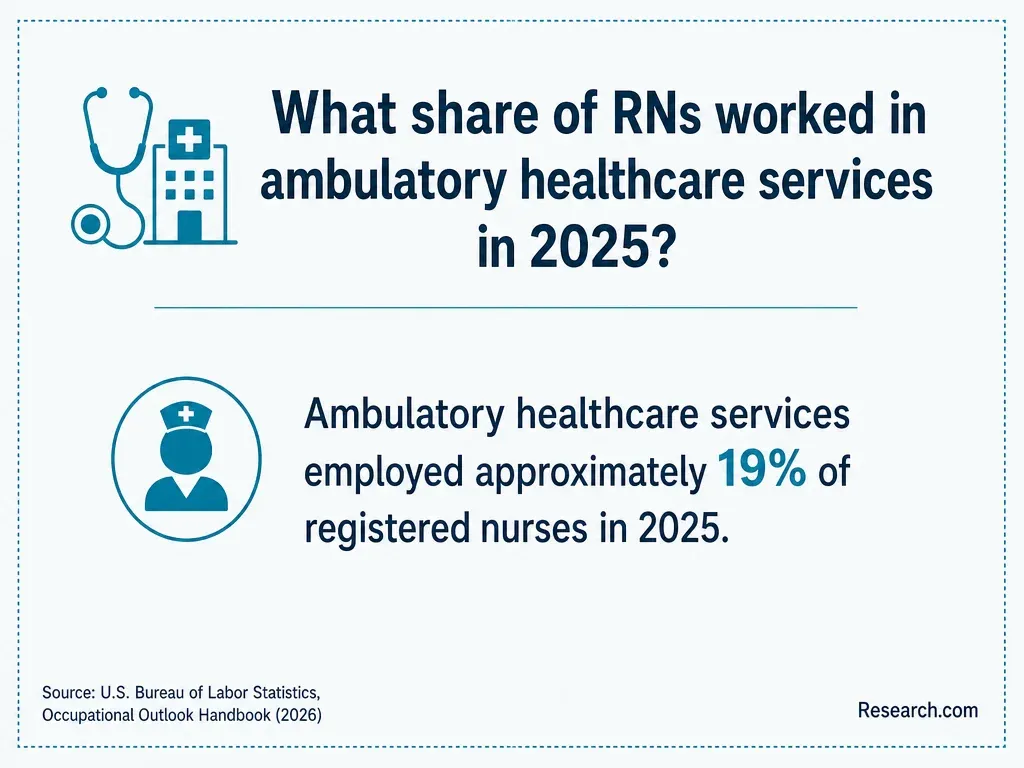
The immediate occupational change is from LPN to licensed RN, not simply from one degree label to another. RNs may assess and coordinate care within their licensed scope and work in settings such as hospitals, clinics, and community services. A BSN can meet educational preferences for some RN positions and provide a foundation for later advancement, but hiring, unit placement, pay, and specialty competence also depend on experience, orientation, employer requirements, and the local market.
For pay comparisons, use the U.S. Bureau of Labor Statistics' registered nurse occupation - not a claimed "BSN salary" - and check its most recent New Mexico wage estimates alongside actual local job postings. National RN wages and employment projections describe an occupation containing nurses with different degrees and experience; they do not predict an individual new RN's offer or a BSN pay premium. Later roles may require additional education and authorization. For instance, MSN-PMHNP program length comparisons concern graduate advanced practice preparation, not jobs available solely because an LPN earned a BSN.
Other Things You Should Know About Nursing
Often, if you maintain your LPN license and can meet your program's attendance and clinical requirements. Ask for the actual rotation schedule before committing to work shifts.
No. It may help you learn, but the hiring employer determines and evaluates orientation for the RN role and its patient population.
Not necessarily. Ask which schools and courses qualify, whether reimbursement requires a minimum grade, and whether leaving the job triggers repayment.
Only if the nursing program approves the site and all applicable placement and regulatory requirements are met. A nursing license or compact privilege alone does not approve a school's clinical arrangement.
- 16.12.3 NMAC - State Records Center & Archives - New Mexico https://www.srca.nm.gov/parts/title16/16.012.0003.html
- Pre-Licensure BSN | College of Nursing - UNM Health Sciences https://hsc.unm.edu/nursing/programs/bsn/pre-licensure/
- Nursing (AAS), LPN to RN Mobility Option (CPE) | CNM https://www.cnm.edu/programs/coordinated-program-entry/cpe-programs/nursing-aas-lpn-mobility-concentration
- Terms and Conditions | New Mexico State University https://alamogordo.nmsu.edu/student-services/financial-aid/terms-conditions.html
- BSN Degree Program | New Mexico State University https://schoolofnursing.nmsu.edu/nursing/son-pages/bsn-program.html
- Tuition & Fees | nnmc.edu https://catalog.nnmc.edu/content.php
- RN to BSN | College of Nursing - The University of New Mexico https://rnbsnonline.unm.edu/programs/rn-to-bsn.aspx
- Nursing Pathways in Education and the Workforce | ushe.edu https://udrc.ushe.edu/research/ra17/index.html
- Nursing, BSN: RN to BSN and Dual Enrollment Options | UCCS Online Programs https://online.uccs.edu/academics/programs/rn-to-bsn-and-dual-enrollment-option
- Concurrent enrollment pathway: A model for ADN-BSN programs - ScienceDirect https://www.sciencedirect.com/science/article/pii/S8755722323001011


