2027 Low-Cost Online Neurodiagnostic Technology Associate Degree Programs with Financial Aid: FAFSA, Grants, and Scholarships

Co-Founder and Chief Data Scientist
Choosing an online neurodiagnostic technology associate degree is really a cost-and-eligibility decision: the cheapest tuition is not always the lowest final bill. The current maximum Federal Pell Grant is $7,395 for eligible full-time students, which can substantially change the net price of a FAFSA-eligible program. This guide is for students comparing online or hybrid neurodiagnostic technology AAS or AS options, especially those who need grants, scholarships, employer benefits, or loans. You will learn how to verify aid eligibility, compare financial aid offers, avoid hidden costs, and choose a program that fits your career plan.
Key Things You Should Know
- FAFSA-eligible online neurodiagnostic technology programs are usually offered by Title IV-participating colleges and are commonly hybrid, with online coursework plus in-person labs or clinical rotations.
- The maximum Federal Pell Grant is $7,395 for eligible full-time students, but grants depend on financial need, enrollment level, cost of attendance, and whether the program itself is aid-eligible.
- The best value is the lowest reliable net price after grants, scholarships, required fees, clinical costs, travel, books, technology, and any loans-not the lowest advertised tuition.
Which Low-Cost Online Neurodiagnostic Technology Associate Degree Programs Offer Financial Aid?
Low-cost online neurodiagnostic technology associate degree programs that offer financial aid are typically career-focused Associate of Applied Science programs at public community colleges, technical colleges, or nonprofit health science colleges.
Because neurodiagnostic technology requires hands-on clinical skill development, most "online" programs are better described as hybrid: lectures may be online, but EEG labs, competencies, and supervised clinical hours must be completed in person.
The table below shows the main types of programs students are likely to encounter and how financial aid usually works. Use it to separate truly FAFSA-eligible degree programs from short training options that may require full out-of-pocket payment.
| Program type | Typical financial aid access | Cost pattern | Best fit | Important question to ask |
| Public community college AAS or AS in neurodiagnostic technology | Often eligible if the college participates in federal student aid and the program is approved for Title IV funding | Usually lower tuition for in-district or in-state students, but may include lab, background check, immunization, and clinical placement fees | Students seeking the lowest sticker price and a direct path to entry-level clinical work | Is this exact online or hybrid neurodiagnostic program listed as financial-aid eligible? |
| Public technical college AAS in neurodiagnostic or electroneurodiagnostic technology | Often FAFSA-eligible when the program leads to an eligible credential and meets minimum length rules | May have affordable tuition but higher equipment, testing, and clinical compliance costs | Students who want a career-focused program with structured clinical training | Are online students charged different tuition or distance-learning fees? |
| Private nonprofit health science college associate program | May participate in federal aid and may also offer institutional scholarships | Sticker price can be higher, but institutional aid may reduce net cost | Students who need flexible online coursework and stronger advising or clinical coordination | What is the average net price for students in this program after grants and scholarships? |
| Noncredit, certificate-only, or private training provider | Often not FAFSA-eligible unless offered through an eligible institution and approved program | May appear cheaper upfront but can require cash payment or private financing | Students already working in a clinical setting who need targeted training rather than a degree | Will this credential qualify for federal aid, transfer credit, or employer recognition? |
A neurodiagnostic technology associate degree is most useful when it combines online flexibility with verified clinical access. Be cautious of programs that advertise "fully online" completion without explaining how students complete required hands-on competencies, patient-care practice, and supervised clinical experience.
If you are still comparing healthcare pathways and want a program with more administrative or data-focused options, a health information management degree online may be worth reviewing alongside neurodiagnostic technology.
How Does FAFSA Work for Online Neurodiagnostic Technology Associate Degree Programs?
FAFSA is the federal form used to determine eligibility for need-based grants, federal student loans, and some state or institutional aid. Submitting the FAFSA does not guarantee that your online neurodiagnostic technology associate degree will be affordable; it only starts the aid calculation process.
The process matters because both the school and the specific program must be eligible. Follow these steps before you commit to enrollment or pay nonrefundable fees.
- Confirm that the college participates in federal student aid and has a valid federal school code.
- Ask whether the online or hybrid neurodiagnostic technology associate degree itself is Title IV-eligible, not just whether the institution accepts FAFSA.
- Complete the FAFSA using your legal name, Social Security number, income information, contributor information if required, and the correct school code.
- Review your Student Aid Index and the school's financial aid offer after the college receives your FAFSA results.
- Compare grants, scholarships, work-study, and loans separately so you know which aid does not need to be repaid.
- Ask how your aid changes if you enroll part time, fail a course, take a term off, or cannot secure a clinical placement on schedule.
The most common mistake is assuming FAFSA eligibility equals free tuition. Federal aid is based on need, enrollment intensity, cost of attendance, and program eligibility, so two students in the same program can receive very different packages.
Another important rule is satisfactory academic progress. Students usually must maintain a minimum GPA, complete a required share of attempted credits, and finish within a maximum timeframe to keep receiving federal aid; withdrawing from courses can reduce current or future eligibility.

What Grants Can Help Pay for an Online Neurodiagnostic Technology Associate Degree?
Grants are usually the best form of aid because they generally do not have to be repaid when students meet the award rules. For low-income and moderate-income students, grants can make a FAFSA-eligible online neurodiagnostic technology associate degree significantly less expensive than a non-eligible training program.
The table below summarizes the grant categories students should check first. Amounts and eligibility can change by award year, state, institution, and enrollment status.
| Grant source | What it may cover | Why it matters for neurodiagnostic technology students | Key limitation |
| Federal Pell Grant | Tuition, fees, books, supplies, and other education-related costs within the school's cost of attendance | The maximum award is $7,395 for eligible full-time students, making it the most important starting point for need-based aid | Actual award depends on financial need, enrollment level, program cost, and lifetime Pell limits |
| Federal Supplemental Educational Opportunity Grant | Additional need-based support at participating schools | Can reduce out-of-pocket costs for students with high financial need | Campus funds are limited and not every school participates |
| State grants | Tuition or general education costs for residents attending eligible in-state institutions | Can make a public community college or technical college much cheaper than a private option | Residency, deadlines, credit load, and approved-program lists vary by state |
| Institutional need-based grants | School-awarded aid that may be applied to tuition or fees | May make a higher-sticker-price nonprofit program competitive after aid | Renewal rules, minimum GPA, and funding availability vary by college |
| Workforce or adult learner grants | Training costs tied to high-demand healthcare occupations | May help career changers, displaced workers, or students referred through workforce agencies | Often requires separate approval and may not cover every program expense |
Students should also ask whether clinical compliance costs are included in the school's cost of attendance. Background checks, drug screening, immunizations, CPR certification, uniforms, liability insurance, and travel to clinical sites may not appear in a simple tuition quote.
For students who decide neurodiagnostic technology is too clinical or location-dependent, lower-cost healthcare options such as medical billing and coding may offer a more flexible online pathway, though the career outcomes and credential expectations are different.
Scholarships can reduce borrowing, but they are less predictable than grants because they may be competitive, limited by deadline, or tied to professional membership, residency, academic performance, or healthcare employment.
Neurodiagnostic technology students should search both broadly and narrowly: healthcare scholarships, allied health scholarships, community college foundation awards, and neurodiagnostic-specific awards can all be relevant.
The table below shows where to look and what each scholarship type is best suited to cover. This can help you build a scholarship plan instead of relying on one large award.
| Scholarship source | Typical applicant profile | Potential use | What to verify |
| College foundation scholarships | Enrolled or admitted students at a community college, technical college, or health science college | Tuition, fees, books, or program supplies | Whether online neurodiagnostic technology students are eligible |
| Allied health scholarships | Students pursuing patient-care healthcare careers | General education costs, clinical equipment, or certification-related expenses | Whether an associate degree qualifies and whether part-time students can apply |
| Neurodiagnostic or EEG professional scholarships | Students entering neurodiagnostic technology, EEG, epilepsy monitoring, intraoperative monitoring, or sleep-related training | Tuition support, professional development, or exam preparation | Membership, faculty recommendation, clinical placement, and program accreditation requirements |
| Hospital or health system scholarships | Students connected to a local employer, service area, or clinical partner | Tuition support in exchange for employment interest or service commitment | Whether accepting the award creates a work obligation |
| Local civic and community scholarships | Residents, adult learners, first-generation students, or students with financial need | Small gap funding for books, fees, transportation, or technology | Whether awards can be used for online or hybrid healthcare programs |
Scholarship renewal rules deserve close attention. A $1,000 award that renews for four terms can be more valuable than a one-time award with no renewal, while a scholarship that requires full-time enrollment may not help a working adult who can only attend part time.
If you are comparing aid-heavy online healthcare credentials, it can also be useful to review how accredited medical billing and coding schools online with financial aid structure grants and scholarships, since many of the same net-price comparison principles apply.
Financial aid can reduce the cost of an online neurodiagnostic technology associate degree from "unmanageable" to "possible," but the impact depends on the difference between total cost of attendance and gift aid. The most useful calculation is not tuition minus aid; it is total program cost minus grants and scholarships, with loans shown separately.
The examples below are illustrative net-price scenarios, not promises from any specific school. They show how the same degree can look very different depending on FAFSA eligibility, grant access, and scholarship support.
| Scenario | Example total annual cost before aid | Example grants and scholarships | Estimated amount still to cover | What the student should consider |
| High-need student at a low-cost public college | $9,000 | $7,395 Pell Grant plus possible state or institutional aid | Potentially low if fees and clinical costs are included in aid budget | Confirm whether aid covers summer terms, clinical travel, and program-specific fees |
| Moderate-need student at a public technical college | $12,000 | Partial Pell Grant and small institutional scholarship | Several thousand dollars may remain | Compare payment plan, employer aid, and subsidized loan options before using private loans |
| Student at a higher-cost private nonprofit program | $20,000 | Federal grants plus institutional scholarship | Could be lower than sticker price but still higher than many public options | Ask for program-level net price and total borrowing estimate through graduation |
| Student in non-FAFSA training program | $6,000 | No federal grants | Often most or all cost must be paid directly | Lower sticker price may still be less affordable if grants are unavailable |
A higher-cost program can become cheaper after aid, but only if the grants and scholarships are real, renewable, and applicable to the terms you will attend. Loans can help cover remaining cost, yet they should not be counted as a discount because they must usually be repaid with interest.
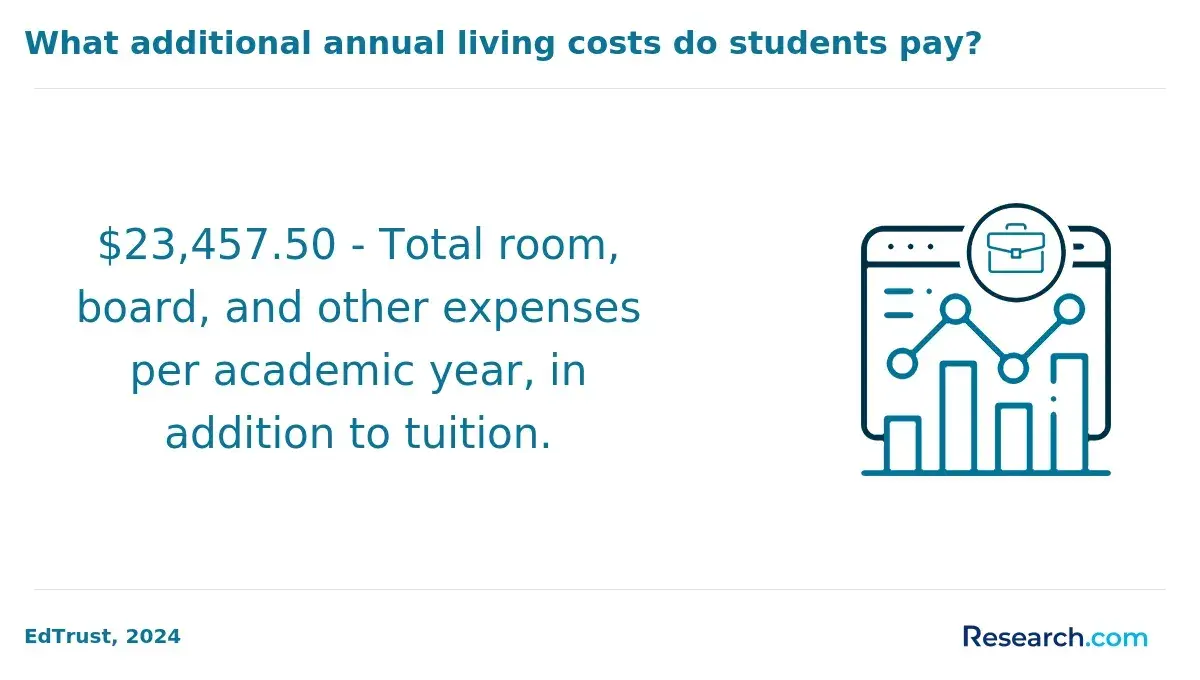
Students should request a full cost of attendance estimate that includes tuition, mandatory fees, distance-learning charges, books, EEG-related supplies, clinical compliance costs, transportation, parking, exam fees, graduation fees, and any required on-campus intensives.
Financial aid offers can be difficult to compare because schools may present grants, scholarships, loans, and work-study together. A generous-looking package may include a large loan, while a smaller package may have more grant aid and a lower net cost.
The table below explains the aid-offer details that matter most when comparing online neurodiagnostic technology associate degree programs. Focus on the items that affect actual out-of-pocket cost and completion risk.
| Aid-offer item | Why it matters | Red flag |
| Gift aid | Grants and scholarships reduce cost without typical repayment | The award is one-time only or depends on full-time enrollment you cannot maintain |
| Net price | Shows remaining cost after grants and scholarships | The school highlights tuition but excludes fees, clinical costs, or books |
| Loans | Can cover gaps but increase long-term cost | The package looks affordable only because it assumes maximum borrowing |
| Enrollment assumptions | Aid often changes between full-time, three-quarter-time, half-time, and less-than-half-time study | The offer is based on full-time attendance even though you plan to attend part time |
| Clinical placement costs | Neurodiagnostic programs may require travel, health records, background checks, and site-specific fees | The school cannot explain who pays if a clinical site is far from your home |
| Renewability | Multi-term awards are more valuable than one-time discounts | The scholarship requires a GPA, credit load, or program sequence you may not be able to sustain |
Use a consistent comparison process before choosing a program. This prevents you from mistaking the largest aid package for the best value.
- List each school's total cost of attendance for the same academic period.
- Subtract only grants and scholarships to find estimated net price.
- Separate federal loans, private loans, work-study, employer aid, and payment plans.
- Calculate the likely total cost through graduation, not just the first term.
- Ask how the package changes if you take fewer credits, repeat a course, or delay clinical rotations.
- Choose the program with the best combination of net price, accreditation, clinical access, completion support, and career preparation.
A program with the lowest tuition may still cost more if it has limited clinical placement support or if students must pay substantial travel costs. Conversely, a program with higher tuition may be worth considering if it offers stronger gift aid, predictable clinical coordination, and better alignment with credentialing expectations.
Employer tuition assistance can be especially valuable for neurodiagnostic technology students because hospitals, sleep centers, neurology clinics, and epilepsy monitoring units often need trained technologists.
The federal tax code allows up to $5,250 in employer-provided educational assistance to be excluded from taxable income when the benefit meets applicable rules, which can make employer aid a meaningful part of a low-cost strategy.
Before relying on employer benefits, clarify exactly how the benefit works. Employer programs can be generous, but they often have timing and service requirements.
- Ask whether the employer pays the school upfront or reimburses you after grades are posted.
- Confirm whether online or hybrid associate degree programs are eligible, and whether the program must be job-related.
- Check grade requirements, annual caps, waiting periods, and whether part-time employees qualify.
- Ask whether you must stay employed for a set period after receiving tuition assistance.
- Find out whether the benefit covers fees, books, certification exams, clinical compliance expenses, or only tuition.
- Coordinate employer aid with FAFSA because outside assistance can affect the school's aid calculations.
Other benefits may include union education funds, workforce-board support, hospital foundation scholarships, military education benefits, vocational rehabilitation, and payment plans. These options are most useful when they replace loans rather than simply delaying payment.
A good employer-funded path is often strongest for students already working as patient care technicians, medical assistants, EEG aides, sleep technicians, or hospital unit staff. These students may have easier access to clinical mentors and may be able to connect coursework with current workplace experience.
Accreditation and enrollment status directly affect whether students can receive and keep financial aid. At a minimum, students should verify institutional accreditation, federal aid participation, and program-level recognition relevant to neurodiagnostic technology employment or credentialing.
The table below shows how different eligibility factors can affect cost and risk. Use it before you submit an enrollment deposit.
| Factor | Why it affects financial aid | Why it affects career value |
| Institutional accreditation | Federal student aid generally requires attendance at an eligible accredited institution that participates in Title IV programs | Employers and transfer institutions may reject credits from schools without recognized accreditation |
| Program eligibility for Title IV aid | Some schools offer both aid-eligible and non-aid-eligible programs | A non-eligible program may still train students, but it can be more expensive upfront and less transferable |
| Programmatic accreditation or recognized approval | May not be required for all aid, but it can influence program credibility | Neurodiagnostic employers may prefer graduates from programs aligned with professional standards and credential pathways |
| Enrollment intensity | Pell Grant and other aid can change based on credit load | Part-time study may extend completion time and delay entry into the workforce |
| Satisfactory academic progress | Students who fall below GPA, pace, or maximum-timeframe rules can lose aid | Repeating courses can increase debt and postpone clinical completion |
| Transferability | Transfer credits can reduce future cost if students pursue a bachelor's degree later | Transfer-oriented AS degrees may support further education, while AAS degrees are often more career-focused |
Associate degree type matters. An AAS in neurodiagnostic technology is usually designed for direct employment, while an AS may include more transferable general education. An AA is less common for this clinical field and may be better suited to students planning a broader transfer pathway rather than immediate technical practice.
Students should also ask about certification preparation. Many employers value credentials such as Registered EEG Technologist, but eligibility pathways can depend on education, clinical experience, and current credentialing-board rules, so students should verify requirements directly before enrolling.
A low-cost online neurodiagnostic technology associate degree with financial aid is most beneficial for students who want a patient-facing healthcare role, can complete in-person clinical requirements, and qualify for enough gift aid to keep borrowing modest. It is also a strong fit for students who prefer a faster career-focused route over a four-year degree.
The value calculation should include both cost and career fit. The U.S. Bureau of Labor Statistics reported a $49,500 median annual wage for all occupations in May 2024; neurodiagnostic technology is a specialized allied health path, so students should compare local wage postings, employer credential preferences, and clinical placement quality rather than relying on a single national salary number.
Students most likely to benefit share several characteristics. These factors suggest that the degree may produce a stronger return on time and money.
- They qualify for Pell Grant, state grant, institutional scholarship, employer tuition assistance, or a combination of gift aid sources.
- They live close enough to approved clinical sites to avoid high travel or relocation costs.
- They are comfortable working with patients, electrodes, monitoring equipment, medical records, and neurological testing procedures.
- They want an applied healthcare role rather than a purely administrative or data-management position.
- They can maintain the enrollment level and academic progress required to keep financial aid.
- They have a realistic plan for certification, local employment, and possible advancement into EEG, epilepsy monitoring, sleep medicine, or intraoperative monitoring roles.
Students who cannot attend clinical rotations, need a fully asynchronous program, or prefer healthcare data and compliance work may want to compare alternatives such as the best online CAHIIM accredited health information management degree programs. That path may offer more online flexibility, though it prepares students for a different type of healthcare career.
How Should Students Minimize the Total Cost of an Online Neurodiagnostic Technology Associate Degree?
The lowest total cost usually comes from combining a FAFSA-eligible program, strong gift aid, low required fees, transfer credits, predictable clinical placement, and careful borrowing. Students should treat affordability as a step-by-step verification process, not a marketing claim.
Use the following sequence to reduce avoidable costs before enrollment and while completing the degree.
- Shortlist only programs that clearly explain online coursework, in-person clinical requirements, accreditation status, and federal aid eligibility.
- Request the full cost of attendance, including tuition, fees, books, technology, uniforms, background checks, immunizations, CPR, drug screening, liability insurance, clinical travel, exam preparation, and graduation fees.
- Complete the FAFSA as early as possible and check state grant deadlines, which may be earlier than school deadlines.
- Ask each school for a net-price estimate based on your planned enrollment level, residency, transfer credits, and aid eligibility.
- Apply for college foundation scholarships, allied health scholarships, employer aid, and local awards before accepting loans.
- Verify whether prior college credits can reduce program length without disrupting the neurodiagnostic course sequence.
- Compare aid offers by separating grants and scholarships from loans, work-study, and payment plans.
- Ask what happens financially if you fail a course, withdraw, lose clinical placement, or switch from full-time to part-time enrollment.
- Borrow only after calculating expected total debt through graduation and estimating a manageable repayment range.
- Keep copies of aid offers, scholarship renewal terms, clinical cost estimates, and program completion plans.
Common red flags include programs that will not confirm Title IV eligibility in writing, advertise "financial aid available" without showing whether the specific program qualifies, exclude major fees from tuition estimates, or promise employment outcomes without transparent placement data. A reputable program should be able to explain costs, aid rules, clinical requirements, and credential preparation clearly.
Other Things You Should Know About Neurodiagnostic Technology
Usually no. Lecture courses may be online, but students typically need in-person labs, patient-care practice, and supervised clinical rotations to develop EEG and neurodiagnostic testing skills.
Neurodiagnostic technologists help record and monitor nervous system activity using specialized equipment. Common duties may include preparing patients, applying electrodes, recording EEG studies, monitoring data quality, documenting procedures, and working with physicians or clinical teams.
Certification requirements vary by employer and role, but many employers prefer or require professional credentials such as EEG-related registration. Students should ask each program which exams it prepares graduates to pursue and what additional clinical experience may be required.
Useful skills include attention to detail, patient communication, comfort with medical equipment, basic anatomy and physiology knowledge, computer documentation, professionalism in clinical settings, and the ability to stay calm during patient monitoring procedures.
- Program Information https://orangecoastcollege.edu/academics/health-sciences/allied-health/neurodiagnostic-technology/program-information.html
- Understanding Financial Aid Eligibility and the FAFSA Process https://www.innovativecpagroup.com/resources/newsarticles/understanding-financial-aid-eligibility-and-the-fafsa-process/
- Unlocking the Mind: EEG Tech Training and Career Guide - Neuro Pathway https://myneuropathway.com/blog/unlocking-the-mind-eeg-tech-training-and-career-guide/
- FAFSA Requirements: A Complete Guide | Bankrate https://www.bankrate.com/loans/student-loans/fafsa-requirements/
- Neurodiagnostic Tech Certification & Licensure Guide â Trusted Health https://www.trustedhealth.com/allied-career-guide/neurodiagnostic-tech/certification-guide
- Do Online Colleges Accept FAFSA? | Ascent Funding https://www.ascentfunding.com/blog/do-online-colleges-accept-fafsa/
- 9 Online Schools That Accept FAFSA (and How to Get Financial Aid) https://www.studentloanplanner.com/financial-aid-online-colleges/
- Find Online Radiation Therapy Programs with Financial Aid https://www.edumed.org/online-schools/radiation-therapy/financial-aid/
- ASSOCIATE OF SCIENCE IN NEURODIAGNOSTIC TECHNOLOGY - Procirca https://www.procirca.com/associate-of-science-in-neurodiagnostic-technology/
- Can You Get Financial Aid for Online College? Finding Out https://beal.edu/can-you-get-financial-aid-for-online-college/