2027 Low-Cost Online Learning Design Doctorate Programs with Financial Aid: Scholarships, Grants, and Employer Tuition Support

Co-Founder and Chief Data Scientist
Choosing an online learning design doctorate is a high-stakes cost decision because tuition, fees, dissertation timelines, and aid policies can change the real price by thousands. The BLS reported a May 2024 median salary of $125,040 for training and development managers, showing why advanced learning design credentials can appeal to educators, corporate trainers, and instructional technology leaders. This guide explains lower-cost program types, funding sources, employer tuition support, and comparison strategies so you can identify a doctorate that fits your goals without taking on unnecessary debt.
Key Things You Should Know
- The lowest total cost usually comes from comparing full program price, not per-credit tuition; low-cost online learning design doctorates often fall into the public university or tuition-flat private online category, but fees, residencies, and dissertation continuation charges can change the final bill.
- Graduate students can use federal Direct Unsubsidized Loans up to $20,500 per academic year for 2025-26, but interest rates of 7.94% for Direct Unsubsidized Loans and 8.94% for Grad PLUS Loans make grants, scholarships, and employer support especially valuable.
- Return on investment depends on your target role: a doctorate may be most financially defensible for instructional design leadership, faculty, research, learning analytics, EdTech strategy, or senior training roles rather than entry-level instructional design jobs.
Which Online Learning Design Doctorate Programs Offer the Lowest Total Cost?
The lowest-cost online learning design doctorate programs are usually EdD or PhD programs in instructional design, instructional technology, learning design, educational technology, curriculum and instruction with a technology concentration, or organizational learning. A low advertised tuition rate is useful, but the best comparison is total program cost: required credits multiplied by tuition, plus mandatory fees, residency travel, dissertation enrollment, books, software, and any tuition increases during the program.
Students looking for a broader affordability scan can also compare lists of cheapest online EdD programs, then narrow the results to doctorates with learning design, instructional technology, educational technology, or curriculum design coursework.
The table below summarizes common low-cost online doctorate pathways in learning design-related fields. Use it as a screening tool, then confirm the current tuition and fee schedule directly with each school before applying.
| Program or program type | Typical credential | Why it may be lower cost | Cost caution to verify | Best fit |
| Public online EdD in instructional design or instructional technology | EdD | Often uses in-state, e-rate, or online graduate tuition instead of premium doctoral pricing | Residency, dissertation, distance learning, and university fees may apply separately | K-12, higher education, and training professionals seeking applied leadership roles |
| Public online PhD in educational technology or learning sciences | PhD | May offer stronger research funding in some departments | Some PhD programs require synchronous research work, campus visits, or faculty matching | Students targeting research, faculty, learning analytics, or academic leadership roles |
| Private nonprofit online EdD with flat per-credit tuition | EdD | Predictable tuition can make budgeting easier, especially for part-time students | Scholarship amounts may be smaller than the tuition gap compared with public options | Working adults who need consistent online scheduling and structured dissertation support |
| Private online doctorate with accelerated terms | EdD or PhD | Shorter course terms may reduce opportunity cost if the student can progress continuously | Acceleration can increase workload and may not reduce cost if tuition is charged per credit | Experienced professionals with a clear dissertation topic and strong time management |
| Curriculum and instruction doctorate with learning technology concentration | EdD | Sometimes priced as a general education doctorate rather than a specialized technology program | Confirm that the curriculum includes instructional design, learning science, digital learning, or evaluation coursework | Educators who want learning design skills without leaving the broader education leadership track |
A low-cost program makes the most sense when it is regionally accredited, has faculty expertise that matches your dissertation interest, and provides enough advising to help you finish. A slightly higher tuition program may be the better value if it offers stronger dissertation support, transfer credit, employer-aligned scheduling, or institutional scholarships that reduce your net cost.
What Financial Aid Is Available for Online Learning Design Doctorate Students?
Online doctoral students can often use many of the same financial aid tools as campus-based graduate students, but eligibility depends on the institution, enrollment status, degree level, satisfactory academic progress rules, and whether the program participates in federal aid. The starting point is the FAFSA because schools generally use it to determine federal loan eligibility and, in some cases, institutional need-based aid.
The 2025-26 federal loan rates make careful borrowing especially important: graduate Direct Unsubsidized Loans carry a 7.94% fixed interest rate, while Grad PLUS Loans carry an 8.94% fixed interest rate. That means even a modest tuition difference can become much larger after interest if you finance most of the degree.
The table below compares the major funding sources available to many online learning design doctorate students. It focuses on how each source affects net cost and what students should verify before relying on it.
| Funding source | Typical availability for online doctoral students | Repayment required? | What to verify | Best use |
| Federal Direct Unsubsidized Loan | Common at aid-participating institutions | Yes | Annual borrowing limit, interest rate, origination fee, and half-time enrollment rules | Covering remaining tuition after grants, scholarships, and employer aid |
| Federal Grad PLUS Loan | Common if the school participates in federal aid | Yes | Credit check, higher interest rate, cost of attendance cap, and repayment options | Last-resort gap funding when lower-cost aid is exhausted |
| Institutional scholarship or tuition discount | Varies widely by school | No, if requirements are met | Renewal GPA, enrollment load, application deadline, and whether online students qualify | Reducing tuition before borrowing |
| Graduate assistantship or fellowship | Less common for fully online students but possible in some programs | No, though work or research obligations may apply | Remote eligibility, stipend amount, tuition waiver scope, and weekly work expectations | Reducing cost while building research or teaching experience |
| Employer tuition assistance | Common in education, healthcare, government, corporate learning, and technology-enabled training roles | Usually no, unless the employee leaves early or fails course requirements | Annual cap, grade requirements, repayment clause, and whether doctoral tuition is covered | Paying course-by-course while staying employed |
| Private scholarship or professional association award | Selective but worth pursuing | No, if award conditions are met | Field restrictions, dissertation topic requirements, membership rules, and deadlines | Offsetting fees, research expenses, conference travel, or dissertation costs |
A practical funding order is to use gift aid first, employer support second, low-interest or limited federal borrowing third, and higher-cost borrowing last. Avoid assuming that an online format automatically lowers financial need; online students still face tuition, software, technology, childcare, and reduced work-hour costs.
Which Scholarships Help Reduce the Cost of an Online Learning Design Doctorate?
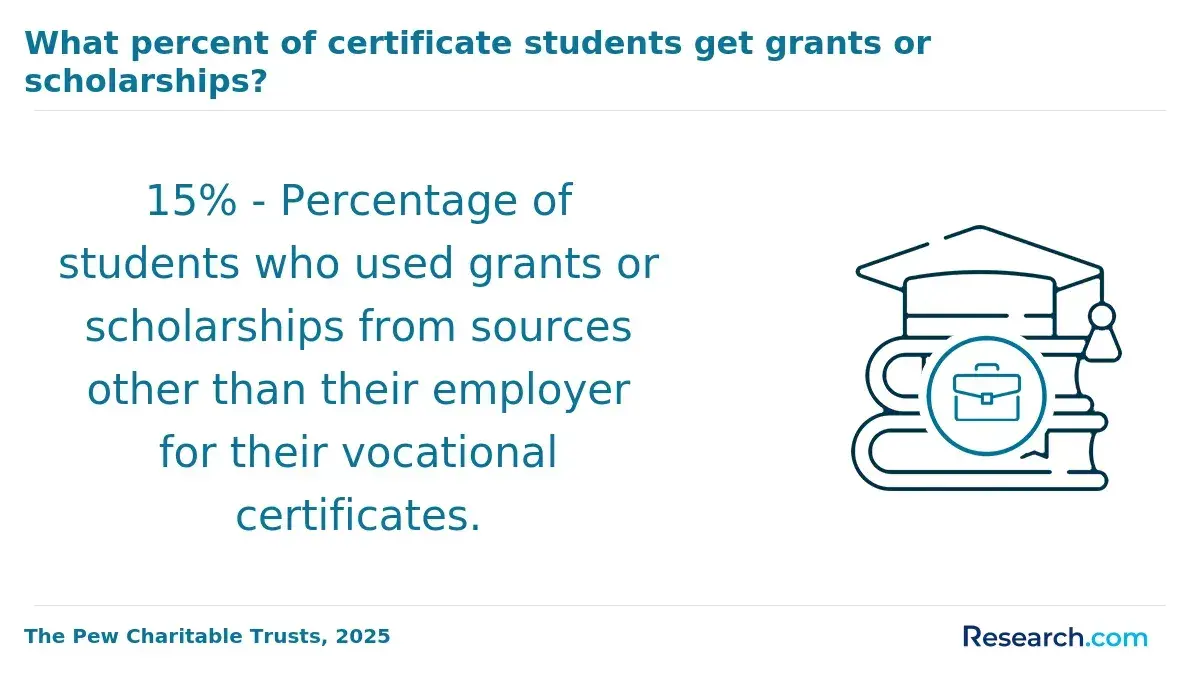
Scholarships for learning design doctorate students usually fall into three groups: university awards, professional association scholarships, and dissertation or research grants. Doctoral scholarships are often smaller than undergraduate scholarships, but they can still reduce borrowing, especially when stacked with employer tuition assistance.
If you are not sure whether a doctorate is necessary yet, comparing lower-cost graduate pathways such as the best online instructional design master's programs can help you decide whether a master's degree, certificate, or doctorate is the right next investment.
The table below highlights scholarship categories that commonly fit online learning design, instructional design, educational technology, and curriculum innovation students. Exact award amounts and eligibility rules change, so verify deadlines and online-student eligibility before applying.
| Scholarship or grant category | Who it may fit | Typical selection factors | Cost it can help cover |
| University graduate education scholarships | Online EdD or PhD students enrolled through a college of education | Academic record, financial need, leadership, service, or educator status | Tuition and mandatory fees |
| Instructional technology and educational technology association awards | Students researching digital learning, learning technologies, or instructional systems | Research focus, association membership, professional contribution, or conference participation | Tuition, research expenses, or professional development |
| Dissertation research grants | Doctoral candidates collecting data, building interventions, or evaluating learning outcomes | Approved proposal, research design quality, and topic relevance | Data collection, software, transcription, incentives, and analysis tools |
| Diversity, equity, and educator leadership scholarships | Students serving underrepresented learners, rural schools, adult learners, or accessibility-focused populations | Career goals, community impact, and demonstrated service | Tuition, books, and project expenses |
| State educator grants or professional development funds | Licensed educators, instructional coaches, or district learning leaders | State residency, employment status, shortage-area priorities, or district approval | Course tuition or professional learning costs |
Strong scholarship applications usually connect your doctoral study to a clear problem in learning design, such as improving online course completion, designing accessible learning, evaluating AI-supported instruction, or expanding professional training for adult learners. The common mistake is applying with a generic career statement; funders usually prefer a specific, measurable purpose.
Before each application cycle, create a scholarship file with the materials that doctoral awards frequently request. This prevents missed deadlines and makes it easier to apply for several awards without rewriting from scratch.
- Updated resume or CV showing teaching, training, design, technology, leadership, or research experience
- Statement of purpose that explains your learning design problem, population, methods, and intended impact
- Unofficial and official transcripts, because some awards require both at different stages
- Two or three recommendation contacts who can speak to research potential, instructional design skill, or leadership ability
- Draft dissertation or research interest summary, even if your final topic is not yet approved
How Can Employer Tuition Assistance Help Pay for an Online Learning Design Doctorate?
Employer tuition assistance can be one of the strongest ways to reduce the out-of-pocket cost of an online learning design doctorate because many students in this field already work in schools, universities, healthcare training, government learning departments, corporate L&D, or EdTech. The advantage is that you can often apply the degree directly to your current role while spreading tuition across multiple fiscal years.
Under federal tax rules, employers may generally provide up to $5,250 per year in tax-free educational assistance to eligible employees. For a part-time doctoral student taking two or three courses per year, that amount can meaningfully reduce annual tuition, but it rarely covers the entire degree by itself.
Employer policies vary, so read the written policy before enrolling. The most important details are not always the headline benefit amount.
- Check whether doctoral programs are covered or whether the benefit is limited to certificates, bachelor's degrees, or master's degrees.
- Ask whether reimbursement is paid after course completion, paid directly to the school, or advanced before the term begins.
- Confirm grade requirements, because many employers reimburse only courses completed with a minimum grade.
- Look for service commitments or clawback clauses that require repayment if you leave the organization within a certain period.
- Ask whether books, technology fees, dissertation credits, residency fees, and research software are eligible expenses.
- Coordinate course timing with the employer's calendar year so you do not waste unused annual benefit dollars.
An employer-sponsored doctorate makes the most financial sense when the program supports a role your employer values, such as learning experience design, training evaluation, LMS strategy, accessibility, faculty development, AI learning policy, or workforce education. It may make less sense if the employer benefit locks you into a job that does not match your long-term goals or requires repayment you cannot comfortably absorb.
How Do Assistantships, Fellowships, and Research Funding Work for Online Learning Design Doctorate Students?
Assistantships and fellowships are more common in full-time campus-based doctoral programs, but online students should not ignore them. Some learning design programs offer remote research assistant roles, course design work, evaluation projects, teaching support, or grant-funded positions that align well with an online student's professional background.
The key question is whether the funding is compatible with your enrollment format and work schedule. A remote assistantship may be valuable, but a position requiring daytime meetings, campus presence, or a fixed weekly workload can be difficult for working professionals.
These funding types differ in purpose and flexibility, so ask specific questions instead of assuming they all work the same way.
- Assistantships usually involve work, such as teaching support, research coding, literature reviews, course design, or faculty project assistance.
- Fellowships usually support study or research and may not require weekly work, but they are often more competitive.
- Research grants may cover dissertation expenses rather than tuition, which still helps if your study requires software, survey tools, transcription, data analysis, or participant incentives.
- Tuition waivers may cover only a set number of credits, and some exclude online program fees or doctoral continuation credits.
- Stipends may be taxable and may affect your financial aid package, so ask the financial aid office how the award will be treated.
The strongest candidates for remote funding usually bring a clear skill set: instructional design, research methods, statistics, qualitative analysis, accessibility review, learning management systems, multimedia design, or evaluation. If you already work in learning design, frame your experience as research capacity, not just job history.
Which Program Features Have the Biggest Impact on the Total Cost of an Online Learning Design Doctorate?
The biggest cost drivers are not always visible on a tuition page. A program with higher tuition but fewer required credits, stronger transfer policies, and better dissertation support can cost less than a program with a low per-credit rate and a long completion timeline.
Students comparing pace should be cautious with accelerated options. Resources on 1 year EdD programs online can help explain how fast-track formats work, but learning design doctorates still require realistic time for research design, data collection, analysis, and dissertation approval.
The table below shows which features most often change total cost. Use it to build a full-cost worksheet before committing to a program.
| Program feature | Why it affects cost | Lower-cost signal | Red flag |
| Required credits | More credits usually mean more tuition and more time enrolled | Clear credit requirement after transfer review | Unclear dissertation credit minimum or open-ended continuation enrollment |
| Transfer credit policy | Accepted graduate credits can reduce tuition | Published maximum transfer credits and early transcript review | Transfer decisions made only after enrollment deposit |
| Residency requirement | Campus visits add travel, lodging, meals, and time away from work | Virtual residency or short, predictable campus requirement | Multiple in-person sessions not included in cost estimates |
| Dissertation model | Long dissertation delays can add semesters of tuition or fees | Structured milestones, committee assignment process, and research methods support | No clear timeline for proposal, IRB, data collection, defense, and revisions |
| Technology and software fees | Learning design students may need authoring tools, analytics software, or research platforms | Included software access or student licensing | Required tools not disclosed before enrollment |
| Enrollment pace | Part-time study can preserve income but may extend fee exposure | Predictable part-time course rotation | Courses offered too infrequently, delaying progress |
A common mistake is choosing the program with the lowest tuition per credit without asking how many dissertation credits students typically complete. For doctoral programs, time-to-completion risk is a real cost factor.
How Can Students Reduce Borrowing While Earning an Online Learning Design Doctorate?
The best borrowing strategy is to reduce the amount you need before loans enter the picture. For online learning design doctoral students, that usually means combining employer support, scholarships, careful pacing, transfer credit, and a dissertation plan that is realistic from the beginning.
Follow a sequence that protects cash flow and keeps higher-interest borrowing as a last resort.
- Request a full cost-of-attendance estimate from each school, including tuition, fees, residencies, dissertation credits, books, software, and expected annual increases.
- Ask for a transfer credit evaluation before enrolling so you know whether prior graduate coursework will reduce required credits.
- File the FAFSA early if the school participates in federal aid, even if you hope to avoid loans, because some institutional aid processes use FAFSA information.
- Apply for university scholarships and professional awards before accepting the full loan amount offered.
- Submit employer tuition assistance paperwork before each term, not after the deadline, and align courses with annual benefit limits.
- Choose a dissertation topic that is feasible with your access to participants, data, tools, and approvals.
- Borrow only the amount you need for the term rather than automatically accepting the full annual loan offer.
Part-time enrollment can reduce borrowing if you can pay some tuition from income or employer reimbursement. Full-time enrollment can be less expensive only when it shortens the program enough to reduce fees, preserve funding, or move you into a higher-paying role sooner. The right choice depends on your work schedule, family obligations, aid package, and dissertation readiness.
Watch for red flags that can increase debt unexpectedly. These include unclear dissertation continuation fees, mandatory residencies not listed in tuition estimates, scholarships that cannot be renewed, employer reimbursement that excludes doctoral courses, and programs that will not provide completion or student outcome information.
Does Paying Less for an Online Learning Design Doctorate Affect Career Outcomes?
Paying less does not automatically weaken career outcomes, and paying more does not guarantee stronger ones. Employers and academic hiring committees usually care more about accreditation, relevant experience, portfolio quality, research ability, leadership record, and fit with the role than the size of your tuition bill.
Career outcomes vary by sector. The BLS reported May 2024 median pay of $74,720 for instructional coordinators and $125,040 for training and development managers, but those figures describe occupations rather than guaranteed outcomes for doctorate holders. Use them as labor-market context, not as a promise that a degree will produce a specific salary.
A lower-cost doctorate can support strong outcomes when the program helps you build evidence of advanced capability. In learning design, that evidence often matters more than brand prestige alone.
- A dissertation or applied research project tied to measurable learning outcomes, workforce performance, accessibility, or digital learning effectiveness
- A portfolio showing learning experience design, evaluation plans, needs assessment, learning analytics, and technology integration
- Experience leading course redesign, faculty development, training strategy, online program quality, or enterprise learning systems
- Research skills in qualitative, quantitative, mixed-methods, or design-based research
- Clear alignment between the doctorate concentration and the roles you plan to pursue
A higher-cost program may be worth considering if it provides specialized faculty, stronger research networks, funded projects, reputable applied partnerships, or a structure that helps you finish faster. It may not be worth the premium if the curriculum is generic, the dissertation process is unclear, or the school cannot explain how online doctoral students are supported.
Which Online Learning Design Doctorate Programs Offer the Best Combination of Cost, Financial Aid, and Flexibility?
The best-value program is not necessarily the cheapest. For most working adults, the strongest combination is a regionally accredited online doctorate with transparent total costs, flexible pacing, relevant learning design coursework, reasonable dissertation support, and funding that fits the student's employment situation.
The table below organizes program choices by student profile. This is often more useful than a single ranking because affordability depends on whether you can use employer benefits, transfer credits, scholarships, or full-time study.
| Student profile | Best-value program pattern | Why it works | What to avoid |
| K-12 educator or instructional coach | Online EdD in curriculum, instruction, instructional technology, or learning design from a public or education-focused institution | May align with district professional development goals and applied leadership projects | Programs without coursework in digital learning, assessment, accessibility, or adult learning if those are career goals |
| Corporate learning and development professional | Online EdD in learning design, organizational learning, instructional systems, or educational technology | Can connect coursework to workplace learning, training evaluation, and performance improvement | Programs focused only on K-12 policy if the goal is corporate L&D leadership |
| Higher education instructional designer | Online doctorate with faculty development, online learning, learning analytics, and research methods depth | Supports roles in academic innovation, online program quality, and teaching and learning centers | Programs with weak research methods support or limited dissertation advising |
| Aspiring faculty or researcher | Online or hybrid PhD with strong research mentorship and publication opportunities | Research productivity and faculty fit may matter more than maximum flexibility | Programs that are convenient but do not support publishable research or methodological training |
| Employer-funded student | Part-time online program with predictable course sequencing and annual tuition planning | Allows tuition assistance to be used across multiple years while maintaining income | Accelerated loads that exceed annual reimbursement caps or create work conflicts |
| Debt-averse student | Lowest total cost regionally accredited program with transfer credits and limited residency requirements | Reduces both direct tuition and hidden costs | Choosing solely by tuition without verifying fees, completion support, and accreditation |
If two programs look similar, compare net cost after aid rather than sticker price. A school with higher tuition but a renewable scholarship, transfer credit, and no travel requirement may cost less than a cheaper program with mandatory residencies and limited dissertation support.
How Should Students Compare Low-Cost Online Learning Design Doctorate Programs?
A smart comparison process starts with your career goal and works backward. Learning design doctorates can lead toward different outcomes: senior instructional design, academic technology leadership, corporate learning strategy, curriculum leadership, faculty development, research, consulting, or higher education administration. The right program is the one that supports your target outcome at the lowest reasonable net cost.
Accreditation also matters, especially if your work overlaps with regulated education roles. For example, students comparing education pathways outside learning design may need specialized accreditation checks, just as those researching school psychology programs online accredited by NASP must consider field-specific standards; learning design students should at minimum confirm institutional accreditation and any program-level quality indicators relevant to their goals.
Use these questions when speaking with admissions, financial aid, program faculty, and current students. The answers will reveal whether a low-cost program is truly affordable and academically suitable.
- What is the total estimated cost from enrollment through dissertation completion, including fees and expected annual tuition changes?
- How many credits are required after my transfer evaluation, and when will I receive that evaluation in writing?
- Are online doctoral students eligible for the same scholarships, grants, assistantships, or tuition discounts as campus students?
- How many in-person residencies are required, and what costs should students expect for travel and lodging?
- What is the typical dissertation timeline for part-time online students in this program?
- How are dissertation chairs assigned, and what happens if a student's topic does not match available faculty expertise?
- What learning design tools, research software, or technology platforms are included in tuition?
- What career services, alumni networks, research opportunities, or portfolio-building experiences are available to online students?
- Can the program provide completion data or outcome information for online doctoral students?
- What happens financially if I need to pause enrollment for work, health, military, or family reasons?
After gathering answers, compare programs in three layers: academic fit, net cost, and completion risk. A low-cost doctorate is a good investment only if it is credible, finishable, and aligned with the work you want to do after graduation.
Other Things You Should Know About Learning Design
They overlap, but they are not always identical. Instructional design often focuses on designing instruction, assessments, and learning materials, while learning design may take a broader view that includes learner experience, technology, accessibility, analytics, motivation, and learning environments.
Usually no. A teaching license may matter for K-12 roles, district leadership, or state-specific educator positions, but most instructional design, corporate training, higher education technology, and learning experience roles do not require teacher licensure.
Some programs are fully online, while others require short residencies, orientations, dissertation intensives, or campus defenses. Always ask whether any in-person requirements apply and whether virtual alternatives are available.
Helpful preparation includes research methods, academic writing, learning theory, assessment design, accessibility, project management, learning management systems, and basic data analysis. Experience designing or evaluating real learning programs can also make doctoral coursework and dissertation planning easier.
References
- Financial Supports - Alder Graduate School of Education https://aldergse.edu/financial-supports/
- Scholarships for Doctor of Education (EdD) Students | Teach.com https://teach.com/online-ed/education-degrees/online-edd-programs/scholarships/
- The Ultimate Guide to Designing Education Benefits https://guild.com/education-benefits
- Tuition Reimbursement Programs [A Guide for HR and Employers] https://compt.io/blog/employee-tuition-reimbursement/
- 50+ Scholarships & Grants for Study Abroad in 2025 | Go Overseas https://www.gooverseas.com/blog/study-abroad-scholarships-grants
- Funding and Scholarships Options for Online PhD Programs 2026 - GTR Blogs | Career Guidance Articles https://gtracademy.org/blog/scholarships-options-for-online-phd-programs/
- Paying for college https://www.commonapp.org/plan/paying-for-college/
- 2025 Most Affordable Online Doctorates in Education https://www.onlineu.com/most-affordable-colleges/education-doctoral-degrees
- 25 Cheapest Online EdD Programs of 2025 https://www.eddprograms.org/schools/affordable-online-doctor-of-education-programs/
- Best Online Doctor of Education Programs for 2025 https://www.princetonreview.com/education-school-rankings