2027 Best Online Learning Design Doctorate Programs for Mid-Career Professionals

Co-Founder and Chief Data Scientist
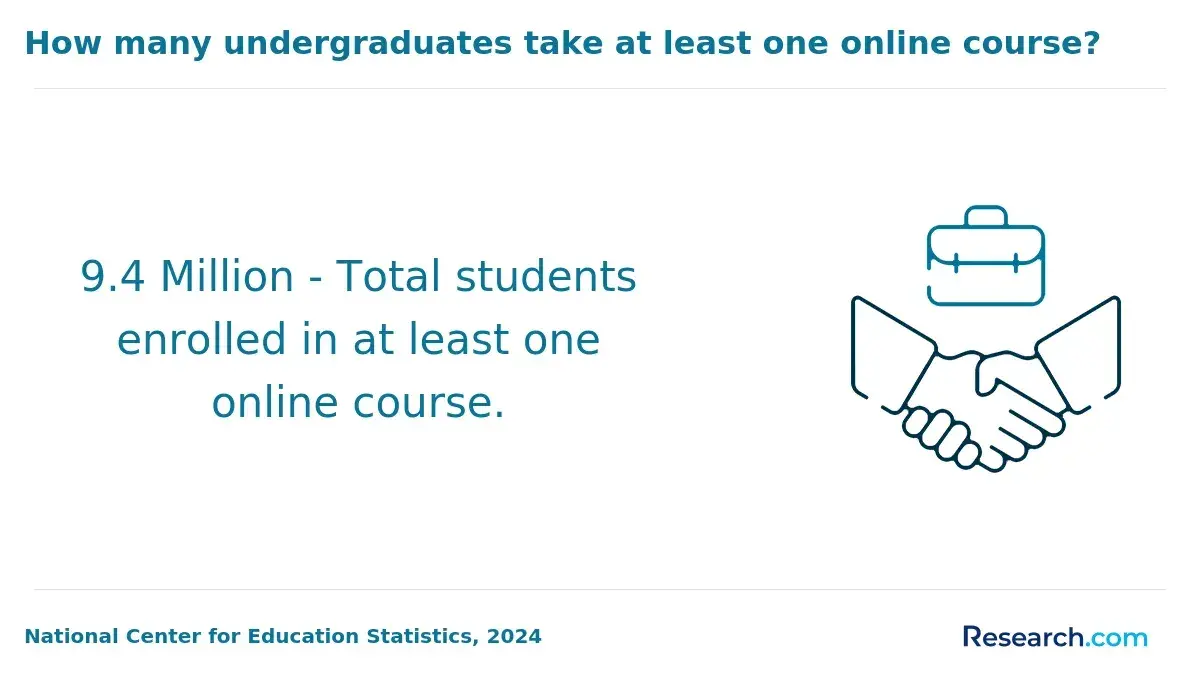
Mid-career Learning Design professionals often reach a point where experience is not enough for senior strategy, research, or academic leadership roles. An online doctorate can help, but only if the program fits your schedule, goals, and budget. NCES data released in 2024 shows that more than half of postbaccalaureate students took at least one distance education course, reflecting how common graduate online study has become.
This guide explains program options, costs, timelines, admissions, and career trade-offs so you can decide whether an online Learning Design doctorate is the right next move.
Key Things to Know About Online Learning Design Doctorate Programs for Mid-Career Professionals
- The best online Learning Design doctorate programs for working professionals are usually EdD or PhD programs in instructional design, learning technologies, educational technology, curriculum and instruction, or learning sciences with flexible online coursework and strong dissertation support.
- NCES graduate tuition data released in 2024 shows average annual graduate tuition and required fees were roughly $12,600 at public institutions and $30,500 at private nonprofit institutions, so total cost can vary widely by school type, residency rules, and transfer credits.
- BLS May 2024 wage data places median pay at $74,720 for instructional coordinators, $127,090 for training and development managers, and $103,960 for postsecondary education administrators, making the doctorate most useful when it supports leadership, research, faculty, or executive learning roles rather than general entry-level instructional design work.
Is earning an online Learning Design doctorate worth it for mid-career professionals?
An online Learning Design doctorate can be worth it when the degree directly supports a leadership, research, faculty, consulting, or organizational learning strategy goal. Learning Design is the practice of creating effective learning experiences using instructional theory, learner research, technology, assessment, and performance improvement. At the doctoral level, the focus shifts from building courses to leading systems, evaluating learning at scale, conducting applied research, and influencing policy or strategy.
The value is strongest for professionals who already have several years of experience in instructional design, corporate learning, higher education technology, curriculum leadership, UX learning, faculty development, or workforce training. For someone still trying to enter the field, a doctorate may be more expensive and time-intensive than necessary; a master's degree, graduate certificate, or portfolio-based path may produce faster returns.
The decision often comes down to whether the credential unlocks opportunities that experience alone has not. BLS May 2024 wage data shows the median salary for training and development managers was $127,090, while instructional coordinators had a median salary of $74,720. That gap does not mean a doctorate automatically causes a salary increase, but it shows why professionals targeting senior learning leadership may view doctoral training as part of a broader advancement strategy.
This comparison can help clarify when the degree makes sense and when another option may be better.
| Professional situation | Doctorate may be worth it when | Another option may be better when |
| Experienced instructional designer | You want to lead enterprise learning strategy, research teams, or academic programs. | You mainly need stronger authoring-tool, LMS, or multimedia production skills. |
| Corporate learning manager | You want credibility for director-level, CLO-track, evaluation, or organizational change roles. | Your employer rewards certifications, project results, or management experience more than degrees. |
| Higher education learning technologist | You want faculty, center director, assessment, or academic innovation leadership roles. | You need a faster credential to qualify for a specific promotion cycle. |
| K-12 curriculum or technology leader | You want district-level learning innovation, research, or superintendent-adjacent leadership responsibilities. | Your state or district requires a different administrative license for the role you want. |
| Consultant or entrepreneur | You want to strengthen research credibility for complex learning transformation projects. | Your clients hire primarily based on case studies, niche expertise, or industry network. |
The biggest mistake is assuming the letters after your name will do the career work by themselves. A doctorate is more likely to pay off when you enter with a clear problem to study, a target role, employer support, and a realistic plan for completing research while working.
Which online Learning Design doctorate programs are the best for mid-career professionals?
The best program is not necessarily the one with the most recognizable name. For mid-career professionals, the strongest fit usually combines regional accreditation, a relevant Learning Design concentration, flexible delivery, experienced faculty, applied research support, and a dissertation or capstone model that connects to workplace problems.
The programs below are examples of U.S. online or mostly online doctorates that working Learning Design professionals commonly compare. Availability, residency requirements, tuition, and concentration names can change, so confirm details with each university before applying.
| University | Relevant doctorate | Best fit for | Format considerations |
| Boise State University | EdD in Educational Technology | Learning technology leaders, instructional designers, and online learning professionals who want an applied doctorate. | Designed for online students; confirm current cohort and dissertation expectations. |
| Indiana University Bloomington | EdD or doctoral study in Instructional Systems Technology | Professionals seeking strong grounding in instructional systems, design research, and performance improvement. | Check whether your preferred doctoral pathway is fully online, hybrid, or requires campus components. |
| University of South Carolina | EdD in Educational Practice and Innovation with Learning Design and Technologies focus | Educators and workplace learning professionals who want an applied innovation-focused doctorate. | Online-oriented structure; verify residency, internship, and dissertation-in-practice requirements. |
| Old Dominion University | PhD in Education with Instructional Design and Technology concentration | Professionals interested in research-intensive preparation for higher education, research, or advanced design roles. | May include synchronous or residency expectations; ask about dissertation advising for distance students. |
| Arizona State University | EdD in Leadership and Innovation | Working professionals who want to study learning innovation, organizational change, or educational leadership problems. | Broad leadership doctorate rather than a narrow instructional design doctorate. |
| Liberty University | EdD in Curriculum and Instruction with Instructional Design and Technology options | Professionals seeking a faith-based private university environment and flexible online study. | Confirm transfer credit, dissertation sequence, and any intensive requirements. |
| University of West Georgia | EdD in School Improvement with instructional technology-related pathways | K-12 and education-sector professionals focused on school improvement, technology integration, and learning systems. | More education-sector oriented than corporate learning oriented. |
| Capella University | PhD in Education with instructional design-related specialization options | Adult learners who want an online private university format with structured doctoral milestones. | Review faculty model, dissertation support, and employer recognition carefully. |
Because program names vary, search beyond the phrase "Learning Design doctorate." Strong programs may use terms such as instructional design and technology, learning technologies, instructional systems, educational technology, curriculum and instruction, learning sciences, or education innovation.
Use a structured comparison process before building your shortlist:
- Confirm institutional accreditation through the U.S. Department of Education or CHEA-recognized accreditor directories.
- Read the doctoral curriculum, not just the marketing page, to see whether it includes research design, learning theory, evaluation, technology integration, and dissertation support.
- Ask whether online students receive the same faculty advising, library access, research software, and professional networking as campus students.
- Compare dissertation models, including traditional dissertation, dissertation-in-practice, applied project, or improvement science study.
- Contact current students or recent graduates if the program can connect you with them.
A practical rule: choose the program that best supports the problem you want to solve, not just the program that sounds most prestigious. For a mid-career professional, the right research fit and advising model can matter more than a small difference in ranking.
What specializations are available in Learning Design doctorate programs?
Learning Design doctorates are rarely labeled in only one way. Most are housed in colleges of education, technology, curriculum, adult learning, or leadership, and the specialization determines whether the program fits corporate training, higher education, K-12 systems, edtech, or research goals.
The table below summarizes common specialization areas and the types of professionals they tend to serve.
| Specialization | What it emphasizes | Good fit for |
| Instructional Design and Technology | Design models, learning systems, multimedia learning, LMS strategy, and technology-enabled instruction. | Instructional designers, learning technologists, eLearning managers, and edtech specialists. |
| Educational Technology | Technology integration, digital learning environments, online teaching, and innovation in education settings. | K-12 technology leaders, higher education staff, and online learning administrators. |
| Learning Sciences | Research on cognition, motivation, collaboration, and how people learn in complex environments. | Professionals interested in research, academic roles, UX learning research, or evidence-based product design. |
| Curriculum and Instruction | Curriculum theory, assessment, pedagogy, and instructional improvement across schools or academic programs. | Curriculum directors, faculty developers, and education-sector leaders. |
| Adult Learning and Workforce Development | Professional learning, workplace performance, organizational development, and adult learner support. | Corporate learning leaders, HR development professionals, and workforce training directors. |
| Online Learning Leadership | Online program management, quality standards, faculty support, analytics, and digital strategy. | Online program directors, instructional design managers, and academic innovation leaders. |
| Assessment, Evaluation, and Learning Analytics | Program evaluation, outcomes measurement, data-informed design, and continuous improvement. | Learning analytics specialists, assessment leaders, and professionals managing large-scale training impact. |
AI is also changing specialization choices. Employers increasingly expect senior Learning Design professionals to evaluate AI tools, design responsible AI-supported learning workflows, and measure whether automation improves or harms learning outcomes. A doctorate with research methods, ethics, analytics, and technology strategy can be especially relevant for professionals who want to lead those decisions rather than simply use new tools.
If you are choosing between specializations, start with the setting where you want influence. Corporate learners, university faculty, K-12 educators, and software users all require different evidence, design constraints, and implementation strategies.
What admission requirements should professionals prepare for Learning Design doctorate programs?
Most online Learning Design doctorate programs expect applicants to show graduate-level readiness, professional experience, research interest, and a clear reason for doctoral study. Requirements vary by university, but mid-career applicants are usually evaluated on both academic preparation and the quality of their professional problem of practice.
Professionals should prepare the following materials early because they take time to assemble while working full-time:
- Graduate transcripts showing completion of a master's degree, often in education, instructional design, technology, curriculum, organizational learning, or a related field.
- A statement of purpose that explains your career goals, research interests, and why the program's faculty and format fit your needs.
- A current resume or CV showing progressive responsibility in learning design, teaching, training, leadership, technology, assessment, or curriculum work.
- Letters of recommendation from supervisors, faculty, or senior colleagues who can discuss your professional judgment, writing ability, and readiness for doctoral research.
- A writing sample, research paper, portfolio artifact, or professional publication if requested by the program.
- Evidence of professional experience, which may be especially important in EdD programs built around applied problems of practice.
- GRE or other test scores only if required; many education doctorates have made standardized tests optional or removed them.
Learning Design doctorates usually do not lead to state licensure by themselves. That makes them different from regulated preparation programs, where specialized accreditation or approval can be essential; for example, professionals comparing school psychology programs online accredited by NASP are looking at a field with different credentialing expectations. For Learning Design, regional institutional accreditation, faculty expertise, and employer recognition are usually more relevant than licensure alignment.
Common application mistakes can weaken an otherwise strong mid-career profile. Avoid applying with a vague goal such as "I want to advance in education technology" without naming the problem you want to investigate. Do not assume your years of experience replace the need for strong academic writing. Also avoid choosing recommenders based only on job title; a direct supervisor who can describe your design leadership is often more useful than a high-ranking executive who barely knows your work.
How much does an online Learning Design doctorate program cost?
The cost of an online Learning Design doctorate depends on tuition model, number of credits, residency requirements, dissertation enrollment fees, books and software, travel, and how long you remain enrolled after coursework. NCES graduate tuition data released in 2024 reports average annual graduate tuition and required fees of roughly $12,600 at public institutions and $30,500 at private nonprofit institutions for 2022-23, which shows why school type and residency policy can materially affect total cost.
When comparing programs, look at the full degree cost rather than the per-credit rate alone. The most important cost figures usually include:
- Public university graduate tuition averages: about $12,600 per year for tuition and required fees in NCES data released in 2024.
- Private nonprofit graduate tuition averages: about $30,500 per year for tuition and required fees in NCES data released in 2024.
- Online doctoral program totals: commonly higher or lower than annual averages depending on credit load, transfer credits, dissertation pace, and institutional fees.
- Potential travel costs: required residencies, intensives, conferences, or dissertation defenses can add costs even in programs marketed as online.
- Extended enrollment costs: dissertation delays can create additional semester fees after coursework is finished.
Cost also depends on how the school charges online students. Some public universities offer the same online rate to in-state and out-of-state students, while others charge different rates. Private nonprofit and private for-profit institutions may offer predictable online pricing but can still vary significantly in total program cost.
The table below shows common cost drivers that professionals often overlook when comparing online doctorate programs.
| Cost factor | Why it matters | Question to ask |
| Credit requirements | A 54-credit program and a 90-credit program can have very different total costs even if per-credit tuition looks similar. | How many credits are required after my master's degree? |
| Transfer credit | Accepted graduate credits can reduce cost and shorten time to completion. | How many credits can I transfer, and are they applied to electives or core requirements? |
| Dissertation fees | Some students pay continuing registration fees while completing research. | What fees apply after coursework is complete? |
| Residency travel | Airfare, lodging, meals, and time off work can change the real price of a "mostly online" program. | Are any campus visits required? |
| Employer tuition assistance | Employer support can reduce out-of-pocket cost but may include annual caps or repayment clauses. | Will my employer fund doctoral coursework, and what work commitment is required afterward? |
| Research tools | Software, transcription, survey tools, statistics support, and editing may add expenses. | Which research tools are included for online doctoral students? |
If affordability is your top priority, compare total program cost, not just tuition. A list of the cheapest online EdD programs can be a useful starting point, but you should still verify whether the curriculum actually supports Learning Design, instructional technology, or applied learning research.
To reduce cost, ask your employer about tuition reimbursement before you enroll, apply for graduate assistantships if available to online students, look for professional association scholarships, and choose a dissertation topic connected to your current workplace only if your employer permits access to data and participants.
What is the typical timeline for online Learning Design doctorate programs?
Most online Learning Design doctorate programs take about three to six years, depending on credit load, transfer credits, cohort structure, dissertation progress, and whether the student works full-time. Accelerated programs can be attractive, but a faster timeline often means heavier weekly reading, writing, research, and milestone deadlines.
The table below shows how timelines often differ by enrollment pace. Use it to compare a program's advertised length with your actual weekly availability.
| Study pace | Common completion range | Best fit | Main risk |
| Accelerated full-time | About 2 to 3 years when transfer credits and dissertation progress align | Professionals with employer flexibility, sabbatical options, or lighter family obligations. | Burnout, rushed research design, or limited time for deep faculty engagement. |
| Standard part-time | About 3 to 5 years | Most working professionals who can protect consistent weekly study time. | Competing work deadlines can delay dissertation milestones. |
| Extended part-time | About 5 to 7 years, depending on institutional limits | Professionals in demanding leadership roles or with unpredictable schedules. | Additional fees, loss of momentum, and changing research access. |
NCES distance education data released in 2024 shows that online graduate study is now mainstream, but online format does not make doctoral work light. The hard part is usually not attending class; it is sustaining independent reading, research design, data collection, analysis, and writing over several years.
Some professionals search for 1 year EdD programs online, but Learning Design applicants should be cautious with any timeline that seems unusually short. A legitimate doctorate requires advanced coursework and a substantial research component, so "fast" should never come at the expense of accreditation, faculty support, or research quality.
A realistic timeline plan should include the following milestones:
- Complete foundational coursework in learning theory, design research, technology, leadership, and evaluation.
- Refine a problem of practice or research question that is narrow enough to study but meaningful enough to support your goals.
- Pass qualifying exams, portfolio reviews, or candidacy requirements if the program uses them.
- Develop and defend a dissertation proposal or applied research plan.
- Secure institutional review board approval before collecting data from learners, employees, students, or faculty.
- Collect and analyze data without depending on unrealistic workplace access.
- Write, revise, defend, and submit the final dissertation or doctoral project.
What skills can professionals learn from online Learning Design doctorate programs?
A Learning Design doctorate develops skills beyond course building. The best programs help professionals become evidence-driven learning leaders who can diagnose performance problems, design interventions, evaluate outcomes, manage change, and communicate research to decision-makers.
These are the doctoral-level skills that tend to matter most for mid-career professionals moving into senior roles:
- Advanced learning theory application, including how cognition, motivation, accessibility, culture, and context affect learning outcomes.
- Research design, including qualitative, quantitative, mixed-methods, action research, design-based research, and improvement science approaches.
- Learning analytics and evaluation, including how to measure outcomes beyond course completion or learner satisfaction.
- Strategic instructional systems design, including needs assessment, performance analysis, implementation planning, and continuous improvement.
- Technology evaluation, including how to judge AI tools, adaptive learning platforms, LMS ecosystems, simulations, and digital assessment systems.
- Leadership and change management, including how to gain stakeholder buy-in and scale learning improvements across teams or institutions.
- Scholarly communication, including literature reviews, conference presentations, executive briefs, academic articles, and dissertation writing.
- Ethical decision-making, including data privacy, learner consent, accessibility, bias in AI-supported tools, and responsible research practices.
The rise of generative AI makes research literacy especially important. A senior Learning Design professional may be asked to decide whether AI-generated feedback, tutoring, simulations, or content development tools actually improve learning. Doctoral training can help you test those claims rather than rely on vendor demonstrations or workplace enthusiasm.
Professionals should also expect to become stronger writers. In many programs, writing is not just an academic exercise; it is the main way students learn to synthesize evidence, defend design decisions, and influence senior leaders.
What career opportunities open up for online Learning Design doctorate degree holders?
An online Learning Design doctorate can support career movement into senior educational technology, learning strategy, faculty, research, consulting, and organizational leadership roles. It is not usually required for all instructional design jobs, but it can strengthen credibility for roles that involve research, large-scale decision-making, executive communication, or academic appointment.
BLS May 2024 wage data provides useful labor-market context: postsecondary education administrators had a median salary of $103,960, and training and development managers had a median salary of $127,090. These figures are not specific to Learning Design doctorate holders, but they help show where advanced education may align with higher-responsibility roles.
The table below connects common career paths with the type of doctoral value they may require.
| Career path | How the doctorate may help | Important limitation |
| Director of learning design or instructional design | Supports leadership in design systems, faculty or designer supervision, strategy, and quality standards. | Employers may prioritize leadership record and portfolio as much as the degree. |
| Learning and development executive | Builds credibility for evaluation, workforce transformation, and evidence-based investment decisions. | Business acumen and executive experience remain essential. |
| Higher education faculty member | May meet minimum credential expectations for teaching, research, or tenure-track consideration. | Tenure-track roles can be highly competitive and may prefer a PhD over an EdD. |
| Educational technology researcher | Provides research methods training and dissertation experience relevant to studies of tools, learners, and outcomes. | Research roles may require publications, grants, or advanced quantitative skills. |
| Online learning administrator | Supports leadership in online program quality, faculty development, accessibility, and digital strategy. | Institutional politics and accreditation experience may matter heavily. |
| Independent consultant | Can improve credibility for complex learning transformation, evaluation, or strategy engagements. | Consulting success still depends on niche expertise, network, and client results. |
| Chief learning officer pathway | May support enterprise learning strategy and evidence-based talent development. | A doctorate alone is not enough without broad organizational leadership experience. |
Doctorate holders may also move laterally into specialized roles such as learning analytics lead, AI learning strategy consultant, assessment director, faculty development director, or learning experience research lead. The best opportunities often come when the dissertation becomes a professional asset: a study, framework, evaluation model, or implementation project that demonstrates expertise in a real problem employers care about.
A common mistake is pursuing the doctorate without checking job postings first. Before enrolling, review several target roles and note whether they prefer an EdD, PhD, master's degree plus experience, publication record, management experience, specific tools, or industry credentials.
How can Learning Design doctorate students balance their time between studies and work?
Balancing a doctorate with full-time work requires more than motivation. It requires schedule protection, employer communication, realistic course loads, and a dissertation topic that can survive changes in job responsibilities, data access, and personal bandwidth.
Working professionals should build a weekly operating system before the first term begins. These steps can reduce the risk of falling behind:
- Block recurring study time in your calendar and treat it like a standing executive meeting.
- Choose a course load based on your hardest work season, not your easiest one.
- Tell your supervisor what the program requires if you expect schedule flexibility or tuition assistance.
- Use work problems as inspiration for assignments, but do not assume you can use employer data without written permission and ethics approval.
- Create a reading workflow with citation software, article summaries, and a searchable notes system.
- Meet faculty advisors early instead of waiting until the dissertation stage.
- Protect recovery time because doctoral writing quality drops when every evening and weekend is overbooked.
The best time to start is usually when your professional role gives you access to meaningful learning problems but still leaves enough weekly control to study. It may be better to wait if you are changing jobs, leading a major organizational rollout, caring for a new family member, or facing financial uncertainty.
The table below highlights signs that a professional may be ready to enroll versus signs that waiting could be wiser.
| Ready to start | Consider waiting |
| You have a clear career goal that requires or strongly benefits from doctoral preparation. | You are applying mainly because you feel stuck but have not defined the next role. |
| You can commit consistent weekly reading and writing time. | Your schedule changes so often that even one protected study block is unrealistic. |
| Your employer may support tuition, flexibility, research access, or professional development. | Your employer will not support time away, data access, or tuition, and you lack a backup plan. |
| You have a focused problem of practice that connects to Learning Design. | Your research interests are broad, disconnected, or mostly based on current trends. |
| Your finances can handle tuition, fees, books, and possible dissertation delays. | You would need to borrow heavily without a clear career or repayment strategy. |
Many successful students use their professional context as a laboratory for learning, but they also set boundaries. Your job should inform your research; it should not become the only reason your dissertation can exist.
What should professionals evaluate when choosing an online Learning Design doctorate program?
Choosing an online Learning Design doctorate should be a structured decision, not a reaction to rankings or advertising. Mid-career professionals need to evaluate whether the program's format, faculty, research model, cost, and outcomes fit the career move they actually want.
Start with accreditation and fit. Regional institutional accreditation is the baseline for credibility, federal financial aid eligibility, credit transfer, and employer reimbursement. Then evaluate whether the doctorate is truly centered on Learning Design or only loosely related through general education leadership coursework.
Use these questions when speaking with admissions advisors, program directors, or faculty:
- Is the program fully online, mostly online, or hybrid, and are any campus visits required?
- Which faculty members advise dissertations in instructional design, learning technologies, online learning, learning analytics, or adult learning?
- What percentage of online doctoral students reach candidacy and complete the dissertation within the expected timeframe?
- How are dissertation chairs assigned, and how often do online students meet with advisors?
- Can working professionals study part-time without losing cohort access or financial aid eligibility?
- What research methods courses are required, and do they match the type of study I want to conduct?
- Are online students eligible for scholarships, assistantships, research groups, or conference funding?
- How does the program support students who need IRB approval, workplace research permissions, or data analysis help?
- What roles do graduates move into, and can the program provide examples without promising outcomes?
- How does the total cost change if the dissertation takes one or two extra semesters?
Also compare the doctorate against alternatives. If your goal is to enter instructional design or strengthen applied design skills, one of the best online instructional design master's programs may be more efficient than a doctorate. If your goal is research leadership, faculty work, or enterprise-level learning strategy, the doctorate may be the better fit.
The table below summarizes major program-choice trade-offs for working professionals.
| Choice | When it makes sense | Trade-off to consider |
| EdD | You want applied leadership, improvement science, or a dissertation-in-practice connected to professional problems. | Some academic research roles may prefer a PhD. |
| PhD | You want research-intensive preparation, faculty roles, publishing, or theory development. | May be less flexible or more research-heavy than some working professionals expect. |
| Fully online | You need maximum schedule flexibility and cannot travel regularly. | You must be proactive about networking, advising, and research community. |
| Hybrid | You value face-to-face residencies, cohort bonding, and direct faculty interaction. | Travel costs and time away from work can add pressure. |
| Public university | You want potentially lower tuition and strong institutional recognition. | Out-of-state rates or limited online flexibility may affect affordability. |
| Private university | You want structured online delivery, frequent starts, or a specific specialization. | Total cost and employer perception should be reviewed carefully. |
| Accelerated format | You can handle intensive study and already have a focused research direction. | Less time for reflection, networking, and dissertation development. |
| Part-time format | You need to maintain full-time employment and family responsibilities. | Longer enrollment can increase total fees and completion risk. |
Red flags include unclear accreditation, vague faculty credentials, no transparent dissertation process, aggressive enrollment pressure, limited access to student outcomes, and a curriculum that mentions technology but lacks research, evaluation, accessibility, or learning theory depth.
Other Things You Should Know About Learning Design
Often, yes, but you need permission from your employer, approval from the university's institutional review board, and a research plan that protects participants. Do not assume access to employee, student, or learner data will be allowed just because you work there.
Some do and some do not. A program may be marketed as online while still requiring summer institutes, orientation weekends, dissertation defenses, or research residencies. Always ask how many visits are required, when they occur, and whether virtual alternatives exist.
An EdD is often better for applied leadership, organizational change, and practice-based research. A PhD is often better for research-intensive, faculty, or scholarly roles. The better option depends on your target career, preferred dissertation model, and the kind of evidence you want to produce.
Most accredited universities do not print "online" on the diploma, but policies vary. If this matters for employer reimbursement or personal preference, ask the registrar how the degree title, concentration, and delivery format appear on the diploma and transcript.
References
- Online Master's Degree: Learning Design & Technology https://www.umgc.edu/online-degrees/masters/learning-design-technology
- Online vs Traditional PhD Programs: 2026 Comparison Guide https://streamlinedai.app/blog/online-schools-phd
- How to apply for the AI + Durable Skills Work-Based Learning Design Challenge - Education Design Lab https://eddesignlab.org/news-events/how-to-apply-for-the-ai-durable-skills-work-based-learning-design-challenge/
- How long should a PhD take today - Swiss School of Business Research https://ssbr-edu.ch/how-long-should-a-phd-take-today/
- For Career-Driven Master's Students, a Flexible Program is Essential https://paloaltou.edu/resources/blog/career-driven-masters-students-flexible-program-essential
- How To Choose The Right Instructional Design PhD Program https://elearningindustry.com/choose-right-instructional-design-phd-program
- Mid-Career Professionals https://www.forumea.org/mid-career-professionals.html
- How Does Curriculum Development in Higher Education Work? | ACE Blog https://ace.edu/blog/how-does-curriculum-development-in-higher-education-work/
- 25 Best Online EdD Programs of 2025 https://www.eddprograms.org/schools/best-online-doctor-of-education-programs/
- What Is an Best Online PhD Program and How Does It Work 2026? - GTR Blogs | Career Guidance Articles https://gtracademy.org/blog/online-phd-program/