2027 Low-Cost Online Child Development Education Doctorate Programs with Financial Aid: Scholarships, Grants, and Employer Tuition Support

Co-Founder and Chief Data Scientist
Choosing an online doctorate in child development education is often a cost decision before it is an academic one. Graduate federal loans for 2025-26 carry rates of 7.94% for Direct Unsubsidized Loans and 8.94% for Grad PLUS Loans, so reducing tuition before borrowing matters.
This guide is for educators, early childhood leaders, curriculum specialists, and child-focused professionals comparing affordable online EdD or PhD pathways. You will learn how to estimate total cost, find funding, compare program value, and avoid debt-heavy choices that do not fit your career goal.
Key Things You Should Know
- The lowest-cost online child development education doctorate is usually not the school with the lowest advertised tuition; it is the program with low total credits, limited residency fees, strong transfer policies, and renewable aid.
- Graduate students should prioritize grants, scholarships, assistantships, and employer tuition support before federal loans because 2025-26 Grad PLUS borrowing costs are close to 9% before fees.
- Career ROI varies by role: BLS May 2024 wage data shows higher median pay for K-12 education administrators than for many early childhood center leadership roles, so your intended job should guide how much debt is reasonable.
Which Online Child Development Education Doctorate Programs Offer the Lowest Total Cost?
The most affordable online child development education doctorate programs are usually EdD programs in early childhood education, curriculum and instruction, educational leadership, human development, or learning sciences with a child development focus. A pure "child development education doctorate" is less common than a broader education doctorate that lets students specialize their dissertation, practicum, research agenda, or electives around early learning, family systems, developmental science, or child-centered pedagogy.
For cost comparison, total tuition is more useful than per-credit tuition because doctoral programs vary widely in credit length, transfer acceptance, dissertation enrollment rules, and residency requirements. Students trying to finish quickly may also compare accelerated formats, including 1 year EdD programs online, but speed only saves money if the program still fits the student's research interests, work schedule, and accreditation needs.
The table below shows the program types that most often lead to a lower total cost. It does not rank individual schools because tuition, fees, and aid policies change frequently; instead, it identifies the structures that usually produce the best net price.
| Program type | Typical affordability advantage | Best fit | Cost risk to check |
| Public university online EdD with in-state or flat online tuition | Often lower base tuition than private options, especially when online students receive the same rate | Licensed educators, district leaders, early childhood administrators, curriculum specialists | Out-of-state surcharges, mandatory campus residencies, dissertation continuation fees |
| Regional public university EdD in curriculum, instruction, or educational leadership | May offer fewer credits and lower fees than research-intensive doctoral programs | Working professionals seeking leadership roles rather than full-time academic research careers | Limited child development electives or faculty mentorship in early childhood topics |
| Private nonprofit EdD with tuition discounts or employer partnerships | Can become competitive after institutional scholarships, cohort discounts, or employer reimbursement | Students whose employer has a partnership or annual tuition benefit | Higher published tuition if discounts are not guaranteed or renewable |
| Online PhD or research doctorate with funded research access | May offer stronger research support for students aiming at academia or policy research | Future faculty, researchers, grant writers, policy analysts | Longer time to completion can offset funding if the student cannot study full time |
A low-cost choice makes the most sense when the program is regionally accredited, has faculty who can supervise child development education research, and provides enough flexibility to keep you employed while enrolled. A very cheap program becomes a poor value if it lacks appropriate mentorship, has weak completion support, or requires travel that is not obvious on the tuition page.
What Financial Aid Is Available for Online Child Development Education Doctorate Students?
Online doctoral students at accredited U.S. institutions may qualify for several types of aid, but availability depends on the school, enrollment status, satisfactory academic progress, citizenship or eligible noncitizen status, and program eligibility for federal aid. The Free Application for Federal Student Aid is still the starting point for most students because many universities use it to determine federal loans, institutional grants, and need-based awards.
The table below compares major funding sources by how they affect total cost. The key distinction is whether the funding reduces tuition or simply helps cash flow through borrowing.
| Funding source | Does it reduce net cost? | Typical use | Main limitation |
| Institutional grants | Yes | Need-based or merit-based tuition reduction from the university | May be limited, competitive, or tied to credit load |
| Scholarships | Yes | Awards from schools, professional associations, foundations, districts, or community groups | Often require essays, recommendations, or annual reapplication |
| Employer tuition assistance | Yes, if not repaid to the employer | Reimbursement or direct billing for employees pursuing job-related education | May require a service commitment or repayment if you leave |
| Assistantships and fellowships | Yes, when they include tuition remission or stipend support | Research, teaching, program evaluation, or administrative work | Less common for fully online part-time EdD students than for residential PhD students |
| Federal Direct Unsubsidized Loans | No | Borrowing for tuition and eligible education costs | Interest accrues while enrolled |
| Federal Grad PLUS Loans | No | Borrowing after unsubsidized loan eligibility or for remaining cost of attendance | Higher interest rate and origination fee than unsubsidized loans |
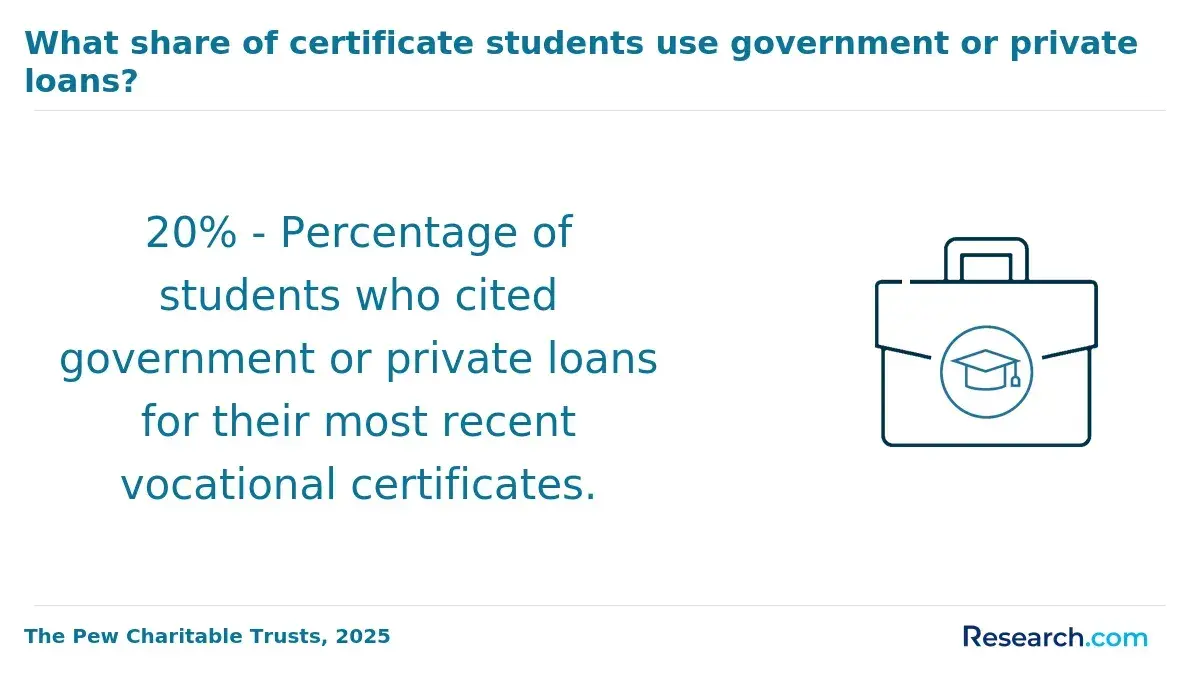
The practical order is simple: pursue money that does not have to be repaid before accepting loans. Loans may be appropriate when the doctorate clearly supports a salary step, promotion, administrative credential, research role, or long-term leadership path, but they should not be the first funding strategy.
Which Scholarships Help Reduce the Cost of an Online Child Development Education Doctorate?
Scholarships for online child development education doctorate students usually fall into three groups: education leadership awards, early childhood education awards, and dissertation or research awards. Students should search broadly because a doctorate focused on child development may qualify under several labels, including early childhood education, developmental science, curriculum studies, family studies, special education, educational psychology, or equity in education.
These scholarship categories are especially relevant because they connect to common doctoral goals in child development education:
- University doctoral scholarships for education students, which may be based on academic merit, leadership experience, financial need, or commitment to underserved communities.
- Early childhood education association awards, especially for educators researching preschool access, child care quality, family engagement, early literacy, inclusion, or culturally responsive teaching.
- Dissertation research grants from education foundations or scholarly associations, which can help pay for data collection, transcription, travel to research sites, software, or participant incentives.
- District, state, or community foundation scholarships for educators who agree to continue serving local schools, Head Start programs, child care systems, or public agencies.
- Diversity, equity, and first-generation doctoral awards for students whose work addresses educational access, child well-being, disability inclusion, multilingual learners, or rural education.
One common mistake is applying only to scholarships with "doctoral" in the title. Many awards are open to graduate students generally, and a strong child development research proposal can be competitive even when the scholarship is housed under curriculum, teacher leadership, psychology, or educational equity. Students exploring whether a doctorate is necessary should also compare adjacent graduate pathways, such as child psychology master's programs, before committing to doctoral-level tuition.
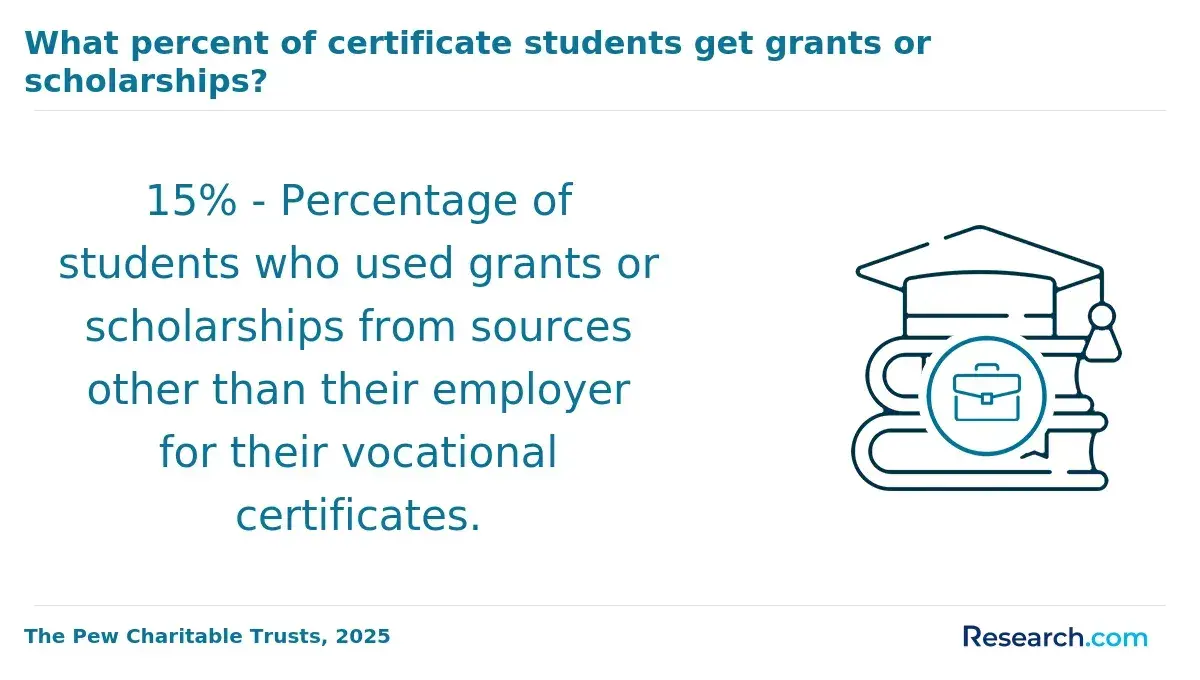
Scholarships are most useful when they are stackable with employer support and institutional aid. Before accepting an award, ask whether it reduces your bill directly, replaces loan eligibility, affects other aid, or requires enrollment in a minimum number of credits.
How Can Employer Tuition Assistance Help Pay for an Online Child Development Education Doctorate?
Employer tuition assistance can be one of the strongest ways to lower the net cost of an online doctorate because it allows working professionals to earn a credential while keeping income, benefits, and professional experience. It is especially relevant for teachers, instructional coaches, child care administrators, district specialists, nonprofit program managers, higher education staff, and government employees whose doctoral research aligns with organizational goals.
Many employer education benefits are structured around annual reimbursement, direct payment to the university, or preapproved course-by-course funding. Under current federal tax rules, employers may generally provide up to $5,250 per employee per year in tax-free educational assistance when the plan meets IRS requirements; amounts above that may be taxable unless another exclusion applies.
Before counting on employer support, review the policy carefully. These are the questions that determine whether the benefit truly lowers your cost:
- Does the employer pay upfront, or do you need to pay tuition first and wait for reimbursement?
- Is the doctorate considered job-related for your current role or only for a promotion track?
- Is there a grade requirement, credit limit, annual cap, or approved-school list?
- Must you remain employed for a set period after receiving reimbursement?
- Will the employer fund dissertation credits, research methods courses, residencies, or only standard coursework?
- Can the benefit be combined with institutional scholarships, district grants, or federal aid?
Employer funding works best when the doctorate directly benefits the organization. For example, a district may be more willing to support a dissertation on early literacy intervention, kindergarten readiness, special education inclusion, curriculum implementation, or teacher coaching than a topic unrelated to the employee's job. Professionals considering less research-intensive career moves may also compare doctoral study with targeted programs such as the best online instructional design master's programs, particularly if their goal is curriculum technology, learning design, or training leadership rather than doctoral-level research.
How Do Assistantships, Fellowships, and Research Funding Work for Online Child Development Education Doctorate Students?
Assistantships, fellowships, and research funding can reduce the cost of a doctorate, but online EdD students should understand that these awards are not distributed evenly across program types. Full tuition assistantships are more common in residential PhD programs, while online professional doctorates may offer smaller project-based grants, dissertation awards, teaching opportunities, or limited hourly research roles.
For child development education students, funding is most likely when the student's expertise matches a faculty project, school-university partnership, grant-funded evaluation, or community research initiative. Strong matches often involve early childhood assessment, language development, intervention design, parent engagement, inclusive classrooms, educator workforce development, or program evaluation.
Students can improve their chances by taking a targeted approach rather than sending generic funding requests. A practical sequence is:
- Identify faculty whose current work overlaps with your intended child development education research topic.
- Ask whether the department has funded research assistant roles, grant projects, dissertation mini-grants, or paid program evaluation work for online students.
- Prepare a short research statement that explains your professional background, methods skills, population of interest, and availability.
- Clarify whether any funding includes tuition remission, a stipend, hourly pay, travel support, software access, or only professional development funds.
- Confirm whether funding is renewable and whether it changes your expected time to completion.
The red flag is assuming "doctoral program" automatically means "funded program." Online professional doctorates are often designed for working adults, so the financial model may expect students to use employer support, scholarships, savings, or loans instead of full-time assistantship funding.
Which Program Features Have the Biggest Impact on the Total Cost of an Online Child Development Education Doctorate?
Two programs with similar per-credit tuition can have very different total costs. The biggest differences usually come from credit count, transfer policy, dissertation structure, residency expectations, and whether online students pay extra fees.
The table below highlights the cost features students should compare before assuming one program is cheaper than another.
| Program feature | Why it matters financially | What to verify before enrolling |
| Total required credits | A lower per-credit price may not save money if the program requires significantly more credits | Minimum credits, transfer credits, and whether dissertation credits are included |
| Dissertation or capstone model | Extra semesters can add tuition, fees, and loan interest | Average completion time, continuation fees, and faculty advising structure |
| Residency requirements | Travel, lodging, missed work, and childcare can raise the real cost of an online program | Number of visits, location, length, and whether virtual residency options exist |
| Tuition rate for online students | Some public universities charge flat online rates, while others separate in-state and out-of-state pricing | Whether your residency status affects tuition and fees |
| Transfer and prior doctoral credit | Accepted credits can reduce tuition and shorten time to completion | Maximum transferable credits and recency rules |
| Accreditation and licensure alignment | Federal aid, employer reimbursement, and career recognition often depend on institutional legitimacy | Regional institutional accreditation and any program-specific expectations for your career path |
Accreditation deserves special attention. For most education doctorates, regional institutional accreditation is the baseline requirement for federal financial aid and employer recognition. Program-specific accreditation or approval may matter in certain educator preparation, school psychology, counseling, or administrative licensure pathways, but requirements vary by state and role.
How Can Students Reduce Borrowing While Earning an Online Child Development Education Doctorate?
Reducing borrowing is less about one scholarship and more about building a layered funding plan. The goal is to lower the bill before each term starts, not to hope that a large award appears after loans have already been accepted.
A realistic debt-reduction plan should include these steps:
- Calculate total program tuition using required credits, not just the per-credit price.
- Add mandatory fees, residency travel, dissertation continuation costs, books, software, background checks, and lost work time.
- Submit the FAFSA early so the school can package federal aid and any institution-based need aid.
- Ask the financial aid office whether scholarships are renewable and whether part-time students qualify.
- Request written employer tuition approval before enrolling in the first term.
- Apply for small scholarships every cycle because multiple modest awards can reduce the amount borrowed.
- Use pay-as-you-go payment plans for affordable balances instead of automatically borrowing the full cost of attendance.
- Borrow only what is needed after grants, scholarships, employer support, and savings are applied.
A major red flag is accepting the maximum loan offer simply because it appears in the aid portal. Federal loan eligibility is not the same as affordability. If a program requires heavy Grad PLUS borrowing and does not clearly support your promotion path, salary lane movement, administrative transition, or research career, it may be worth choosing a slower or lower-cost option.
Does Paying Less for an Online Child Development Education Doctorate Affect Career Outcomes?
Paying less does not automatically weaken career outcomes, but choosing poorly can. Employers usually care more about accreditation, relevant experience, leadership record, research quality, licensure fit, and demonstrated skills than whether the tuition was high. However, a very low-cost program may be risky if it lacks qualified faculty in child development education, has limited dissertation support, or is not recognized by your employer or state agency.
Salary context should shape how much debt feels reasonable. BLS May 2024 data reports a median annual wage of $104,070 for education administrators in kindergarten through secondary settings, while instructional coordinators had a median annual wage of $74,720 and preschool and childcare center directors had a median annual wage of $54,290. Those differences matter: a doctorate financed mostly with loans may be easier to justify for a district leadership or higher education path than for a role with lower median pay and limited salary-lane increases.
Career outcomes also depend on whether the doctorate matches the credential rules for the role. For example, school psychology, counseling, and clinical child psychology have distinct licensure pathways that an education doctorate may not satisfy. Students considering child development work in assessment, mental health, or school-based psychological services should review licensure-focused options, including school psychology programs online accredited by NASP, rather than assuming an EdD will meet those requirements.
Technology is also changing expectations. Child development education leaders increasingly need to interpret learning data, evaluate early learning software, guide ethical AI use in classrooms, and support teachers using digital assessment tools. A lower-cost program with strong research methods, data literacy, program evaluation, and technology integration may offer better practical value than a more expensive program with a weaker fit.
Which Online Child Development Education Doctorate Programs Offer the Best Combination of Cost, Financial Aid, and Flexibility?
The best value is usually a program that fits the student's employment situation, research goal, and funding access. There is no single universal winner because a public university can be cheapest for one student, while a private nonprofit with employer partnership pricing can be cheaper after aid for another.
The table below gives a decision-oriented way to identify the strongest fit by student profile.
| Student profile | Best-value program structure | Why it can be cost-effective | When to avoid it |
| Full-time educator seeking district leadership | Online EdD in educational leadership, curriculum and instruction, or early childhood leadership at a public or employer-partnered university | Can align with salary lanes, leadership roles, and employer reimbursement | If the program does not meet state administrative credential expectations when licensure is required |
| Early childhood program director or nonprofit leader | Online EdD with applied dissertation or capstone focused on early learning systems | Allows research to solve a workplace problem while maintaining employment | If tuition depends heavily on loans and the employer offers no raise or advancement pathway |
| Aspiring faculty member or researcher | Research-oriented PhD or EdD with faculty mentorship in child development, early childhood policy, or learning sciences | Stronger fit for publishing, research methods, and future academic roles | If the program is unfunded and takes significantly longer than a professional EdD |
| Working parent or caregiver needing maximum flexibility | Asynchronous online EdD with limited residencies and predictable course sequencing | Reduces travel, childcare disruption, and lost work time | If limited live interaction leads to weak advising or delayed dissertation progress |
| Student with substantial prior doctoral credit | Program with generous transfer policy and transparent degree completion plan | Reduces repeated coursework and shortens the paid enrollment period | If transfer credits are accepted only as electives and do not reduce total tuition |
The strongest combination is usually found by comparing net price after aid, not published price. Ask each program for a term-by-term cost estimate that includes tuition, fees, residency expenses, expected dissertation credits, and available scholarships or discounts.
How Should Students Compare Low-Cost Online Child Development Education Doctorate Programs?
Students should compare programs as investment options, not as tuition pages. A low-cost online doctorate should be affordable, properly accredited, academically relevant, and realistic to finish while working.
Use this comparison process before applying or depositing:
- Define your target outcome, such as district leadership, early childhood administration, policy research, higher education teaching, curriculum leadership, or nonprofit evaluation.
- Confirm that the degree type fits that outcome, especially if your goal involves licensure, certification, or a regulated school role.
- Request the full cost of attendance for the entire program, including dissertation and residency costs.
- Ask for a written explanation of scholarships, grants, tuition discounts, employer partnerships, and renewal conditions.
- Compare faculty expertise in child development education, early childhood research, developmental psychology, family engagement, and learning systems.
- Review completion support, including dissertation advising, cohort structure, research methods preparation, library access, and statistical software support.
- Estimate your net borrowing under conservative assumptions, then compare the monthly repayment impact with realistic salary or promotion expectations.
- Check employer recognition before enrolling, especially if tuition reimbursement or salary advancement depends on approved institutions.
The most common mistake is treating "online" as automatically cheaper. Online study can reduce relocation and commuting costs, but mandatory fees, residencies, technology charges, and extended dissertation enrollment can still make the final bill high. The best low-cost program is the one you can afford to complete and use.
Other Things You Should Know About Child Development Education
An EdD is usually better for practitioners who want leadership, curriculum, program evaluation, or administrative roles. A PhD is usually better for students who want a research-intensive path, academic publishing, or tenure-track faculty work. The better choice depends on your career goal, not only the degree title.
Many do, but some professional doctorates use an applied dissertation, doctoral project, or capstone instead of a traditional research dissertation. Students should ask how long the final project usually takes and whether extra enrollment fees apply after coursework ends.
Usually not by itself. Doctoral programs often assume students already hold teaching or administrative credentials. Licensure rules vary by state, so students seeking initial teacher certification, principal licensure, or specialist credentials should confirm requirements with the state education agency before enrolling.
Strong applicants often have a master's degree, education or child-focused work experience, academic writing ability, and a clear research or leadership goal. Programs may request transcripts, recommendations, a resume, a statement of purpose, and sometimes writing samples or interviews.
References
- Tips for Applying to Doctoral Programs | AASL Knowledge Quest https://knowledgequest.aasl.org/tips-for-applying-to-doctoral-programs/
- Online Ed.D. in Early Childhood Education | Doctorate in ECE Online https://www.pacificoaks.edu/academic-programs/edd-in-early-childhood-education/
- Top 5 Online Child Development Bachelor’s Degree Programs https://www.topeducationdegrees.org/rankings/online-child-development-bachelors/
- Earning an Online Doctorate in Early Childhood Education https://www.gograd.org/online-phd-programs/best-early-childhood-education-degrees/
- Ed.D. in Early Childhood Education | ACE https://ace.edu/degree-programs/doctoral-degrees/doctoral-education/doctor-of-education-in-early-childhood-education/
- Educational Funding https://phdproject.org/educational-funding/
- Tuition Assistance — CCPU Training Fund https://www.ccputrainingfund.org/tuition-assistance
- Scholarships for Doctor of Education (EdD) Students | Teach.com https://teach.com/online-ed/education-degrees/online-edd-programs/scholarships/
- Financial Assistance - The Pennsylvania Key https://www.pakeys.org/financial-assistance/
- Embrace the Perks of a Child Care Career https://careers.learningcaregroup.com/about-us/about-learning-development