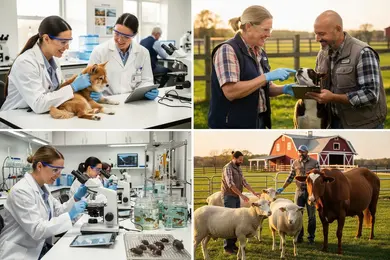
2026 Job Placement Rates for Animal Science Master's Graduates: Employment Outcomes

Co-Founder and Chief Data Scientist
For graduates weighing the value of a master's in animal science, job placement rates offer a crucial lens into career prospects. Employment outcomes vary sharply by industry sector and geographic region, shaping first-job timing and long-term stability.
A recent report from the U. S. Bureau of Labor Statistics highlights rising demand for animal science specialists in agricultural technology and environmental consulting, signaling where opportunities cluster.
Meanwhile, the growing prevalence of online and hybrid programs-accounting for nearly 30% of graduate enrollments in life sciences-reshapes access for adult learners balancing work and study. Understanding how program focus, internships, and employer perception influence outcomes equips candidates to select pathways aligned with realistic market entry and advancement.
Key Things to Know About the Job Placement Rates for Animal Science Master's Graduates
- Graduates concentrating in livestock production face higher demand in the Midwest, where regional industry focus accelerates job placement but limits geographic mobility compared to broader program emphases.
- Internship experience strongly influences employer perception, with 75% of surveyed agribusiness recruiters prioritizing candidates who completed industry-relevant internships, underscoring an experiential tradeoff for students needing unpaid or local placements.
- Rural versus urban program location affects access and timing; 2024 data on adult learners show that distance-education offerings expand enrollment options but may delay workforce entry due to reduced hands-on training.
What Are the Typical Job Placement Rates for Animal Science Master's Graduates?
Job placement rate in graduate education is not a singular figure but a spectrum shaped by how employment is defined and measured post-graduation. For those pursuing a master's degree in animal science, understanding this variability is central to setting realistic expectations about immediate career outcomes and long-term professional positioning.
Placement rates typically separate graduates who secure full-time roles closely aligned with animal science from those employed in any capacity, as well as those continuing education-each carrying distinct implications for career trajectories and workforce integration.
Programs and data sources like the National Center for Education Statistics (NCES) and the U.S. Bureau of Labor Statistics (BLS) reflect this complexity. NCES data often aggregates employment broadly, potentially overstating sector-specific placement, while BLS projections highlight occupational trends without isolating master's-level degrees.
This divergence means that reported job placement rates for animal science master's graduates can vary widely, depending on how programs define "related employment" and the timing of their surveys.
Prospective students should scrutinize the methodology notes of outcome reports to understand precisely what the numbers represent, especially since practical experience like internships and geographic demand significantly sway employability.
- Full-Time Field Employment: This category tracks graduates in roles that directly apply their animal science expertise, typically within a year after graduation. Rates can range from 60% to 80%, but success here often hinges on program specialization and proximity to agricultural hubs or research institutions.
- Any Employment: Includes a broader scope of work, sometimes unrelated to animal science, pushing rates above 85%. While this widens the net on employability, it may mask challenges graduates face securing field-specific positions.
- Continued Education: A meaningful portion of master's graduates pursue doctoral or professional degrees, which lowers immediate job placement figures but is indicative of a deliberate path toward advanced research or specialized roles that demand further credentials.
- Methodological Variability: Outcome data differs due to how programs measure employment windows, define job relevance, and handle response rates. These nuances critically influence reported rates and should guide interpretation.
- Sector and Location: Graduates entering well-funded agricultural centers or research facilities find better job prospects compared to peers in underserved areas, where economic and institutional factors constrain opportunities.
- Internship and Employer Perception: Programs embedding practical experience and maintaining positive alumni reputations with employers generally report stronger placement outcomes, reflecting the value of real-world skills and networking in hiring.
For individuals exploring graduate options, the interplay between these factors underscores the importance of selecting a program aligned with targeted career goals, geographic preferences, and industry demands.
This measured understanding, supplemented by clear data scrutiny, provides the most reliable foundation for interpreting typical job placement rates for animal science master's graduates.
Moreover, for those comparing credentials or seeking flexible pathways, considering alternatives like cheap online nursing programs may also reflect evolving labor market conditions and personal career strategies.
Table of contents
How Does Animal Science Master's Graduate Employment Compare to the National Average?
Graduates with a master's degree in animal science typically face employment outcomes that reflect the specialized and regionally variable nature of their field rather than uniform national trends. Unlike broader graduate degree holders who often benefit from widespread demand across multiple sectors, animal science graduates experience tradeoffs that influence the timing and quality of employment.
Compared to national employment averages for all master's degree recipients at six months to one year after graduation, animal science graduates generally perform at or slightly below these averages. This pattern stems from several interconnected factors rooted in the industry's specific labor market dynamics and credential expectations.
Drawing on insights from the BLS Occupational Outlook Handbook and NCES graduate outcome reports, these nuances are essential for prospective students and workforce participants to consider when evaluating the pragmatic value of this credential.
- Field Demand: Positions related to animal science concentrate in agriculture, food production, research, and environmental management-fields characterized by cyclical hiring and regional concentration, contrasting with consistently expanding domains like IT or healthcare.
- Credential Specificity: The master's degree's focused curriculum appeals to niche employers and roles requiring specialized expertise but limits broader portability, which can slow initial job placement compared to degrees with more generalized applications.
- Regional Labor Market Conditions: Variability between rural and urban job markets and state-level industry presence means that geographic location significantly impacts employment likelihood and salary prospects.
- Data Definition Differences: Variations in how "employment" is recorded, whether part-time work, internships, or temporary positions are included, affect direct comparisons across BLS and NCES sources and require attention to measurement context.
- Employer Perception and Internship Experience: Practical experience and strong professional networks frequently enable graduates to outperform aggregate statistics, highlighting that applied skills and internships materially improve hiring outcomes.

Which Industries and Sectors Hire the Most Animal Science Master's Graduates?
Master's graduates in animal science often face a strategic choice between specializing deeply in a niche sector or leveraging the degree's adaptability across multiple industries.
Data from IPEDS graduate outcome surveys and BLS employment statistics reveal distinct hiring concentrations, which directly influence early career stability and long-term employability.
For example, a graduate focused on regulatory science may find more opportunities in government agencies but fewer options in urban biotech hubs.
Meanwhile, those opting for research-intensive thesis tracks typically access biotechnology and pharmaceutical firms at a higher rate, a crucial consideration for students balancing academic rigor against market demand. Understanding these patterns is essential for weighing career flexibility against targeted specialization.
- Agriculture and Food Production: This sector remains the primary employer, with roles emphasizing livestock management, nutrition, breeding, and sustainable production-fields demanding practical expertise grounded in animal science methodology.
- Government and Regulatory Agencies: Positions focused on compliance, animal health policies, and environmental assessments thrive in federal and state agencies, though availability can hinge on geographic and institutional priorities.
- Biotechnology and Pharmaceutical Industries: Graduates with thesis or research-focused credentials tend to gravitate here, contributing to genetics research, veterinary therapeutics, and animal health product development, reflecting industry preference for advanced scientific training.
- Education and Extension Services: Academic institutions and nonprofit outreach programs recruit graduates for instructional and applied research roles that demand both scientific expertise and strong communication abilities.
- Private Consulting and Industry Services: Consulting firms provide opportunities for graduates who combine technical knowledge and practical experience to advise on farm management, agricultural technology, or animal welfare solutions.
- Geographic Considerations: Employment prospects show marked regional variation, with rural agriculture-intensive areas favoring production and regulatory roles, while urban regions concentrate biotech and consulting opportunities.
This nuanced industry distribution influences employment outcomes for animal science master's graduates and highlights the importance of aligning program choices with geographic and sector-specific realities.
Prospective students should consider how their chosen concentration, practical experience, and geographic preferences shape access to the most active employment sectors.
Additionally, professionals weighing a return to graduate study might compare these dynamics with alternative credentials, such as those in healthcare administration, where increasing demand across healthcare systems creates different career trajectories, as detailed in analyses of health care administration masters programs, a relevant consideration for those exploring allied fields within science-driven healthcare contexts.
What Types of Job Titles Do Animal Science Master's Graduates Most Commonly Hold?
Job titles held by master's graduates in animal science reveal distinct pathways depending on experience level and sector focus, highlighting how the degree translates into labor market roles.
Early-career graduates typically occupy positions that emphasize technical proficiency and hands-on research involvement, serving as essential footholds in their professional development.
In contrast, mid-tier and senior professionals leverage the degree to assume leadership or advisory roles that demand strategic oversight and specialized expertise, often reflecting a transition from direct execution to management or consultancy.
Prospective students should consider these title distinctions as practical indicators of both immediate employability and longer-term career trajectories.
- Research Assistant: Predominantly an entry point role, this position involves supporting research projects through data collection, experimentation, and technical reporting, often within academic or industry labs.
- Animal Production Specialist: Combining scientific knowledge with operational skills, this title is common in agriculture and commercial enterprises focused on optimizing breeding, nutrition, and welfare practices.
- Extension Specialist: These roles commonly appear in government or university outreach, emphasizing translating complex research into applicable advice for farmers and community stakeholders.
- Livestock Consultant: Frequently held by those offering expert guidance on animal health and business efficiencies, consultants often operate independently or with advisory firms, reflecting a knowledge-based service model.
- Animal Scientist: Typically mid-to-senior level, this title denotes responsibility for experiment design, project leadership, and innovation initiatives within corporate or academic research contexts.
Sector-specific variables, such as livestock industry concentration, geographic location, and the presence of internship experiences, considerably affect how quickly graduates secure positions and the salaries they command.
Employer perceptions and program focus areas further influence whether recent graduates enter research-intensive roles or transition toward consultancy and management tracks. Investigating job postings under these titles helps clarify genuine demand and signals employer expectations aligned with graduate capabilities.
One graduate recalled navigating slow communications during a rolling admissions cycle, unsure whether to accept a local research assistant position or await potential offers from higher-ranked programs farther away.
Balancing urgency against the prospect of stronger credentials, they ultimately found value in early employment that provided crucial practical experience. This nuanced decision, made amid uncertain timing and limited feedback, underlines how navigating admissions and job market timing can shape graduates' initial career steps as much as program content.
How Soon After Graduation Do Animal Science Master's Graduates Typically Find Employment?
Employment timelines for master's graduates in animal science vary significantly depending on sector, location, and prior experience, often complicating straightforward interpretations of placement data.
A common distinction is between time-to-offer, the point when a graduate accepts a job, and time-to-start, when they actually begin work. The difference can span weeks or months due to hiring delays, relocation, or seasonal work cycles typical in this field.
- Pre-Graduation Searches: Graduates securing offers before completing their degree may skew placement statistics, presenting a faster median than most students realistically experience.
- Measurement Windows: Programs report outcomes at different intervals-3, 6, or 12 months post-graduation-affecting perceived success rates because shorter windows often highlight early hires, while longer periods capture more complete employment trajectories.
- Sector Influence: Employment speed varies across research, industry, and extension services; sectors with higher internship integration or stronger employer ties typically see quicker placement.
- Geographic and Market Factors: Location-specific demand and regional job market conditions significantly impact how rapidly graduates secure roles and negotiate salaries.
- Employer Perceptions: Recognition of program reputation and graduate experience can either accelerate hiring or extend job searches, stressing the value of targeted internships and networking.
Prospective students should critically assess whether program-reported data captures the median graduate's experience or disproportionately reflects pre-graduation hires, as well as clarify the post-graduation timeframe used in reporting.
These factors are crucial for setting realistic expectations about time to employment and planning effective job search strategies in animal science careers.

What Is the Average Salary for Animal Science Master's Graduates in Their First Job?
Salary outcomes for entry-level animal science master's graduates in the United States are shaped by multiple pragmatic factors rather than a fixed market rate.
For example, a graduate entering private biopharmaceutical firms may start at a noticeably higher salary than one transitioning into academia or government roles, highlighting a tradeoff between sectors with distinct career progression paths.
Prospective students must calibrate expectations beyond simple median salary figures, accounting for program reputation, geographic labor markets, and individual background.
Key considerations influencing first-job salaries include:
- Industry Sector: Graduates working in private industry, including pharmaceuticals or animal nutrition companies, typically secure better starting pay than those in academic research or cooperative extension services, reflecting employer budget constraints and role specialization.
- Geographic Region: Urban areas and regions with a strong agricultural or biotech presence generally offer higher salaries, while rural or less industry-concentrated locations may limit earning potential despite lower living costs.
- Program Selectivity and Reputation: Candidates from highly selective or research-intensive programs often access competitive internships and employer networks, translating into higher initial compensation.
- Career Background: Career changers might accept lower starting salaries as they gain domain-specific skills, whereas graduates advancing within their existing fields often command better immediate compensation.
- Internship and Practical Experience: Graduates with substantial hands-on or industry internship experience are more competitive in salary negotiations, as employers value proven applied skills.
The entry-level animal science master's graduate salaries in the United States vary widely and should be interpreted through these contextual variables.
It is prudent for candidates to consult multiple salary data sources-such as the BLS Occupational Employment and Wage Statistics program, NACE surveys, and field-specific compensation reports-rather than rely solely on program-reported medians, which may be skewed by self-disclosing subsets of graduates.
This nuanced understanding permits more informed decisions about the return on investment of an animal science master's degree relative to individual career goals and labor market conditions.
For professionals considering career pivots or credential stacking while maintaining healthcare roles, programs like the CCMA to LPN bridge program demonstrate the strategic value of layered credentials over narrow specialization alone.
How Do Animal Science Master's Program Rankings Affect Graduate Employment Outcomes?
Higher rankings of master's programs in animal science rarely guarantee faster or better employment outcomes for graduates. Employers often weigh factors beyond published rankings, meaning that attending a highest-ranked school does not necessarily translate into superior job placement or salary.
Critical variables influencing graduate success include geographic context, industry connections, curriculum focus, and practical experience opportunities. These elements directly shape how quickly a graduate finds relevant work and the sustainability of their career trajectory.
- Location: Programs near agricultural industry clusters or major employers offer graduates access to diverse job markets and quicker employment, whereas graduates from highly ranked but remote programs may face limited regional options.
- Alumni Network Strength: Active, well-connected alumni provide mentorship, job leads, and networking advantages that often outweigh the prestige reflected in rankings.
- Employer Partnerships: Collaborations enabling internships, co-op placements, or applied research enhance graduates' real-world readiness and serve as direct recruitment channels.
- Program Concentrations: Specialized tracks aligned with emerging sector demands, like animal genetics or nutrition, equip students with sought-after skills, improving employability.
- Outcome-Specific Data: Reliable evaluation hinges on placement rates, employer engagement, and salary metrics rather than ranking alone, making these data points essential in program selection.
One graduate recalled wrestling with timing during a rolling admissions cycle for a well-ranked master's program. The applicant hesitated to accept early offers while waiting for decisions from other schools that boasted stronger employer ties in a preferred region.
Ultimately, choosing a program based on connections and placement statistics rather than rank alone proved decisive, highlighting the tradeoffs faced when weighing uncertain timelines against tangible employment outcomes.
What Role Does Geographic Location Play in Animal Science Master's Graduate Job Placement?
The geographic location of an animal science master's program and the graduate's intended employment region profoundly shape job placement rates, salary levels, and the speed of securing a position.
State-level data from the Bureau of Labor Statistics (BLS) confirm that regions with dense animal science industries, including strong agricultural or biotech sectors, provide more immediate and often higher-paying opportunities.
Graduates near major metropolitan hubs with active animal science employers typically benefit from faster transitions into the workforce due to better access to on-campus recruiting, internships, and employer partnerships.
By contrast, those relocating far from their program's base often confront delays while they build local networks and establish employer credibility, impacting their early career momentum.
- Metropolitan Advantage: Programs near large urban centers with established employers offer students quicker access to targeted recruiting events and practical internships, accelerating entry into jobs aligned with their specialization and wage expectations.
- Alumni Networks: Proximity to a strong local alumni base strengthens job placement through referrals and insider knowledge of regional employer demands, an advantage less accessible to those moving into new markets.
- Regional Industry Concentration: Employment prospects and salaries tend to be higher in areas with clusters of relevant firms, reflecting concentrated demand for animal science expertise and a broader job pool.
- Relocation Trade-Offs: While relocating expands possible employment locations, it often requires more time to develop professional contacts and gain regional employer trust.
- Program-Job Market Alignment: Geographically flexible students should evaluate programs with robust links to their target job markets, whereas those fixed to a location should prioritize schools maintaining strong local employer relationships to optimize outcomes.
Incorporating internship experience and employer perception into these considerations is critical since they significantly influence hiring outcomes.
For prospective students seeking alternative credentials to complement animal science knowledge, examining comparative degree formats is prudent; for example, certain 5 year speech pathology programs show similar demand dynamics influenced by geographic and industry concentration factors.
Understanding average salaries for animal science graduates by region can further guide decision-making, underlining the practical importance of aligning educational choices with local labor market realities.
How Do Internship and Practicum Experiences Influence Animal Science Master's Employment Rates?
Internship and practicum experiences play a decisive role in shaping employment rates for animal science master's graduates by providing tangible, field-relevant competencies that classroom instruction alone often cannot replicate.
Graduates entering competitive areas such as animal nutrition or livestock management without structured, supervised applied learning frequently face longer job searches and lower starting salaries. In contrast, those who complete internships connected to employers within their target sectors demonstrate adaptability and reduce employers' onboarding costs, offering clear hiring advantages.
A common scenario involves a student completing a practicum at a veterinary support facility, thereby gaining direct exposure to operational standards and securing professional references essential for rapid job placement.
Programs with thesis or professional tracks that integrate these applied components systematically show higher placement rates, emphasizing the need to scrutinize not just the existence of experiential elements but their quality, including employer partnerships and supervision.
- Structure: Effective internships are embedded within program curricula, balancing academic rigor with workplace expectations via mentorship and periodic evaluations.
- Supervision: Regular feedback by experienced professionals enhances skill acquisition and fosters professional networks. Employer Connections: Close alignment with local industry contacts facilitates transition from education to employment.
- Program Type: Professional and hybrid tracks generally prioritize applied learning more than research-only thesis pathways.
- Outcome Impact: Graduates with detailed practicum records tend to access higher initial salaries and quicker employment in target sectors.
- Contextual Fit: The value of internships varies by geographic location and sector demand, necessitating student discernment when selecting placements.
Additionally, as adult learners evaluate delivery formats and costs, understanding these experiential components alongside tuition helps clarify comprehensive investment and labor market return.
This discussion parallels considerations in related fields, such as medical education, outlined in guidance about what medical degree can I get online, where practicum intensity similarly affects outcomes.
What Career Services and Job Placement Support Do Animal Science Master's Programs Offer?
The availability and sophistication of career services in animal science master's programs significantly shape graduate employability, especially for those entering competitive or unfamiliar job markets.
Programs with robust infrastructures can shorten job search periods by providing direct access to employers and personalized professional preparation, which often translates into tangible placement advantages.
For instance, a graduate shifting from an unrelated field can leverage these resources to bridge gaps in industry knowledge and networks, while those targeting niche sectors benefit from targeted employer connections.
- Dedicated Career Advising: Advisors with sector-specific expertise help align student skills and experiences with current employer demands, mitigating common mismatches between academic credentials and workplace expectations.
- Employer Recruiting Events: Organized job fairs and networking opportunities offer students exposure to both established firms and startups, facilitating face-to-face interactions that increase hiring probability.
- Alumni Mentorship Platforms: Through structured alumni-student mentorships, programs provide critical industry insight and access to professional networks, often absent in less connected institutions.
- Resume and Interview Coaching: These services emphasize translating academic and research competencies into marketable language, preparing candidates for specialized interview formats common in animal science-related roles.
- On-Campus Recruiting Partnerships: Formal collaborations with employers foster internship and employment pipelines, allowing students to gain relevant experience and employers to identify promising hires early.
Given the strong variation in career support quality, prospective students should request detailed statistics on service utilization rates, such as what percentage access counseling, attend recruiting events, or secure jobs via program connections, rather than rely on generic service descriptions.
Doing so helps gauge whether the program's support infrastructure effectively enhances employment outcomes. National labor data from 2024 indicates median entry-level salaries in animal science fields range broadly from $45,000 to $65,000 annually, contingent on employer type and geographic region, underscoring the need for programs to link graduates strategically with appropriate opportunities.
What Graduates Say About the Job Placement Rates for Animal Science Master's Graduates
- Major: "Balancing a full-time job while pursuing my master's in animal science was challenging, but I chose the program because of its flexible evening classes. The limited time made me prioritize internships over additional certifications, and this hands-on experience landed me a position at a local research facility. However, I quickly realized that without licensure, advancing into senior roles remains a hurdle in my current organization."
- Douglas: "After switching careers from agriculture management, I pursued a master's in animal science to pivot into wildlife conservation. Budget constraints meant I skipped paid internships, choosing instead to focus on developing a strong portfolio through volunteer work. This approach helped me secure remote consultancy roles, but I found that competing for on-site positions was tougher without formal certification recognized by employers."
- Ezra: "The demanding workload of my animal science master's program forced me to forgo several job offers early on, focusing instead on completing a research thesis. The decision paid off when my thesis led to an internship with a veterinary pharma company, which boosted my resume considerably. Still, I've faced slower salary growth compared to peers with veterinary licensure, which has influenced my long-term career planning."
Other Things You Should Know About Animal Science Degrees
Employment rates can shift notably depending on the chosen specialization within animal science. For example, graduates focusing on livestock production or animal nutrition often find more immediate opportunities in agriculture and feed industries, where demand remains steady. Conversely, those concentrating in wildlife conservation or biotechnology may face a narrower job market with more competition, requiring additional networking or niche experience. When selecting a program, prioritize specializations aligned with sectors showing consistent hiring trends to improve rapid job placement chances.
Employers often view a master's in animal science as a strong signal of technical expertise and commitment, especially where research and applied science skills are valued. However, practical experience matters as much as the degree itself, so graduates who supplement their studies with internships or applied projects tend to stand out. Employers in industry sectors like pharmaceuticals or agricultural tech may prioritize advanced degrees more heavily, whereas in field-based roles, hands-on experience often trumps academic credentials. This nuance means candidates should match their educational path with the expectations of their targeted employer pool.
Graduates from on-campus programs typically report higher immediate employment rates, partly due to more direct access to lab facilities, faculty mentorship, and local industry connections. Online program graduates may encounter challenges demonstrating equivalent practical skills unless the program integrates robust hands-on components or partnerships for internships. Prospective students should weigh their need for flexibility against potential tradeoffs in networking and experiential learning opportunities, which can directly affect job placement speed and quality.
Prospective students should request detailed employment outcomes broken down by specialization, including time-to-employment metrics and types of employers hiring graduates. Inquire about the scope and nature of internships or practical training embedded in the curriculum, as these significantly influence job readiness. Ask for alumni career trajectories to assess long-term employability and sector mobility. Prioritizing programs with transparent, granular employment data enables informed decision-making tailored to individual career goals.
References
- BSAS https://www.bisas.org.uk/undergraduates-and-early-career/ec-education
- Animal Scientist - Salary, How to Become, Job Description & Best Schools https://www.onlinedegree.com/careers/agriculture-food/animal-scientist/
- Animal Science – Master of Science https://www.massey.ac.nz/study/all-qualifications-and-degrees/master-of-science-PMSCN/animal-science-PMSCN1SANSC1/
- Careers in Animal Science https://www.angelo.edu/career/career-exploration/majors/animal-science.php
- Animal Science Careers: Job Descriptions & Salary Info https://learningpath.org/articles/Animal_Science_Careers_Job_Descriptions_Salary_Info.html