2027 How to Choose a Data Science Master's for a Research-Intensive Industry Role

Co-Founder and Chief Data Scientist
A data science master's can prepare you for an industry role that develops and tests new methods - but a program built mainly around applying established tools may not offer the same preparation. If you want to work on problems such as model reliability, experimentation, or large-scale machine learning, look beyond the degree title.
This guide shows you how to evaluate research access, technical depth, projects, cost, and career evidence so you can choose a program that fits your target role.
Key Things You Should Know
- Prioritize sustained research work with faculty or industry mentors over a capstone that only demonstrates a familiar technique.
- Check for graduate-level statistics, optimization, machine learning, and computing depth; a course title alone does not establish how deeply a subject is taught.
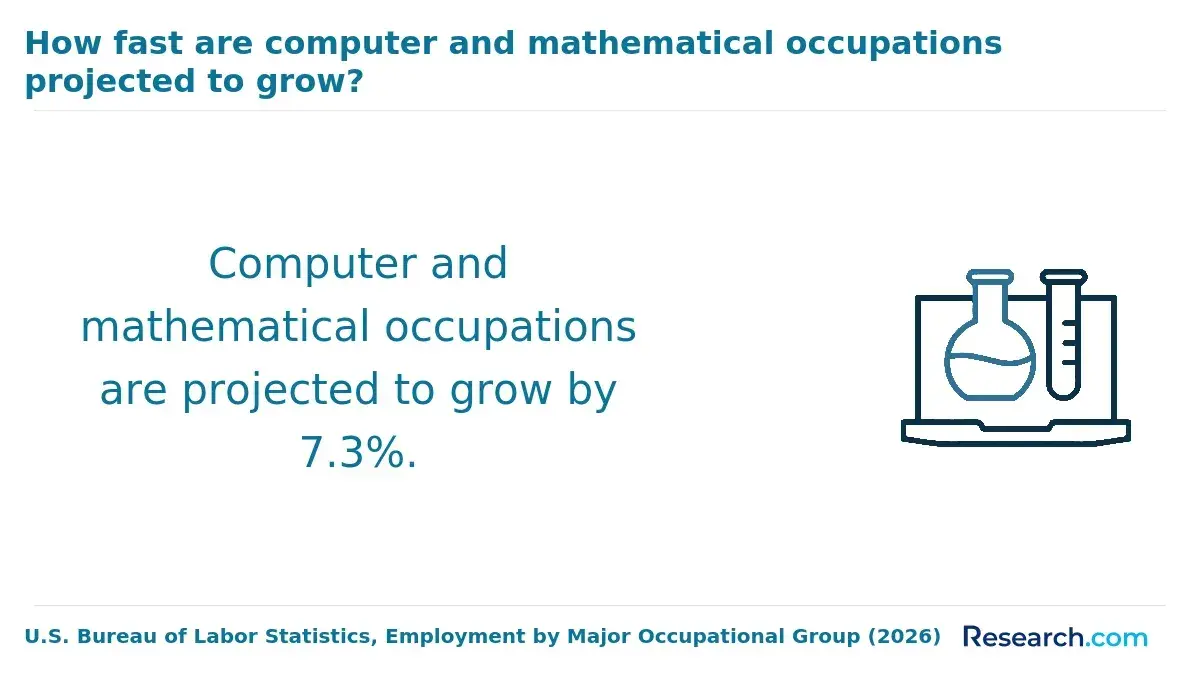
- The U.S. Bureau of Labor Statistics projects 35% growth in data scientist employment from 2025 to 2035, but that occupation-wide forecast does not predict demand for a particular research specialty or program's graduates.
What Is a Research-Focused Data Science Master's Degree?
A research-focused data science master's gives students repeated opportunities to formulate questions, examine prior work, develop or adapt methods, and evaluate results against credible alternatives. It may be called a data science, statistics, computer science, or applied mathematics degree. The label matters less than the work students can actually do.
For an industry research role, the distinction is between using a method competently and investigating whether it works, why it fails, and how it might be improved. A strong fit may offer an advisor-supervised thesis, a substantial independent study, or a research lab placement. A project-based program can also fit if its projects permit rigorous experiments rather than only building a dashboard or deploying a standard model.
If your target work centers on reporting, business metrics, or established analytical workflows instead, a data analytics graduate degree guide may help you assess a more applied path. Neither label is a substitute for reading course descriptions and project requirements.
How Do You Choose an Accredited Data Science Master's Program?
Start by confirming that the institution holds recognized institutional accreditation. For a U.S. school, check its current status in the U.S. Department of Education's accreditation database or with the accreditor itself. Do not assume that institutional accreditation means a particular master's has separate programmatic accreditation - or that separate accreditation is required for this career path.
Then compare programs on evidence of research opportunity, not rankings alone. Use the same questions for every school so an appealing course list does not obscure limited access to advisors or projects:
- Identify two or three target problems, such as causal inference for product experiments or robust machine learning for medical data, and locate relevant faculty, labs, and courses.
- Ask whether master's students can join those labs, how advisors are assigned, and whether thesis or independent-study places are limited.
- Request recent examples of master's projects and examine the methods, evaluation, and student contribution - not just the project titles.
- Confirm current degree requirements, course availability, accreditation, and any restrictions on research participation directly with the institution.
A warning sign is a program that prominently advertises faculty research but cannot explain how master's students participate. Treat access as unverified until you know the eligibility rules and how students obtain supervision.
What Curriculum Prepares Students for Research-Intensive Data Science Roles?
Look for a sequence that supports original investigation: probability and statistical inference; algorithms and software engineering; machine learning and optimization; then advanced work relevant to your intended research problem. The table distinguishes core areas by the kind of work they enable - not by whether a catalog happens to use a fashionable course title.
| Curriculum area | Why it matters in industry research | Evidence of meaningful depth |
| Statistics and experimental design | Supports uncertainty estimates, valid comparisons, and interpretation of results. | Graduate inference or causal methods with assignments that defend assumptions and analyze bias. |
| Machine learning and optimization | Supports method development, model comparison, and diagnosis of failure. | Work deriving or modifying methods and testing them against baselines. |
| Computing and data systems | Supports reproducible experiments on realistic datasets and computing infrastructure. | Substantial code review, version control, data pipelines, or distributed-computing work. |
| Research practice | Connects technical results to a defensible claim. | Literature review, reproducible evaluation, technical writing, and sustained feedback. |
For example, a student aiming at foundation-model research may need advanced machine learning and computing systems, while one targeting clinical experimentation may need stronger causal inference and study-design preparation. Inspect syllabi and assignments: a passing mention of a method is not equivalent to a dedicated course, advanced elective, or substantial project. If data infrastructure is central to your target role, master's-level AI programs that teach data engineering offer another curriculum comparison point.
Should You Choose an Online or Campus-Based Data Science Master's?
Choose the format that gives you reliable access to the research work you want to do. Campus study may make it easier to attend lab meetings, use on-site computing resources, and build relationships with potential advisors. Online study may better accommodate an existing job and let you investigate problems at your employer. Neither format, by itself, establishes research quality.
For an online option, confirm whether remote students can take research credits, receive individual supervision, use required computing resources, and participate in lab meetings. Ask whether any thesis defense, examination, or industry project requires travel. For a campus option, verify that master's students - not only doctoral students - can work with the labs that attracted you.
If your interests are specifically in AI and an online format is essential, compare the research opportunities of data science degrees with affordable graduate-level artificial intelligence study. A lower price or more convenient schedule is valuable only if the curriculum and supervision still fit your intended work.
What Are the Admission Requirements for a Data Science Master's?
Requirements vary by program. Applicants commonly need to demonstrate readiness for quantitative coursework and programming, but schools differ in the courses, grades, tests, recommendations, and experience they require. A research-oriented application is stronger when it also explains a specific problem you want to investigate and shows how prior coursework, employment, or projects prepared you to investigate it.
If your background is outside computer science, compare your transcript and work against each program's stated prerequisites. A portfolio can demonstrate programming or research readiness, but it does not automatically fulfill a formal course requirement. Ask admissions staff what evidence they accept before paying for a preparatory course. Applicants also considering an AI degree can use guidance on a master's in AI after a non-CS bachelor's to frame that comparison.
How Long Does a Data Science Master's Take, and What Does It Cost?
Time to completion depends on required credits, enrollment pace, course scheduling, and whether research or a thesis adds work beyond classes. A thesis can be valuable evidence for research hiring, but it may also make the finish date less predictable. Ask for the program's published completion rules and a realistic course sequence for your intended pace.
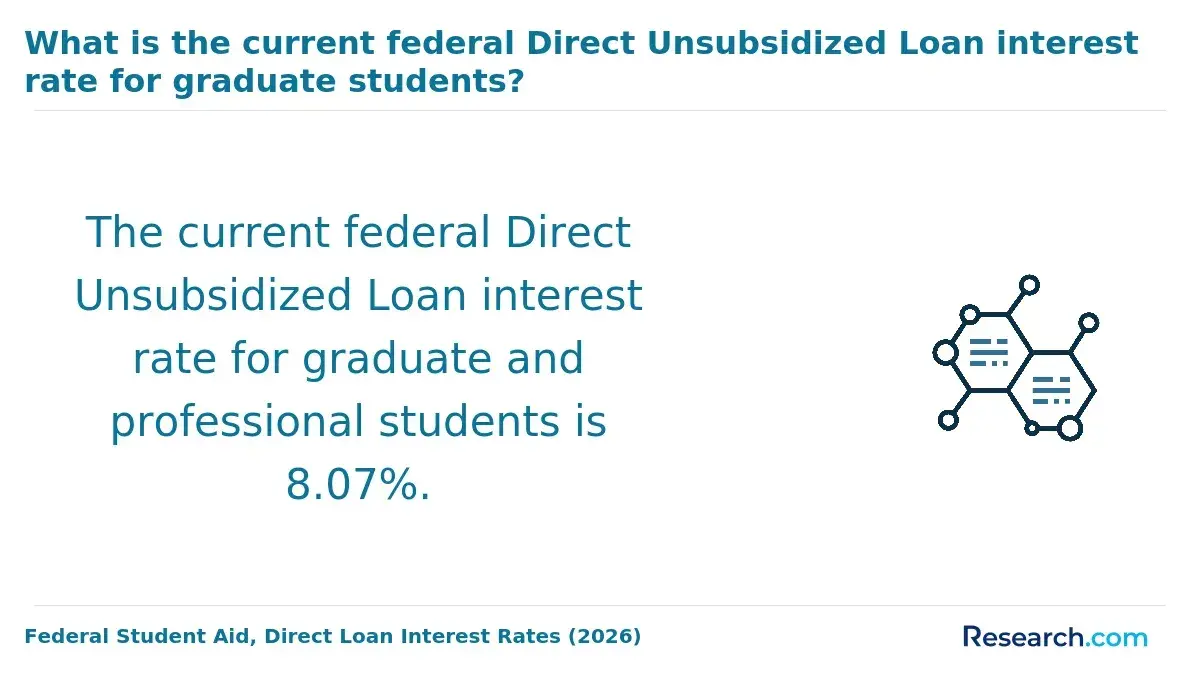
Compare the full cost of programs, not tuition alone. Include mandatory fees, computing or materials charges, travel if required, and income you might forgo while studying. Check whether research assistantships, employer tuition benefits, scholarships, or federal aid are available to students in your format and enrollment status; none should be assumed. A data science master's tuition funding guide can help you examine financing options before committing.
To judge value, compare that total commitment with the specific research access and skills each program offers. A higher price does not establish better mentorship, and an expected future salary is not a return caused by the degree.
Which Research and Industry Projects Should a Data Science Program Offer?
The most useful projects resemble the decisions made in an industry research team: defining a question, choosing meaningful baselines, testing under realistic constraints, documenting uncertainty, and explaining whether a result could be used. Look for opportunities to produce work you can discuss in detail, even when an employer's data cannot be shared publicly.
Strong options include an advisor-supervised investigation that develops or tests a method, a partner project with a genuine unresolved question, or an independent study culminating in a reproducible technical report. Before enrolling, ask to see project descriptions and clarify who proposes topics, how much time mentors provide, whether students can access data and computing resources, and what they may show prospective employers.
A capstone with an industry logo is not necessarily research. If the question and technique are predetermined, the project may demonstrate implementation skill rather than the ability to investigate an uncertain result. Conversely, a careful study using public data can provide persuasive research evidence when its design and evaluation are rigorous.
What Careers Can You Pursue With a Research-Oriented Data Science Master's?
Potential targets include data scientist positions involving experimentation or method development, applied scientist roles, machine learning research engineering, and domain-specific quantitative research. Job titles are inconsistent across employers: one "data scientist" may run product experiments, while another primarily maintains reporting workflows. Read job descriptions for the methods, research responsibilities, and degree expectations that match your goals.
The U.S. Bureau of Labor Statistics projects about 24,800 data scientist openings annually, on average, from 2025 to 2035. That broad occupational figure signals opportunities across many kinds of work; it does not measure openings in research-intensive teams. Some research scientist positions may prefer or require a doctorate, so use postings for your intended employers to decide whether a master's is an appropriate endpoint.
How Much Can Data Scientists With Master's Degrees Earn?
The U.S. Bureau of Labor Statistics reports a median annual wage of $120,230 for data scientists in May 2025. This is the median for the occupation, not a master's-graduate salary or a forecast of what a research-focused graduate will earn.
Compensation depends on experience, responsibilities, location, and employer. When comparing programs, request any available graduate outcomes with the survey period, number of respondents, prior experience, and job titles. If a school does not publish sufficiently detailed outcomes, do not turn an occupation-wide wage into a program-specific earnings estimate.
What Certifications and Skills Strengthen a Data Science Career?
For research-intensive hiring, evidence of technical judgment is usually more relevant than collecting broad tool certificates. Strengthen your application with reproducible code, clear technical writing, sound statistical reasoning, and the ability to explain why an experiment's conclusion is - or is not - credible. Match any additional training to the tools used in your target roles.
A certification can help document familiarity with a particular platform, but it does not replace evidence that you can formulate a question and evaluate a method. Before buying one, inspect current job postings and ask whether the credential addresses a real gap in your experience. For many candidates, improving a well-documented research project will be the more direct preparation.
Other Things You Should Know About Data Science
Not necessarily. Hiring expectations vary by role and employer. A rigorous thesis or project can demonstrate your contribution even without a paper, provided you can explain its question, methods, results, and limitations.
Possibly, but obtain approval from both the employer and program before committing to the topic. Clarify data access, privacy requirements, intellectual property, and what can appear in a thesis or job portfolio.
Yes, if the program offers an accessible thesis, independent study, or supervised project. Confirm scheduling and eligibility early; an internship is not the only route to research experience.
It can help you test your interest and build relevant experience, but doctoral admission is separate and not guaranteed. If a PhD is a possibility, look for sustained faculty mentorship and opportunities to produce substantial, independently defensible work.
References
- Technology readiness levels for machine learning systems | nih.gov https://pmc.ncbi.nlm.nih.gov/articles/PMC9585100/
- Use The Data - National Center for Education Statistics (NCES) https://nces.ed.gov/ipeds/use-the-data
- In-Person Program - UChicago Data Science Institute https://datascience.uchicago.edu/education/masters-programs/in-person-program/
- Master of Science in Data Science - Graduate Programs https://www.umflint.edu/graduateprograms/data-science-ms/
- CU Boulder MS in Data Science: Student Outcomes, Profiles & Program Stats | Student Support & Advising Services https://www.colorado.edu/program/data-science/residential/residential-program-stats
- Master's in Data Science | Harvard SEAS https://seas.harvard.edu/masters-data-science
- Admissions FAQs | Biostatistics https://sph.umich.edu/biostat/programs/faq.html
- MS Data Science & Statistics: FAQ | Binghamton University https://www.binghamton.edu/math/graduate/statistics/faq.html
- Professional Master of Data Science | Rice University https://datascience.rice.edu/academics/professional-master-data-science
- Research Computing - Information Technology (UW-IT) https://it.uw.edu/guides/research/