2027 AI Safety Evaluation in an Online Data Science Master's: Courses, Projects, and Program Selection

Co-Founder and Chief Data Scientist
An online data science master's can teach the statistics and machine learning needed for AI safety evaluation, but a course labeled "responsible AI" does not necessarily provide hands-on evaluation practice.
For prospective students interested in testing model reliability, harmful outputs, bias, or deployment risks, the decision is whether a program offers enough technical depth, supervised projects, and flexibility to build credible evidence of those skills. This guide shows what to look for - and what to verify before enrolling.
Key Things You Should Know
- Look for a combination of machine learning, experimental design, responsible AI, and a substantial evaluation project; a course title alone does not establish depth.
- A strong portfolio evaluates a defined risk against a documented baseline, reports results by subgroup or failure type, and explains uncertainty and limitations.
- The U.S. Bureau of Labor Statistics projects 35% employment growth for data scientists from 2025 to 2035, but that occupation-wide forecast is not a prediction of AI safety jobs or graduate outcomes.
What is AI safety evaluation in an online data science master's program?
AI safety evaluation is the systematic testing of an AI system for failures that could cause harm or make it unsuitable for a particular use. In a data science master's, that might mean measuring inaccurate responses, unequal performance across groups, unsafe outputs, privacy risks, or performance changes after a model is updated. The work combines statistical evaluation with a clear account of who may be affected and what the test cannot establish.
It is more than asking a model a few difficult questions. A graduate-level evaluation should define a use case and failure criterion, construct or justify a test set, compare results with a baseline, examine uncertainty, and document limitations. Safety is context-dependent: an error that is tolerable in a brainstorming tool may be unacceptable in a system used to support consequential decisions. Evaluation can identify risks; it does not certify that a model is safe in every setting.
Why does AI safety evaluation matter for data science careers?
Organizations using AI need people who can determine not only whether a model performs well on average, but also when it fails, for whom, and with what consequences. That makes evaluation relevant to model development, product testing, governance, and domain-specific analytics. The exact job title varies by employer; a data scientist may do this work without holding a dedicated "AI safety" role.
Domain knowledge matters when defining meaningful failures. For example, someone considering healthcare applications should examine how a program handles sensitive data, clinical context, and human review - not assume that a general-purpose benchmark captures those concerns. Readers comparing domain-focused degrees can also explore AI graduate programs for healthcare career paths.
Choose this focus if you enjoy designing tests and communicating their limits as much as building models. If your primary goal is AI policy rather than technical measurement, a program with stronger policy or governance coursework may be a better fit.
What courses teach AI safety evaluation in online data science master's programs?
No single course title proves that a program teaches evaluation well. Look for a sequence that builds from statistical reasoning and machine learning to testing models in realistic settings. A responsible AI elective is most valuable when students apply its concepts to measurable outcomes rather than only discuss principles.
The distinctions below help separate a passing mention of safety from sustained technical practice.
| Curriculum component | Contribution to safety evaluation | Evidence of greater depth |
| Statistics and experimental design | Supports sampling, uncertainty estimates, and valid comparisons. | Students defend test-set design and interpret uncertain results. |
| Machine learning and model evaluation | Builds fluency with baselines, error analysis, and distribution shift. | Assignments investigate failures beyond a single aggregate score. |
| Responsible AI, fairness, or privacy | Connects technical measures to people and potential harms. | Students examine metric trade-offs and the limits of available data. |
| Specialized AI evaluation or advanced elective | May cover robustness, generative AI testing, or monitoring. | A substantial assessment requires a reproducible evaluation report. |
Read syllabi and assignment descriptions, not just catalog summaries. Ask whether relevant electives run regularly and are available to online students. If your goal is broader measurement and business decision-making rather than model safety, compare data analytics programs at the master's level before committing to a more AI-focused curriculum.
What projects help students build AI safety evaluation skills?
A useful project makes a narrow, testable claim about a system in a stated context. It produces evidence that another person could inspect or reproduce, rather than declaring a model "safe" based on an overall score. Public models and appropriately licensed datasets can make independent work possible, subject to access and use restrictions.
These project designs demonstrate different evaluation skills while keeping the question manageable:
- Subgroup error audit: Compare a predictive model's errors across relevant groups, report sample sizes and uncertainty, and explain why the dataset may not represent deployment.
- Generative AI reliability test: Build a documented set of questions for a defined task, score supported versus unsupported answers, and analyze recurring failure types against a baseline.
- Update or shift study: Test how performance changes when inputs or model versions change, then propose thresholds for further human review.
A strong capstone also includes a data-use rationale, versioned code or test procedures, an honest account of measurement limits, and a recommendation tied to the intended user. Do not publish sensitive records, private prompts, or harmful test material simply to make a portfolio public. Ask whether faculty can supervise this kind of work and whether the capstone rules permit your proposed topic.
How do online and campus-based data science master's programs compare?
Both formats can teach evaluation through code, datasets, peer review, and supervised projects. The meaningful difference is not whether a class meets online; it is whether you can obtain timely technical feedback, access appropriate computing resources, and complete collaborative evaluation work within your schedule.
Online study may suit a working professional who needs to test ideas in an existing role. Campus study may better suit someone seeking frequent in-person research contact or access to a particular laboratory. Neither format guarantees those opportunities. For online options, verify whether meetings are live, when group work occurs, and whether project supervision is available remotely. Those constraints are especially important when comparing data science master's programs suited to professional schedules.
What accreditation should an online data science master's program have?
Start by checking that the university holds recognized institutional accreditation, then confirm that the online degree is awarded by that institution. Institutional accreditation is a baseline credibility check; it does not demonstrate that a particular program teaches AI safety evaluation or offers an evaluation-focused capstone.
Verify accreditation through the institution and the relevant accreditor or U.S. Department of Education records rather than relying on an advertisement. Also confirm that the institution can enroll students where you live. Treat accreditation, enrollment eligibility, and curriculum depth as separate questions.
What are the admission requirements for an online data science master's?
Requirements vary by program. Applicants should check the published policy for prior degree requirements, quantitative and programming preparation, transcripts, recommendations, essays, and any required tests. For evaluation-focused study, comfort with probability, statistical inference, and coding is particularly useful even when a school does not list every skill as a formal prerequisite.
If you have a gap, distinguish preparing to succeed from satisfying an admissions requirement: self-study may improve your readiness without meeting a required college-course prerequisite. Ask admissions which evidence they accept. Applicants for whom essays are a significant constraint can compare personal-statement requirements for online ML master's programs, while checking the current rules for each degree.
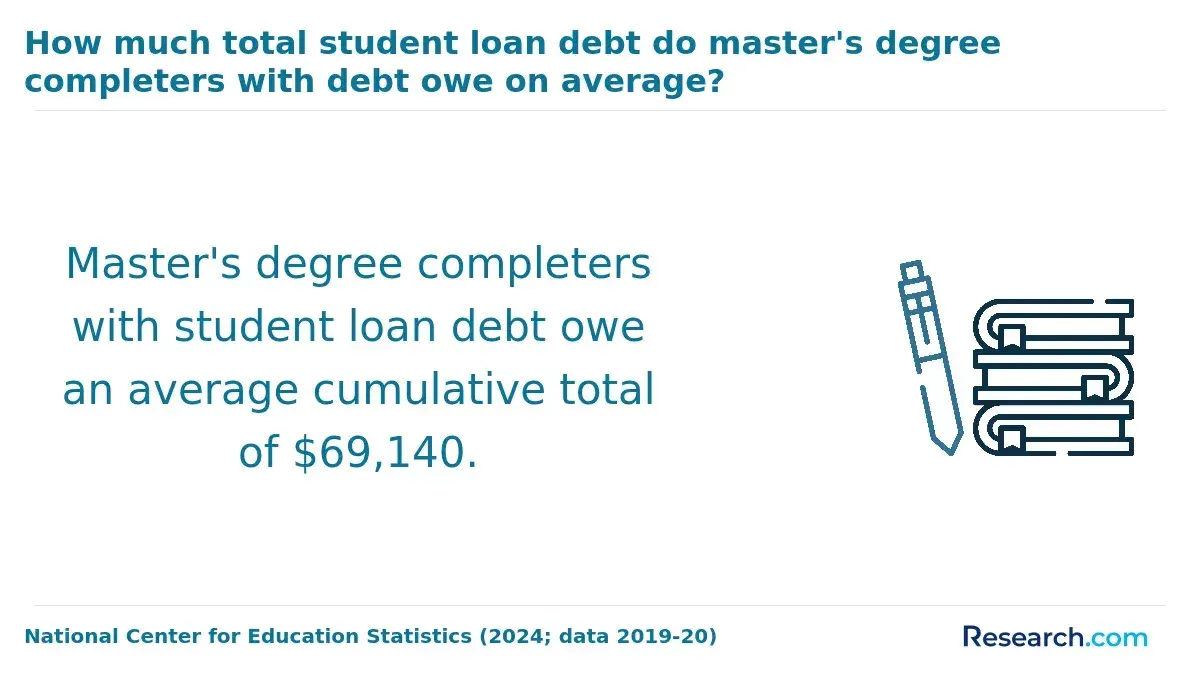
How long does an online data science master's take and cost?
There is no reliable universal time or price for an online data science master's. Both depend on required credits, course availability, enrollment pace, tuition policy, and fees. An evaluation elective offered infrequently can also lengthen a student's path even when the advertised degree timeline looks short.
To compare programs fairly, calculate tuition for the credits you expect to take, then add mandatory fees and any applicable computing, materials, or travel costs. Ask whether tuition changes by residency or enrollment status and whether employer assistance applies. Confirm that your planned pace leaves room for the courses and project supervision you want. The lowest published tuition is not necessarily the lowest total cost - or the best value for this specialization.
What careers and salaries can an online data science master's support?
Relevant paths include data scientist, machine learning engineer, model evaluation specialist, and AI governance or risk roles with a technical testing component. Titles and required qualifications differ across employers; project evidence and prior experience may matter alongside the degree.
The U.S. Bureau of Labor Statistics reports a $120,230 median annual wage for data scientists in May 2025. That figure describes an occupation, not AI safety specialists, new master's graduates, or the salary increase attributable to a degree. Use it as broad labor-market context, then examine target job postings for evaluation responsibilities and required experience. Pay also varies by industry and role; pay comparisons for graduates entering data science industries can provide further context without predicting an individual offer.
How do you choose a reputable online data science master's program?
Choose based on demonstrable opportunities to practice evaluation, not the prominence of "AI safety" in marketing. First establish that the institution and delivery format are legitimate; then test whether the curriculum supports the work you want to show an employer.
Before applying, use these questions to distinguish a substantive option from a superficial match:
- Which required courses teach experimental design and model error analysis, and what do students actually submit?
- Are relevant electives offered to online students often enough to fit my planned schedule?
- Can I complete a supervised capstone evaluating a model, and may I review examples of past project scope?
- What technical feedback, computing access, and career support are available remotely?
- What is my estimated total cost and completion plan under the institution's current policies?
Be wary of a program that relies on a single ethics lecture to substantiate an AI safety claim, cannot clarify elective access, or advertises career outcomes without explaining whom those outcomes represent. Prefer the program whose coursework and project rules let you produce a rigorous, appropriately scoped evaluation - not merely add an appealing phrase to a résumé.
Other Things You Should Know About Data Science
There is no single certification that substitutes for the ability to design, run, and explain an evaluation. Check specific job postings for employer requirements and prioritize demonstrable technical work.
Yes. You can test observable inputs and outputs if access terms permit it. Be explicit that such testing cannot establish what happens inside the model or under conditions you did not examine.
If they are part of the intended user population, their tasks and language varieties should be considered in the test design. Report coverage gaps rather than treating results from one language as universal.
Only with the employer's permission and in line with university rules and applicable data protections. A public or synthetic alternative may be safer when access, confidentiality, or publication rights are unclear.
References
- Cost of Attendance (Budget) | 2025-2026 Federal Student Aid Handbook https://fsapartners.ed.gov/knowledge-center/fsa-handbook/2025-2026/vol3/ch2-cost-attendance-budget
- Artificial Intelligence Accountability Policy | National Telecommunications and Information Administration https://www.ntia.gov/issues/artificial-intelligence/ai-accountability-policy-report/overview
- AI measurement and evaluation | NIST https://www.nist.gov/ai-measurement-and-evaluation
- Effective and Responsible Use of AI in Research | UW Graduate School https://grad.uw.edu/advice/effective-and-responsible-use-of-ai-in-research/
- M.S. in Data Science, Online | virginia.edu https://datascience.virginia.edu/degrees/msds-online
- Estimated Degree & Program Costs - Illinois Online https://online.illinois.edu/student-services/online-degrees-and-certificates-program-costs/
- AI Degree Tuition & Cost | Purdue Online https://www.purdue.edu/online/artificial-intelligence/tuition/
- AI Safety Evaluations: An Explainer | CSET https://cset.georgetown.edu/article/ai-safety-evaluations-an-explainer/
- Online Master of Data Science Degree Program | MDS@Rice https://csweb.rice.edu/academics/graduate-programs/online-mds
- Recommendation on the Ethics of Artificial Intelligence - AI | UNESCO https://www.unesco.org/en/artificial-intelligence/recommendation-ethics