
2027 Flexible Online Medical Billing & Coding Associate Degree Programs: Part-Time, Hybrid, Evening, and Self-Paced Options

Co-Founder and Chief Data Scientist
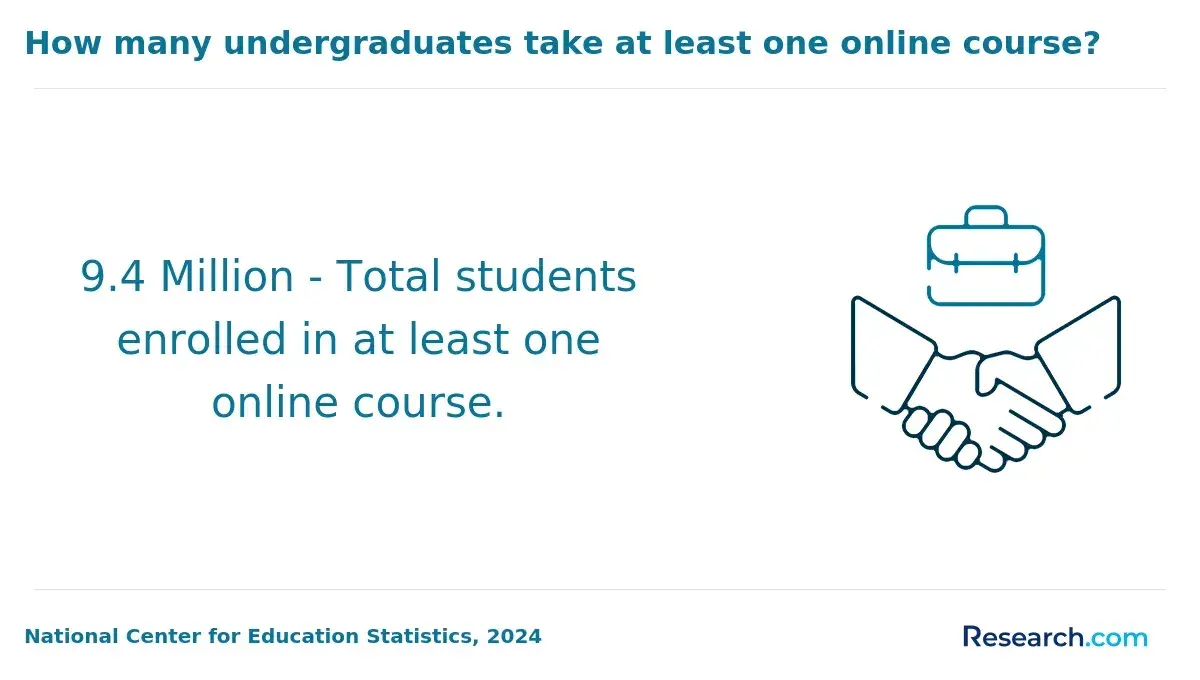
Choosing an online medical billing and coding associate degree often comes down to schedule fit as much as curriculum. NCES data released in 2024 show that more than half of U. S. undergraduates took at least one distance education course in fall 2022, underscoring how normal flexible study has become.
This guide is for working adults, caregivers, career changers, and first-time students comparing part-time, hybrid, evening, and self-paced formats. You'll learn how each option affects weekly structure, campus attendance, completion time, cost planning, and career preparation.
Key Things You Should Know
- Part-time programs usually offer the most manageable weekly workload, but they can extend a 60-credit associate degree from about two years to three or more years depending on course load and term availability.
- Hybrid programs may feel flexible online, but they can still require scheduled campus labs, exams, orientations, or proctored activities; self-paced programs reduce meeting times but may set term deadlines or competency milestones.
- The U.S. Bureau of Labor Statistics reported a May 2024 median annual wage of $50,250 for medical records specialists, so comparing tuition, transferability, certification preparation, and completion time matters before choosing a format.
What Flexible Online Medical Billing & Coding Associate Degree Formats Are Available?
A flexible online associate degree in medical billing and coding typically combines general education courses, healthcare administration basics, diagnostic and procedural coding, reimbursement methods, health data systems, and compliance topics such as HIPAA. The goal is to prepare students for entry-level billing, coding, claims, revenue cycle, or medical records roles while also providing college credit that may transfer into a bachelor's program.
The word "flexible" can mean very different things from one school to another. Some programs are flexible because you can enroll part time; others because courses are asynchronous, offered at night, partly self-paced, or delivered mostly online with limited campus attendance. If you are still comparing shorter training options with a degree path, a broader overview of medical billing and coding courses can help you understand how certificates, diplomas, and associate degrees differ.
The table below compares the main flexible formats by the factors that usually matter most to adult learners: scheduling control, required attendance, campus visits, and pace.
| Format | How scheduling works | Campus or live attendance | Best fit | Main trade-off |
| Part-time online | Students take fewer courses per term, often one to three classes. | Usually no campus requirement if fully online, but some exams may be proctored. | Working adults, caregivers, and students who need a lighter weekly load. | Completion usually takes longer, and some courses may not be offered every term. |
| Self-paced or competency-based | Students move through material at their own speed within term, subscription, or milestone rules. | Usually online, though proctoring or skills checks may be required. | Independent learners with consistent study time and prior healthcare or office experience. | More freedom also means more self-management; falling behind can be easy. |
| Evening online | Live classes, advising, labs, or support sessions are scheduled after typical work hours. | Live online attendance may be required at set times. | Students who want instructor structure but work during the day. | Evening class times can conflict with rotating shifts, childcare, or overtime. |
| Hybrid | Most coursework is online, with some in-person activities scheduled on campus or at approved sites. | Campus visits may be occasional or recurring depending on the school. | Students who want online convenience but value face-to-face support. | Travel, parking, and fixed attendance dates reduce flexibility. |
| Asynchronous online | Lessons and assignments are completed by weekly or module deadlines without live class meetings. | Usually no live class meetings, though proctored exams may apply. | Students with irregular schedules who can meet deadlines independently. | Less real-time interaction can make difficult coding topics harder without proactive support. |
| Synchronous online | Students attend live virtual classes at scheduled times. | Live attendance is commonly expected. | Students who learn better through lectures, discussion, and routine. | Less schedule control than asynchronous study. |
None of these formats is automatically better than the others. The strongest choice is the one that matches your available study hours, commute limits, technology access, need for instructor interaction, and target completion date.
How Do Part-Time Online Medical Billing & Coding Associate Degree Programs Work?
Part-time online programs let students reduce their course load while still pursuing the same associate degree requirements. A full-time associate degree student may take about 12 to 15 credits per term, while a part-time student may take six to nine credits, or sometimes a single course at a time. This matters because coding courses can be detail-heavy, especially when students are learning anatomy, medical terminology, ICD-10-CM, CPT, HCPCS, reimbursement rules, and payer documentation standards at the same time.
Part-time study is often the most realistic format for students working full time or managing family responsibilities. It can also reduce academic overload for students returning to school after a long break. The trade-off is that a two-year degree can take longer, especially if required coding courses are offered only once or twice per year.
Before choosing part-time enrollment, students should verify how the school sequences courses. The following points are especially important because a light course load can still become difficult if prerequisites are not planned carefully.
- Ask whether medical terminology, anatomy, coding, reimbursement, and health information systems courses must be completed in a specific order.
- Confirm whether part-time students receive priority registration for required courses or whether full-time students fill those seats first.
- Check whether online courses run in eight-week, ten-week, semester, or accelerated formats because shorter terms can make a "part-time" load feel intensive.
- Ask whether there is a maximum time limit for completing the associate degree or for applying older credits toward graduation.
- Find out whether practicum, capstone, internship, or certification review courses are offered every term or only during certain semesters.
Part-time online study is usually worth considering if you can commit to consistent weekly work but cannot handle several courses at once. It may not be ideal if you need the fastest possible route into the workforce, have employer tuition benefits that require full-time enrollment, or rely on financial aid rules that require a minimum credit load.

How Do Self-Paced and Competency-Based Medical Billing & Coding Associate Degree Programs Work?
Self-paced and competency-based formats give students more control over when they study and, in some models, how quickly they complete courses. In a traditional online course, the instructor sets weekly assignments and deadlines. In a self-paced course, students may be able to move ahead after mastering each module. In a competency-based model, progress is tied to demonstrated mastery of defined skills or outcomes rather than seat time alone.
These formats can be appealing for students who already have healthcare office experience, strong reading habits, or prior exposure to medical terminology. They can also help motivated students accelerate through familiar general education or introductory content. However, they are not the same as "unlimited time." Many schools still use term dates, subscription periods, assessment windows, academic progress rules, and financial aid requirements.
Self-paced study works best when you treat flexibility as responsibility, not as open-ended freedom. These are the practical conditions that usually determine whether the format is a good fit.
- You have predictable weekly study blocks, even if those blocks are early mornings, weekends, or late evenings.
- You are comfortable learning from readings, coding manuals, recorded lessons, practice cases, and online quizzes without frequent live reminders.
- You can stay organized across detailed coding guidelines, payer rules, documentation requirements, and compliance concepts.
- You are willing to ask for help quickly when coding exercises, anatomy concepts, or reimbursement calculations stop making sense.
- You understand the school's pace expectations, including minimum progress, maximum completion windows, and what happens if you do not finish a course on time.
A self-paced or competency-based associate degree may be less suitable if you need live lectures, peer discussion, frequent instructor check-ins, or external deadlines to stay on track. It can also be risky for students with unpredictable work schedules if the school charges by term or subscription period, because slower progress may increase total cost.
Yes, some online medical billing and coding associate degree programs offer evening classes, evening live sessions, or evening student support hours. These programs are usually designed for students who work during the day but still want a structured class schedule. Evening formats are most often synchronous, meaning you log in at set times for lectures, discussion, labs, coding practice, or exam review.
Evening classes can be a strong middle ground between fully self-directed study and traditional daytime courses. They provide routine, real-time access to instructors, and a clearer boundary between work and school. For students learning complex coding rules for the first time, that structure can be valuable.
The main drawback is that "evening" does not always mean flexible enough for every schedule. Students with rotating shifts, mandatory overtime, second jobs, unreliable childcare, or long commutes may find fixed evening sessions difficult to attend consistently. Before enrolling, review the exact attendance policy rather than relying on the phrase "evening option."
When comparing evening programs, ask admissions or the department these questions so you know whether the schedule is truly workable.
- Are evening sessions required, optional, recorded, or used only for tutoring and review?
- What days and times do live classes usually meet, and do they change each term?
- How many absences are allowed before grades, financial aid, or course completion are affected?
- Are exams, presentations, labs, or group projects also scheduled in the evening?
- Does the program provide evening access to advising, tutoring, technical support, library help, and career services?
An evening associate degree format is often best for students who want accountability and can protect specific weekly class times. It is usually weaker for students who need the freedom to study at different times each week.
Synchronous and asynchronous delivery describe how online classes are scheduled. Synchronous courses meet live at set times through a virtual classroom. Asynchronous courses let students complete lectures, readings, discussions, assignments, and quizzes on their own schedule, usually within weekly or module deadlines.
The difference matters because medical billing and coding is detail-oriented. Some students benefit from live explanation when learning code sets, payer rules, modifiers, claims workflows, and documentation requirements. Others perform better when they can pause recordings, repeat demonstrations, and work through coding scenarios during quiet study time.
The table below shows how the two formats compare for scheduling, learning support, and student fit.
| Feature | Synchronous online | Asynchronous online |
| Class meetings | Live virtual sessions at scheduled times. | No required live class meetings in many courses. |
| Schedule flexibility | Moderate; you must attend at fixed times. | High; you choose when to study within deadlines. |
| Instructor interaction | Immediate during live class. | Usually through messages, forums, office hours, or feedback. |
| Best for | Students who need routine, discussion, and real-time clarification. | Students with changing work hours or family schedules. |
| Risk | Missing live sessions can put you behind quickly. | Procrastination can create a backlog of assignments and coding practice. |
A strong online program may combine both approaches. For example, a course may be mostly asynchronous but include optional live review sessions before major coding exams. That can give students flexibility without removing access to real-time help.
Hybrid medical billing and coding associate degree programs blend online coursework with some in-person requirements. The online portion may include lectures, assignments, discussion boards, coding exercises, and exams. The in-person portion may include orientation, advising, testing, workshops, lab activities, presentations, internship meetings, or proctored assessments.
Campus requirements vary widely. One hybrid program may require only a few visits per year, while another may require weekly or monthly attendance. Some schools also use the word "hybrid" for programs that are mostly campus-based with only a few online courses, so students should not assume the degree is primarily online.
Hybrid study may be worth it if you live near campus and want access to face-to-face faculty, tutoring, computer labs, career fairs, or local employer connections. It can be less practical if you live far away, have limited transportation, work unpredictable shifts, or need to avoid commute-related costs.
Before enrolling in a hybrid program, confirm the specific in-person obligations. These details are important because a small number of required visits can still disrupt a work or childcare schedule if dates are fixed.
- Ask how many campus visits are required per course, per term, and across the full program.
- Request a sample schedule that shows typical in-person days, times, and duration.
- Find out whether in-person requirements can be completed on weekends or evenings.
- Confirm whether any internship, practicum, or exam must be completed at a school-approved site.
- Estimate the real cost of travel, parking, unpaid time off, childcare, and equipment needed for campus days.
Hybrid programs are not inherently less flexible than fully online programs, but they are less location-independent. The right question is not whether the program has campus visits; it is whether those visits are predictable, affordable, and compatible with your weekly responsibilities.
Most associate degrees require about 60 credits. Full-time students commonly plan for about two academic years, while part-time students may need three years or more depending on how many credits they take each term and how often required courses are offered. Accelerated, self-paced, or competency-based formats may shorten the timeline for highly organized students, but they can also become slower if students pause, repeat assessments, or miss progress milestones.
Timeline should be evaluated alongside career goals and earning potential. The BLS reported a May 2024 median annual wage of $50,250 for medical records specialists, but actual pay varies by location, employer, experience, certification, and role scope; reviewing broader medical coding salary context can help you decide how much time and tuition you are comfortable investing.
The table below summarizes typical completion patterns. These are planning ranges rather than guarantees because transfer credits, developmental coursework, repeated classes, work schedules, and term structure can change your actual timeline.
| Enrollment pattern | Typical course load | Common completion pace | What can slow progress |
| Full-time online | About 12 to 15 credits per term. | Often about two years. | Heavy workload, limited course availability, or failed prerequisites. |
| Part-time online | About six to nine credits per term. | Often about three years or longer. | Course sequencing, skipped terms, or aid minimums. |
| Accelerated online | Shorter terms with more frequent start dates. | May finish faster if courses are taken continuously. | Condensed deadlines and high weekly workload. |
| Self-paced or competency-based | Varies by mastery and school rules. | Can be faster or slower than standard pacing. | Poor time management, assessment delays, or term-based billing. |
| Hybrid | Varies by online and campus schedule. | Similar to full-time or part-time plans. | Required campus days, limited section availability, or commute barriers. |
A practical way to estimate your own timeline is to divide the total remaining credits by the number of credits you can realistically complete each term. Then check that required coding courses, capstones, or practicums are available in the terms you plan to take them.
Accreditation is one of the most important quality checks for any online associate degree. At minimum, the college should hold institutional accreditation from an accreditor recognized by the U.S. Department of Education or the Council for Higher Education Accreditation. Institutional accreditation can affect federal financial aid eligibility, transfer credit acceptance, employer recognition, and future bachelor's degree options.
Program-specific recognition can also matter, especially if the degree is housed in health information technology, healthcare administration, or allied health. Requirements vary by school and employer, so students should ask whether the curriculum prepares them for common industry certification exams from organizations such as AAPC or AHIMA. Certification is not always required for every billing job, but many employers use it as a hiring or advancement signal.
If you want to compare programs with both accreditation and affordability in mind, a curated list of accredited medical billing and coding schools online with financial aid can be a useful starting point before you verify details directly with each school.
Transfer-friendliness is a separate issue from accreditation. A school can be accredited but still have restrictive transfer policies, especially for career and technical courses. Students who may later pursue health information management, healthcare administration, business, public health, or a bachelor's degree completion pathway should review transfer rules before enrolling.
Use this checklist to reduce the risk of choosing a program that limits your next step.
- Confirm the college's institutional accreditation on the school website and through recognized accreditation databases.
- Ask whether credits transfer into specific bachelor's programs, not just whether they are "eligible for transfer."
- Request written information about articulation agreements with four-year colleges or universities.
- Check whether coding, billing, and health information courses count as major credits, electives, or nontransfer technical credits at receiving schools.
- Ask whether certification exam preparation is built into the curriculum or offered as an optional review.
- Verify whether online students have the same transcript, degree title, advising, and career support as campus students.
A major red flag is a program that emphasizes speed and convenience but gives vague answers about accreditation, transfer credit, certification preparation, or employer recognition. Flexibility is valuable only if the credential remains useful after graduation.
The cost of a flexible online associate degree depends on tuition rate, residency status, fees, books, coding manuals, software, exam costs, proctoring, and how long you stay enrolled. College Board's 2024 pricing data reported average published tuition and fees of $4,050 for in-district students at public two-year colleges for the 2024-25 academic year. That benchmark is useful because community colleges often offer some of the lowest-cost associate degree pathways, but online out-of-district or out-of-state pricing may be higher.
Current cost benchmarks and aid figures to keep in mind include the following. These figures are starting points, so always request a program-specific cost breakdown from the school.
- Average published tuition and fees for in-district students at public two-year colleges in 2024-25: $4,050.
- Maximum Federal Pell Grant for the 2024-25 award year: $7,395 for eligible students.
- Common additional costs: coding manuals, course materials, technology fees, background checks if required, proctoring fees, certification exam fees, and graduation fees.
Financial aid may be available if the school is eligible for federal student aid and the student meets enrollment and eligibility requirements. Degree programs are more likely than short noncredit courses to qualify for federal aid, but students should confirm the program's aid eligibility before enrolling. Part-time students may still qualify for aid, though award amounts and loan eligibility can depend on credit load.
Flexible formats can affect cost in less obvious ways. A self-paced subscription model may be economical if you complete courses quickly, but expensive if you need extra terms. Part-time study may lower your immediate tuition bill each term, but it can extend fees and delay entry into higher-paying roles. Hybrid study may add transportation, parking, and childcare costs even when tuition looks affordable.
To compare total cost accurately, look beyond the advertised tuition rate. Ask for a full estimate that includes all terms through graduation, not just the first semester.
- Calculate tuition based on the total credits required after transfer credits are applied.
- Add required fees, books, coding manuals, software, proctoring, and certification preparation materials.
- Ask whether tuition is charged per credit, per term, per subscription period, or by program.
- Confirm whether part-time enrollment changes financial aid, scholarships, employer reimbursement, or payment plan options.
- Estimate opportunity costs, including unpaid time off for hybrid requirements or reduced work hours during accelerated terms.
The lowest tuition is not always the best value if the program has weak support, poor transferability, limited certification preparation, or a schedule that increases your risk of stopping out.
How Should You Choose the Best Flexible Online Medical Billing & Coding Associate Degree Program for Your Schedule?
The best flexible program is the one you can finish without sacrificing credential quality, financial stability, or your longer-term goals. Start by identifying your nonnegotiable constraints: work hours, caregiving, commute limits, weekly study capacity, budget, technology access, and target graduation date. Then compare formats against those constraints instead of choosing the program that sounds most convenient.
Use the following step-by-step process to narrow your options. This sequence helps you compare flexibility, quality, and career value in a practical order.
- Decide how many hours per week you can study consistently, including reading, assignments, coding practice, exams, and group work.
- Choose the format that matches your schedule: part-time for lower weekly load, asynchronous for irregular hours, evening for structured after-work learning, hybrid for local in-person support, or self-paced for independent acceleration.
- Check accreditation, transfer policies, certification preparation, and whether the degree is eligible for financial aid.
- Request a complete degree plan that shows course sequence, start dates, prerequisites, and expected graduation timing for your chosen pace.
- Compare total cost through graduation, including fees, course materials, certification expenses, and any travel or childcare costs.
- Ask about online tutoring, faculty response times, coding practice tools, career services, internship support, and job search resources.
- Review withdrawal, leave of absence, repeated course, and incomplete policies in case work or family responsibilities change.
Students who plan to move into management later may also want to think beyond the associate degree. For example, after gaining healthcare experience and completing further education, some professionals compare options such as an affordable online MBA healthcare management program, but that path usually makes more sense after clarifying career goals and bachelor's-level requirements.
Common mistakes are avoidable if you ask direct questions before enrolling. Do not assume "online" means no live attendance, "hybrid" means only one campus visit, "self-paced" means unlimited time, or "part-time" means easy. Do not choose a program based only on speed if it lacks accreditation or transfer value. Do not ignore certification preparation if your target employers prefer certified coders. Most importantly, do not build your plan around your ideal week; build it around the week you actually have during busy work, family, or health disruptions.
A good final test is simple: if the school can show you a clear schedule, total cost estimate, accreditation status, transfer pathway, support plan, and realistic graduation map, it is easier to judge whether the flexibility is real. If the answers stay vague, keep comparing.
Other Things You Should Know About Medical Billing & Coding
Many online associate degree programs include coursework that supports preparation for coding or billing certification exams, but eligibility and readiness vary by credential and organization. Ask whether exam review, coding practice, and current manuals are included in the curriculum.
No. Medical coding focuses on translating diagnoses, procedures, and services into standardized codes. Medical billing focuses more on claims, reimbursement, payer communication, patient billing, and revenue cycle processes. Many associate programs teach both because the workflows overlap.
A common planning estimate is several hours per week for each credit, but the actual workload depends on course difficulty, term length, and your background. Coding courses often require extra practice time because accuracy improves through repeated case exercises.
Usually yes. You will need reliable internet, a computer that meets school requirements, document and spreadsheet tools, access to the learning platform, and sometimes coding software, virtual labs, webcam proctoring, or electronic coding resources. Confirm requirements before the first term.
- Online Medical Coding and Billing Professional - MedCerts https://medcerts.com/programs/healthcare/medical-coding-and-billing-professional-online-training
- Medical Assistant Programs: Complete Guide to Training, Certification, and Choosing the Right Program in 2026 https://zollege.com/blog/medical-assistant-programs/
- Learn How to Use Social Media Responsibly in College https://www.edumed.org/online-schools/medical-billing-coding/most-affordable/
- Medical Billing and Coding | Aims Community College https://www.aims.edu/programs/medical-billing-and-coding
- Online Medical Billing and Coding Associate Degree Program https://chartercollege.edu/programs/health-care/medical-billing-and-coding-aas/
- Which Online Medical Coding Program Is Best — a Certificate, Diploma, or Associate degree? https://www.medicalbillingandcoding.org/qnas/which-online-medical-coding-program-is-best-a-certificate-diploma-or-associate-degree/
- Medical Coding & Billing Program https://www.careerstep.com/certify/health-data/medical-coding-billing/
- Online Medical Billing and Coding Programs https://www.ultimatemedical.edu/program/medical-billing-and-coding/
- 5 Best Online Associate in Medical Billing and Coding Programs https://www.onlinecolleges.net/rankings/best-online-associate-medical-billing-and-coding-degree-programs/
- One moment, please... https://www.smithwoodmedical.com/midtown-medical-billing-coding-classes/


