2027 Fastest Accredited Online Health Information Management Degree Programs That Accept Transfer Credits

Co-Founder and Chief Data Scientist
The fastest route to an accredited online Health Information Management degree usually depends less on the advertised program length and more on how many prior credits actually apply. That matters for degree completers: the National Student Clearinghouse Research Center reported in 2024 that 36.8 million adults under 65 had some college but no credential.
This guide is for transfer students, working healthcare staff, and adults returning to finish a bachelor's degree. You will learn how to compare transfer-friendly HIM programs, verify accreditation, estimate realistic completion time, and avoid shortcuts that could limit RHIA eligibility, employer recognition, or graduate-school options.
Key Things You Should Know
- The fastest legitimate online HIM bachelor's paths are usually CAHIIM-accredited degree-completion programs that accept about 90 transfer credits, leaving roughly 30 credits of residency or major coursework; students with a completed associate degree and the right prerequisites may finish in about 12 to 18 months.
- Transfer-friendly programs to compare first include online HIM options from Franklin University, Southern New Hampshire University, University of Cincinnati, Charter Oak State College, Western Governors University, and University of Wisconsin Extended Campus, but the fastest choice depends on how general education, coding, statistics, anatomy, healthcare law, and HIM major credits map to the degree plan.
- Maximum transfer credit is not the same as usable transfer credit: a school may accept up to 90 or more credits institutionally, but CAHIIM-aligned professional courses, upper-division requirements, a capstone, practicum, and a 25% to 30-credit residency rule can still determine the real graduation timeline.
What Are the Fastest Accredited Online Health Information Management Degree Programs That Accept Transfer Credits?
The fastest accredited online Health Information Management degree programs for transfer students are typically bachelor's completion programs, competency-based programs, or accelerated online bachelor's programs with generous transfer policies. For HIM, "accredited" should mean two things: the college or university has recognized institutional accreditation, and the HIM program has programmatic accreditation from the Commission on Accreditation for Health Informatics and Information Management Education, commonly called CAHIIM.
The table below highlights transfer-friendly online HIM bachelor's options that are commonly relevant for students trying to finish quickly. Policies can change, so treat this as a shortlist for deeper verification rather than a guarantee of admission, credit acceptance, or RHIA eligibility.
| Program to compare | Why it may be fast for transfer students | Best fit | Main caution |
| Franklin University, BS in Health Information Management | Often appeals to adult transfer students because Franklin publishes a high bachelor's transfer allowance and offers short online course terms. | Students with substantial prior college credit, healthcare coursework, or an associate degree. | Major, capstone, and upper-level HIM requirements may still need to be completed at Franklin. |
| Southern New Hampshire University, BS in Health Information Management | SNHU is known for transfer-friendly online bachelor's pathways and accelerated undergraduate terms. | Students who want predictable term starts and a traditional course-based online format. | Not every healthcare, coding, or business course will satisfy a specific HIM requirement. |
| University of Cincinnati Online, BS in Health Information Management | UC's online HIM completion pathway can be efficient for students who already have lower-division credits and prerequisites. | Students seeking a public university option with a structured HIM curriculum. | Students lacking science, statistics, or HIM prerequisites may need extra terms. |
| Charter Oak State College, BS in Health Information Management | Charter Oak is designed for adult degree completion and can work well for students bringing a broad mix of credits. | Students with credits from multiple colleges, military training, or prior learning. | Residency and major-course requirements can limit how much time is actually saved. |
| Western Governors University, BS in Health Information Management | WGU's competency-based model can be fast for self-directed students who can complete multiple courses in a term. | Students with strong healthcare experience, discipline, and time to progress quickly. | Speed depends on demonstrated competency, not just transferred credits. |
| University of Wisconsin Extended Campus, BS in Health Information Management and Technology | The program is built as an online degree-completion option for students who already have significant college credit. | Students with about two years of prior college coursework who want a public-university consortium model. | It may not be the shortest path for students starting with few transferable credits. |
A good "fastest" shortlist should include programs that are fast after credit evaluation, not merely fast in marketing language. Ask each school for an unofficial degree audit before enrolling, because the winning program is usually the one that leaves the fewest required credits, not the one with the highest transfer-credit cap.
How Fast Can You Complete an Online Health Information Management Degree With Transfer Credits?
With transfer credits, many online HIM bachelor's students can finish faster than first-time freshmen, but the realistic timeline depends on the number of credits that apply to the degree plan. Most bachelor's degrees require about 120 semester credits, and many schools require at least 30 credits to be completed through the awarding institution.
The table below gives practical timeline ranges for a motivated student in an accredited online HIM bachelor's program. These ranges assume that transferred credits apply cleanly to general education, electives, prerequisites, or major requirements; students missing key prerequisites may need more time.
| Applicable transfer credits | Likely remaining credits | Realistic online completion time | What affects speed most |
| 0 to 24 credits | About 96 to 120 credits | 3 to 4 years | Full-time load, summer terms, and availability of prerequisites. |
| 30 credits | About 90 credits | 2.5 to 3 years | Whether general education is mostly complete. |
| 60 credits | About 60 credits | 18 to 24 months | Whether the student has an associate degree that maps well to the HIM curriculum. |
| 75 to 90 credits | About 30 to 45 credits | 12 to 18 months | Residency rules, upper-division HIM courses, practicum, and capstone timing. |
| 90 or more credits | Usually at least 30 credits | 9 to 18 months | Program format, term length, and whether the school allows accelerated course stacking. |
Students trying to finish in one year should confirm four things before applying. These checks help determine whether a compressed timeline is academically possible rather than just theoretically advertised.
- Ask for a course-by-course transfer estimate showing which credits apply to specific HIM degree requirements.
- Confirm the minimum credits that must be completed at the school granting the degree.
- Check whether professional practice, capstone, coding, statistics, and healthcare data courses are offered every term.
- Ask whether full-time, accelerated, or competency-based pacing is allowed for new transfer students.
The common mistake is assuming that 90 accepted credits automatically means only 30 credits remain. In HIM, a student may still need upper-division courses in health data governance, reimbursement, coding systems, privacy, compliance, quality improvement, and informatics if those subjects were not covered in prior coursework.
How Many Transfer Credits Can You Apply Toward an Online Health Information Management Degree?
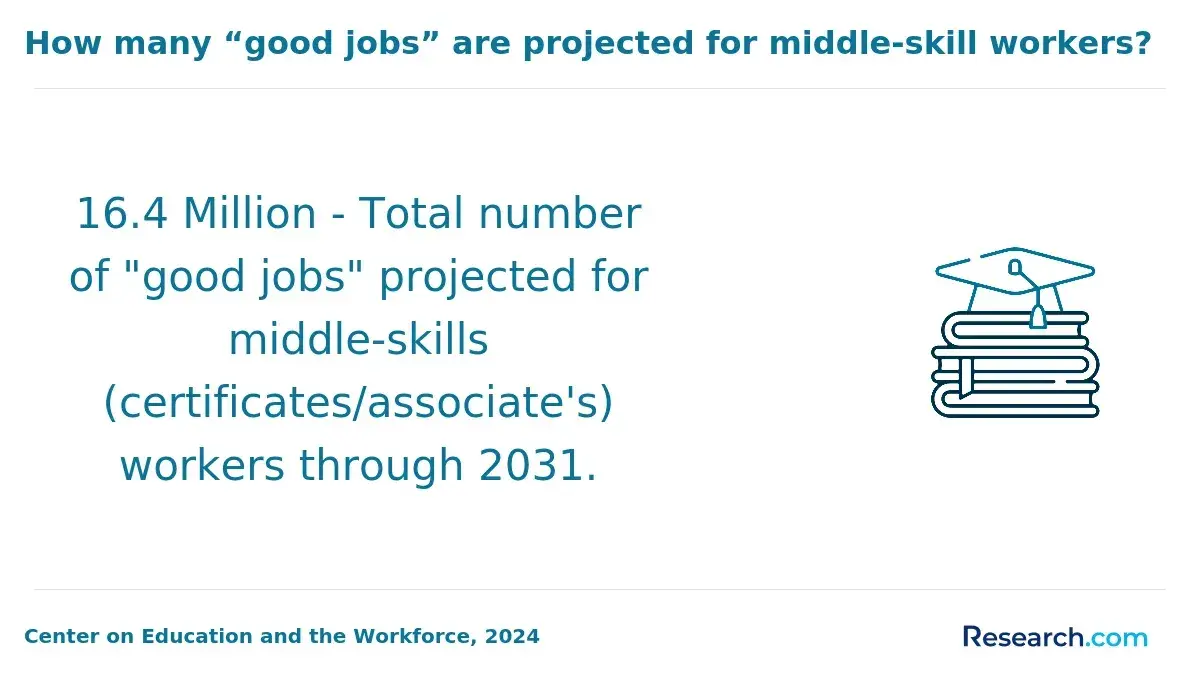
Many online bachelor's programs allow transfer students to bring in up to 75% of a degree, often around 90 credits for a 120-credit bachelor's program. Some adult-focused institutions may publish slightly higher transfer allowances, but institutional limits are only one part of the decision.
The table below separates the credit limits students often see from the issues that determine whether those credits shorten the HIM degree. This distinction is crucial because credits can be accepted by the university but still fail to meet a required part of the HIM curriculum.
| Credit policy factor | What it means | Why it matters for speed |
| Maximum transfer allowance | The largest number of credits the institution may accept toward a bachelor's degree. | A higher cap helps only if the credits apply to remaining degree requirements. |
| General education transfer | Prior English, math, science, humanities, and social science courses may satisfy core requirements. | This can clear lower-division requirements and let the student focus on HIM major courses. |
| Major-course equivalency | Prior HIM, coding, health law, reimbursement, or informatics courses are compared with program requirements. | This is where many students gain or lose time, especially if old courses do not match current CAHIIM-aligned outcomes. |
| Upper-division requirement | Some credits must be completed at the junior or senior level. | Lower-division associate credits may not replace advanced HIM management courses. |
| Residency requirement | The minimum number of credits that must be earned through the degree-granting school. | Even with many transfer credits, students commonly need at least 30 institutional credits. |
Before choosing a program, request a written or portal-based transfer evaluation and compare the remaining courses across schools. A program that accepts fewer total credits may still be faster if it applies more of your previous coursework to the HIM major.
How Can You Verify Accreditation for Fast Online Health Information Management Degree Programs?
Accreditation is especially important in Health Information Management because many students want the degree to support RHIA eligibility, healthcare employment, or graduate study. For a fast online HIM degree, speed should never come at the expense of institutional legitimacy or CAHIIM programmatic accreditation.
Use the following checklist before enrolling. It helps you avoid programs that are online, quick, or inexpensive but may not meet the recognition standards you need.
- Verify institutional accreditation through the U.S. Department of Education or Council for Higher Education Accreditation databases using the college's official name.
- Confirm the HIM program's CAHIIM status on CAHIIM's program directory, not only on the school's marketing page.
- Check whether the online version of the program is included under the accredited program listing.
- Ask the school whether graduates meet the education requirement for the RHIA exam, if that credential is part of your plan.
- Confirm that transfer credits, prior learning credits, and substitute courses will not affect eligibility for required professional practice experiences.
A red flag is a school that describes itself as "accredited" but will not clearly name the accrediting agency or cannot show CAHIIM accreditation for the HIM program. Another warning sign is pressure to enroll before you receive a transfer evaluation, especially if you are trying to finish quickly.
Which Types of Transfer Credits Can Count Toward an Online Health Information Management Degree?
Transfer credits for an online HIM degree can come from several sources: prior colleges, community college associate programs, healthcare certificates, military education, standardized exams, or evaluated professional learning. The key question is whether the credit fits the degree plan, meets grade and age requirements, and satisfies the level of coursework required.
The table below summarizes common credit sources and how they may apply. It can help you prepare better questions for an admissions or transfer-credit advisor.
| Credit source | Possible HIM degree use | Speed benefit | Common limitation |
| Associate degree credits | General education, electives, anatomy, physiology, statistics, computer applications, or introductory healthcare courses. | Can move a student directly into a degree-completion pathway. | Not all associate credits are upper-division or CAHIIM-equivalent. |
| RHIT or HIM-related coursework | Coding, reimbursement, health data, privacy, compliance, and health record systems. | May reduce repeated professional coursework if the content aligns. | Older coding or regulatory courses may not transfer cleanly because standards change. |
| Medical billing and coding certificate courses | May apply to electives or introductory coding requirements. | Useful for students who completed formal college-credit training. | Noncredit certificates may not transfer unless evaluated for credit. |
| Business or IT coursework | Management, project management, database, analytics, cybersecurity, or healthcare operations electives. | Helpful for HIM roles that blend data, compliance, and administration. | Courses may not replace HIM-specific informatics or data governance classes. |
| Military training | Electives, healthcare administration, records management, or technical coursework after evaluation. | Can reduce total credits for veterans and active-duty students. | Credit depends on ACE recommendations and school policy. |
Students coming from online medical billing and coding programs should pay close attention to whether their training was college-credit, noncredit, or certification-prep only. Certification-prep coursework can strengthen admissions readiness, but it does not always reduce bachelor's degree requirements unless the college formally awards transfer or prior learning credit.
How Do Residency and Major Requirements Affect Transfer Credits for an Online Health Information Management Degree?
Residency requirements are one of the biggest reasons a high-transfer program may still take longer than expected. In higher education, "residency" usually does not mean living on campus; it means the number of credits you must complete at the school that awards the degree.
For a 120-credit bachelor's degree, a 30-credit residency rule is common. That means even a student with 100 transferable credits may still need about 30 credits from the new school, especially if the remaining work includes upper-division HIM courses, a professional practice experience, or a capstone.
The following comparison shows why two programs with similar transfer caps can lead to different completion dates. Use it to understand what to look for in your degree audit.
| Policy scenario | What it looks like | Likely effect on completion time |
| High transfer cap and low remaining major requirements | Most general education and prerequisite courses apply, and only the core HIM sequence remains. | Often the fastest route for associate-degree holders. |
| High transfer cap but many unmatched HIM courses | Credits are accepted as electives, but required HIM courses remain incomplete. | May add one or more terms despite a generous transfer policy. |
| Strict upper-division requirement | Lower-division courses transfer, but junior- and senior-level management or informatics courses must be completed at the new school. | Can prevent a one-year finish even for students with many credits. |
| Sequenced practicum or capstone | Professional practice or capstone courses are offered only after prerequisites are completed. | Can delay graduation if the student misses the required term sequence. |
To avoid surprises, ask for the remaining course list in writing and confirm when each course is offered. The fastest program is the one with the shortest confirmed path through required courses, not simply the school that accepts the largest number of credits.
Can Prior Learning, CLEP, Military Training, or Certifications Help You Finish an Online Health Information Management Degree Faster?
Prior learning, CLEP exams, military training, and healthcare certifications can sometimes help students reduce total credits, but they work differently from standard college transfer credit. These options are most useful when they satisfy general education, elective, or introductory professional requirements without delaying enrollment.
Consider these credit-acceleration options if you have strong work experience or documented training. Each option should be confirmed with the HIM program before you spend time or money pursuing it.
- Prior learning assessment: Some schools award credit through portfolios, faculty review, or approved professional learning evaluations, which may help experienced healthcare workers convert documented learning into elective or requirement credit.
- CLEP or DSST exams: These exams may satisfy general education areas such as composition, social science, math, or humanities, but they rarely replace upper-division HIM professional courses.
- ACE-evaluated military training: Military transcripts may provide credit for healthcare administration, records management, leadership, or technical training, depending on the institution's policy.
- Healthcare certifications: Credentials in coding, billing, compliance, revenue cycle, or health records may support prior learning credit at some schools, but policies vary widely.
If you are comparing healthcare career ladders, remember that HIM is not the same pathway as nursing. A student researching a medical assistant to LPN bridge program is usually looking for clinical licensure progression, while HIM focuses on health data, compliance, coding systems, reimbursement, privacy, analytics, and information governance.
How Much Does a Fast Online Health Information Management Degree Cost After Transfer Credits and Financial Aid?
The cost of a fast online HIM degree depends on tuition, remaining credits, fees, books, technology costs, transfer evaluation fees, and whether the student qualifies for federal, state, employer, military, or institutional aid. Transfer credits can reduce cost by reducing the number of credits or terms you must pay for, but a cheaper per-credit rate is not always cheaper overall if more courses remain.
College Board's 2024 Trends in College Pricing and Student Aid reported the following average published tuition and fees for full-time undergraduates. These figures are not HIM-specific, but they provide a useful benchmark when comparing public, private, and online tuition offers.
- Public four-year in-state average published tuition and fees: $11,610 for 2024-25.
- Public four-year out-of-state average published tuition and fees: $30,780 for 2024-25.
- Private nonprofit four-year average published tuition and fees: $43,350 for 2024-25.
For transfer students, the better calculation is total remaining program cost. Multiply the number of credits left after transfer by the tuition rate, then add mandatory fees, course materials, practicum costs, graduation fees, and any extra terms caused by missing prerequisites.
Use this cost-check sequence before enrolling. It helps compare programs on real price-to-completion rather than sticker tuition alone.
- Get an unofficial or official transfer evaluation showing the credits remaining.
- Ask for the tuition rate that applies to online HIM students, including whether out-of-state online tuition differs.
- Confirm whether the school charges per credit, per term, or by subscription period.
- Ask whether federal financial aid applies to the program format and enrollment pace.
- Compare employer tuition assistance, military benefits, scholarships, and Pell Grant eligibility if applicable.
- Estimate the cost of delayed graduation if a cheaper program requires extra terms.
Students comparing healthcare degrees should also consider long-term education plans. For example, someone aiming for administrative pharmacy leadership might eventually research pharmacy school online, while an HIM student may instead prioritize RHIA eligibility, analytics certificates, compliance credentials, or graduate healthcare management programs.
How Do Accelerated, Competency-Based, and Self-Paced Online Health Information Management Degree Programs Compare?
Accelerated, competency-based, and self-paced online HIM programs can all shorten the path to graduation, but they do so in different ways. The best format depends on your transfer credits, schedule, learning style, and ability to handle dense healthcare data and compliance coursework without falling behind.
The comparison below shows how each model affects completion time. It is especially useful for working adults deciding whether speed, structure, or flexibility matters most.
| Program format | How it can be faster | Best for | Potential drawback |
| Accelerated course-based | Uses shorter terms, such as 5-, 6-, 7-, or 8-week courses, with multiple starts per year. | Students who want structure but can manage a faster weekly workload. | Missing one course in a sequence can still delay graduation. |
| Competency-based | Allows students to move through material by proving mastery rather than waiting for a traditional semester to end. | Experienced, self-directed learners who can study consistently. | Students who need frequent deadlines or instructor-led pacing may progress more slowly. |
| Self-paced within limits | Lets students accelerate assignments or modules inside a term or subscription period. | Students with predictable study time and strong prior knowledge. | Financial aid, faculty assessment schedules, and course availability may limit true self-pacing. |
| Traditional online semester | May allow full-time or summer enrollment but follows standard academic calendars. | Students who need a steadier pace while working or managing family responsibilities. | Usually slower than accelerated formats for students with many transfer credits. |
Competency-based programs are not automatically easier or faster. They can be efficient for students who already understand medical terminology, coding concepts, healthcare systems, databases, and compliance, but they can be challenging for students who need more guided instruction.
Healthcare students comparing online pathways should also distinguish administrative and clinical education models. Online np programs, for example, usually include clinical practice requirements tied to advanced nursing licensure, while online HIM programs focus on managing health information, data quality, privacy, reimbursement, and organizational decision-making.
Are Fast Accredited Online Health Information Management Degrees Respected by Employers and Graduate Schools?
Fast accredited online HIM degrees can be respected by employers and graduate schools when the institution is properly accredited, the HIM program has CAHIIM accreditation, and the curriculum aligns with industry expectations. Employers generally care more about accreditation, skills, credential eligibility, experience, and performance than whether courses were completed online.
The labor market context is also favorable for students who pair the degree with practical skills. The U.S. Bureau of Labor Statistics lists a 2024 median annual wage of $50,250 for medical records specialists and projects 9% job growth from 2023 to 2033, while medical and health services managers have a higher median wage but usually require broader experience and leadership responsibility. These figures are national medians, not promises, so local market, employer type, credentialing, and experience matter.
An HIM bachelor's degree can support roles in several areas of healthcare administration and data operations. Common pathways include health information management, coding management, revenue cycle, compliance, privacy, clinical documentation improvement, data quality, registry work, and health informatics support.
Graduate schools usually evaluate whether the bachelor's degree came from an institutionally accredited college and whether the applicant meets prerequisite, GPA, and experience requirements. Students interested in leadership may later compare an MBA healthcare pathway with options such as a master's in health informatics, health administration, public health, or information systems.
The safest strategy is to choose the fastest program that still protects future options. Do not sacrifice CAHIIM accreditation, RHIA eligibility, transfer transparency, or graduate-school recognition just to finish a few months earlier.
Other Things You Should Know About Health Information Management
Many CAHIIM-accredited HIM programs include a professional practice experience, practicum, capstone, or applied project. Online students may be able to complete the requirement near where they live, but placement rules, background checks, and site approvals vary by school.
Yes, many students do, but the fastest pace may require evening, weekend, and consistent weekly study time. If you work full time, ask whether the program allows part-time enrollment without disrupting course sequencing.
Not always. An associate degree in HIM can help, especially if it includes coding, reimbursement, and health data courses, but many bachelor's programs also accept students with general education credits, healthcare coursework, or credits from other majors.
Collect official or unofficial transcripts from every college attended, course descriptions or syllabi for healthcare and technology courses, military transcripts if applicable, certification records, and documentation of any prior learning or professional training you want reviewed.
References
- Financial Aid Overview and Scholarships https://www.medicalbillingandcoding.org/resources/financial-aid/
- What Are the Job Prospects for an HIM Graduate? - Healthcare Administration Degree Programs https://www.healthcare-administration-degree.net/faq/what-are-the-job-prospects-for-an-him-graduate/
- Revolutionizing Health Information Management: Best Practices and Strategies | eLearningConnex https://www.elearningconnex.com/lms_blog/revolutionizing-health-information-management-best-practices-and-strategies/
- Online Health Information Management Programs (2026) https://healthinformationmanagementprograms.com/programs/online-him-programs/
- Health Information Management - CAHIIM https://www.cahiim.org/accreditation/health-information-management/
- Online Health Information Management Degrees: Top Schools https://www.edumed.org/online-schools/health-information-management-degrees/
- Financing Your Degree https://aspph.org/student-journey/financing-your-degree/
- Career Paths https://www.kumc.edu/school-of-health-professions/academics/departments/health-information-management/career-paths.html
- Financial Aid For Online Colleges https://www.affordablecollegesonline.org/financial-aid/financial-aid-for-online-colleges/
- Online Health Information Management Program https://www.ultimatemedical.edu/program/health-information-management/