2027 Evaluating a Patient Safety Nurse Job: Workload, Performance Measures, Schedule, and Support
Audited and Verified:
Our Editorial and Data Verification Process
Research.com uses government datasets, official education statistics and primary institutional information to support its career and degree guides. Our review process checks factual accuracy, occupational definitions, source dates and the requirements associated with the credentials discussed.
How This Article Was Fact-Checked
Our editorial team verifies salary estimates, employment projections, education requirements and program information against original data providers and official organizations. Salary figures are checked against the relevant occupational definitions and reporting periods. Information about licensure, accreditation and required in-person training is reviewed separately.
Fact-checked and verified on:

Co-Founder and Chief Data Scientist
A patient safety nurse job can offer a move away from routine bedside assignments, but it is not necessarily a lower-pressure role. Event investigations, competing deadlines, difficult conversations, and limited authority to change workflows can shape the workday.
For RNs considering a transition, the best offer is one with a manageable scope and the support to improve care - not just an appealing title. This guide explains the role, qualifications, pay context, workload, measures, schedule, and interview questions that can help you judge whether a position fits.
Key Things You Should Know
- Ask how many facilities and service lines the role covers, who handles urgent events, and whether routine duties are reduced when a major investigation begins.
- Strong evaluations consider timely follow-up and implemented improvements, not simply a low count of reported events; reporting volume alone does not establish safety.
- Confirm access to clinical leaders, quality and data staff, protected investigation time, and a clear escalation route before accepting an offer.
What Does a Patient Safety Nurse Do?
A patient safety nurse helps an organization identify risks, learn from safety events, and make care processes safer. Depending on the employer, the title may be patient safety specialist, safety officer, or quality and patient safety RN. Typical work includes reviewing event reports, coordinating investigations, examining trends, facilitating discussions across disciplines, and tracking whether corrective actions were put into practice.
The job is usually about improving systems rather than assigning individual blame. A nurse might discover, for example, that a confusing medication handoff contributes to near misses and then work with pharmacy, bedside staff, and leadership on a safer process.
The employer should define who makes clinical decisions, who leads investigations, and what the safety nurse can escalate or change. Experience with a focused improvement project can help an RN demonstrate relevant skills; RN-to-BSN project-based learning options may offer a way to build that experience, although a school project is not a substitute for employer-approved safety work.
What Education and Licensure Does a Patient Safety Nurse Need?
For a position designated as a nursing role, employers commonly seek an active RN license and clinical experience. A BSN may be preferred or required, while some employers consider experienced ADN-prepared RNs. Requirements depend on the posting: a role that interprets clinical events across departments may call for substantial bedside experience, whereas a broader safety-team position may accept other healthcare backgrounds.
Useful preparation includes event review, evidence appraisal, process improvement, clear documentation, and the ability to facilitate conversations without making staff reluctant to report concerns. Ask whether the employer provides supervised onboarding in its reporting system, investigation methods, and confidentiality rules.
An MSN can support later leadership work but is not a universal entry requirement. Before comparing lower-cost BSN-to-MSN routes, check whether target employers actually require a graduate degree or value relevant RN experience more.
How Much Does a Patient Safety Nurse Earn?
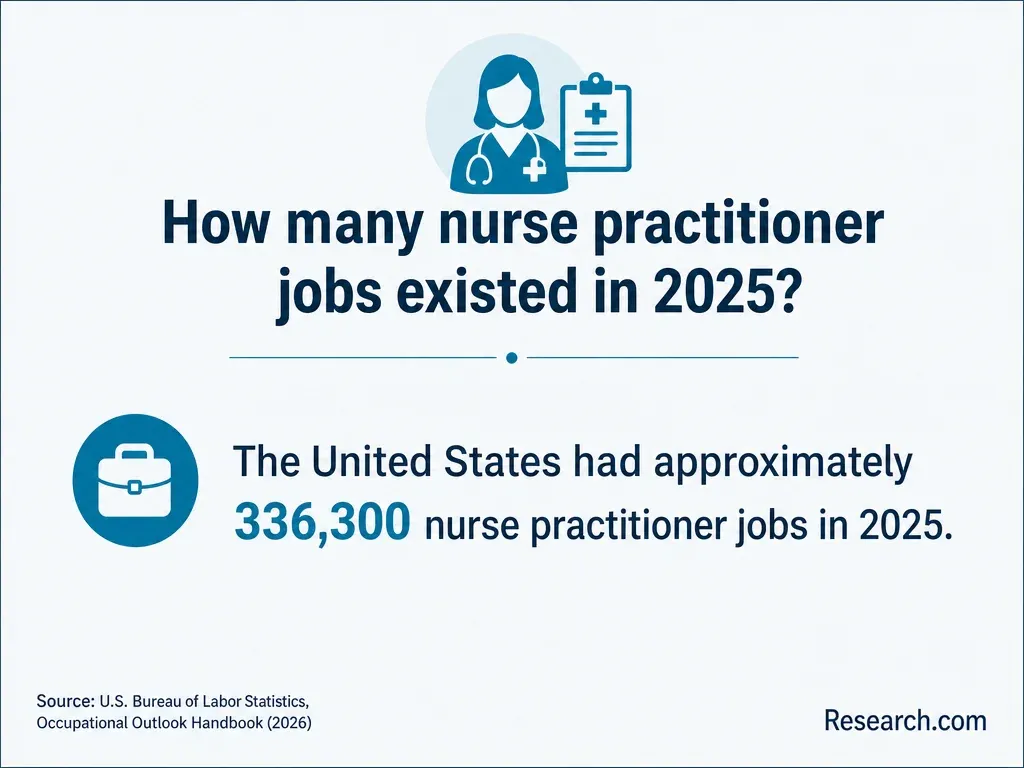
There is no separate U.S. Bureau of Labor Statistics wage series for "patient safety nurse." The BLS reported a $93,600 median annual wage for registered nurses in May 2024 and projected 5% RN employment growth from 2024 to 2034. Those occupation-wide figures are context, not an estimate of pay or demand for this specialty. Patient safety offers vary with location, health system, experience, management responsibility, and whether the position is hourly or salaried.
Compare offers using base pay, benefits, paid development time, on-call expectations, and the number of sites covered. If further education is part of your plan, compare its total cost and lost work time against an actual job requirement - not an assumed pay increase. For example, lower-cost online PMHNP programs prepare nurses for a different career objective and should not be treated as a pay strategy for patient safety work.
There is no standard patient safety nurse caseload. Work may be steady until a serious event requires interviews, record review, meetings, and follow-up alongside existing deadlines. A single-facility role with a dedicated team can look very different from a system role covering multiple hospitals.
The following distinctions help reveal whether the workload is realistic. Ask for recent examples rather than relying on the job title.
| Workload feature | What to clarify | Why it matters |
| Coverage | Facilities, units, and service lines assigned | A wider scope increases travel and competing requests. |
| Event response | Who triages reports and handles urgent events | Unclear ownership can make the role continuously reactive. |
| Investigation capacity | Protected time and backup during major reviews | Existing projects may otherwise continue at full pace. |
| Follow-through | Who owns, funds, and checks corrective actions | A nurse cannot implement every change alone. |
Ask what work is postponed when an investigation starts and whether vacant positions have changed the scope. If you are weighing this role against an advanced practice transition, remember that fast-track psychiatric NP MSN study involves a different set of clinical and scheduling commitments; neither path should be chosen on program speed alone.
Reasonable measures connect the nurse's work to a learning and improvement process. They may include timely event triage, completion and quality of reviews, participation by relevant departments, implementation of agreed actions, and follow-up checks showing whether a new process is used. Employers may also monitor event rates or other patient outcomes, but those results have multiple causes and should not be attributed to one employee without context.
A low number of incident reports is not automatically a success. It can reflect underreporting rather than fewer hazards. Ask how the organization interprets reporting trends, defines each measure, and responds when staff raise concerns. Also ask whether an evaluation recognizes well-documented risks that leadership has not yet funded. A general advanced practice credential is not a replacement for these skills; affordable graduate pathways to NP preparation serve a different role and should not be confused with preparation for safety performance work.
Many positions center on weekday meetings and administrative work, but a daytime listing does not establish predictable hours. Significant events may require a prompt response, and system-level jobs may involve travel between sites. Work can combine desk-based analysis with unit visits, interviews, committee meetings, and sensitive discussions with clinicians and leaders.
Before accepting, confirm usual hours, remote-work rules, travel, after-hours coverage, and whether evening or weekend events trigger work the next day. Ask who covers absences. Nurses balancing caregiving or study should compare those obligations with the actual job schedule; comparing online PMHNP certificate schedules is relevant only if a separate advanced practice transition is also a goal, not as preparation required for this position.
Effective safety work depends on authority and cooperation across departments. Look for an identified leader who can resolve barriers, access to quality or analytics staff, infection prevention and pharmacy partners when needed, and training in the employer's event-reporting and investigation processes. Confidentiality guidance and support after distressing events matter too.
Ask for an example of a recent recommendation that required operational change: Who approved it, supplied resources, and verified implementation? An employer that expects the nurse to find problems but provides no decision-maker for fixing them is offering responsibility without adequate support. If tuition assistance is offered, confirm which programs qualify and whether reimbursement requires a service commitment. Shorter online DNP programs may interest a nurse pursuing a later leadership goal, but a DNP should not be assumed necessary for this job.
For someone entering nursing, an approved prelicensure ADN or BSN program can lead toward RN licensure after graduation, examination, and the state board's licensing decision. An ADN-prepared RN can later consider an RN-to-BSN program if target employers prefer a bachelor's degree. For an experienced RN, targeted improvement training and documented committee or project work may be more direct than another degree.
An MSN in leadership, quality, or a related non-APRN field may fit a nurse seeking broader organizational responsibility. It does not, by itself, qualify someone for an NP role. Associate-degree RNs considering graduate study can investigate graduate nursing routes for associate-degree nurses, but should first verify admission requirements, the credential awarded, cost, and whether local safety employers value it. Choose the route that closes a documented hiring gap.
The Certified Professional in Patient Safety (CPPS) credential is directly relevant to patient safety work. Quality-focused credentials, such as Certified Professional in Healthcare Quality (CPHQ), may also align with positions that combine safety and quality duties. Check each awarding organization's current eligibility, examination, fees, and renewal rules before applying; employer preferences vary.
Certification can demonstrate focused knowledge, but it does not replace an RN license where one is required, validate competence in a particular employer's procedures, or guarantee a raise. Ask whether the employer pays for preparation, examination, and renewal and allows study time. By contrast, shorter family NP certificate pathways address advanced practice preparation, not patient safety certification.
How Can You Choose a Reputable Nursing Program?
If a job evaluation reveals an actual education gap, choose a program for that gap - not for its marketing claims. For initial RN preparation, verify the program's state board status, eligibility for licensure in your intended state, institutional accreditation, applicable nursing program accreditation, clinical arrangements, and published outcomes. For an RN-to-BSN or graduate program, confirm that it admits nurses with your current license and awards the qualification the employer requests.
Get the full cost, required on-site activities, completion timeline, and clinical or project expectations in writing. If the goal is organizational safety leadership, ask how students learn to evaluate changes and handle healthcare data responsibly. Admissions ease alone is not evidence of fit: exploring less competitive DNP admissions makes sense only after deciding that a DNP advances your specific career objective. Before enrolling anywhere, compare the program's requirements with several actual patient safety job postings.
Other Things You Should Know About Nursing
Yes, depending on the employer. Document relevant event-review, committee, education, audit, or improvement work accurately, and be ready to explain your contribution without sharing confidential information.
Usually not as a routine assignment, but duties vary. Ask whether the position includes clinical coverage or direct-care responsibilities, especially during staffing shortages.
Not necessarily. The teams often collaborate, but risk management may focus more on claims and organizational exposure. Ask which team owns each responsibility at the employer.
Request the job description, reporting structure, coverage area, evaluation criteria, orientation plan, and written schedule and on-call expectations. Clarify any mismatch before accepting.
- Nursing Practice FAQ - Texas Board of Nursing - Texas.gov https://www.bon.texas.gov/faq_nursing_practice.asp
- Nursing and Patient Safety | PSNet https://psnet.ahrq.gov/primer/nursing-and-patient-safety
- Tools and Strategies for Quality Improvement and Patient Safety | nih.gov https://www.ncbi.nlm.nih.gov/books/NBK2682/
- Patient safety | who.int https://www.who.int/news-room/fact-sheets/detail/patient-safety
- First Responder Peer Support Programs | fbi.gov https://leb.fbi.gov/articles/featured-articles/first-responder-peer-support-programs
- Why a Culture of Safety is Important | cdc.gov https://www.cdc.gov/niosh/learning/safetyculturehc/module-1/2.html
- Nurse Administrators and Data Analytics | WPUNJ https://online.wpunj.edu/degrees/healthcare/rn-to-msn/nurse-administration/how-administrators-use-data/
- How Many Hours Do Nurses Work? | fortis.edu https://www.fortis.edu/blog/nursing/nursing-hours-how-long-do-nurses-work.html
- 5 Ways Technology in Nursing is Transforming Patient Care | Marquette https://mastersnursing.marquette.edu/blog/technology-in-nursing/
- What Does a Patient Safety Specialist Do? | Southeast Missouri State University https://semo.edu/blog/blog-posts/what-does-a-patient-safety-specialist-do