2027 Emergency Department vs Urgent Care Nursing: Daily Work, Schedules, and Career Fit
Audited and Verified:
Our Editorial and Data Verification Process
Research.com uses government datasets, official education statistics and primary institutional information to support its career and degree guides. Our review process checks factual accuracy, occupational definitions, source dates and the requirements associated with the credentials discussed.
How This Article Was Fact-Checked
Our editorial team verifies salary estimates, employment projections, education requirements and program information against original data providers and official organizations. Salary figures are checked against the relevant occupational definitions and reporting periods. Information about licensure, accreditation and required in-person training is reviewed separately.
Fact-checked and verified on:

Co-Founder and Chief Data Scientist
An emergency department and an urgent care clinic may see some of the same symptoms, but they give nurses different responsibilities, resources, and workdays. That distinction matters if you are choosing a first RN job or considering a move from hospital to outpatient care. This comparison covers typical shifts, scheduling, preparation, pay, and advancement. It also shows what to check in a job offer, so you can judge the actual workplace - not just the setting's name.
Key Things You Should Know
- Choose the emergency department (ED) if you want to care for patients across the acuity spectrum and can work in a 24/7 operation; expect unpredictable surges, frequent reprioritization, and substantial orientation.
- Consider urgent care if you prefer shorter outpatient encounters and more predictable opening hours; staffing, weekend coverage, and emergency-transfer responsibilities still vary by clinic.
- Compare offers, not assumed specialty pay: the U.S. Bureau of Labor Statistics reported a $93,600 median annual wage for all registered nurses in May 2024, not separate ED and urgent care medians.
What is the difference between emergency department and urgent care nursing?
Emergency departments are hospital-based or hospital-affiliated services equipped to evaluate and stabilize potentially life-threatening conditions at any hour. Urgent care centers generally evaluate patients with problems that need prompt attention but appear suitable for an outpatient setting, such as minor injuries or uncomplicated illnesses. A patient's condition can turn out to be more serious than it first appears, so urgent care nurses also need to recognize deterioration and escalate care.
The practical difference is not that one nurse makes important decisions and the other does not. It is the range of acuity and resources immediately available. ED nurses may work with resuscitation teams, continuous monitoring, admission decisions, and prolonged waits for inpatient beds. Urgent care nurses commonly work with brief visits, point-of-care testing, procedures, discharge instructions, and transfers when a patient needs hospital-level evaluation.
Facility names can mislead. A freestanding emergency department is not necessarily an urgent care center; confirm the facility's license, services, staffing, and transfer arrangements before judging the role.
Checking exact licensure, clinical hours, and prerequisites is just as important when reviewing one-year FNP admission requirements, since accelerated programs often set strict baselines for prior nursing experience, GPA, and unencumbered licensure before admitting students.
What does an emergency department nurse do during a typical shift?
An ED shift often begins with a handoff on assigned patients, including unresolved tests, medications, safety concerns, and likely admissions or discharges. The nurse then assesses new arrivals, carries out orders within policy and scope, reassesses patients, documents changes, and coordinates with clinicians, technicians, imaging, inpatient units, and transport. Depending on assignment and training, an ED nurse may care for patients with anything from a minor injury to a time-sensitive emergency.
There is rarely a fixed sequence for the rest of the shift. A stable patient may need discharge teaching while another suddenly requires a higher level of care. Some departments assign nurses to triage, trauma or resuscitation areas, observation, or behavioral health; others rotate assignments. Crowding and patients waiting for inpatient beds can mean caring for both new arrivals and people requiring ongoing treatment.
For a new graduate, the key question is how the department develops safe prioritization under supervision. Ask whether orientation includes a consistent preceptor, staged exposure to higher-acuity assignments, and clear escalation support. Completing a nursing program does not establish independent ED competence.
That same reality check applies when looking at shorter family NP certificate pathways: a compressed timeline can streamline coursework for graduate nurses, but real clinical readiness still depends on structured supervision, precepted hours, and scope-specific training rather than speed alone.
What does an urgent care nurse do during a typical shift?
In urgent care, a nurse may prepare rooms and equipment, review incoming patients' concerns, obtain histories and vital signs, administer ordered treatments, assist with procedures, arrange tests, document care, and reinforce follow-up instructions. The exact division of work depends on clinic staffing and state scope rules: some sites employ RNs, while others rely more heavily on LPNs/LVNs, medical assistants, and advanced practice clinicians.
Visits are often shorter than ED encounters, but the pace can be brisk when walk-ins arrive near closing time. A nurse must recognize when the presenting complaint exceeds the clinic's capabilities and follow its escalation and emergency-transfer procedures. Ask what equipment, clinicians, protocols, and transport arrangements are available rather than assuming every urgent care site can manage the same conditions.
If you enjoy patient education and efficient outpatient teamwork, urgent care may fit well. If you want continuous monitoring and repeated reassessment of complex patients, the typical clinic role may offer less of that experience.
Just as an urgent care center's clinical readiness depends on verified equipment, protocols, and transfer infrastructure rather than its storefront name, evaluating preceptor assistance in online family NP programs requires checking how placement support actually works in practice—whether the school actively secures approved sites and preceptors, tracks supervision ratios, or simply offers a directory while leaving placement risk on the student.
The setting gives you a starting expectation, not a reliable personal schedule. This comparison shows patterns worth checking against a specific posting and staffing plan.
| Schedule factor | Emergency department | Urgent care |
| Operating hours | Usually staffed around the clock | Usually operates set daily hours; some sites offer extended hours |
| Shift pattern | May include 12-hour shifts, nights, weekends, and holidays | May include shorter or longer daytime/evening shifts, weekends, and holidays |
| End-of-shift predictability | Handoffs, emergencies, and crowding can delay departure | Late arrivals, procedures, and closing tasks can delay departure |
| Extra coverage | Ask about call, overtime, and rotating shifts | Ask about coverage at other clinic locations and staffing gaps |
A three-day workweek in the ED may sound flexible, but 12-hour shifts, nights, and recovery time can complicate childcare or classes. Urgent care's posted closing time may be easier to plan around, yet routine weekends or travel among sites can offset that advantage. Request the actual rotation, holiday policy, average overtime, and any required floating before accepting an offer.
That same scrutiny over hidden commitments applies when reviewing lower-tuition psychiatric nursing graduate programs, where a low sticker price on tuition can sit alongside clinical placement fees, out-of-state compliance costs, or heavy clinical hour schedules that shape the real cost and workload of the degree.
RN positions in either setting require an active RN license in the state where the nurse practices, or another valid authorization recognized there. A prelicensure associate or bachelor's nursing program can lead toward eligibility for the NCLEX-RN; graduation and passing the exam are distinct from receiving a license from the state board of nursing. Employers may also require background checks and setting-specific training.
ED employers often look for strong assessment, medication safety, rapid communication, and experience with changing patient conditions. Some hire new graduates into structured transition programs; others prefer prior acute-care experience. Urgent care employers may value ambulatory experience, efficient documentation, patient teaching, and the ability to recognize a patient who needs transfer. Neither setting has one universal experience requirement.
Some urgent care positions are advertised for LPNs/LVNs rather than RNs. Those nurses have a different license and scope of practice; duties and supervision depend on state law and employer policy. Read the posting closely instead of treating all "urgent care nurse" jobs as interchangeable.
Looking closely at what is actually included versus assumed is just as critical in nurse practitioner program tuition comparisons, where advertised per-credit rates or total tuition figures may exclude technology fees, background checks, malpractice insurance, or clinical travel costs that alter the true price tag.
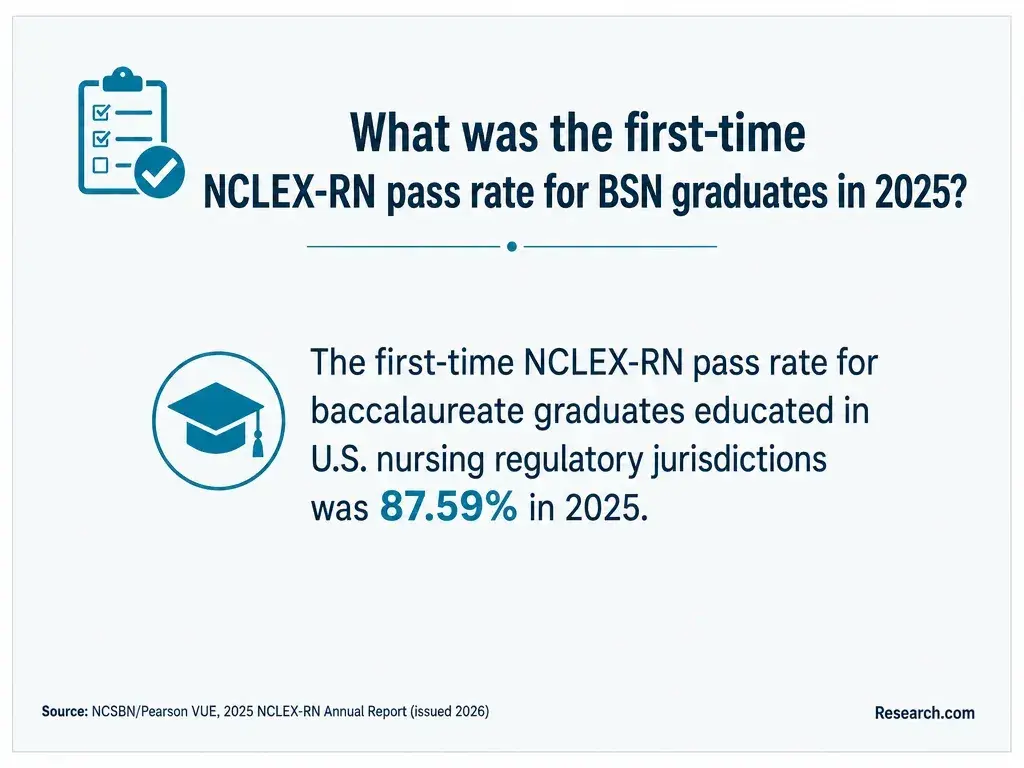
For someone seeking initial RN licensure, the best degree is a state-board-accepted prelicensure pathway that you can complete and that fits the hiring expectations of your target employers. An ADN/ASN and a prelicensure BSN are both potential RN entry routes; a BSN may broaden eligibility where an employer prefers or requires it, but neither degree alone grants a license or ED proficiency.
If you already hold an RN license, another degree is not automatically the best next step. An RN-to-BSN program may help meet a particular employer's advancement criteria, while a supported ED orientation or targeted ambulatory training may address an immediate practice gap more directly. Compare the time, tuition, lost work hours, and employer assistance with the requirement you are actually trying to meet.
When a master's degree is the right target after a bachelor's, reviewing lower-cost master's nursing pathways after a BSN helps weigh program affordability against total time commitment, clinical scheduling demands, and career alignment.
Career changers with a non-nursing bachelor's degree can also investigate accelerated prelicensure BSN programs, subject to each school's prerequisites and clinical schedule. A graduate program that assumes an existing RN license is not a substitute for initial nursing preparation.
State RN licensure is required for an RN job; specialty board certification is not universally required for ED or urgent care nursing. Employers may require Basic Life Support and, depending on the role, courses or credentials such as Advanced Cardiovascular Life Support, Pediatric Advanced Life Support, or trauma-focused training. Verify whether a posting requires them before hire, permits completion during orientation, and pays the associated costs.
Experienced ED nurses may pursue the Board of Certification for Emergency Nursing's Certified Emergency Nurse (CEN) credential. Its eligibility and examination policies come from the certifying organization, not a nursing school or state board. A certification can demonstrate specialty knowledge and may matter to an employer, but it does not expand legal scope or replace supervised onboarding and competency checks.
In urgent care, the most useful training depends on patient mix and clinic capabilities. A pediatric-heavy site or one that performs more procedures may set different expectations from a general walk-in clinic. Match any proposed credential to the actual job description before paying for it.
That same discipline—checking real operational requirements against marketing claims—matters just as much when comparing faster PMHNP certificate pathways, where a 12-month timeline usually assumes you already hold graduate nursing preparation or an existing APRN credential, meet prerequisite coursework, and can complete hundreds of precepted clinical hours without placement bottlenecks.
There is no dependable national ED-versus-urgent-care RN wage figure in the standard occupational data. The U.S. Bureau of Labor Statistics reported a May 2024 median annual wage of $93,600 for registered nurses overall. That figure covers RNs across workplaces and experience levels; it is not an expected offer for either specialty.
ED compensation may include night, weekend, holiday, or on-call differentials, depending on the employer. An urgent care offer may have fewer differential opportunities but a schedule that reduces commuting or childcare costs. Salary comparisons should therefore include the hourly base rate, guaranteed hours, differentials you are realistically likely to earn, overtime rules, benefits, and travel among sites.
For example, a higher quoted ED annual income may assume nights and overtime that you do not want to work. Ask each employer for the written pay structure and calculate compensation using the shifts you would actually accept. Compare local offers rather than assuming one setting always pays more.
Running a realistic, apples-to-apples net math check is equally essential when weighing short-format PMHNP master's options, where a fast MSN timeline can save months of schooling yet carry heavier course loads, reduced shift flexibility, or extra clinical travel expenses that change the true return on investment.
Both settings can support a nursing career, but they build different day-to-day experience. ED practice can lead to triage, charge, education, quality and safety, or other acute-care opportunities, subject to experience and employer requirements. Urgent care practice can lead to ambulatory team leadership, clinical education, care coordination, or multisite operations roles. Moving between settings is possible, but an experienced nurse may still need substantial orientation to the new workflow and acuity.
The Bureau of Labor Statistics projects 5% employment growth for registered nurses from 2024 to 2034. That is an occupation-wide projection, not a forecast of ED or urgent care openings in your area. Local hiring, turnover, clinic ownership, and hospital staffing can matter more to your immediate prospects.
For career fit, compare what energizes you with what each job repeatedly demands. ED nursing suits nurses who want broad acuity and team-based responses to uncertain situations, provided they have adequate training and support. Urgent care may suit nurses who prefer focused encounters and outpatient continuity through education and follow-up. Neither choice guarantees lower stress: ask about staffing, patient volume, workplace violence procedures, breaks, and access to clinical backup.
Matching actual daily demands against what sustains you is just as important when comparing accelerated DNP programs, where a compressed doctorate timeline may look appealing on paper yet test your bandwidth through scholarly project milestones, clinical hour requirements, and sustained work-school-life demands.
How can you choose an accredited nursing program for these specialties?
If you are not yet an RN, choose a program for valid licensure preparation and clinical learning, not an advertised promise of immediate entry into a specialty. Confirm that the exact prelicensure program meets the relevant state board's requirements for your intended licensing jurisdiction. Check institutional accreditation separately from nursing program accreditation, such as ACEN or CCNE where applicable; these are different forms of oversight.
Then examine the experiences that will help you evaluate both workplaces: supervised assessment, medication administration, clinical judgment, escalation, documentation, and exposure to acute and ambulatory care. A named ED rotation can be valuable, but its availability and patient-care opportunities may vary. Ask who arranges placements, how students are evaluated, and whether a transition-to-practice partnership exists. Do not mistake simulation or an advertised clinical site for a guaranteed specialty placement or job.
Already licensed? Start with local job postings and employers' orientation details before enrolling again. A program is worth the cost when its credential meets a specific requirement or opens an opportunity you can identify - not simply because it has an emergency or ambulatory theme.
Other Things You Should Know About Nursing
Yes, some EDs hire new graduates into structured orientation or residency programs. Ask about preceptor continuity, staged assignments, competency checks, and support after orientation; hiring policies vary.
Paramedic experience can be valuable, but it does not by itself grant an RN license. An applicant needs an RN-licensure-qualifying education pathway and must meet the state board's requirements.
No. A freestanding ED provides emergency services, while an urgent care center generally operates as an outpatient clinic. Verify the facility's designation and services before comparing jobs.
No. Patient populations vary by clinic. Ask whether the site treats children, what ages it accepts, and what training and clinical backup are provided.
- SCOPE OF PRACTICE - Nursing Fundamentals - NCBI Bookshelf https://www.ncbi.nlm.nih.gov/books/NBK610819/
- Risk Factors for Stress and Burnout | Healthcare Workers https://www.cdc.gov/niosh/healthcare/risk-factors/stress-burnout.html
- The Health Care Industry and Calculating Overtime Pay | dol.gov https://www.dol.gov/agencies/whd/fact-sheets/54-healthcare-overtime
- The impact of nurse staffing methodologies on... - PMC - NIH https://pmc.ncbi.nlm.nih.gov/articles/PMC9291075/
- Emergency Room Nurse: A Day in the Life | denvercollegeofnursing.edu https://www.denvercollegeofnursing.edu/blog/nursing/a-day-in-the-life-of-an-emergency-nurse.html
- Urgent Care Nurse: Job Prospects, Skills & How to Get Started | STU https://online.stu.edu/degrees/healthcare/rn-to-bsn/urgent-care-nurse-job/
- Association Between the Opening of Retail Clinics and Low-Acuity Emergency Department Visits - ScienceDirect https://www.sciencedirect.com/science/article/abs/pii/S0196064416309982
- What Does an ER Nurse Do? Inside Emergency Room Nursing | St. Thomas https://absn.stthom.edu/
- ER Nursing Career Guide: Education, Salary, Skills, and Travel Opportunities | Medical Solutions https://www.medicalsolutions.com/blog/clinician/er-nursing-career-guide-education-salary-skills-and-travel-opportunities/
- Urgent Care Centers Deter Some Emergency Department Visits But, On Net, Increase Spending | Health Affairs https://www.healthaffairs.org/doi/abs/10.1377/hlthaff.2020.01869