2027 Easiest Online Nursing Education Doctorate Programs to Get Into: Admission Requirements, GPA, and Workarounds

Co-Founder and Chief Data Scientist
Online Nursing Education doctorates are becoming a practical path for nurses who need advancement without pausing their careers. AACN reported in 2024 that U. S. nursing schools turned away more than 65,000 qualified applications in 2023, with faculty shortages among the constraints. That makes advanced nurse educators increasingly important. This guide is for applicants worried about low GPAs, selective admissions, or testing barriers. You will learn which online doctoral formats tend to be more accessible, what requirements to expect, and how to use legitimate workarounds to build a stronger application.
Key Things About the Easiest Online Nursing Education Doctorate Programs
- Most accessible online Nursing Education doctorates are professional doctorates, especially DNP, EdD, or DHA-style programs with education concentrations; many prioritize licensed nursing practice, graduate preparation, and fit over GRE or GMAT scores.
- A 3.0 graduate GPA is the most common benchmark, but some programs review applicants below that level through conditional admission, GPA addendums, recent graduate coursework, or last-60-credit calculations.
- Applicants who want the lowest research barrier should look for applied capstone, DNP project, or practice-improvement models instead of traditional dissertation-only PhD pathways.
Are online Nursing Education doctorate programs competitive?
Yes, but the level of competition depends heavily on the degree type, cohort size, accreditation requirements, and whether the program is built for working nurses. Online Nursing Education doctorates are usually less admissions-intensive than funded, research-heavy PhD programs because many are designed as tuition-supported professional degrees. That does not mean they are easy academically; it means the admissions model often weighs professional readiness and goal alignment more heavily than a narrow academic ranking process.
National acceptance-rate data for Nursing Education doctorates is limited because many universities do not publish program-level admit rates. The more useful question is whether a program has enrollment caps, faculty-mentored research slots, or clinical/practicum placement limits. Programs with fixed research supervision capacity tend to be more selective, while online professional doctorates often admit multiple working-professional cohorts per year.
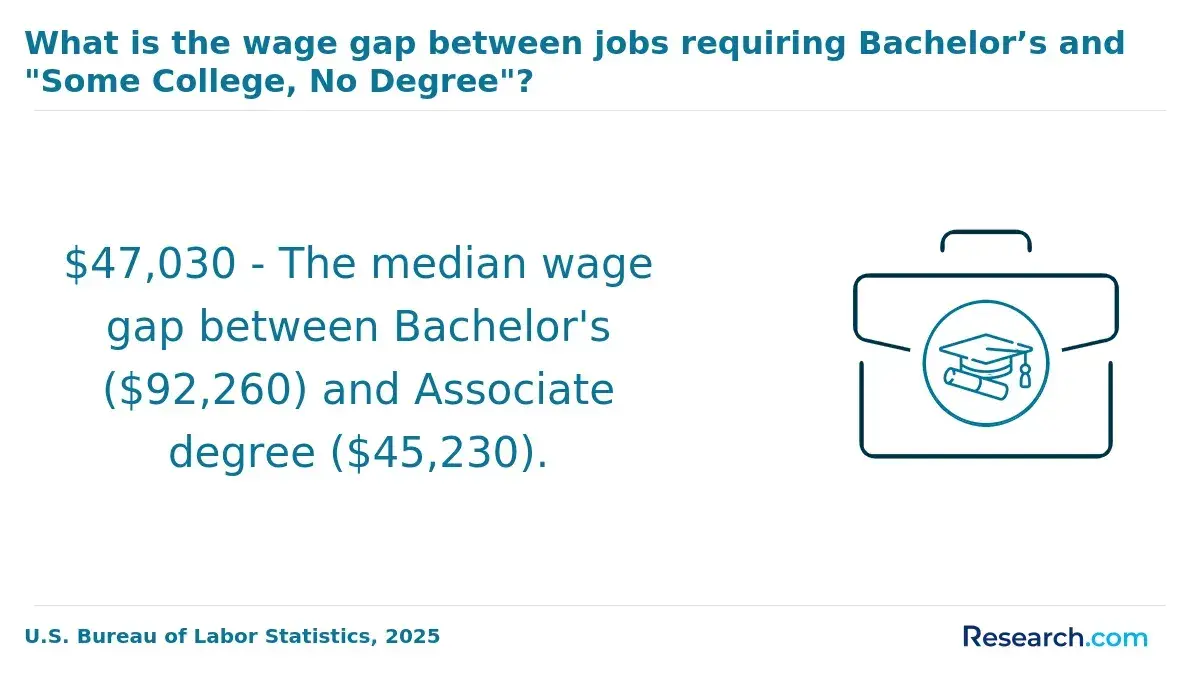
The market context also matters. The U.S. Bureau of Labor Statistics projects employment for postsecondary teachers to grow 8% from 2023 to 2033, faster than the average for all occupations. For nurses considering doctoral study, this means the credential may support faculty, curriculum, leadership, and academic administration pathways, but admission still depends on a credible fit between the applicant's background and the program's mission.
The table below summarizes how selectivity usually differs by doctoral format. Use it to decide whether you are applying to a lower-barrier professional program or a more selective research pathway.
| Doctoral option | Typical admissions intensity | Why it may be easier or harder | Best fit |
| DNP with Nursing Education focus | Moderate | Often values RN/APRN experience, MSN preparation, and practice goals more than standardized testing | Nurses who want educator-leader or practice-improvement roles |
| EdD in Nursing Education or Health Professions Education | Moderate | Usually applied and cohort-based, with emphasis on teaching, curriculum, and leadership experience | Nurse educators, academic coordinators, and clinical faculty |
| PhD in Nursing with education research focus | High | Faculty research fit, writing sample strength, and research capacity matter significantly | Applicants targeting tenure-track research, funded doctoral study, or scholarship-heavy careers |
| DHA or health professions doctorate with education track | Moderate to low | May accept broader healthcare leadership backgrounds, though nursing faculty roles may still require nursing credentials | Nurses focused on academic leadership, simulation, training, or healthcare workforce development |
Easy admission should not be the only factor. A high-acceptance program may be a smart choice if it is accredited, affordable, and aligned with your career goal. It may be a poor choice if it lacks the education practicum, faculty preparation, or nursing credibility you need for academic employment.
What are the easiest online Nursing Education doctorate programs to get into?
The easiest online Nursing Education doctorate programs to get into are usually accredited, practice-focused programs with holistic admissions, multiple annual start dates, no GRE requirement, and clear pathways for applicants who have an MSN or related graduate nursing degree. They are rarely "easy" in coursework; they are easier at the entry point because they evaluate more than one metric.
Applicants who want the lowest admissions barriers should compare degree type before comparing brand names. A research PhD may be the right investment for someone who wants to publish, secure grant funding, or pursue a tenure-track role. A DNP or EdD may be more practical for nurses who want to teach, lead curriculum change, direct simulation labs, supervise clinical education, or move into academic administration.
If affordability is part of your definition of "easy," compare admissions access alongside tuition and completion structure. Research-focused applicants can also review cheapest online nursing PhD programs to see whether a lower-cost PhD is a better fit than an applied doctorate.
The table below compares the characteristics that often make a program easier to enter. These are program features to look for on admissions pages or confirm with an advisor.
| Lower-barrier feature | What it usually means | Who benefits most | What to verify |
| No GRE or GMAT | The school relies on GPA, professional experience, writing, and recommendations | Applicants with strong nursing experience but weaker test performance | Whether the test is fully waived or only optional |
| Minimum GPA near 3.0 | The program uses a common graduate admissions threshold | Applicants with solid MSN performance | Whether the GPA is cumulative, graduate-only, or last-60-credit |
| Conditional admission | The school may admit students who must earn strong grades in early courses | Applicants with low older GPAs but recent academic improvement | Required first-term GPA and dismissal rules |
| Multiple start dates | The program may have more admissions cycles and less single-cohort pressure | Working nurses who need timing flexibility | Application deadlines, seat limits, and practicum timing |
| Applied capstone | Completion is based on a practice, education, or quality-improvement project | Nurses focused on teaching or leadership rather than original research | Project scope, faculty support, and required dissemination |
Choose an easier-entry program if you need flexibility, have a defensible academic record, and want an applied credential for teaching or leadership. Choose a more competitive program if you need intensive research mentoring, funding, a specific faculty advisor, or a pathway into research-focused academia.
What is the minimum GPA requirement for online Nursing Education doctorate programs?
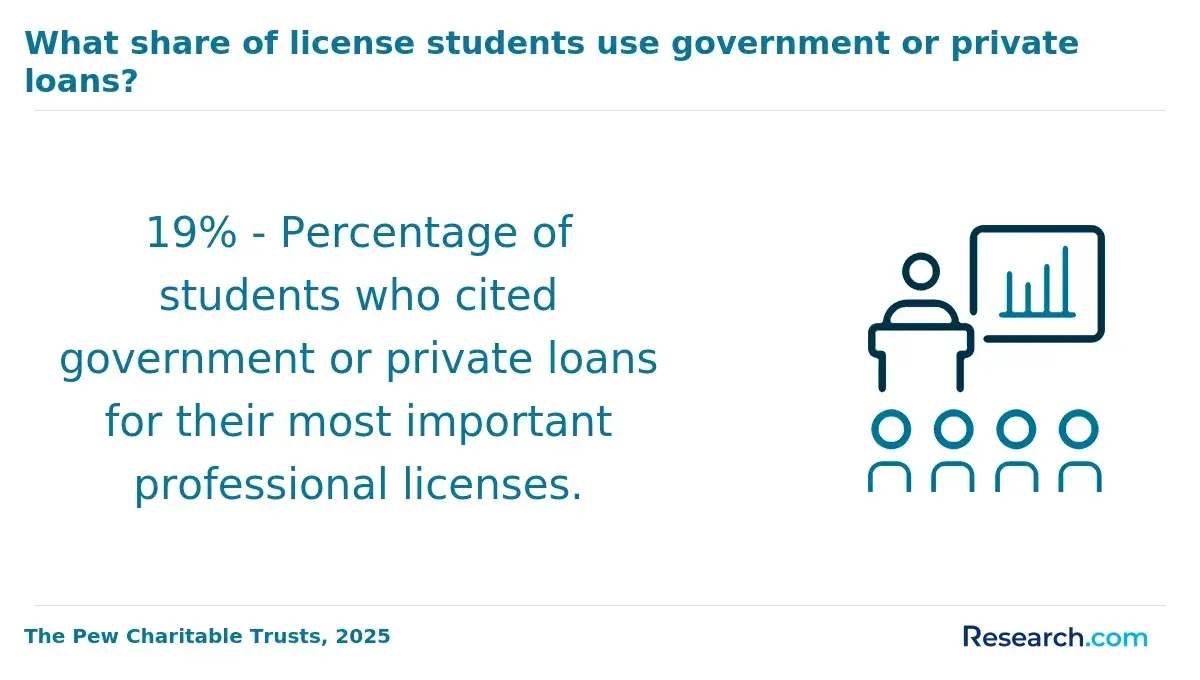
The most common minimum GPA requirement is 3.0, especially for DNP, EdD, and post-master's doctoral programs. Some universities require a 3.0 in the most recent graduate degree, while others calculate cumulative undergraduate and graduate GPAs separately. A few programs may consider applicants below 3.0 if the rest of the file shows readiness for doctoral work.
GPA rules are not always as simple as they look. A student with a 2.85 undergraduate GPA and a 3.75 MSN GPA may be viewed more favorably than a student with a 3.1 cumulative GPA but weak graduate writing, unclear goals, and poor recommendations. This is why applicants should ask how the program calculates GPA before assuming they are ineligible.
The table below shows common GPA policies and what each one means for applicants. It can help you identify whether your academic record is a disqualifier or a challenge you can explain.
| GPA policy | Common threshold | How it affects admission | Applicant takeaway |
| Graduate GPA minimum | Often 3.0 | MSN or master's performance carries significant weight | Strong graduate grades can offset older undergraduate weakness |
| Cumulative GPA minimum | Often 3.0 | All prior college work may be included | Applicants with many old credits should ask about recalculation options |
| Last-60-credit calculation | Often 3.0 | Recent academic performance matters more than early college grades | Useful for students whose grades improved over time |
| Conditional admission review | May allow below 3.0 | Admission may depend on early doctoral course grades | Good option only if you can handle a high-stakes first term |
| Holistic review | Varies | Experience, licensure, writing, and recommendations are considered together | Best for applicants with strong professional evidence |
If your GPA is near the cutoff, do not self-reject. Ask whether the admissions committee accepts a GPA addendum, considers graduate-only GPA, or allows non-degree doctoral coursework before formal admission.
Can you get accepted into an online Nursing Education doctorate program with a low GPA?
Yes, some applicants get accepted with a low GPA, but they usually need to prove that the GPA no longer reflects their current academic ability. A low GPA is more manageable when it is old, tied to a specific life circumstance, followed by stronger graduate performance, or balanced by significant nursing leadership and teaching experience.
The key is to submit evidence, not excuses. Admissions committees need to see that you can complete doctoral reading, writing, evidence appraisal, statistics, and project work. A vague statement such as "I am more mature now" is much weaker than a short addendum showing recent A-level coursework, professional certifications, educator experience, and a clear plan for academic support.
Use the following steps if your GPA is below the posted preference or close to the cutoff. These actions give the committee concrete reasons to consider an exception.
- Ask the admissions office whether the GPA cutoff is firm, preferred, graduate-only, cumulative, or eligible for conditional review.
- Write a concise GPA addendum that explains the cause of the weak grades, the time period affected, and the measurable evidence that your performance has improved.
- Complete one or two recent graduate-level courses in nursing education, statistics, evidence-based practice, informatics, or health professions teaching and aim for strong grades.
- Request recommendations from supervisors or faculty who can speak directly to your writing, leadership, teaching, and ability to complete doctoral-level work.
- Use your personal statement to connect your professional record to the exact doctoral curriculum, not just to your desire for a title.
Common mistakes can weaken an otherwise viable low-GPA application. Avoid these errors before you spend money on application fees.
- Submitting no GPA explanation and hoping the committee ignores the transcript.
- Writing a defensive addendum that blames instructors, programs, or personal circumstances without showing growth.
- Applying only to highly research-selective PhD programs when an applied DNP or EdD better matches your record and goals.
- Taking unrelated easy courses instead of recent graduate coursework that shows readiness for doctoral nursing education content.
- Using recommendations from people with impressive titles who cannot describe your academic or educator potential.
A low-GPA workaround makes sense when the rest of your file is strong. It is less likely to work if your recent graduate grades are also weak, your writing sample is underdeveloped, or your goals do not match the program.
Do online Nursing Education doctorate programs require GRE or GMAT scores?
Many online Nursing Education doctorate programs do not require GRE or GMAT scores, especially professional doctorates. Test-optional and test-waived policies have expanded across graduate education because programs increasingly evaluate applicants through prior graduate performance, licensure, professional experience, writing samples, and interviews.
Research-focused PhD programs are more likely than DNP or EdD programs to consider standardized tests, although even some PhD programs have moved away from requiring them. If a test appears on the admissions page, check whether it is required for all applicants, waived for MSN-prepared nurses, or requested only when the GPA is below a threshold.
Applicants comparing advanced practice and doctoral routes may also want to understand how admissions expectations differ across nursing pathways. For example, many MSN to DNP programs emphasize graduate nursing preparation, licensure, and professional practice rather than GRE performance.
The table below summarizes common test-waiver criteria. Because policies vary by school, use this as a checklist for questions to ask rather than as a universal rule.
| Waiver basis | How it is usually evaluated | Why it helps | What to ask |
| Completed MSN or related master's degree | Official transcript and graduate GPA | Shows recent graduate-level academic ability | Is the waiver automatic or committee-reviewed? |
| Active RN or APRN license | License verification | Confirms professional standing in nursing | Does the license need to be unencumbered? |
| Professional experience | Resume, employer letter, or interview | Shows readiness for applied doctoral work | How many years are preferred? |
| High graduate GPA | Transcript review | May offset the need for a standardized test | Which GPA calculation is used? |
| Prior doctoral coursework | Transcript and syllabi | Demonstrates direct doctoral readiness | Can credits transfer if admitted? |
If you have weak test scores, do not send them unless the program requires them or they clearly strengthen your profile. A better strategy is to target programs where tests are not required and invest time in a stronger statement, writing sample, and recommendation package.
Is prior professional experience required for Nursing Education doctorate programs?
Prior professional experience is commonly expected, and in some programs it is required. Nursing Education doctorates are built for applicants who can connect doctoral theory to real teaching, clinical practice, leadership, quality improvement, or workforce development problems. The more applied the degree, the more your professional record matters.
Experience does not always mean years as a full-time nursing faculty member. Relevant experience may include precepting students, serving as a clinical educator, developing onboarding materials, leading simulation exercises, supervising new nurses, managing quality-improvement projects, or teaching continuing education. For many applicants, the challenge is not lack of experience but failure to frame it as educator preparation.
Use the following approach to translate work experience into admissions evidence. This is especially helpful if your GPA is average or your degree background is not a perfect match.
- List every teaching-related duty you have performed, including precepting, mentoring, simulation, unit education, in-service training, curriculum input, and evaluation.
- Connect each duty to a doctoral theme such as adult learning, competency assessment, evidence-based practice, curriculum design, leadership, or outcomes improvement.
- Quantify scope only when accurate, such as number of learners trained, units supported, courses assisted, or projects completed.
- Ask recommenders to describe specific examples of your educator judgment, communication, reliability, and leadership rather than general professionalism.
- Choose a potential capstone or dissertation topic that grows naturally from your experience and fits the program's faculty strengths.
BLS wage and employment data published in 2024 continues to show that nursing faculty and healthcare education roles sit within a broader labor market that values graduate credentials, but job titles and employer requirements vary. Use doctoral study as a targeted career tool, not as a generic promotion strategy.
Can non-Nursing Education majors qualify for a doctorate in the discipline?
Yes, but "non-Nursing Education major" can mean several different things. An MSN-prepared nurse who specialized in leadership, informatics, administration, public health, or advanced practice may qualify more easily than someone without a nursing license or graduate nursing foundation. Most Nursing Education doctoral pathways require applicants to be nurses; the workaround is usually for the education specialization, not for the nursing identity itself.
Degree mismatch is common because many nurses discover teaching after working as preceptors, clinical leaders, or advanced practice clinicians. Applicants coming from advanced practice backgrounds may also compare doctoral education routes with online nurse practitioner programs if they are still deciding between clinical specialization and academic preparation.
The table below compares common bridge options for applicants whose prior degree does not directly match Nursing Education. It shows what each option is for, not a guarantee that every school will accept it.
| Bridge option | Best for | Typical evidence required | Main limitation |
| Leveling courses | Applicants missing education theory, curriculum, assessment, or research foundations | Course completion with satisfactory grades | Adds time and cost before or during the doctorate |
| Graduate certificate in Nursing Education | MSN-prepared nurses who want formal educator preparation | Transcript and certificate coursework | Credits may not always transfer fully |
| Prior Learning Assessment | Experienced educators without formal coursework in every area | Portfolio, artifacts, supervisor verification, and reflective analysis | Not available at every university |
| Bridge or post-master's pathway | Nurses moving from clinical or leadership MSN tracks into education-focused doctoral study | Transcript review and individualized plan | May require extra prerequisites |
| Related health professions education doctorate | Nurses focused on interprofessional education or academic leadership | Healthcare experience and graduate degree | May not be ideal for nursing-faculty-specific roles |
If a school offers Prior Learning Assessment, prepare a portfolio that demonstrates educator competence. Strong portfolios usually include organized evidence rather than a simple resume.
- Teaching artifacts such as lesson plans, simulation scenarios, orientation modules, evaluation rubrics, or continuing education materials.
- Evidence of learner or program outcomes, such as course evaluations, competency results, quality-improvement summaries, or supervisor feedback.
- A reflective statement explaining how your experience maps to graduate-level learning outcomes in nursing education.
- Licenses, certifications, professional development records, and conference presentations related to teaching or clinical education.
Bridge coursework is usually better when you need structured academic preparation. Prior Learning Assessment is more useful when you already have substantial, documented educator experience and want to avoid repeating what you can prove you know.
Are online Nursing Education doctorate programs less competitive than on-campus programs?
Often, yes, but not always. Online programs can be less competitive because they are built for geographic reach, working-professional enrollment, and scalable course delivery. They may also run multiple cohorts or start dates. On-campus programs, especially research PhDs, may be more selective because admission depends on faculty research fit, lab or grant capacity, funding, and local supervision models.
However, online does not automatically mean easier. A high-quality online doctorate can have rigorous writing expectations, synchronous seminars, practicum requirements, residency sessions, and intensive faculty review. The easier part is usually access, not academic workload.
The table below compares online and on-campus formats from an admissions and decision-support perspective. It can help you decide whether flexibility or research immersion matters more for your goal.
| Factor | Online Nursing Education doctorate | On-campus Nursing Education doctorate | Decision point |
| Admissions access | Often more flexible and cohort-based | Often more capacity-limited | Online may be better for working nurses seeking accessibility |
| Research mentoring | Varies by faculty availability and design | Often stronger for lab, funded, or faculty-led research | Campus may be better for research-intensive careers |
| Schedule | Designed for part-time or asynchronous study in many programs | May require more fixed attendance | Online may reduce work disruption |
| Practicum or project work | Often completed in the student's local setting | May rely on campus or nearby partner sites | Verify site approval and supervision rules |
| Networking | Virtual cohorts, residencies, and professional networks | More face-to-face faculty and peer contact | Choose based on how you build professional relationships |
The biggest trade-off is between flexibility and fit. A lower-barrier online program may help you finish while employed, but a more selective on-campus program may provide deeper research socialization, funding opportunities, or closer faculty mentoring. Neither is universally better; the right choice depends on your desired role.
Are there online Nursing Education doctorate programs that do not require a traditional dissertation?
Yes. Many online professional doctorates in Nursing Education use an applied capstone, DNP project, scholarly project, dissertation-in-practice, or practice-improvement project instead of a traditional five-chapter research dissertation. This is one reason applied doctorates can feel more accessible to working nurses.
A capstone pathway is not a shortcut. It still requires literature review, evidence appraisal, project design, implementation or evaluation, writing, and faculty approval. The difference is that the final product is usually tied to a real educational or practice problem rather than original theory-building research.
The table below explains the main completion models. Use it to match the program's final project to your career goal and tolerance for research intensity.
| Completion model | Typical degree type | Main focus | Best fit |
| Traditional dissertation | PhD | Original research and scholarly contribution | Future researchers, tenure-track faculty, and grant-focused academics |
| Dissertation-in-practice | EdD | Applied investigation of a real education problem | Nurse educators and academic leaders solving institutional challenges |
| DNP scholarly project | DNP | Evidence-based practice, quality improvement, or education-practice change | Nurses seeking practice, leadership, or educator impact |
| Capstone project | DNP, EdD, or professional doctorate | Applied curriculum, training, simulation, or organizational project | Working nurses who want a concrete professional deliverable |
| Portfolio-based doctoral project | Some professional doctorates | Integrated evidence of competencies and applied work | Experienced professionals with documented achievements |
Choose a capstone or scholarly project route if your goal is to improve teaching, clinical learning, competency assessment, simulation, or academic operations. Choose a dissertation-heavy PhD if your long-term plan requires independent research, publication productivity, or eligibility for research-intensive faculty roles.
How can students increase their chances of getting into a Nursing Education doctorate program?
The strongest applicants do not simply look for the easiest school; they build an application that makes admission feel low-risk to the committee. That means showing academic readiness, professional purpose, nursing credibility, writing ability, and a realistic plan for completing an online doctorate while working.
Before applying, compare Nursing Education doctorates with adjacent nursing pathways if your career goal is not fully settled. For example, someone focused on advanced clinical practice may be better served by the easiest NP program rather than a doctorate centered on teaching, curriculum, or academic leadership.
Follow these steps to improve your odds, especially if you are applying with a lower GPA, degree mismatch, or no test scores.
- Confirm regional accreditation first, then check nursing or education-related accreditation, state authorization, and whether the program's format is recognized by employers you care about.
- Ask admissions advisors how many applicants were admitted in the most recent cycle, whether the program has cohort caps, and whether denied applicants are encouraged to reapply after coursework.
- Match the degree type to the goal: PhD for research, DNP for practice and systems change, EdD for education leadership, and health professions doctorates for broader academic training roles.
- Prepare a focused personal statement that names the teaching or workforce problem you want to address and explains why that program's curriculum fits it.
- Use recommenders who can provide specific examples of teaching, leadership, writing, evidence-based practice, and persistence in demanding professional settings.
- Submit a professional resume that highlights educator functions, not just clinical job duties.
- If your GPA is weak, add recent graduate coursework or a formal addendum instead of relying on hope.
- Ask about transfer credit, Prior Learning Assessment, practicum-site approval, residency requirements, and capstone expectations before enrolling.
Also weigh the pros and cons of choosing a higher-acceptance program. Accessibility can be valuable, but only when the program still supports your desired outcome.
| Potential advantage | Potential drawback | How to manage the trade-off |
| Faster admission decision and more start dates | Less time to compare financial aid and fit | Build a shortlist before applying |
| No GRE or GMAT barrier | Application may depend more heavily on writing and experience | Strengthen the statement, resume, and recommendations |
| Conditional admission may help low-GPA applicants | Early courses may carry high academic risk | Confirm the required first-term GPA and support services |
| Applied capstone may align with real workplace problems | May not carry the same research depth as a PhD dissertation | Choose based on your target role |
| Online format supports working nurses | Time management and self-direction are critical | Review weekly workload and residency expectations in advance |
Finally, avoid the most common application mistakes. Do not apply without verifying accreditation. Do not assume an online doctorate automatically meets state, employer, or faculty-rank requirements. Do not choose a program based only on perceived ease. And do not ignore cost: tuition, fees, books, travel for residencies, practicum expenses, and lost work time all affect ROI.
Other Things You Should Know About Nursing Education
Many post-master's online doctorates take about two to four years, depending on transfer credits, course load, capstone or dissertation pace, and whether the student enrolls part time. BSN-to-doctorate routes usually take longer because they include graduate nursing foundations before doctoral-level work.
They can, but requirements vary by employer, rank, and institution type. Many nursing faculty roles prefer or require a graduate nursing degree and may value a doctorate, teaching experience, certification, and clinical expertise. Always compare the program curriculum with job postings for the roles you want.
Start with institutional accreditation from a recognized accreditor. Then check whether the nursing program has appropriate nursing accreditation when relevant, and ask whether the doctorate meets employer expectations for faculty, leadership, or academic administration roles. State authorization matters for online students as well.
They can be worth it if the program is accredited, affordable, aligned with your career goal, and realistic for your schedule. They are less worth it if you only want the easiest admission path, have no clear role target, or choose a program that does not support the faculty, leadership, or research outcomes you need.
References
- Admission Requirements | Ursuline - Liberal Arts College in OH https://www.ursuline.edu/academics/programs/doctor-of-nursing-practice-dnp-program/admission
- Doctor of Nursing Practice Admission Requirements | Carlow https://online.carlow.edu/programs/doctorate-nursing-practice/admissions/
- Here Are the Top Graduate Nursing Schools for 2026 | MedPage Today https://www.medpagetoday.com/nursing/nursing/120678
- Online Doctor of Nursing Practice DNP Degree Programs https://teach.com/online-ed/healthcare-degrees/online-doctor-of-nursing-practice-programs/
- Can You Earn a DNP Online? | All Nursing Schools https://www.allnursingschools.com/dnp/online-or-on-campus/
- The Complete Guide to DNP Programs: Online, Campus, and Hybrid https://www.onlinefnpprograms.com/guides/guide-to-dnp-programs/
- Your Guide to Online PhD Nursing Programs: What They Are, What to Expect, and How to Choose the Right One – FRESHRN https://www.freshrn.com/online-phd-nursing-programs/
- 10 Nursing Programs With High Acceptance Rates https://blog.diversitynursing.com/blog/10-nursing-programs-with-high-acceptance-rates