2027 Can You Get Into an Online Nursing Education Doctorate Program with a Low GPA? Admission Chances and Alternatives

Co-Founder and Chief Data Scientist
A low GPA does not always end a nurse's path to a doctorate, but it changes the admissions strategy. Online nursing education doctorate programs often review leadership, licensure, graduate performance, writing ability, and fit alongside grades. The timing matters because the U.S. Bureau of Labor Statistics projects postsecondary teacher employment to grow 8% from 2023 to 2033, making qualified nurse educators important to workforce capacity. This guide is for RNs, MSN-prepared nurses, and aspiring faculty who need to decide whether to apply now, strengthen their record first, or choose another pathway.
Key Things You Should Know
- Admission is possible with a low GPA, especially at programs using holistic review, but many doctoral nursing programs still use a 3.0 graduate GPA as a common screening benchmark.
- Applicants below the preferred GPA range are strongest when they show recent A-level graduate coursework, an active RN license, nursing leadership, educator experience, and a clear doctoral goal.
- Alternatives such as a graduate certificate, additional MSN-level coursework, an MSN-to-DNP route, or a less GPA-centered clinical program may be better if your transcript is far below the minimum.
Can You Get Into an Online Nursing Education Doctorate Program With a Low GPA?
Yes, you can get into some online nursing education doctorate programs with a low GPA, but your odds depend on how low the GPA is, whether it is undergraduate or graduate GPA, and how well the rest of your application proves readiness for doctoral work. In nursing doctorate admissions, "low GPA" usually means below the stated minimum, below the preferred average, or weaker than the applicant pool even if it technically meets the cutoff.
Most online nursing education doctorates fall into three broad categories: a PhD in Nursing or Nursing Education, a DNP with an education or academic leadership focus, and an EdD or education doctorate designed for nurse educators. PhD programs usually emphasize research and scholarship. DNP programs usually emphasize practice improvement, systems leadership, and evidence-based change. EdD-style programs often emphasize teaching, curriculum, assessment, and educational leadership.
The table below summarizes how GPA expectations typically differ by doctorate type. It is not a substitute for checking each school's catalog, but it can help you estimate whether you are a reasonable applicant or need a strengthening step first.
| Program type | Typical GPA expectation | How a low GPA is usually viewed | Best compensating evidence |
| PhD in Nursing or Nursing Education | Often 3.0 or higher, with stronger preference for high graduate grades | More concerning because research programs rely heavily on academic writing, statistics, and independent scholarship | Recent graduate research coursework, publications, faculty mentor fit, strong writing sample |
| DNP with Nursing Education concentration | Often 3.0 or higher, though some programs review applicants holistically | May be offset by advanced practice, leadership, quality improvement, or educator experience | MSN performance, clinical leadership, project experience, professional recommendations |
| EdD or education-focused doctorate for nurses | Often 3.0 preferred, with some flexibility depending on institution | Reviewed in relation to teaching background and educational leadership potential | Curriculum work, simulation teaching, preceptor experience, academic leadership |
| Post-master's certificate before doctorate | May allow applicants to demonstrate recent graduate success | Useful when the applicant is not yet competitive for direct doctoral admission | A grades in advanced pathophysiology, statistics, nursing education, informatics, or research courses |
A GPA slightly below 3.0 is different from a GPA far below the requirement. If your graduate GPA is 2.9 but your last 12 to 18 credits are strong, you may still be viable at schools that allow petitions, conditional admission, or holistic review. If your GPA is closer to 2.5 and the program requires a firm 3.0, applying without additional evidence is usually a poor use of time and application fees.
The most important distinction is whether the low GPA reflects your current academic ability. Admissions committees may be more forgiving of an old undergraduate record if you later earned strong MSN grades, passed advanced certification exams, led practice initiatives, or taught in clinical or academic settings. They are less likely to overlook weak recent graduate work because doctoral nursing programs require sustained reading, writing, synthesis, and project management.
What Admissions Factors Matter Most Beyond GPA for Online Nursing Education Doctorate Programs?
GPA matters because it is a quick academic-readiness signal, but it is rarely the only signal. Online nursing education doctorate programs often review whether the applicant has the professional maturity, time management, writing ability, and leadership experience to complete a dissertation, scholarly project, or doctoral portfolio.
The following table shows the major admissions factors that can carry weight when GPA is not your strongest asset. Use it to identify which parts of your application need proof rather than vague claims.
| Admissions factor | Why it matters | What strong evidence looks like |
| Active RN license | Confirms professional eligibility for advanced nursing study | Unencumbered license and, when relevant, APRN certification or specialty credentials |
| Graduate-level performance | Shows whether you can handle advanced academic work now | Recent A or B+ grades in MSN, statistics, research, education, or evidence-based practice courses |
| Nursing education experience | Connects your goals to the doctorate's purpose | Preceptor work, adjunct teaching, simulation lab support, curriculum committees, staff development |
| Leadership and project work | Predicts readiness for doctoral projects and organizational change | Quality improvement projects, policy work, accreditation preparation, unit education leadership |
| Writing sample or statement | Demonstrates doctoral-level communication | Clear problem statement, evidence-based reasoning, realistic goals, explanation of GPA pattern |
| Recommendations | Provides third-party evidence of readiness | Letters from graduate faculty, nurse executives, DNP or PhD-prepared supervisors, or academic leaders |
| Program fit | Shows that your goals match faculty expertise and curriculum | Specific connection to nurse faculty preparation, clinical education, simulation, curriculum, or scholarship |
Admissions committees are usually looking for a coherent story. A low GPA combined with weak writing, vague goals, and generic recommendations is a red flag. A low GPA paired with recent academic improvement, educator experience, and a focused doctoral purpose can be a credible application.
One current trend working in serious applicants' favor is the continuing demand for nurse educators and healthcare faculty. Because postsecondary teaching roles are projected to grow faster than average from 2023 to 2033, programs have an incentive to identify applicants who can become effective faculty, not just applicants with perfect transcripts. That does not erase GPA requirements, but it helps explain why many schools use holistic review.
Which Online Nursing Education Doctorate Programs Offer Flexible Admission Pathways?
The most flexible programs are usually those that state they use holistic admissions, allow conditional admission, review the last 60 credits separately, or accept applicants who can show strong professional experience. Flexibility is more common when a program is designed for working nurses and offers part-time online enrollment.
Applicants with lower GPAs should compare pathways rather than applying randomly. If you are comparing cost-sensitive doctoral options, reviewing cheapest online nursing PhD programs can be useful, but affordability should be weighed alongside admissions flexibility, accreditation, faculty support, and dissertation or project expectations.
These are the program features most likely to help a lower-GPA applicant find a realistic entry point:
- Holistic review: The school considers GPA, nursing experience, recommendations, writing, leadership, and fit together instead of using GPA as the only screen.
- Conditional or provisional admission: The program may admit an applicant who must earn a minimum grade in the first term or first few courses.
- Last-credits review: Some schools pay close attention to the most recent 30, 45, or 60 credits, which can help applicants whose early academic record was weaker.
- Graduate certificate bridge: The school may recommend a certificate or nondegree graduate courses before full doctoral admission.
- Post-master's DNP route: MSN-prepared nurses may enter a practice doctorate that includes education coursework or an educator-focused project.
- Optional standardized testing: If GRE or other scores are optional, strong scores may help at some schools, but weak scores may add another liability.
Be careful with the word "flexible." It does not always mean easier. A flexible program may still require strong writing, heavy reading, evidence-based practice skills, and strict progression standards after admission. It simply means the school is willing to evaluate more than one academic indicator.
How Can Applicants Strengthen an Online Nursing Education Doctorate Application With a Low GPA?
The best strategy is to make your application impossible to reduce to one number. You need to show that the GPA is either old, explainable, or no longer representative of your ability to succeed in doctoral-level nursing education work.
Use the following steps to build a stronger application before you submit. These are especially important if you are below the preferred GPA but close enough that the school may still review your file.
- Audit every program's GPA rule before applying: Identify whether the GPA minimum is firm, preferred, petitionable, or based only on graduate coursework.
- Calculate multiple GPAs: Know your cumulative undergraduate GPA, nursing GPA, MSN GPA, last 60-credit GPA, and any recent graduate GPA.
- Take one or two targeted graduate courses: Prioritize statistics, nursing research, evidence-based practice, curriculum design, informatics, or healthcare policy if they match the doctorate.
- Write a focused GPA addendum if appropriate: Briefly explain circumstances, accept responsibility, and show concrete evidence of improvement without overexplaining.
- Secure recommendations that address academic readiness: Ask recommenders to comment on writing, analysis, leadership, follow-through, and ability to manage graduate-level work.
- Connect your experience to nurse educator outcomes: Describe teaching, precepting, simulation, staff education, student evaluation, or curriculum work using specific examples.
- Submit a polished writing sample: If optional, treat it as a chance to prove doctoral-level organization, evidence use, and clarity.
- Ask about an admissions interview: A strong interview can help explain fit, maturity, and professional purpose more effectively than a transcript alone.
Common mistakes include applying only to highly selective research doctorates, ignoring stated minimums, submitting a generic personal statement, assuming years of nursing experience automatically outweigh poor grades, or failing to verify accreditation. If your GPA is weak, every other part of the application must look intentional.
Should Students Complete Additional Coursework Before Applying to an Online Nursing Education Doctorate?
Additional coursework can be a smart move if your GPA is below the threshold, your last graduate courses were weak, or you have been away from school for several years. It is less useful if the courses are unrelated, taken at a questionable institution, or completed without earning strong grades.
For MSN-prepared nurses, comparing structured MSN to DNP programs may also help because some routes let students build a stronger doctoral record through practice-focused coursework rather than entering a research-heavy PhD immediately.
The table below outlines common coursework options and when they make sense. The goal is not simply to collect credits; it is to prove readiness in the areas doctoral faculty care about most.
| Coursework option | Best for | Admissions value | Limitation |
| Graduate statistics | Applicants targeting PhD, EdD, or research-heavy programs | Shows readiness for quantitative reasoning and evidence appraisal | A weak grade can hurt more than not taking the course |
| Nursing research or evidence-based practice | Applicants lacking recent scholarly coursework | Connects directly to doctoral projects and dissertations | May not raise cumulative GPA much if many credits are already completed |
| Nursing education or curriculum design | Applicants aiming for faculty or staff development roles | Shows alignment with nursing education doctorate goals | Less helpful for programs emphasizing clinical systems leadership |
| Graduate certificate in nursing education | Applicants who need a structured academic reset | Provides multiple recent grades and a clearer educator pathway | Adds time and tuition before doctoral enrollment |
| Nondegree doctoral-level course | Applicants near the GPA cutoff who need proof of readiness | Can demonstrate ability to perform at the level expected | Not all schools allow nondegree doctoral enrollment or transfer credit |
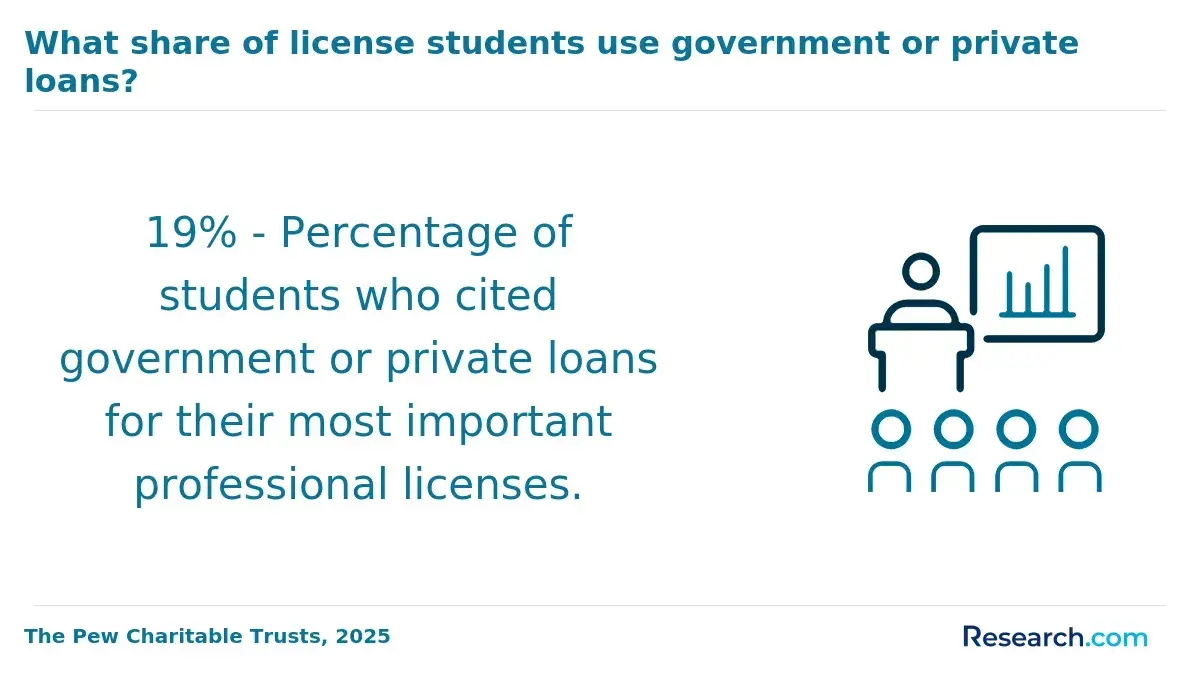
Before enrolling, ask the target doctoral program whether the credits will be considered, whether they can transfer, and whether the school prefers specific course subjects. The current federal Direct Unsubsidized Loan annual limit for many graduate and professional students is $20,500, so taking extra coursework can affect borrowing capacity and should be planned carefully.
How Do Conditional Admission and Probationary Admission Work in Online Nursing Education Doctorate Programs?
Conditional admission, provisional admission, and probationary admission are pathways that allow a school to admit a student who does not fully meet standard criteria. The terms vary by institution, but they usually mean the student must prove academic readiness quickly after enrollment.
These pathways can be helpful for lower-GPA applicants, but they are not risk-free. You may have limited time to earn required grades, and failure to meet the condition can result in dismissal or loss of full admission status.
Before accepting a conditional offer, ask the admissions office or program director these questions:
- What exact GPA or course grade must I earn to move from conditional to full admission?
- How many credits or semesters are included in the probationary period?
- Can I receive federal financial aid while conditionally admitted?
- Will all credits completed under conditional status count toward the doctorate?
- What support is available for writing, statistics, research methods, and online learning?
- What happens if I earn one grade below the required threshold?
A conditional offer is most worth considering when the conditions are clear, the first courses match your strengths, and you have enough time outside work to perform well. It is less advisable if you are already overloaded, uncertain about the program, or unable to absorb the financial risk of not progressing.
Does a Low GPA Affect Financial Aid or Scholarship Opportunities in Online Nursing Education Doctorate Programs?
A low GPA usually does not automatically block federal student loans if you meet general eligibility rules, but it can affect institutional scholarships, assistantships, fellowships, and academic progression after enrollment. Schools also require students to maintain satisfactory academic progress, which often includes a minimum graduate GPA and pace of completion.
The table below separates admissions GPA issues from funding issues. This distinction matters because being admitted does not always mean receiving the most favorable aid package.
| Funding source | How GPA may matter | What to verify |
| Federal Direct Unsubsidized Loans | Prior GPA is generally less central than enrollment status and aid eligibility | Annual borrowing limit, aggregate loan history, satisfactory academic progress policy |
| Federal Grad PLUS Loans | GPA is not the main eligibility factor, but credit history is reviewed | Credit requirements, interest rate, total cost of borrowing |
| Institutional scholarships | Often more GPA-sensitive, especially merit awards | Minimum GPA, renewal rules, whether conditional admits qualify |
| Graduate assistantships | May require strong academic standing and faculty confidence | Online student eligibility, workload, stipend, tuition remission |
| Employer tuition assistance | May require minimum grades for reimbursement | Grade threshold, repayment obligation, approved program list |
Cost should be part of the admissions decision, not an afterthought. If you are entering conditionally, borrowing for a program with strict early GPA requirements carries more risk than enrolling after strengthening your academic record. Ask each school for total tuition, fees, required campus visits, technology costs, and any doctoral project or dissertation fees.
Does a Low GPA Affect Career Outcomes After Completing an Online Nursing Education Doctorate?
Once you complete an accredited doctorate, your old GPA usually matters far less than your license, doctoral credential, teaching skill, scholarly work, leadership record, and references. Employers in nursing education may ask for transcripts, especially for faculty roles, but they typically focus on the highest degree earned, graduate preparation, clinical expertise, and ability to teach or mentor students.
Career outcomes depend heavily on the type of doctorate. A PhD may be better for tenure-track research roles, grant work, and dissertation supervision. A DNP may be stronger for clinical education leadership, practice change, executive roles, and academic-practice partnerships. An EdD-style nursing education doctorate may fit curriculum, assessment, simulation, and educational leadership roles.
Doctoral study can also lead some nurses to reconsider whether they want education, advanced practice, or leadership. If your long-term goal is direct patient care rather than teaching or academic leadership, comparing online nurse practitioner programs may be more aligned than pursuing a nursing education doctorate.
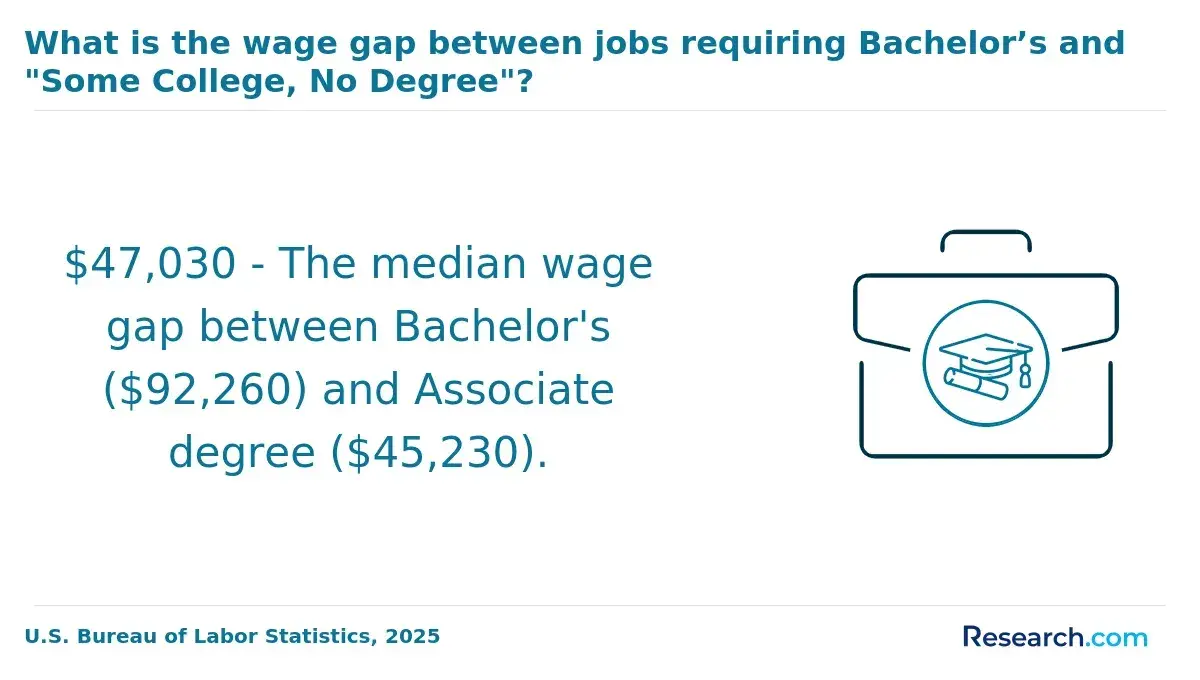
The labor market supports careful planning, not automatic assumptions. The BLS reported a May 2024 median annual wage of $117,960 for medical and health services managers, while faculty salaries vary widely by institution type, region, rank, and contract length. This means a doctorate may improve eligibility for certain roles, but return on investment depends on your career target, debt level, employer support, and whether you plan to work in academia, healthcare leadership, or both.
Which Students Are Most Likely to Succeed in an Online Nursing Education Doctorate Despite a Low GPA?
Students who succeed despite a lower GPA usually have evidence that they have changed how they learn, manage time, and perform academically. Online doctorate programs require sustained independence, and the format can magnify weaknesses in writing, organization, and self-direction.
The strongest lower-GPA applicants usually share several characteristics. These traits do not guarantee admission or completion, but they make the risk more manageable.
- Recent academic improvement: They can point to strong recent graduate grades rather than asking admissions committees to ignore all transcript evidence.
- Clear professional purpose: They know whether they want to become faculty, lead nursing education programs, direct staff development, or improve clinical learning systems.
- Protected study time: They have realistic weekly time available for reading, writing, discussion posts, research, and project work.
- Writing readiness: They can organize scholarly arguments, use evidence, and revise based on feedback.
- Supportive workplace: They can access clinical, educational, or organizational settings for projects, practicum work, or applied research.
- Comfort with technology: They can manage learning platforms, virtual meetings, online library tools, citation managers, and digital collaboration.
- Resilience under feedback: They treat faculty critique as part of doctoral training rather than as a personal setback.
Students should be cautious if they are applying mainly to prove they can overcome an old GPA, if they do not enjoy academic writing, or if they cannot reduce work or family obligations during demanding terms. A doctorate is a long project, not just an admissions hurdle.
How Should Students Decide Whether to Apply to an Online Nursing Education Doctorate With a Low GPA?
The decision should come down to fit, risk, and evidence. If your GPA is slightly below the target but your recent academic and professional record is strong, applying to a carefully chosen set of holistic programs may be reasonable. If your GPA is far below the minimum and you lack recent graduate success, a strengthening pathway is usually wiser.
Use this decision guide to choose your next move. It summarizes common applicant scenarios and the most practical response.
| Applicant situation | Admission outlook | Best next step |
| Graduate GPA is 3.0 or higher, undergraduate GPA is weak | Reasonable at many programs | Apply to programs that weigh graduate performance more heavily |
| Graduate GPA is 2.8 to 2.99 with strong recent coursework | Possible at holistic or conditional-admission programs | Contact admissions before applying and prepare a GPA addendum |
| Graduate GPA is below 2.8 with no recent A-level work | Low unless the school has a petition route | Complete targeted graduate coursework or a certificate first |
| Strong clinical leadership but limited teaching experience | Better for DNP or leadership-oriented pathways than education-only routes | Add preceptor, staff development, or adjunct teaching experience |
| Primary goal is advanced clinical practice, not education | Nursing education doctorate may be misaligned | Compare NP, DNP, or clinical specialty pathways |
| Unclear goals and high expected debt | Risky | Delay application until goals, funding, and program fit are clearer |
If you are unsure whether doctoral education or advanced practice is the better fit, researching the easiest NP program options can help you compare admissions expectations, workload, and career direction before committing to a doctorate focused on nursing education.
A practical application strategy is to contact admissions offices before spending money. Ask whether your GPA can be reviewed, whether recent coursework matters, whether conditional admission exists, and whether applicants with your profile have been admitted. Apply broadly enough to include realistic programs, but do not apply to schools that clearly state a firm GPA minimum you do not meet.
The best choice is the one that improves your probability of completion, not just admission. A lower-GPA applicant should prioritize accredited programs, transparent progression rules, strong advising, faculty alignment, manageable cost, and a format that fits work and life responsibilities.
Other Things You Should Know About Nursing Education
Most nursing doctorate programs require an active, unencumbered RN license, and some require APRN certification or an MSN depending on the pathway. Always verify whether the license must be valid in the school's state, your practicum state, or both.
Many online nursing education doctorates take about three to five years, depending on whether you enroll full time or part time, enter with a BSN or MSN, and complete a dissertation, DNP project, or applied research requirement.
Both can support teaching roles, but they serve different goals. A PhD is usually stronger for research-intensive faculty positions, while a DNP is often valued for clinical education, practice leadership, and applied teaching roles.
Many universities do not label the delivery format on the diploma, but policies vary. Before enrolling, ask how the degree appears on the diploma and transcript, and make sure the program is institutionally accredited and appropriately aligned with nursing education standards.
References
- Best Online PhD in Nursing Programs: The Top Student Options https://www.phds.me/online-programs/phd-in-nursing/
- Post-Baccalaureate Bridge Programs - Ithaka S+R https://sr.ithaka.org/publications/post-baccalaureate-bridge-programs/
- How Admissions Committees Actually Read Applications (Step-by-Step) https://www.acceptmed.com/blog/how-admissions-committees-actually-read-applications-step-by-step
- AACN Position Statement on the Practice Doctorate in Nursing https://www.aacnnursing.org/news-data/position-statements-white-papers/practice-doctorate-in-nursing
- Doctoral Nursing | ACE https://ace.edu/degree-programs/doctoral-degrees/doctoral-nursing/
- Admissions Committee: The Review Process https://www.ivywise.com/ivywise-knowledgebase/how-the-admissions-committee-review-process-works/
- Online Nursing PhD Programs: Compare Top Schools https://www.edumed.org/online-schools/nursing-rn-programs/phd/
- Getting Accepted to a NP Program With a Low GPA | ThriveAP https://provider.thriveap.com/blog/getting-accepted-np-program-low-gpa
- Low GPA - what kind post-bac/SMP should I apply to? https://forums.medicalschoolhq.net/t/low-gpa-what-kind-post-bac-smp-should-i-apply-to/10848
- Low GPA? Here’s How Medical School Admissions Committees View Post-Bacc and SMP Programs https://www.admitmd.com/post/low-gpa-heres-how-medical-school-admissions-committees-view-post-bacc-and-smp-programs