2027 Online Nursing Education Doctorate Programs with Specializations: Concentrations, Tracks, and Career Paths

Co-Founder and Chief Data Scientist
Choosing an online nursing education doctorate is really a choice about your future role: scholar, faculty leader, curriculum expert, simulation director, or executive educator. The U.S. Bureau of Labor Statistics reported a May 2024 median wage of $83,980 for postsecondary teachers, showing why advanced academic preparation remains a serious career investment.
This guide is for nurses comparing doctoral concentrations, tracks, and specializations. You will learn how each option affects coursework, research or dissertation focus, online format, and career direction so you can choose a program that fits your goals.
Key Things You Should Know
- Specializations, concentrations, and tracks are not always the same: a specialization usually signals a focused area of doctoral study, a concentration may define a cluster of required courses, and a track may shape the program pathway, such as Ph.D., DNP, Ed.D., leadership, research, or teaching practice.
- Most online nursing education doctorates take about 3 to 6 years depending on whether the student enters with a BSN, MSN, or post-master's credential, whether the degree requires a dissertation or scholarly project, and whether enrollment is full-time or part-time.
- Career fit matters more than popularity: academic and research-heavy tracks often align with faculty and scholarship roles, while leadership, simulation, curriculum, and healthcare education tracks may better support administrative, clinical educator, and workforce development roles.
What Are the Best Specializations and Concentrations for an Online Nursing Education Doctorate?
The best specialization is the one that connects your current nursing experience with the work you want to do after graduation. In online nursing education doctorates, "specialization" is often the broadest term, "concentration" usually refers to a defined set of courses, and "track" may describe the degree route or professional pathway inside the program.
The table below compares common nursing education doctorate focus areas by academic emphasis and career fit. Use it to narrow your options before reviewing individual curricula, faculty expertise, practicum expectations, and dissertation or project requirements:
| Specialization or concentration | Best fit for | Typical coursework focus | Common career alignment | When to consider another option |
| Nursing Education | Nurses who want to teach in colleges, universities, hospitals, or professional development departments | Curriculum design, assessment, teaching strategies, program evaluation, educational theory | Nurse educator, faculty member, academic coordinator, professional development specialist | If your main goal is executive administration rather than teaching or curriculum work |
| Curriculum and Instruction | Nurses interested in course design, accreditation preparation, learning outcomes, and academic quality | Instructional design, competency-based education, evaluation methods, course mapping | Curriculum director, instructional designer, academic program leader | If you prefer direct teaching over system-level curriculum planning |
| Simulation and Technology | Nurses who want to build virtual, lab-based, or AI-supported learning experiences | Simulation pedagogy, debriefing, learning technologies, clinical judgment evaluation | Simulation director, clinical education technology leader, lab coordinator | If the program lacks in-person simulation intensives or access to relevant technology platforms |
| Healthcare Leadership or Nursing Leadership | Nurses who want to lead education departments, academic programs, or clinical learning initiatives | Organizational leadership, policy, finance, strategic planning, workforce development | Dean, director of nursing education, chief learning officer, education administrator | If you want a dissertation-intensive research career in academia |
| Research or Nursing Science | Nurses who want to generate evidence about teaching, learning, patient outcomes, or workforce development | Quantitative methods, qualitative methods, theory, statistics, grant writing, dissertation research | Research faculty, nurse scientist, academic scholar, policy researcher | If you want a practice-focused project rather than a traditional dissertation |
| Public Health or Population Health Education | Nurses interested in community education, health equity, prevention, and population-level learning | Community health, epidemiology, health promotion, program evaluation | Public health educator, community nursing faculty, population health education leader | If your target jobs are primarily inside academic nursing departments |
For nurses comparing cost-sensitive research pathways, reviewing cheapest online nursing PhD programs can help identify whether a research-focused doctorate is financially realistic before committing to a narrow concentration.
A common mistake is choosing a concentration because it sounds prestigious without checking the course sequence. For example, a "leadership" concentration may include finance and systems courses, while a "nursing education" concentration may require teaching practica, curriculum evaluation, and student assessment projects. Those differences can shape your dissertation topic, portfolio, and job-market narrative.
How Do I Choose the Right Track in My Nursing Education Doctoral Degree?
Start with the role you want, then work backward to the track that builds the right evidence of expertise. A nurse aiming for tenure-track faculty work may need a different research foundation than a nurse who wants to lead a hospital-based education department or design simulation programs.
Use the following sequence to compare tracks in a practical way. These steps help you avoid choosing based only on program title, convenience, or tuition sticker price:
- Define your target role in plain language, such as "teach BSN students," "lead a simulation center," "publish nursing education research," or "direct clinical education for a health system."
- Check whether the track is research-focused, practice-focused, leadership-focused, or teaching-focused, because this determines the kind of final project, methods training, and mentoring you will receive.
- Review at least four courses in the concentration, not just the program description, to see whether the content matches your intended career tasks.
- Look for faculty who publish, teach, or practice in your area of interest, because doctoral advising quality often matters as much as the track name.
- Ask whether practica, residencies, immersion experiences, or teaching demonstrations can be completed in your local area or require campus travel.
- Compare final deliverables: a dissertation, DNP scholarly project, Ed.D. capstone, teaching portfolio, manuscript, or quality improvement project can signal different strengths to employers.
If your long-term goal involves advanced practice teaching or precepting, it may also be useful to compare doctoral education tracks with online nurse practitioner programs, especially if you are deciding between an educator identity and an advanced clinical practice identity.
Red flags include a concentration with only one elective, a program that advertises nursing education but lists no education faculty, or a track that requires in-person components you cannot attend. Another warning sign is a dissertation or project requirement that does not align with the kind of evidence your target employer values.
What Career Paths Can I Pursue With a Doctorate in Nursing Education?
A doctorate in nursing education can support academic, healthcare, research, and leadership roles, but it does not lead to the same outcome for every graduate. Your prior clinical background, teaching experience, publication record, licensure, location, and chosen track all influence your options.
The career paths below show how different doctoral concentrations commonly translate into responsibilities. The table is not a guarantee of employment, but it can help you connect program design with realistic professional goals:
| Career path | Common responsibilities | Most relevant concentration | Salary context |
| Nursing faculty member | Teach nursing courses, advise students, assess clinical competencies, participate in curriculum and accreditation work | Nursing Education, Curriculum and Instruction, Research | BLS reported a May 2024 median wage of $83,980 for postsecondary teachers overall, though pay varies by institution type, rank, and discipline. |
| Academic program director | Oversee curriculum, faculty assignments, student progression, compliance, and assessment plans | Healthcare Leadership, Nursing Education, Curriculum and Instruction | Compensation may reflect both academic rank and administrative responsibility. |
| Clinical nurse educator | Train nurses in hospitals or health systems, evaluate competencies, support onboarding, and improve clinical education processes | Nursing Education, Simulation and Technology, Leadership | Pay is often tied to employer type, clinical specialty, and local nursing labor markets. |
| Simulation director | Design simulation scenarios, lead debriefing, manage labs, evaluate learning technology, and train faculty or staff | Simulation and Technology, Curriculum and Instruction | Higher responsibility may come from managing facilities, budgets, staff, and technology. |
| Nursing education researcher | Study learning outcomes, clinical judgment, workforce preparation, teaching methods, or academic progression | Research, Nursing Science, Ph.D. in Nursing Education | Roles may depend heavily on publications, grant experience, and dissertation quality. |
| Healthcare education administrator | Lead professional development, continuing education, competency management, or enterprise learning strategy | Leadership, Organizational Education, DNP or Ed.D. track | BLS listed a May 2024 median wage of $117,960 for medical and health services managers, but many education roles differ from general operations management. |
One important trade-off is academic depth versus operational scope. A research-heavy doctorate may make you more competitive for scholarship-oriented faculty roles, while a professional doctorate with leadership and education courses may better fit system-wide training, curriculum implementation, and workforce development roles.
Which Nursing Education Doctoral Concentrations Lead to the Highest-Paying Jobs?
The highest-paying paths are often linked less to the concentration name and more to role level, employer type, geography, administrative responsibility, and prior nursing experience. Still, some concentrations tend to align with roles that have stronger salary ceilings because they prepare nurses for leadership, management, technology, or advanced academic responsibilities.
These concentration-to-pay relationships are best understood as directional signals, not promises. The goal is to choose a track that gives you credible preparation for higher-responsibility work, not simply the one with the most impressive title:
- Healthcare Leadership or Nursing Leadership: Often aligns with director, dean, or executive education roles where compensation may reflect budgets, personnel management, accreditation responsibility, and institutional strategy.
- Simulation and Technology: Can support specialized roles in simulation centers, online learning design, virtual clinical education, and competency assessment, especially as schools and health systems expand technology-supported training.
- Curriculum and Instruction: May lead to academic administration, program evaluation, accreditation support, and instructional leadership roles that can carry additional responsibility beyond classroom teaching.
- Research or Nursing Science: Can support tenure-track and grant-funded academic roles, but salary potential often depends on institution type, rank, publication record, and external funding rather than the concentration alone.
- General Nursing Education: Offers broad flexibility for teaching and professional development roles but may need to be strengthened with a focused dissertation, teaching portfolio, certification, or leadership experience.
If salary is a major factor, compare the concentration's likely career ladder. A simulation concentration may be valuable if you can access simulation leadership roles, while a leadership concentration may offer better ROI if you already supervise educators or manage academic operations.
Are Online Nursing Education Doctorate Degrees Respected by Employers and Academic Institutions?
Online nursing education doctorates can be respected when the school is properly accredited, the nursing program has recognized nursing accreditation when applicable, and the curriculum includes rigorous research, teaching, leadership, and practicum expectations.
Employers increasingly focus on institutional credibility, learning outcomes, and evidence of doctoral-level work rather than online delivery alone.
Respect depends on verifiable quality markers. Before enrolling, check the following items because they are more meaningful than marketing language about flexibility or prestige:
- Institutional accreditation: Confirm that the university is accredited by an accreditor recognized by the U.S. Department of Education or the Council for Higher Education Accreditation.
- Nursing accreditation: For nursing programs, look for appropriate programmatic accreditation such as CCNE or ACEN when relevant to the degree level and program type.
- Faculty qualifications: Review whether faculty have doctoral credentials, nursing education scholarship, teaching experience, and expertise related to your concentration.
- Residency and practicum design: A strong online program should explain how students complete teaching, leadership, research, or immersion experiences.
- Dissertation or project transparency: The program should clearly state whether students complete a dissertation, DNP project, Ed.D. capstone, manuscript, portfolio, or another doctoral deliverable.
- Licensure clarity: If the program involves advanced practice or state-specific clinical requirements, the school should explain whether it meets your state's rules.
A common mistake is assuming "online" means easier. In reputable programs, online delivery changes where you study, not the level of doctoral expectations. You should expect advanced reading, scholarly writing, research methods, applied projects, and sustained faculty feedback.
How Do Online Nursing Education Doctoral Programs Handle Research and Dissertation Requirements?
Research and dissertation requirements vary by doctorate type. A Ph.D. usually emphasizes original research and a dissertation, while a DNP often requires a practice-focused scholarly project, and an Ed.D. may use an applied dissertation or capstone focused on educational improvement.
Specialization choice can strongly shape your final doctoral work. A nursing education student might study clinical judgment assessment, a simulation student might evaluate debriefing methods, and a leadership student might examine educator retention or onboarding systems.
Most online programs handle research expectations through a combination of virtual coursework and structured faculty supervision. Students often complete methods courses, statistics or evaluation courses, literature reviews, proposal development, ethics training, and multiple stages of committee review. Some programs also require short residencies, synchronous defenses, or campus intensives.
Before choosing a concentration, ask how the program supports students through the research process. Important questions include who can chair your project, whether faculty match your topic, how long proposal approval usually takes, what data collection support is available, and whether the school allows local sites for applied projects.
Do not choose a highly niche research topic unless the program has the faculty, data access, and committee structure to support it. A strong dissertation or project is not just a graduation requirement; it can become a writing sample, conference presentation, publication, promotion evidence, or leadership portfolio artifact.
Can I Work Full-Time While Pursuing an Online Nursing Education Doctorate?
Many students complete online nursing education doctorates while working full-time, but "online" does not mean low-effort. The realistic question is whether the program's pacing, synchronous meetings, practicum hours, residency requirements, and dissertation timeline fit your work schedule.
A part-time format is often the best fit for nurses with clinical, academic, or leadership responsibilities. If you already hold an MSN and want a practice-oriented route, comparing MSN to DNP programs can help you understand how professional doctorate timelines and project expectations differ from Ph.D. pathways.
Use these workload checks before enrolling. They will help you identify whether the concentration is compatible with full-time employment:
- Ask how many hours per week students typically spend on reading, discussion, writing, and research during concentration courses.
- Confirm whether live class sessions are required and whether they occur during work hours, evenings, or weekends.
- Find out whether teaching practica, leadership immersions, or simulation experiences can be completed at your workplace or near your home.
- Ask when dissertation, project, or capstone work begins, because waiting until the end can extend time to completion.
- Review leave policies, stop-out rules, and maximum time limits in case your job responsibilities change.
- Speak with your employer early about tuition support, schedule flexibility, practicum site approval, or project data access.
The main risk for full-time workers is underestimating the dissertation or scholarly project phase. Coursework may feel manageable, but proposal writing, data collection, revisions, and committee feedback require sustained time that is harder to compress.
What Are the Admission Requirements for a Nursing Education Doctoral Program Online?
Admission requirements vary by school and degree type, but online nursing education doctorates commonly expect a strong nursing background, graduate-level academic preparation, an active RN license, professional goals, and evidence that the applicant can complete doctoral-level writing and inquiry.
The most common requirements include the items below. Schools may add interviews, statistics prerequisites, writing samples, or state authorization limits, so always confirm requirements directly with the program:
- BSN, MSN, or related graduate degree from an accredited institution, depending on entry pathway.
- Active, unencumbered RN license; APRN licensure may be required for some clinically oriented tracks.
- Minimum GPA, often higher for competitive doctoral programs.
- Professional resume or CV showing nursing, teaching, leadership, or clinical experience.
- Statement of purpose that connects career goals to the chosen specialization or track.
- Letters of recommendation from academic, clinical, or professional supervisors.
- Graduate statistics, research, or evidence-based practice coursework in some programs.
- Interview, writing sample, or scholarly goal statement for programs with research or dissertation expectations.
If you are still deciding whether to become an advanced practice nurse before moving into doctoral education, resources on the easiest NP program options can help you compare clinical-entry pathways with education-focused doctoral routes.
A frequent admissions mistake is applying to a concentration without explaining why it fits your professional background. A stronger application connects your experience, target role, proposed area of inquiry, and faculty fit. For example, an applicant interested in simulation should describe teaching or clinical training experience and a plausible simulation-related project idea.
How Much Does an Online Nursing Education Doctoral Degree Cost and How Can I Fund It?
The cost of an online nursing education doctorate depends on credit count, tuition rate, transfer credits, residency travel, technology fees, dissertation continuation fees, and whether the student enters after a BSN or MSN. A shorter post-master's pathway is usually less expensive than a BSN-to-doctorate route because fewer credits are required.
For financing, one current federal benchmark matters for many graduate students. Use it as a limit to plan borrowing carefully rather than as a recommendation to borrow the full amount:
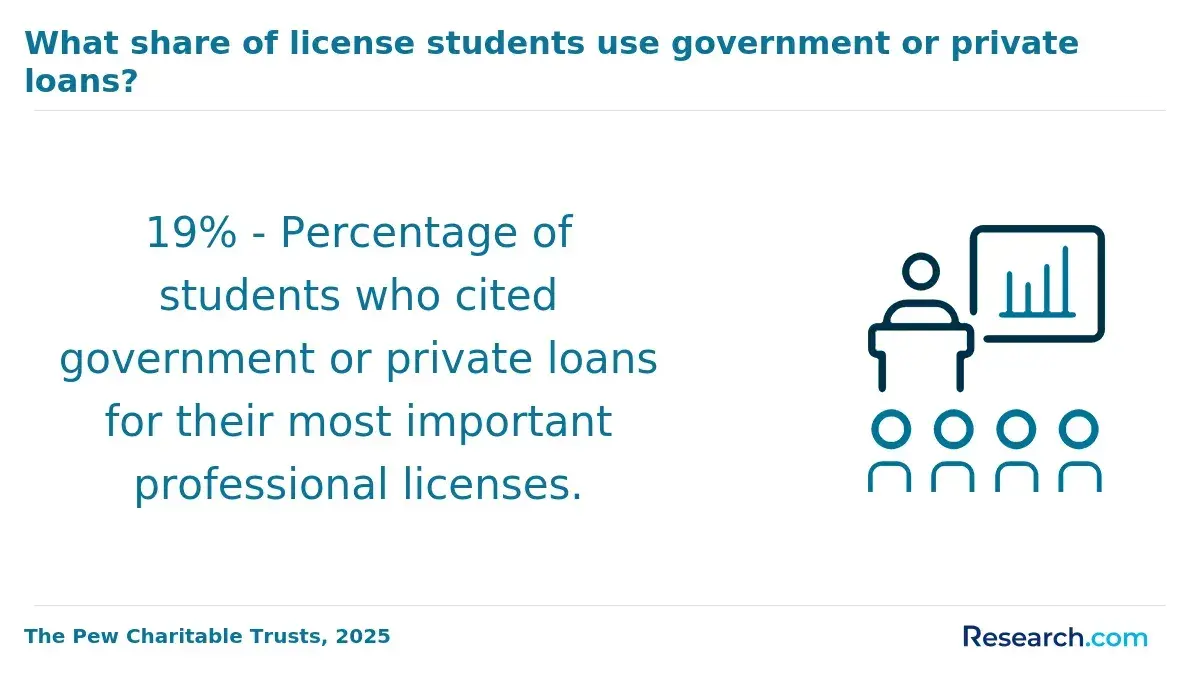
- Federal Direct Unsubsidized Loans for eligible graduate and professional students: up to $20,500 per academic year.
To estimate total cost, multiply tuition per credit by required credits, then add mandatory fees, books, residency travel, clinical or practicum expenses, and dissertation continuation charges. Also ask whether the concentration changes cost; simulation tracks, campus intensives, or additional practicum requirements may add expenses that are not obvious in the base tuition rate.
Funding options may include employer tuition reimbursement, HRSA-related nursing workforce programs when available, scholarships, assistantships, faculty development support, military benefits, payment plans, and federal loans. Academic employees should also ask about tuition remission or internal professional development funds.
ROI should be evaluated by role fit, not salary alone. If the doctorate helps you qualify for faculty promotion, program leadership, a simulation director role, or a system-level education position, the value may come through career mobility, academic rank, or leadership access. If the concentration does not support a clear next step, a less expensive or broader program may be the better decision.
What Is the Difference Between a Nursing Education Ph.D. and a Professional Nursing Education Doctorate?
A nursing education Ph.D. and a professional nursing education doctorate can both be valid choices, but they are designed for different outcomes. The Ph.D. is usually best for original research and scholarship, while a DNP or Ed.D. pathway is usually more applied, focusing on practice improvement, leadership, educational systems, or organizational change.
The comparison below clarifies how degree type affects research expectations, final projects, and career alignment. This distinction is one of the most important decisions you will make before choosing a concentration:
| Degree type | Main purpose | Typical final requirement | Best fit | Potential limitation |
| Ph.D. in Nursing or Nursing Education | Prepare nurse scholars to conduct original research and contribute to nursing science or education evidence | Dissertation based on original research | Tenure-track faculty, nurse scientist, research-focused academic roles | May be less directly focused on operational leadership or immediate practice implementation |
| DNP with Nursing Education focus | Prepare advanced nurses to apply evidence, improve systems, and lead educational or practice change | Scholarly project, quality improvement project, or practice-focused capstone | Clinical education leader, director of professional development, practice-focused faculty, healthcare education administrator | May not provide the same depth of traditional research preparation as a Ph.D. |
| Ed.D. with Nursing Education or Health Professions Education focus | Prepare education leaders to solve applied teaching, curriculum, and organizational learning problems | Applied dissertation, capstone, or improvement-focused project | Curriculum leader, academic administrator, simulation or instructional design leader | May be less nursing-science focused than a Ph.D. in nursing |
Choose the Ph.D. if you want to build a research agenda, publish regularly, pursue grants, or compete for scholarship-centered faculty roles. Choose a professional doctorate if you want to apply evidence to teaching practice, lead education systems, improve curriculum, or solve organizational learning problems.
The wrong choice is often caused by focusing only on the word "doctorate." Instead, compare the degree's purpose, faculty expectations, methods training, final project, and target employers. The letters after your name matter, but the work you complete during the program matters more.
Other Things You Should Know About Nursing Education
Sometimes, but it depends on the school. Changing concentrations may add courses, delay your dissertation or project, or require a new advisor. Ask whether credits apply across tracks before switching.
Not always, but teaching, precepting, staff development, or academic experience can strengthen your application. Programs often want evidence that your goals match the education-focused curriculum.
It varies. Some schools list the concentration on the transcript rather than the diploma. If the credential wording matters for promotion or employment, ask the registrar or program director before enrolling.
A narrow specialization is useful when it matches a specific goal, such as simulation leadership or curriculum design. A broader doctorate may be better if you want flexibility across teaching, administration, and professional development roles.
References
- Best Online PhD in Nursing Programs: The Top Student Options https://www.phds.me/online-programs/phd-in-nursing/
- 4 Things to Know About Accreditation in Online Nursing Programs https://blog.diversitynursing.com/blog/4-things-to-know-about-accreditation-in-online-nursing-programs
- Five ways a doctoral degree in nursing can transform your career https://onlinedegrees.bradley.edu/blog/five-ways-a-doctoral-degree-in-nursing-can-transform-your-career
- Accreditation of nursing programs https://nursekey.com/accreditation-of-nursing-programs/
- Nursing School Accreditation https://nursinglicensemap.com/nursing-degrees/nursing-accreditation/
- Career Paths for Nurses With a DNP https://www.allnursingschools.com/dnp/career-paths/
- DNP Education https://www.aacnnursing.org/students/nursing-education-pathways/dnp-education
- Career Goals https://doctorsofnursingpractice.org/forums/topic/career-goals/
- 10 different career options for NPs https://comphealth.com/resources/career-options-nps
- Accreditation for Online NP Programs: What the Labels Mean and Why Some Matter More Than Others https://entokey.com/accreditation-for-online-np-programs-what-the-labels-mean-and-why-some-matter-more-than-others/