2027 DNP Pediatric Primary Care NP Programs for Nurses in Delaware: BSN and MSN Entry Routes and Clinical Training
Audited and Verified:
Our Editorial and Data Verification Process
Research.com uses government datasets, official education statistics and primary institutional information to support its career and degree guides. Our review process checks factual accuracy, occupational definitions, source dates and the requirements associated with the credentials discussed.
How This Article Was Fact-Checked
Our editorial team verifies salary estimates, employment projections, education requirements and program information against original data providers and official organizations. Salary figures are checked against the relevant occupational definitions and reporting periods. Information about licensure, accreditation and required in-person training is reviewed separately.
Fact-checked and verified on:

Co-Founder and Chief Data Scientist
Delaware nurses seeking a pediatric primary care nurse practitioner (PNP-PC) DNP face an important distinction: a school may offer a DNP without offering the pediatric primary care track needed for that role. The decision also changes depending on whether you hold a BSN, an MSN in another field, or an existing NP credential. This guide explains how to verify Delaware options, compare entry routes, plan supervised pediatric training, and check the steps from graduation to certification and Delaware advanced practice licensure.
Key Things You Should Know
- A Delaware DNP listing does not establish that a school admits students to a pediatric primary care NP track; confirm the exact track and entry route for your intended term.
- BSN-entry students need initial NP preparation, while MSN-entry nurses may need a faculty-approved review of prior courses and clinical hours. Neither route grants an NP license merely by awarding a DNP.
- The Pediatric Nursing Certification Board identifies at least 500 supervised pediatric primary care clinical hours for its CPNP-PC certification pathway; verify the current eligibility guide and your program's additional requirements.
What is a DNP pediatric primary care NP program in Delaware?
A pediatric primary care NP DNP is a practice-focused doctoral pathway that prepares an already-licensed RN for advanced care of infants, children, and adolescents in primary care. It combines population-specific assessment, diagnosis, treatment, prevention, and family education with doctoral work in evidence-based practice and improvement. PNP-PC is a specific advanced practice population focus, not another name for a general pediatric DNP or a family nurse practitioner (FNP) track.
These programs do not provide initial RN licensure. A nurse without an RN license needs a prelicensure route first; accelerated direct-entry nursing master's pathways address a different starting point and should not be mistaken for PNP-PC preparation.
Which Delaware schools offer pediatric primary care DNP programs?
Do not treat a Delaware school's general DNP offering as a confirmed PNP-PC opening. A current, track-specific catalog or written admissions confirmation is needed to establish whether either BSN-entry or MSN-entry applicants can enroll. The Delaware institutions below are reasonable places to check, but the table does not identify them as confirmed current PNP-PC providers.
Use this comparison to direct inquiries to the right program office rather than relying on a university-wide degree listing.
| Delaware institution to check | Confirmation needed before applying |
| University of Delaware | Whether its current DNP admissions include pediatric primary care NP, the eligible entry routes, and Delaware clinical placement arrangements |
| Wilmington University | Whether a pediatric primary care NP DNP track - not simply a general DNP or another NP specialty - is open for the intended term |
| Other Delaware nursing schools | Whether the school awards the DNP and offers this exact NP population focus, rather than an MSN, certificate, or non-APRN doctorate |
Ask for the degree-plan name, catalog year, admissions contact, and a written statement of certification eligibility. If no Delaware-based school confirms an open track, consider an out-of-state program that accepts Delaware residents and supports approved Delaware-area placements. A one-year family nurse practitioner pathway may be worth comparing only if its broader family population focus - not pediatric primary care specialization - meets your goal.
What are the BSN and MSN entry routes for pediatric DNP programs?
The deciding factor is what graduate-level NP preparation you already have, not simply whether your highest degree says "MSN." The routes below can lead to different course sequences and clinical obligations even when both award a DNP.
| Starting point | Likely educational need | Key question for the school |
| BSN-prepared RN | Full graduate NP preparation in pediatric primary care plus DNP requirements | Does this DNP admit BSN-entry PNP-PC students? |
| MSN-prepared RN without NP preparation | Pediatric NP specialty coursework and supervised care, plus applicable doctoral work | Does the MSN-entry route include initial PNP-PC preparation? |
| Certified NP in another population focus | Formal review of prior graduate work and remaining pediatric primary care competencies | What does the school's documented gap analysis require? |
| Already-certified PNP-PC | Potential post-master's DNP study without repeating initial NP preparation | Which prior practice hours and courses count toward this DNP? |
Prior pediatric RN employment is valuable experience, but it does not replace graduate NP coursework or approved supervised NP clinical hours. Nurses starting with an associate degree can investigate comparing ADN-to-MSN nursing programs as an earlier academic step; they must still verify a subsequent PNP-PC route.
Check three separate matters: the university's institutional accreditation, the DNP nursing program's accreditation by an applicable nursing accreditor such as the Commission on Collegiate Nursing Education or Accreditation Commission for Education in Nursing, and whether the specific PNP-PC curriculum meets the intended certifier's educational eligibility requirements. Accreditation of a DNP degree alone does not prove that every NP specialty is offered or that a particular student qualifies for certification.
Also ask the program to confirm its authority to enroll a Delaware resident and arrange clinical education where you intend to train. State practice authorization is a separate decision made through Delaware's nursing regulator. This distinction matters even when comparing earlier qualifications: online BSN completion clinical policies do not establish what supervised clinical work a later NP track requires.
Expect an active RN license, qualifying nursing degree, transcripts, and evidence that you can undertake graduate study. Schools may also request a minimum GPA, professional references, a statement of goals, an interview, and relevant nursing experience. Clinical sites may impose additional background, immunization, or onboarding requirements after academic admission.
Before applying, request the requirements for your exact entry route and PNP-PC track. An MSN applicant should submit graduate syllabi and documented supervised hours for review; an RN with pediatric bedside experience should ask how that experience informs admission without assuming it waives NP training. Entrance tests vary by school and degree level. Lists of nursing programs that do not require TEAS scores concern a different admissions question and cannot establish a DNP program's requirements.
There is no defensible single Delaware PNP-PC DNP price or completion time without a confirmed school, track, credit evaluation, and enrollment plan. BSN-entry study generally includes more initial NP preparation than a post-master's DNP completed by an already-certified PNP-PC. An MSN in leadership or education, however, may leave substantial specialty coursework and clinical training to complete.
Request a term-by-term plan and an itemized estimate covering tuition and university fees, clinical compliance, travel to pediatric sites, any campus visits, certification and licensing costs, and reduced work hours. Check whether summer enrollment or a delayed clinical placement changes the total. Accelerated Doctor of Nursing Practice programs may shorten an academic sequence, but they cannot be assumed to shorten required pediatric clinical preparation.
Initial PNP-PC preparation builds on advanced pathophysiology, pharmacology, and health assessment, then applies them to pediatric growth and development, preventive visits, common acute concerns, chronic conditions, and family-centered care. Students practice clinical reasoning, documentation, referral, and care coordination with qualified preceptors under program oversight. A school must determine which experiences and hours satisfy its curriculum; RN employment and simulation are not automatic substitutes for supervised NP care.
The DNP component typically adds a practice-improvement project involving an approved problem, feasible measures, and appropriate privacy and organizational oversight. Population focus remains important: accelerated mental health NP master's coursework prepares students for a different advanced practice specialty, even when both programs address children.
Delivery format must be checked for the specific PNP-PC track and entry term. Online lectures may coexist with scheduled live sessions, skills assessments, campus visits, and in-person pediatric clinical rotations. A program based outside Delaware may also restrict where students enroll or complete placements. "Online" therefore does not mean that clinical training can be completed remotely or at any convenient workplace.
Ask who secures preceptors, which pediatric settings qualify, how far students may travel, and what happens if a site falls through. Resources about FNP programs with support finding preceptors illustrate a useful comparison question, but their placement policies do not establish support for a PNP-PC student. Working nurses should obtain actual clinical-day and on-site attendance expectations before committing to a work schedule.
The usual sequence is to complete an educational pathway that satisfies pediatric primary care certification eligibility, apply to the Pediatric Nursing Certification Board for its Certified Pediatric Nurse Practitioner-Primary Care (CPNP-PC) examination, and apply for Delaware advanced practice licensure under the state's applicable requirements. The certifying body decides exam eligibility; the Delaware Board of Nursing determines state licensure. Employers separately assess privileges, onboarding, and competence.
Before enrollment, have the program identify the certification examination its graduates are prepared to take and confirm current requirements directly with the certifier and Delaware regulator. A DNP advertised among DNP programs with accessible admission requirements is not necessarily an NP-preparing program: admission, graduation, certification, and authorization to practice are four different milestones.
What careers, salaries, and job outlook do pediatric DNP graduates have?
Certified and Delaware-licensed PNP-PCs may seek roles in pediatric primary care practices, outpatient clinics, and community-based child health services. The work centers on preventive care, assessment and management within the practitioner's authorized scope, family education, and coordination with other clinicians. An employer may prefer experience or provide a structured transition before assigning a new graduate an independent caseload.
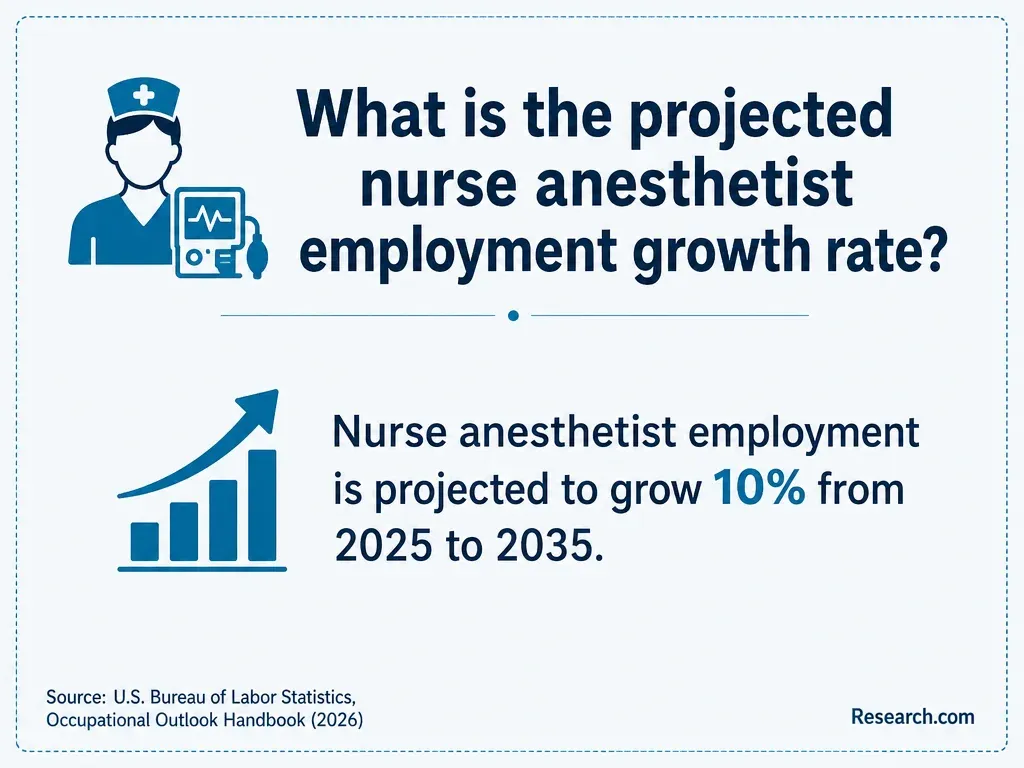
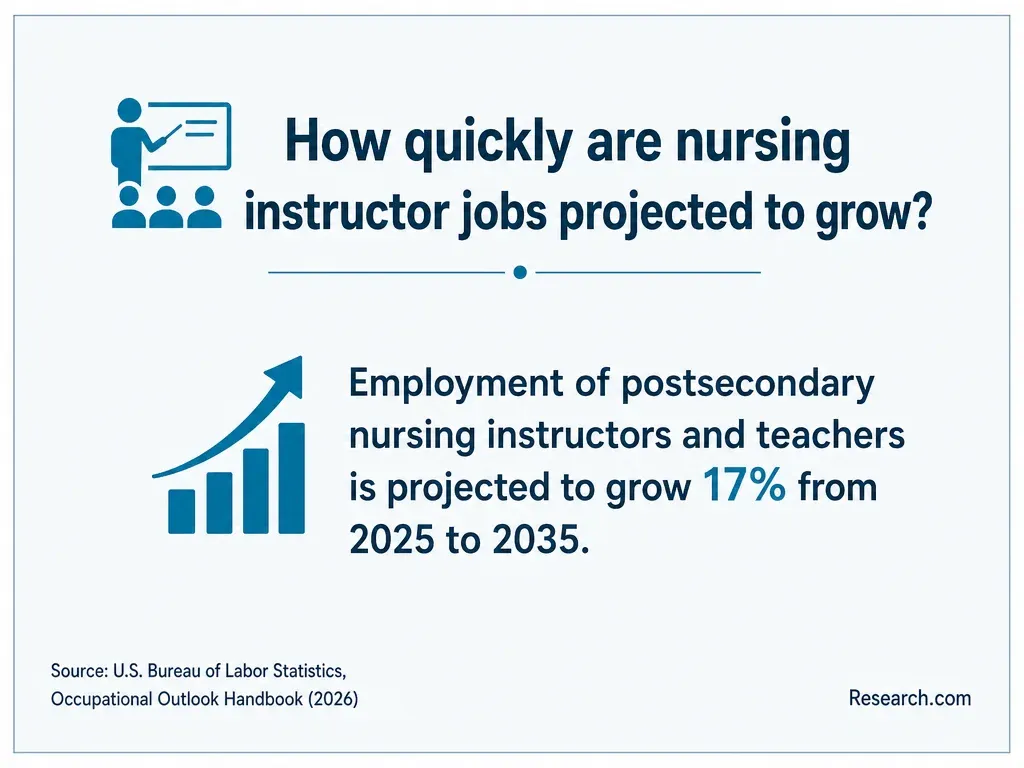
The U.S. Bureau of Labor Statistics reports pay and employment projections for nurse practitioners as an occupation, not a separate Delaware PNP-PC DNP salary. Those national figures can indicate the wider NP labor market, but they cannot predict a pediatric offer, a local vacancy, or a DNP wage premium. Compare actual Delaware-area job postings and offers by setting, schedule, benefits, supervision, and patient population. For a BSN-prepared nurse weighing earnings against additional education, planning the cost of a BSN-to-MSN transition can provide a separate comparison; the least expensive degree is useful only if it leads to the intended pediatric credential.
Other Things You Should Know About Nursing
Do not assume so. Pediatric acute care has different preparation and certification. Match the job's duties to your education, certification, Delaware authority, and employer privileges.
Prescribing depends on current Delaware advanced practice law, the practitioner's individual authorization, and applicable controlled-substance rules. Confirm the requirements before accepting a role that includes prescribing.
Notify your program's clinical placement office promptly. Ask how it approves a replacement, protects completed hours, and handles a delayed rotation; do not begin counting hours at an unapproved site.
Not every practice-improvement project is human-subjects research, but the student cannot make that determination alone. Follow the school's and clinical organization's review, permission, and patient-data procedures before collecting information.
- Advanced Practice Registered Nurse (APRN) License | State of Delaware https://dpr.delaware.gov/boards/nursing/apnlicense/
- Advanced Practice Programs | ca.gov https://www.rn.ca.gov/education/apprograms.shtml
- BSN to DNP | Duke University School of Nursing https://nursing.duke.edu/academic-programs/msn-master-science-nursing/bsn-dnp
- BS to DNP Primary Care Pediatric Nurse Practitioner | CU Anschutz Nursing https://nursing.cuanschutz.edu/degrees-programs/graduate-programs/bs-dnp/pnp-pc
- 24 Del. Admin. Code § 1900-8.0 - Rules and Regulations... - LII | LII / Legal Information Institute https://www.law.cornell.edu/regulations/delaware/24-Del-Admin-Code-SS-1900-8.0
- Nursing | Wesley College of Health & Behavioral Sciences at Delaware State https://wchbs.desu.edu/departments/nursing
- Prepping for PNCB Nursing Certification | Regis College Online https://online.regiscollege.edu/blog/pncb-nursing
- Online DNP - Pediatric NP Program | Baylor University https://onlinenursing.baylor.edu/programs/dnp-pnp
- School of Nursing - UD Catalog - University of Delaware https://catalog.udel.edu/preview_entity.php
- BSN to MSN - Pediatric Primary Care Nurse Practitioner | Herzing University https://www.herzing.edu/nursing/msn-pnp-program