2027 DNP Executive Leadership Programs for Nurses in West Virginia: Entry Routes, Project, and Practice Hours
Audited and Verified:
Our Editorial and Data Verification Process
Research.com uses government datasets, official education statistics and primary institutional information to support its career and degree guides. Our review process checks factual accuracy, occupational definitions, source dates and the requirements associated with the credentials discussed.
How This Article Was Fact-Checked
Our editorial team verifies salary estimates, employment projections, education requirements and program information against original data providers and official organizations. Salary figures are checked against the relevant occupational definitions and reporting periods. Information about licensure, accreditation and required in-person training is reviewed separately.
Fact-checked and verified on:

Co-Founder and Chief Data Scientist
A West Virginia nurse considering an executive leadership DNP needs to know more than whether classes are online. Entry routes differ by prior degree, and a program's practice-hour and project rules can determine whether a working leader can finish. This guide explains how to compare leadership-focused DNP options, document prior graduate preparation, plan an organizational project, and estimate the full commitment before applying.
It is for experienced RNs and APRNs seeking broader responsibility - not nurses looking for initial licensure or a new advanced practice specialty.
Key Things You Should Know
- Executive leadership DNPs are postlicensure doctorates, not routes to RN or nurse practitioner licensure; applicants commonly enter with a BSN or MSN, depending on the program.
- Plan around a commonly applied minimum of 1,000 post-baccalaureate practice hours across qualifying graduate preparation; the school decides which documented prior hours count.
- An online course schedule does not eliminate approved practice activities, organizational access, project oversight, or possible campus visits.
What Is a DNP Executive Leadership Program for Nurses in West Virginia?
A Doctor of Nursing Practice (DNP) executive leadership program prepares licensed nurses to apply evidence, organizational analysis, and improvement methods to healthcare systems. Its work may center on staffing, quality, patient safety, operations, or population-level services rather than a new direct-care specialty.
A West Virginia nurse may study at an in-state school or enroll in an out-of-state program authorized to serve students in West Virginia; the exact track and enrollment eligibility must be checked for the intended start term.
The distinction from an advanced practice track matters. A leadership DNP does not, by its title, provide nurse practitioner population-focus preparation or confer APRN authority. It also does not substitute for initial nursing education, such as LPN programs combining online learning and clinical training. Its strongest fit is an RN who already has substantial clinical or management experience and a plausible opportunity to lead a measurable change.
What Entry Routes Lead to West Virginia DNP Executive Leadership Programs?
The entry credential affects both the amount of doctoral coursework and the practice hours still to be completed. The routes below are categories to ask schools about, not promises that a particular West Virginia program offers each one.
| Starting point | Possible route | Key review before applying |
| BSN-prepared RN | BSN-to-DNP leadership track | Confirm that the track includes all required graduate leadership and doctoral work. |
| MSN-prepared RN or APRN | Post-master's DNP leadership track | Request a review of graduate courses and documented, supervised practice hours. |
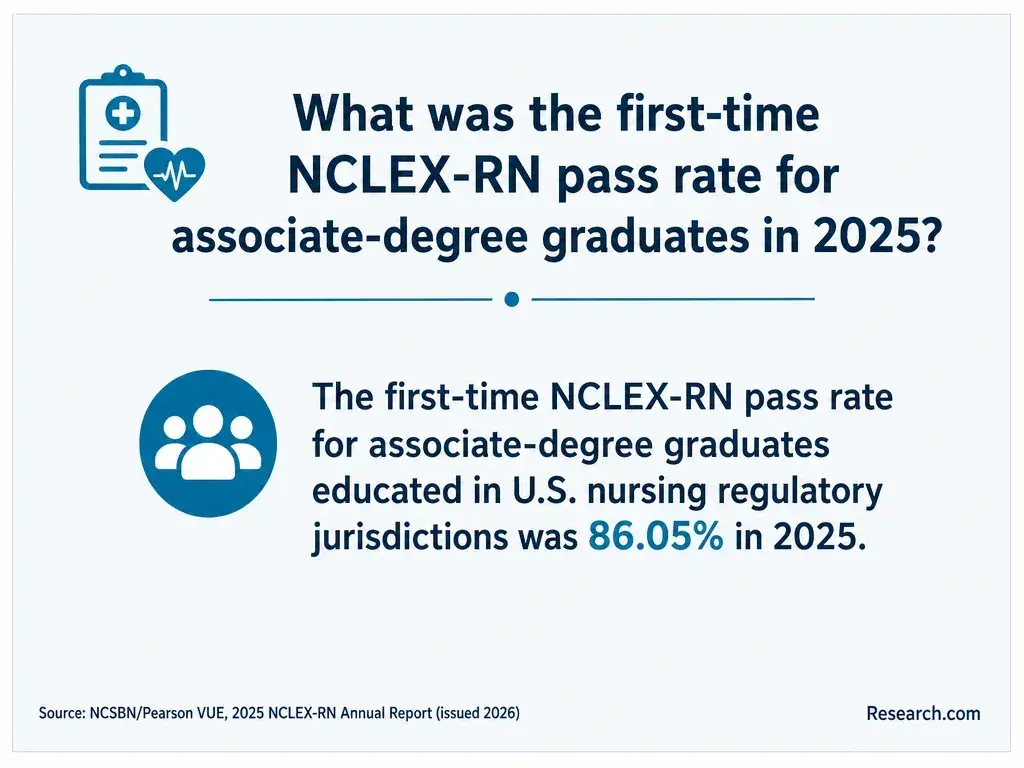
| Associate-degree RN | Bridge to graduate nursing education, then an eligible DNP route | Determine which degrees the bridge awards and whether it leads to the intended doctorate. |
An associate-degree RN should not assume direct admission to a DNP; associate-degree RN to MSN options may provide an intermediate route, subject to each school's admissions rules. An MSN does not automatically shorten the doctorate: the receiving program must evaluate transcripts, syllabi, competencies, and hour records. APRNs changing population focus need separate specialty preparation; an executive track is not a shortcut to that change.
What Accreditation and Practice Requirements Apply to West Virginia DNP Programs?
Check three distinct questions: whether the university holds recognized institutional accreditation, whether the DNP falls within the scope of nursing program accreditation such as CCNE or ACEN, and whether the school may enroll a student who will study and complete practice activities in West Virginia. An accreditor's listing should match the institution and degree; university accreditation alone does not establish nursing program accreditation or state enrollment eligibility.
DNP programs commonly plan for at least 1,000 post-baccalaureate practice hours across qualifying graduate nursing preparation. Ask the program for its applicable standard and a written accounting of hours it will accept from a previous MSN.
Employment time, prior patient-care experience, and hours claimed for another credential are not automatically academic practice hours. Requirements for post-master's family NP clinical training requirements address a different, population-focused educational purpose; they cannot be presumed equivalent to executive DNP activities.
Delivery format changes where coursework occurs, not whether the student must demonstrate practice competencies. Compare the schedule and project support behind the format label, especially if employment or caregiving limits travel.
| Format | Potential advantage | Constraint to verify |
| Mostly online | Less routine travel for coursework | Live sessions, residencies, approved local practice sites, and project meetings |
| Campus-based or hybrid | More scheduled in-person contact with faculty and peers | Commute, attendance days, and compatibility with work shifts |
Ask who approves the organization, mentor, and proposed activities before counting hours. Placement assistance is especially important when a nurse cannot use a current workplace; discussions of preceptor assistance in online family NP programs illustrate why "online" does not answer who arranges supervised experience, although an executive project needs different supervision than NP clinical training.
Expect doctoral coursework in evidence appraisal, improvement and implementation methods, health policy, finance, informatics, organizational leadership, and outcomes measurement. Courses may require a budget analysis, a stakeholder plan, or evaluation of a staffing or safety initiative. These assignments build toward an applied organizational project; course names and sequencing vary by school.
Review syllabi for the methods you need in your intended role. A nurse planning system-wide quality work needs credible measurement and change-management preparation, not just a leadership title. By contrast, fast-track mental health nursing graduate study serves a different goal: specialty patient-care preparation rather than executive practice.
Programs typically assess an active RN license, an eligible prior nursing degree, academic record, professional experience, recommendations, and a statement connecting the applicant's leadership goals to doctoral study. Some may request a résumé, interview, or proposed practice problem. Minimum GPA, required experience, and whether an APRN license is relevant depend on the track.
Before applying, assemble graduate transcripts, course descriptions, and any official record of prior supervised practice hours. Ask whether the school admits you to the leadership track itself, not merely to the university, and whether your proposed practice location is eligible. Nurses without an RN license need an initial licensure route first; comparing ABSN prerequisite policies is a separate decision from DNP admission.
Length depends on the entry route, accepted graduate work, enrollment pace, course sequence, and project progress. A post-master's student may have less coursework than a BSN-to-DNP student, but an incomplete practice-hour record or delayed organizational approval can extend either route. Request a term-by-term plan for your actual entry credential rather than relying on a program-wide completion estimate.
Compare total charges, not tuition alone: required credits, per-credit or term pricing, fees, books, travel or lodging for campus visits, project-related expenses, and continued enrollment if the project takes longer. Ask when employer tuition assistance is paid and what happens if you change jobs.
If the intended role does not require a doctorate, exploring less expensive MSN pathways after a BSN may reveal a more proportionate investment. No degree establishes a guaranteed promotion or earnings return.
The DNP project is an applied, faculty-guided response to a practice or organizational problem. A leadership student might propose improving a nurse-manager handoff process, evaluating a staff-retention intervention, or strengthening documentation for a safety measure. The deliverable should specify a feasible setting, stakeholders, baseline measure, intervention, evaluation plan, and limitations. A proposal is not evidence that the intervention succeeded.
The commonly applied planning benchmark is at least 1,000 post-baccalaureate practice hours across qualifying graduate preparation, not necessarily 1,000 new hours after an MSN. The program determines how it documents prior hours, what new activities meet its competencies, who may supervise them, and whether any simulation counts. Hours spent working as an RN do not count simply because the work relates to the project.
Secure employer permission and faculty approval before using organizational data. The site's privacy and quality-review processes - and, when applicable, an IRB determination - govern access and oversight; a student should not assume a quality-improvement label removes those obligations. Earlier RN-to-BSN pathways using applied projects can build improvement skills, but their projects and hours do not automatically satisfy doctoral requirements.
Potential roles include nurse director, chief nursing officer, quality or patient-safety leader, and health-system operations leader. Hiring depends heavily on management scope, budgeting experience, demonstrated results, and the employer's requirements. A DNP can strengthen preparation for complex systems work; it neither grants supervisory authority nor guarantees an executive position.
For pay and outlook research, the U.S. Bureau of Labor Statistics category "medical and health services managers" offers broader management context, but it includes professionals who are not nurses and cannot be treated as a nurse executive DNP graduate salary.
Compare current West Virginia job postings and compensation ranges for the specific title, employer, and level of responsibility. A nurse whose actual goal is psychiatric advanced practice should instead evaluate cost-focused online psychiatric NP options; that is a distinct clinical and licensure pathway.
How Can Nurses Choose a Reputable DNP Executive Leadership Program?
Start with the role you want and the organization where you could complete a project. Then request answers that apply to your entry term and prior education. The following checks expose differences that a program title or online label can hide:
- Verify institutional accreditation, the DNP's nursing accreditation scope, and eligibility to enroll and complete practice activities from West Virginia.
- Obtain a written route and degree plan showing accepted courses, accepted practice hours, remaining hours, and expected project milestones.
- Ask who approves the site and mentor, what happens if workplace access changes, and which visits or live meetings are mandatory.
- Compare the complete estimated cost and ask for track-specific completion information, including how delayed projects affect enrollment.
Choose a track for its actual preparation, not because it is the shortest graduate credential you can find. For example, accelerated psychiatric NP certificate options address a population-focused APRN goal, not executive leadership competencies. If a school cannot explain how your prior hours and proposed project setting fit its rules, resolve that uncertainty before committing.
Other Things You Should Know About Nursing
No. A DNP project applies evidence to a practice problem; a PhD dissertation generally develops original research. Confirm the specific school's scholarly requirements.
It may support an application or project plan, but it does not automatically become accepted academic hours. Ask the school what supervised documentation it requires.
Possibly. Teaching eligibility depends on the institution, course, required nursing expertise, and any faculty preparation or experience it expects.
Tell the faculty advisor promptly. A replacement site or revised project needs program and site approval, and the change may affect the completion schedule.
- Cost of Attendance (Budget) | 2025-2026 Federal Student Aid Handbook https://fsapartners.ed.gov/knowledge-center/fsa-handbook/2025-2026/vol3/ch2-cost-attendance-budget
- Nurse Executive Competencies: Skills for Healthcare Leaders | Sacred Heart University https://onlineprograms.sacredheart.edu/programs/masters-nursing/nursing-management-executive-leadership-specialization/nurse-leader-competencies/
- BSN to DNP vs. MSN to DNP: Which Pathway Works for You? | Herzing University https://www.herzing.edu/blog/bsn-dnp-vs-msn-dnp-which-pathway-works-you
- Pathways to the DNP | University of Maryland School of Nursing https://www.nursing.umaryland.edu/academics/doctoral/dnp/dnp-pathways/
- Doctor of Nursing Practice in Executive Leadership | upenn.edu https://www.nursing.upenn.edu/dnp-executive-leadership/
- Doctor of Nursing Practice (DNP) Project Expectations | pba.edu https://my.pba.edu/ICS/Portlets/ICS/Portlet.Resources/ViewHandler.ashx
- Online Nursing Practice D.N.P. Degree Program | WVU Online https://online.wvu.edu/programs/doctoral-programs/nursing-practice-dnp/
- Preceptor Responsibilities | Johns Hopkins https://publichealth.jhu.edu/offices-and-services/office-of-public-health-practice-and-training/information-for-preceptors/preceptor-responsibilities
- What to Know About Becoming a Nurse Executive | Walden University https://www.waldenu.edu/online-masters-programs/master-of-science-in-nursing/msn-nurse-executive/resource/how-to-become-a-nurse-executive
- Advancing Your Nursing Career BSN-DNP | Duke University School of Nursing https://nursing.duke.edu/news/advancing-your-nursing-career-bsn-dnp