2026 Cybercrime Master's Degree vs Doctorate: Career Paths & Salary Differences

Co-Founder and Chief Data Scientist
Choosing between a master's degree and a doctorate in cybercrime presents a critical crossroads-balancing immediate career access against long-term salary growth and promotion potential. Many graduates struggle to assess whether the deeper specialization and research focus of a doctorate justify its higher costs and extended timeline.
Recent data shows that holders of a cybercrime doctorate report a median salary approximately 30% higher than master's degree completers, yet the return on investment varies widely by industry and region. This article explores these dynamics in detail-providing clear insights on how each degree shapes professional trajectories, financial outcomes, and opportunities across sectors and geographies.
Key Things to Know About Career Paths & Salary Differences Between a Cybercrime Master's Degree and a Doctorate
- Master's degree holders typically access mid-level cybersecurity roles faster-earning 15-25% less initially than doctorate graduates but benefiting from lower educational costs and quicker workforce entry.
- Doctorate recipients see steeper salary growth-often 30% higher after five years-and have stronger promotion potential within specialized research or academia-driven cybersecurity sectors.
- Long-term outlook favors doctorates for leadership and innovation roles-though masters provide better return on investment in high-demand markets due to shorter degree duration and broader employer appeal.
What Is the Difference Between a Cybercrime Master's Degree and a Doctorate, and Which Should You Pursue?
The difference between a cybercrime master's degree and a doctorate lies mainly in their structure and academic purpose. A master's degree in cybercrime generally spans one to two years and offers both thesis and non-thesis tracks tailored to career-oriented students. Its curriculum emphasizes applied technical skills, policy comprehension, and practical problem-solving, preparing graduates for roles in cybersecurity, law enforcement, or corporate security. This degree particularly suits recent bachelor's graduates, career changers, or professionals seeking to deepen their expertise.
A doctorate in cybercrime-either a PhD or professional doctorate-usually requires four to seven years of study, focusing on original research and theoretical frameworks. Doctoral candidates conduct extensive investigations that contribute new knowledge or innovative approaches to the field. These programs are designed for those targeting high-level research, academic positions, or leadership roles influencing cybercrime policy and technology development. Professionals aspiring to academic careers or senior executive roles often find this path fitting, including those exploring the shortest PhD programs available to accelerate their trajectory.
- Curriculum: Master's programs emphasize applied skills and integrating existing knowledge; doctorate studies center on research methodologies, theory expansion, and scholarly work.
- Research Requirements: Master's may involve a thesis but are often coursework-driven, while doctorates mandate a rigorous dissertation that advances the discipline.
- Time-to-Completion: Master's typically take 1-2 years; doctorates require a significant time investment of 4 to 7 years.
- Career Focus: Master's graduates enter operational or mid-level positions; doctorate holders pursue research-heavy, teaching, or executive roles.
- Intended Audience: Master's attract recent graduates or professionals enhancing practical skills; doctorates appeal to those aiming for academic influence or top-tier industry leadership.
Choosing between a cybercrime master's degree and doctorate program demands careful evaluation of career access, salary progression, return on investment, and long-term professional growth. Each degree's credential level distinctly impacts opportunities across sectors, regions, specializations, and employers-providing a critical lens for students and working professionals interested in shaping their cybercrime careers with precision.
What Career Paths Are Exclusively Available to Cybercrime Doctorate Holders That Are Closed to Master's Graduates?
Several career tracks in cybercrime remain exclusively accessible to doctorate holders-creating professional boundaries a master's degree cannot cross. These roles demand the highest level of expertise and advanced research capabilities that only a terminal degree provides. This credentialing ceiling shapes long-term career planning by clearly delineating roles where master's graduates-even with extensive experience-rarely qualify.
- Academic Tenure-Track Positions: Universities and research centers require a doctorate for tenure-track faculty roles in cybercrime fields. Employers stress the need for original research contributions and rigorous methodological training unique to PhD programs, a standard unfulfilled by master's degrees.
- Independent Research Directorates: Leadership of government- or foundation-funded cybercrime research labs demands doctoral qualifications. These directors oversee large-scale studies, secure funding, and publish in top-tier journals-responsibilities aligned with a doctorate's in-depth research design and execution training.
- Senior Government Scientist Roles: Certain federal agencies and specialized law enforcement units mandate a doctorate for senior analyst or scientist positions focused on complex cybercrime exploitation and policy development. The doctorate establishes the scientific rigor and critical judgment these roles require.
- Regulatory and Licensing Standards: Though less prevalent in cybercrime than clinical sciences, emerging licensure frameworks for advanced cybersecurity consulting and forensic expert testimony increasingly require doctoral credentials to uphold expert witness credibility at the highest level.
The mandate for advanced research roles limited to cybercrime PhD graduates centers on the unique skills and theoretical foundations cultivated during doctoral study. Job data from platforms like LinkedIn and Lightcast confirm the scarcity of master's-level candidates for these positions, reinforcing the doctorate as a strict gatekeeper credential.
While workforce shortages and shifting industry demands have slightly relaxed entry ceilings-expanding opportunities for master's degree holders in mid-to-upper-level private sector roles-the most impactful research and policy positions remain largely out of reach without a doctorate.
Those assessing educational paths should weigh if these exclusive career opportunities for cybercrime doctorate holders align with their ambitions. For detailed guidance on affordable graduate options, exploring cybersecurity degrees can offer valuable insights into strategic degree investment decisions.
What Career Paths Are Best Suited to Cybercrime Master's Graduates in Today's Job Market?
Master's degrees in cybercrime align most effectively with roles where practical expertise and swift operational decisions matter more than extended scholarly research. Current data from the Bureau of Labor Statistics and employer surveys by the National Association of Colleges and Employers reveal that positions such as incident response specialists rely heavily on hands-on skills to detect and manage cyber threats promptly, a domain where a doctorate is often unnecessary.
- Incident Response Specialists: Focus on rapid threat mitigation and system recovery, leveraging applied knowledge rather than theoretical insights.
- Information Security Analysts: Mid to senior roles in this field commonly require a master's credential, facilitating the implementation of robust security measures without needing advanced academic qualifications.
- Cybersecurity Consultants: These professionals translate complex technical frameworks into actionable business strategies-expertise frequently found among master's degree holders.
- Forensic Analysts: Skilled in investigative tools and methodologies, master's graduates excel by delivering timely and practical cyber incident analyses.
- Threat Intelligence Analysts: Combining critical analysis with current industry information, master's professionals identify and forecast emerging threats with actionable intelligence prioritized over academic theory.
Graduates with master's degrees enjoy faster transitions to the workforce compared to doctoral candidates, benefiting from reduced educational costs and earlier salary gains. This advantage is especially prominent in sectors like finance, healthcare, and government, where applied cybercrime proficiency results in immediate operational improvements. While doctorates may open academic or research avenues, employers consistently regard the master's as the optimal terminal degree for practitioner-oriented careers.
When asked about his experience, a professional with a cybercrime master's shared, "Balancing full-time work and the intensive coursework was challenging, but practical projects kept me engaged. I appreciated how the curriculum focused on real-world problem-solving instead of purely theoretical content. Early on, I worried about job competition with doctoral graduates, but once I started applying my skills on the job, employers valued my hands-on expertise. The faster career entry helped me avoid additional debt, and I felt confident progressing without the lengthy doctoral path." This perspective highlights how the master's degree meets specific career ambitions by emphasizing applied capabilities and rapid workforce contribution.
How Do Long-Term Salary Trajectories Differ Between Cybercrime Master's and Doctorate Degree Holders Over a Full Career?
Salary progression over 20-30 years for cybercrime master's versus doctorate holders reveals distinct patterns shaped by career timing and role shifts. Early career salaries for master's graduates tend to match or slightly exceed those of doctoral peers due to faster entry into mid-level positions. Yet, long-term earnings differences emerge as doctorates often transition into specialized or senior roles.
- Inflection Points: Typically, 10 to 15 years into their careers, doctoral holders start surpassing master's degree earners, especially when moving into senior research, advanced leadership, or tenured academic posts. This divergence usually aligns with roles emphasizing innovation, policy, or complex cybercrime analysis requiring deep expertise.
- Role-Type Transitions: Doctoral credentials open doors to managerial and academic positions with significant salary premiums. Leadership in large organizations and tenure-track university roles drive higher earnings for doctorate holders.
- Specialization: Fields like cryptography, digital forensics, and cybersecurity law magnify income gaps, as advanced knowledge is highly valued in niche cybercrime markets.
- Geographic and Sector Impact: Doctorates see greater rewards in tech-dense regions and federal agencies, while public sector pay scales often minimize differences between degree levels.
- Employer Size: Larger private firms usually offer steeper salary growth for doctoral graduates compared to smaller employers with flatter pay structures.
Long-term salary differences for cybercrime master's versus doctorate holders depend on these nuanced factors, so modeling personalized earning projections is advisable. Using tools such as the Bureau of Labor Statistics' Occupational Outlook Handbook and the Georgetown CEW earnings calculator helps tailor expectations beyond generalized averages. For those considering graduate paths, exploring the best online finance degree options can also aid in comparing investment returns alongside cybercrime credentials and career salary progression in cybercrime graduate degrees.
What Is the Return on Investment for a Cybercrime Master's Degree Versus a Cybercrime Doctorate?
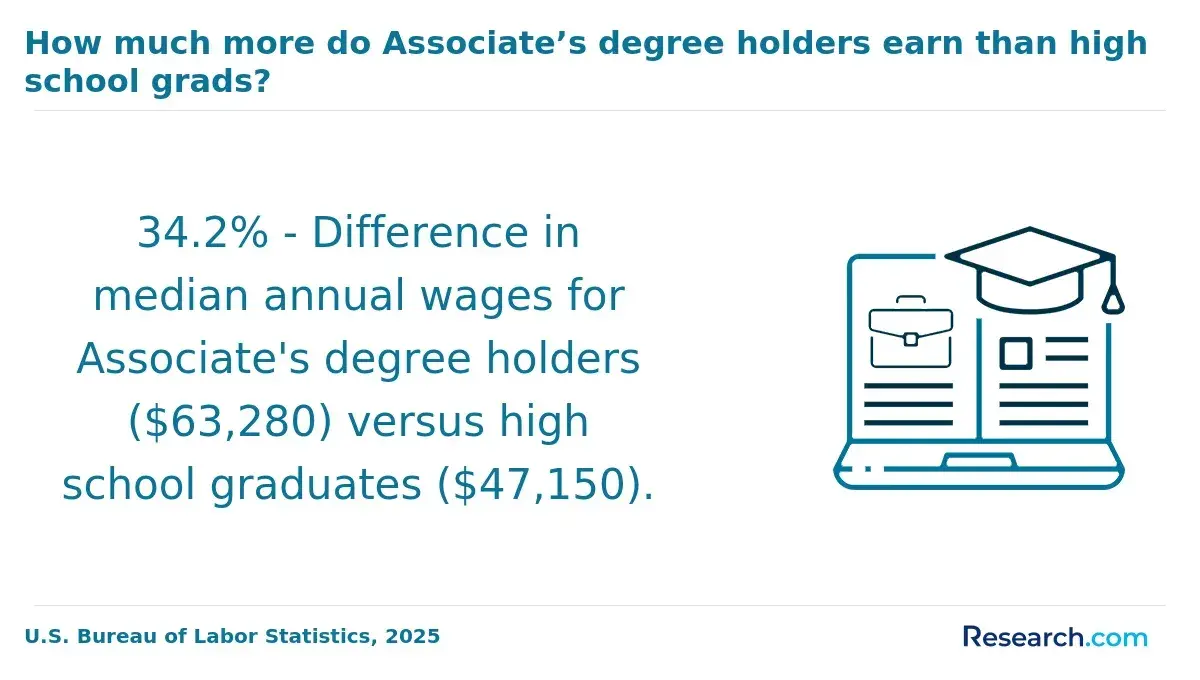
Pursuing advanced education in cybercrime requires weighing tuition, fees, living expenses, and the income lost while studying full-time to understand true return on investment (ROI). Master's programs generally span two years and cost between $50,000 and $70,000, excluding earnings forgone during that period. Graduates usually enjoy a 20%-35% salary increase compared to bachelor's holders-equating to roughly $10,000 to $20,000 more annually. Over a three-decade career, this can translate into a solid financial payoff, especially if career advancement aligns well with individual goals.
Doctoral degrees demand a longer commitment-typically 4 to 6 years-and have higher direct costs, often between $60,000 and $100,000. However, stipends, research assistantships, and tuition waivers frequently mitigate expenses, improving ROI beyond the sticker price. Doctorates often command salary premiums exceeding 40% above bachelor's level, thanks to eligibility for senior research, leadership, and academic roles that offer increased responsibility and compensation.
- Cost Considerations: Total out-of-pocket expenses plus opportunity cost are critical for an accurate ROI.
- Funding Opportunities: Doctoral stipends and assistantships can drastically lower costs but are not guaranteed.
- Time-to-Degree: Master's programs allow faster workforce reentry; doctorate studies require longer but typically offer higher rewards.
- Salary Premium: Moderate boosts for master's alumni versus substantial gains for doctorate holders-especially in research and academia.
- Non-Monetary Value: Increased professional autonomy, intellectual challenge, and elite career access matter beyond dollars.
- Personal ROI Framework: Assess career goals, realistic funding, and lifestyle alongside pure financial metrics.
The professional I spoke with, who completed a master's degree in cybercrime, reflected on the balancing act between cost and benefit: "Though the financial investment was significant, the two-year program was intense but manageable alongside my personal obligations. The salary increase was noticeable within the first year, which validated the sacrifice of lost wages during study. What stood out most was how the degree opened doors to leadership roles I hadn't previously considered-turning abstract career ambitions into concrete opportunities." She also noted that careful planning and choosing a program with strong industry ties were key to maximizing her return.
How Does a Cybercrime Master's Degree Versus a Doctorate Affect Advancement Speed and Promotion Potential?
The level of academic qualification significantly influences how quickly professionals advance and the highest roles they can reach within cybercrime organizations. Many employers enforce a "credential ceiling" that governs career trajectory, often placing doctoral degree holders on faster tracks to senior specialist or principal positions, emphasizing research and expertise.
- Credential Ceiling: Doctoral graduates typically access senior individual contributor or principal roles sooner-positions that require advanced knowledge and innovation-while master's degree holders more often move rapidly into management or leadership roles focused on practical application and team supervision.
- Industry Differences: In sectors such as research and development companies, federal scientific agencies, and academic institutions, a doctorate frequently results in quicker promotions and salary increases compared to a master's. In contrast, industries like healthcare administration, nonprofit leadership, and corporate analytics show little to no promotional advantage for those with doctorates versus a master's degree.
- Advancement Timing: Employers sometimes favor master's graduates for early managerial roles due to their focus on leadership and problem-solving, whereas doctoral professionals may have slower initial promotion paths that eventually lead to higher specialist or executive positions.
- Defining Success: Candidates prioritizing status, autonomy, or specialized expertise tend to benefit from doctoral education. Those seeking salary growth, wider organizational impact, or direct team leadership often find the master's route more aligned with their career objectives.
- Employer Expectations: Corporate and applied cybercrime settings favor master's credentials for management advancement, whereas innovation-driven environments emphasize doctorate qualifications for upper-level career moves.
As of 2024, surveys reveal that 63% of cybercrime employers consider doctoral degrees essential for top-tier research and specialist roles, underscoring the credential's influence in advancement within innovation-centric organizations.
What Are the Time and Lifestyle Costs of Pursuing a Cybercrime Doctorate Compared to a Master's Degree?
Pursuing a doctorate in Cybercrime demands a substantial time commitment-typically four to seven years beyond a bachelor's degree-compared to one to three years for a master's program. This extended timeline reflects the intense requirements of original research, comprehensive exams, and dissertation work, which often depend on advisor availability and institutional factors, leading to a less predictable path.
- Time Commitment: Doctoral students navigate a complex, often non-linear journey, with an average completion rate near 56% according to the Council of Graduate Schools. Master's programs usually offer more structured timelines and higher completion rates, generally exceeding 70%.
- Academic Demands: Doctoral study involves designing and conducting original research, demanding self-motivation and resilience. Master's programs focus more on coursework and applied skills, with clearly defined endpoints and reduced uncertainty.
- Psychological Impact: Research from the American Psychological Association points to elevated stress levels among doctoral candidates-feelings of anxiety and isolation are common due to the solitary nature of dissertation writing and reliance on advisors. Master's students tend to experience lower stress thanks to shorter durations and more consistent peer interaction.
- Lifestyle Considerations: Family responsibilities, financial strain, and age at enrollment weigh heavily on doctoral candidates, who often face career interruptions. For working professionals and career changers, the risk of long-term income disruption can be crucial when choosing a degree path.
- Self-Assessment Framework: Prospective students should honestly assess their capacity for extended academic demands, mental health resilience, financial resources, and career goals. Opting for a master's degree to preserve quality of life is a rational, respectable choice-not a sign of lesser dedication to the Cybercrime field.
Enrollment in master's programs in Cybercrime and related disciplines has risen by 15%, reflecting growing demand for flexible, accelerated options that accommodate working adults' schedules and responsibilities.
How Does Geographic Location Influence Career and Salary Outcomes for Cybercrime Master's Versus Doctorate Holders?
Geographic location can have a significant impact on career opportunities, salary potential, and professional advancement across different educational levels and specializations. Understanding how regional demand, economic conditions, and industry concentration influence outcomes can help students make more informed decisions about education, relocation, and long term career planning.
- Regional Variance: Geographic markets significantly impact career opportunities and Cybercrime graduate salary differences by region between master's and doctorate holders. Areas with major research universities, federal clusters, and biotech corridors-such as Boston, Washington D.C., and San Francisco-tend to offer more specialized roles that financially reward doctoral credentials beyond national averages. These hubs constitute the strongest salary premiums for doctorate holders compared to master's degree professionals.
- Sector Concentration: Doctorate degrees in Cybercrime open doors to leadership, advanced research, and consulting roles in dense healthcare markets and government sectors. In contrast, smaller or interior metropolitan areas usually exhibit far narrower salary differentials, reflecting fewer opportunities that recognize or require doctoral-level expertise.
- Cost-of-Living Impact: While nominal salaries favor doctorate holders in high-cost coastal metros, local expenses-especially housing-reduce the real purchasing power of those pay premiums. Conversely, more affordable interior locations may pay less nominally but often provide better lifestyle efficiency and savings, sometimes making a master's degree salary more practical when adjusted for cost of living.
Geographic Flexibility: Being willing to relocate amplifies career growth for both degree holders. Moving to a region with high demand for Cybercrime professionals can result in salary gains rivaling or surpassing the doctoral salary premium in stagnant markets. This geographic mobility is a powerful tool for accelerating salary and career advancement.
For those weighing their options, balancing credential level with location choice is key-especially for recent graduates and career changers considering how regional differences in Cybercrime graduate salary differences by region affect long-term outcomes. Additionally, exploring an online MBA under 10k may provide another accessible path for professional growth in this evolving field.
What Role Does Institution Prestige Play in Cybercrime Master's Versus Doctorate Career and Salary Outcomes?
Institution prestige has long been assumed to affect career and salary outcomes for graduates in cybercrime master's versus doctorate programs, but empirical research reveals more nuance. Studies from the National Bureau of Economic Research and Georgetown CEW indicate that the impact of institutional prestige varies significantly by sector and credential level. This is particularly evident when examining regional ranking influence on cybercrime doctorate and master's career outcomes.
- Academic Hiring: Doctoral candidates targeting academic or research positions often benefit from strong institutional brands. Universities and research institutes prioritize graduates from prestigious programs-associating such prestige with rigorous training and extensive networks. This affiliation can translate into higher starting salaries and improved placement rates, especially within geography-sensitive academic markets.
- Private Sector Employers: Many private-sector employers de-emphasize institutional prestige, focusing more on demonstrated skills, hands-on experience, and portfolio quality. For master's holders-and some doctorates outside academia-practical competencies and relevant work history frequently outweigh a program's brand, highlighting a more meritocratic hiring approach.
- Program Quality Metrics: Prospective students should evaluate programs by concrete indicators like alumni employment statistics, faculty research output, employer partnerships, and salary data-such as those published by the U.S. Department of Education's College Scorecard-rather than relying solely on general rankings. These metrics offer clearer insight into career readiness and return on investment.
- Cost Versus Prestige Trade-Offs: Especially for doctoral candidates, the strength of mentorship, dissertation project quality, and advisor networks often guide career success more than institutional name recognition. Choosing a lower-ranked but affordable or fully funded program can be a smarter investment than incurring debt at a prestigious, costly school.
For professionals considering advancement or career changes, exploring related fields such as forensic science careers may also provide valuable interdisciplinary opportunities alongside cybercrime expertise.
How Do Cybercrime Master's and Doctorate Programs Differ in Preparing Graduates for Industry Versus Academic Careers?
Different degree levels often emphasize distinct skill sets, training approaches, and professional outcomes depending on the career paths they are designed to support. Understanding how academic programs prepare graduates for industry roles versus research or teaching careers can help prospective students choose educational pathways that align with their long term professional goals.
Master's programs in cybercrime emphasize hands-on skills and applied knowledge aimed at immediate industry application-topics often include threat detection, incident management, and cybersecurity policies. Doctoral programs focus on in-depth theoretical frameworks and original research contributions, preparing students for innovation and knowledge creation rather than direct industry tasks.
- Research Emphasis: Doctoral candidates engage in extensive independent research, often spanning several years, to develop novel methodologies or deepen understanding of complex cybercrime issues. Master's students complete shorter, practical projects geared toward solving specific, real-world challenges.
- Applied Project Requirements: Applied master's degrees frequently incorporate internships, client-based consulting, or simulation labs to replicate workplace environments. In contrast, doctoral programs center on research output and publication, fitting graduates for academic or specialized research roles more than corporate settings.
- Professional Development: Master's curricula include training in communication, teamwork, and business acumen-skills essential for consulting and leadership positions within organizations. Doctoral programs largely focus on scholarly competencies such as grant writing and conference speaking, offering limited preparation for client-facing or team-oriented industry roles.
- Industry Versus Academic Preparation: Graduates of doctoral programs are well-prepared for faculty appointments and research leadership, yet may lack experience with the collaborative and rapid-paced demands common in commercial environments. Some innovative doctorate programs have responded by integrating interdisciplinary and professional skills training to better align with industry expectations.
- Career Placement Data: Prospective students are advised to carefully review employment outcomes for programs of interest, emphasizing the balance between graduates employed in academia versus those working in industry, government, or nonprofit sectors. This distribution is a practical indicator of how well a program's design matches your targeted career path.
How Do Starting Salaries for Cybercrime Master's Graduates Compare to Those for Cybercrime Doctorate Holders?
Starting salaries for graduates with a master's degree versus those holding a doctorate in cybercrime differ notably, influenced heavily by the sector and role. Data from the BLS Occupational Employment and Wage Statistics, NACE surveys, and sources like PayScale highlight these distinctions across typical entry-level positions.
- Sector Variation: Doctorate holders generally command higher starting pay in academia and research due to advanced expertise and teaching duties, which justify a more substantial salary premium at these entry points.
- Industry and Government: In private industry and government roles, salary differences between master's and doctoral graduates tend to be minimal or sometimes nonexistent, reflecting a stronger emphasis on practical skills, certifications, and experience rather than just academic credentials.
- Opportunity Cost: Those pursuing a PhD often sacrifice three to five years of earnings they might have gained with a master's degree, accruing further expenses and debt. This delay means most doctoral graduates do not match or exceed master's-level salaries until they reach mid-career, depending on specialization and employer type.
- Role Expectations: Doctoral paths typically lead to specialized research, policy-making, or academic roles prioritizing depth of knowledge-factors that influence initial salary packages differently than the operational and technical roles often filled by master's graduates.
What Cybercrime Graduates Say About the Career Paths & Salary Differences Between a Master's Degree and a Doctorate
- Bryson: "Completing the master's program gave me a solid entry point into the cybersecurity field-immediate access to key roles without feeling overwhelmed by years of study. However, I noticed that my salary growth plateaued faster compared to those with doctorates, who often see steeper increases down the line. For me, the master's was a great return on investment-quick career launch and decent earnings-though I sometimes wonder about holding back on certain leadership opportunities."
- Tripp: "Reflecting on my journey, the doctorate opened doors that seemed locked at the master's level-especially in research-driven roles and high-level consulting positions. Salary trajectories for doctorates tend to be more rewarding in the long term, but it takes patience and dedication to reap those benefits. While the master's offered a faster route into the workforce, the doctorate has provided stronger promotion potential and a more robust professional network."
- Joshua: "From a professional standpoint, pursuing a doctorate was a strategic move to differentiate myself in a crowded market. The career access difference is subtle initially-masters can secure many roles-but the doctorate consistently leads to higher salaries and broader leadership responsibilities as time passes. The return on investment felt substantial because the doctorate enhanced my credibility and long-term outlook, making it easier to negotiate raises and promotions."
Other Things You Should Know About Cybercrime Degrees
Doctoral programs in Cybercrime often provide more substantial funding opportunities than master's programs-this can include full or partial tuition waivers, stipends, and research assistantships. Master's students typically rely on scholarships, loans, or employer tuition assistance, with fewer guaranteed funding options. This difference impacts the total cost of education and may influence decisions about which degree to pursue based on financial circumstances.
The job market generally views a doctorate in Cybercrime as a higher credential for roles emphasizing research, policy development, or academic positions. Employers seeking advanced technical leadership or specialized expertise often prefer candidates with doctorates. However, many industry positions-particularly in cybersecurity analysis, incident response, and law enforcement-commonly require only a master's degree, making it the more practical credential for numerous career paths.
For master's graduates, specializations such as network security, digital forensics, and threat intelligence are highly sought after due to their direct applicability in operational roles. Doctoral candidates often focus on emerging research areas like cyber policy and law, cryptography, or AI-driven cyber defense. Both levels align with evolving market demands, but doctoral specializations tend to concentrate on innovation and comprehensive problem-solving strategies.
Most candidates benefit from completing a Cybercrime master's before entering a doctoral program since the master's provides foundational knowledge and practical skills essential for advanced research. Direct admission into doctoral programs is less common and usually reserved for students with exceptional undergraduate records or relevant experience. The sequential approach tends to offer better preparation and clearer career trajectory insights.
References
- 20 Coolest Cybersecurity Careers and Jobs | SANS Institute https://www.sans.org/cybersecurity-focus-areas/cybersecurity-careers/20-coolest-cyber-security-careers
- Getting a Ph.D. in Cyber Security – Everything You Need to Know | Cyber Security Jobs https://www.cybersecurityjobs.com/phd-cyber-security/
- Master’s vs PhD: Which Degree Is Right for Your Career Goals? https://theredpen.in/blog/masters-vs-phd-everything-you-need-to-know/
- Master’s vs. Ph.D. in IT: Which Degree Should You Pursue? https://www.ucumberlands.edu/blog/masters-vs-phd-it-which-degree-to-pursue
- Is a Doctorate Better Than a Masters? https://aituedu.org/is-a-doctorate-better-than-a-masters/
- Master vs. PhD: Salary, Jobs & Time, The Big Differences https://www.applykite.com/blog/phd-guide-master-vs-phd