
2027 Correctional Nurse Orientation: Training, Competency Reviews, and Support to Compare
Audited and Verified:
Our Editorial and Data Verification Process
Research.com uses government datasets, official education statistics and primary institutional information to support its career and degree guides. Our review process checks factual accuracy, occupational definitions, source dates and the requirements associated with the credentials discussed.
How This Article Was Fact-Checked
Our editorial team verifies salary estimates, employment projections, education requirements and program information against original data providers and official organizations. Salary figures are checked against the relevant occupational definitions and reporting periods. Information about licensure, accreditation and required in-person training is reviewed separately.
Fact-checked and verified on:

Co-Founder and Chief Data Scientist
Correctional nursing requires more than learning a facility's medication schedule. Nurses must deliver care while navigating security procedures, limited access to patients, urgent health needs, and professional duties that remain their own. For a new graduate or a nurse changing specialties, the quality of orientation can determine whether that transition is safe and sustainable.
This guide explains what training and competency reviews should cover, how education and credentials fit in, and what to ask before accepting a correctional nursing position.
Key Things You Should Know
- Compare orientation by its supervised practice, documented skill checks, and access to a qualified preceptor - not by its length alone.
- Correctional facilities may hire RNs or LPNs/LVNs within their respective scopes; neither a BSN nor specialty certification replaces an active license or employer-validated competence.
- Before accepting an offer, ask for the orientation schedule, competency checklist, escalation process, and plan for support after independent assignment begins.
What does correctional nurse orientation typically include?
Correctional nurse orientation is the employer's structured transition from general nursing preparation to safe practice in a particular jail, prison, or other detention setting. It commonly combines facility access and security instruction, clinical policy review, supervised shifts, and observed performance. The sequence should reflect the nurse's experience, license, assigned duties, and patient population; there is no single orientation length that establishes readiness everywhere.
A useful comparison separates security orientation from clinical orientation. Learning movement rules and emergency codes does not show that a nurse can assess a patient, document findings, or escalate a change in condition. Likewise, completing an RN-to-BSN pathway without standard hospital rotations would not substitute for supervised onboarding in a correctional facility.
Ask whether the nurse will shadow different assignments before carrying a full workload, who will observe clinical work, and how access to a clinician is maintained during nights, weekends, and emergencies. A shorter orientation may be reasonable for an experienced correctional nurse familiar with the facility's duties; it is a more significant concern when a new graduate is expected to manage unfamiliar situations without close support.
What education and licensure are required to become a correctional nurse?
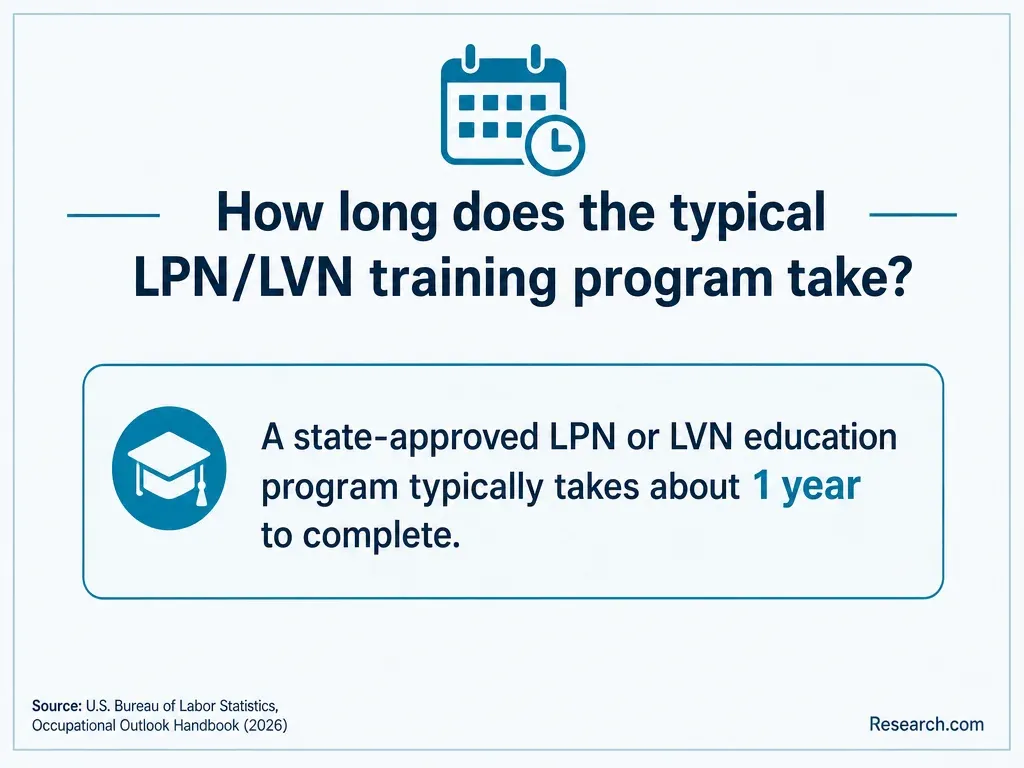
Correctional nurse is a practice setting, not a separate entry-level nursing license. An RN generally enters practice through a board-eligible nursing program, passes the NCLEX-RN, and obtains state licensure. An LPN/LVN follows the applicable practical-nursing education, examination, and licensing route. Employers decide which roles they hire for particular assignments; state scope-of-practice rules and facility policies govern what each nurse may do.
RNs may be responsible for broader assessment, planning, triage, and delegation, while LPN/LVN duties depend on state law and available supervision. Someone considering a guide to fast-track practical nursing programs should first check whether nearby correctional employers hire LPNs/LVNs for the desired role. Practical-nursing education is not RN preparation, and a school's online coursework does not eliminate required hands-on learning.
Before applying, verify the job posting's license and experience requirements, the state board's rules, and whether the employer will accept a new graduate. Degree completion, NCLEX eligibility, licensure, and readiness for a correctional assignment are separate milestones.
How are correctional nursing competencies evaluated and reviewed?
A competency review should establish whether a nurse can perform an assigned duty safely in that facility - not merely whether they attended a class. Employers may use direct observation, case discussion, simulation, chart review, and documented preceptor feedback. They should identify who can validate each skill, what counts as satisfactory performance, and what happens when more practice is needed.
The methods below answer different questions. Comparing them helps a prospective employee judge whether the review measures actual practice rather than paperwork alone.
| Review method | What it can show | Important limit |
| Direct observation | Performance of an assigned task and communication in the work setting | One observation may not represent every situation |
| Simulation or case discussion | Recognition, prioritization, and escalation in a rare or high-risk scenario | It does not replace observation of routine clinical work |
| Chart or medication-process review | Documentation quality and adherence to required workflows | A complete record alone cannot establish clinical judgment |
| Preceptor feedback and follow-up review | Progress over time and remaining support needs | Feedback needs specific examples and a documented plan |
Reviews matter after orientation, too: changed assignments, new equipment, policy changes, or a performance concern may call for reassessment. A nurse interested in systems-level improvement might later consider systems-focused DNP study options, but advanced study does not replace an employer's validation of bedside responsibilities.
Training should match the facility's services and the nurse's assigned role. Common subjects include intake health screening, recognizing urgent deterioration, medication processes, chronic-disease follow-up, infection prevention, behavioral-health concerns, suicide-risk response, withdrawal-related escalation, and documentation. Nurses also need to understand how to request access to a patient, arrange a higher level of care, and communicate clinical concerns across security and healthcare teams.
Correctional practice raises distinctive ethical and operational issues: patient confidentiality in a controlled environment, professional boundaries, care for patients who may distrust the system, and the difference between a security decision and a clinical decision. Training should explain the facility's policies without suggesting that security procedures override a nurse's licensed obligations or the need to escalate an urgent concern.
Behavioral-health training is especially useful, but it does not confer advanced practice authority. An RN comparing online MSN-PMHNP completion timelines is considering a separate graduate preparation and credentialing path, not a replacement for correctional nurse orientation.
Both an eligible prelicensure associate-degree nursing pathway and an eligible prelicensure BSN pathway can lead toward RN licensure, subject to state board requirements. Neither ordinarily makes a graduate independently competent in correctional nursing. Facility-specific supervision and skill validation still matter most when comparing first jobs.
An ADN may offer a more direct route to RN entry for a student whose local employers accept associate-prepared nurses. A BSN includes broader baccalaureate study that may be useful for population health, care coordination, leadership, or roles whose employer requires the degree. An already-licensed ADN nurse does not need to repeat initial RN preparation to enter a facility that accepts the credential. If later graduate study becomes relevant, compare ADN-to-MSN bridge length and requirements against RN-to-BSN and other routes rather than assuming an advanced degree is necessary for bedside correctional work.
The practical question is whether the intended employer requires a BSN for the specific position or for later advancement. If not, prioritize a licensure-eligible program you can complete and a job with strong supervised onboarding.
Most nurses do not enter a dedicated prelicensure "correctional nursing program." They first apply to an RN or LPN/LVN program, or - if already licensed - seek an employer position or a continuing-education offering. Nursing-school prerequisites, grades, entrance assessments, background-review policies, and clinical-placement conditions vary by program. Admission to a school does not necessarily mean admission to its nursing major.
Applicants weighing entry barriers at nursing schools should also confirm that the specific nursing program meets the state board requirements relevant to initial licensure. For a correctional job, check separately for license status, experience preferences, facility clearance requirements, and any limits on where a new hire may be assigned.
If a course advertises a correctional nursing certificate, ask whether it admits students or requires an existing license, who issues the completion document, and whether it includes supervised practice. A course certificate is not an RN license or proof of employer-validated competence.
There is no universal correctional nursing education timeline or price. The largest commitment for someone new to nursing is initial licensure preparation; an already-licensed nurse may instead need employer orientation and selected continuing education. Orientation length depends on the facility, prior experience, staffing, and the competencies assigned, so a quoted number of weeks is less informative than a written progression plan.
Compare the total cost of the route you actually need: tuition and fees for initial nursing education if unlicensed; exam and licensing expenses; travel or required on-site attendance; and any unpaid time for optional courses. Ask an employer which training is paid, which credentials it funds, and whether reimbursement carries a service commitment. Nurses considering a later psychiatric advanced-practice role can compare PMHNP education costs and program choices separately; that graduate expense should not be treated as a standard cost of correctional RN orientation.
Before paying for specialty coursework, compare its learning objectives with the employer's onboarding plan. A focused course may fill a genuine knowledge gap, but it cannot guarantee a shorter orientation or a higher wage.
Nurses can study many correctional-health topics online, including policy, documentation, ethics, and case-based clinical judgment. They cannot assume that online study replaces supervised patient care, facility security instruction, or observed competency checks. Even an online course with simulation may require the employer to validate the nurse's performance on the assigned unit.
For someone not yet licensed, the same distinction applies to initial nursing education. A hybrid LPN-to-RN bridge education option may put some coursework online while retaining in-person labs and approved clinical experiences. Confirm the school's actual attendance schedule and board eligibility before enrolling; confirm the correctional employer's separate orientation requirements before accepting a position.
Correctional nurses must follow their state's nursing law, applicable facility policies, and professional duties concerning safe care, documentation, and confidentiality. Correctional-health standards can help facilities organize services and assess quality, but accreditation of a facility, an individual nurse's license, and an individual specialty credential are different things.
The National Commission on Correctional Health Care offers correctional-health professional credentials, including a nursing-focused credential. Eligibility, examinations, fees, and renewal conditions should be checked directly with the credentialing organization before applying. Certification may demonstrate specialty commitment or meet an employer preference; it does not expand state scope of practice or replace onboarding. Similarly, PMHNP certificate completion timelines concern a distinct advanced-practice education route, not certification as a correctional nurse.
When comparing offers, ask whether a credential is required, preferred, or merely supported - and whether the employer pays for preparation, examination, or renewal.
What career opportunities, salaries, and job outlook exist for correctional nurses?
Correctional nurses work in settings such as jails and prisons, with assignments that may include intake, medication services, chronic care, and urgent-response support. With appropriate experience and employer requirements met, some move into charge, education, quality, or management work. Advanced practice is a separate pathway: an RN seeking an NP role needs the applicable graduate population-focus preparation, certification, and state authorization. An online nurse practitioner affordability guide is relevant only if that is the intended next role, not as a prerequisite for correctional RN practice.
The U.S. Bureau of Labor Statistics reports wages and projected employment for the broader registered nurse and licensed practical and vocational nurse occupations, not a dependable national correctional-nurse salary or outlook. Those occupation-wide figures can provide context, but they cannot predict a facility's offer. Compare actual postings by license, shift, overtime rules, benefits, location, and responsibility; request the pay scale where one applies.
Job fit deserves equal weight. Ask about patient volume, access to a provider, staffing during off-hours, emergency transfer procedures, preceptor availability, and how nurses raise a patient-safety concern. An offer with a slightly higher rate may be less attractive if independent assignments begin before the nurse has demonstrated competence and established reliable support.
Other Things You Should Know About Nursing
Assignments vary. Some nurses have nearby clinical colleagues; others cover a location with support available remotely or on call. Ask who responds to urgent clinical questions on every shift you may work.
A nurse should promptly raise a safety concern through the employer's escalation process and follow applicable state law and professional obligations. The appropriate response depends on the circumstances; document concerns according to policy.
Do not assume it will. Ask who will supervise your clinical progression, whether that person works the same shifts, and how feedback and readiness will be documented.
Only the school and any applicable regulator or credentialing body can determine what hours qualify. Employment alone does not establish an approved placement, required supervision, or acceptable documentation.
- Practice - Guidelines - Texas Board of Nursing https://www.bon.texas.gov/practice_guidelines.asp.html
- Wellness for Corrections and Supervision Professionals | The National Institute of https://nicic.gov/resources/topics/wellness-corrections-and-supervision-professionals
- Nursing Competency: Definition, Structure and Development | nih.gov https://pmc.ncbi.nlm.nih.gov/articles/PMC5871720/
- Mandatory Continuing Education for nurses | mass.gov https://www.mass.gov/info-details/mandatory-continuing-education-for-nurses
- Peer Recovery Support Services in Correctional Settings | Office of Justice Programs https://www.ojp.gov/library/publications/peer-recovery-support-services-correctional-settings
- Orientation Training for Health Services Staff | mn.gov https://policy.doc.mn.gov/docpolicy/PolicyDoc
- Modeling wellbeing for U.S. correctional nurses: A cross sectional survey - ScienceDirect https://www.sciencedirect.com/science/article/pii/S0020748923001542
- Correctional Nurse Competency and Quality Care Outcomes | Digital Commons @ UConn https://digitalcommons.lib.uconn.edu/cgi/viewcontent.cgi
- 7651.6 Clinical health services authority. - State Government Sites https://govt.westlaw.com/nycrr/Document/I4fb49702cd1711dda432a117e6e0f345
- Professionalism in Correctional Nursing | National Commission on Correctional Health Care https://ncchc.org/correctional-nursing-practice-what-you-need-to-know/professionalism-in-correctional-nursing/


