2027 CNOR Certification vs an Operating Room Orientation Program: Different Milestones
Audited and Verified:
Our Editorial and Data Verification Process
Research.com uses government datasets, official education statistics and primary institutional information to support its career and degree guides. Our review process checks factual accuracy, occupational definitions, source dates and the requirements associated with the credentials discussed.
How This Article Was Fact-Checked
Our editorial team verifies salary estimates, employment projections, education requirements and program information against original data providers and official organizations. Salary figures are checked against the relevant occupational definitions and reporting periods. Information about licensure, accreditation and required in-person training is reviewed separately.
Fact-checked and verified on:

Co-Founder and Chief Data Scientist
A new operating room nurse needs supervised training before taking on a full assignment. CNOR certification serves a different purpose: it recognizes an RN's established perioperative experience through a professional credential. Confusing the two can lead a new graduate to study for a credential they cannot yet pursue - or an experienced RN to mistake certification for a hospital's competency sign-off.
This guide explains what each milestone establishes, how long it may take, what it can cost, and which questions to ask before accepting an OR position or paying for exam preparation.
Key Things You Should Know
- Orientation comes first for most new OR nurses: It is employer-directed, supervised training for the facility's procedures and equipment; completing it does not award CNOR certification.
- CNOR is an experienced RN credential: CCI's eligibility framework includes two years and 2,400 hours of perioperative nursing experience, including at least 1,200 intraoperative hours. Confirm the current handbook before applying.
- Neither milestone replaces the other: RN licensure authorizes nursing practice, an employer validates readiness for its OR assignments, and CCI awards CNOR after its eligibility and examination requirements are met.
What Is the Difference Between CNOR Certification and OR Orientation?
OR orientation is a transition into a particular workplace; CNOR is a professional specialty certification. An employer designs orientation to prepare and assess an RN for its operating rooms. The Competency & Credentialing Institute (CCI) awards CNOR to eligible RNs who pass its certification examination. The credential does not itself authorize a nurse to practice or certify competence with every procedure performed at a facility.
The comparison below shows why a nurse might need both milestones at different points in a career.
| Question | OR orientation | CNOR certification |
| Who oversees it? | The hiring employer and its designated educators and preceptors | CCI, the certifying organization |
| Who is it for? | New hires, including new graduates and experienced RNs entering a different OR | RNs who meet CCI's perioperative experience and other eligibility requirements |
| What does it assess? | Performance against the employer's role- and site-specific competencies | Knowledge sampled by a standardized specialty examination |
| What is the result? | Employer-determined progression toward an assignment | A time-limited professional credential that requires maintenance |
A seasoned CNOR changing hospitals may still need orientation to unfamiliar equipment, procedures, and policies. Conversely, an RN can complete orientation and work in the OR without holding CNOR. Similarly, comparing FNP preceptor placement policies can help nurses understand how clinical preparation, institutional requirements, and practical experience differ across programs.
Is CNOR Certification Required to Become an Operating Room Nurse?
Generally, no. The entry requirement for an OR RN position is an appropriate, active RN license, plus whatever qualifications the employer sets for that vacancy. A hospital may hire a newly licensed RN into a perioperative residency or orientation program; that nurse would not yet have the experience required for CNOR. Individual job postings may prefer or eventually require certification, so read the specific offer rather than assuming a universal rule.
If you are still in nursing school, the sequence is graduation from a qualifying prelicensure program, meeting your state board's requirements, obtaining RN licensure, and then completing employer onboarding. If you work in another profession, career-change nursing program guide can help you distinguish routes toward initial nursing preparation from postlicensure study. A course branded as "perioperative certification" is not a substitute for an RN license or the CCI credential.
How Does an Operating Room Orientation Program Prepare New Nurses?
A substantial orientation moves an RN from observation and guided practice toward assignments matched to demonstrated ability. The content varies by employer and role, but commonly addresses the circulating nurse's responsibilities, surgical asepsis, patient positioning, counts, specimen handling, documentation, communication during handoffs, and escalation of safety concerns. Scrub-role preparation may be included where the employer uses RNs in that role.
Classroom teaching and simulation can introduce a workflow, but preceptors must also observe performance in the clinical setting. Ask how the program handles different surgical services, case exposure, feedback, and competency checks. Completing a scheduled number of weeks is not, by itself, evidence that a nurse is ready for every case or call assignment.
For nurses conducting short-format FNP program comparisons, evaluating clinical preparation and supervision is just as important as comparing program length. For a new graduate, the practical question is not simply whether the hospital "offers orientation." It is whether preceptors are available, assignments progress safely, and the nurse has a clear way to request more supervised practice when a procedure remains unfamiliar.
CNOR is a credential for registered nurses, not a degree program. CCI's eligibility framework calls for a current, unrestricted RN license and qualifying perioperative nursing experience. It includes two years and 2,400 hours of perioperative nursing experience, with at least 1,200 hours in the intraoperative setting. Consult CCI's current eligibility handbook for its precise definitions, documentation rules, and any changes before applying; working near an OR does not automatically make every hour eligible.
RNs exploring MSN bridge options for ADN-prepared RNs should distinguish graduate education from professional certification requirements. An ADN- or BSN-prepared RN may pursue CNOR if they satisfy CCI's requirements; a new degree is not the default next step for an otherwise eligible nurse. Nursing students, unlicensed graduates, and nurses without sufficient qualifying experience should focus first on licensure and appropriate clinical employment. Employers decide hiring and assignment requirements, while the state board governs licensure and CCI decides certification eligibility.
CCI does not require completion of a particular prep course to earn CNOR. Eligible nurses prepare for CCI's examination, which samples perioperative knowledge across the domains in its current official exam content outline. Topics include patient assessment and planning, intraoperative care, infection prevention, safety, communication, and professional accountability. The outline - not a commercial course advertisement - should determine what you study.
Nurses considering short online DNP completion pathways should compare program requirements with their existing knowledge, experience, and professional goals. A workable plan is to compare the current blueprint with cases you routinely encounter, then prioritize weaker domains. Use reputable references and practice questions to explain why an answer is correct, not to memorize supposed exam items. An RN whose experience is concentrated in one service line may need extra study in less familiar perioperative areas. Passing a knowledge exam still does not replace a preceptor's observation of hands-on performance with a facility's equipment and protocols.
PMHNP certificate completion timelines and OR orientation timelines follow different schedules. OR orientation may last several months, but its length depends on prior experience, case mix, staffing, scheduling, and competency progression. A new graduate entering a broad surgical service may need a different plan from an experienced OR RN learning one hospital's workflows. Ask whether the stated duration includes classroom time, supervised cases, and any later specialty-service or call training.
For CNOR, the major timeline constraint is qualifying experience: studying faster cannot replace CCI's required practice period and hours. Once eligible, the nurse must allow time for application, exam scheduling, and preparation under CCI's applicable policies. Before setting an exam date, check that your experience records meet the current rules and that you can realistically cover the blueprint.
For a hired RN, orientation is generally part of employer onboarding rather than a separate credential the nurse purchases. Still, compare offers for paid training time, expected shifts, call obligations, travel to other sites, and any repayment agreement. A longer, well-supported orientation can be more valuable than a short program that quickly places a novice in assignments beyond their preparation.
For nurses pursuing fast-track psychiatric NP MSN study, budgeting should account for more than tuition alone. CNOR has different potential expenses: the CCI exam fee, optional study materials or review courses, and later credential-maintenance costs. Fees and employer benefits can change, so check CCI's current fee schedule and ask your manager whether the facility pays for the exam, provides study time, or reimburses only after a passing result. An optional prep course is worth paying for only if it addresses a documented knowledge gap; it is not a prerequisite merely because it is marketed alongside the exam.
Much CNOR study can be done online through readings, review courses, and practice questions. Online preparation does not waive experience requirements or itself confer certification. Follow CCI's current instructions for examination delivery and identification rather than assuming that every exam can be taken from home.
When making psychiatric NP tuition comparisons, look beyond advertised tuition to identify clinical requirements, supervision, and additional program expenses. OR orientation may use online modules for policies and foundational knowledge, but the clinical transition cannot be completed entirely online. An employer must assess performance in its operating rooms with appropriate supervision. If a program advertises "online perioperative training," ask which parts are educational content, where supervised cases occur, and who signs off role-specific competencies.
Nurses exploring less restrictive DNP entry options should consider how graduate education aligns with their existing qualifications and long-term career goals. Orientation can lead to an OR RN assignment once the employer determines the nurse is ready for the assigned work. With experience, a perioperative RN may pursue broader service-line responsibilities, precepting, education, or leadership opportunities. CNOR can document specialty knowledge and may satisfy an employer preference, but it does not guarantee promotion, a raise, or qualification for a different licensed role.
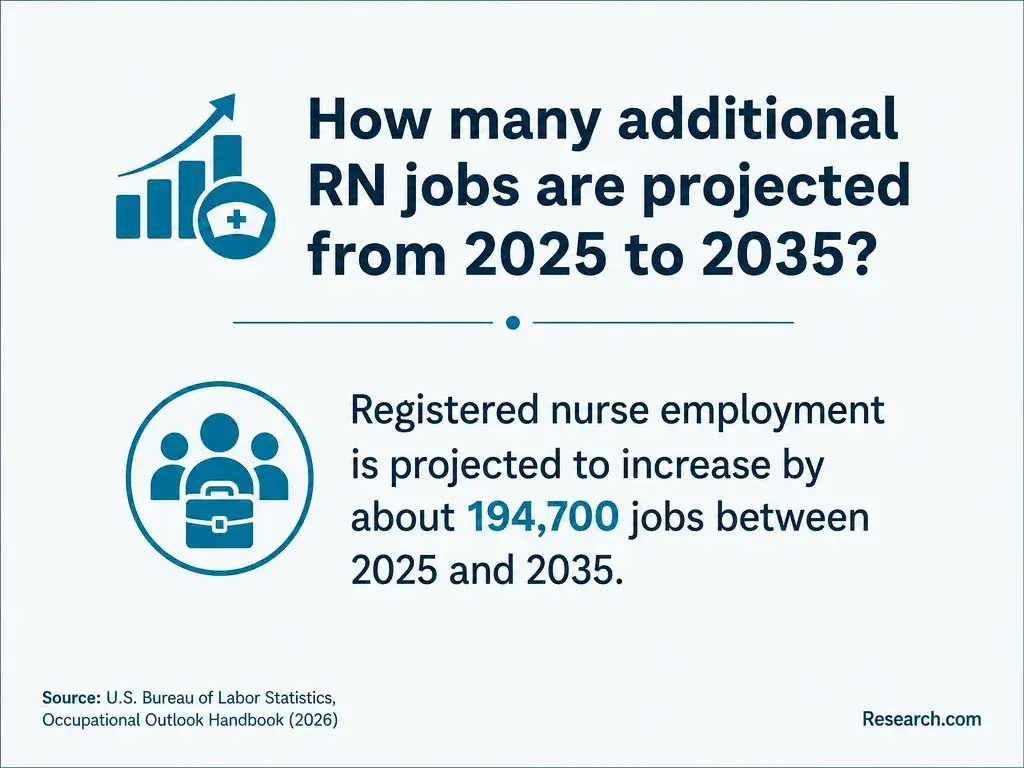
The U.S. Bureau of Labor Statistics reports pay and employment projections for registered nurses as an occupation, not separate national salary figures for CNOR holders or newly oriented OR nurses. Those occupation-wide figures are a broad benchmark, not an estimate of what this credential will add to an offer. Compare local OR postings and ask about base pay, differentials, call pay, overtime expectations, and certification incentives in writing. For an early-career nurse, the quality of supervision may matter more than a modest difference in starting pay.
How Can You Choose a Reputable Perioperative Nursing Program?
When making online RN-to-BSN clinical requirement comparisons, first identify what the program actually awards. An employer orientation or a course such as a perioperative curriculum supports learning; neither automatically awards CNOR. CCI alone determines whether an applicant meets its certification requirements and passes its exam. If the offering is a prelicensure nursing degree, check the applicable state board and program accreditation separately from any claims about OR career preparation.
Before committing to an OR job or paying for training, ask for the details that determine whether the pathway fits your stage of practice:
- For employer orientation: Who precepts new hires, how are competencies documented, and what happens if additional supervised cases are needed?
- For a paid course: Who is the intended learner, what clinical access is included, and does the provider clearly distinguish course completion from CNOR eligibility?
- For CNOR preparation: Does the content match CCI's current exam blueprint, and are all fees and refund terms clear?
If you are newly licensed, prioritize an OR position with credible supervised onboarding. If you are already an experienced perioperative RN, verify your qualifying hours with CCI, then decide whether certification supports a specific employment or professional goal. Neither group needs to buy another nursing degree solely to move between these two milestones.
Other Things You Should Know About Nursing
CNOR is the name of CCI's perioperative nursing certification credential. Use CCI's credentialing guidance for the correct designation after your name.
Yes. It is a time-limited credential. Check CCI's current renewal requirements and deadline early enough to maintain it without a lapse.
Do not assume so. CCI evaluates qualifying experience under its RN perioperative nursing rules; ask CCI how a particular work history is treated.
No. RN first assistant duties involve distinct preparation and employer requirements. CNOR alone does not establish readiness or authorization for that role.
- Nurse Orientation and Onboarding: A Make or Break! | AMSN https://amsn.org/Practice-Resources/Medical-Surgical-Monitor/Article/nurse-orientation-and-onboarding-a-make-or-break
- Readiness to Practice Indicators | Galen CPD https://www.nursedevelopmentresources.com/news/readiness-to-pracice-indicators-accelerating-new-graduate-nurses-toward-independent-practice
- How to Know When a Nurse Is Ready for Independent Practice - Creative Health Care Insight https://www.mychci.com/blog/how-to-know-when-a-nurse-is-ready-for-independent-practice/
- 2024 CNOR® and CFPN® Job Task Analysis | Competency & Credentialing Institute https://www.cc-institute.org/credentials/cnor-cfpn-job-analysis/
- Components of an Effective Nurse Orientation Pathway | American Association of Critical-Care Nurses https://solutions.aacn.org/blog/components-of-an-effective-nurse-orientation-pathway
- Align nurse orientation with clinical specialties | wolterskluwer.com https://www.wolterskluwer.com/en/expert-insights/nurse-specialty-orientation-as-key-workforce-strategy-to-build-confidence-competence-and-retention