2027 Choosing an Online MS in Psychology - Forensic Psychology for a Future Juvenile Justice Research Position: Prerequisites to Compare
Audited and Verified:
Our Editorial and Data Verification Process
Research.com uses government datasets, official education statistics and primary institutional information to support its career and degree guides. Our review process checks factual accuracy, occupational definitions, source dates and the requirements associated with the credentials discussed.
How This Article Was Fact-Checked
Our editorial team verifies salary estimates, employment projections, education requirements and program information against original data providers and official organizations. Salary figures are checked against the relevant occupational definitions and reporting periods. Information about licensure, accreditation and required in-person training is reviewed separately.
Fact-checked and verified on:

Co-Founder and Chief Data Scientist
An online MS in forensic psychology may sound like a direct route into juvenile justice research, but the concentration name tells you less than its admissions rules, methods training, and access to supervised research.
This guide is for applicants comparing programs for nonclinical research roles in courts, agencies, universities, or community organizations. It explains which prerequisites to verify, which courses and projects matter most, and when a different degree or targeted experience may be the better investment.
Key Things You Should Know
- A bachelor's degree is the usual starting credential, but a psychology major, particular GPA, statistics course, or entrance test is required only if the specific program says so.
- For juvenile justice research, prioritize statistics, research design, adolescent development, ethics, and a feasible supervised thesis or applied project over the forensic label alone.
- A nonclinical forensic psychology MS does not confer psychologist licensure; compare its full cost against research-oriented alternatives and the qualifications in actual job postings.
What Is an Online MS in Forensic Psychology for Juvenile Justice Research?
It is a graduate psychology degree that studies behavior in legal contexts while delivering some or most coursework online. For a future juvenile justice researcher, its value lies in learning to investigate questions about adolescents' development, diversion, family and community contexts, system involvement, and program outcomes—not in acquiring investigative or clinical authority.
Programs bearing the same name can differ substantially. One may emphasize legal topics and case discussion; another may teach research design, statistical analysis, and a faculty-supervised thesis. The second is generally more useful if you hope to study justice-involved youth. Likewise, addiction psychology degree options for undergraduate students may introduce a relevant issue in diversion research, but subject-area exposure is not a substitute for graduate methods training.
Research on minors also requires attention to safeguarding, confidentiality, and institutional permissions. Studying forensic psychology does not authorize a graduate to conduct forensic evaluations, practice law, or work as a licensed psychologist.
What Prerequisites Are Needed for an Online Forensic Psychology Master's Degree?
There is no universal prerequisite list. Start with the current admissions page and catalog for each MS, then distinguish mandatory entry conditions from preparation the program merely recommends. Applicants from criminal justice, education, social work, sociology, public health, computing, and other fields may bring useful experience without having majored in psychology.
The following comparison keeps an admissions requirement separate from evidence that you could succeed in juvenile justice research:
| Preparation to check | What to verify with the program | Why it matters for this goal |
| Bachelor's degree and academic record | Accepted fields, degree recognition, GPA policy, and any credential evaluation | Establishes eligibility; a prior major alone does not establish research readiness |
| Psychology foundation | Required versus recommended introductory, developmental, or abnormal psychology courses | Helps you interpret adolescent behavior without treating coursework as a clinical qualification |
| Quantitative preparation | Statistics, research methods, or equivalent coursework; whether gaps can be completed after admission | Supports evaluation of measures, study design, and agency outcome data |
| Application evidence | Writing sample, statement, references, test policy, and relevant experience | Shows your ability to frame a feasible research question and communicate findings |
Before paying an application fee, send admissions staff your transcript and ask which courses count, whether a prerequisite can be taken elsewhere, and when it must be finished. If you are still completing a bachelor's degree, guidance on using previous coursework toward a psychology degree can inform that earlier step; only the bachelor's institution can decide how those credits apply to its degree, and the MS program separately decides whether they satisfy graduate admission prerequisites.
How Can an Online MS in Forensic Psychology Prepare You for Juvenile Justice Research?
A strong program should help you move from an issue of concern—such as participation in a diversion program—to a researchable question, a defensible design, and a clearly limited interpretation. Useful training includes comparing groups without overstating causation, assessing whether measures suit adolescents, handling missing information, and writing findings for agency decision-makers.
Look for a thesis, research assistantship, or approved applied project with a qualified supervisor. A feasible project might use an agency-authorized, appropriately governed dataset to examine how a program measures participation. That example is a possible project plan, not a claim of data access or research approval. Work involving minors or restricted records may require agency authorization, data-use agreements, and institutional review; deidentification alone does not settle every obligation.
Prior work in schools, courts, or community services, or familiarity with recovery services employment pathways, can help an applicant identify relevant research questions. It does not automatically provide permission to recruit participants, inspect case files, or use workplace data for a degree project. Ask whether the program can supervise a project when access to a justice agency is unavailable.
Check institutional accreditation for the university and confirm that it applies to the institution awarding the degree. Accreditation does not, by itself, establish that a particular MS has strong research supervision or meets a professional licensing board's requirements. Do not expect APA accreditation of a general, nonclinical forensic psychology master's; APA accreditation applies to specified professional psychology programs and training at other levels, not to every degree containing "psychology."
A nonclinical MS does not independently qualify someone to diagnose, provide psychotherapy, conduct independent forensic psychological assessments, or use a protected psychologist title. If your actual goal is licensed treatment rather than research, investigate a qualifying professional degree and the relevant state board's education and supervised-practice rules. Intensive graduate study in clinical mental health counseling represents a different training route; its pace should be considered only after verifying licensure alignment in the intended state.
Compare required courses and reliably available electives, not just a list of topics a school says students can explore. For this research goal, method depth is more valuable than a large selection of forensic case-study courses.
| Curricular area | Stronger evidence of fit | Potential limitation |
| Statistics and research design | Graduate-level analysis, study design, and interpretation of observational evidence | A single introductory survey may not prepare you to analyze agency data |
| Development and justice context | Adolescent development paired with youth-specific legal or service-system content | Adult-focused forensic examples may transfer poorly to juvenile settings |
| Measurement and ethics | Validity, reliability, cultural responsiveness, privacy, and research involving minors | Learning about tests does not confer authority to administer restricted assessments |
| Research output | A supervised thesis or substantive evaluation project with defined milestones | A capstone label alone says little about design, data access, or feedback |
Request recent syllabi and ask whether advanced courses will run during your expected enrollment period. Comparing fast-paced psychology degree formats can clarify scheduling trade-offs, but compressed courses should still leave time to learn analysis, obtain approvals, and revise a research project.
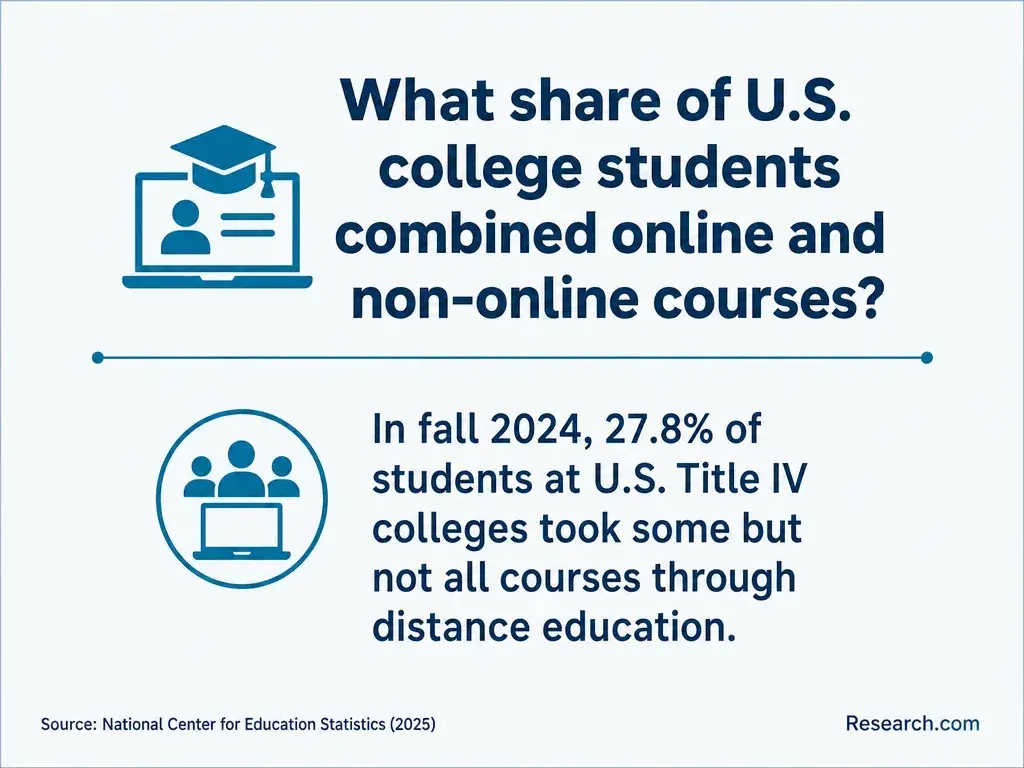
Online delivery can let an agency employee remain in their job and apply new methods to relevant problems. Campus-based study may make research-team meetings and faculty contact easier to access. Neither format guarantees a thesis adviser, youth-focused research, or permission to work with agency records.
For an online option, verify whether classes are asynchronous, when live seminars and research meetings occur, whether campus visits are required, and how a remote student obtains method support. Ask who approves an off-campus project and what happens if a proposed partner agency cannot provide data. Online psychology master's completion planning is useful context for pace, but the workable schedule is the one that accommodates actual supervision and project milestones.
If you already work in juvenile justice, ask whether your job can support a supervised, nonclinical project. Employment and academic fieldwork are separate arrangements: a supervisor's interest does not replace university approval or the agency's data-governance requirements.
Length depends on required credits, course rotation, enrollment pace, and whether a thesis or project extends beyond ordinary coursework. Do not infer completion time from an advertised accelerated option: research approvals, supervisor availability, and data access can set a different schedule.
To compare costs, calculate required credits multiplied by the applicable tuition rate, then add mandatory fees and any expected software, travel, residency, or continuation charges. Ask for a written estimate based on your intended pace and whether changing enrollment intensity affects aid eligibility. Cost-conscious options for a psychology master's provide a starting point, but a lower advertised tuition rate is not necessarily a lower total cost.
Finally, weigh the price against the credential actually requested by target employers. If research assistant postings accept a bachelor's degree plus analysis experience, a statistics course and supervised project may be a more direct first investment than an MS.
Potential nonclinical roles include research assistant, program evaluation specialist, policy research associate, and research coordinator at a university, government agency, or nonprofit. Duties may involve literature reviews, data cleaning, interview coordination under an approved protocol, outcome reporting, and communicating limitations to decision-makers. Employers may value an MS, but they can also require agency experience, specific analytical skills, or a different disciplinary background.
Applicants already employed in schools or justice agencies may be able to pursue internal research or evaluation responsibilities; they should check civil-service classifications and hiring rules rather than assume the degree brings a promotion.
If you lack a bachelor's degree and primarily want direct addiction service work rather than research, first compare the relevant undergraduate route and its financing. Information on undergraduate addiction counseling grants and scholarships concerns that distinct pathway, not funding guaranteed for a forensic psychology MS.
For research hiring, a portfolio showing a well-documented analysis or evaluation plan can be more persuasive than the concentration title alone. Share only work you are authorized to disclose; remove protected or identifying information.
There is no reliable, single salary or growth rate for "forensic psychology MS graduates in juvenile justice research." Jobs with similar descriptions can sit in different occupational categories and pay systems. A government research assistant, university coordinator, and nonprofit evaluator may face different pay scales even when their projects concern the same population.
For a useful estimate, match actual job duties and location to current postings, then check the U.S. Bureau of Labor Statistics' wage data for the closest occupation—for example, social science research assistants—while noting that an occupation-wide wage is not a graduate outcome or an offer. Check projected employment for that occupation separately; broad growth figures do not predict openings in a particular juvenile justice unit.
Do not use licensed clinician wages to estimate the return on a nonclinical research MS. If you are comparing research with treatment work, clinical counseling master's fees and graduation timelines illustrate a separate cost and credential decision, not an expected salary premium for forensic psychology graduates.
How Do You Choose a Reputable Online Forensic Psychology Program?
Build a shortlist from the qualifications in juvenile justice research postings you would realistically pursue. Then obtain current catalog pages, sample course schedules, project rules, and a complete cost estimate for each candidate. Faculty expertise matters most when an available supervisor can support a feasible question—not merely when a biography mentions forensic psychology.
Before enrolling, ask each program for specific answers to these decision-making questions:
- Which admissions prerequisites are mandatory for my background, and who gives written confirmation of equivalencies or waivers?
- Which methods courses are required, and how many recent online students completed a supervised research project?
- Who supervises remote projects, and what alternatives exist if a juvenile justice partner or dataset is unavailable?
- What live meetings, visits, fees, and continuation rules apply to my intended pace?
- What documented career support or alumni outcomes relate specifically to research and evaluation roles?
Compare the answers rather than an advertised finish date. Forensic psychology master's intensive study options may suit applicants who already have strong method skills, but speed is a poor trade if it eliminates the supervision or substantive project needed for the target job. Choose an MS only when its verified training fills a gap that less costly coursework, research employment, or another degree would not fill as well.
Other Things You Should Know About Psychology
Yes. A project may analyze published research, public aggregate information, or appropriately authorized existing data. The permitted use of any dataset still needs to be checked.
Only if the university approves the project and supervision, and your employer authorizes the relevant work and data use. Ordinary job duties do not automatically earn academic credit.
Not universally. A thesis can show sustained research ability, but employers may also consider supervised analyses, evaluation reports, methods coursework, and relevant work experience.
Ask what your agency and university permit. An approved, nonconfidential methods summary or a separate project using public data may demonstrate your skills without exposing records.
- Five Things About Juvenile Delinquency Intervention and Treatment | National Institute of Justice https://nij.ojp.gov/topics/articles/five-things-about-juvenile-delinquency-intervention-and-treatment
- Research & Statistics | Office of Juvenile Justice and Delinquency Prevention https://ojjdp.ojp.gov/research-statistics
- Accreditation in the U.S. | ed.gov http://www.ed.gov/laws-and-policy/higher-education-laws-and-policy/college-accreditation/accreditation-in-the-us
- Diversion Programs | Youth.gov https://youth.gov/youth-topics/juvenile-justice/diversion-programs
- Research, Statistics & Evaluation | Office of Justice Programs https://ojp.gov/topics/research-statistics-evaluation
- What Type of Psychology Degree Do I Need to Become a Forensic Psychologist? | Palo Alto University https://paloaltou.edu/resources/business-of-practice-blog/what-type-of-psychology-degree-do-i-need-to-become-a-forensic-psychologist
- Forensic Psychology Master's Requirements | University of North Dakota https://und.edu/programs/forensic-psychology-ma-ms/requirements.html
- M.S. in Forensic Psychology Admissions Requirements | Nova Southeastern University https://psychology.nova.edu/degrees/masters/forensic-psychology/admissions-requirements.html
- Master of Arts (MA) in Research and Evaluation Methods | Boston College https://www.bc.edu/bc-web/schools/lynch-school/academics/departments/mesa/ma-research-evaluation-methods.html
- Juvenile Justice Specialists: How to Become One | Franklin University https://www.franklin.edu/career-guide/probation-officers-and-correctional-treatment-specialists/how-to-become-juvenile-justice-specialists