2027 Cheapest Online Human Resources Associate Degree Programs That Pay Well: Tuition, Duration, and Career Outcomes

Co-Founder and Chief Data Scientist
Choosing a cheap online human resources associate degree is really a cost-versus-career decision: will the credential help you qualify for better jobs, transfer into a bachelor's program, or move up at work? The stakes are practical because BLS May 2024 data places median pay for human resources specialists at $72,910, while HR assistants earn a lower median wage.
This guide is for budget-conscious students comparing tuition, completion time, and realistic outcomes so they can choose an affordable program with the strongest long-term value.
Key Things You Should Know
- The lowest-cost online HR associate degrees are usually public community or technical college programs; in-state tuition can be under $100 per credit in some states, but total cost depends on fees, books, residency rules, and transfer credits.
- An associate degree can support entry-level HR assistant, payroll, recruiting support, benefits assistant, or office administration roles, but many higher-paying HR specialist and manager jobs prefer or require a bachelor's degree plus experience.
- BLS May 2024 wage data shows a wide earnings gap across HR-related roles: HR assistants have a lower median wage than HR specialists, compensation specialists, and training specialists, so ROI depends heavily on the job path the student can realistically enter.
Which Are the Cheapest Online Human Resources Associate Degree Programs That Lead to Well-Paying Careers?
The cheapest online human resources associate degree programs are typically offered by regionally accredited public community colleges and technical colleges. The best-value choices are not always the absolute lowest advertised tuition; they are the programs that combine low tuition, online access, transferable credits, and coursework tied to HR jobs such as recruiting support, payroll, benefits administration, employee relations, and HR information systems.
The table below highlights examples of affordable online or largely online HR associate pathways in the U.S. Costs are estimates based on published tuition structures and standard associate-degree credit loads, so students should confirm current tuition, fees, residency rules, and online-course charges before enrolling.
| School | Credential or HR pathway | Typical credits | Why it may be affordable | Best fit |
| Wake Technical Community College | AAS in Human Resources Management | About 60 to 70 credits | North Carolina public community college tuition can be especially low for in-state students | Students seeking a career-focused HR associate degree with transfer potential |
| Fayetteville Technical Community College | AAS in Human Resources Management | About 60 to 70 credits | Public two-year pricing and online course availability can reduce relocation and commuting costs | Working adults who want HR, payroll, or administrative employment preparation |
| Pitt Community College | Human Resources Management associate pathway | About 60 to 70 credits | Low in-state community college tuition and a practical business curriculum | Students planning entry-level HR work or later bachelor's transfer |
| Ivy Tech Community College | Business Administration associate degree with HR-related coursework or concentration options | About 60 credits | Statewide public community college tuition and strong transfer pathways in Indiana | Students who want broader business training with HR electives |
| Northcentral Technical College | Human Resources associate degree | About 60 credits | Technical college pricing and online delivery can be cost-effective for Wisconsin residents | Students who want career-specific HR courses and applied business training |
| Milwaukee Area Technical College | Human Resources associate degree | About 60 credits | Public technical college tuition and flexible delivery options | Students near Wisconsin employers or those seeking an applied HR credential |
Students comparing these programs should look beyond the program name. An AAS is usually more career-focused, while an AA or AS may be better for students who plan to transfer into a bachelor's degree; a business administration associate degree with an HR concentration can also be useful if the student wants broader options in management, payroll, operations, or recruiting.
A useful shortcut is to group programs by their main value proposition before comparing tuition. The most common low-cost HR associate pathways fall into these categories:
- Career-focused AAS in Human Resources Management: Best for students who want practical preparation for HR assistant, payroll, recruiting support, or office administration roles soon after graduation.
- Transfer-oriented AA or AS in Business with HR electives: Best for students who expect to continue into a bachelor's degree in HR management, business administration, organizational leadership, or management.
- Business administration associate degree with an HR concentration: Best for students who want flexibility because it can support HR, operations, customer service management, or general administrative careers.
Students who discover that their real goal is managing cross-functional teams may also compare HR programs with a project management degree, especially if they want roles focused on scheduling, process improvement, vendor coordination, or operations rather than employee relations.
How Much Does an Online Human Resources Associate Degree Cost?
An online human resources associate degree usually requires about 60 credits, so the total cost is driven by the per-credit tuition rate, mandatory fees, textbooks, technology costs, prior learning credit, and whether the student qualifies for in-district or in-state pricing. College Board's 2024 pricing data places average published tuition and fees at public two-year colleges around $4,050 for in-district students, which explains why community colleges often dominate the low-cost end of the market.
The table below shows how quickly total tuition changes when the same 60-credit degree is priced at different per-credit rates. This is a tuition-only estimate, not a full cost of attendance calculation.
| Per-credit tuition | Estimated tuition for 60 credits | What it usually signals |
| $76 | $4,560 | Very low public in-state or in-district community college pricing |
| $150 | $9,000 | Moderate public two-year or technical college pricing |
| $250 | $15,000 | Higher out-of-state public or lower-cost private online pricing |
| $400 | $24,000 | Private or higher-priced online program territory |
To compare programs accurately, students should calculate the full completion cost instead of relying on the tuition headline. The practical cost review should include the following items:
- Tuition for all required credits: Multiply the required credits by the actual rate that applies to your residency and online status.
- Mandatory fees: Ask about online course fees, student service fees, graduation fees, lab fees, proctoring fees, and payment-plan fees.
- Books and software: HR courses may use business law texts, payroll simulations, spreadsheet tools, learning platforms, or HR information system exercises.
- Transfer-credit impact: A student entering with 15 approved credits may cut one semester or more from both tuition and time to completion.
- Opportunity cost: A full-time program may be faster, but part-time study may allow a working student to keep income and employer tuition assistance.
The biggest red flag is a program that looks cheap per credit but requires more credits than similar programs, charges high online fees, or has weak transfer agreements. A slightly more expensive program can be a better value if it accepts more transfer credits, has clearer bachelor's pathways, or lets the student finish faster.
How Long Does It Take to Complete an Online Human Resources Associate Degree?
Most online HR associate degrees are designed to take two academic years of full-time study, but actual completion time varies widely. Working adults often take three years or more because they enroll part time, pause during busy work periods, or need developmental coursework before taking college-level business classes.
The table below compares common completion patterns so students can estimate the time-cost trade-off before choosing a program.
| Enrollment pace | Typical course load | Estimated completion time | Best for |
| Full time | 12 to 15 credits per term | About two years | Students who can prioritize school and want faster entry into HR roles |
| Part time | 6 to 9 credits per term | About three to four years | Working adults, parents, and students paying out of pocket |
| Accelerated | Short sessions or heavier year-round enrollment | Potentially under two years if credits are available and scheduling works | Students with transfer credits, strong study time, and clear degree plans |
| Transfer-heavy | Varies by accepted credits | May be shortened significantly | Students with prior college, military training, AP, CLEP, or employer training credit |
Faster is not automatically better. A student who rushes through courses without building Excel, communication, employment law, payroll, and interviewing skills may graduate quickly but still struggle to compete for HR jobs. On the other hand, stretching a low-cost program over too many years can increase fees, delay earnings gains, and reduce momentum.
Before enrolling, students should ask the school several timing questions that directly affect value:
- Are HR courses offered every term, or only once per year?
- Can all required courses be completed online, including any internship, capstone, or proctored assessment?
- Does the school offer eight-week, five-week, evening, weekend, or asynchronous courses?
- How many transfer, military, exam, or prior learning credits can apply to the degree?
- Will part-time enrollment affect financial aid eligibility or scholarship renewal?
An online HR associate degree can support entry-level business and HR work, but the highest salaries in the HR field often require experience, a bachelor's degree, specialized knowledge, or supervisory responsibility. BLS May 2024 wage data is useful because it shows the salary ladder students may be trying to climb, not because it guarantees what an associate-degree graduate will earn immediately.
The table below compares HR-related occupations by median pay and how realistic each path is for someone starting with an associate degree.
| Career path | BLS May 2024 median annual wage | Associate-degree access | What improves advancement odds |
| Human resources assistants, except payroll and timekeeping | $48,060 | Most directly aligned with an associate degree | HR software, recordkeeping, onboarding, communication, and employment documentation skills |
| Payroll and timekeeping clerks | $52,740 | Often accessible with associate-level business, payroll, and accounting coursework | Payroll systems, Excel, attention to compliance, and experience with wage-and-hour rules |
| Training and development specialists | $65,850 | Possible with experience, but many roles prefer a bachelor's degree | Presentation skills, learning technology, instructional design, and workplace training experience |
| Human resources specialists | $72,910 | Associate degree may help entry, but bachelor's degree is commonly preferred | Recruiting, benefits, employee relations, HRIS, analytics, and professional certification |
| Compensation, benefits, and job analysis specialists | $74,530 | Usually requires experience and often a bachelor's degree | Data analysis, labor market pricing, benefits administration, and compliance knowledge |
The practical takeaway is that an associate degree is strongest as an entry point or stepping stone. Students seeking higher-paying HR specialist, training, compensation, or management roles should plan for experience, a bachelor's degree, or later graduate study rather than assuming the associate credential alone will unlock senior-level salaries.
Students who already know they want leadership, talent strategy, or organizational change roles may eventually compare HR pathways with the best organizational development master's programs online, but that route usually makes sense after completing a bachelor's degree and gaining professional experience.
The best ROI comes from the program that helps a student reach a realistic employment or transfer goal at the lowest total cost and in the shortest workable time. For many students, a $5,000 to $10,000 public associate degree can be a strong investment if it leads to HR assistant, payroll, recruiting coordinator support, or administrative roles while preserving bachelor's-transfer options.
A simple tuition-to-earnings comparison can help students avoid overpaying. The table below uses BLS May 2024 median wages for relevant occupations and compares them with sample tuition levels for a 60-credit degree.
| Estimated tuition | Most relevant early HR target | Median wage benchmark | ROI interpretation |
| $5,000 | HR assistant or payroll support | $48,060 to $52,740 | Strong tuition-to-wage ratio if the student completes and qualifies for local openings |
| $10,000 | HR assistant, payroll, or administrative HR support | $48,060 to $52,740 | Still reasonable for many students, especially with grants or employer aid |
| $20,000 | Entry-level HR or business support | $48,060 to $52,740 | Requires closer scrutiny because the same jobs may be reachable through cheaper public options |
| $30,000 or more | Entry-level HR support unless transfer value is exceptional | $48,060 to $52,740 | May be difficult to justify for an associate degree unless most costs are covered by aid |
ROI improves when the program has low tuition, accepts transfer credits, prepares students for software-heavy HR tasks, and leads smoothly into a bachelor's degree. ROI weakens when the program is expensive, takes too long, lacks regional accreditation, or prepares students for jobs that local employers reserve for bachelor's graduates.
Students can use this practical sequence to compare value across programs:
- Calculate tuition for the exact number of required credits after transfer credit is applied.
- Add mandatory fees, books, technology, and graduation costs to estimate the real program price.
- Check local job postings for HR assistant, payroll clerk, recruiting assistant, benefits assistant, and administrative coordinator roles.
- Note whether those postings accept an associate degree or prefer a bachelor's degree.
- Compare estimated total cost with realistic local entry-level wages, not only national median wages.
- Confirm whether credits transfer into a bachelor's degree without excess-credit loss.
If the long-term goal is HR leadership or strategic workforce planning, a cheap associate degree can still be a smart first step because it lowers the cost of the first two years. Later, students may compare bachelor's and graduate options, including the cheapest online master's in human resources, after they have completed the required undergraduate foundation.
Financial aid can make a low-cost online HR associate degree even cheaper, but aid depends on school eligibility, student status, enrollment intensity, satisfactory academic progress, and federal aid rules. For the 2024-2025 award year, the maximum Federal Pell Grant is $7,395, which can cover a large share of tuition at many public two-year colleges for eligible students.
The most useful aid sources are those that reduce borrowing or do not need to be repaid. Students should compare these options before using loans:
- Federal Pell Grants: Need-based grants for eligible undergraduate students that can substantially reduce tuition at community colleges.
- State grants: Many states offer need-based or workforce-focused grants for residents attending public colleges.
- Institutional scholarships: Community colleges may offer small but valuable scholarships for business, adult learner, first-generation, or continuing students.
- Employer tuition assistance: Working students should ask HR or benefits departments whether the employer covers business, HR, payroll, or management coursework.
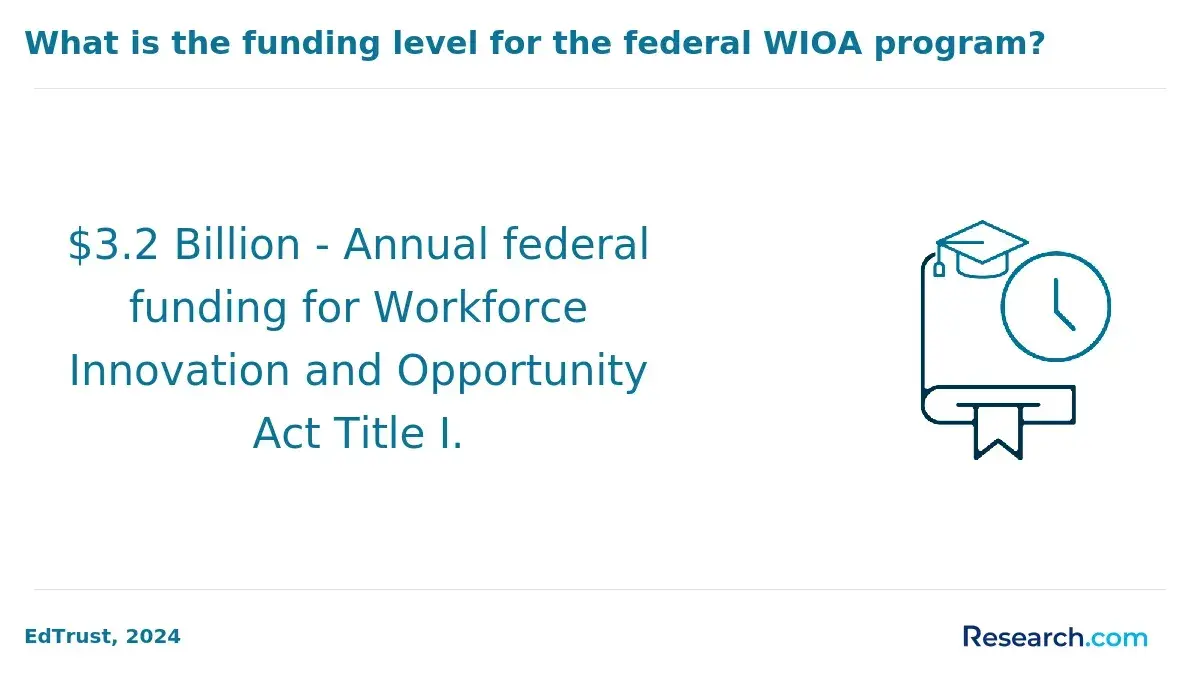
- Workforce development funds: Local workforce boards may support training for eligible job seekers or displaced workers, especially for business support roles.
- Credit for prior learning: Approved military, workplace, exam, or prior college credit can reduce the number of courses a student must pay for.
Loans can help students finish, but borrowing for an associate degree should be conservative. The strongest borrowing case is when the student has a clear completion plan, strong local job demand, and a low total debt amount; the weakest case is borrowing heavily for a program that leads to the same entry-level roles available through cheaper public colleges.
Accreditation affects whether credits transfer, whether students can receive federal financial aid, and whether employers trust the credential. For an online HR associate degree, the most important baseline is institutional accreditation from an agency recognized by the U.S. Department of Education or the Council for Higher Education Accreditation.
Program quality also matters because HR is increasingly software-driven, compliance-sensitive, and data-aware. Employers may expect new HR staff to handle applicant tracking systems, onboarding platforms, payroll data, benefits records, spreadsheets, and confidential employee information, so a low-cost program should still teach practical tools and professional judgment.
Students should verify these quality indicators before enrolling:
- Institutional accreditation: Confirm the college is properly accredited and eligible for federal aid if the student plans to use FAFSA-based assistance.
- Transfer agreements: Look for clear articulation pathways into business, HR management, organizational leadership, or management bachelor's programs.
- HR-relevant curriculum: Courses should cover employment law basics, recruiting, benefits, payroll, training, communication, business ethics, and HR technology.
- Faculty and advising support: Online students need accessible instructors, degree planning, career services, tutoring, and transfer advising.
- Career preparation: Resume help, mock interviews, internships, capstones, or applied projects can strengthen entry-level competitiveness.
Common red flags include vague accreditation claims, unclear total costs, no published degree plan, limited transfer information, aggressive sales pressure, or marketing that implies high-paying HR careers are guaranteed. A legitimate program should be transparent about costs, requirements, completion expectations, and transfer limits.
Flexible and accelerated online HR associate degree programs are most useful for students balancing school with work, caregiving, military service, or unpredictable schedules. Flexibility can come from asynchronous courses, multiple start dates, short sessions, evening support services, part-time pacing, or year-round enrollment.
The table below explains which flexible features matter most and how they affect cost and completion speed.
| Flexible feature | How it helps | Potential drawback |
| Asynchronous online courses | Students can complete weekly work around job and family schedules | Requires strong self-management and regular login habits |
| Eight-week sessions | Can speed completion by allowing more course starts per year | Workload is compressed and may be difficult with full-time employment |
| Year-round enrollment | Summer terms can shorten time to degree | Financial aid and burnout need careful planning |
| Generous transfer-credit policies | Can reduce cost and time for students with prior college or military credit | Not all credits apply to major or general education requirements |
| Stackable certificates | Students can earn a short credential on the way to the associate degree | Certificates should still align with the full degree plan |
Accelerated completion is best for students who already have college credit, can study consistently, and do not need heavy remediation in math, writing, or technology. Students new to college may be better served by a steady two-year or part-time plan that leaves enough time to build HR writing, spreadsheet, business communication, and workplace problem-solving skills.
Before choosing an accelerated program, students should confirm the exact course rotation. A program advertised as online may still require a course that is offered only once per year, has a daytime synchronous meeting, or depends on internship availability.
Yes, an online HR associate degree can lead to advancement or a bachelor's degree, but the outcome depends on degree type, transfer agreements, employer expectations, and the student's work experience. The associate degree is often most valuable when it lowers the cost of the first two years while helping the student qualify for entry-level HR or business support work.
Students planning to transfer should understand the difference between applied and transfer-oriented credentials. The table below summarizes the typical purpose of each option.
| Associate degree type | Primary purpose | Transfer considerations |
| Associate of Applied Science | Career preparation for HR, payroll, recruiting support, or office administration | Some credits may transfer, but technical courses may not always count toward a bachelor's major |
| Associate of Science | Business or management transfer preparation with quantitative coursework | Often stronger for transfer into business-related bachelor's programs |
| Associate of Arts | Broad general education and transfer preparation | Often flexible for transfer, especially when paired with business or HR electives |
| Business administration associate degree with HR concentration | Broad business foundation plus HR-focused electives | Can support transfer and wider career options if credits are accepted by the receiving school |
Career advancement usually requires stacking the degree with experience. A student might start as an HR assistant, payroll clerk, recruiting assistant, or administrative coordinator, then move toward HR specialist roles after building workplace experience and completing additional education.
Students who are already thinking beyond the associate and bachelor's levels should compare future graduate options only after confirming undergraduate transfer requirements. For example, the best online masters degree in human resource management programs generally require a completed bachelor's degree, so the associate degree should be chosen partly for how efficiently it transfers into that next step.
How Should Students Choose the Cheapest Online Human Resources Associate Degree for Their Career Goals?
Students should choose the cheapest online HR associate degree by matching the program to a specific career or transfer goal, not by sorting tuition from lowest to highest. The right program is the one that the student can afford, complete, transfer if needed, and use to pursue realistic local opportunities.
A practical selection process can keep the decision grounded in cost, time, and outcomes:
- Define the immediate goal: HR assistant, payroll, recruiting support, office administration, bachelor's transfer, or internal promotion.
- Choose the right degree type: AAS for faster workforce preparation, AA or AS for smoother transfer, or business administration with HR courses for flexibility.
- Confirm accreditation and federal aid eligibility before comparing tuition.
- Calculate full program cost using required credits, fees, books, technology, and any transfer credits.
- Check whether every required course is available online and how often HR courses are offered.
- Review local job postings to see whether employers accept an associate degree or prefer a bachelor's degree.
- Ask about internships, capstones, career services, employer connections, and HR software exposure.
- Verify transfer agreements in writing if a bachelor's degree is part of the plan.
Students should avoid choosing an associate degree primarily because it is cheap when their target job clearly requires a bachelor's degree, when the school will not disclose fees, when credits do not transfer, or when the program lacks meaningful HR coursework. In those cases, the cheapest option can become expensive if it delays the student or forces them to repeat credits later.
The strongest candidates for a low-cost online HR associate degree are students who want an affordable entry point into HR or business administration, need online flexibility, and plan to build experience while keeping future bachelor's options open. Students seeking HR management, compensation analysis, labor relations, or organizational strategy roles should treat the associate degree as a first step rather than the final credential.
Other Things You Should Know About Human Resources
Some do, but many online associate programs use a capstone, applied project, or elective instead. If an internship is required, ask whether remote, local, or current-employer placements are allowed.
It can at some colleges. Schools may award credit for military transcripts, standardized exams, prior college coursework, industry training, or portfolio-based prior learning, but policies vary widely.
Excel, word processing, applicant tracking systems, payroll platforms, HR information systems, scheduling tools, and basic data reporting are especially useful. Students should look for courses that include practical technology assignments.
Certification is not usually required for entry-level HR assistant roles, but it can help later. Eligibility rules vary by credential, and some certifications require experience or a higher degree before candidates qualify.
- HR Salary in the UK: How Much Can You Earn at Every Level? https://www.avadolearning.com/blog/what-jobs-salaries-can-i-expect-in-human-resources/
- Best Value Human Resource Master’s Programs https://www.humanresourcesedu.org/most-affordable-hr-masters-programs/
- 2025 Most Affordable Online Human Resources Degrees https://www.onlineu.com/most-affordable-colleges/human-resources-degrees
- The 25 Best Online Bachelor's in HR Programs https://www.onlinecolleges.net/rankings/best-online-bachelors-human-resources-degree-programs/
- Online Human Resources Degree | Affordable Human Resources Degree - USCI https://www.uscareerinstitute.edu/online-human-resources-associate-degree
- Discover The Most Affordable Online Human Resources Degrees https://www.affordablecollegesonline.org/degrees/human-resources-programs/
- How Long Does It Take to Get an HR Certificate? https://hrcertification.com/blog/how-long-does-it-take-to-get-an-hr-certificate-biid1000037