
2027 Cheapest Online Health Sciences Associate Degree Programs That Pay Well: Tuition, Duration, and Career Outcomes

Co-Founder and Chief Data Scientist
Choosing a low-cost online health sciences associate degree is really a cost-versus-outcome decision: Will the program qualify you for work, transfer well, or both? The stakes are high because the U. S. Bureau of Labor Statistics projects healthcare occupations to generate about 1.9 million openings each year from 2023 to 2033. This guide is for students comparing affordable online or hybrid associate programs and wanting clear answers on tuition, time, accreditation, career pay, and when a cheaper option may not be the best value.
Key Things You Should Know
- The cheapest path is usually a regionally accredited public community or technical college, especially if you qualify for in-district or in-state tuition; College Board reported average public two-year tuition and fees of $4,050 for 2024-25.
- Fully online general health sciences associate degrees are often best for transfer or healthcare support roles, while higher-paying clinical careers usually require hybrid coursework, in-person labs, clinical placements, and programmatic accreditation.
- BLS May 2024 wage data show stronger associate-level healthcare pay in credentialed technical fields such as respiratory therapy, radiologic technology, diagnostic sonography, health information, and occupational therapy assisting, but requirements vary by state and employer.
Which Are the Cheapest Online Health Sciences Associate Degree Programs That Lead to Well-Paying Careers?
The cheapest online health sciences associate degree programs that can lead to well-paying careers are usually not one-size-fits-all. A general Associate of Science or Associate of Arts in Health Sciences is often affordable and transfer-friendly, while an Associate of Applied Science in an allied health field is usually more career-focused but may require campus labs, clinical rotations, background checks, immunizations, and a separate competitive admission process.
Students who need a fully online path should pay close attention to health information, healthcare administration support, medical coding, and health services coordination options. For example, a low-cost health information management degree online can be a better fit than a general health sciences degree if your goal is medical records, revenue cycle, coding, compliance, or data-focused healthcare work.
The table below compares the major affordable associate-degree pathways by online availability and career value. Use it to decide whether you are looking for immediate employment, transfer to a bachelor's degree, or entry into a credentialed allied health profession.
| Affordable program pathway | Typical online availability | Best career use | Value considerations |
| AA or AS in Health Sciences | Often fully online for general education and transfer courses | Transfer to a bachelor's degree in health sciences, public health, healthcare administration, nursing prerequisites, or allied health prerequisites | Usually inexpensive, but direct job outcomes may be limited unless paired with certifications or prior healthcare experience |
| AAS in Health Information Technology or Medical Records | Often online or mostly online | Medical records, coding support, release of information, revenue cycle, registry, compliance, and health data roles | Strong fit for students wanting healthcare work without bedside clinical duties; programmatic accreditation can matter for credential eligibility |
| AAS in Respiratory Therapy | Usually hybrid | Respiratory therapist roles in hospitals, clinics, and pulmonary care settings | Higher wage potential than many general health sciences paths, but clinical placements and state licensing requirements are major factors |
| AAS in Radiologic Technology | Usually hybrid | Radiologic technologist roles in hospitals, imaging centers, and outpatient facilities | Career value depends heavily on accreditation, clinical access, certification eligibility, and local employer demand |
| AAS in Occupational Therapy Assistant | Usually hybrid | Occupational therapy assistant roles in rehabilitation, schools, skilled nursing, and outpatient settings | Can offer solid associate-level pay, but admission can be competitive and clinical fieldwork is required |
| Pre-nursing or nursing transfer associate pathway | Partly online, with science labs often hybrid or campus-based | Preparation for ADN, BSN, or healthcare transfer pathways | Can be cost-effective if credits transfer cleanly, but it does not by itself qualify students for RN licensure |
The practical answer is that the "cheapest" program depends on your goal. If you want the lowest tuition and maximum transfer flexibility, choose a public AA or AS health sciences program with a strong articulation agreement. If you want the strongest associate-level earnings, compare hybrid allied health AAS programs and verify whether they qualify you for required exams or licensure.
How Much Does an Online Health Sciences Associate Degree Cost?
An online health sciences associate degree usually costs less than a bachelor's degree, but advertised tuition rarely shows the full price. College Board reported average tuition and fees of $4,050 for public two-year in-district students in 2024-25, which explains why community colleges are often the first place to look for affordability.
The table below shows the cost categories students should compare before deciding that one program is cheaper than another. This matters because two schools with similar tuition can have very different fees, transfer-credit rules, and clinical expenses.
| Cost factor | What to check | Why it affects affordability |
| Tuition per credit | Whether the rate is in-district, in-state, out-of-state, online-only, or flat-rate | Out-of-state and online surcharges can erase the savings of a low advertised tuition rate |
| Required credits | Total credits needed after transfer credit is evaluated | A 60-credit degree is cheaper than a 70-credit degree only if the courses meet your career or transfer requirements |
| Mandatory fees | Technology, distance learning, lab, graduation, transcript, testing, and course fees | Fees can materially increase the real cost of an inexpensive online program |
| Books and supplies | Textbooks, digital access codes, uniforms, equipment, and software | Health science and anatomy courses may require materials beyond standard textbooks |
| Clinical and compliance costs | Background checks, drug screening, immunizations, CPR certification, liability insurance, and travel | Hybrid allied health programs can be excellent investments but may cost more than fully online transfer programs |
| Transfer-credit policy | How many prior credits the school accepts and whether they apply to degree requirements | The cheapest per-credit tuition may not be the cheapest total degree if many credits do not transfer |
A simple way to estimate cost is to multiply the school's per-credit rate by the number of credits you still need, then add all mandatory fees and expected course expenses. For example, a student needing 60 credits at $150 per credit would start with $9,000 in tuition before fees, books, and supplies.
Common mistakes include comparing only tuition, assuming online is always cheaper, ignoring clinical travel, and failing to ask whether a course fee applies to every class. Before enrolling, request a written cost estimate for your exact program plan rather than relying only on a website tuition table.
How Long Does It Take to Complete an Online Health Sciences Associate Degree?
Most associate degrees require about 60 credits, which many full-time students complete in two academic years. Part-time students commonly take longer, but part-time enrollment can still be a smart financial choice if it helps them keep working, avoid borrowing, or complete prerequisites at a manageable pace.
The table below compares common completion timelines. Use it to weigh speed against work schedule, family responsibilities, course intensity, and the risk of stopping out.
| Study pace | Typical course load | Likely timeline | Best fit |
| Full-time | About 12 to 15 credits per term | About two years | Students who can dedicate significant weekly time and want to enter the workforce or transfer quickly |
| Part-time | About 6 to 9 credits per term | Often three years or more | Working adults, caregivers, and students trying to reduce borrowing |
| Accelerated online | Shorter course sessions, often with year-round enrollment | Potentially less than two years if courses are available continuously | Self-directed students with strong time management and few schedule conflicts |
| Hybrid clinical pathway | Online lectures plus labs and clinical rotations | Often two years after prerequisites, but selective admission can add time | Students seeking credentialed allied health roles where hands-on training is required |
Completion time affects ROI because a cheaper program that takes an extra year can delay earnings, transfer, or licensure eligibility. Ask each school whether required courses are offered every term, whether science labs are available online or locally, and whether clinical placements are arranged by the school or left to the student.
Students comparing fast programs should also look for hidden risks. Accelerated eight-week courses may help motivated learners finish sooner, but they can be difficult if anatomy, physiology, statistics, or medical terminology are compressed into a short term.
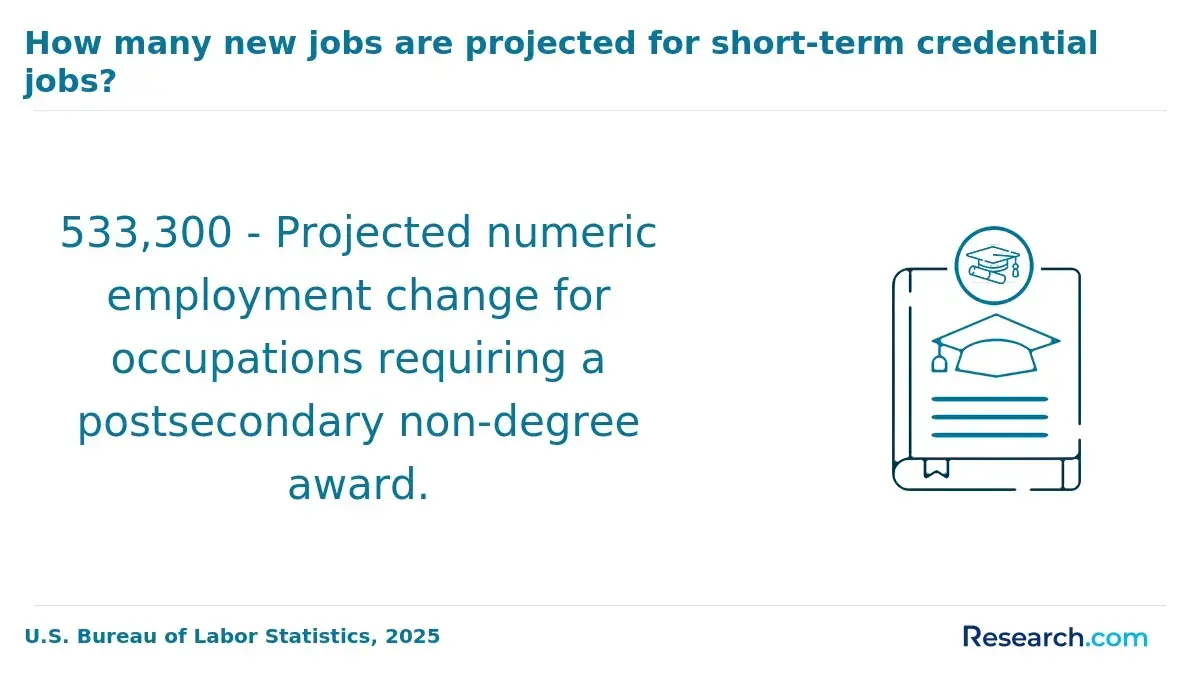
The highest-paying careers connected to associate-level health sciences education are usually credentialed technical or clinical fields, not general health sciences roles alone. BLS May 2024 data show that several healthcare practitioner and technical occupations accessible through associate-level or postsecondary pathways have median wages above the national median for all occupations, but actual entry-level pay depends on region, employer, certification, licensure, and experience.
The table below summarizes career options commonly connected to associate-level health sciences, health information, or allied health pathways. It is especially useful for separating careers that may be realistic with an associate degree from those that require additional credentials.
| Career pathway | Typical associate-level preparation | BLS May 2024 median pay | Important limitation |
| Diagnostic medical sonographer | Accredited sonography associate program or comparable postsecondary pathway | $89,340 | Usually requires intensive clinical training and may not be available as a fully online degree |
| Respiratory therapist | Accredited respiratory therapy associate program | $77,960 | State licensure is commonly required, and clinical rotations are essential |
| Radiologic technologist | Accredited radiography associate program | $78,980 for radiologic and MRI technologists as a broader BLS group | Certification eligibility and clinical placement quality are central to job readiness |
| Occupational therapy assistant | Accredited occupational therapy assistant associate program | $67,010 | Requires supervised fieldwork and credentialing steps beyond online coursework |
| Health information technologist or medical registrar | Health information, coding, registry, or data-focused associate pathway | $67,310 | Credential expectations vary by role; some employers prefer RHIT, coding, or registry credentials |
| Medical records specialist | Health information, medical coding, or related associate or certificate pathway | $50,250 | Entry-level coding and records jobs may pay less than the median until experience and credentials are gained |
Health information careers deserve special attention because they can be more online-friendly than bedside clinical paths. Students comparing wages, credentials, and advancement options can review health information management salary data to understand how responsibilities and education level affect long-term earning potential.
The most important caution is that median pay is not entry-level pay. Use BLS medians as a comparison point, then check local job postings for required credentials, preferred experience, shift differentials, and whether employers in your area hire associate-degree graduates for the role you want.
The best ROI does not automatically come from the program with the lowest sticker price. A strong affordable online health sciences associate degree balances total cost, completion speed, accreditation, transfer value, and realistic career access.
The table below shows how different low-cost associate pathways tend to produce value. Use it to match the degree structure to your goal instead of judging programs by tuition alone.
| Student goal | Usually stronger ROI choice | Why it may pay off | When to be cautious |
| Enter healthcare work quickly without direct patient care | Online AAS or AS in health information, medical records, coding support, or healthcare support services | Programs are often online-friendly and can connect to administrative, data, and compliance roles | Some higher-paying roles may require experience or industry credentials beyond the associate degree |
| Move into a high-paying clinical technical field | Hybrid AAS in respiratory therapy, radiologic technology, sonography, or occupational therapy assisting | Credentialed allied health roles may offer stronger associate-level wage potential | Lowest tuition is less important than accreditation, clinical placement quality, and exam eligibility |
| Transfer to a bachelor's degree | AA or AS in Health Sciences with a formal transfer agreement | General education and prerequisite credits can reduce bachelor's degree cost | An AAS may not transfer as cleanly unless the receiving school has an applied-degree pathway |
| Keep working while studying | Fully online part-time AA, AS, or health information pathway | Lower schedule disruption may reduce borrowing and income loss | Taking too few courses can extend the timeline and delay career benefits |
A basic ROI check should include three steps. These steps help you compare the education investment with the earnings pathway you are actually targeting.
- Calculate total degree cost using remaining credits, tuition, fees, books, supplies, and clinical expenses.
- Identify the specific job titles you can pursue after graduation and whether they require licensure, certification, or additional education.
- Compare local entry-level job postings with BLS median wage data so you do not confuse national mid-career medians with first-job earnings.
Students should avoid choosing a cheap associate degree if the program does not align with a real job, does not transfer, lacks required accreditation, or requires clinical placements the student cannot complete. In those cases, paying more for a better-aligned program may produce stronger long-term value.
Financial aid can make an already affordable online health sciences associate degree much less expensive. The federal Pell Grant maximum award for 2024-25 was $7,395, which can cover a large share of tuition at many public two-year colleges for eligible students.
Students should compare aid options in a specific order because some sources do not have to be repaid while others create future obligations. The list below shows the major forms of aid to investigate before using loans.
- Federal Pell Grants and state grants, which are often the most valuable because eligible students do not repay them.
- Institutional scholarships from community colleges, technical colleges, hospital partners, and healthcare foundations.
- Workforce development funds, especially for high-demand allied health programs tied to local labor shortages.
- Employer tuition assistance or reimbursement for students already working in healthcare, long-term care, insurance, or medical office settings.
- Military, veteran, and dependent education benefits, when applicable.
- Federal student loans, used cautiously after grants, scholarships, and employer aid have been considered.
Financial aid can change the best-value choice. A higher-tuition program with a larger grant package, better transfer agreement, or employer sponsorship may cost less out of pocket than the program with the lowest published tuition.
Before enrolling, ask the financial aid office whether aid covers summer courses, online fees, prerequisite courses, repeated courses, and clinical requirements. Also ask whether dropping below half-time enrollment will affect aid eligibility or loan repayment status.
Accreditation affects whether your credits transfer, whether employers respect the credential, and whether you can qualify for certain certifications or licenses. At a minimum, students should choose a school with recognized institutional accreditation; for many allied health and health information programs, programmatic accreditation is also important.
Program quality is especially important in online health sciences because a degree can look affordable but provide weak career value if it lacks clinical support, employer connections, or transfer pathways. Students interested in health information should compare program recognition carefully, including options such as the best online CAHIIM accredited health information management degree programs when credential eligibility is part of the plan.
The table below explains common accreditation and quality checks. These are decision filters, not just administrative details.
| Quality factor | What it tells you | Why it matters |
| Institutional accreditation | The college meets recognized academic and administrative standards | It affects federal financial aid eligibility, transfer options, and employer recognition |
| Programmatic accreditation | A specific health program meets field-specific standards | It may be required or strongly preferred for certification, licensure, clinical placement, or employment |
| Clinical placement support | Whether the school helps arrange approved hands-on training | Students in hybrid allied health programs may not graduate on time without reliable placements |
| Transfer agreements | Whether credits are accepted by partner bachelor's programs | Clean transfer can reduce the total cost of a bachelor's degree |
| Student outcomes disclosure | Graduation, retention, credential exam, or placement information when available | Outcomes help you judge whether a cheap program supports completion and employment |
Red flags include vague accreditation language, pressure to enroll quickly, unclear clinical requirements, missing fee information, and promises of guaranteed jobs or salaries. A trustworthy program should be able to explain its accreditation status, transfer pathways, student support services, and total estimated cost in plain language.
Flexible and accelerated online health sciences associate degree programs are most common in general health sciences, health information, healthcare administration support, and transfer-oriented pathways. Clinical allied health programs can still be flexible, but they usually cannot be fully online because students must complete labs, simulations, and supervised clinical hours.
The table below compares flexible program structures. Use it to identify which format fits your schedule without creating unrealistic time demands.
| Flexible format | How it works | Who benefits most | Watch for |
| Asynchronous online courses | Students complete weekly work without required live class meetings | Working adults and students with irregular schedules | Requires strong self-discipline and reliable internet access |
| Accelerated sessions | Courses run in shorter terms, often allowing more start dates | Students who want faster progress and can handle intensive weekly workloads | Science and writing-heavy courses may feel compressed |
| Year-round enrollment | Students take fall, spring, and summer courses | Students trying to finish faster without taking too many courses at once | Summer aid and course availability should be confirmed |
| Transfer-credit-friendly programs | Prior college credits, military learning, or exams may reduce remaining requirements | Returning adults and students with previous coursework | Credits must apply to the degree, not just appear on the transcript |
| Hybrid allied health programs | Lectures may be online, while labs and clinicals occur in person | Students pursuing credentialed clinical careers | Travel, scheduling, and clinical site availability can affect completion time |
The fastest program is not always the best financial choice. If acceleration increases the risk of failing science prerequisites or withdrawing from courses, a slower schedule may produce better value by protecting financial aid eligibility and reducing repeated-course costs.
Ask schools whether online courses are available every term, whether prerequisites delay admission to the major, whether clinical hours are daytime only, and whether students can complete requirements near their home area. These details matter more than a marketing claim that a program is "flexible."
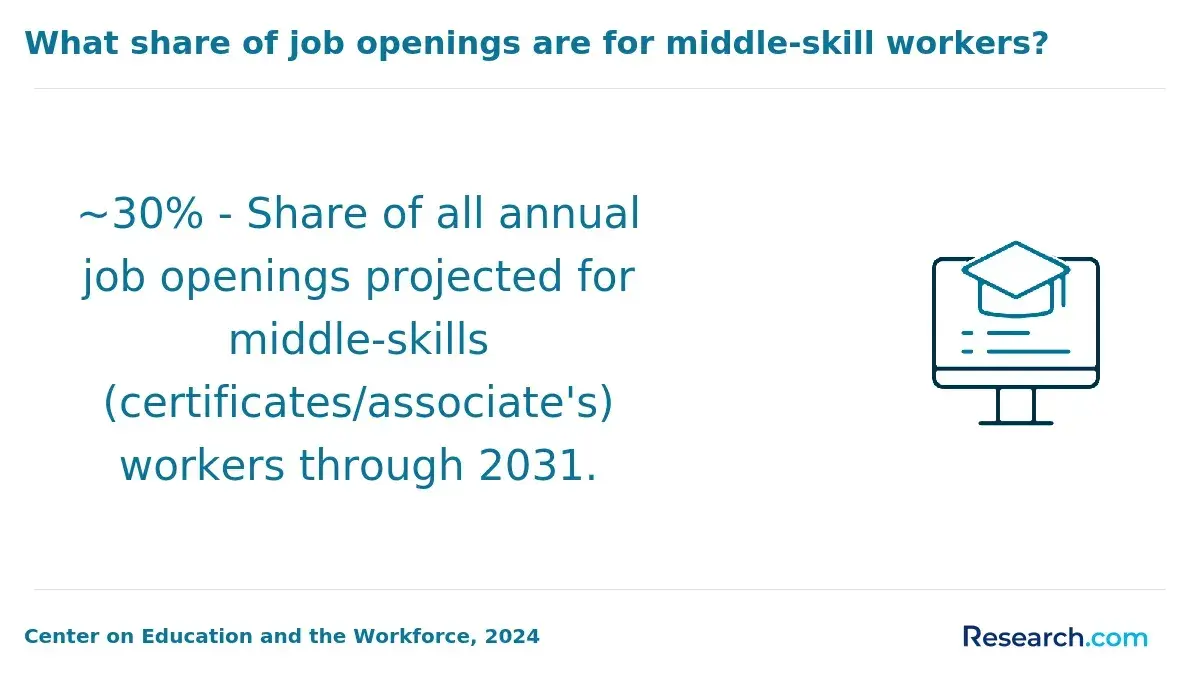
An online health sciences associate degree can support career advancement, but the best pathway depends on the degree type. AA and AS programs are usually designed for transfer, while AAS programs are usually designed for workforce entry; both can be valuable, but they serve different purposes.
The table below shows how common associate-degree structures connect to next steps. This helps students avoid the mistake of choosing a low-cost degree that does not support their long-term education plan.
| Associate degree type | Primary purpose | Possible next step | Transfer caution |
| Associate of Arts in Health Sciences | General education and transfer preparation | Bachelor's degree in health sciences, public health, healthcare administration, or related fields | Science prerequisites may be limited depending on the curriculum |
| Associate of Science in Health Sciences | Transfer preparation with more science or technical coursework | Bachelor's degree in health sciences, nursing prerequisites, allied health prerequisites, or health administration | Students should verify that anatomy, physiology, statistics, and lab sciences transfer as required |
| Associate of Applied Science | Career entry in a specific technical or allied health field | Employment, licensure or certification, applied bachelor's completion, or later management study | Some AAS credits may transfer only as electives unless an articulation agreement exists |
Students who eventually want supervisory, management, or administrative roles should plan beyond the associate degree. A student may start with a low-cost associate program, complete a bachelor's degree later, and eventually compare options such as a masters in healthcare administration if leadership roles become the goal.
The key is to ask transfer questions before taking the first course. Confirm which bachelor's programs accept the associate degree, whether credits transfer course-for-course, whether there is a guaranteed admission agreement, and whether the associate program includes prerequisites required for the next degree.
How Should Students Choose the Cheapest Online Health Sciences Associate Degree for Their Career Goals?
Students should choose the cheapest online health sciences associate degree by starting with the career or transfer goal, then working backward to cost, accreditation, duration, and delivery format. A low-cost program is only a good deal if it moves you toward the job, credential, or bachelor's degree you actually want.
Use the following process to compare programs in a way that protects both your budget and your long-term options.
- Define your primary goal as immediate employment, transfer to a bachelor's degree, preparation for an allied health program, or career advancement in your current healthcare role.
- Identify exact job titles you want and check whether they require licensure, certification, clinical training, or a higher degree.
- Verify institutional accreditation and any programmatic accreditation required for your intended field.
- Request a full cost estimate that includes tuition, fees, books, supplies, online charges, lab costs, clinical expenses, and graduation fees.
- Ask for a transfer-credit evaluation before enrolling if you have prior college, military, dual-enrollment, or exam credits.
- Compare completion timelines based on actual course availability, not just the catalog's suggested sequence.
- Review local job postings to see whether employers accept associate-degree applicants and which credentials they prefer.
- Ask whether the school publishes graduation, transfer, credential exam, or employment outcomes for the program.
Some students should avoid choosing an associate degree based primarily on low cost. This includes students whose target career requires a bachelor's degree, students unable to complete required clinical hours, students needing guaranteed transfer to a specific university, and students comparing programs that cannot clearly explain accreditation or total cost.
The strongest choice is usually the program that provides the best combination of affordable tuition, transparent fees, manageable timeline, recognized accreditation, realistic career access, and transfer value. In health sciences, genuine affordability is measured by the total pathway to your goal, not just the price of the first credential.
Other Things You Should Know About Health Sciences
Many do, especially if the program includes anatomy, physiology, microbiology, or allied health prerequisites. Some schools offer virtual labs for nonclinical transfer courses, while clinical pathways may require campus labs or approved in-person lab sites.
Yes, many students do, especially in asynchronous or part-time programs. However, clinical programs may require daytime labs, fieldwork, or rotations, so working students should confirm schedules before enrolling.
It can be useful if you want healthcare data, billing, compliance, or records work. Coding roles may require employer-preferred credentials, so compare the associate curriculum with certification exam preparation before choosing electives.
Employers generally focus more on accreditation, relevant skills, credentials, clinical experience, and whether the school is recognized. The transcript usually does not matter as much as whether the program prepares you for the role's requirements.
- 10 Most Affordable Online Health Science Bachelor Degrees - BestMedicalDegrees.com https://www.bestmedicaldegrees.com/cheapest-online-health-science-bachelor-degrees/
- Careers https://www.publichealthdegrees.org/careers/
- 11 Types of Healthcare Careers - Education & Requirements https://nursinglicensemap.com/resources/healthcare-careers/
- Highest-Paying Healthcare Degrees Online | EduMed.org https://www.edumed.org/articles/highest-paying-healthcare-degrees/
- 2025 Most Affordable Online Colleges & Degrees https://www.onlineu.com/most-affordable-colleges
- Is College Worth it? | Return on Investment Analysis of College Degree https://educationdata.org/college-degree-roi
- Top 50 Health Careers - Salary & Career Growth https://www.medicaltechnologyschools.com/medical-lab-technician/top-50-healthcare-careers
- The five highest paying jobs in health sciences https://imagine-america.org/blog/five-highest-paying-jobs-in-health-sciences
- Pursue Your AS in Allied Health Science Online with South U https://www.southuniversity.edu/online/degrees-programs/healthcare/allied-health-science-as
- Online Health Sciences Degrees https://www.affordablecollegesonline.org/degrees/public-health-programs/health-sciences/


