2027 Cheapest Online Data Analytics Associate Degree Programs That Pay Well: Tuition, Duration, and Career Outcomes

Co-Founder and Chief Data Scientist
Choosing the cheapest online data analytics associate degree is really a question about risk: will a low-cost credential lead to usable skills, transfer credits, and realistic job options? The timing matters because the U. S. Bureau of Labor Statistics reports strong demand for data-focused roles, including much faster-than-average growth for data scientists. This guide is for budget-conscious students, working adults, and career changers comparing tuition, program length, and outcomes. You will learn how to identify affordable programs, estimate total cost, compare salaries, avoid weak options, and decide whether an associate degree is enough for your goal.
Key Things You Should Know
- Public community colleges usually offer the lowest online associate degree tuition; College Board's 2024 data lists average published tuition and fees at $3,990 for public two-year in-district students, before books, technology, and program fees.
- The best-paying analytics-related careers often require more than an associate degree, but an associate can support entry-level roles in reporting, database support, business intelligence assistance, and transfer pathways into bachelor's programs.
- ROI depends on total completion cost, transferability, local wages, and time to finish; the cheapest advertised tuition is not always the best value if credits do not transfer or the program lacks hands-on SQL, Excel, Python, statistics, and dashboard training.
Which Are the Cheapest Online Data Analytics Associate Degree Programs That Lead to Well-Paying Careers?
The cheapest online data analytics associate degree programs are usually found at public community colleges, especially when students qualify for in-district or in-state tuition. Because "data analytics" may appear under related names such as business analytics, data science technology, computer information systems, or database analytics, students should compare curriculum and outcomes rather than relying only on the program title.
The table below highlights affordable online or online-heavy associate options that budget-focused students commonly compare. Tuition changes frequently, so use the figures as a starting point and verify the school's current tuition, fees, residency rules, and online course availability before applying.
| School | Program type | Approximate published tuition profile | Typical credits | Best fit |
| Austin Community College | Associate pathway in data analytics or related computer information systems area | Low in-district Texas community college tuition; higher rates for out-of-district and out-of-state students | About 60 | Texas students seeking low tuition and transfer-friendly coursework |
| Wake Technical Community College | AAS in business analytics or related analytics pathway | North Carolina community college tuition is among the lowest for in-state students | About 65 to 70 | Students who want applied analytics training with spreadsheet, database, and business reporting skills |
| Central Piedmont Community College | Data analytics, business intelligence, or information technology analytics pathway | Low in-state North Carolina tuition; out-of-state students pay more | About 60 to 70 | Students comparing affordable applied programs with employer-facing technical coursework |
| Dallas College | Associate pathway in data analytics, business analytics, or related IT area | Low in-district tuition for Dallas County residents; nonresident rates vary | About 60 | Students who want a low-cost local online option tied to a large regional labor market |
| St. Petersburg College | AS pathway in data science, technology, or analytics-related computing | Florida public college tuition is generally affordable for in-state students | About 60 | Florida residents seeking online public-college pricing and transfer options |
| Ivy Tech Community College | Data analytics or information technology associate pathway | Moderate public two-year tuition, often lower for Indiana residents | About 60 | Students who want a large statewide community college with online course availability |
| Sinclair Community College | AAS or transfer pathway in data analytics, business intelligence, or related IT field | Public community college tuition; lowest for local or in-state students | About 60 | Ohio students prioritizing affordability, technical courses, and transfer planning |
| Southern New Hampshire University | AS in Data Analytics | Private nonprofit online tuition, typically higher than in-district community college rates but available nationally | 60 | Students who need a fully online national option and predictable online scheduling |
The lowest-cost choice for most students is the accredited public college that gives them the best residency rate and the most transferable credits. A nationally available private nonprofit online program may cost more, but it can still make sense for students who cannot access the required courses at a local community college or need a more standardized online schedule.
When comparing cheap programs, look for evidence that the curriculum teaches job-relevant analytics tasks, not just general computer literacy. A strong associate-level program should include database concepts, SQL, statistics, spreadsheet modeling, data visualization, introductory programming, business communication, and a capstone or project-based course.
How Much Does an Online Data Analytics Associate Degree Cost?
An online data analytics associate degree usually costs less than a bachelor's degree because it takes about half the credits and is often offered by public two-year colleges. College Board's 2024 Trends in College Pricing reported average published tuition and fees of $3,990 for public two-year in-district students, which makes community colleges the first place most cost-sensitive students should look.
The table below shows the main cost categories to include when estimating the real price of a program. This matters because a program with low tuition can become less affordable if it adds high online fees, textbook subscriptions, testing costs, or nonresident charges.
| Cost item | What to check | Why it affects affordability |
| Tuition per credit | In-district, in-state, out-of-state, and online rates | Residency pricing can change the total cost more than any other factor |
| Required credits | Total credits needed for the degree, including general education | A 70-credit AAS can cost more than a 60-credit AS even when tuition per credit is similar |
| Online fees | Distance learning, technology, course platform, or proctoring fees | These charges may not appear in headline tuition figures |
| Books and software | Textbooks, spreadsheet tools, statistics software, cloud access, and lab materials | Analytics courses may require paid platforms or specialized materials |
| Transfer credit review | Fees and limits for prior college credit, exams, military credit, or industry certifications | Accepted credits can reduce both cost and time to completion |
| Graduation and administrative fees | Application, transcript, graduation, and payment-plan fees | Small fees can add up, especially for part-time students |
A practical way to compare programs is to calculate total estimated tuition before judging affordability. Multiply the tuition rate by the required credits, then add mandatory fees and expected materials. If a school charges different rates by residency, calculate the price using your actual status rather than the lowest advertised rate.
Common mistake: choosing the lowest tuition without checking total credits. A $100-per-credit program requiring 70 credits costs more in tuition than a $110-per-credit program requiring 60 credits, and the longer program may delay your entry into the workforce or transfer timeline.
How Long Does It Take to Complete an Online Data Analytics Associate Degree?
Most online data analytics associate degrees require about 60 credits, which typically takes two years of full-time study. Part-time students often take three years or longer, especially if they balance coursework with full-time employment or need developmental math before statistics and programming courses.
The table below compares common pacing options. The best timeline is not always the fastest one; analytics courses build on each other, and students who rush through math, SQL, or programming may finish quickly but feel underprepared for projects or interviews.
| Completion pace | Typical course load | Estimated time | Best for |
| Full-time | 12 to 15 credits per term | About two academic years | Students who can devote significant weekly time to coursework |
| Part-time | 6 to 9 credits per term | About three to four years | Working adults, caregivers, and students using tuition reimbursement |
| Accelerated | Short terms, summer courses, or heavy credit loads | Potentially less than two years | Students with transfer credits, strong math readiness, and flexible schedules |
| Transfer-heavy | Degree completion after prior credits are accepted | Varies by accepted credits | Students with prior college, military, exam, or certificate credit |
Students should also check course sequencing. If SQL is offered only in the fall or statistics is a prerequisite for a later analytics course, missing one class can extend graduation by a full term.
Before enrolling, ask the school these timeline questions because they reveal whether the advertised duration is realistic for online learners:
- Are all required analytics courses available online every term, or only once per year?
- Can part-time students complete prerequisites without delaying graduation?
- Are summer courses available for general education or technical requirements?
- Does the program accept prior learning, CLEP, AP, military training, or industry certifications?
- Is there a recommended course map for working adults who can take only one or two classes per term?
Full-time study may provide a faster return if it leads to earlier employment or transfer, but part-time study can be the better financial choice when it allows students to avoid loans, keep employer benefits, or use tuition assistance.
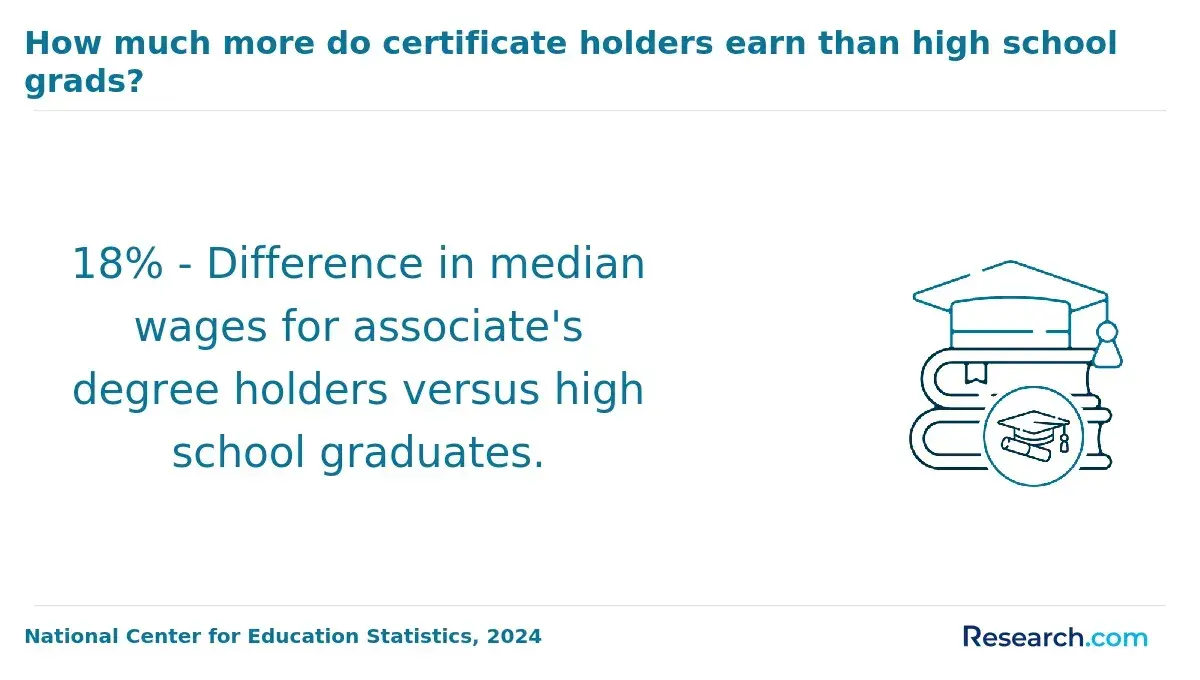
An associate degree can help students qualify for some entry-level analytics-adjacent roles, but the highest salaries in data analytics usually go to positions requiring a bachelor's degree, advanced technical skills, or substantial experience. The U.S. Bureau of Labor Statistics reported a 2024 median wage of $112,590 for data scientists, which shows the earning potential of the field but should not be treated as an associate-degree starting salary.
The table below separates realistic associate-level targets from higher-paying roles that may require more education. This distinction is important because many students overestimate immediate earnings by reading median salaries for jobs that typically require a bachelor's degree or higher.
| Career path | Typical minimum preparation | What the work involves | Salary context |
| Data reporting assistant | Associate degree, spreadsheet skills, SQL basics, and portfolio projects | Prepares reports, cleans data, updates dashboards, and supports analysts | Entry-level pay varies widely by region and industry |
| Business intelligence support specialist | Associate degree plus dashboard and database experience | Maintains reports, builds basic visualizations, and helps teams interpret operational data | Higher pay is more likely with SQL, Power BI, Tableau, or similar tools |
| Database support technician | Associate degree in IT, database coursework, and troubleshooting skills | Assists with data entry systems, database maintenance, permissions, and quality checks | May lead to stronger earnings after experience or further credentials |
| Market research or operations analyst assistant | Associate degree may support assistant roles; analyst roles often prefer bachelor's degrees | Collects data, prepares summaries, supports surveys, and helps analyze business trends | Median analyst wages are not the same as associate-level assistant wages |
| Data analyst | Bachelor's degree is commonly preferred, though some employers consider strong portfolios | Analyzes datasets, builds models, communicates insights, and supports business decisions | Pay improves with programming, statistics, domain knowledge, and experience |
| Data scientist | Often bachelor's or graduate-level preparation in data science, statistics, computer science, or related fields | Builds predictive models, applies machine learning, and works with complex datasets | Among the higher-paying data careers, but usually beyond associate-only preparation |
Students aiming for the highest-paying analytics careers should treat the associate degree as the first step, not the endpoint. If your long-term target is data science, compare transfer pathways early and review what a bachelor's-level data scientist degree typically includes so you can choose associate courses that count toward the next credential.
A good associate program should help you build a portfolio before graduation. Employers may want to see dashboard samples, SQL queries, cleaned datasets, written analysis, and a short explanation of how your work helped answer a business question.
The affordable online data analytics associate degrees with the best return on investment are not always the programs with the lowest tuition. A strong ROI program combines low net price, short completion time, transferable credits, hands-on technical training, and realistic access to local or remote entry-level work.
The table below shows how to compare ROI factors. Use it to move beyond ranking programs by price and toward identifying the option most likely to support your next educational or career step.
| ROI factor | High-value sign | Red flag |
| Net price | Low tuition after grants, scholarships, employer aid, or transfer credits | Low advertised tuition but high mandatory fees or nonresident charges |
| Completion speed | Clear two-year full-time map or flexible part-time map | Required courses offered rarely, causing delayed graduation |
| Transfer value | Articulation agreements with public universities or bachelor's completion programs | Credits transfer only as electives or do not apply to a major |
| Career preparation | SQL, statistics, Excel, visualization, Python or R, and project work | Mostly general business or computer literacy courses with little analytics practice |
| Employer relevance | Career services, internships, applied projects, advisory boards, or regional employer ties | No information about job support, portfolios, or skill outcomes |
| Student support | Online tutoring, advising, technical help, and transfer planning | Online students receive limited access to advising or labs |
A simple tuition-to-earnings check can help you avoid overpaying. Compare the program's estimated total out-of-pocket cost with wages for entry-level analytics-adjacent jobs in your region, then consider whether the degree also reduces the cost of a future bachelor's program through transfer credits.
Students should be cautious when schools imply that a short associate degree will quickly lead to high-paying analyst or data scientist jobs. The better question is whether the program gives you a credible first step: a lower-cost credential, a portfolio, transferable credits, and skills that employers can recognize.
Financial aid can make a cheap online associate degree even more affordable, especially at accredited public community colleges. For the 2024-25 award year, the maximum Federal Pell Grant is $7,395, which can cover a substantial share of published tuition and fees at many public two-year colleges for eligible students.
Students should compare aid sources in the right order because grants and employer assistance are generally more favorable than loans. The list below shows the main options to investigate before deciding how much you can afford.
- Federal Pell Grants: Need-based aid for eligible undergraduate students that does not usually need to be repaid.
- State grants: Many states offer community college grants, last-dollar scholarships, workforce awards, or adult learner aid.
- Institutional scholarships: Community colleges may offer scholarships for first-generation students, adult learners, IT students, or high-demand workforce programs.
- Employer tuition assistance: Some employers reimburse courses that improve spreadsheet, reporting, database, or business technology skills.
- Workforce funding: Local workforce boards may support programs tied to in-demand occupations, especially for unemployed or underemployed adults.
- Prior learning credit: Accepted credits from previous college, exams, military training, or industry certifications can reduce the number of credits you must pay for.
- Federal student loans: Loans can fill gaps, but borrowing should be limited because associate-level entry wages vary and high-paying analytics roles may require further education.
To avoid surprises, ask each school for a cost estimate after aid, not just a tuition chart. The most useful number is your net price for the full degree, including tuition, required fees, books, software, and any charges specific to online courses.
A common mistake is assuming online students are automatically charged the same rate as campus students. Some colleges charge extra online fees, while others apply different tuition rules to distance learners, so confirm the rate in writing before enrolling.
Accreditation affects whether your credits transfer, whether you can receive federal financial aid, and whether employers or universities recognize the degree. At minimum, choose an institution accredited by an agency recognized by the U.S. Department of Education or the Council for Higher Education Accreditation.
Program quality matters just as much as institutional status. Data analytics changes quickly because of cloud tools, automation, and AI-assisted analysis, so a low-cost program should teach durable fundamentals rather than only one software package.
Use the following quality checklist when reviewing an affordable online program:
- Verify institutional accreditation through official accreditation databases, not only the school's marketing page.
- Review the curriculum for SQL, spreadsheets, statistics, data visualization, data ethics, database concepts, and introductory programming.
- Check whether courses include applied projects using real or realistic datasets.
- Ask whether credits transfer into a bachelor's program in data analytics, information systems, business analytics, computer science, or statistics.
- Confirm that online students can access tutoring, advising, library databases, software support, and career services.
- Look for faculty or advisory-board connections to analytics, business intelligence, IT, healthcare data, finance, logistics, or other data-heavy fields.
Students should also pay attention to AI content. A program does not need to be an AI degree, but it should teach responsible data use, interpretation, and automation-aware workflows; students who want a deeper AI career path may later compare an artificial intelligence major with a data analytics bachelor's pathway.
Red flags include vague course descriptions, no clear transfer pathway, little evidence of hands-on analytics work, and promises of high salaries without explaining the additional education or experience many roles require.
Flexible and accelerated online data analytics associate degrees are best for students who already have college credits, strong math readiness, or work experience with spreadsheets and business systems. Flexibility can improve ROI when it helps students finish faster, keep working, or avoid relocation costs.
The table below explains the main flexibility features to compare. Do not assume a program is flexible just because it is online; some online courses still require scheduled meetings, proctored exams, or strict sequencing.
| Flexibility feature | How it helps | What to verify |
| Asynchronous courses | Allows students to complete weekly work without fixed class meetings | Deadlines, group project expectations, and exam windows |
| Short terms | Can help students complete credits faster or focus on fewer courses at a time | Whether accelerated terms are too intense for technical courses |
| Summer enrollment | Shortens the calendar time to graduation | Whether required analytics courses are offered in summer, not only general education |
| Prior learning credit | Reduces cost and completion time for students with previous training | Credit limits, documentation requirements, and transfer applicability |
| Stackable certificates | Lets students earn a shorter credential on the way to the associate degree | Whether certificate credits fully apply to the degree |
| Multiple start dates | Helps students begin sooner instead of waiting for a fall term | Whether late-start students can still follow the correct course sequence |
Students with long-term research or advanced AI ambitions should understand that an associate degree is only the beginning of the pathway. Someone eventually interested in an online PhD in artificial intelligence USA would usually need to progress through bachelor's and often master's-level preparation first, so transfer planning becomes more important than finishing the cheapest standalone credential.
Accelerated study works best when students can commit regular time to technical practice. If you are new to coding, statistics, or databases, a slightly slower pace may produce better learning and a stronger portfolio.
An online data analytics associate degree can lead to career advancement, but its strongest value is often as a stepping stone. It can help current administrative, customer service, operations, healthcare, finance, or logistics workers move toward reporting and analytics tasks while completing lower-division credits for a bachelor's degree.
The table below compares common next steps after an associate degree. The right path depends on whether your main goal is immediate employment, transfer, promotion within your current organization, or preparation for higher-level analytics roles.
| Next step | When it makes sense | What to plan before graduating |
| Entry-level employment | You want a faster, lower-cost route into reporting, database support, or analytics assistant work | Build a portfolio and target job titles that match associate-level preparation |
| Bachelor's transfer | You want analyst, data science, business intelligence, or technical roles that often prefer a bachelor's degree | Confirm transfer agreements and major requirements before choosing electives |
| Internal promotion | You already work in a data-heavy setting and can apply analytics skills on the job | Ask your employer which tools, credentials, or projects support advancement |
| Industry certification | You need proof of specific tool skills such as SQL, Excel, cloud platforms, or visualization software | Choose certifications that align with real job postings in your region |
| Graduate study later | You plan to move into management, advanced analytics, or specialized technical leadership | Use the associate degree to preserve transfer options and build quantitative foundations |
Students who already know they want advanced analyst, analytics manager, or specialized data leadership roles should map the full ladder early. A future data analytics master's degree typically requires bachelor's-level preparation, so the associate degree should be chosen for transfer efficiency as well as immediate affordability.
An associate degree may be the better choice than a bachelor's degree when you need a lower-cost entry point, are unsure about committing to four years, or want to test your interest in analytics while earning transferable credits. It may be the wrong choice if your target employers consistently require a bachelor's degree and the associate program does not transfer cleanly.
How Should Students Choose the Cheapest Online Data Analytics Associate Degree for Their Career Goals?
Students should choose the cheapest online data analytics associate degree by matching the program to a specific goal, not by picking the lowest advertised tuition. The best decision balances cost, completion time, transfer value, skill development, and the kinds of jobs available in your area or target remote market.
Use this step-by-step process to compare programs in a practical way:
- Define your target outcome: immediate job, promotion, bachelor's transfer, or career exploration.
- List three to five accredited programs that offer online or online-heavy coursework in data analytics, business analytics, data science technology, or information systems analytics.
- Calculate total estimated cost by multiplying tuition by required credits and adding mandatory fees, books, software, technology costs, and graduation fees.
- Check whether your residency status changes the price, especially for community colleges with in-district, in-state, and out-of-state rates.
- Compare the curriculum against job postings for entry-level reporting, database support, business intelligence assistant, and junior analytics roles.
- Ask each school whether credits transfer into specific bachelor's programs and whether an articulation agreement exists.
- Review completion maps for full-time and part-time study, including course sequencing and summer availability.
- Request information on online student support, tutoring, career services, internship access, and portfolio-building opportunities.
- Compare local wage data and job availability before assuming that national median salaries reflect your first job prospects.
- Choose the program with the best combination of low net cost, realistic completion timeline, transferable credits, and career-relevant projects.
Ask schools direct questions before applying. Good questions include: What is the total program cost for my residency status? Are all courses online? Which fees are mandatory? Which bachelor's programs accept the credits? What analytics tools will I use? What portfolio projects will I complete? What jobs have recent students pursued?
Avoid choosing a program based only on rankings, marketing claims, or the word "analytics" in the title. A cheap degree is a good investment only if it helps you complete the credential, prove job-ready skills, and keep future education options open.
Other Things You Should Know About Data Analytics
Most employers focus on the school's accreditation, your skills, and your portfolio rather than the delivery format. An online degree is strongest when you can show practical work with spreadsheets, SQL, dashboards, statistics, and real analysis projects.
Usually no. Many associate programs start with introductory technology, spreadsheet, database, or programming courses. However, students who review basic algebra, Excel, and beginner Python or SQL before enrolling may have an easier transition.
A certificate can be faster and cheaper if you only need a specific tool skill, but an associate degree usually provides broader general education, transfer credits, and a more structured pathway. The better choice depends on whether you need quick upskilling or a longer-term academic credential.
Students typically need a reliable laptop or desktop, stable internet, webcam access for some courses, and enough processing power to run spreadsheets, database tools, browsers, and visualization software. Always check the program's technology requirements before buying equipment.
- How Much Does an Associates Degree Increase Your Salary https://imagine-america.org/blog/how-much-does-an-associates-degree-increase-your-salary
- Top Data Analytics Associate Degrees Online https://www.itcareerfinder.com/program-rankings/best-data-analytics-associate-degrees.html
- All Data Analytics Associate Degrees - AnalyticsDegrees.org https://www.analyticsdegrees.org/data-analytics/associate/
- How Associate Degree Programs Prepare Students for Workforce Success https://mariacollege.edu/blog/how-associate-degree-programs-prepare-students-for-workforce-success
- Associate Degree in Data Analytics | Data Analytics Program | Normandale Community College https://www.normandale.edu/academics/degrees-certificates/data-analytics/index.html
- CourseCareers https://coursecareers.com/blog-posts/best-data-analytics-courses
- Data Analyst Salary Guide 2026: Pay by Level, City & Skill - KORE1 https://www.kore1.com/data-analyst-salary-guide/
- Data Analytics https://www.ntc.edu/academics-training/programs/all/associate-degree/data-analytics
- Associate degrees and certificates are more valuable than you may think https://fordhaminstitute.org/national/commentary/associate-degrees-and-certificates-are-more-valuable-you-may-think
- The benefits of Associate Degrees include better earnings https://www.luminafoundation.org/topics/todays-credentials/associate-degrees/