2027 Cheapest Online Animation Associate Degree Programs That Pay Well: Tuition, Duration, and Career Outcomes

Co-Founder and Chief Data Scientist
Choosing a cheap online animation associate degree is really a cost-versus-career decision: will the program build a strong portfolio, transfer cleanly, and qualify you for entry-level creative work? The stakes are real because the College Board reported average public two-year in-district tuition and fees of $4,050 for 2024-25, while private and for-profit creative programs can cost far more. This guide is for students comparing online animation, game art, digital media, and visual design associate programs. You will learn how tuition, duration, accreditation, portfolio quality, and salary potential affect long-term value.
Key Things You Should Know
- The lowest-cost online animation associate options are usually public community college AAS, AS, or digital media programs; published two-year in-district tuition averaged $4,050 for 2024-25, before books, software, and fees.
- Well-paying animation-related careers often require a strong portfolio and sometimes a bachelor's degree; BLS data places special effects artists and animators among higher-paying creative roles, but an associate degree alone is usually strongest for entry-level production, design, and game art support jobs.
- The best ROI rarely comes from tuition alone; students should compare total credits, transferability, software costs, completion time, portfolio support, internship access, and local or remote job demand before enrolling.
Which Are the Cheapest Online Animation Associate Degree Programs That Lead to Well-Paying Careers?
The cheapest online animation associate degree programs are typically not standalone "animation" degrees at private art schools. They are more often public community college programs in animation, game art, digital media, simulation and game development, multimedia design, or visual communication that include 2D animation, 3D modeling, motion graphics, storyboarding, digital illustration, and production software.
Because online availability and tuition classification can change by state, the most practical way to compare programs is to separate low-cost public options from higher-cost private art and media schools. The table below shows the types of programs that tend to offer the strongest affordability-to-career balance for students seeking animation-related work.
| Program type | Common degree names | Why it can be affordable | Best-fit career goal | Value caution |
| Public community college online or hybrid AAS | Animation, Game Art, Digital Media, Simulation and Game Development, Multimedia Design | Lower per-credit tuition, especially for in-state or in-district students | Entry-level production artist, junior animator, game asset artist, motion graphics assistant | Some hands-on courses may require campus labs or scheduled software access |
| Public community college transfer-focused AA or AS | Digital Arts, Visual Arts, Graphic Design, Studio Art with animation electives | Lower lower-division cost before transferring to a bachelor's program | Bachelor's transfer in animation, game design, UX, digital media, or film | May include fewer animation-specific courses than an AAS |
| Online technical or career college associate program | Animation, Digital Media, Web and Interactive Media, Game Art | Can be flexible and career-focused, sometimes with monthly start dates | Portfolio-driven creative employment while studying online | Total tuition may be much higher than public colleges |
| Private art school online associate program | Animation, Visual Effects, Illustration, Game Development | May provide specialized faculty, critique, and industry-style projects | Students who need intensive portfolio development and can manage higher cost | Cheapest advertised option may not be the best ROI if debt is high |
A low-cost program is most likely to lead to well-paying work when it teaches both art fundamentals and production tools. Look for courses in drawing, design, character animation, 3D modeling, rigging, motion graphics, editing, visual storytelling, portfolio development, and collaborative production.
Students should also understand the difference between associate degree types before comparing tuition. An AAS is usually career-oriented and may include more applied software and studio courses. An AA or AS is often better for transfer because it includes more general education and lower-division bachelor's requirements. Neither is automatically better; the right choice depends on whether your next step is employment, freelancing, or a bachelor's degree.
How Much Does an Online Animation Associate Degree Cost?
An online animation associate degree usually costs less at a public community college than at a private art school, but the advertised tuition rarely shows the full price. Students should calculate total program cost using credits required, tuition rate, mandatory fees, software, hardware, books, portfolio materials, and any proctored or campus-based requirements.
The College Board's 2024 pricing report gives students a useful benchmark: average published tuition and fees at public two-year in-district colleges were $4,050 for 2024-25. That figure is not animation-specific, but it helps show why community colleges are often the cheapest starting point for associate-level creative training.
The table below shows how the same 60-credit associate degree can produce very different tuition totals depending on the school's per-credit rate. Fees, books, software, and equipment would be added on top.
| Per-credit tuition | Estimated tuition for 60 credits | What it usually represents | What to check before enrolling |
| $100 | $6,000 | Very low-cost public community college rate for eligible students | Residency rules, online course fees, and whether animation courses are fully online |
| $200 | $12,000 | Moderate public or lower-cost online rate | Technology fees, transfer agreements, and software access |
| $350 | $21,000 | Common range for some private or career-focused online programs | Graduation rate, portfolio support, and employer connections |
| $700 | $42,000 | Higher-cost private art or media school pricing | Whether stronger portfolio development justifies the added debt |
Animation students should budget for more than tuition. Online learners often need a computer capable of running Adobe Creative Cloud, Blender, Toon Boom, Maya, Unity, Unreal Engine, or similar tools. Some programs include software in tuition or provide student licenses; others expect students to pay separately.
Before choosing the lowest sticker price, ask the school for a written cost estimate that includes these items:
- Total credits required for the degree, including prerequisites and repeated courses if portfolio classes must be retaken.
- Tuition rate by residency status, because in-district, in-state, and out-of-state online students may pay different rates.
- Mandatory online learning, technology, studio, graduation, transcript, and portfolio review fees.
- Required software subscriptions, hardware specifications, drawing tablet costs, and cloud storage or rendering needs.
- Whether transfer credits, prior learning, AP, CLEP, or military credits can reduce the total number of courses.
The cheapest program on paper may become less affordable if it requires extra semesters, expensive software, or credits that do not transfer. True affordability means completing the credential with manageable debt and a portfolio that supports your next career or education step.
How Long Does It Take to Complete an Online Animation Associate Degree?
Most online animation associate degrees require about 60 to 70 credits and take two years of full-time study. Part-time students commonly take three years or more, especially if they work while enrolled or need to build foundational drawing, design, or software skills before taking advanced animation courses.
Duration matters because a slower program can increase living costs, delay earnings, and reduce ROI even when tuition is low. The table below shows how common enrollment patterns affect completion time.
| Enrollment pace | Typical credits per term | Estimated completion time | Best for | ROI consideration |
| Full-time | 12 to 15 | About 2 years | Students who can prioritize school and portfolio development | Fastest path to transfer or entry-level work |
| Three-quarter time | 9 to 11 | About 2.5 to 3 years | Working students who still want steady progress | May preserve income while extending time to completion |
| Part-time | 6 to 8 | About 3 to 4 years | Students balancing work, caregiving, or military service | Lower term bills but delayed career transition |
| Accelerated or year-round | 15 or more, including summer | Less than 2 years when available | Students with transfer credits or strong readiness | Can improve ROI if course load is realistic |
Animation courses can be time-intensive because projects require sketching, revisions, rendering, critique, and portfolio polish. A full-time online schedule may be flexible, but it is not necessarily lighter than campus study. Students who are new to digital art should avoid overloading their first term with multiple studio or software-heavy classes.
The fastest path is usually available to students who enter with transferable general education credits, strong computer skills, and a clear portfolio goal. However, rushing can backfire if the final portfolio is weak. For creative hiring, the quality of your reel and project samples often matters as much as the credential itself.
The highest-paying animation-related careers are usually specialized, portfolio-driven roles in entertainment, games, advertising, product visualization, education technology, and digital media. However, many higher-paying creative roles prefer or require a bachelor's degree, several years of experience, or advanced technical skills.
BLS wage data published with recent occupational updates shows that special effects artists and animators are among the stronger-paying creative occupations, but students should treat that as a career-field benchmark rather than an entry-level promise. Associate degree holders are more likely to begin in junior, assistant, production, or freelance roles and grow through portfolio quality and experience.
The table below compares animation-related career paths by associate-degree fit and salary potential. Use it to identify which jobs are realistic immediately and which may require a bachelor's degree, certifications, or additional technical training.
| Career path | Typical responsibilities | Associate degree fit | Salary potential context | Common next step |
| Junior animator or 2D/3D production artist | Create animation assets, clean up frames, model objects, assist with production shots | Possible with a strong reel and software skills | Higher-paying roles usually require experience and a competitive portfolio | Bachelor's degree, studio experience, or specialized demo reel |
| Game asset artist | Build characters, props, textures, environments, and visual assets for games | Strong fit for AAS game art or digital media programs | Pay varies widely by studio, region, contract status, and engine skills | Unity, Unreal Engine, 3D modeling, and portfolio specialization |
| Motion graphics designer | Create animated graphics for video, advertising, social media, and web content | Good fit if the program includes design, editing, and After Effects-style coursework | Often stronger with design, branding, and video editing skills | Freelance portfolio, agency work, or bachelor's completion |
| Graphic designer with animation skills | Design visual assets, layouts, social graphics, and simple animated content | Good entry-level path for associate graduates | Usually lower than specialized animation or UX roles, but more widely available | UX, web design, motion graphics, or brand design specialization |
| Web or interactive media designer | Create digital interfaces, visual assets, interactive layouts, and multimedia content | Possible when the degree includes web, UI, and digital media courses | Technical design skills can improve earning potential | Front-end skills, UX coursework, or bachelor's transfer |
Students who want the highest earnings should compare animation with adjacent technical fields. If you enjoy coding, interactive design, or game systems as much as visual art, a cheapest online computer science degree may lead to a broader range of software and technical roles, while animation can remain a portfolio specialization.
The key is to match the associate degree to the job market you actually want. A low-cost animation degree can be worthwhile for students who build a targeted reel, seek internships or freelance clients early, and understand that entry-level creative wages may be lower than occupational medians.
The best ROI comes from the program that produces the strongest combination of low total cost, timely completion, transferable credits, and employable portfolio work. The cheapest program is not always the best value if it lacks animation-specific courses, industry software, faculty critique, or transfer agreements.
A simple ROI screen can help students avoid overpaying. Compare the amount you expect to pay against the career path you are targeting, then ask whether the degree reduces your risk, improves your portfolio, or saves money on future bachelor's credits.
The table below shows how different student goals change the meaning of "best return on investment."
| Student goal | Best low-cost degree structure | Why it may offer good ROI | Risk to avoid |
| Enter the workforce quickly | AAS in animation, game art, digital media, or multimedia production | More applied studio courses and portfolio projects | Choosing a program with weak career services or outdated software |
| Transfer to a bachelor's degree | AA or AS with an articulation agreement in digital arts, animation, game design, or media | Lower-cost first two years before paying bachelor's tuition | Taking credits that the receiving university counts only as electives |
| Freelance while studying | Flexible online AAS with motion graphics, illustration, and digital production courses | Portfolio pieces can become client samples | Underestimating business, pricing, and client-management skills |
| Move into technical creative roles | Digital media program with web, UX, coding, or game engine electives | Combines visual skills with more marketable technical abilities | Taking too few technical courses to compete for higher-paying roles |
To compare ROI, students can use a basic tuition-to-earnings check. If a program costs $8,000 and prepares you for entry-level production work or transfer, the risk is usually lower than a $40,000 associate program that does not clearly improve your portfolio, credits, or job access. This does not mean the cheaper program is always better; it means the higher-cost program should offer a clear advantage.
Students considering long-term technical or analytics-heavy careers should also think beyond the associate degree. For example, creative technologists who later move toward visualization, AI tools, or media analytics may eventually compare graduate pathways such as an online masters in data science, but that path usually requires stronger math, programming, and bachelor's-level preparation first.
The strongest affordable online animation associate degree is usually the one that gives you an exit option and a growth option: you can seek entry-level creative work after graduation, but your credits can also move efficiently into a bachelor's program if the job market demands more education.
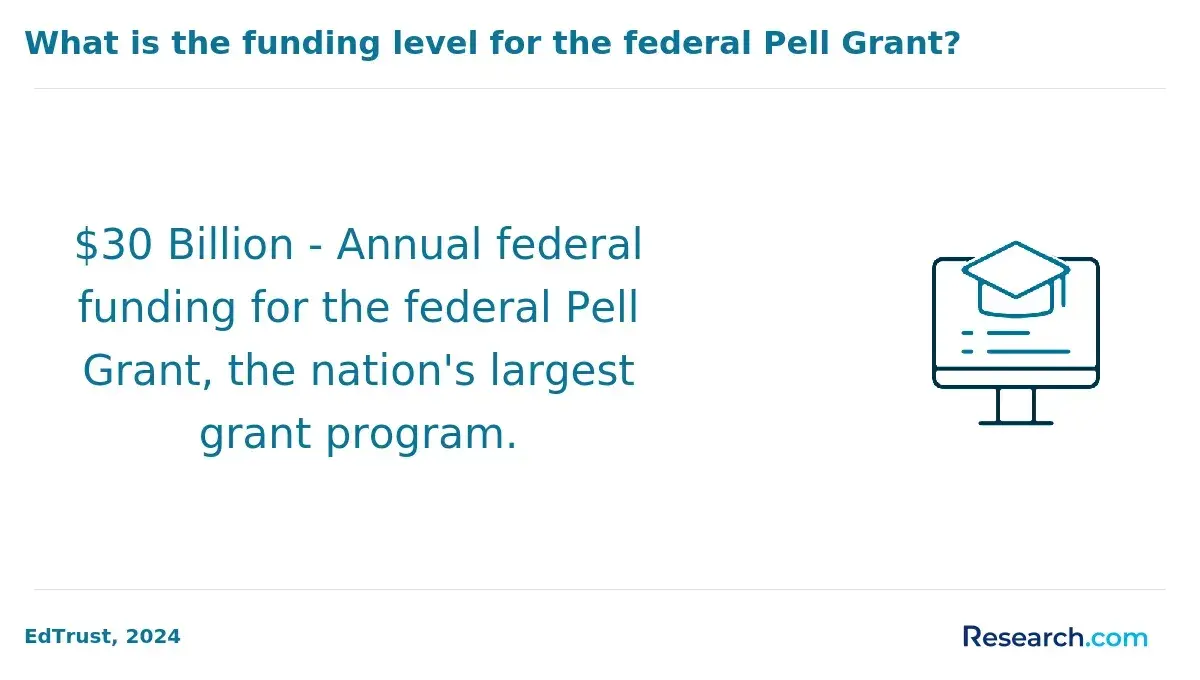
Financial aid can make a low-cost online animation associate degree significantly more affordable, especially at accredited public colleges. Students should complete the FAFSA before assuming they cannot afford a program, because grants and state aid may reduce out-of-pocket tuition without adding debt.
The Federal Student Aid maximum Pell Grant for the 2024-25 award year was $7,395. For eligible students at low-cost community colleges, that amount can cover a large share of tuition and fees, although the actual award depends on enrollment status, financial need, cost of attendance, and federal rules.
Students should compare aid sources in a practical order, starting with money that does not need to be repaid and ending with borrowing only if the expected value justifies it.
- Submit the FAFSA and list every college you are seriously considering so each school can prepare an aid offer.
- Ask about federal Pell Grants, state grants, need-based institutional aid, and tuition waivers for residents or adult learners.
- Search for scholarships from community foundations, arts organizations, game development groups, and local employers.
- Check whether your employer offers tuition reimbursement for digital media, design, communications, or technology coursework.
- Use federal student loans cautiously, borrowing only after calculating total program cost and likely repayment obligations.
Animation students should also ask schools whether financial aid can cover required equipment or software as part of the cost of attendance. If a high-performance laptop, drawing tablet, or software subscription is required, the school's financial aid office may be able to explain whether those costs can be included in your budget.
A common mistake is comparing programs only after scholarships are advertised. Some scholarships are competitive, renewable only with a certain GPA, or limited to full-time students. Always ask whether an aid offer is guaranteed for both years of the associate degree and what happens if you switch to part-time enrollment.
Accreditation affects whether students can receive federal financial aid, transfer credits, and have their degree recognized by other colleges or employers. For online animation associate degrees, institutional accreditation is the first requirement to verify. Programmatic accreditation is less common in animation than in fields such as nursing or education, so students should not assume the absence of a specialized animation accreditor automatically means poor quality.
Use accreditation as a minimum quality screen, then evaluate the creative substance of the program. A properly accredited program can still be a weak choice if it lacks current software, meaningful critique, portfolio courses, or transfer pathways.
The table below separates accreditation and quality factors so students can evaluate both compliance and career value.
| Quality factor | Why it matters | What to ask the school |
| Institutional accreditation | Supports federal aid eligibility and credit transfer review | Which recognized accreditor currently accredits the institution? |
| State authorization for online students | Determines whether the school can enroll students in your state | Can the program legally enroll online students from my state? |
| Portfolio curriculum | Creative hiring often depends on work samples | Which courses produce portfolio-ready animation, game art, or motion graphics projects? |
| Software and production tools | Employers expect familiarity with current workflows | Which tools are required, provided, or discounted? |
| Faculty critique and feedback | Animation skills improve through revision and review | How often do students receive instructor critique on visual work? |
| Transfer agreements | Credits can reduce bachelor's degree cost | Which universities accept the degree as a block transfer or major pathway? |
Red flags include vague accreditation language, unclear tuition pages, no student portfolio examples, outdated course descriptions, limited faculty information, and promises of high-paying jobs. Schools should be able to explain costs, credit transfer, online delivery, and career preparation in plain language.
Students should also remember that employers in creative fields often evaluate portfolios directly. Accreditation helps establish legitimacy, but it does not replace a strong reel, polished projects, collaboration experience, or evidence that you can meet deadlines.
Flexible and accelerated online animation associate programs are best for students who need to balance school with work, caregiving, military service, or freelance projects. Flexibility may include asynchronous courses, evening critique sessions, multiple start dates, part-time pacing, summer terms, and transfer-credit acceptance.
Acceleration is valuable only when it does not weaken the portfolio. Animation projects require iteration, and students often need time to practice timing, staging, modeling, texturing, editing, and critique-based revision.
The most flexible low-cost programs usually include several of these features:
- Asynchronous lectures paired with scheduled critique or project deadlines.
- Eight-week, ten-week, or summer courses that allow year-round progress.
- Transfer-credit policies that accept prior college general education courses.
- Stackable certificates in digital media, game art, graphic design, or web design that apply toward the associate degree.
- Part-time plans that keep students eligible for aid while reducing weekly workload.
- Online tutoring, library access, software support, and career services for distance learners.
Students who want the fastest completion should first transfer general education credits, then reserve enough time for studio courses. It is usually easier to accelerate English, math, communication, or general education classes than advanced animation production courses that require extensive project work.
If speed is your top priority but you are more interested in coding, game systems, or interactive technology than animation production, you may want to compare an accelerated computer science degree online with an animation associate pathway. A programming-focused degree may be more intensive, but it can align better with software, game development, or technical production roles.
The best flexible program is the one you can actually finish. A slightly slower part-time plan may produce better ROI than an accelerated schedule if it lets you maintain income, avoid failed courses, and build stronger portfolio pieces.
An online animation associate degree can support career advancement, but its strongest long-term value may be as a stepping stone to a bachelor's degree. Many advanced animation, visual effects, UX, game design, creative technology, and art director roles prefer deeper specialization, broader portfolios, and more advanced production experience than a two-year degree can usually provide.
Transfer planning should begin before enrollment. Students who wait until graduation may discover that some applied animation courses transfer only as electives, which can reduce the savings they expected from choosing a low-cost associate program.
Ask each school and receiving university these transfer questions before committing:
- Does the associate degree have a formal articulation agreement with a bachelor's program in animation, game design, digital media, film, UX, or graphic design?
- Will the degree transfer as a completed block, or will each course be evaluated individually?
- Which animation, studio, or software courses count toward the bachelor's major instead of only general electives?
- Is a portfolio review required for admission to the junior year or major sequence?
- What GPA is needed to transfer, keep scholarships, or enter the bachelor's major?
- Can online students use advising from both the associate institution and the transfer university?
An associate degree can also help working adults move into visual communication, marketing content, educational media, social media production, and internal training roles. Students interested in e-learning, training design, or educational media may eventually compare graduate pathways such as the best online instructional design master's programs, although that route generally comes after completing a bachelor's degree.
Students should choose an associate degree instead of a bachelor's degree when they need a lower-cost start, want to test the field before committing, plan to transfer, or need a faster credential for entry-level work. They should consider starting with or moving quickly into a bachelor's pathway if their target jobs consistently list a four-year degree, advanced studio experience, or specialized technical skills.
How Should Students Choose the Cheapest Online Animation Associate Degree for Their Career Goals?
The cheapest online animation associate degree is the right choice only if it fits your career goal, budget, learning style, and transfer plan. A program that is inexpensive but poorly aligned with your target role can cost more in lost time than it saves in tuition.
Use this decision process to compare programs in a practical, career-focused way:
- Define your target outcome first: entry-level job, freelance work, bachelor's transfer, game art, motion graphics, or general digital design.
- Calculate total cost, not just tuition, by adding fees, software, equipment, books, portfolio costs, and possible travel or campus requirements.
- Check accreditation and state authorization before applying, especially if you live outside the school's home state.
- Compare the curriculum to your target job postings and look for required tools, portfolio projects, and production courses.
- Ask for transfer agreements in writing if you plan to complete a bachelor's degree later.
- Review student work, faculty backgrounds, career services, internship access, and portfolio support.
- Estimate completion time based on your real weekly availability, not the fastest advertised schedule.
- Compare local and remote job postings to see whether associate-level candidates are competitive in your chosen specialization.
Common mistakes include choosing the lowest advertised tuition without checking total credits, assuming online is always cheaper, confusing median wages with entry-level earnings, ignoring transfer-credit rules, and believing that a degree alone will secure an animation job. Creative hiring is highly portfolio-driven, so students should prioritize programs that help them produce polished, relevant work.
Students should avoid choosing an associate degree based primarily on low cost when the program lacks transparent pricing, has weak or unclear accreditation, offers few animation-specific courses, provides little instructor critique, or cannot explain transfer outcomes. Paying slightly more can make sense if the program shortens completion time, includes software, transfers cleanly, or provides stronger portfolio development.
A good final test is simple: would this program help you build a portfolio, earn transferable credit, and keep debt low enough that entry-level creative work remains financially realistic? If the answer is yes, a cheap online animation associate degree can be a smart first step. If the answer is unclear, keep comparing before enrolling.
Other Things You Should Know About Animation
It can be challenging, but it is realistic for self-directed students. Online animation learners need reliable technology, time for practice, comfort receiving critique, and discipline to revise projects without in-person studio structure.
You do not need to be an expert, but drawing fundamentals help. Many programs teach design, figure drawing, and visual storytelling, while 3D or motion graphics paths may rely more heavily on software, timing, composition, and technical production.
Yes, but clients usually care more about your portfolio, communication, reliability, and pricing than the degree title. Students should build sample projects, simple contracts, and a professional online portfolio before seeking paid freelance work.
Requirements vary by school and software. In general, students should ask for the official hardware list before enrolling because animation, rendering, editing, and 3D modeling may require more memory, graphics power, and storage than a basic laptop provides.
- Digital Media and Design A.A.S. - Animation Specialty Option - Career Degree https://www.clcillinois.edu/programs/comdv/digital-media-and-design/digital-media-and-design-aas-animation-specialty-option-career-degree
- Admissions : Campus Tuition | Full Sail University https://www.fullsail.edu/admissions/tuition
- Animator - Salary, How to Become, Job Description & Best Schools https://www.onlinedegree.com/careers/arts-design-entertainment/animator/
- Animation School — Education, Careers & Industry Guide https://www.animationeducations.com/
- 2025 Most Affordable Online Associate Degrees https://www.onlineu.com/most-affordable-colleges/associate-degrees
- Best Online Animation Bootcamps | ComputerScience.org https://www.computerscience.org/bootcamps/rankings/best-online-animation-bootcamps/
- WHICH ANIMATION SCHOOL PREPARES YOU BETTER FOR A CAREER IN ANIMATION? — Hollywood Animation Academy https://www.hollywoodanimationacademy.com/the-animation-school-blog/comparison-of-top-anmation-schools-in-the-us
- Animation https://www.aims.edu/degrees-certificates/animation
- Florida Animation Schools: Most to Least Expensive | Animation Career Review https://www.animationcareerreview.com/articles/florida-animation-schools-most-least-expensive
- Research and Shortlist Animation Programs by Graduate Employment Rates https://oxetta.com/shortlist-animation-programs-employment-rates/