
2027 Cheapest Accredited Online Social Emotional Learning Master's Programs With No Out-of-State Tuition Surcharge

Co-Founder and Chief Data Scientist
An online master's focused on social emotional learning (SEL) can prepare educators and support professionals to build students' self-awareness, relationship, and decision-making skills, but "cheap" tuition can be misleading. The U.S. Department of Education's annual Direct Unsubsidized Loan limit for graduate students is $20,500, making total program cost - not just a low per-credit rate - important for borrowing decisions. This guide explains how to find accredited, residency-neutral programs, compare real costs, verify requirements, and decide whether the degree fits your career goals.
Key Things You Should Know
- No out-of-state tuition surcharge means eligible online students pay one published rate regardless of residence; it does not mean the program is automatically the lowest-cost option.
- For graduate borrowing, the annual federal Direct Unsubsidized Loan limit is $20,500, so a program's required credits, mandatory fees, and completion pace can materially affect how much students need to finance.
- SEL is commonly offered as a concentration within education, educational leadership, curriculum and instruction, school counseling, or youth-development master's programs rather than as a standalone degree, requiring close curriculum and accreditation review.
What Does No Out-Of-State Tuition Surcharge Mean for an Online Social Emotional Learning Master's Program?
A no-out-of-state-surcharge policy means an institution charges online students the same tuition rate whether they live in the university's home state or elsewhere in the United States. Schools may describe this as "online tuition," "distance-learning tuition," "flat-rate tuition," or "same tuition for all students." It is a pricing policy, not a statement about residency, admissions standards, accreditation, or financial-aid eligibility.
For an SEL-focused master's program, this can be especially useful because the most relevant curriculum may be housed at a university outside a student's state. Programs may use titles such as Master of Education in curriculum and instruction, educational leadership, learning sciences, counseling, or student affairs, with coursework in trauma-informed practice, school climate, behavior support, child development, equity, and family engagement.
The distinctions below help students avoid treating similar marketing language as identical.
| Tuition model | What it usually means | Best use case | What to confirm |
| Residency-neutral online rate | One published rate for eligible online students | Students living outside the institution's state | That the rate applies to the exact master's program and every required term |
| In-state and out-of-state rates | Nonresidents pay a higher rate unless they qualify for an exception | Residents or students with a documented waiver | Residency rules, waiver duration, and whether online enrollment qualifies |
| Online differential rate | Online tuition differs from campus tuition and may be uniform | Students comparing delivery formats | Distance-learning, technology, and course-specific fees |
| Temporary nonresident waiver | A discount may apply under stated conditions | Students who can maintain the conditions | Renewal requirements, excluded courses, and possible policy changes |
A residency-neutral rate can still be higher than an in-state public-university rate. Compare the full published program estimate, not only the nonresident differential that the school says it has removed.
A common mistake is assuming that all online programs at the same university have the same policy. Graduate schools, colleges of education, and special online cohorts may use different tuition schedules, so students should obtain confirmation in writing for the specific program, start term, and delivery format.
How Can Students Verify Accreditation for an Affordable Online Social Emotional Learning Master's Program?
Start with institutional accreditation. A properly accredited institution has been evaluated by an accrediting agency recognized by the U.S. Department of Education or the Council for Higher Education Accreditation. Institutional accreditation matters for federal aid, credit transfer, employer confidence, and admission to future graduate study.
SEL itself does not have one universal programmatic accreditor. The relevant specialized standard depends on what the degree is designed to do. A curriculum-and-instruction or educational-leadership program may have education-unit recognition or state approval, while a school counseling pathway may need to meet accreditation and state-board requirements that are much more specific.
Use the following verification sequence before paying an application deposit.
- Find the university's institutional accreditor in the school's official accreditation disclosure and confirm it through a recognized accreditor or federal database.
- Read the curriculum and identify whether the degree is an M. Ed., M.A., M.S., counseling degree, leadership degree, or certificate-bearing specialization.
- Ask whether the program leads to, supports, or does not lead to state educator certification, administrator licensure, or counselor licensure in your state.
- Confirm whether fieldwork, practicum, internship, background checks, or supervised hours are required and whether they can be completed where you live.
- Request written confirmation that online students receive the same degree, transcript designation, and academic support as other students.
Do not confuse institutional accreditation with a professional credential. An institution may be accredited while a particular program does not meet the academic, practicum, examination, or state-specific conditions needed for a license. Conversely, an SEL concentration may be valuable for an already licensed teacher without being a licensure pathway itself.
Red flags include vague accreditation claims without naming an agency, a program that implies licensure but does not identify states served, and tuition pages that do not match the catalog. A school's catalog, state authorization information, and written reply from the program office are more reliable than an advertising headline.
How Much Does the Cheapest Online Social Emotional Learning Master's Program Cost in Total?
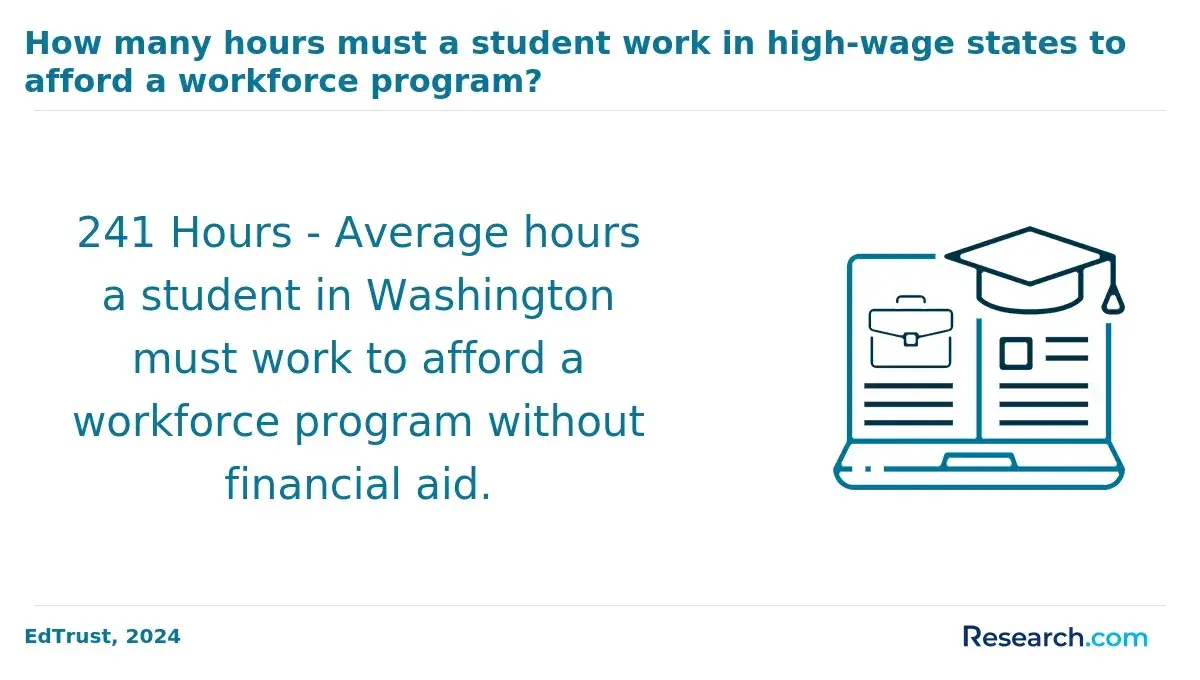
There is no single nationwide "cheapest" accredited SEL master's program because institutions package SEL coursework differently and revise tuition by term. The cheapest option for one student may not be cheapest for another after residency-neutral pricing, transfer credit, fees, employer aid, and required fieldwork are considered. Calculate an estimated total using the number of credits the student will actually be required to complete.
This worksheet separates tuition from costs that low advertised prices can conceal.
| Cost component | Calculation | Why it matters |
| Tuition | Required credits × published online rate per credit | This is the largest direct academic charge for most students |
| Mandatory university fees | Per-term fees × expected terms | Part-time students may pay more fee cycles |
| Program or course fees | Published fee × applicable courses | Education courses may charge assessment, placement, or materials fees |
| Books and learning materials | School estimate or course-list estimate | Digital materials may be separate from tuition |
| Practicum, travel, or residency costs | Expected local and travel expenses | Hybrid requirements can erase a tuition advantage |
| Net cost | Total direct charges and required expenses − grants, scholarships, and employer support | Best figure for comparing affordability |
For example, two programs with the same per-credit tuition may have different total prices if one requires more credits, charges a fee every session, or requires a campus residency. Ask the school whether the quoted rate is locked for continuing students or may change annually; a published rate is generally not a guarantee of the final price for future terms.
Students should also distinguish tuition from cash-flow needs. Federal loans can help eligible students cover qualified education expenses, but borrowing is not a discount. Compare the estimated net cost before loans with the amount of debt the career benefit can reasonably support.
Do Online Social Emotional Learning Master's Students Have to Establish Residency to Receive the Lowest Tuition Rate?
Usually, no - if the program genuinely uses a residency-neutral online tuition rate. In that model, moving to the university's state should not be necessary to access the listed online rate. However, students still may need to provide a U.S. address, meet state-authorization rules, or satisfy separate residency standards for state grants and other benefits.
Students should ask admissions or the bursar's office these questions before enrolling.
- Is the quoted tuition identical for online students in every U.S. state where the program enrolls students?
- Does the rate apply to every required course, including electives, practica, and summer sessions?
- Are there different charges for full-time, part-time, synchronous, or hybrid enrollment?
- Will I ever be asked to establish residency to retain the rate, receive a waiver, or qualify for institutional aid?
- Can you provide the total estimated charges for my planned credit load in writing?
Residency can still matter at public institutions that offer a standard in-state rate plus an online exception. The exception may be limited to certain programs, may exclude campus courses, or may be replaced by a different tuition schedule after a curriculum change. Students who are already state residents should compare the standard resident rate against the online rate rather than assuming either is lower.
Do not relocate solely for an anticipated tuition reduction without confirming the institution's residency classification rules. Many public universities use detailed domicile, tax, employment, and timing criteria, and their rules can differ from state aid rules.
How Do Public and Private Universities Compare on the Cost of an Online Social Emotional Learning Master's Degree?
Public universities often offer especially favorable tuition to residents, while private nonprofit universities commonly use one rate for all students. Either model can be the better value. A public university's residency-neutral online rate may be competitive nationally, and a private nonprofit institution may offset a higher sticker price with scholarships, shorter calendars, or fewer fees.
Students exploring education-related career changes can apply the same comparison method used for an online bachelor's degree in biology: evaluate the complete curriculum, time to completion, and required experiences rather than assuming institutional type determines affordability.
This comparison shows the trade-offs that matter more than an institution's public or private label.
| Factor | Public university | Private nonprofit university | Decision implication |
| Tuition structure | May vary by resident, nonresident, and online status | Often one published rate, though exceptions exist | Compare the exact online program rate |
| Residency effect | Can be substantial unless online tuition is residency-neutral | Usually not based on state residence | Out-of-state students should calculate both options |
| Fees | May include institutional and distance-learning fees | May bundle some services or charge separate fees | Review each term's charges |
| Financial aid | Federal aid and institutional awards may be available | Federal aid and institutional awards may be available | Compare net price after non-loan aid |
| Program fit | May align closely with state educator systems | May offer flexible nationwide cohorts | Confirm state authorization and licensure alignment |
A lower sticker price is not always lower total cost. A private nonprofit program can be the sounder choice when its scholarship, course sequence, advising, and field-placement support reduce time away from work or prevent an extra term. A public option can be stronger when the student qualifies for resident tuition and the degree meets a local certification or leadership goal.
Can Financial Aid Reduce the Cost of a Cheap Online Social Emotional Learning Master's Program?
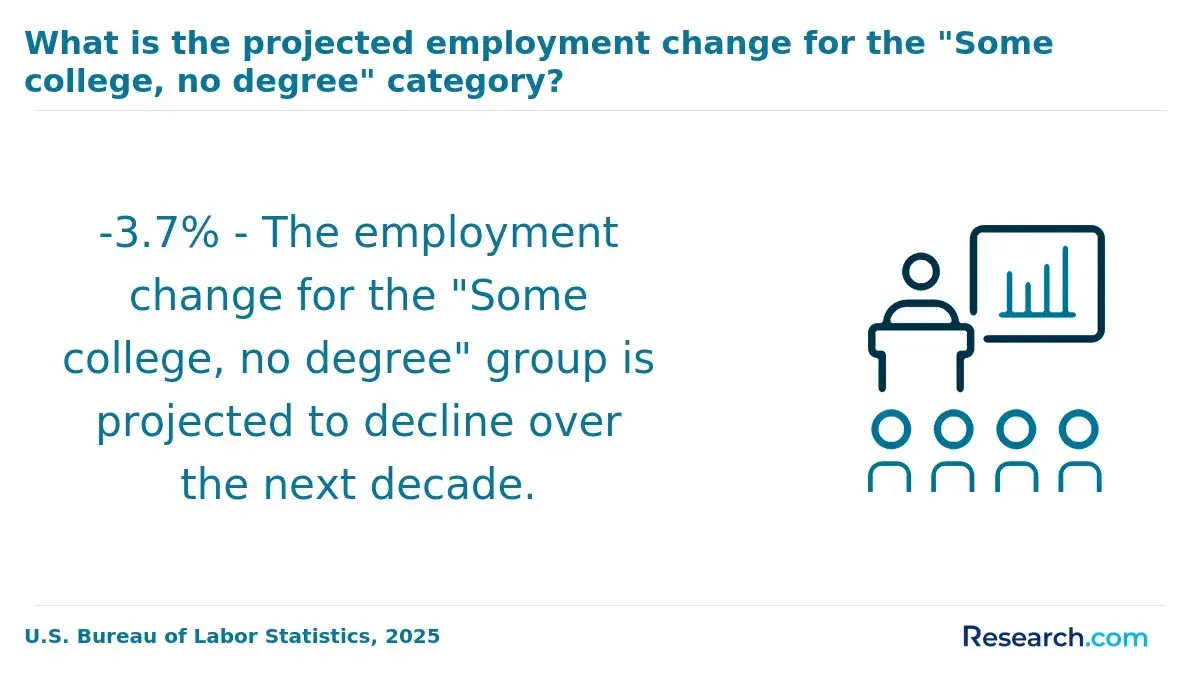
Yes. Eligible online graduate students may use federal student aid when enrolled in an eligible program at a participating institution, and they may also qualify for institutional scholarships, employer education benefits, assistantships, or external awards. Aid can make a higher-tuition program less expensive out of pocket, but students should separate grants and scholarships from loans that must be repaid.
Working professionals in helping fields often combine career advancement with education benefits. For instance, nurses comparing RN to BSN online programs without clinicals may face the same decision: an employer benefit can outweigh a modest tuition difference only if the employer approves the institution, program, grade requirement, and reimbursement timeline.
Before accepting an offer, compare aid categories in this order.
- Subtract grants, scholarships, tuition waivers, and employer payments that do not require repayment.
- Confirm award renewal criteria, enrollment requirements, deadlines, and whether online students are eligible.
- Calculate the remaining direct cost after each term's mandatory fees and required materials.
- Use federal loans only after understanding annual limits, interest, origination charges, and the expected borrowing total.
- Ask whether tuition is due before employer reimbursement arrives, since a reimbursement benefit may still require short-term cash flow or borrowing.
File the FAFSA early enough to meet institutional deadlines, even if you expect employer support. The FAFSA is often used to determine federal loan eligibility and, at some schools, institutional need-based consideration. Do not assume that an online program's low tuition includes books, licensure tests, background checks, software, or travel.
How Do Program Format and Completion Time Affect the Cost of an Online Social Emotional Learning Master's Degree?
Format affects both billed costs and indirect costs. Fully online asynchronous programs can reduce commuting and allow working professionals to schedule coursework around school or family responsibilities. Hybrid programs may provide valuable face-to-face practice but can add travel, lodging, and missed-work expenses. A required practicum can be professionally important, yet it may limit a student's ability to accelerate.
Accelerated programs can reduce the number of terms and associated term-based fees, but only when the course load is sustainable. Similar pacing questions arise in health-profession education, including accelerated pharmacist programs; faster completion should be evaluated alongside workload, sequencing, and support rather than treated as an automatic bargain.
Use the format comparison below to identify costs beyond tuition.
| Format | Potential cost advantage | Potential added cost or risk | Best fit |
| Fully online asynchronous | Fewer commuting and scheduling expenses | May require strong self-management and local fieldwork arrangements | Working professionals needing schedule flexibility |
| Fully online synchronous | No regular campus travel | Live meeting times may conflict with work schedules | Students who value scheduled interaction |
| Hybrid | May include structured practice and local networking | Travel, lodging, and campus attendance can raise total cost | Students able to attend required sessions |
| Accelerated | May reduce term-based fees and time to completion | Heavy course load can increase withdrawal or repeat-course risk | Students with reliable time and academic capacity |
| Part-time | May preserve employment income and reduce weekly workload | More terms can mean more fees and delayed completion | Students balancing substantial responsibilities |
Confirm whether tuition is charged by credit, by term, or as a cohort price. Per-credit pricing rewards efficient progression, while a flat per-term model can favor students able to take more credits within the same billing period. Neither is automatically cheaper without a personal completion plan.
How Much Can Transfer Credits Reduce the Cost of an Online Social Emotional Learning Master's Degree?
Transfer credit can reduce cost only when the receiving program accepts prior graduate-level coursework and applies it to required degree credits. Policies vary widely: some programs accept a limited number of comparable credits, some accept only recent credits, and others require all core SEL coursework to be completed in residence. Credit acceptance is never automatic simply because a prior course has a similar title.
Students with previous graduate coursework in education, psychology, counseling, human development, leadership, or assessment should request an official evaluation before making an enrollment decision. The relevant question is not just how many credits can transfer, but whether they replace required courses and shorten the published sequence.
To evaluate the real savings, gather the documents the school is likely to need.
- Official transcripts showing completed graduate courses and grades
- Course descriptions or syllabi identifying learning outcomes, texts, assessments, and contact hours
- The receiving program's written transfer-credit limit and minimum grade policy
- A degree plan showing exactly which requirements the accepted credits replace
- A revised estimate of tuition, fees, and expected completion date after the evaluation
Be cautious about paying for a graduate certificate solely because it appears stackable. Confirm in writing that the certificate courses apply to the exact master's pathway, remain eligible under current policy, and do not require separate admission conditions. A stackable credential is valuable only if it advances the student's intended degree or career path.
Is a Cheap Online Social Emotional Learning Master's Degree Worth the Cost for Career Advancement?
An affordable SEL-focused master's can be worthwhile when it builds skills that match a realistic next role: classroom teacher leader, instructional coach, curriculum specialist, student-support coordinator, youth-program administrator, school climate specialist, or nonprofit education professional. The degree is most defensible when it helps the student meet an employer's stated qualification, strengthen existing educator credentials, or move into responsibilities involving curriculum, professional development, behavior supports, or family engagement.
SEL preparation can also complement adjacent behavioral-health and prevention work. Professionals considering an online substance abuse counseling degree should recognize that counseling licensure and addiction-counseling credentials have separate state and supervised-practice requirements; SEL coursework alone does not authorize clinical practice.
Career return depends on the job, location, employer pay scale, prior credentials, and whether the degree qualifies the student for a salary lane change or promotion. The U.S. Bureau of Labor Statistics classifies instructional coordinators as roles that typically require a master's degree and reported a 2024 median annual wage of $74,620. This is a national occupational benchmark, not an expected salary for every SEL graduate, and many instructional-coordination roles also require teaching experience or state licensure.
Assess value against these practical signals rather than tuition alone.
| Career-value question | Why it matters | Evidence to seek |
| Does the role require a master's degree? | A degree may be necessary for advancement in some school systems | Job postings, collective-bargaining salary schedules, and employer policy |
| Does the program meet licensure needs? | Some leadership and counseling roles require state-specific credentials | Written licensure disclosure and state-board guidance |
| Will the curriculum build usable SEL expertise? | Employers may value implementation skills over a degree title alone | Courses in assessment, implementation, equity, data use, and family partnership |
| Can you keep working while enrolled? | Preserved income may matter more than a small tuition difference | Course schedule, practicum demands, and employer flexibility |
| What will you borrow? | Debt affects the financial return of any advancement | Net-cost estimate and a personal repayment plan |
A low-cost program is a weaker investment if it lacks the coursework, state alignment, field experience, or employer recognition needed for the student's target position. Paying more can make sense when the additional cost clearly buys required licensure preparation, a relevant specialization, stronger local placement support, or a substantially better fit with a defined career plan.
How Should Students Compare the Cheapest Accredited Online Social Emotional Learning Master's Programs?
Compare programs using a written shortlist, not tuition advertisements alone. Because standalone SEL master's degrees are uncommon, include related M. Ed., M.A., and M.S. programs only when their required curriculum actually covers the SEL competencies and career pathway you need. An M. Ed. is often practice-oriented, while an M.A. or M.S. may be more research-focused; individual curricula matter more than the degree initials.
Admissions requirements also vary. Applicants familiar with nursing schools that don t require TEAS or HESI should apply the same principle here: confirm the requirements for the actual program instead of assuming a university-wide admissions policy. Education master's programs may request a bachelor's degree, official transcripts, minimum GPA, statement of purpose, recommendations, résumé, writing sample, or proof of educator credentials.
Build a comparison sheet with the following fields before applying to more than a few programs.
- Institutional accreditation, plus any education-unit approval or licensure alignment relevant to your goal
- Exact online tuition rate, required credits, mandatory fees, and whether nonresidents pay the same amount
- Required SEL-related courses, concentration options, capstone or thesis expectations, and research versus applied emphasis
- Fully online, synchronous, hybrid, practicum, internship, and campus-residency requirements
- Transfer-credit policy, course sequencing, full-time and part-time pathways, and realistic completion timeline
- Financial-aid eligibility, scholarship deadlines, employer reimbursement compatibility, and estimated net cost
- Career services, faculty expertise, field-placement support, and written disclosures about certification or licensure outcomes
Then ask each finalist for a program-specific cost estimate and degree plan. The best affordable choice is usually the accredited program with the lowest verified net cost that still meets your career, licensure, scheduling, and learning needs - not necessarily the program with the lowest number on a tuition webpage.
Other Things You Should Know About Social Emotional Learning
Social emotional learning is an educational approach that helps people develop skills such as self-awareness, self-management, social awareness, relationship skills, and responsible decision-making. In schools, SEL may be integrated into classroom instruction, behavior supports, advisory programs, family engagement, and school-climate initiatives.
Yes. Teachers, instructional coaches, curriculum specialists, school administrators, youth-program staff, and nonprofit educators may use SEL expertise without practicing counseling. Clinical counseling, diagnosis, and psychotherapy are regulated activities that generally require a separate degree, supervised experience, examination, and state credential.
Look for coursework in child or adolescent development, learning environments, trauma-informed practice, culturally responsive instruction, behavior supports, program implementation, assessment, data use, ethics, and collaboration with families and community partners. The best mix depends on whether you plan to work in classrooms, leadership, student services, or community programs.
Not always. Professional M. Ed. programs often use an applied capstone, action-research project, or portfolio, while research-oriented M.A. and M.S. programs may require a thesis. Choose the format that supports your next step: an applied project for workplace implementation or a thesis if you may pursue doctoral study or research-focused work.
References
- 2025 Most Affordable Online Master's Programs https://www.onlineu.com/most-affordable-colleges/masters-degrees
- Social Work Scholarships https://socialworklicensemap.com/social-work-resources/social-work-scholarships/
- Program Details: https://www.eastern.edu/academics/graduate-programs/master-social-work-msw-online
- Best Affordable Master's Degree In Social Work https://www.psychology.org/social-work/best-affordable-masters-programs/
- Online Social Work Degree Programs in Illinois - Aurora University https://online.aurora.edu/online-programs/areas-of-study/social-work/
- Average Cost of a Master's Degree: 2025 Analysis https://educationdata.org/average-cost-of-a-masters-degree
- Scholarships for Online Grad School | OEDb.org https://www.oedb.org/graduate-scholarship/
- College Scholarship Resources | National MS Society https://www.nationalmssociety.org/resources/financial-planning/financial-planning-resources/scholarships


