2027 Cheapest Accredited Online Library Science Degree Programs: Tuition, Fees, and Financial Aid

Co-Founder and Chief Data Scientist
Choosing an online library science degree is really a cost-and-credential decision: the lowest tuition rate is not always the lowest total price. The Bureau of Labor Statistics reports a May 2024 median annual wage of $64,370 for librarians and library media specialists, so borrowing discipline matters.
This guide is for students comparing accredited online MLIS, MLS, and related library science programs. You will learn how tuition, mandatory fees, accreditation, FAFSA, scholarships, transfer credits, and net price affect affordability, so you can identify genuinely low-cost options and avoid expensive surprises.
Key Things You Should Know
- Among widely available ALA-accredited online library science master's programs, Valdosta State University's online MLIS is often one of the lowest advertised tuition options, with published tuition commonly cited around the low-$300-per-credit range for a 39-credit program; students should still verify mandatory fees before treating it as the lowest net cost.
- The cheapest accredited online library science degree is usually a public university program with either a flat online rate or favorable in-state tuition, but the true comparison should include credit requirements, technology fees, distance-learning fees, graduation fees, books, fieldwork costs, and whether out-of-state students pay more.
- Net price can be lower than advertised tuition when grants, scholarships, tuition waivers, employer reimbursement, assistantships, or transfer credits apply; it can also be higher if a program has nonrenewable scholarships, high per-term fees, or limited federal aid eligibility.
What Are the Cheapest Accredited Online Library Science Degree Programs?
What are the cheapest accredited online library science degree programs? For most students, the most relevant credential is an ALA-accredited master's degree, usually called an MLIS, MLS, MSLS, or MSLIS. ALA accreditation matters because many public, academic, school, and specialized library employers either require or strongly prefer it for professional librarian roles.
The table below summarizes low-cost online options that are commonly considered by cost-conscious students:
| Program | Accreditation focus | Typical credit requirement | Affordability signal | Cost checks before applying |
| Valdosta State University online MLIS | ALA-accredited master's program | About 39 credits | Often one of the lowest published online tuition rates among ALA-accredited MLIS options | Confirm current online tuition, mandatory university fees, technology fees, and whether the same rate applies to all online students |
| North Carolina Central University online MLS | ALA-accredited master's program | About 36 credits | Can be highly affordable for North Carolina residents and competitive for some distance learners | Compare resident and nonresident tuition, distance education fees, and course availability by term |
| University of Central Missouri online MS in Library Science and Information Services | ALA-accredited master's program | About 36 credits | Public university pricing and a moderate credit load can keep total tuition competitive | Verify online rate, graduate fees, certification-track requirements, and practicum costs |
| Emporia State University online MLS | ALA-accredited master's program | About 36 credits | Known for library science specialization and regional cohort options that may reduce relocation costs | Ask whether cohort location, residency, or term structure affects total cost |
| University of Southern Mississippi online MLIS | ALA-accredited master's program | About 40 credits | Online delivery and public university status can make it a practical mid-cost option | Check distance-learning tuition, per-credit fees, and whether electives add course material costs |
| San José State University online MLIS | ALA-accredited master's program | About 43 units | Fully online delivery and broad course selection may add value even when total credits are higher | Compare total units, campus fees, payment deadlines, and the cost of extra electives |
The "cheapest" choice depends on where you live, whether you qualify for in-state tuition, how many credits you must complete, and whether the school charges fees per course, per term, or per credit. A program with a slightly higher tuition rate may still cost less if it requires fewer credits or awards stronger institutional aid.
How Were the Cheapest Online Library Science Degree Programs Ranked?
How were the cheapest online library science degree programs ranked? A useful affordability ranking should not simply sort schools by the lowest advertised per-credit tuition. It should estimate the likely total education cost for an online student who completes the required curriculum without adding unnecessary electives.
The ranking approach below prioritizes decision-useful cost factors. It is similar to how students should evaluate other regulated, accreditation-sensitive graduate degrees, including lists of cheapest CACREP-accredited programs online, where accreditation, fees, and eligibility for aid can matter as much as headline tuition:
- Confirmed that the program is institutionally accredited and, for professional library science master's programs, listed as ALA-accredited or otherwise clearly aligned with the student's intended library career path.
- Compared published tuition by credit, unit, or term, giving preference to programs with low online rates and transparent pricing for distance learners.
- Estimated total tuition using required credits rather than a single-course price, because a 36-credit program and a 43-credit program can differ substantially even when the per-credit price looks similar.
- Reviewed mandatory fee categories, including online learning fees, technology fees, student service fees, graduation fees, and course-specific fees where publicly identified.
- Considered affordability modifiers such as in-state tuition, flat online rates, scholarships, transfer-credit acceptance, employer benefits, and federal financial aid eligibility.
This method favors programs that are both low-cost and verifiable. It also reduces the risk of choosing a school that appears inexpensive but becomes less affordable after fees, residency rules, or credit requirements are added.
How Can You Verify the Accreditation of an Online Library Science Degree Program?
How can you verify the accreditation of an online library science degree program? Accreditation has two layers. Institutional accreditation means the college or university is recognized by an approved accrediting agency. Programmatic accreditation, in library science, most often refers to ALA accreditation for master's programs that prepare professional librarians.
Before enrolling, verify accreditation directly rather than relying on advertising language. This matters because federal financial aid, employer recognition, transferability, and professional hiring standards can all depend on the school's accreditation status:
- Check the university's institutional accreditation through the U.S. Department of Education's Database of Accredited Postsecondary Institutions and Programs or the Council for Higher Education Accreditation directory.
- For MLIS, MLS, MSLS, or MSLIS programs, confirm whether the degree appears in the American Library Association's directory of accredited master's programs.
- Ask the program whether online students receive the same degree title and transcript wording as campus students.
- If you plan to become a school librarian, confirm state educator licensure requirements with your state education agency, because ALA accreditation alone may not satisfy school library certification rules.
- Save screenshots or written confirmation of accreditation and licensure information before paying an application or enrollment deposit.
A common mistake is assuming that "accredited university" and "ALA-accredited library science program" mean the same thing. They do not. A university can be institutionally accredited while a specific library science master's program is not ALA-accredited.
How much does an accredited online library science degree really cost? The real cost is the sum of tuition, mandatory fees, books and materials, technology expenses, fieldwork or practicum costs, graduation fees, and financing costs if you borrow. The most useful number is the net price after grants, scholarships, tuition benefits, and other aid that does not need to be repaid.
The table below shows the main cost layers students should separate when comparing online library science degrees. This is important because two programs with similar tuition can produce different final bills:
| Cost layer | What it means | Why it changes affordability |
| Tuition | The published charge for instruction, usually per credit, per unit, or per term | It is the easiest number to compare, but it may exclude required fees |
| Mandatory fees | Required charges such as technology, online learning, student services, library, or graduation fees | Fees can add up over multiple terms, especially for part-time students charged each semester |
| Total program cost | Tuition plus required fees and estimated academic expenses for the full degree | This is better than per-credit tuition for comparing programs with different credit requirements |
| Financial aid | Grants, scholarships, waivers, assistantships, loans, and employer benefits | Aid can lower out-of-pocket cost, but loans lower current payments rather than the total amount owed |
| Net price | The amount left after gift aid and discounts are applied | This is the best affordability measure if calculated using renewable aid and realistic enrollment plans |
Students comparing other online professional programs, such as accelerated paralegal school options, face the same issue: the advertised tuition is only one part of the cost equation. For library science, the degree may be affordable on paper but less affordable if a student takes extra electives, repeats courses, or enrolls part time and pays recurring term fees for several years.
Which tuition models make online library science degree programs more affordable? Online library science programs use several pricing models. The best model depends on your state residency, work schedule, transfer credits, and ability to complete courses efficiently.
The table below compares common tuition structures and the type of student most likely to benefit from each one:
| Tuition model | How it works | Who may benefit most | Potential drawback |
| Per-credit tuition | Students pay for each credit attempted | Part-time students who want predictable course-by-course costs | Total cost rises if the program requires more credits or if courses are repeated |
| Flat online rate | Online students pay the same rate regardless of state residency | Out-of-state students comparing public universities | The rate may still exclude mandatory online or technology fees |
| In-state and out-of-state tuition | Residents pay less than nonresidents | Students who live in the same state as a low-cost public university | Nonresident tuition can make a seemingly affordable program much more expensive |
| Flat-rate term pricing | Students pay a fixed amount for a credit range in a term | Full-time students who can handle heavier course loads | Working students may overestimate how many credits they can finish successfully |
| Competency-based or subscription pricing | Students pay for time and progress through demonstrated mastery | Students with strong prior knowledge and disciplined study habits | Less common in ALA-accredited library science and not ideal if pacing support is limited |
The safest approach is to ask each school for a written cost estimate based on your intended start term, enrollment pace, residency, and concentration. A low per-credit rate is valuable only if you can complete the required credits without avoidable delays or repeated charges.

How does FAFSA and federal financial aid work for online library science degree programs? Online students can often use federal financial aid if they attend an eligible accredited institution and enroll in an eligible degree program. The FAFSA is the application used to determine access to federal grants, loans, and some school-based aid.
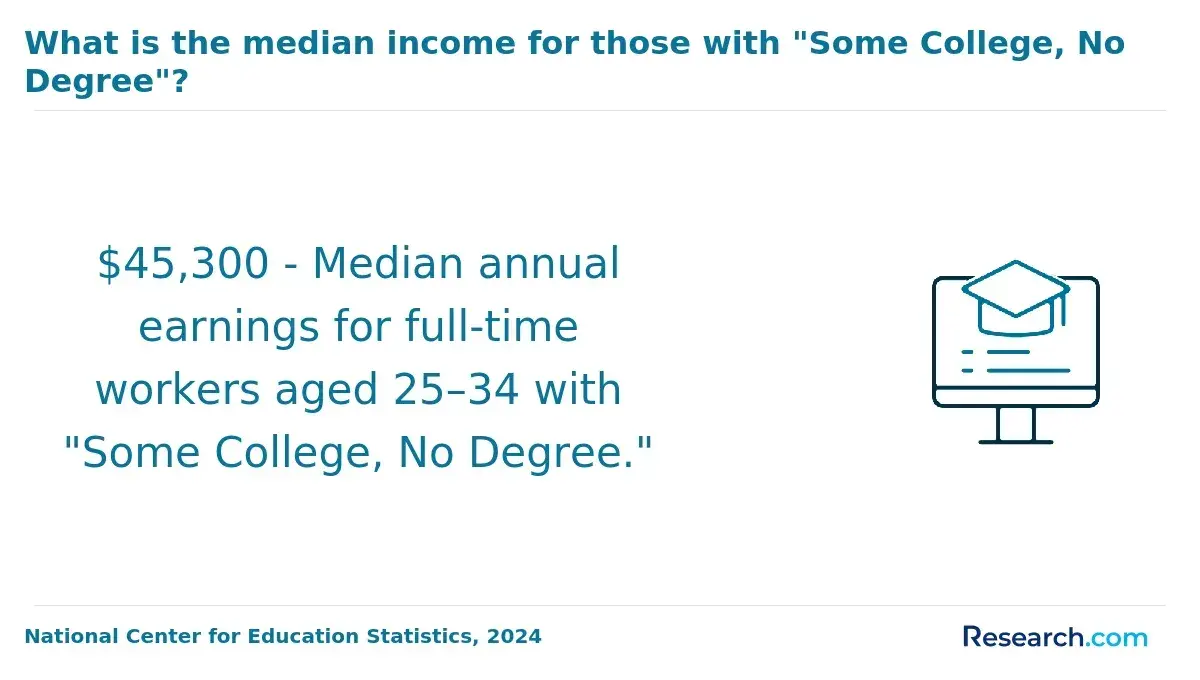
Graduate library science students should understand that federal aid often means loans rather than grants. For recent federal aid years, the maximum Pell Grant has been $7,395, but Pell Grants generally apply to eligible undergraduate students, not most MLIS students. Graduate students more commonly use Direct Unsubsidized Loans, Grad PLUS Loans, scholarships, assistantships, or employer benefits.
Follow these guidelines:
- Confirm that the school participates in Title IV federal student aid programs.
- Submit the FAFSA using the school's federal code and the correct aid year.
- Ask whether the online library science program itself is aid-eligible, especially if it is a certificate, licensure add-on, or nondegree option.
- Review the aid offer separately for grants, scholarships, loans, and work opportunities.
- Borrow only what you need after subtracting gift aid, employer assistance, savings, and payment-plan options.
Students comparing library science with other human-service graduate paths, such as an online counseling degree, should pay attention to the same distinction: FAFSA eligibility does not mean the program is free, and loans must be evaluated against likely earnings and career requirements.
Which scholarships, grants, and tuition benefits can help pay for an online library science degree? The best aid package combines funds that do not need to be repaid with a realistic payment plan. For library science students, funding may come from the university, state library associations, professional organizations, employers, or service-based programs.
Use the categories below to build a funding checklist before choosing a program. The goal is to reduce net price, not simply delay payment through borrowing:
- Institutional scholarships: Ask the library science department whether awards are automatic, competitive, need-based, merit-based, renewable, or limited to full-time students.
- Graduate assistantships: Some universities offer tuition support or stipends for research, teaching, archives, digital scholarship, or library service roles.
- State library association scholarships: Many state and regional library groups support residents preparing for professional library work.
- Employer tuition assistance: Public libraries, universities, school districts, government agencies, and corporate information centers may reimburse part of tuition for employees.
- Service-linked benefits: Veterans benefits, AmeriCorps education awards, public service programs, or workforce grants may apply depending on eligibility.
- School librarian support: Students pursuing school library media roles should ask state education agencies and districts about shortage-area incentives or educator tuition programs.
Students exploring other education-related credentials, such as BCBA certification online, should use the same funding rule: verify whether tuition benefits are renewable and whether they apply to all required courses, not just the first term.
Can transfer credits, prior learning, and competency-based study lower the cost of an online library science degree? Yes, but the savings depend on the program's transfer policy. Most ALA-accredited library science master's programs limit the number of graduate credits students can transfer, and credits usually must be recent, relevant, and earned with a minimum grade.
Students should ask about transfer and prior-learning rules before enrolling, not after completing the first term. The most useful questions are practical and specific:
- How many graduate credits can transfer into the MLIS, MLS, MSLS, or MSLIS program?
- Do transfer credits reduce both tuition and mandatory fees, or only tuition?
- Are credits from non-ALA programs, certificates, education degrees, archives programs, or instructional technology programs accepted?
- Is there a time limit on graduate credits, such as courses completed within a certain number of years?
- Does the program require a minimum number of credits to be completed at the home institution?
- Can prior professional experience waive a practicum, internship, or introductory course?
Transfer credits can lower cost, but they can also reduce scholarship eligibility if an award requires a minimum credit load. Ask the registrar, program director, and financial aid office to confirm how transferred credits affect both graduation requirements and aid.
How Should Students Compare the Net Price, Quality, and Return on Investment of Online Library Science Degree Programs?
How should students compare the net price, quality, and return on investment of online library science degree programs? The best-value program is the one that meets your career goal at the lowest realistic net price while maintaining accreditation, student support, and employer credibility. Affordability should narrow your list, but it should not be the only factor.
The Bureau of Labor Statistics lists the typical entry-level education for librarians and library media specialists as a master's degree and reports a May 2024 median annual wage of $64,370. That salary context does not guarantee an individual outcome, but it gives students a practical benchmark for comparing debt, repayment, and career fit.
Use this decision framework before enrolling:
- Calculate total tuition by multiplying the required credits by the current tuition rate, then add mandatory fees for your expected number of terms.
- Subtract only confirmed gift aid, such as renewable scholarships, grants, waivers, or employer funds that you are likely to receive.
- Compare the resulting net price with career requirements for your target role, such as public librarian, academic librarian, archivist, digital asset manager, school librarian, or information specialist.
- Review program quality indicators, including ALA accreditation, course availability, faculty expertise, advising, fieldwork support, career services, and completion flexibility.
- Estimate borrowing conservatively and avoid using the maximum loan amount as your budget unless you truly need it.
- Ask recent students or alumni whether courses were offered often enough to graduate on time without paying for extra terms.
ROI also depends on the type of work you want. A student aiming for archives, data curation, UX research, or digital collections may value specialized electives and portfolio projects, while another student may prioritize the lowest ALA-accredited route to public library eligibility.
Similar ROI thinking applies in skills-based fields such as a game development degree online, where cost should be weighed against portfolio strength, tools, and job-market fit.
Other Things You Should Know About Library Science
Yes, many employers accept online library science degrees when the institution is accredited and the master's program meets the employer's requirements. For professional librarian roles, an ALA-accredited online MLIS, MLS, or equivalent degree is often the safest option.
Not always. A general MLIS may prepare students for public, academic, or special libraries, while school library media roles may require educator licensure, supervised fieldwork, exams, or state-approved coursework. Requirements vary by state.
Part-time study can reduce short-term payment pressure, but it is not always cheaper. If fees are charged every term, taking longer to graduate can increase the total cost even when tuition per credit stays the same.
Some programs are fully online, while others may require orientations, residencies, practicums, internships, or local field placements. Confirm these requirements before enrolling because travel and placement costs can affect affordability.
- Online Master of Library and Information Studies https://www.ualberta.ca/en/school-of-library-and-information-studies/programs/online-mlis.html
- 2025 Best Online MLIS Programs that are ALA Accredited https://www.librarysciencedegrees.org/programs/online/best-mlis-ala-accredited
- 2025's Most Affordable Library Science Degrees (MLIS) Online https://librarysciencedegreesonline.org/affordable-library-science-programs/
- Online vs. In-Person Library Science Programs https://www.librariancertification.com/online-vs-in-person-library-science-programs/
- Library Education Scholarships - The Library Network https://tln.org/page/scholarships
- Best MLIS Programs by Tuition Cost: 2026 Comparison https://www.mastersinlibraryscience.org/articles/mlis-program-tuition-comparison/