2027 Cheapest Accredited Online International Business Master's Programs With No Out-of-State Tuition Surcharge

Co-Founder and Chief Data Scientist
Choosing an online international business master's involves more than finding the lowest per-credit rate: out-of-state surcharges, fees, required travel, and completion time can change the total substantially. This guide is for working professionals and recent graduates comparing accredited, residency-neutral options. It explains how to verify tuition and accreditation, estimate your real cost, and weigh career value.
For context, management analysts had a $101,190 median annual wage in May 2024, according to the U.S. Bureau of Labor Statistics, illustrating the earnings level in a related business-advisory occupation.
Key Things You Should Know
- A no-out-of-state-tuition-surcharge policy means eligible online students pay the same published tuition regardless of residence; it does not automatically mean the program has the lowest total cost.
- Compare required credits multiplied by the applicable online tuition rate, then add mandatory fees, books, technology, and any travel costs; a lower per-credit price can lose its advantage in a longer program.
- Verify institutional accreditation, confirm whether business accreditation such as AACSB applies, and evaluate curriculum, schedule, transfer policy, aid, and career fit alongside price.
What Does No Out-Of-State Tuition Surcharge Mean for an Online International Business Master's Program?
A no-out-of-state-tuition-surcharge program charges online students one tuition rate regardless of the state where they live. At a public university, that rate may be described as a flat online rate, eRate, distance-learning rate, or universal graduate rate. It is not necessarily the same as the university's resident tuition, but it removes the additional nonresident amount that campus-based students often pay.
This model is most useful for students living outside the university's home state, especially those who do not plan to move. A resident applicant should still compare the online rate with the school's in-state rate, because either one could be lower depending on the program.
The comparison below distinguishes similar-sounding policies that can produce very different bills.
| Tuition policy | What it usually means | Who benefits most | What to confirm |
| Flat online tuition | One published rate for online students in all states | Out-of-state students seeking predictable pricing | Whether every required course uses that rate |
| In-state tuition for all online students | Online learners are billed at the resident rate | Nonresidents comparing public universities | Fees and exclusions for business courses |
| Nonresident tuition waiver | A reduction from the standard nonresident rate | Students who meet stated eligibility terms | Whether the waiver is automatic and renewable |
| Residency-based tuition | Residents and nonresidents pay different rates | Applicants already eligible for residency | Residency documentation and program delivery rules |
A common mistake is treating "no out-of-state surcharge" as a promise of low tuition. It only answers one part of the price question. Ask the program office for the tuition schedule for your entry term, the number of credits required, and a list of mandatory program, distance-learning, and course fees.
How Can Students Verify Accreditation for an Affordable Online International Business Master's Program?
Start with institutional accreditation. This is the broad quality-review status of the university and is important for federal aid eligibility, employer recognition, and transferring credits. Confirm the institution in the U.S. Department of Education or Council for Higher Education Accreditation directories, then verify that the accreditation applies to the degree-granting institution rather than only to an affiliated learning platform.
Business accreditation is separate. AACSB, ACBSP, and IACBE are examples of specialized business accreditors. AACSB is widely recognized in business education, but the absence of a specialized business credential does not by itself make an institution unaccredited or a program unsuitable. Review the specific curriculum, faculty, student support, and employer relevance.
The following sequence reduces the risk of relying on an outdated marketing claim.
- Locate the exact online master's program on the university's official catalog, not only on an admissions landing page.
- Confirm the university's institutional accreditor through an authoritative accreditation directory.
- Ask whether the business school or the exact program holds specialized accreditation and whether that status will remain active through your expected graduation date.
- Save written confirmation of the program title, delivery method, total credits, and accreditation response before paying a deposit.
Specialized accreditation matters differently across fields. For example, counseling applicants should use a list of CACREP-accredited programs because that field's professional pathways can depend heavily on program approval. International business is generally not a licensed profession, so institutional accreditation and career alignment are usually the central checks.
How Much Does the Cheapest Online International Business Master's Program Cost in Total?
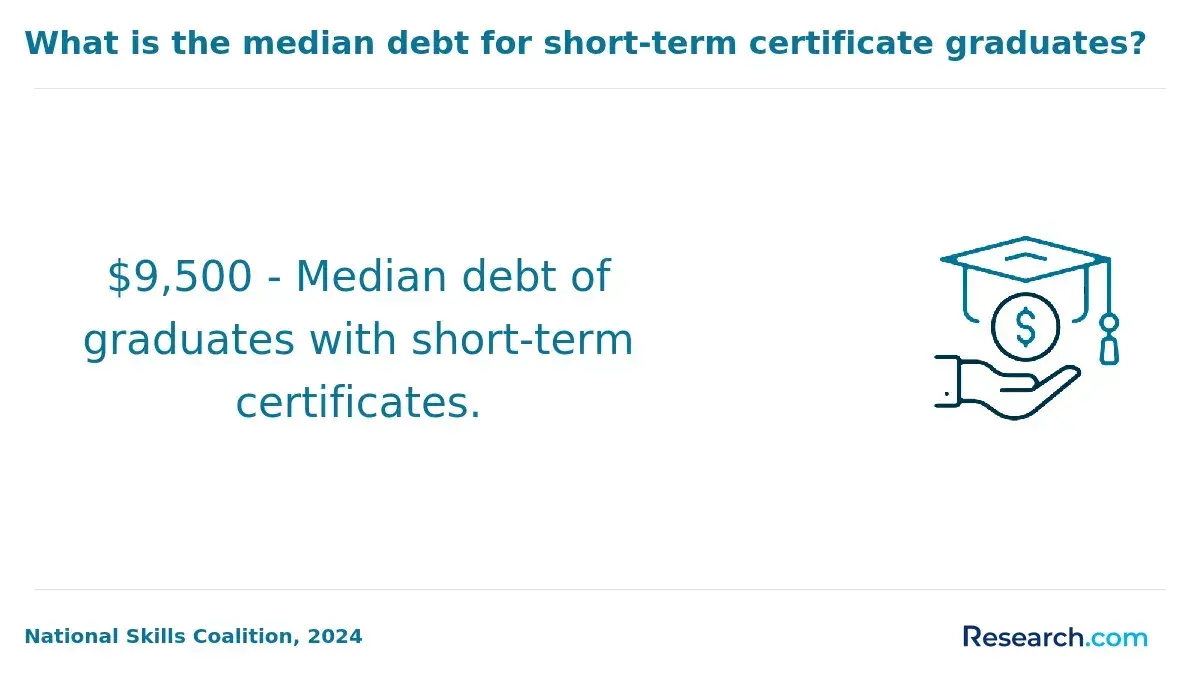
There is no permanent nationwide "cheapest" accredited online international business master's program because institutions change rates, credit requirements, and fees by term. The most useful figure is the estimated total program cost for your start date, not an advertised monthly payment or a single course's tuition.
Use this calculation: required program credits × applicable tuition per credit + mandatory institutional and course fees + required materials + unavoidable travel or residency expenses. Do not subtract scholarships or employer benefits until you know that you qualify and that the funds can be used for tuition and required fees.
This cost worksheet shows the components that should appear in a side-by-side comparison. Enter only figures confirmed by each school.
| Cost component | How to calculate it | Why it changes the decision |
| Base tuition | Required credits × online rate per credit | Usually the largest direct expense |
| Mandatory fees | Per-term, per-credit, technology, graduation, and course fees | Can make comparable tuition rates diverge |
| Materials | Textbooks, software, simulations, and case-study access | May vary by course and specialization |
| Travel and lodging | Required campus visits, residencies, or international components | Can materially increase a hybrid program's cost |
| Financing cost | Interest and fees if borrowing is necessary | Reflects the cost of paying over time rather than upfront |
Request a written estimate that separates tuition from fees and identifies assumptions, such as full-time enrollment or a fixed cohort price. Tuition can change before later terms, and a school may reserve the right to revise fees. A transparent estimate is more valuable than a low headline rate with unclear exclusions.
Usually, no - if the program genuinely uses a residency-neutral online tuition rate. Students pay the stated online rate without proving state residence. However, schools may still ask for an address to determine state authorization, eligibility for state aid, military benefits, or other administrative requirements.
Residency may matter when a university advertises a waiver rather than a universal online rate. A waiver can have conditions related to location, enrollment level, employer partnership, military status, or a particular campus. It can also exclude some fees or lapse if a student changes programs.
Before applying, get clear answers to the questions below. They distinguish a dependable published rate from a discount that could be limited.
- Does the listed rate apply to every required online international business course?
- Is the rate available to students in my state for the full degree, including electives and capstone courses?
- Must I submit residency documents, maintain a certain course load, or meet any waiver condition?
- Are online students charged separate distance-learning, college, or campus fees?
- Will the school provide the estimated total tuition and mandatory fees in writing for my planned start term?
Do not establish residency solely because you assume it will lower online tuition. State residency rules can be lengthy and fact-specific, while a flat-rate online program may eliminate the need entirely. Confirm the policy for the exact degree rather than relying on general university tuition pages.
Public universities can be especially competitive for residents and for nonresidents enrolled in flat-rate online programs. Private nonprofit universities often publish one tuition rate for all students, which can make their pricing simpler and occasionally competitive after scholarships. Neither category is automatically cheaper.
The most useful comparison is between specific programs with the same academic and delivery requirements. Public status may bring a lower base rate but more separate fees; a private nonprofit may have a higher stated price but include more services or offer institutional scholarships. For a useful comparison of affordability models in another graduate field, see these MSW online options.
This framework shows where cost differences commonly arise.
| Institution type | Potential cost advantage | Potential limitation | Best comparison method |
| Public university | Resident rates or flat online rates may be low | Nonresident rules and fee structures can vary | Compare the exact online program's total required charges |
| Private nonprofit university | One nationwide rate and institutional aid may simplify planning | Published tuition may be higher before aid | Compare net price after confirmed grants and scholarships |
| For-profit institution | May offer frequent starts and streamlined enrollment | Price, transferability, and outcomes require close review | Verify accreditation, total cost, and student protections carefully |
Nonprofit status and public ownership are not quality guarantees. Evaluate institutional accreditation, specialized business accreditation where relevant, curriculum, career support, faculty access, and whether the degree's international focus matches your intended industry.
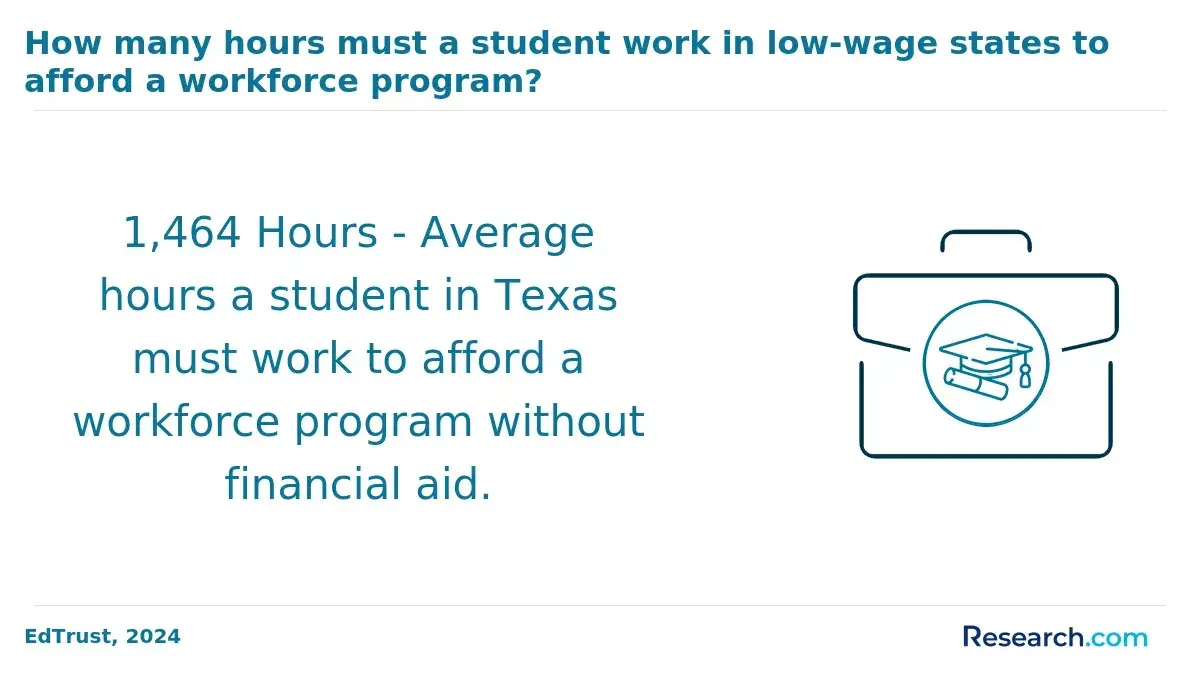
Yes. Eligible graduate students may use federal Direct Unsubsidized Loans and Grad PLUS Loans, while schools, employers, professional associations, and foundations may provide scholarships or tuition support. Federal Student Aid eligibility requires enrollment in an eligible program at an eligible institution and completion of the FAFSA; awards and borrowing limits depend on the student and school.
For many employed learners, employer tuition assistance can have more immediate value than a small difference in advertised tuition. Check whether reimbursement is paid upfront or after grades post, whether a work-commitment agreement applies, and whether textbooks, fees, and international study components are excluded.
Use this order to estimate net cost without assuming aid is guaranteed.
- Calculate total tuition and mandatory fees using the school's current schedule.
- Subtract only scholarships, grants, veteran education benefits, or employer assistance that you have confirmed in writing.
- Identify the remaining amount you can pay from savings or current income.
- Compare federal loan terms before considering private loans, and review the likely repayment obligation rather than focusing only on the monthly payment.
A low-cost program is often preferable to borrowing heavily for a more expensive option with similar academic fit. Still, a higher-priced accredited program can be rational if confirmed employer support, a relevant specialization, stronger scheduling, or better career access materially improves your ability to complete and use the degree.
Format affects both direct and indirect cost. Fully online asynchronous programs can reduce commuting and scheduling conflicts, while synchronous classes may provide real-time faculty and peer interaction but require attendance at set times. Hybrid programs can add transportation, lodging, and time-away-from-work expenses even when tuition is residency-neutral.
International business master's degrees come in various forms, including MS, MA, MBA concentration, and specialized master's. An MS often focuses on analytics, strategy, and quantitative business methods, while an MA may emphasize intercultural communication, policy, or regional study. An MBA with an international business concentration is typically a broader professional management degree.
Some programs culminate in a capstone project, while others incorporate a thesis or research component. These differences significantly impact credits, pacing, and fit, making the degree label alone an insufficient indicator.
The table highlights format choices that should be priced before selecting a program.
| Format or pace | Possible cost effect | When it may fit | Important caution |
| Fully online, asynchronous | May reduce travel and scheduling costs | Working professionals in different time zones | Requires consistent independent time management |
| Fully online, synchronous | Direct tuition may be similar to asynchronous delivery | Students wanting scheduled discussion and structure | Work-hour conflicts can slow progress |
| Hybrid or residency-based | Travel may increase total cost | Students who value in-person networking | Confirm every required visit before enrolling |
| Accelerated cohort | Can reduce the number of billed terms and living-cost time | Students with dependable availability | Fast pacing can make work interruptions more costly |
| Part-time flexible program | Can spread payments over more terms | Students balancing major work or caregiving demands | More terms may mean more recurring fees |
Accelerated study is not automatically less expensive if tuition is charged per credit and the credit total is unchanged. It can, however, lower indirect costs by shortening the time to completion. Learners considering other fast-paced professional options can also review a best online construction management degree guide to see how accelerated structures should be evaluated by total requirements rather than speed alone.
Transfer credit can reduce cost only when a school accepts relevant graduate-level coursework and applies it to required degree credits. Many master's programs limit the number of transfer credits, require a minimum grade, set a recency window, and require that the coursework come from an appropriately accredited institution. Some cohort programs accept no transfer credit at all.
Do not calculate savings until the registrar or program director has evaluated your transcript. A course that sounds similar may not meet a program's learning outcomes, and transfer credit can affect sequencing, financial aid enrollment status, or the time you need to complete a capstone.
Use these steps to evaluate transfer value accurately.
- Request the maximum number of transferable credits, minimum grade, course-age limit, and residency-credit requirement in writing.
- Collect official transcripts, course descriptions, syllabi, and learning outcomes for potential matches.
- Ask whether accepted credits replace required courses or only count as electives.
- Recalculate tuition using the reduced number of credits, then check whether fewer enrolled credits change scholarship or aid eligibility.
Advanced standing is more common in fields with defined prior professional preparation than in international business, so applicants should not assume it will be offered. Transfer policies also vary widely across disciplines; students exploring design education should review the transfer and studio requirements of an online bachelor of architecture before assuming prior coursework will shorten that path.
A lower-cost online international business master's can be worthwhile when it builds skills you can use in a defined next role and does so without excessive borrowing. Common target paths include international sales management, global supply chain coordination, market research, import-export operations, procurement, compliance support, global account management, and business consulting. Actual job requirements vary by employer, industry, experience, language ability, and location.
International business work typically involves interpreting market conditions, coordinating across cultures and time zones, evaluating trade or supply risks, communicating with overseas partners, and using financial, market, or operational data. Employers may value applied experience, analytics, negotiation, foreign-language proficiency, and familiarity with regional regulations alongside the master's credential.
The U.S. Bureau of Labor Statistics reports a $101,190 median annual wage for management analysts in May 2024 and projects 9% employment growth from 2024 to 2034. This is not a salary estimate for every international business graduate, but it is useful context for applicants considering consulting and business-analysis-adjacent roles. Compare the degree's cost with the advancement opportunity in your own field rather than treating a national occupation figure as a personal outcome.
A stronger return on investment is more plausible when the program fits a clear career plan. Before enrolling, assess the following factors.
- Whether the curriculum includes the global strategy, trade, supply chain, finance, analytics, or regional-market content required for your target role.
- Whether the program offers practical projects, employer connections, alumni access, internships, or career coaching that you can realistically use online.
- Whether your employer recognizes the degree for promotion, role changes, or tuition assistance.
- Whether expected borrowing remains manageable if advancement takes longer than planned.
AI tools are increasing the value of workers who can evaluate outputs, use data responsibly, communicate across markets, and make context-sensitive decisions. A degree is most useful when its coursework develops those capabilities rather than simply adding a credential. Applicants deciding between technical and business pathways may also compare a computer science bachelor degree online with their current experience and the skills demanded in their intended role.
How Should Students Compare the Cheapest Accredited Online International Business Master's Programs?
Build a short list of programs that are institutionally accredited, authorized to enroll students in your state, and aligned with your career goal. Then compare their verified total costs on the same basis: one start term, the full required credit count, and the same assumptions about transfer credits and financial aid.
A practical comparison should include more than tuition. The table below identifies the decision criteria that most often separate an apparently cheap program from a strong overall value.
| Comparison factor | What to collect | Why it matters |
| Total required cost | Tuition, mandatory fees, materials, and required travel | Shows the actual price of completing the degree |
| Residency policy | Written confirmation of the online rate for your state | Prevents unexpected nonresident billing |
| Accreditation | Institutional status and any business-school credential | Supports recognition, aid, and transfer decisions |
| Credit requirement and pace | Total credits, term length, maximum time, and course sequence | Determines both cost and feasibility |
| Curriculum | Required courses, concentrations, capstone, thesis, and experiential work | Tests alignment with your target career |
| Student support | Career services, advising, library access, tutoring, and technical support | Can affect completion and job-search usefulness |
| Outcomes evidence | School-published employment information and alumni examples | Provides context without guaranteeing individual results |
After comparing your finalists, contact admissions and financial aid with a single written request for the current tuition schedule, total credits, all mandatory fees, transfer decision timeline, residency policy, and available aid. Keep the replies with your application records. This step is especially important when the website uses broad terms such as "affordable," "starting at," or "as low as."
The best choice is usually the lowest verified net cost among programs that meet your academic, scheduling, and career requirements. A program with slightly higher tuition may be the better investment if it eliminates travel, accepts useful transfer credit, provides a relevant specialization, or allows you to finish without disrupting stable employment.
Other Things You Should Know About International Business
Not always. Many programs admit students from nonbusiness majors, although they may require foundation coursework in accounting, economics, statistics, or finance. Review prerequisites early because extra courses can increase both cost and completion time.
No. An MBA is generally a broad management degree with an international specialization, while a specialized master's focuses more directly on global markets, cross-border strategy, trade, and international operations. Choose based on whether you need broad leadership preparation or deeper international-business study.
Yes, many public universities charge the same online graduate tuition to all students, which avoids the out-of-state surcharge. To verify this, check the school’s tuition table, look for a flat online rate, and confirm the program is regionally accredited through the institution and program page.
Applicants commonly submit a bachelor's transcript, application, resume, statement of purpose, and sometimes recommendation letters. GMAT or GRE requirements vary; some schools waive them based on professional experience or academic record. Always check the exact program's current admissions page.
- Online Master's in International Business: Review Top Schools https://www.onlinemastersdegrees.org/best-programs/business/international-business/
- Online MBA Programs for International Students https://www.bschools.org/blog/online-mba-for-international-students
- Master of International Business vs MBA: Which Is Right for You? | StudyNext Australia https://studynext.com/au/resources/master-of-international-business-vs-mba
- How Long Does It Take to Get an MBA? | Articles | Unimy https://www.unimy.com/article/how-long-does-it-take-to-get-an-mba