2027 Cheapest Accredited Online Intelligence Master's Programs With No Out-of-State Tuition Surcharge

Co-Founder and Chief Data Scientist
An online intelligence master's can be affordable for out-of-state students, but a flat tuition rate does not automatically mean the lowest total price. The U.S. Bureau of Labor Statistics projects 29% employment growth for information security analysts from 2024 to 2034, underscoring demand for analytical and security-adjacent skills.
This guide is for working professionals and career changers comparing intelligence, national security, strategic intelligence, and related programs. Learn how to verify accreditation, calculate every required cost, evaluate flexible formats, and identify the program that best supports your career and budget.
Key Things You Should Know
- A no-out-of-state-tuition-surcharge policy means eligible online students pay one published rate regardless of residence. It does not mean the degree has the lowest total cost after fees, required credits, and travel.
- Confirm institutional accreditation, the exact online program's tuition page, required credit count, and mandatory fees before comparing advertised per-credit prices.
- Career value depends on role alignment. The U.S. Bureau of Labor Statistics projects 29% growth for information security analysts from 2024 to 2034, but intelligence positions may also require experience, clearance eligibility, specialized skills, or employer-specific credentials.
What Does No Out-Of-State Tuition Surcharge Mean for an Online Intelligence Master's Program?
A no-out-of-state-tuition-surcharge online intelligence master's program charges the same base tuition to qualifying online students whether they live in the university's home state or elsewhere.
Schools may call this "online tuition," "distance-learning tuition," "eRate," or a residency-neutral rate. It is different from automatically receiving the campus in-state rate, because the online rate may be higher or lower than that rate.
This model usually benefits nonresidents who would otherwise face a public university's higher nonresident graduate tuition. It is less important for residents who already qualify for a lower campus rate, and it may not be the best deal when a private nonprofit university offers a lower all-in price.
Use the school's program-specific disclosures to distinguish a true flat rate from a limited waiver. The following comparison shows what to verify.
| Tuition model | What it means | Best fit | Key caution |
| Residency-neutral online rate | One base rate for eligible online students | Out-of-state working adults | Fees and exclusions may still vary |
| In-state and out-of-state rates | Price changes with legal residency | Established in-state residents | Do not assume online enrollment qualifies for in-state tuition |
| Private university rate | Usually one published tuition rate regardless of residency | Students comparing service, schedule, and net price | A single rate can still be comparatively high |
Ask admissions whether the listed rate applies to the exact intelligence degree, every required term, and all students living outside the state. Also ask whether the rate changes if you take a hybrid course, attend a campus residency, or move during enrollment.
How Can Students Verify Accreditation for an Affordable Online Intelligence Master's Program?
Start with institutional accreditation. An accredited university has been evaluated by an accrediting agency recognized by the U.S. Department of Education or the Council for Higher Education Accreditation. This matters for federal aid eligibility, credit transfer, employer confidence, and future doctoral applications.
Intelligence studies does not have one universal programmatic accreditor equivalent to those used in some licensed professions. A school may instead hold institutional accreditation while its intelligence, security studies, cybersecurity, criminal justice, or homeland security program follows field-specific curriculum standards. That is normal, but it means students should evaluate the curriculum and faculty rather than assume a programmatic seal exists.
Use this verification sequence before paying an application fee:
- Find the university in the U.S. Department of Education's accreditation database and confirm its current institutional accreditor.
- Confirm that the online intelligence master's is awarded by the accredited institution, not merely delivered through a third-party platform.
- Review the catalog for degree title, required credits, learning outcomes, faculty, and online-delivery approval.
- Ask whether credits are likely to transfer to your intended employer-supported, doctoral, or post-master's pathway.
- Request written confirmation if the website's accreditation language does not clearly cover the online program.
A common mistake is confusing state authorization, military-friendly participation, or a professional association membership with accreditation. Those facts can be useful, but none replaces institutional accreditation.
How Much Does the Cheapest Online Intelligence Master's Program Cost in Total?
The cheapest credible option is the program with the lowest net total cost for the credits you must complete, not necessarily the lowest published tuition rate. Intelligence master's programs commonly differ in credit requirements, and a low rate attached to more required credits can cost more than a higher rate attached to a shorter curriculum.
Calculate tuition first, then add costs the tuition page may separate. This framework shows the numbers to collect for each school.
| Cost item | How to calculate it | Why it matters |
| Base tuition | Published per-credit rate × required billable credits | Creates the core comparison |
| Mandatory university fees | Term fees × expected number of terms | Can make an accelerated and a traditional program cost differently |
| Course-specific charges | Sum technology, lab, proctoring, or course fees | May not appear in headline tuition |
| Required travel | Transportation, lodging, meals, and local travel for residencies | Important for hybrid or intensive formats |
| Books and software | Estimate from syllabi or bookstore listings | Varies by course and research tools required |
| Financial assistance | Grants, scholarships, and confirmed employer support | Produces the estimated net cost |
Use this formula: (tuition + mandatory fees + required educational expenses + required travel) − gift aid − confirmed employer assistance = estimated net program cost. Keep loans separate from scholarships or grants; borrowing changes how the bill is financed, not the program's underlying price.
Request a written cost estimate for the full degree and ask whether tuition is locked for continuing students. A price listed for one academic year may change before a part-time student completes the program.
If the program explicitly publishes one online rate for all eligible students, establishing residency will not necessarily lower tuition because the school is already using a residency-neutral online price. Read the eligibility language carefully, since some universities exclude certain online programs or apply a special rate only to students who remain fully online.
Students should not move to a state solely to seek lower tuition without understanding the residency rules. Public universities commonly require evidence of domicile and may impose a waiting period, financial-independence review, or restrictions for people who moved primarily to attend school. Online enrollment can also be treated differently from campus enrollment.
Before relying on a residency classification, ask the registrar these questions:
- Does the online intelligence master's have one rate for all U.S. residents, or separate resident and nonresident rates?
- Would any on-campus requirement change my tuition classification or eligibility for the online rate?
- Is the stated rate guaranteed through completion, and what enrollment changes could affect it?
- Are military-affiliated students, veterans, or employees eligible for separate statutory or institutional tuition policies?
A no-surcharge policy is generally the simpler choice for a nonresident who needs predictable pricing. A residency-based public program can make more sense for a student who already meets the institution's resident definition and has confirmed the lower rate in writing.
Public and private nonprofit institutions can both offer strong value. Public universities often have an advantage for eligible in-state students, while private nonprofit institutions commonly use one rate for all students. For an out-of-state online learner, a public school with a residency-neutral rate may be directly competitive with a private nonprofit program.
Compare the institution type only after comparing the specific degree's all-in price, academic fit, and schedule. Students considering management-oriented alternatives can also compare the cost structure of a business degree online when their desired career path emphasizes operations, analytics, or organizational leadership rather than intelligence analysis.
The table identifies the practical trade-offs that matter more than an institution's label.
| Factor | Public university | Private nonprofit university | Decision implication |
| Residency pricing | May use in-state, out-of-state, or online flat rates | Often one rate regardless of residence | Compare the exact online-program rate |
| Fees | May separate campus and online fees | May bundle or separately charge fees | Use a full-term cost estimate |
| Scheduling | Can vary by department and term | May offer structured cohorts or frequent starts | Match pace to work obligations |
| Potential value | Can be especially favorable for qualifying residents | Can be favorable for nonresidents with aid or lower total tuition | Evaluate net cost and outcomes together |
Do not assume public means cheaper or private means unaffordable. A lower-cost choice should also provide appropriate faculty expertise, useful electives, reliable online support, and a curriculum that fits your intended intelligence role.
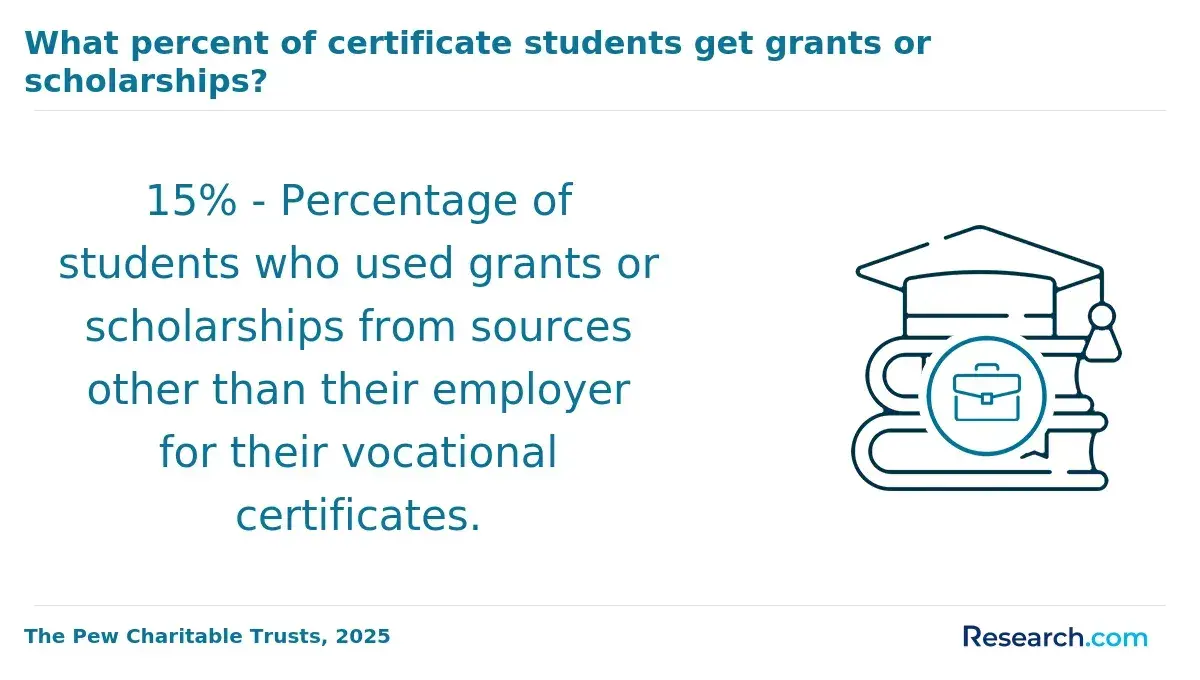
Eligible online graduate students may qualify for federal student loans, and schools may offer institutional scholarships, need-based grants, military benefits, or payment plans. Employer tuition assistance can be especially meaningful for professionals in defense, public safety, cybersecurity, government contracting, risk, and corporate security, but reimbursement rules vary by employer and may require continued employment or a minimum grade.
For graduate students, federal Direct Unsubsidized Loans have an annual borrowing limit of $20,500, subject to the aggregate federal loan limit. That limit is a financing ceiling, not a recommendation to borrow or proof that a program is affordable. Compare the resulting debt with your expected budget and career path.
Evaluate funding in this order so that you identify aid that reduces the price before debt financing:
- Submit the FAFSA and confirm the school participates in federal aid for its online graduate students.
- Ask the program whether it has scholarships limited to intelligence, security studies, veterans, public servants, or working professionals.
- Obtain employer reimbursement rules in writing, including annual caps, grade requirements, approved-school lists, and repayment obligations.
- Subtract grants, scholarships, and confirmed employer support from your all-in program estimate.
- Borrow only the remaining amount you need after considering your monthly budget and existing loan obligations.
A lower tuition bill is not the only way to control career-development spending. If your near-term goal is an accounting-support role rather than intelligence work, a shorter credential such as the best bookkeeping certification may be a more appropriate and lower-cost route. Choose the credential that matches the work you actually plan to pursue.
Format affects both direct charges and the practical cost of finishing. Fully online asynchronous programs can reduce travel and scheduling conflicts for working adults.
Synchronous courses may provide real-time discussion and networking but require attendance at set times. Hybrid programs can be valuable when in-person simulations, briefings, or faculty interaction are central to the curriculum, yet required travel can materially raise the total cost.
Accelerated programs may reduce the number of terms in which you pay recurring fees and can shorten the time before you apply new skills at work. They can also create a demanding workload that leads students to reduce work hours, retake a course, or take fewer classes than planned. A traditional part-time pace can be more manageable, though tuition changes over additional years remain a risk.
Compare the delivery features below against your work, caregiving, and travel constraints.
| Format feature | Potential cost effect | Best for | Question to ask |
| Fully asynchronous | May minimize travel and missed-work costs | Students needing schedule flexibility | Are there required live sessions or proctored exams? |
| Live online classes | Usually avoids travel but requires set-time attendance | Students who prefer structured interaction | Are sessions recorded for work conflicts? |
| Hybrid residency | Adds travel and lodging expenses | Students seeking in-person exercises or networking | How many visits are mandatory and where are they held? |
| Accelerated cohort | May reduce term-based fees but increases workload intensity | Students with predictable available time | What is the expected weekly study commitment? |
For students whose long-term plan includes advanced research or teaching, an online master's should be evaluated alongside the admissions and time demands of online doctorate programs. Confirm that the master's includes the writing, research-methods, and faculty-mentorship opportunities your next step may require.
Transfer credits can reduce cost only when the university accepts prior graduate-level coursework and applies it to required degree credits. Some intelligence master's programs accept a limited number of transfer credits; others use a lockstep cohort curriculum and accept few or none. Policies often require a minimum grade, course equivalency, recent completion, and official transcripts.
Do not treat transfer eligibility as guaranteed until a formal evaluation is completed. A school may accept credits toward graduate standing but not toward the intelligence degree itself, or it may accept electives while requiring all core intelligence courses to be taken at the institution.
To estimate the potential savings responsibly, follow these steps:
- Identify the program's total required credits and its maximum transferable-credit limit.
- Collect course descriptions, syllabi, grades, and official transcripts for prior graduate work.
- Ask whether each likely transfer would replace a required course, an elective, or nothing.
- Calculate savings using only credits the school confirms can apply to the degree.
- Compare the lost value of repeating a course against the benefit of refreshing essential methods or analytical skills.
Advanced standing based on professional training, military education, or certifications is less common at the graduate level and should be confirmed separately. Never enroll assuming a verbal estimate will become a binding transfer award.
A low-cost accredited intelligence master's can be worthwhile when it closes a clear skill gap for your target role, fits employer expectations, and does not require unmanageable borrowing.
Programs may lead to or support work in intelligence analysis, threat assessment, risk analysis, cybersecurity intelligence, fraud investigation, geopolitical analysis, emergency management, or corporate security. Actual job requirements differ across federal agencies, state and local employers, contractors, and private companies.
Intelligence work typically requires clear analytical writing, source evaluation, briefing, research methods, data literacy, ethical judgment, and the ability to communicate uncertainty.
Some roles also favor language ability, technical expertise, prior military or law-enforcement experience, clearance eligibility, or a specialized portfolio. A master's degree can strengthen preparation, but it does not guarantee a clearance, a government position, or a particular salary.
The closest national labor-market reference for technical intelligence-adjacent work is information security analysis. The U.S. Bureau of Labor Statistics reports a 2024 median annual wage of $124,910 for information security analysts. Use that figure as context for a distinct occupation, not as an expected salary for every intelligence graduate.
Career changers should also compare nearby analytical fields before committing. An online marketing degree may fit candidates whose preferred work centers on consumer research, competitive intelligence, analytics, and business strategy rather than national-security or threat-focused intelligence.
A higher-cost program may be justified when it offers a needed specialization, employer-recognized faculty expertise, stronger networking access, or required methodological training. It is harder to justify when its added cost buys only a broad title without improving your access to relevant skills, projects, or career support.
How Should Students Compare the Cheapest Accredited Online Intelligence Master's Programs?
Compare programs using the same assumptions: the full required credit count, your likely enrollment pace, all mandatory charges, and only aid you can reasonably document. A price comparison without those assumptions can favor a program that appears inexpensive but requires more credits, travel, or fees.
Create a one-page comparison for each finalist using the factors below. This approach keeps tuition from overshadowing accreditation, curriculum quality, and career fit.
| Comparison factor | What to confirm | Why it affects the decision |
| Accreditation | Current institutional accreditation and degree-awarding institution | Supports aid, transfer, and employer confidence |
| Residency policy | Exact online rate and any eligibility conditions | Determines whether nonresidents avoid a surcharge |
| Total cost | Credits, tuition, fees, materials, and travel minus confirmed gift aid | Measures the actual financial commitment |
| Curriculum | Analysis methods, intelligence cycle, ethics, writing, data, and relevant electives | Shows whether the degree develops target-role skills |
| Format | Asynchronous, live, hybrid, residency, and pace requirements | Determines whether you can finish without disrupting work |
| Career relevance | Faculty experience, projects, networking, and support services | Connects the program to your intended transition or advancement |
| Transfer policy | Maximum credits, equivalencies, and written evaluation process | Can change both timeline and total cost |
As a final check, ask each school for the catalog year that will govern your degree, a written estimate for your planned schedule, and confirmation of any residency requirement.
Students comparing online master's degrees across fields can apply the same framework to a masters in child development online program: the best value is the program whose total cost, accreditation, delivery format, and professional outcomes fit the student's actual goal.
The best affordable choice is not simply the program with the lowest advertised rate. It is the accredited program you can complete on schedule, finance responsibly, and use in the career direction you have verified.
Other Things You Should Know About Intelligence Programs
Intelligence studies is an academic and professional field focused on collecting, evaluating, protecting, and communicating information for security, policy, business, and risk decisions. Intelligence quotient is a psychological assessment concept and is unrelated to most intelligence master's degree curricula.
Some government and contractor roles require a clearance, while many private-sector intelligence, risk, research, and corporate-security roles do not. A university degree does not grant a clearance; employers sponsor eligible candidates when a role requires one.
Programs may admit students from political science, criminal justice, history, cybersecurity, business, international relations, data-focused fields, and other disciplines. Admissions requirements vary, so review prerequisite expectations for research methods, statistics, writing, or technical coursework.
Many online programs are designed for working adults, especially those using asynchronous coursework or part-time enrollment. Check the expected weekly workload, group-project requirements, live-session times, and any required residencies before deciding that a program fits your schedule.
- Master of Arts in Strategic Intelligence Studies - The Institute of World Politics https://www.iwp.edu/academics/graduate-degree-programs/master-of-arts-in-strategic-intelligence-studies/
- Accredited Online Master's Degree Programs at CSU Global | Colorado State University Global https://csuglobal.edu/academic-programs/graduate-degrees
- Companies That Pay For College | Find 36 Top Options https://www.educationconnection.com/financial-aid/companies-that-pay-for-college/
- 2025 Most Affordable Online Master's Degrees in Homeland Security https://www.onlineu.com/most-affordable-colleges/homeland-security-masters-degrees
- Top affordable online cybersecurity master degree programs https://cybersecurityguide.org/rankings/most-affordable-online-masters/
- Companies That Pay for Your Degree | ComputerScience.org https://www.computerscience.org/resources/companies-that-pay-for-college/
- Most Affordable Online Cybersecurity Master's Degrees in 2025 https://www.mastersinai.org/degrees/affordable-online-masters-in-cybersecurity/
- Best Online AI Master's Programs https://www.itcareerfinder.com/program-rankings/best-artificial-intelligence-masters-programs.html