2027 Cheapest Accredited Online Health Information Management Master's Programs With No Out-of-State Tuition Surcharge

Co-Founder and Chief Data Scientist
An online health information management master's degree can be affordable for out-of-state students when a university uses one tuition rate for all online learners, but the advertised per-credit price rarely tells the whole story. The U.S. Bureau of Labor Statistics projects 29% employment growth for medical and health services managers from 2023 to 2033, creating demand for professionals who can manage health data, compliance, systems, and operations.
This guide helps working adults compare residency-neutral tuition, accreditation, fees, completion time, aid, and career fit before applying.
Key Things You Should Know
- A no-out-of-state-surcharge policy means eligible online students pay the same published tuition rate regardless of where they live, but it does not automatically mean the program has the lowest total cost.
- For a credible online Health Information Management master's degree, verify institutional accreditation and determine whether programmatic accreditation, such as CAHIIM recognition, matters for your intended certification or employer; health services manager employment is projected to grow 29% from 2023 to 2033.
- Compare required credits × tuition, mandatory fees, transfer-credit limits, residency requirements, and employer aid; the cheapest advertised rate can cost more if it requires more credits, campus travel, or extra course fees.
What Does No Out-Of-State Tuition Surcharge Mean for an Online Health Information Management Master's Program?
Health Information Management, often abbreviated HIM, focuses on the governance, quality, privacy, security, analysis, and operational use of health information. Master's programs may be titled MS in Health Information Management, MS in Health Informatics, Master of Health Administration with an informatics concentration, or a related degree. Titles overlap, but the curriculum and intended career outcomes can differ substantially.
The comparison below distinguishes common tuition structures. Students should use the school's program-specific tuition page and written enrollment agreement rather than assuming all online degrees at one institution use the same policy.
| Tuition model | How residency affects price | Best fit | Important caution |
| Flat online tuition | One stated rate for eligible online students | Students living outside the university's state | Fees, course charges, and excluded programs may still vary |
| In-state and out-of-state rates | Nonresidents generally pay more | Students already eligible for in-state tuition | Residency rules can be difficult to meet while studying online |
| Out-of-state waiver | A waiver lowers, but may not eliminate, the nonresident difference | Students meeting stated eligibility criteria | Waivers may be limited, renewable, or unavailable for a specific program |
| Private-university tuition | Usually does not vary by state residency | Students comparing predictable published prices | A single rate can still be higher than a public online rate |
Ask admissions whether the rate applies to your exact degree, concentration, start term, and enrollment format. Also ask whether students located in your state may enroll, because state authorization can affect availability even when tuition is residency-neutral.
How Can Students Verify Accreditation for an Affordable Online Health Information Management Master's Program?
Accreditation is a quality-review process, but there are two different checks. Institutional accreditation applies to the university as a whole and is important for federal aid, credit transfer, and general degree recognition. Programmatic accreditation evaluates a particular academic program against field-specific standards. A low price should never substitute for either verification step.
For HIM, the Commission on Accreditation for Health Informatics and Information Management Education, commonly known as CAHIIM, is the principal specialized accreditor associated with health informatics and health information management education. Not every useful master's degree holds programmatic accreditation, particularly programs designed for administration, analytics, or informatics rather than an HIM credential pathway. The right standard depends on the student's goal.
Use the following process before paying an application deposit. It helps separate a current accreditation status from vague marketing language such as "accredited curriculum" or "aligned with industry standards."
- Confirm the university's institutional accreditor through the institution's official accreditation disclosure and the U.S. Department of Education or CHEA database.
- Search the relevant specialized accreditor's directory for the exact program, degree level, delivery format, and campus location.
- Read the program's curriculum and determine whether it supports your intended certification, such as RHIA eligibility, rather than assuming all HIM-related master's degrees do.
- Request written confirmation from the school if the online pathway, concentration, or teach-out arrangement is unclear.
- Save the tuition and accreditation information dated for the term in which you expect to enroll.
A common mistake is treating institutional accreditation as proof that a degree meets every professional certification requirement. Another is assuming a bachelor's program's CAHIIM status extends to a separate graduate program. Verify the exact credential. Nurses considering a different clinical leadership path can also compare 1 year MSN to DNP program options, which have distinct accreditation and clinical-practice considerations.
How Much Does the Cheapest Online Health Information Management Master's Program Cost in Total?
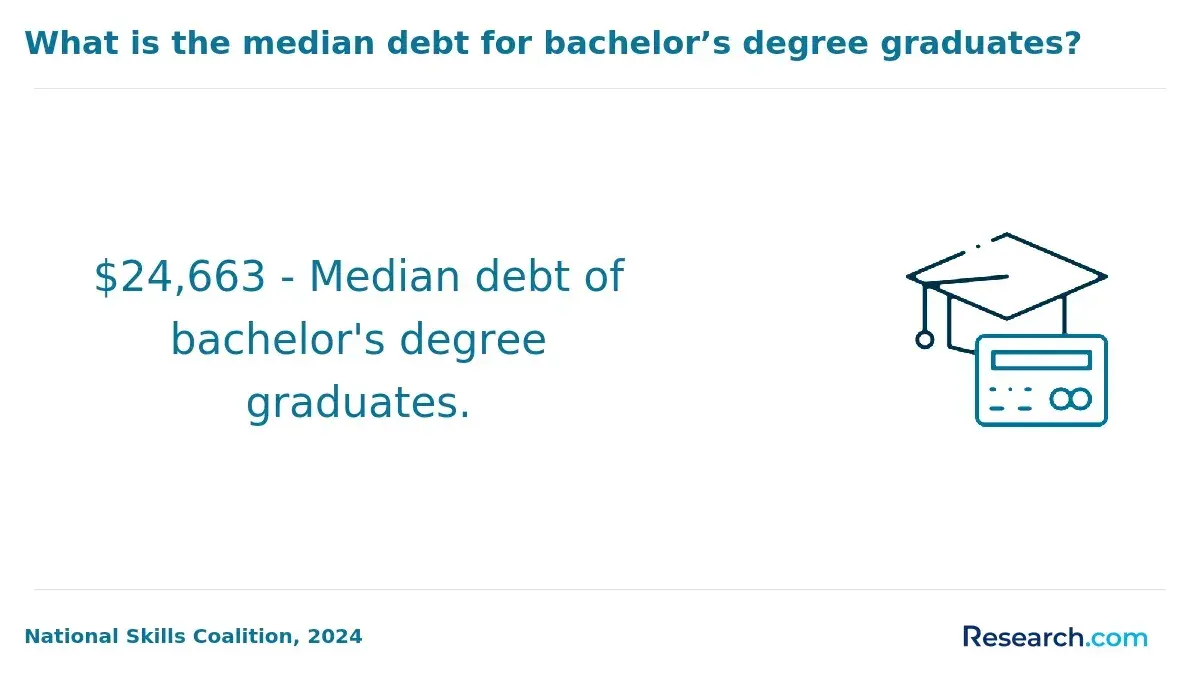
The cheapest program is the one with the lowest net total cost for the degree requirements you must complete, not simply the lowest tuition advertised per credit. Total cost begins with required graduate credits multiplied by the applicable tuition rate, then adds unavoidable institutional and program expenses. A shorter, higher-priced program can sometimes cost less overall than a lower-priced program requiring substantially more credits.
This formula provides a transparent starting point. Insert only figures confirmed for your enrollment term, because tuition and fee schedules can change.
| Cost component | How to calculate it | Why it matters |
| Base tuition | Required billed credits × published rate per credit | Usually the largest direct expense |
| Mandatory university fees | Per-term or per-credit required charges | Can make a low tuition rate less competitive |
| Program and course fees | Technology, assessment, software, lab, or practicum charges | May apply only to HIM or informatics courses |
| Required travel | Residency, orientation, practicum, or conference expenses | Often omitted from online cost estimates |
| Books and technology | Required materials, computer, internet, and proctoring costs | May be paid outside the tuition bill |
| Net cost | Total direct costs minus grants, scholarships, and employer support | Best figure for financing decisions |
Request a written estimate that identifies both tuition and mandatory fees for the whole degree. If a program quotes a range, ask what assumptions cause the range: credit load, residency, transfer credits, annual increases, or optional services. Do not budget based on a one-course estimate.
For example, a residency-neutral rate is financially attractive only after confirming the number of credits and all required charges. Students should also identify whether tuition is locked for continuing students or can rise annually. A tuition lock can improve predictability, but its terms may depend on continuous enrollment and a maximum completion period.
Do Online Health Information Management Master's Students Have to Establish Residency to Receive the Lowest Tuition Rate?
Usually, no. A genuine no-out-of-state-surcharge online program sets a single eligible online tuition rate and does not require students to become state residents. However, schools may still ask for a home address to confirm state authorization, determine financial-aid processing, or apply a separate tuition category. Residency-neutral tuition and residency status are related administrative concepts, but they are not the same thing.
Students should obtain answers in writing to the questions below before assuming they qualify for the posted rate.
- Does the stated online tuition rate apply to this specific Health Information Management master's program?
- Does the rate apply to students living in my state and starting in my intended term?
- Are there separate rates for part-time, full-time, synchronous, hybrid, or competency-based enrollment?
- Must I remain fully online, or will a campus course, practicum, or residency trigger another tuition schedule?
- Are any scholarships, grants, or graduate assistantships restricted by residency?
A residency waiver is less certain than a universal online rate. It may require a minimum course load, a separate application, academic performance, military affiliation, or renewal each term. Students who are eligible for traditional in-state tuition at a strong public university should compare that option too; a flat online rate is not automatically lower than a resident rate.
Health care professionals planning a career change should also avoid assuming that location-neutral online tuition changes professional training rules. For example, learners exploring LPN programs near me need to consider clinical-placement and state-approval requirements that are very different from an online HIM master's degree.
How Do Public and Private Universities Compare on the Cost of an Online Health Information Management Master's Degree?
Public and private nonprofit universities can both offer good value. Public institutions may offer especially low rates to in-state residents or through dedicated online tuition schedules. Private nonprofit institutions often use one rate for all students, which can simplify comparison for nonresidents. Neither governance model proves that a program is cheaper, better accredited, more flexible, or more likely to support a student's goals.
This side-by-side view highlights the trade-offs worth evaluating after you have calculated each program's total direct cost.
| Factor | Public university pattern | Private nonprofit university pattern | Decision implication |
| Residency pricing | May have resident, nonresident, and online-specific rates | Often uses one rate regardless of residency | Out-of-state students should compare the actual online schedule |
| Tuition predictability | Can vary by residency and course format | Can be easier to estimate with one published rate | Review fee schedules and annual increases in both cases |
| Financial aid | May include institutional awards and public-sector benefits | May offer institutional scholarships or employer partnerships | Compare net cost, not published tuition alone |
| Program design | May emphasize public health systems, research, or regional employers | May emphasize adult learners and cohort delivery | Assess curriculum, advising, and career support |
Private nonprofit status is different from for-profit status, and students should verify institutional accreditation and financial-aid eligibility for any school. For a student who needs predictable billing and cannot gain residency, a private nonprofit program with a lower total cost may beat a public nonresident option. For a resident with access to a well-aligned state university, public tuition may be the stronger value.
Students comparing administration-oriented degrees with clinical advancement routes may find that an ADN to MSN NP programs pathway has different clinical, scheduling, and cost considerations. It should be evaluated separately rather than treated as an HIM substitute.
Can Financial Aid Reduce the Cost of a Cheap Online Health Information Management Master's Program?
Yes. Financial aid can reduce the amount a student pays from savings or borrowing, although graduate students should distinguish grants and scholarships from loans that must generally be repaid. Online enrollment does not automatically prevent federal aid eligibility, but the institution, program, enrollment level, satisfactory academic progress, and student circumstances affect eligibility.
Start with the FAFSA and then ask the university's financial-aid office whether online graduate students can receive institutional scholarships, departmental awards, payment plans, or assistantships. For employed health care workers, employer tuition assistance may be especially meaningful when it covers an accredited, job-relevant degree. Confirm reimbursement caps, grade requirements, approved-school rules, and whether repayment is required if you leave the employer.
Prioritize funding sources in an order that protects long-term affordability.
- Apply for grants, scholarships, workforce awards, and employer tuition assistance before accepting loans.
- Compare each school's aid offer against its complete estimated cost, including fees and any travel.
- Ask whether scholarships are renewable and whether part-time online students remain eligible.
- Use federal loans only after understanding borrowing limits, interest, fees, and repayment obligations.
- Calculate the remaining out-of-pocket balance for each term so a payment plan does not create an unexpected shortfall.
A common mistake is comparing a lower-tuition program with no institutional aid against a higher-tuition program with a renewable scholarship without calculating net cost. The reverse mistake is accepting a large loan offer as though it were a discount. Loans finance education; they do not reduce the degree's price.
Those already working in patient-care roles may have employer education benefits that also apply to career ladders such as a CMA to LPN bridge program. Read employer policies carefully because clinical programs and administrative graduate degrees may be reimbursed differently.
How Do Program Format and Completion Time Affect the Cost of an Online Health Information Management Master's Degree?
Format affects both billed expenses and the indirect costs of completing a degree while working. Fully online asynchronous programs can reduce commuting and make scheduling easier for professionals, while synchronous sessions may provide structure and live collaboration but require attendance at fixed times. Hybrid programs may offer valuable faculty or networking access, yet travel, lodging, and missed work can raise the true cost.
Most HIM-related master's programs use a professional curriculum with a capstone, applied project, or practicum rather than a thesis. Research-oriented MS programs may require a thesis and can fit students considering doctoral study. An MA or MS label alone does not establish rigor or career relevance; the course sequence, faculty expertise, applied experience, and intended outcome matter more.
The following format comparison helps students identify expenses that a tuition calculator may not show.
| Format | Potential cost advantage | Potential added cost or risk | Best fit |
| Fully online asynchronous | Minimal commuting and flexible course access | Requires strong time management; may include remote proctoring fees | Working adults with changing schedules |
| Fully online synchronous | No routine travel to campus | Fixed meeting times can conflict with work shifts | Students who prefer live instruction |
| Hybrid | Combines online learning with in-person engagement | Travel and lodging can materially increase total cost | Students near campus or seeking face-to-face learning |
| Accelerated cohort | May shorten time away from career advancement opportunities | Heavy course loads can reduce work hours or flexibility | Students with reliable time and financial capacity |
| Part-time traditional pace | Can spread tuition payments across more terms | May increase exposure to future tuition increases | Students balancing substantial work or caregiving duties |
Faster completion lowers the number of terms in which recurring fees may apply, but acceleration is not automatically cheaper. A demanding sequence can lead to dropped courses, delayed completion, or reduced work income. Ask whether courses are offered every term, whether there is a maximum time to degree, and what happens if a required class is unavailable.
How Much Can Transfer Credits Reduce the Cost of an Online Health Information Management Master's Degree?
Transfer credits can reduce tuition only when a school accepts graduate-level coursework that applies directly to its degree requirements. Policies vary widely: some programs allow a limited number of recent credits, while cohort-based or specialized programs may accept none. Do not subtract potential transfer credits from your budget until the registrar or graduate program has completed an official evaluation.
Students with prior graduate study in informatics, public health, business, analytics, or health administration should ask whether completed coursework can satisfy a core requirement, elective, or concentration requirement. A course title match is not enough. Schools commonly review grade, credit level, learning outcomes, recency, accreditation, and whether the course was already used toward another awarded degree.
Use this review sequence to estimate savings without overpromising them.
- Request the program's maximum transferable-credit policy and minimum credits that must be completed at the institution.
- Submit official transcripts and, when requested, course descriptions or syllabi before enrollment.
- Ask whether accepted credits replace required courses or only electives.
- Recalculate total tuition using the official degree plan, not an informal admissions estimate.
- Check whether transfer credit changes financial-aid eligibility, course sequencing, or time to completion.
Advanced standing is not identical to transfer credit. Some programs award course waivers based on professional experience or prior credentials but require students to complete replacement credits, producing little or no tuition reduction. The valuable outcome is fewer billed credits required for graduation, not simply a waiver from one course.
Is a Cheap Online Health Information Management Master's Degree Worth the Cost for Career Advancement?
An affordable HIM master's degree can be worthwhile when it fills a real gap between your current education, experience, and target role. It is most useful for professionals seeking leadership or specialized work in health data governance, privacy, revenue cycle, quality improvement, clinical documentation, health informatics, analytics, compliance, or health care operations. It is less compelling when a job posting requires a different credential, a specific certification, or experience that the program does not help you build.
The U.S. Bureau of Labor Statistics reports that medical and health services managers had a median annual wage of $110,680 in May 2023 and projects 29% employment growth from 2023 to 2033. This occupation includes many management roles, not only HIM positions, and it does not mean a master's degree produces that salary. Use the data as labor-market context, then examine job descriptions in your region and organization to identify the education and skills actually requested.
HIM leaders increasingly need practical capability with electronic health record workflows, interoperability, privacy and security controls, coding and reimbursement concepts, data quality, analytics, and change management. AI-enabled documentation, coding, and analytics tools may change tasks, but they also increase the need for professionals who can validate data, manage governance, monitor risk, and apply health-information rules responsibly.
A degree has stronger potential value when it aligns with a defined next step. Compare your goal with the evidence a program provides.
| Career goal | Program features to prioritize | Evidence to request |
| HIM or informatics leadership | Governance, analytics, privacy, leadership, and applied projects | Course sequence, faculty backgrounds, capstone examples |
| Compliance or privacy work | Regulation, auditing, risk management, and security curriculum | Relevant electives and professional-development support |
| Data or quality improvement roles | Statistics, data visualization, quality methods, and informatics tools | Software expectations and project requirements |
| Doctoral preparation | Research methods, thesis option, and faculty mentorship | Research requirements and doctoral-placement information if available |
| Career transition from clinical work | Health systems, management, informatics, and flexible scheduling | Admissions prerequisites and support for non-HIM backgrounds |
Calculate value conservatively: estimate your total net cost, likely borrowing, lost work time, and the realistic career opportunities the degree may support. Do not rely on a school's generalized salary claim. Ask your supervisor or target employers whether the credential is preferred, whether certification matters more, and whether tuition assistance is available.
Students interested in behavioral-health administration or a clinical therapy route should recognize that online marriage and family therapy masters programs lead toward a different professional pathway, often with supervised clinical and state licensure requirements.
How Should Students Compare the Cheapest Accredited Online Health Information Management Master's Programs?
Compare programs using a consistent worksheet rather than a single ranking or tuition number. The best choice is the lowest-cost program that meets your educational, professional, scheduling, and geographic needs. A program with a slightly higher price can offer better value if it has the accreditation, curriculum, support, transfer policy, and flexibility needed to finish on time.
Begin with a shortlist of programs that are authorized to enroll students in your state and that offer a clearly stated online tuition policy. Then use the following decision process before applying.
- Confirm the degree title, curriculum, concentration, and career pathway match your goal: HIM leadership, informatics, analytics, privacy, administration, or doctoral preparation.
- Verify institutional accreditation and determine whether CAHIIM or another specialized standard is necessary for your certification or employer objective.
- Obtain the required-credit count, tuition rate, mandatory fees, and any travel, practicum, technology, or graduation expenses in writing.
- Calculate total direct cost using the number of credits you personally must complete after an official transfer-credit review.
- Confirm that the no-out-of-state-surcharge policy applies to your residence, online format, start term, and enrollment status.
- Compare net cost after scholarships, grants, employer assistance, and realistic borrowing rather than comparing sticker prices.
- Review course availability, expected completion time, faculty access, advising, career support, and capstone or practicum requirements.
- Ask whether tuition can rise during enrollment and whether there is a tuition lock or continuous-enrollment requirement.
Keep the final comparison focused on outcomes and fit. The table below can serve as a decision checklist for each school on your shortlist.
| Comparison category | What to record | Red flag |
| Accreditation | Institutional status and applicable programmatic status | Unclear accreditor, expired status, or unsupported certification claims |
| Tuition policy | Exact online rate and written residency applicability | "Starting at" pricing without program confirmation |
| Total billed credits | Required credits after official evaluation | Comparing only per-credit rates |
| Required fees | Per-term, technology, course, and graduation charges | Fees omitted from estimates |
| Delivery | Asynchronous, synchronous, hybrid, and travel obligations | Required campus visits discovered after enrollment |
| Academic fit | Courses, concentration, capstone, thesis, and prerequisites | Degree title does not match curriculum or goal |
| Completion support | Advising, course rotation, tutoring, and career services | No clear path for working students to complete on schedule |
The most common error is calling a program "cheapest" before verifying total cost and academic fit. A better standard is lowest verified net cost among programs that meet your requirements. That approach protects against surprise fees, ineligible waivers, weak credential alignment, and an inexpensive degree that does not help with the next career move.
Other Things You Should Know About Health Information Management
Health information management traditionally emphasizes the lifecycle, quality, privacy, security, coding, governance, and compliant use of health records. Health informatics often emphasizes technology, systems, data exchange, analytics, and workflow design. Many master's programs overlap, so review required courses rather than choosing solely by degree title.
Not always. Programs may admit students from business, information technology, public health, clinical, or other backgrounds. Schools can require prerequisites in statistics, health terminology, anatomy, information systems, or health care experience. Applicants should confirm prerequisites early because completing them can add time and cost.
Eligibility depends on current certification requirements and the accreditation status of the specific educational pathway. Do not assume that any master's degree with HIM or informatics in its title qualifies. Confirm eligibility directly with the credentialing organization and ask the university for written clarification about its program.
Employers generally focus on the institution, accreditation, curriculum, relevant experience, technical skills, certifications, and demonstrated ability to improve health information processes. An online format can be appropriate when it is offered by a credible institution and includes meaningful applied learning, faculty support, and a curriculum aligned with the job you want.
References
- 35 Most Affordable Online Master's Degrees in Healthcare Administration - Healthcare Administration Degree Programs https://www.healthcare-administration-degree.net/best/affordable-online-masters-degrees-in-healthcare-administration-22/
- Health Informatics Programs Offered by Accredited Universities https://www.usfhealthonline.com/resources/career/usf-among-accredited-universities-offering-online-health-informatics-programs/
- 2025 Best Health Informatics Master's Degree Online https://www.onlineu.com/degrees/healthcare-informatics
- Online Health Information Management Degrees: Top Schools https://www.edumed.org/online-schools/health-information-management-degrees/
- Online Master's Degree: Health Information Management & Technology https://www.umgc.edu/online-degrees/masters/health-information-management-technology
- M.S. in Health Informatics https://financialaid.mercer.edu/cost-of-attendance/graduate-and-professional/college-of-professional-advancement/m-s-in-health-informatics/
- Online MHA Programs Ranked by Affordability (2025) https://www.mhaonline.com/blog/affordable-online-mha-programs-ranked