2027 Cheapest Accredited Online Health Informatics Degree Programs That Accept FAFSA

Co-Founder and Chief Data Scientist
Finding a cheap online health informatics degree is not just about the lowest tuition. It is about whether the program is accredited, FAFSA-eligible, transferable, and useful for healthcare technology careers. The stakes are real. The U.S. Bureau of Labor Statistics reported a May 2024 median wage of $50,250 for medical records specialists and $117,960 for medical and health services managers.
This guide helps working adults, transfer students, and first-time online learners compare affordable programs, estimate aid, avoid hidden costs, and choose a degree that fits their career goals.
Key Things You Should Know
- The cheapest FAFSA-eligible online health informatics options are usually public universities, degree-completion programs, or competency-based programs where transfer credits can reduce the total cost more than a low per-credit rate alone.
- Federal aid can lower upfront cost, but FAFSA participation does not guarantee a grant; the 2024-25 maximum Federal Pell Grant is $7,395, and eligibility depends on financial need, enrollment level, degree status, and lifetime limits.
- For career ROI, compare total net cost with realistic roles. Health data, coding, clinical systems, EHR support, compliance, and analytics positions may require different credentials, experience, or certifications beyond the degree.
Which Are the Cheapest Accredited Online Health Informatics Degree Programs That Accept FAFSA?
The cheapest accredited online health informatics degrees that accept FAFSA are typically offered by regionally accredited public universities and nonprofit institutions that participate in federal student aid.
Because "health informatics" can appear under several names, this comparison includes online degrees in health informatics, health information management, health information administration, and closely related healthcare data programs.
The table below highlights affordable options to research first. Published tuition changes often, and your actual net cost can differ based on residency, transfer credits, fees, enrollment intensity, and financial aid eligibility, so treat these as starting points for comparison rather than final bills.
| School | Online degree to review | Accreditation and aid status | Affordability signal | Best fit |
| University of Central Florida | BS in Health Informatics and Information Management | Regionally accredited; participates in federal student aid; program has specialized HIM accreditation to verify before enrollment | Low in-state public tuition can make it one of the stronger values for Florida residents | Students seeking a full bachelor's pathway with strong public-university recognition |
| Florida International University | Online BS in Health Informatics and Information Management | Regionally accredited; participates in federal student aid; specialized HIM accreditation should be confirmed on the current program page | Competitive public tuition, especially for Florida residents | Students who want a structured online bachelor's program connected to a large public university |
| Western Governors University | BS in Health Information Management | Regionally accredited; participates in federal student aid; specialized accreditation status should be verified for the current catalog | Flat-rate, competency-based tuition can be inexpensive for students who finish terms quickly | Self-directed adults with transfer credits, healthcare experience, or strong independent study habits |
| Weber State University | Online Health Information Management degree options | Regionally accredited public university; participates in federal student aid; program accreditation should be checked for the specific pathway | Public tuition and flexible pathways can reduce total cost for transfer students | Students who may enter through certificates, associate-level work, or bachelor's completion |
| Dakota State University | BS in Health Information Administration or related online health information pathway | Regionally accredited public university; participates in federal student aid; specialized status should be verified | Often cost-competitive for online students compared with many private options | Students interested in healthcare data, systems, privacy, and information governance |
| University of Louisiana at Lafayette | Online BS in Health Information Management | Regionally accredited public university; participates in federal student aid; specialized program accreditation should be confirmed | Flat online tuition can simplify cost planning | Students who want a fully online public-university program with predictable pricing |
| CUNY School of Professional Studies | Online BS in Health Information Management or related health information pathway | Regionally accredited public system; participates in federal student aid; program-level status should be checked | Strong value for eligible New York residents and transfer students | Adult learners who want a public, transfer-friendly online completion option |
The most important takeaway is that the "cheapest" program depends on your profile. A Florida resident with few transfer credits may find UCF or FIU cheaper, while a working adult with many credits and the ability to accelerate may pay less at a competency-based institution such as WGU.
How Does FAFSA Eligibility Work for Online Health Informatics Degree Programs?
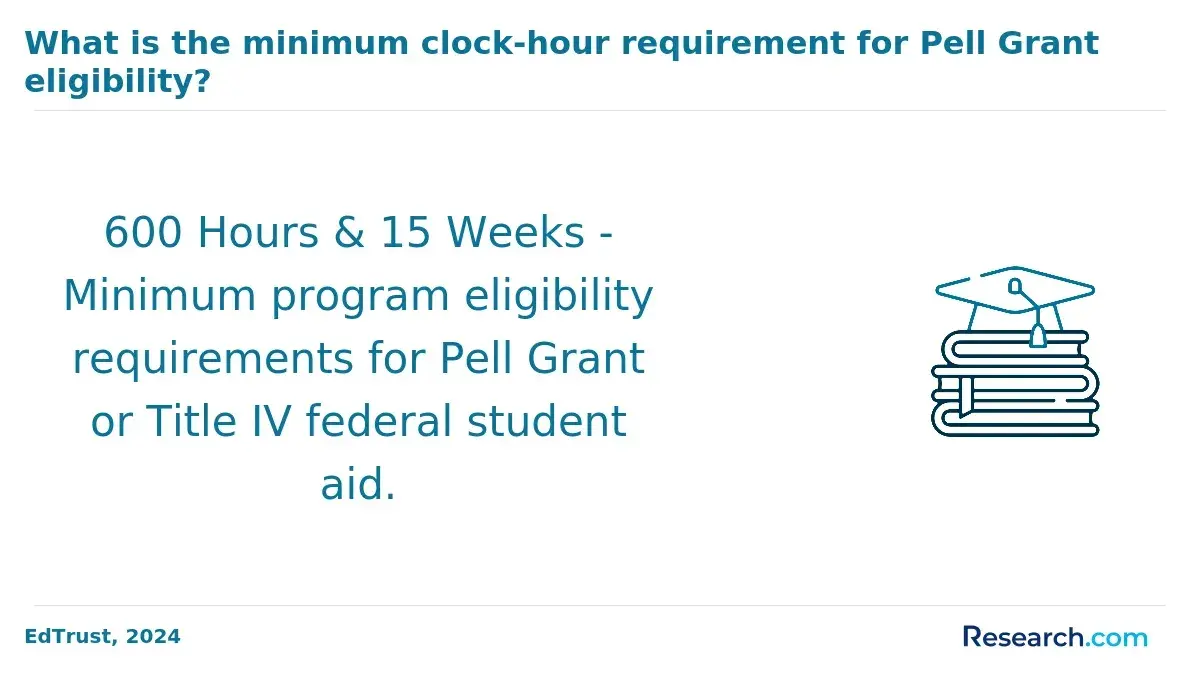
FAFSA eligibility means the school participates in federal Title IV student aid and the student is enrolled in an eligible degree or certificate program. For online health informatics students, this matters because federal grants, federal loans, and work-study usually require both institutional eligibility and student eligibility.
Before assuming an online program can be paid for with federal aid, verify the following items directly with the school's financial aid office:
- Confirm that the institution is listed as eligible to receive federal student aid and has a valid federal school code.
- Ask whether the specific online health informatics, health information management, or health information administration program is Title IV eligible.
- Check whether your enrollment level will be full time, three-quarter time, half time, or less than half time, because aid can change with course load.
- Ask whether accelerated terms, competency-based terms, practicums, or prior-learning credits affect disbursement timing.
- Confirm whether you are classified as undergraduate, second-degree, graduate, dependent, or independent, since aid limits differ.
These checks prevent one of the most expensive mistakes: enrolling in a program that is legitimate but not eligible for the aid you expected.
FAFSA is an application, not a discount. It tells schools what federal and institutional aid you may be eligible to receive, but the final award letter can include grants, loans, work-study, scholarships, or no need-based grant aid at all.
How Much Does an Online Health Informatics Degree Cost After Financial Aid?
The cost after financial aid is your net price: tuition and required expenses minus grants, scholarships, and other gift aid. Loans reduce what you pay immediately, but they do not reduce the actual cost because they must be repaid with interest.
The table below shows how students should think about cost layers. It is more useful than comparing tuition alone because two programs with similar tuition can produce very different out-of-pocket costs after aid, transfer credits, and fees.
| Cost factor | Why it matters | How it affects affordability |
| Tuition per credit or per term | This is the published price for instruction | Low tuition helps, but total required credits matter just as much |
| Program fees | Online, technology, lab, assessment, or graduation fees may apply | Fees can narrow the difference between a low-tuition and higher-tuition school |
| Transfer credits | Accepted credits reduce the number of credits you must pay for | A higher-cost school that accepts more credits may cost less overall |
| Books and software | Health informatics students may need coding manuals, database tools, or exam resources | Included materials can make a program cheaper than it looks |
| Grants and scholarships | Gift aid lowers the actual price | Need-based and institutional awards can make a public or private nonprofit program more affordable |
| Loans | Borrowed aid covers current charges | Loans improve access but increase long-term cost |
As a practical rule, ask each school for a total program cost estimate based on your transfer evaluation and expected enrollment plan. Do not compare a 120-credit posted bachelor's price with a 45-credit degree-completion quote; those are different cost realities.
Which Affordable Online Health Informatics Degree Programs Offer the Best Value?
The best value is not always the lowest sticker price. A strong-value health informatics program is accredited, FAFSA-eligible, flexible enough to finish, aligned with your target roles, and transparent about transfer credits, fees, and career preparation.
Use the value comparison below to identify which type of program is likely to fit your situation. Students comparing health informatics with broader administrative tracks may also want to review affordable online healthcare degrees if their career goal is healthcare operations rather than data systems or information governance.
| Program type | When it can be the best value | When it may not be the best choice |
| Public in-state online bachelor's program | You qualify for resident tuition and need a recognized full degree pathway | You live out of state and face a much higher tuition rate |
| Degree-completion HIM or informatics program | You already have an associate degree or many transferable general education credits | You are starting from zero credits and must complete many prerequisites elsewhere |
| Competency-based bachelor's program | You can move quickly, study independently, and complete more courses per term | You need frequent live instruction, fixed weekly structure, or slower pacing |
| Private nonprofit online program | The school offers strong scholarships, employer partnerships, or generous transfer credit | The net price remains high after aid and the program does not add career advantages |
| Master's in health informatics | You already hold a bachelor's degree and need analytics, leadership, or systems-focused advancement | You are seeking entry-level health records or coding roles that do not require graduate debt |
A more expensive program can be worth choosing if it accepts substantially more transfer credit, has a stronger pathway to professional credentials, offers employer-recognized experience, or lets you finish faster while working. The lowest-cost program becomes a poor value if it delays graduation, lacks the right accreditation, or does not support the roles you want.
Are the Cheapest Online Health Informatics Degree Programs Properly Accredited?
Yes, many low-cost online health informatics and health information management programs are properly accredited, but students must verify both institutional accreditation and any relevant programmatic accreditation. Institutional accreditation affects federal aid eligibility and credit transfer, while programmatic accreditation may affect certification eligibility and employer recognition in health information fields.
For this field, look first for institutional accreditation from a U.S. Department of Education-recognized accreditor. Then check whether the health information management or related program has specialized accreditation from the Commission on Accreditation for Health Informatics and Information Management Education when that credential matters for your certification or employer goals.
Use this verification sequence before applying. It is especially important for online programs because polished marketing pages can make different types of credentials look similar.
- Search the institution in the federal accreditation database or ask the school for its current accreditor and accreditation status.
- Confirm the school participates in federal student aid and has a federal school code.
- Check whether the exact online degree name is covered by any programmatic accreditation the school advertises.
- Ask whether graduates meet education requirements for relevant credentials such as RHIA, RHIT, or coding-related certifications, if those are part of your plan.
- Get accreditation and aid answers in writing before committing to a deposit or enrollment agreement.
A red flag is a school that says it is "accredited" but will not name the accrediting body, cannot explain whether the online program is aid-eligible, or avoids answering certification eligibility questions. Cheap tuition is not a bargain if credits will not transfer or employers do not recognize the credential.
What FAFSA Grants and Federal Aid Can Pay for an Online Health Informatics Degree?
FAFSA can connect eligible online students to federal grants, federal loans, and sometimes work-study. The most valuable aid is gift aid because it reduces net cost without repayment; loans should be evaluated based on total borrowing and expected repayment, not just whether they cover the bill today.
The main federal aid types below commonly apply to eligible undergraduate or graduate students, but your award depends on your FAFSA results, school cost of attendance, enrollment status, dependency status, prior aid usage, and degree level.
- Federal Pell Grant: need-based undergraduate grant aid; the 2024-25 maximum award is $7,395 for eligible students.
- Federal Supplemental Educational Opportunity Grant: campus-based grant aid for students with exceptional financial need, available only at participating schools with remaining funds.
- Direct Subsidized Loans: need-based undergraduate loans where the government pays interest during qualifying in-school periods.
- Direct Unsubsidized Loans: federal loans available to eligible undergraduate and graduate students, with interest accruing after disbursement.
- Federal Work-Study: part-time employment funding through participating schools, though fully online students should ask whether remote or local placements are available.
- PLUS Loans: credit-based federal loans for graduate students or parents of dependent undergraduates, usually best considered after lower-cost aid options.
Students comparing different healthcare paths should also remember that financial aid rules can vary by credential and program level. For example, short workforce programs such as online medical coding programs may have different aid eligibility than a full bachelor's degree, even when both are offered online.
How Do Transfer Credits Lower the Cost of an Online Health Informatics Degree?
Transfer credits can be the biggest cost reducer in an online health informatics degree because they lower the number of credits you must complete at the new school. This is especially important for adult learners who already have an associate degree, healthcare coursework, military training, prior college credits, or professional certifications.
The table below shows why transfer policy can matter more than the advertised tuition rate. A program with a higher per-credit cost may still be cheaper if it accepts more usable credits toward the degree.
| Transfer situation | Possible cost effect | Question to ask the school |
| Associate degree in health information technology | May satisfy lower-division major or general education requirements | Will the associate degree transfer as a block or course by course? |
| General education credits from a community college | Can reduce the number of credits needed for a bachelor's degree | Which credits apply to graduation requirements rather than just electives? |
| Professional certification or prior learning | May earn limited credit at some schools | Does the program award credit for RHIT, coding credentials, military training, or portfolio learning? |
| Old credits from several years ago | May still count for general education but not always for technology-heavy courses | Are there expiration rules for anatomy, coding, statistics, database, or IT courses? |
| Credits from a nationally accredited or nontraditional provider | May be less likely to transfer fully | Does the registrar accept these credits, and how will they apply to the degree audit? |
Do not enroll based on an informal transfer estimate. Ask for an official degree audit showing remaining credits, required courses, expected terms, and total tuition. Students considering adjacent entry-level healthcare training can also compare the cost and aid structure of online medical assistant programs with financial aid before committing to a longer informatics pathway.
Which Students Benefit Most From a Low-Cost Online Health Informatics Degree With FAFSA?
A low-cost FAFSA-eligible online health informatics degree is most valuable for students who need flexibility but still want an accredited credential connected to healthcare data, records, analytics, privacy, coding, reimbursement, or electronic health record systems. It can be especially practical for working adults because online delivery reduces relocation and commuting costs.
This pathway is usually strongest for the following students:
- Healthcare workers who already understand clinical workflows and want to move into data, compliance, EHR support, or revenue cycle roles.
- Community college graduates who can transfer an associate degree into a bachelor's completion program.
- Working adults who need asynchronous coursework and can study around shifts or family responsibilities.
- Students who qualify for Pell Grants, state grants, employer tuition assistance, or institutional scholarships that reduce net price.
- Career changers with IT, data, business, or administrative experience who want healthcare-specific knowledge.
The common theme is that the degree helps them build on existing experience or complete a credential without taking on unnecessary debt.
Students should be more cautious if they need intensive hands-on clinical training, expect FAFSA to cover every cost, or are choosing the major only because it is inexpensive. Nurses and advanced clinicians may need a different route. For example, leadership-focused nurses may compare health informatics with MSN to DNP online programs if their goal is doctoral-level clinical or systems leadership.
How Does the Cost of an Online Health Informatics Degree Affect Career ROI?
Career ROI depends on the relationship between total net cost, debt, completion time, and the roles you are realistically positioned to pursue. Health informatics is broad: one graduate may enter medical records, coding, or revenue cycle work, while another may move toward data analysis, implementation support, compliance, project coordination, or health IT management after gaining experience.
The May 2024 BLS median wage of $50,250 for medical records specialists provides a useful lower-to-mid career reference point for many entry-level health information roles. That figure does not mean every graduate earns that amount, but it shows why minimizing borrowing matters if your first role is likely to be operational rather than managerial.
Use the following ROI checks before selecting a program. These steps help you avoid the common mistake of comparing future earnings to tuition only, instead of comparing earnings to total debt and time to completion.
- Estimate total tuition and required fees after transfer credits, not just the cost per credit.
- Subtract grants, scholarships, and employer assistance to calculate net price.
- Separate gift aid from loans so you know the amount you may need to repay.
- Compare the program's curriculum with job postings for your target roles, especially SQL, EHR systems, coding, privacy, analytics, project coordination, and data governance requirements.
- Ask whether the program prepares students for industry-recognized credentials or practicum experiences that employers value.
- Use a federal loan simulator before borrowing to estimate monthly payments under different repayment plans.
A more expensive program may make sense if it shortens your time to graduation, offers stronger employer connections, or aligns better with your intended role. Clinicians planning advanced practice rather than informatics operations should compare the ROI of this degree with clinical graduate options such as the fastest post master's FNP certificate, because the job target and payoff calculation are very different.
How Should Students Choose the Cheapest FAFSA-Eligible Online Health Informatics Degree?
Choose the cheapest FAFSA-eligible online health informatics degree by comparing net cost, accreditation, transfer credits, completion time, student support, and career alignment together. The right program should be affordable enough to finish and credible enough to support your next career step.
Before applying, collect the same information from each school so you can make an apples-to-apples comparison. This is the most reliable way to separate a genuinely affordable program from one that only looks cheap on a tuition page. Ask these questions:
- Request an official transfer evaluation before calculating total cost.
- Ask for a written estimate of tuition, required fees, books, software, and any practicum-related costs.
- Confirm institutional accreditation, programmatic accreditation if relevant, and federal aid participation.
- Compare your estimated financial aid package at each school, focusing on grants and scholarships before loans.
- Ask how many students complete the online pathway on time and what academic support is available.
- Review the curriculum against your target job postings to ensure the program covers healthcare data, privacy, coding, EHR systems, analytics, or management as needed.
- Check whether courses are asynchronous, synchronous, competency-based, or term-based so the schedule fits your life.
- Calculate total borrowing and projected repayment before accepting federal or private loans.
The safest decision is rarely "pick the lowest posted tuition." Instead, choose the accredited program with the lowest realistic net cost that you can complete, that accepts the most useful transfer credit, and that prepares you for the specific health informatics roles you want.
Other Things You Should Know About Health Informatics Programs
A bachelor's degree typically requires about 120 credits, but completion time varies widely. First-time students may need four years of full-time study, while transfer students in degree-completion programs may finish faster depending on accepted credits and course availability.
Most do not require traditional clinical rotations like nursing or allied health programs. However, some programs may require a practicum, capstone, internship, or project with a healthcare organization, so online students should ask whether placements can be completed locally or remotely.
Even an affordable program should cover healthcare data standards, privacy and security, electronic health records, health information systems, coding or classification concepts, analytics basics, workflow improvement, and communication with clinical and administrative teams.
An associate degree can support entry-level health information, coding, or records roles, especially with relevant certification. A bachelor's degree is often more useful for advancement into informatics coordination, compliance, analytics support, implementation, or management-track roles.
References
- Why Pursue a Master’s in Health Informatics? | 23% Job Growth Outlook https://www.usfhealthonline.com/resources/health-informatics/why-pursue-a-masters-in-health-informatics/
- How is the Job Outlook for Health Informatics? - Healthcare Management Degree Guide https://www.healthcare-management-degree.net/faq/how-is-the-job-outlook-for-health-informatics/
- Online Health Science Degrees with Financial Aid https://www.edumed.org/online-schools/health-science-degrees/financial-aid/
- New FAFSA Data Restrictions Threaten Critical Research and Practices to Support Student Success https://www.ihep.org/new-fafsa-data-restrictions-threaten-critical-research-and-practices/
- 2025 Most Affordable Online Healthcare Informatics Degrees https://www.onlineu.com/most-affordable-colleges/healthcare-informatics-degrees
- FAFSA Guide https://www.publichealth.org/resources/fafsa-guide/
- Grants: The Guide To Finding Free Money To Finance Your Health Informatics Degree https://mastersinhealthinformatics.com/masters-in-health-informatics-college-grants/
- FAFSA Eligibility: Requirements & Income Limits | Ascent Funding https://www.ascentfunding.com/blog/fafsa-eligibility/
- Online Medical Assistant Program With Financial Aid (2026) https://www.clinicalskillsinstitute.com/post/online-medical-assistant-program-with-financial-aid