2027 Cheapest Accredited Online Engineering Technology Degree Programs: Tuition, Fees, and Financial Aid

Co-Founder and Chief Data Scientist
Finding the cheapest accredited online Engineering Technology degree is harder than comparing tuition ads. College Board's 2024 Trends in College Pricing report lists average published tuition and fees at $11,610 for in-state public four-year students and $30,780 for out-of-state students, making online cost transparency more important. This guide is for transfer students, working adults, military learners, and first-time bachelor's students. You will learn how to compare accredited programs by tuition, mandatory fees, total program cost, FAFSA aid, scholarships, transfer savings, and net price so you can avoid hidden costs.
Key Things You Should Know
- The lowest advertised online Engineering Technology tuition is often found at public universities with in-state, eMajor, or distance-learning rates; some affordable options start below $200 per credit for eligible residents, while many broadly available online rates fall around $300 to $500 per credit before fees.
- Institutional accreditation supports federal financial aid eligibility, while ABET Engineering Technology Accreditation Commission accreditation may be important for certain employers, graduate programs, or licensure-related pathways.
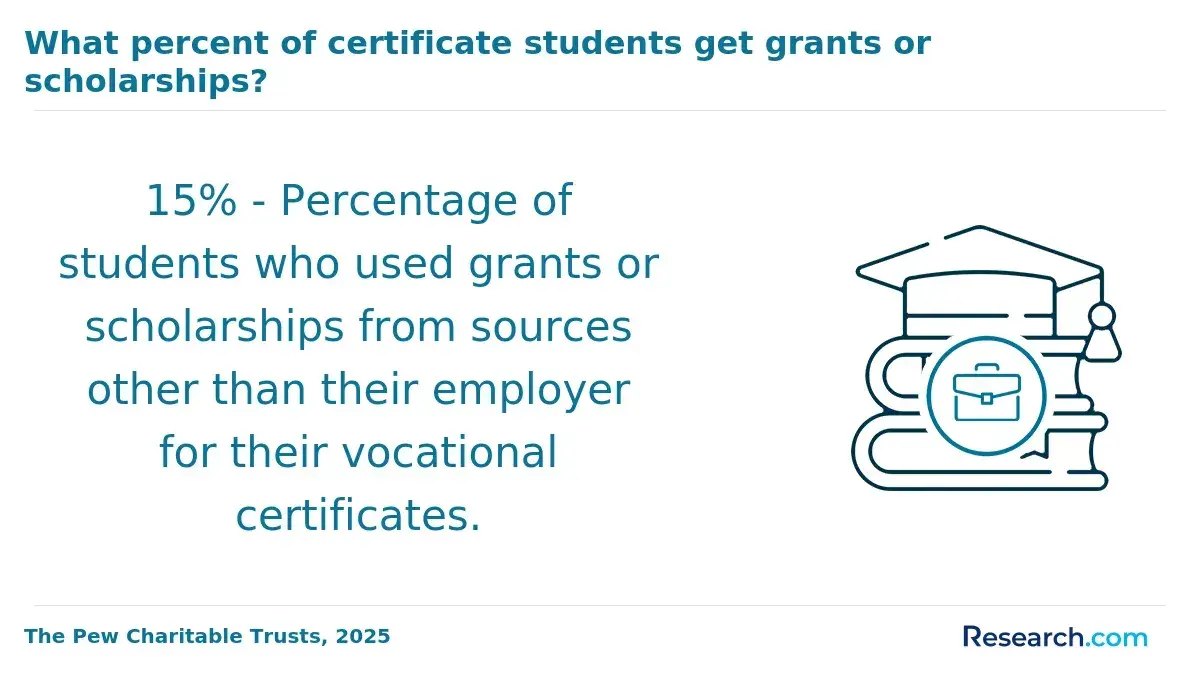
- Net price is the better affordability measure than sticker tuition because Pell Grants, state grants, scholarships, employer tuition assistance, military benefits, and transfer credits can reduce what students actually pay; the maximum federal Pell Grant for the 2024-25 award year is $7,395 for eligible students.
What Are the Cheapest Accredited Online Engineering Technology Degree Programs?
The cheapest accredited online Engineering Technology programs are usually bachelor's completion programs offered by public universities, especially when students transfer an associate degree or technical credits.
The table below compares publicly advertised online or distance-learning options that are commonly considered by cost-conscious students; rates can change by term, residency, course level, and fee category, so use this as a starting point rather than a final bill.
| Program | Common online degree format | Accreditation to verify | Approximate advertised tuition starting point | Cost note |
| University of North Carolina at Charlotte | B.S.E.T. in Electrical Engineering Technology, often transfer-focused | Institutional accreditation and programmatic engineering technology accreditation status | Often among the lowest for North Carolina residents, with rates commonly below many national online options | Best value usually requires North Carolina residency and transferable technical coursework |
| Kennesaw State University | B.A.S. or applied technical pathway in manufacturing or related technology areas | Institutional accreditation; confirm whether the specific program has programmatic recognition | Low online or eMajor-style rates are often competitive with community-college transfer pathways | Strong option for students who already hold applied technical credits |
| Eastern New Mexico University | Online bachelor's pathway in electronics or engineering technology fields | Institutional accreditation and any applicable ABET Engineering Technology Accreditation Commission status | Often around the low-$300-per-credit range before program-specific fees | Appeals to students seeking a public-university online rate without a private-school price |
| Indiana State University | Online Engineering Technology Management or related completion pathway | Institutional accreditation; confirm programmatic accreditation if required for your goal | Often in the mid-$300-per-credit range for online undergraduate study | May fit technicians moving into supervision, operations, or applied engineering management |
| Bemidji State University | Online or hybrid-style Applied Engineering completion pathway | Institutional accreditation and any applied technology program recognition | Often in the mid-$300-per-credit range | Transfer-credit acceptance can make the final cost lower than the published full-degree estimate |
| Old Dominion University | Online Engineering Technology bachelor's completion options | Institutional accreditation and ABET status for the exact concentration | Often around the low-$400-per-credit range, with residency differences possible | May be worth a higher price if the exact concentration and accreditation match career goals |
| University of Southern Mississippi | Online Industrial Engineering Technology bachelor's pathway | Institutional accreditation and any program-level accreditation or recognition | Often around the low-$400-per-credit range | Industrial, manufacturing, and process-improvement students should compare lab and software fees |
| Thomas Edison State University | Electronics systems, nuclear energy, or applied technology degree pathways | Institutional accreditation and program-specific accreditation where applicable | Often lower for New Jersey residents and higher for out-of-state students | Can be cost-effective for adults with large amounts of transfer, military, or prior-learning credit |
| Embry-Riddle Aeronautical University Worldwide | Online Engineering Technology bachelor's program | Institutional accreditation and programmatic status for the specific degree | Often higher than public low-cost options, commonly in the upper-$400-per-credit range before discounts | May provide better fit for aerospace, aviation, defense, or military-aligned career goals |
The cheapest option for one student may not be the cheapest for another. A North Carolina resident with an associate degree may pay far less at a public completion program than a nonresident first-time student, while a military learner with tuition assistance may find a different school more affordable after benefits.
When comparing programs, separate three numbers: tuition is the instructional price per credit, mandatory fees are required charges added by the school, and total program cost is tuition plus fees, books, software, labs, equipment, and any residency or proctored exam expenses.
Net price is the most important number because it reflects remaining cost after grants and scholarships that do not need to be repaid.
How Were the Cheapest Online Engineering Technology Degree Programs Ranked?
The most useful ranking for affordability should not reward a school only for advertising a low per-credit rate. A credible comparison should prioritize total degree cost, accreditation, federal aid access, transfer flexibility, and whether the program's learning model helps students finish without repeating credits.
The ranking logic used here gives the greatest weight to price transparency and real affordability factors. It favors programs that publish clear online tuition, disclose required fees, accept substantial transfer credit, and hold recognized institutional accreditation.
- Confirmed that the institution is accredited by an agency recognized by the U.S. Department of Education or the Council for Higher Education Accreditation.
- Checked whether the specific Engineering Technology program discloses programmatic accreditation, such as ABET Engineering Technology Accreditation Commission status, when available.
- Compared advertised online undergraduate tuition, noting whether rates vary by residency, course level, military status, or degree-completion format.
- Looked for mandatory online learning, technology, lab, assessment, graduation, or proctoring fees that can change the true total cost.
- Prioritized programs that are friendly to associate-degree transfers, military credit, prior learning, or industry credentials because these can reduce the number of credits students must buy.
- Considered whether federal financial aid is available to eligible students through FAFSA participation.
This approach is intentionally conservative. If a program does not clearly publish fees or if accreditation status varies by concentration, students should treat the advertised tuition as incomplete until the school provides a written cost estimate.
How Can You Verify the Accreditation of an Online Engineering Technology Degree Program?
Accreditation is the first affordability checkpoint because a very cheap program can become a costly mistake if credits do not transfer, employers question the credential, or the school is not eligible for federal student aid. For online Engineering Technology, students should check both institutional accreditation and programmatic accreditation.
Institutional accreditation applies to the college or university. Programmatic accreditation applies to a specific degree, and in engineering technology the most recognized programmatic accreditor is often ABET's Engineering Technology Accreditation Commission.
Not every legitimate online Engineering Technology program has ABET accreditation, but students should know whether they need it for their target employer, graduate school, state board, or certification pathway.
- Search the U.S. Department of Education's Database of Accredited Postsecondary Institutions and Programs for the institution's name.
- Confirm that the school participates in Title IV federal student aid if you plan to submit the FAFSA.
- Search ABET's public program database by institution, degree name, and delivery location to see whether the exact online program or concentration is accredited.
- Ask the program director whether online students earn the same diploma and accreditation-covered degree as campus students.
- Request written confirmation if the school's website says "accredited" but does not specify whether that refers to the institution, department, or exact degree program.
A common mistake is assuming that "regionally accredited university" and "ABET-accredited Engineering Technology program" mean the same thing. They do not. Institutional accreditation can make the school legitimate and aid-eligible, while programmatic accreditation may influence technical credibility, transfer options, or professional recognition.
How Much Does an Accredited Online Engineering Technology Degree Really Cost?
The real cost depends on the number of credits you must complete after transfer, not just the per-credit tuition. A full bachelor's degree is commonly about 120 credits, but many online Engineering Technology programs are degree-completion pathways that may require only the final 30 to 60 credits if you already have an associate degree.
The table below shows how advertised tuition changes when translated into program cost. It does not include every possible fee, but it illustrates why transfer credit and fee disclosure matter so much.
| Scenario | Credits needed | Tuition rate example | Estimated tuition before fees | What it means |
| Low-cost in-state completion pathway | 60 credits | $200 per credit | $12,000 | Usually the strongest affordability case, but often limited by residency or transfer rules |
| Public online national-rate program | 60 credits | $350 per credit | $21,000 | Can be affordable if fees are low and transfer credits are accepted cleanly |
| Higher-cost specialized online program | 60 credits | $485 per credit | $29,100 | May still be a good value if the specialization, accreditation, or employer network fits the student's goal |
| Full 120-credit bachelor's with little transfer credit | 120 credits | $350 per credit | $42,000 | Shows why associate-degree transfer, prior learning, and community-college planning can cut costs sharply |
Mandatory fees can add hundreds or thousands to the final price, especially when a program charges online learning fees, lab-kit fees, assessment fees, or graduation fees. Students comparing affordability in any online field, including online SLP master's programs, should use the same rule: compare the net price for the credits you actually need, not the cheapest advertised rate.
The U.S. Department of Education's College Scorecard can also help students compare school-level average annual cost, median debt, and completion patterns. Those data are not a perfect substitute for a personalized financial aid offer, but they can reveal whether a "cheap" school tends to leave students with high borrowing or poor completion outcomes.
Which Tuition Models Make Online Engineering Technology Degree Programs More Affordable?
Online Engineering Technology programs use several pricing models, and each one rewards a different type of student. The best model depends on whether you study full time, transfer credits, qualify for in-state rates, receive employer aid, or need a slower part-time schedule.
The table below compares common tuition models and the students who benefit most from each. Use it to identify which schools deserve closer cost estimates.
| Tuition model | How it works | Best fit | Main risk |
| Per-credit tuition | Students pay for each credit attempted | Part-time students and transfer students who need fewer credits | Repeated courses and extra prerequisites increase cost |
| Flat-rate semester tuition | Students pay one price within a credit range | Full-time students who can handle heavier course loads | Part-time students may overpay if they take too few credits |
| In-state public tuition | Residents pay a lower state-supported rate | Students who live in the school's state and meet residency rules | Nonresidents may pay substantially more |
| Online national rate | Online students pay the same or similar rate regardless of state | Out-of-state students comparing public universities | Fees may still vary by course or program |
| Military or employer-discounted tuition | Eligible students receive reduced tuition or direct assistance | Active-duty military, veterans, defense workers, and employees at partner companies | Benefits may have annual caps, grade requirements, or repayment clauses |
| Competency-based or subscription tuition | Students pay by term and progress by demonstrating mastery | Experienced technicians who can move quickly | Less common in Engineering Technology and may not carry desired programmatic accreditation |
A lower per-credit rate is not always the better model. If one university charges more per credit but accepts 30 additional transfer credits, it may produce a lower total program cost than a cheaper school with strict residency or major-credit requirements.
What Fees and Hidden Costs Should Online Engineering Technology Degree Students Expect?
Engineering Technology can be more equipment-intensive than many online majors. Even when lectures are fully online, students may still pay for simulation software, lab components, technical tools, proctored exams, or short in-person experiences.
Before enrolling, ask the school for a written cost sheet that includes every required charge for online students in your concentration. Pay special attention to these items because they can change the affordability ranking.
- Online learning or distance education fees charged per credit or per course
- Technology, student services, registration, transcript, and graduation fees
- Lab kits, electronics components, measurement tools, safety supplies, or required equipment
- Software licenses for CAD, circuit simulation, programming, manufacturing, quality, or project-management tools
- Proctoring fees for remote exams or testing-center exams
- Travel, lodging, or missed-work costs for any required campus lab, orientation, internship, or capstone presentation
- Course-repeat costs if transfer credits do not satisfy major requirements
- Textbooks, access codes, industry exam fees, and optional certification preparation materials
The biggest red flag is a school that publishes tuition clearly but makes required fees difficult to find. If an advisor cannot explain total cost by credit remaining, fee category, and expected aid, compare other programs before committing.
How Does FAFSA and Federal Financial Aid Work for Online Engineering Technology Degree Programs?
Online students can generally use federal financial aid if they attend an eligible institution, enroll in an aid-eligible degree program, meet basic federal eligibility requirements, and maintain satisfactory academic progress. The FAFSA is the gateway to Pell Grants, federal student loans, and many state or institutional aid programs.
The U.S. Department of Education's 2024-25 federal aid materials list the maximum Pell Grant at $7,395 for eligible students. For a low-cost online Engineering Technology student, that amount can cover a meaningful share of annual tuition; for a higher-cost program, it may reduce borrowing but not eliminate it.
- Confirm that the school is Title IV eligible and that the exact online Engineering Technology degree is aid-eligible.
- Submit the FAFSA as early as possible because some state and institutional grants have limited funds or priority deadlines.
- Review the financial aid offer line by line, separating grants and scholarships from loans that must be repaid.
- Ask whether your enrollment intensity affects aid, since half-time, three-quarter-time, and full-time status can change eligibility.
- Compare aid offers by net price for the same number of credits, not by the largest total aid package.
- Borrow federal loans before considering private loans because federal loans usually include borrower protections that private loans may not offer.
Working adults comparing flexible online degrees should also watch admissions and testing requirements, just as graduate business students often compare MBA no GRE options for convenience. In Engineering Technology, the parallel question is whether the program's schedule, aid rules, and course sequence let you stay enrolled without taking unnecessary credits.
Which Scholarships, Grants, and Tuition Benefits Can Help Pay for an Online Engineering Technology Degree?
Scholarships and grants are more valuable than loans because they generally do not need to be repaid. Engineering Technology students should search broadly because funding may come from the institution, state agencies, employers, unions, professional associations, military programs, or local manufacturing and utilities organizations.
Use the following funding categories to build a layered aid plan. The best result often comes from combining several smaller sources rather than relying on one large scholarship.
- Federal grants, including Pell Grants for eligible undergraduate students
- State grants for residents attending eligible public or private institutions
- Institutional transfer scholarships for students entering with an associate degree or strong college GPA
- STEM, manufacturing, energy, automation, robotics, electronics, quality assurance, or industrial technology scholarships
- Employer tuition reimbursement or direct billing programs for technicians moving into engineering technology, supervision, or operations roles
- Military tuition assistance, GI Bill benefits, Yellow Ribbon participation, and veteran-specific institutional awards
- Workforce development grants from local or state programs tied to high-demand technical fields
- Professional association awards connected to IEEE, SME, ASQ, ISA, robotics, electronics, construction, or manufacturing fields
Always ask whether an award is renewable, whether online students qualify, whether part-time students qualify, and whether the scholarship applies to fees as well as tuition. Some awards look generous but only apply to one term, require full-time enrollment, or exclude distance-learning fees.
If you plan to continue beyond the bachelor's level, keep long-term borrowing low now; the same cost-control mindset matters when comparing future options such as cheapest accredited online doctoral programs.
Can Transfer Credits, Prior Learning, and Competency-Based Study Lower the Cost of an Online Engineering Technology Degree?
Transfer credit is often the largest cost-saving lever for online Engineering Technology students. Because many programs are designed for holders of an A.A.S., A.S., military technical training, or industry experience, students may be able to avoid paying for credits they have already earned elsewhere.
To protect your budget, get a formal transfer evaluation before enrolling, not after your first term. The evaluation should show exactly which credits apply to general education, technical major requirements, electives, and residency requirements.
- Request unofficial pre-evaluations from multiple schools using the same transcripts so you can compare credits accepted, not just tuition rates.
- Ask how many credits must be completed at the university because residency requirements can limit transfer savings.
- Confirm whether associate-degree technical courses count toward the major or only as electives.
- Ask whether military training, apprenticeships, certifications, portfolios, standardized exams, or prior-learning assessment can reduce credits required.
- Check whether old math, physics, electronics, programming, or CAD courses expire for major-placement purposes.
- Compare the total number of credits left after transfer multiplied by tuition and fees for each school.
Competency-based study can lower costs for experienced students when the program allows faster progress for one flat term price, but it is less common in Engineering Technology than in business or general studies.
Students evaluating speed-focused online programs in other fields, such as an accelerated masters in psychology, should use the same caution: faster is only cheaper if accreditation, course sequencing, and workload are realistic.
How Should Students Compare the Net Price, Quality, and Return on Investment of Online Engineering Technology Degree Programs?
The best value is not automatically the school with the lowest tuition. A strong online Engineering Technology program should be affordable, accredited, transferable, technically rigorous, and aligned with the student's target job market.
For career context, the U.S. Bureau of Labor Statistics May 2024 wage data place electrical and electronic engineering technologists and technicians at a median annual wage of $77,180. That figure is not a promise of earnings, but it shows why students should compare program cost against likely roles, local demand, experience level, and specialization rather than treating the degree as a generic credential.
The table below summarizes what to compare after you receive tuition estimates and aid offers. It helps separate a low sticker price from a strong long-term value.
| Comparison factor | What to look for | Why it affects value |
| Net price | Cost after grants and scholarships for the credits you still need | Shows the amount you may need to pay, finance, or cover through employer aid |
| Accreditation | Institutional accreditation and programmatic status where relevant | Supports credibility, transfer, aid eligibility, and employer confidence |
| Transfer efficiency | How many prior credits apply to the major | Can reduce both time and tuition more than a small per-credit discount |
| Student support | Advising, tutoring, lab support, career services, and online technical help | Can improve the chance of finishing without course repeats or delays |
| Program fit | Electronics, industrial, manufacturing, mechanical, construction, or management focus | Determines whether the curriculum matches the roles you want |
| Outcome signals | Completion patterns, employer partnerships, internship options, and alumni roles | Helps judge whether the degree is likely to support your career plan |
Common mistakes include choosing a non-ABET program when ABET is preferred for the target role, ignoring nonresident tuition, assuming all online students pay the same fees, borrowing the full cost without applying for grants, and failing to compare transfer evaluations. A slightly more expensive school may be the better investment if it accepts more credits, has stronger technical labs, or aligns more closely with your career path.
Students should also compare degree payoff in the broader labor market. Research on bachelor's degrees job outlook can help put Engineering Technology alongside other practical bachelor's options when evaluating cost, salary potential, and career fit.
Other Things You Should Know About Engineering Technology
No. Engineering programs usually emphasize advanced theory, design, and mathematical modeling, while Engineering Technology programs focus more on applied systems, implementation, testing, operations, troubleshooting, and technical management. Both can lead to technical careers, but employer expectations may differ.
Yes. Online programs may use remote lab kits, simulation software, recorded demonstrations, local proctoring, partner facilities, or short campus residencies. Always confirm lab requirements before enrolling because equipment and travel can affect total cost.
Usually, yes. Requirements vary by program, but students should expect applied algebra, trigonometry, statistics, physics, circuits, quality methods, or technical computing depending on the concentration. Placement tests or missing prerequisites can add time and cost.
It can support advancement into roles such as engineering technician lead, manufacturing supervisor, quality coordinator, field service manager, process improvement specialist, or technical project coordinator. Experience, industry certifications, employer needs, and communication skills often matter alongside the degree.
References
- Student Loan Debt by Major [2026]: Highest + Lowest Average Debt https://educationdata.org/student-loan-debt-by-major
- Types of Financial Aid https://www.hhloans.com/types-of-financial-aid/
- Undergraduate Engineering Scholarships https://www.ashrae.org/communities/student-zone/scholarships-and-grants/undergraduate-engineering-scholarships
- Engineering Technology school under $30k for 3.89 gpa student? https://talk.collegeconfidential.com/t/engineering-technology-school-under-30k-for-3-89-gpa-student/3644537
- Paying for College – TCSG | Technical College System of Georgia https://www.tcsg.edu/for-students/paying-for-college/
- EIT Accreditation - Engineering College of Science and Technology https://www.ecst.ac.za/why-ecst/accreditation/
- Online Programs Search https://amspub.abet.org/aps/online-search
- 2025 Most Affordable Bachelor's in Engineering Online https://www.onlineu.com/most-affordable-colleges/engineering-degrees
- Accreditation - ABET https://www.abet.org/accreditation/