2027 Cheapest Accredited Online Computer Science Master's Programs With No Out-of-State Tuition Surcharge

Co-Founder and Chief Data Scientist
Choosing an online computer science master's program can be difficult when a low per-credit price hides higher nonresident tuition or required fees. The U.S. Bureau of Labor Statistics projects 17% growth in software developer employment from 2023 to 2033, making careful, cost-conscious upskilling especially relevant.
This guide is for prospective students seeking an accredited, residency-neutral option. It explains how to identify a true no-out-of-state-surcharge policy, estimate total cost, evaluate format and aid, and compare career value.
Key Things You Should Know
- A true no-out-of-state-surcharge program charges the same published online tuition to eligible students regardless of where they live; it does not necessarily have the lowest total price after fees, required credits, and travel costs.
- Verify institutional accreditation, the exact online program's tuition page, required credit count, and mandatory fees before applying. Computer science master's programs commonly require about 30 to 36 credits, so even a modest per-credit difference can materially change total tuition.
- Career value depends on more than price. Software developer employment is projected to grow 17% from 2023 to 2033, but students should match the curriculum, specialization, schedule, and employer support to their intended role before enrolling.
What Does No Out-Of-State Tuition Surcharge Mean for an Online Computer Science Master's Program?
A no-out-of-state-tuition-surcharge policy means an institution charges eligible online students the same tuition rate regardless of state residency. At public universities, this is often described as a flat online rate, an online-only rate, or an out-of-state tuition waiver. It is not the same as free tuition, in-state residency, or a guarantee that every online degree at the university uses the same rate.
For a computer science master's student living outside the institution's home state, a residency-neutral rate can eliminate the largest pricing difference associated with public universities. The useful comparison is still total required program cost: tuition for all required credits, mandatory institutional and course fees, technology charges, and any travel expenses.
The terms below help distinguish policies that sound similar but have different financial consequences.
| Tuition model | What it usually means | Best fit | What to verify |
| Flat online tuition | One tuition rate for eligible online students regardless of residence | Nonresidents who want predictable published tuition | Whether the rate applies to the specific master's program and all required credits |
| In-state tuition only | Lower rate reserved for qualifying state residents | Students who already meet residency rules | Residency deadline, documentation, and whether online enrollment affects eligibility |
| Out-of-state waiver | A reduction from the nonresident rate under stated conditions | Students who clearly meet the waiver requirements | Renewal conditions, credit-load requirements, and exclusions |
| Private university tuition | Often one published rate for all students, though it may be higher | Students comparing net price, flexibility, and support | Program fees, scholarships, and whether tuition changes by course type |
A common mistake is treating "no out-of-state tuition" as equivalent to "in-state tuition." A school may charge one nationwide online rate that is higher than its campus in-state rate but lower than its traditional nonresident rate. Ask the admissions office to confirm the tuition charged to an online student in your state and request the answer in writing or direct it to the applicable published policy.
How Can Students Verify Accreditation for an Affordable Online Computer Science Master's Program?
Start with institutional accreditation. It indicates that the university has been reviewed by an accrediting agency recognized by the U.S. Department of Education or the Council for Higher Education Accreditation. For most computer science master's degrees, institutional accreditation is the essential baseline for federal aid eligibility, employer confidence, transfer review, and later doctoral applications.
Programmatic accreditation is different. ABET accredits many computing programs, particularly at the undergraduate level, but not every legitimate computer science master's program holds ABET accreditation. A lack of ABET accreditation at the master's level is not automatically a concern. Instead, assess whether the curriculum, faculty, prerequisites, and outcomes align with your target role.
Use the following sequence before paying an application fee. It helps prevent confusion between an accredited university and an unaccredited third-party provider or certificate platform.
- Locate the university's institutional accreditation statement and identify the accrediting organization.
- Confirm the university and accreditation status through the accreditor's directory or the federal institutional database.
- Check that the exact degree is awarded by the accredited institution, not merely delivered on its platform.
- Review the program page for its curriculum, credit requirements, faculty information, and any stated programmatic accreditation.
- Ask whether graduates may use the degree for employer tuition reimbursement, doctoral admission, or any credentialing goal relevant to you.
Red flags include a school that cannot clearly name its accreditor, claims recognition without identifying the degree-granting institution, or relies on vague phrases such as "internationally recognized" instead of stating accreditation status.
Also verify that online students receive the same credential listed on the university transcript as campus-based students, if that distinction matters to your employer or future academic plans.
How Much Does the Cheapest Online Computer Science Master's Program Cost in Total?
The cheapest program is not always the program with the lowest advertised per-credit tuition. Total cost is driven by the required number of credits, mandatory fees, prerequisite coursework, and whether the program requires a campus visit, proctored exams, or specialized software. A 30-credit program at a higher rate can cost less than a 36-credit program at a lower rate.
Calculate a comparable estimate using the school's current term-specific schedule rather than a marketing page alone. Students considering graduate business options can use the same total-cost approach when comparing the cheapest online MBA program with a technical graduate degree.
This calculation table shows the cost categories that should be included in every comparison. Fill it with the published figures for each program during the same academic term.
| Cost component | How to calculate it | Why it matters |
| Base tuition | Required program credits × published online tuition per credit | Creates the starting comparison, but does not show all charges |
| Mandatory academic fees | Per-credit, per-course, or per-term fees × expected enrollment | Can make a low tuition rate less competitive |
| Technology and course costs | Required software, cloud tools, textbooks, and proctoring expenses | May vary by concentration and course sequence |
| Travel and residency costs | Transportation, lodging, meals, and time away from work if required | Important for hybrid programs or capstone presentations |
| Prerequisite costs | Tuition and fees for required foundational courses not included in the degree | Especially relevant for applicants without a CS bachelor's degree |
| Estimated total | All required categories combined, minus confirmed grants or employer funding | Supports a realistic out-of-pocket comparison |
Ask whether the tuition rate is guaranteed for continuing students or can change annually. A program that appears cheapest at admission may become less predictable if its rate changes before you finish. Do not subtract loans from total cost; loans finance an expense but do not reduce its price.
Do Online Computer Science Master's Students Have to Establish Residency to Receive the Lowest Tuition Rate?
If a program explicitly offers one online tuition rate regardless of residence, students generally do not need to establish residency to receive that rate. The school may still require proof of location for state authorization, identity verification, tax reporting, or enrollment eligibility, but those administrative requirements are separate from a residency-based tuition classification.
Students should not assume that taking all courses online creates in-state residency. Residency policies are established by states and institutions and may consider domicile, duration of presence, financial independence, employment, tax status, military affiliation, or other factors. Merely renting an address, enrolling online, or moving shortly before classes begin may not qualify a student for resident tuition.
Before relying on a particular rate, get clear answers to these questions from the bursar or graduate admissions office:
- Does the published online tuition rate apply to computer science master's students in my state?
- Are all required courses, including electives and capstone courses, billed at that same rate?
- Is the rate contingent on full-time enrollment, a particular modality, employer affiliation, or a waiver application?
- Are there states or territories where the program cannot enroll students because of state authorization rules?
- Will my rate remain the same if I change from part-time to full-time enrollment or take a leave?
A residency-neutral program is especially useful for working professionals who do not plan to relocate. In-state public tuition can still be the better value for a resident when the school has a substantially lower resident rate, a strong local employer network, or a curriculum that matches the student's goals. Compare the actual billing estimate rather than choosing based on the policy label.
How Do Public and Private Universities Compare on the Cost of an Online Computer Science Master's Degree?
Public and private nonprofit universities can both offer good value. Public institutions may provide very low rates for residents and may use a flat online tuition model for nonresidents. Private nonprofit institutions commonly charge one tuition rate nationally, which improves predictability but does not necessarily make them less expensive or more expensive overall.
Public status, private status, and nonprofit status do not determine quality by themselves. Compare the total bill, accreditation, course availability, student support, and degree requirements. A student who is still choosing an undergraduate pathway can apply the same comparison mindset to the cheapest online university search.
The comparison below highlights where each institutional model can be advantageous.
| Factor | Public university | Private nonprofit university | Decision implication |
| Tuition structure | May vary by resident, nonresident, and online status | Often one standard rate, sometimes with online-specific pricing | Compare the rate offered to you, not the institutional category |
| Residency effect | Can be significant unless the program is residency-neutral | Usually not based on state residency | Flat-rate public programs and private programs may be strongest for nonresidents |
| Fees | May include separate institutional and distance-learning charges | May bundle some services or charge program-specific fees | Request a full cost-of-attendance estimate |
| Scheduling | May follow a traditional academic calendar | May offer multiple starts or structured cohorts | Choose the schedule that limits delayed completion |
| Scholarship approach | May offer institutional, departmental, or state-linked aid | May offer merit discounts or employer partnerships | Compare confirmed net price, not advertised aid |
A lower-priced public option can lose its advantage if it has an out-of-state surcharge, requires travel, or offers too few courses each term. Conversely, a higher-priced private nonprofit program may be worth considering when employer reimbursement, a shorter completion plan, relevant concentrations, or stronger career services reduce the practical cost of finishing.
Can Financial Aid Reduce the Cost of a Cheap Online Computer Science Master's Program?
Aid changes the net cost only when it is a grant, scholarship, tuition benefit, or other funding that does not have to be repaid. Eligible graduate students may use federal Direct Unsubsidized Loans and, where applicable, Graduate PLUS Loans after filing the FAFSA. Loans can help with cash flow, but borrowing should be evaluated as debt rather than as a discount.
Online enrollment does not automatically prevent aid eligibility, though a program must meet federal requirements and students must meet their own eligibility requirements. Graduate computer science students should also ask about departmental awards, employer reimbursement, military or veteran education benefits, and professional association scholarships.
Comparable funding questions matter in other professional programs, including marriage and family therapy online programs accredited, where program format and career requirements may differ substantially.
Use this order to determine your likely net cost before committing:
- Request the complete tuition-and-fee estimate for the credits you expect to take.
- Submit the FAFSA early if you may be eligible for federal student aid.
- Ask the financial-aid office whether institutional scholarships are open to fully online graduate students and whether a separate application is required.
- Review employer tuition assistance rules, including annual caps, grade requirements, approved-school lists, and repayment obligations if you leave the employer.
- Subtract only confirmed grants, scholarships, and employer funds from your estimated cost; evaluate loans separately as future repayment obligations.
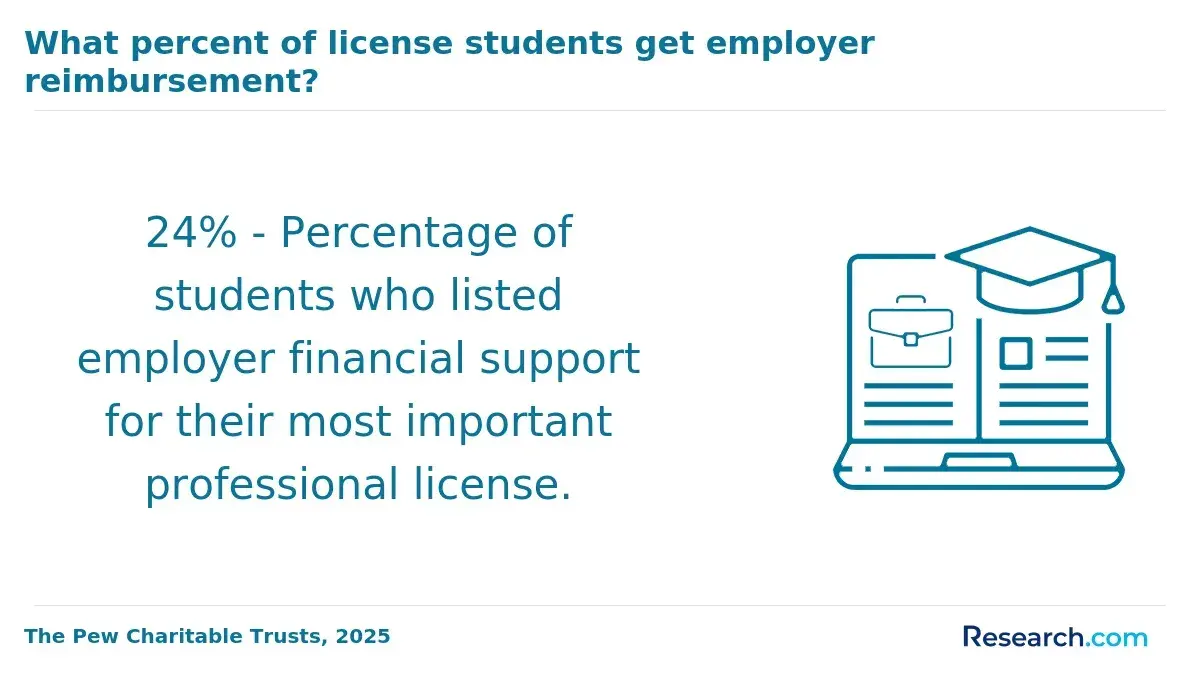
A common mistake is assuming an employer's reimbursement will cover all charges. Many plans exclude fees, books, repeated courses, or courses outside a preapproved degree plan. Another mistake is enrolling before understanding whether aid requires half-time enrollment, satisfactory academic progress, or a minimum course load.
How Do Program Format and Completion Time Affect the Cost of an Online Computer Science Master's Degree?
Format affects both direct and indirect cost. Fully online asynchronous programs can reduce commuting and allow working students to schedule study around employment. Live online courses may offer more structured interaction but can be harder to fit around time zones or work shifts. Hybrid programs may provide valuable lab, networking, or research experiences, yet required travel can raise the actual cost.
Completion time also matters. Accelerated programs can reduce the number of terms in which recurring fees are charged and may help students apply new skills sooner. However, taking too many demanding courses at once can lead to dropped courses, lower grades, or reduced work hours. A slower part-time plan may be financially safer for students relying on steady employment and employer aid.
The following comparison helps connect delivery design to likely cost considerations.
| Format or pace | Potential cost advantage | Potential added cost or risk | Who it may suit |
| Fully online asynchronous | Often minimizes travel and supports flexible scheduling | Requires strong time management and self-directed participation | Working professionals with variable schedules |
| Fully online synchronous | Structured access to faculty and peers | May conflict with work hours or require attendance across time zones | Students who benefit from fixed weekly routines |
| Hybrid or low-residency | May include hands-on, cohort, or networking experiences | Travel, lodging, and missed work may increase total cost | Students who value in-person components and can budget for them |
| Accelerated full-time | Can shorten time to completion and reduce recurring term fees | May limit employment capacity and increase academic intensity | Students with substantial time and financial flexibility |
| Part-time | Can support continued income and employer reimbursement | May extend exposure to tuition increases and recurring fees | Professionals balancing work and family responsibilities |
Computer science master's programs can be professional MS degrees focused on applied software, data, cybersecurity, or AI work; research-oriented MS programs with a thesis; or broader generalist programs with a capstone. Compare course sequencing carefully. A low tuition rate has less value if limited elective availability delays your graduation.
Students exploring creative technology paths may also compare curriculum delivery in graphic design programs, but portfolio-based creative degrees and computer science master's degrees have different admissions, technical, and career expectations.
How Much Can Transfer Credits Reduce the Cost of an Online Computer Science Master's Degree?
Transfer credits can reduce tuition only when a university accepts previously completed graduate-level coursework and applies it toward the degree. Policies vary widely. Some programs accept a limited number of credits from an accredited institution; others require all courses to be completed at the university, particularly for cohort, thesis, or tightly sequenced programs.
Do not assume that a bachelor's degree, professional certificate, work experience, boot camp, or industry certification will automatically reduce master's credits. These credentials may strengthen admission or help satisfy prerequisites, but credit substitution and transfer are separate decisions.
Before enrolling elsewhere to obtain cheaper credits, ask for a written transfer evaluation or, at minimum, a preliminary determination. The review should cover the course level, grade, syllabus, recency, accreditation of the prior institution, and fit with required learning outcomes.
These items are especially important when evaluating the practical savings from transfer credit:
- The maximum number of transfer credits permitted toward the computer science master's degree.
- Whether the program accepts only graduate credits, and the minimum grade required for acceptance.
- Whether transferred courses replace required core courses, electives only, or neither.
- Whether a transfer course has an expiration or recency limit.
- Whether transfer evaluation has a fee and whether approval must occur before enrollment.
- Whether transferring credits affects scholarships, financial-aid enrollment status, or time-to-degree requirements.
Transfer is most valuable when it replaces credits you would otherwise be required to take at the receiving institution. It is less useful when it only reduces elective space you did not need, when the savings are offset by separate course costs, or when it creates a course-sequencing delay. Students switching fields should also budget for prerequisite programming, mathematics, algorithms, or systems courses if required.
Is a Cheap Online Computer Science Master's Degree Worth the Cost for Career Advancement?
A low-cost online computer science master's degree can be a strong investment when it develops skills demanded by the role you want, fits your prior preparation, and can be completed without unsustainable borrowing. It can support advancement for software developers, systems analysts, data-focused professionals, cybersecurity practitioners, and technical professionals moving toward more specialized work.
It is not automatically necessary for every computing role; many employers weigh demonstrated skills, experience, portfolio evidence, and interview performance alongside degrees.
The U.S. Bureau of Labor Statistics reported a 2023 median annual wage of $133,080 for software developers. This national occupation-level figure is not a salary promise for new graduates, does not isolate master's degree holders, and varies by location, industry, experience, and role. Use it as context for assessing possible return on investment, not as a personal earnings forecast.
A worthwhile program should build capabilities that employers can recognize and you can demonstrate. Depending on the curriculum, that may include algorithms, distributed systems, databases, cloud computing, secure software development, machine learning, software engineering, or human-computer interaction.
A thesis can make sense for students targeting research, doctoral study, or research-intensive roles; a capstone or non-thesis professional program may fit professionals seeking applied advancement.
Evaluate career fit with the following questions before comparing only tuition:
- Does the curriculum teach the technical areas required for my target role or specialization?
- Will I complete projects, a capstone, research, or other work I can discuss with employers?
- Does the program's schedule let me preserve relevant work experience while studying?
- Are career services, alumni networking, faculty access, and technical advising available to online students?
- Is the degree appropriate for my next step, such as promotion, career transition, doctoral study, or specialization?
Paying more may be reasonable when a program provides a required specialty, research opportunity, local employer connection, or flexible schedule unavailable in the cheapest option. Paying more is harder to justify when the only difference is branding and the lower-cost accredited program offers comparable coursework, support, and completion feasibility.
How Should Students Compare the Cheapest Accredited Online Computer Science Master's Programs?
Use a consistent comparison process and gather every school's information for the same starting term. The best choice is usually the program with the lowest verified net total cost that also meets your accreditation, curriculum, scheduling, and career needs. Do not rank programs solely by a headline tuition rate.
Students considering adjacent technical design fields may find it useful to contrast delivery and project requirements in an online architecture degree pathway, although architecture education may involve different professional accreditation and licensure considerations than computer science.
The checklist below is designed for side-by-side decisions. Record the answer and the date you verified it, because rates and policies can change by academic year.
- Confirm that the university holds recognized institutional accreditation and that the exact degree is awarded by that institution.
- Confirm the program is available to students in your state and identify whether it is fully online, synchronous, asynchronous, hybrid, thesis-based, or capstone-based.
- Obtain the published online tuition rate and written confirmation that no out-of-state surcharge applies to your program.
- Multiply the rate by all required degree credits, then add mandatory fees, expected technology costs, prerequisites, and travel expenses.
- Review course rotation, maximum time to degree, and realistic completion time at your intended enrollment pace.
- Ask about transfer-credit limits, prior-learning policies, scholarships, federal aid eligibility, and employer-partnership discounts.
- Compare concentrations, faculty expertise, student support, career services, and project or thesis opportunities against your career target.
- Calculate a conservative net-cost estimate using only aid or employer funding you have actually been awarded or confirmed.
Keep a copy of tuition pages, fee schedules, emails, and award letters. If two programs are close in cost, prioritize the one whose policies are clearer, whose required courses are reliably available, and whose learning format you can realistically complete. That approach reduces the risk of selecting a nominally cheap program that becomes expensive through delays, extra credits, or unexpected charges.
Other Things You Should Know About Computer Science Programs
Not always. Some programs admit students from mathematics, engineering, business, science, or other backgrounds, but may require prerequisites in programming, discrete mathematics, data structures, algorithms, or statistics. Ask whether prerequisites add credits, tuition, or time before admission.
Many universities issue the same diploma for online and campus programs, but practices vary. Ask the registrar or admissions office how the degree appears on the diploma and transcript if that matters to you or your employer.
Common preparation areas include programming in at least one language, data structures, algorithms, discrete mathematics, linear algebra, probability, and basic computer systems concepts. Review the program's prerequisites instead of relying on a general list, because AI, cybersecurity, software engineering, and data-focused tracks can differ.
Many online programs are designed for working professionals, especially part-time options. Before enrolling, estimate weekly reading, coding, group-project, and examination demands for each course. A manageable pace can be more valuable than an accelerated schedule that risks withdrawal, repeated courses, or lost employer tuition benefits.
References
- Funding Your Online Master's Degree: How to Pay Less with Financial Aid https://www.onlinemastersdegrees.org/financial-aid/
- Paying for a Computer Science Degree | Scholarships, Grants, Loans https://www.computerscience.org/resources/how-to-pay-for-a-degree/
- Financial Aid For Online Colleges https://www.affordablecollegesonline.org/financial-aid/financial-aid-for-online-colleges/
- 2025 Most Affordable Online Master's Programs https://www.onlineu.com/most-affordable-colleges/masters-degrees
- Accredited Online Master's Degree Programs at CSU Global | Colorado State University Global https://csuglobal.edu/academic-programs/graduate-degrees
- Average Cost of a Master's Degree: 2025 Analysis https://educationdata.org/average-cost-of-a-masters-degree