2027 Cheapest Accredited Online Biotechnology Master's Programs With No Out-of-State Tuition Surcharge

Co-Founder and Chief Data Scientist
An online biotechnology master's can be affordable across state lines, but a "no out-of-state surcharge" claim does not automatically identify the lowest total-cost program. This guide is for working scientists, laboratory professionals, and career changers comparing accredited online options.
The U.S. Bureau of Labor Statistics projects 7% growth for biochemists and biophysicists from 2024 to 2034, faster than the average for all occupations. Learn how to verify tuition, accreditation, format requirements, aid, and career fit before applying.
Key Things You Should Know
- A residency-neutral online tuition policy means eligible online students pay one published rate regardless of where they live; it does not mean tuition is automatically low, fee-free, or identical across every program at the university.
- Compare total required charges, not just the per-credit rate: a biotechnology master's commonly requires about 30 to 36 credits, and technology, laboratory, course, graduation, and travel expenses can materially change the final cost.
- Verify institutional accreditation, the exact online program's tuition policy, transfer-credit limits, and required practical components before enrolling; career value depends on curriculum, employer relevance, and outcomes as well as price.
What Does No Out-Of-State Tuition Surcharge Mean for an Online Biotechnology Master's Program?
A no-out-of-state-tuition-surcharge program charges qualifying online students the same tuition rate whether they live in the institution's home state or elsewhere in the United States. Schools may describe this as "online tuition," "flat tuition," "eRate," "distance-learning rate," or "same tuition for all online students." It removes the extra nonresident price that many public universities charge for campus-based enrollment.
This policy is most useful for an applicant who lives outside the university's state and would otherwise face a higher public-university rate. It is not necessarily equivalent to in-state tuition: the universal online rate may be higher than a resident's campus rate, and the policy may exclude certain programs, cohorts, or fees.
Use the school's program page and tuition schedule to distinguish the common models below. The comparison matters because the lowest advertised rate can produce a higher bill once required credits and charges are included.
| Tuition model | How residency affects price | Who may benefit most | Key caution |
| Residency-neutral online rate | One rate for eligible online students | Out-of-state working professionals | Confirm the biotechnology degree is included |
| Traditional public tuition | Residents usually pay less than nonresidents | Students already eligible for in-state tuition | Online enrollment may use a separate rate |
| Private university tuition | Usually does not vary by state residency | Students comparing predictable published prices | Base tuition may be higher than a public rate |
| Limited waiver or discount | Nonresident charge is reduced under stated conditions | Students who meet the waiver criteria | A waiver can expire or exclude fees |
Do not assume that a university-wide online policy applies automatically. Ask admissions, in writing, whether the quoted rate applies to your start term, degree track, location, enrollment status, and all required courses. Also ask whether tuition can change after admission or between academic years.
How Can Students Verify Accreditation for an Affordable Online Biotechnology Master's Program?
For a U.S. biotechnology master's degree, institutional accreditation is the central verification step. It indicates that the university has been reviewed by an accrediting agency recognized by the U.S. Department of Education or the Council for Higher Education Accreditation. Confirm the institution and its accreditor through the official institutional directory, then confirm that the online degree is awarded by that institution rather than by an unaccredited partner.
Biotechnology does not have one universal programmatic accreditor comparable to the accreditation systems used in several licensed health professions. A program may instead align with laboratory science, regulatory affairs, biomanufacturing, bioinformatics, or business needs. That makes curriculum review especially important.
Before paying an application fee, complete these verification steps. They help separate a valid degree from a marketing claim and identify whether a low price reflects fewer academic or career supports.
- Find the university in the U.S. Department of Education or CHEA accreditation directory and record the accreditor's name and current status.
- Match the degree title, delivery mode, and awarding institution on the university catalog to the online program you intend to enter.
- Request the current curriculum, required credit total, faculty information, graduation requirements, and any internship, laboratory, or campus expectations.
- Ask whether the program supports a specific employer requirement, doctoral path, professional certification, or state-regulated role relevant to your plans.
Institutional accreditation does not guarantee that every course transfers, that an employer will prefer the degree, or that the program meets a specialized certification requirement. If your goal is a clinical laboratory, quality, regulatory, or advanced research role, compare the program's technical coursework and experiential learning to actual job postings and employer expectations.
How Much Does the Cheapest Online Biotechnology Master's Program Cost in Total?
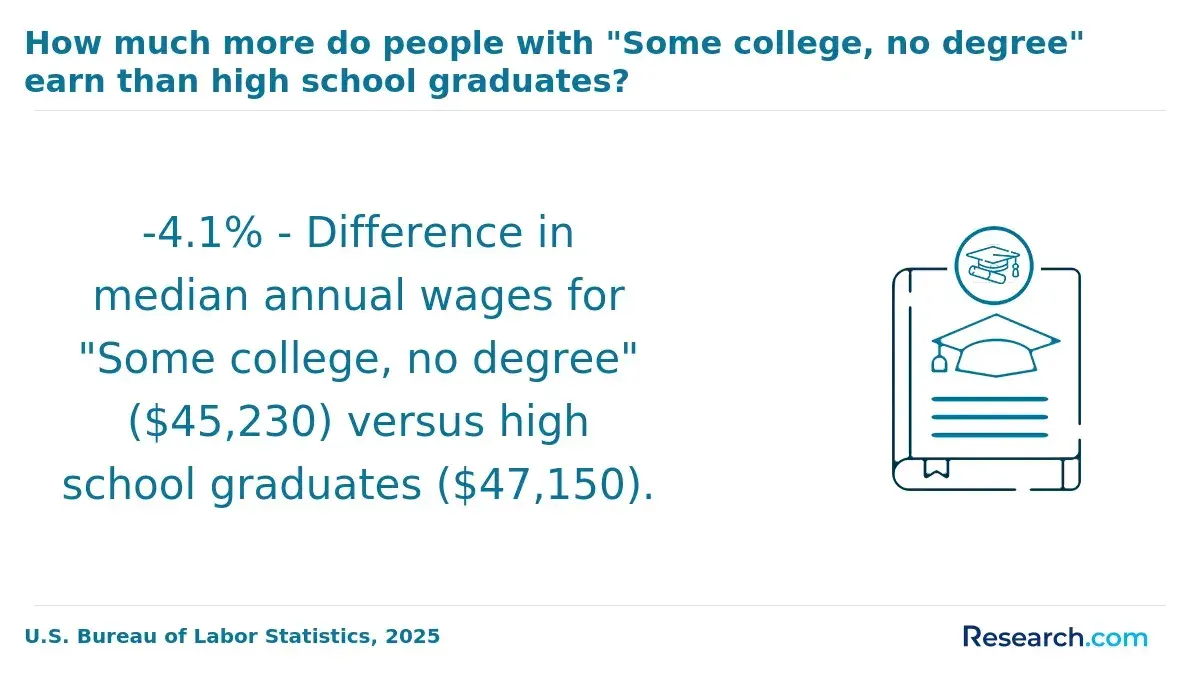
The cheapest program is the one with the lowest net cost for the complete degree, not necessarily the lowest posted price per credit. Total tuition is calculated by multiplying the required billable credits by the applicable rate, then adding mandatory institutional and program charges. Scholarships, grants, employer payments, and eligible transfer credits may reduce what you personally pay.
A 30-credit degree at $500 per credit has $15,000 in tuition before fees; a 36-credit degree at $450 per credit has $16,200 in tuition before fees. This simple comparison shows why a lower per-credit figure can still cost more overall when a program requires additional coursework.
Use this cost worksheet when reviewing official tuition pages and financial-aid offers. Enter only charges that the school confirms for your program and anticipated start date.
| Cost component | How to calculate it | What to verify |
| Required tuition | Billable credits × applicable online rate | Whether all courses use one rate |
| Mandatory fees | Per-term, per-credit, or one-time charges | Online, technology, student-service, and graduation fees |
| Course expenses | Required materials and specialized course charges | Laboratory kits, software, proctoring, and textbooks |
| Travel expenses | Estimated cost of required in-person activity | Residencies, orientations, internships, and presentations |
| Financial support | Confirmed grants, scholarships, and employer aid | Renewal rules, taxable benefits, and reimbursement timing |
Request a written estimate showing tuition and mandatory fees for the entire degree, not only the first term. Tuition schedules may change, so treat estimates as planning tools rather than guaranteed future prices. A program requiring a campus visit can be less affordable than a slightly higher-priced fully online option after airfare, lodging, missed work, and local transportation are counted.
Do Online Biotechnology Master's Students Have to Establish Residency to Receive the Lowest Tuition Rate?
Usually, no. A genuine residency-neutral online rate is available without establishing state residency, provided the student meets the program's online-enrollment conditions. This can simplify enrollment for professionals who cannot relocate. However, some universities use residency classifications for financial aid, state-sponsored benefits, or programs with in-person components even when online tuition is uniform.
Residency rules can be complex because moving to a state solely to attend school may not establish resident status for tuition purposes. A student should not relocate based on an assumption that resident tuition will begin the following term. Ask the registrar, rather than relying only on an admissions representative, how residency is determined and whether it matters for the selected online degree.
Get direct answers to the following questions before comparing a residency-neutral rate with a traditional public-university rate.
- Is the published online tuition rate available to students in every U.S. state where the program admits applicants?
- Does any course, concentration, practicum, or laboratory requirement change the tuition classification?
- Are online students charged campus-based fees, and are those fees affected by residency?
- Must students maintain continuous online enrollment to keep the quoted rate?
- Do institutional scholarships or state grants require state residency even if tuition does not?
A student who already qualifies for low in-state tuition may still find a local public university less expensive. Conversely, an out-of-state applicant may prefer a flat online rate when it offers predictable pricing and avoids the paperwork, relocation costs, and uncertainty associated with residency classification.
How Do Public and Private Universities Compare on the Cost of an Online Biotechnology Master's Degree?
Public and private nonprofit universities can both offer strong value, but they use different pricing logic. Public institutions may offer very low resident rates while charging nonresidents more; some instead publish one online rate. Private nonprofit institutions generally do not apply state-residency pricing, which can make their tuition easier for out-of-state students to predict, though the published base rate may be higher.
Compare the program rather than treating institutional type as a quality or affordability shortcut. A private nonprofit program may cost less overall if it requires fewer credits, includes support services in tuition, accepts more transfer credit, or allows faster completion. A public program may be the stronger value if you receive resident pricing or a competitive online rate.
The distinctions below help applicants identify which comparison is most relevant to their circumstances.
| Factor | Public university pattern | Private nonprofit university pattern | Best comparison question |
| Residency pricing | May vary substantially by state | Often one tuition rate | What rate applies to my online enrollment? |
| Program length | May follow a traditional academic calendar | May offer varied session lengths | How many terms and credits are required? |
| Fees | May include separate institutional charges | May bundle some services or charge separately | What is mandatory beyond tuition? |
| Financial support | May include institution-specific and state-linked options | May offer institutional merit aid | Which awards are available to online graduate students? |
Online biotechnology is one of several ways to build science and health-care credentials while working. Professionals comparing adjacent paths may also evaluate accelerated DNP programs, although nursing practice degrees have distinct clinical, licensure, and accreditation requirements and should not be compared solely on tuition.
Can Financial Aid Reduce the Cost of a Cheap Online Biotechnology Master's Program?
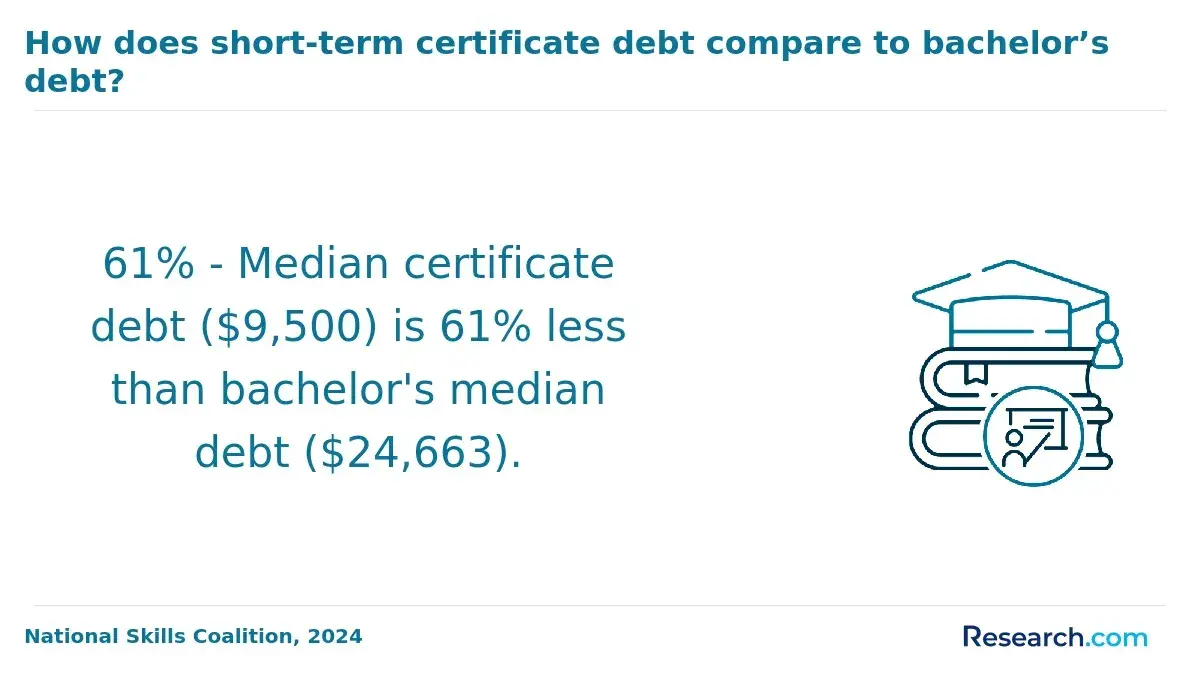
Yes. Graduate students may be eligible for federal Direct Unsubsidized Loans and Graduate PLUS Loans when they meet federal eligibility requirements and attend an eligible institution, but loans reduce upfront costs rather than the degree's price. Submit the FAFSA and the university's aid application early, then compare aid offers using the net amount you will repay or pay from savings.
For employed applicants, employer tuition assistance can be more valuable than a small tuition difference. Confirm whether the employer reimburses biotechnology, regulatory, bioinformatics, management, or related coursework; whether a minimum grade is required; whether payment occurs after the term; and whether a work-commitment agreement applies.
Build a funding plan from sources that do not all have the same repayment consequences. The following order can help control borrowing.
- Apply for grants, scholarships, fellowships, veterans' education benefits, and employer tuition assistance for which you are eligible.
- Calculate the remaining verified program cost after those awards, including required fees and materials.
- Use savings and payment plans only if they preserve an appropriate emergency reserve.
- Borrow only after comparing federal-loan terms and the expected monthly repayment with your budget.
Do not assume online students receive every campus-based scholarship, or that an employer pays fees, textbooks, or repeated courses. Ask financial aid whether awards are renewable, whether part-time enrollment changes eligibility, and whether receiving outside funding affects institutional scholarships. Students exploring clinical pathways should compare costs carefully with alternatives such as fast track medical training, which follows a different education and licensure model.
How Do Program Format and Completion Time Affect the Cost of an Online Biotechnology Master's Degree?
Format affects both direct charges and opportunity costs. A fully online, asynchronous program can reduce commuting and make it easier to retain full-time employment. A synchronous program may provide scheduled faculty interaction but can conflict with shift work. Hybrid programs can be academically appropriate for laboratory-intensive learning, yet required travel may increase the total budget.
Accelerated programs can reduce the number of terms in which a student pays recurring fees and can help professionals apply new skills sooner. They are not automatically cheaper: compressed courses may limit the number of classes a working student can take, and a heavier course load can increase the risk of withdrawing or repeating a course.
Choose the format based on the learning and scheduling conditions that affect completion. These comparisons identify the cost trade-offs to examine.
| Format or pace | Potential cost advantage | Potential added cost or risk | Best fit |
| Fully online asynchronous | Less commuting and schedule flexibility | Requires strong time management | Working professionals with variable schedules |
| Online synchronous | Regular live engagement | May require reduced work availability | Students who benefit from set meeting times |
| Hybrid or low-residency | Access to hands-on or cohort experiences | Travel, lodging, and time away from work | Students needing in-person laboratory exposure |
| Accelerated | Fewer calendar months and possibly fewer term fees | Intensive workload and limited flexibility | Students with sufficient time and prerequisite knowledge |
| Part-time | May preserve income and reduce borrowing per term | More terms of recurring fees and slower completion | Students balancing substantial work or family duties |
Read course descriptions for virtual labs, wet-lab expectations, capstones, internships, and research projects. A biotechnology program can be "online" while still requiring local placement work or short campus sessions. Health-care programs such as online sonography programs typically have even more substantial clinical-placement requirements, so their delivery costs should be evaluated separately.
How Much Can Transfer Credits Reduce the Cost of an Online Biotechnology Master's Degree?
Transfer credit can lower total tuition only when the university accepts prior graduate-level coursework and applies it toward required degree credits. Policies vary widely. Many programs limit the number of credits, require a minimum grade, set a time limit on prior courses, and evaluate whether a course is equivalent to the current curriculum.
Do not calculate savings until the registrar or graduate program gives a written evaluation. A course that transfers as elective credit may not replace a required biotechnology, molecular biology, statistics, bioinformatics, regulatory, or business course. Some schools also require a minimum number of credits to be completed in residence.
Take these steps before choosing a program based on transfer potential.
- Collect official transcripts, course descriptions, syllabi, laboratory details, and proof of grades for potentially transferable courses.
- Ask for the maximum transferable-credit limit and whether the limit differs for electives, certificates, prior graduate degrees, or military and professional learning.
- Request an unofficial pre-enrollment review when available, then obtain the final decision in writing after admission.
- Recalculate total tuition using only credits formally approved to satisfy degree requirements.
Transfer credit may be less important than curriculum alignment for a career changer. Students without a science background may need prerequisites in biology, chemistry, genetics, calculus, or statistics; those courses can add time and cost even if the master's itself is priced competitively.
Is a Cheap Online Biotechnology Master's Degree Worth the Cost for Career Advancement?
A low-cost accredited biotechnology master's can be worthwhile when it develops skills tied to a realistic next role and when the net cost fits your finances. Biotechnology graduates may pursue work in research and development, quality assurance, quality control, biomanufacturing, clinical research, regulatory affairs, bioinformatics, scientific operations, product support, or technical sales. Specific eligibility depends on the employer, prior experience, technical background, and the program's curriculum.
The U.S. Bureau of Labor Statistics reports a 2024 median annual wage of $103,650 for biochemists and biophysicists. That occupation commonly requires a doctoral degree for independent research roles, so prospective master's students should not treat the figure as a typical or guaranteed outcome of an online master's program. It is more useful as context for the research labor market and the importance of matching the degree to the role you actually seek.
An MS often emphasizes scientific depth, research methods, and technical specialization. A professional master's, sometimes an MA or a degree with a management focus, may emphasize commercialization, regulatory strategy, project management, or industry operations. Thesis and research-based tracks can suit students considering doctoral study; non-thesis and capstone tracks may better fit experienced professionals seeking applied advancement.
Evaluate return on investment using your own career pathway. Review the skills requested in target job postings, talk with current supervisors or hiring managers when possible, and determine whether a graduate degree is required, preferred, or optional. Related advanced health education, including accelerated pharmacy programs, serves different regulated career paths and should be selected for professional goals rather than salary comparisons alone.
How Should Students Compare the Cheapest Accredited Online Biotechnology Master's Programs?
Start with a shortlist of programs that are institutionally accredited, authorized to enroll students where you live, and aligned with your intended biotechnology role. Then compare verified information from the university catalog, bursar, financial-aid office, and graduate department. Marketing pages are useful starting points, but they may not show every fee, progression rule, or practical requirement.
A strong comparison considers affordability alongside learning quality and career relevance. Use the same questions for every program so that a low advertised tuition rate does not overshadow material differences.
- Accreditation and authorization: Is the university institutionally accredited, and can it enroll online students in your state?
- Complete cost: What are the required credits, tuition rate, mandatory fees, course expenses, and travel costs through graduation?
- Pricing policy: Does the quoted rate apply regardless of residency, and is it guaranteed or subject to annual changes?
- Curriculum: Does the program provide the molecular biology, data analysis, regulatory, quality, manufacturing, or business skills your target role requires?
- Format: Are classes asynchronous, synchronous, hybrid, accelerated, part-time, or cohort-based, and can you complete them while working?
- Experiential learning: Are internships, capstones, research projects, laboratory sessions, or residencies required, and who arranges and pays for them?
- Support and outcomes: What career services, faculty access, alumni connections, and job-outcome information are available?
- Transfer and aid: How many credits may transfer, and what scholarships, employer partnerships, or payment options are available to online students?
The best choice may not be the absolute cheapest program. Paying more can be reasonable when a program offers a directly relevant specialization, accessible faculty, a practical project portfolio, better scheduling, or employer-recognized training that supports your defined career move. Conversely, avoid paying a premium for a brand name if the lower-cost accredited option provides the same relevant competencies and usable support.
Professionals changing fields should also distinguish biotechnology from other graduate routes. For example, an online doctorate in counseling prepares students for a separate behavioral-health career path with different practicum, licensure, and state requirements.
Other Things You Should Know About Biotechnology
Requirements vary, but many programs expect a bachelor's degree and prior coursework in biology, chemistry, or related sciences. Applicants without the needed foundation may be assigned prerequisites. Review required courses before applying because prerequisites can add cost and time.
Not always. Some programs use a capstone, applied project, internship, or comprehensive examination instead. A thesis or research-heavy option may be more useful for students planning doctoral study, while an applied project may fit industry-focused professionals.
Some programs use simulations, data-analysis projects, and virtual laboratory exercises. Others require in-person intensives, local laboratory access, or a supervised project. Confirm the practical requirements before enrolling, particularly if you want hands-on laboratory experience.
Useful skills depend on the role but may include molecular biology, cell culture, experimental design, statistics, bioinformatics, data interpretation, quality systems, regulatory documentation, scientific communication, and project management. Compare a program's required coursework with the skills named in jobs you want to pursue.
References
- Financing Your Degree https://aspph.org/student-journey/financing-your-degree/
- Online Biotechnology Master's Degrees: Reviewing Top Programs https://www.edumed.org/online-schools/biotechnology-masters-degrees/
- Accredited Online Master's Degree Programs at CSU Global | Colorado State University Global https://csuglobal.edu/academic-programs/graduate-degrees
- 2025 Most Affordable Online Master's Programs https://www.onlineu.com/most-affordable-colleges/masters-degrees
- How to Pay for Graduate School Outside of the U.S. (+39 Scholarship Resources) https://www.collegeessayguy.com/blog/financial-aid-non-us-graduate-school
- Online Master of Science in Biotechnology: Biotechnology Management https://www.umgc.edu/online-degrees/masters/biotechnology-management
- Average Cost of a Master's Degree: 2025 Analysis https://educationdata.org/average-cost-of-a-masters-degree
- Funding Your Online Master's Degree: How to Pay Less with Financial Aid https://www.onlinemastersdegrees.org/financial-aid/
- CBTS Master of Science in Biotechnology Online Year 1 at UNT Health https://www.unthealth.edu/tuition-and-fees/cbts-tuition-and-fees/cbts-master-of-science-in-biotechnology-online-year-1.html