2027 Cheapest Accredited Online Science Master's Programs With Flat-Rate Tuition: Costs per Term and Total Degree Estimates

Co-Founder and Chief Data Scientist
Choosing an online science master's is difficult when schools advertise a low term price but do not make the number of required terms equally clear. Flat-rate tuition can reward students who complete more credits per term, but it can become expensive when pacing, prerequisites, or repeated courses add terms.
This guide explains how to calculate the real cost, verify accreditation, compare flat-rate and per-credit options, and decide whether an accelerated online science master's supports your career goal. For context, the U.S. Bureau of Labor Statistics projected 36% growth for data scientists from 2023 to 2033, illustrating demand in one science-adjacent field.
Key Things You Should Know
- A flat-rate program is cheapest only when you can complete enough credits during each billed term, calculate total terms, not just the advertised term price.
- Use this formula before applying, flat-rate tuition per term × expected paid terms + mandatory fees + required learning materials.
- Institutional accreditation, program fit, and career relevance matter alongside price; for example, the Bureau of Labor Statistics projects 36% growth for data scientists from 2023 to 2033, but a science degree should still match the role you intend to pursue.
What Does Flat-Rate Tuition Mean for an Online Science Master's Program?
Flat-rate tuition means a university charges one set tuition amount for a defined enrollment period, such as a semester, quarter, or six-month term, rather than billing separately for every credit. The price may cover a stated credit range, a full-time course load, or - at some competency-based institutions - additional courses completed after required work is approved.
It is important to read the school's definition carefully. "Flat rate" does not automatically mean unlimited credits, unlimited courses, books, laboratory materials, or fees are included. A Master of Science may also require a capstone, practicum, research project, proctored assessment, or in-person laboratory component that affects both pace and cost.
Flat-rate online science master's programs can fit working professionals who already have a strong technical foundation and can sustain a full-time or near-full-time pace. They are less suitable for students who expect to take one course at a time, need extensive prerequisite coursework, or have work and family demands that make an accelerated schedule unrealistic.
Accreditation requires a separate check. Institutional accreditation helps establish that the university meets recognized quality standards and is generally important for federal aid, employer recognition, and future doctoral admission. Certain fields may also have specialized accreditation or state requirements. A science program leading toward a regulated profession should be checked against the relevant state board before enrollment.
How Much Does a Flat-Rate Online Science Master's Program Cost Per Term?
There is no single national flat-rate price for an online science master's. Published charges vary by institution, subject, residency policy, term length, and whether resources are bundled. The lowest advertised price is not enough to identify the lowest-cost degree because one school may use two long terms while another requires four shorter terms.
Use the school's current tuition page and academic calendar to record the items below. This comparison separates a school's advertised price from the enrollment conditions that determine whether that price works for you.
| Item to verify | Why it changes the per-term cost | What to record |
| Billing period | A six-month term is not directly comparable with an eight-week or 16-week term. | Term length and number of terms each year |
| Credits included | Some rates cover a credit band; others apply only at full-time enrollment. | Minimum and maximum included credits |
| Tuition charge | This is the base rate, not necessarily the final bill. | Published tuition for the intended program |
| Required fees | Technology, enrollment, student-service, and assessment fees may be billed separately. | Fee name, frequency, and amount |
| Course sequencing | Prerequisites and capstones can limit the credits available in a term. | Typical course map for your entry term |
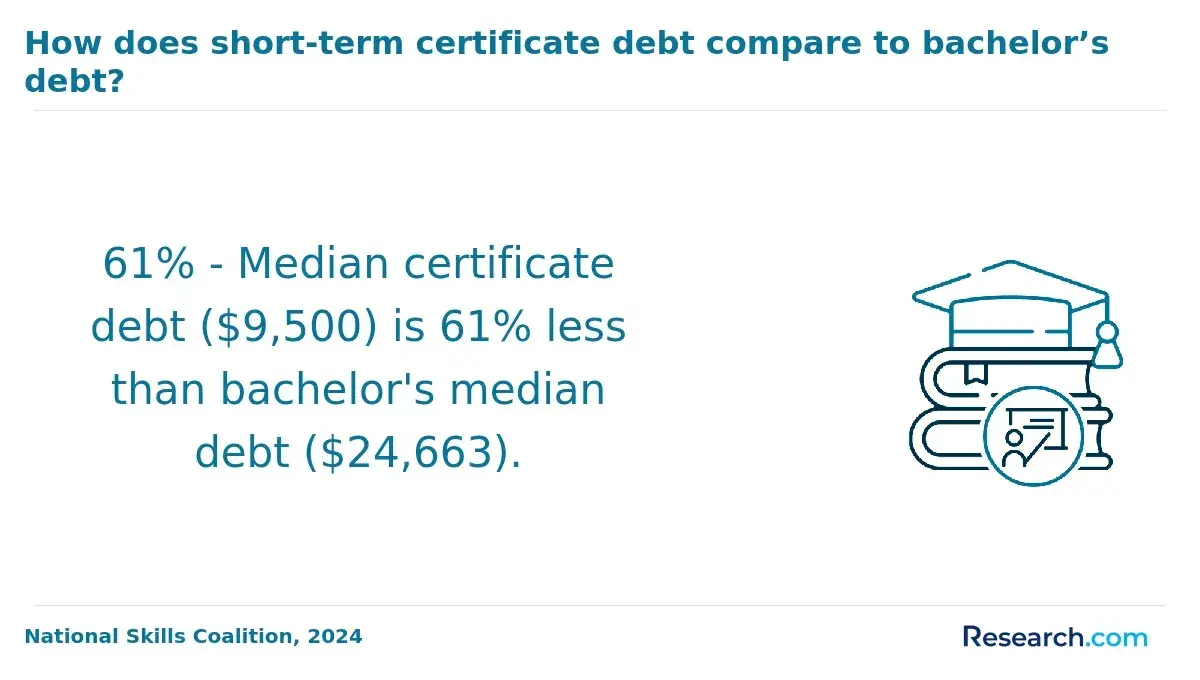
Before committing to a master's, some applicants compare a shorter credential with degree study. A review of 6 month certificate programs can help clarify whether a narrower, lower-commitment credential meets an immediate skills need, although it is not equivalent to a graduate science degree.
How Much Does an Online Science Master's Degree Cost in Total With Flat-Rate Tuition?
Total tuition depends on the number of paid terms required, not the program's nominal credit total alone. A 30-credit program can cost very differently when one student finishes in two billed terms and another needs three or four terms because courses are sequential or time is limited.
The following calculation framework produces a transparent estimate without assuming that every university uses the same rate or calendar.
| Cost component | Calculation | How to use it |
| Base tuition | Published flat-rate term tuition × expected paid terms | Use the program-specific rate, not a general graduate-school rate. |
| Recurring fees | Fee per term × expected paid terms | Include charges billed each enrollment period. |
| One-time fees | Application, graduation, onboarding, or assessment charges | Add only fees that apply to your enrollment. |
| Materials and travel | Required software, textbooks, equipment, proctoring, residencies, or labs | Estimate separately because these are often outside tuition. |
| Estimated degree cost | Base tuition + recurring fees + one-time fees + materials and travel | Compare this total across schools using the same expected pace. |
For example, if a school charges a flat amount of $T per term and your academic plan requires three paid terms, base tuition is 3 × $T. If an additional term becomes necessary, the base tuition becomes 4 × $T, a 33% increase over the three-term estimate. This is why a program with a somewhat higher term price can still be better value if its curriculum is easier to complete within fewer billed terms.
Ask admissions or an academic advisor for a written, program-specific completion map. It should identify required credits, transfer-credit decisions, prerequisite requirements, course availability, and the expected number of billed terms for a student entering with your background.
How Does Course Load Affect the Cost of a Flat-Rate Online Science Master's Degree?
Course load determines the value you receive from a flat-rate term. The effective cost per credit falls as you complete more included credits, but only when the work can be finished successfully and courses are available when needed.
This simplified example shows the math. It is an illustration rather than a published university price: assume a $5,000 flat-rate term covering the listed course loads and excluding fees.
| Credits completed in the term | Illustrative flat-rate term tuition | Effective tuition per credit | Cost implication |
| 3 credits | $5,000 | $1,667 | Usually poor value unless school policy or personal circumstances require a light load. |
| 6 credits | $5,000 | $833 | May be reasonable for a working student, depending on the program's normal pace. |
| 9 credits | $5,000 | $556 | Delivers stronger value if course sequencing permits it. |
| 12 credits | $5,000 | $417 | Maximizes the rate in this example but requires substantial available time and preparation. |
Do not use effective cost per credit as the only measure. A demanding program in data science, biotechnology, environmental science, analytics, computer science, or applied science can include group projects, coding assignments, research writing, and lab simulation work that make an aggressive schedule impractical.
Before selecting a load, evaluate whether you can protect consistent study time, whether required courses run every term, and whether a failed or withdrawn course would delay a prerequisite sequence. Taking fewer courses can be the right academic decision, but it may remove the financial advantage of a flat-rate structure.
Is Flat-Rate Tuition Cheaper Than Per-Credit Tuition for an Online Science Master's Degree?
Flat-rate tuition is cheaper when your expected per-term credit load is high enough that the flat amount is below what you would pay under a comparable per-credit rate. Per-credit tuition can be cheaper for part-time students, students completing only a small number of remaining credits, or learners who need flexibility more than speed.
Find the break-even point by dividing flat-rate term tuition by the competing school's per-credit charge. If a flat rate is $T and a per-credit alternative is $C, the break-even load is $T ÷ $C credits. A student expecting to take more credits than that threshold may benefit from flat-rate billing; a student below it should investigate per-credit pricing.
| Student situation | Potentially better model | Reason |
| Can complete a full graduate load each term | Flat-rate tuition | More completed credits can lower the effective cost per credit. |
| Needs one course at a time while working full time | Per-credit tuition | The student avoids paying a full-term rate for a limited load. |
| Has approved transfer credits but a few courses remain | Usually per-credit tuition | A full flat-rate term may not be efficient for a short remaining sequence. |
| Must take courses in a fixed sequence | Depends on availability | Unused capacity in a term can erase expected flat-rate savings. |
Students comparing graduate fields with licensure paths should be particularly cautious about simple price comparisons. For example, a search for the cheapest counseling degree online should also include programmatic accreditation, supervised-practice requirements, and state licensure rules, which can matter more than the billing model.
What Fees and Additional Expenses Apply to a Flat-Rate Online Science Master's Program?
Flat-rate tuition is often only one line on the bill. A careful total-cost review includes mandatory school charges and program-specific expenses that can affect the affordability of a science master's degree.
Request a complete fee schedule and compare it against your planned number of terms. The categories below are common, but a charge applies only if the school lists it for your program and enrollment status.
| Expense category | Possible examples | Question to ask |
| University fees | Technology, student services, distance-learning, enrollment, or graduation fees | Is this charged once, each term, or per credit? |
| Academic materials | Texts, e-books, data sets, software licenses, cloud-computing access, or equipment | Which items are included in tuition and which must I buy? |
| Assessment costs | Remote proctoring, certification exams, competency assessments, or portfolio reviews | Are attempts, retakes, and proctoring included? |
| Experiential requirements | Lab kits, fieldwork, residency travel, background checks, or practicum costs | Is any in-person participation required, and what travel costs should I expect? |
| Personal technology | Computer upgrades, reliable internet, monitors, or specialized operating systems | What are the minimum hardware and software specifications? |
A common mistake is treating optional and mandatory costs as the same. Separate expenses required for graduation from choices such as upgraded hardware or optional certifications, then build a budget with a small contingency for items the institution confirms are not included.
Can Accelerated Study Lower the Total Cost of a Flat-Rate Online Science Master's Degree?
Accelerated study can lower total tuition when it reduces the number of billed terms without causing failed courses, withdrawals, or a delay in required sequencing. It also may shorten the time before you can apply newly developed skills in the labor market. It is not automatically cheaper if the program's workload exceeds what you can complete well.
An accelerated plan is most realistic for students with current prerequisite knowledge, predictable work hours, strong quantitative or technical preparation, and access to support. Students changing fields may need foundational coursework in statistics, programming, research methods, or discipline-specific science before they can move quickly through graduate-level work.
To test whether acceleration is financially sound, take these steps before enrolling.
- Obtain the course sequence and identify which required courses are offered in every term.
- Confirm the maximum course or competency load permitted in one billing period.
- Ask whether faculty approval, milestones, or assessment turnaround can limit progression.
- Model the total cost at your standard pace and at the fastest sustainable pace.
- Review withdrawal, incompletion, and repeat-course policies before relying on a short timeline.
Acceleration is also relevant outside science. Students exploring project-based technical leadership may compare timelines at the best construction management schools, but they should evaluate curriculum and career fit rather than assuming every accelerated credential has the same return on investment.
Can Financial Aid and Employer Reimbursement Reduce the Cost of a Flat-Rate Online Science Master's?
Yes, but eligibility and payment timing vary. Graduate students may be eligible for federal Direct Unsubsidized Loans and Grad PLUS Loans if they meet federal requirements, while institutional scholarships, workforce grants, military education benefits, and employer tuition assistance can reduce the amount paid out of pocket. Grants that do not require repayment are generally preferable to borrowing, but availability differs sharply by school and student circumstance.
Employer reimbursement deserves close attention because many plans have annual caps, grade requirements, eligible-program rules, repayment obligations after departure, and reimbursement only after the employee pays tuition. A flat-rate term may create a larger up-front bill than an employer's reimbursement schedule can cover.
Use this checklist to coordinate aid with a term-based program.
- File the FAFSA and ask the financial-aid office how aid is disbursed for the program's specific term calendar.
- Request written confirmation of whether enrollment intensity affects aid eligibility or loan processing.
- Ask your employer whether the degree, institution, course grades, and invoices meet reimbursement requirements.
- Compare the reimbursement year with the academic calendar so a term does not exceed the available annual benefit.
- Review borrowing as a total-degree decision, including interest and the possibility of an extra term.
Students considering human-services alternatives can also review cheap online MSW programs. An MSW has different accreditation, field-placement, and licensing considerations than a science master's, so affordability should be compared within the career path you actually intend to enter.
How Do Enrollment Breaks and Extra Terms Affect the Cost of an Online Science Master's Degree?
An extra billed term is one of the largest financial risks in a flat-rate program. It can result from a leave of absence, reduced course load, a missed prerequisite, a capstone delay, an incomplete, a failed course, or a course that is not offered when expected. Even when tuition itself is fixed, recurring fees and delayed career progress can add to the cost.
Before enrolling, ask whether students can pause without being charged, how long they may remain inactive, whether returning students follow a new curriculum or tuition schedule, and whether financial aid must be reapplied for after a break. Also ask what happens if only one capstone or final course remains: some schools offer a reduced completion enrollment option, while others charge the full term rate.
The most useful protection is a conservative plan. Budget for the standard completion schedule, then identify the financial effect of one additional term before signing an enrollment agreement. If that extra-term amount would make the degree unaffordable, a per-credit program or a lower fixed-rate option may be safer than relying on an ideal accelerated timeline.
How Should Students Choose the Best-Value Flat-Rate Online Science Master's Program?
The best-value program is not necessarily the school with the lowest term tuition. It is the accredited option that supports your intended occupation, can be completed at a pace you can sustain, has transparent total costs, and provides coursework employers or future graduate programs recognize.
Start by narrowing the degree type. An MS in data science, computer science, environmental science, biotechnology, analytics, information systems, or a specialized applied-science field can lead to different job targets. Review admissions requirements such as a bachelor's degree, minimum GPA, prerequisite coursework, transcripts, résumé, statement of purpose, recommendation letters, and, where required, quantitative or programming preparation. Admissions policies and prerequisite waivers vary by institution.
Use this decision sequence when comparing finalists.
- Verify institutional accreditation and any specialized accreditation or state approval relevant to your intended profession.
- Match required courses, concentrations, capstones, laboratories, and experiential components to the jobs or doctoral programs you want after graduation.
- Calculate total cost using the school's current term rate, mandatory fees, expected number of terms, and realistic course availability.
- Compare your likely credit load with a per-credit alternative using the break-even calculation.
- Confirm transfer-credit rules in writing; accepted credits may reduce requirements but may not always remove an entire paid term.
- Ask how leaves, failed courses, incomplete work, tuition changes, and capstone delays affect both timeline and billing.
- Evaluate employer reimbursement, federal aid, scholarships, and the amount you would need to borrow.
Career outcomes should guide the final choice. The Bureau of Labor Statistics reported a 2024 median annual wage of $112,590 for data scientists, but this occupation is only one possible destination and pay varies by location, experience, industry, skills, and role. Use labor-market information as context, not as a promise that any degree will produce a particular salary.
If your interests are closer to developmental or behavioral science than technical science, a masters in child psychology online may be worth comparing. Check whether the curriculum supports your intended nonclinical role or meets the additional education and supervised-experience requirements that may apply to licensed practice.
Other Things You Should Know About Science
Some do, but many offer a capstone, applied project, comprehensive examination, or portfolio instead. Confirm the graduation requirement before applying, especially if you may later pursue a doctorate, where research experience can be valuable.
Possibly. Many applied programs admit students from related fields, but they may require prerequisite courses in statistics, calculus, programming, biology, chemistry, or research methods. The time and cost of prerequisites should be included in your plan.
Employer acceptance depends more on the institution's recognition, accreditation, curriculum, demonstrated skills, and your experience than on delivery format alone. Keep records of projects, technical work, portfolios, and relevant certifications where appropriate.
It depends on the profession and state. Degrees in regulated areas may require a specific accredited program, in-person clinical or laboratory training, examinations, and supervised experience. Contact the relevant state licensing board before enrolling rather than relying only on a university's general description.
References
- The Florida Senate https://www.flsenate.gov/laws/statutes/2023/1009.24
- How Long Does It Take to Complete a Master's Degree Program? https://www.calsouthern.edu/articles/how-long-is-a-masters-degree
- Online Master's Degree Programs | University of Phoenix https://www.phoenix.edu/online-masters-degrees.html
- The Hidden Costs of Higher Education http://perspectives.acct.org/stories/the-hidden-costs-of-higher-education-0
- 2025 Most Affordable Online Master's Programs https://www.onlineu.com/most-affordable-colleges/masters-degrees
- EdAssist | Understanding college pricing models https://www.brighthorizons.com/resources/blog/edassist/understanding-college-pricing-models
- How Long is an Online Master's Degree Program? OnlineEducation.com https://www.onlineeducation.com/faqs/how-long-to-earn-masters-degree
- Financial Aid & Scholarships | College Access | LEAP Tampa Bay https://leaptampabay.org/scholarships/
- What is the cost of course materials for a four-year degree at each university in Oregon? https://openoregon.org/what-is-the-cost-of-course-materials-for-a-four-year-degree-at-each-university-in-oregon/
- Types of Financial Aid https://www.hhloans.com/types-of-financial-aid/