2027 Cheapest Accredited Online Science Master's Programs With No Out-of-State Tuition Surcharge

Co-Founder and Chief Data Scientist
An online science master's can be affordable for out-of-state students, but a flat tuition rate does not automatically produce the lowest total price. This guide is for working professionals and recent graduates comparing MS programs in fields such as biology, data science, environmental science, health science, and interdisciplinary science. It explains how to confirm accreditation, calculate all required costs, evaluate residency-neutral tuition, and connect a program's price to career goals.
National Center for Education Statistics data show that average graduate tuition and fees vary substantially by institution type, making school-by-school comparison essential.
Key Things You Should Know
- A no-out-of-state-surcharge policy means online students are not charged a higher nonresident tuition rate, but they may still pay online, technology, course, graduation, laboratory, or residency fees.
- The cheapest option is the program with the lowest net total cost: required credits multiplied by the applicable rate, plus mandatory fees and travel, minus grants, scholarships, employer support, and accepted transfer credits.
- Verify institutional accreditation, curriculum fit, online delivery, and career relevance before enrolling; a lower advertised rate is not a better value if the program requires costly travel, lacks needed specialization, or does not support your next credential.
What Does No Out-Of-State Tuition Surcharge Mean for an Online Science Master's Program?
A no-out-of-state-tuition-surcharge online science master's program charges eligible online students the same tuition regardless of where they live. At public universities, this usually means the school applies an online-specific rate, a universal graduate rate, or the in-state rate to distance learners. It does not mean tuition is free, discounted for every student, or necessarily lower than every private university's rate.
The distinction matters because public institutions often publish separate prices for campus-based residents, campus-based nonresidents, and online students. A residency-neutral online rate can eliminate the largest price gap for an out-of-state applicant, while a school with a lower base price may still charge more once nonresident tuition is applied.
This comparison shows the pricing patterns students may encounter. Use it to identify which published number applies specifically to the degree, academic term, and enrollment format you plan to use.
| Tuition model | How it works for online students | Best fit | Key caution |
| Universal online tuition | One published per-credit or per-term rate for students in all states | Out-of-state students seeking predictable pricing | Confirm whether the rate excludes program fees |
| In-state rate for online learners | Online students receive the resident price without establishing residency | Students comparing public universities | May apply only to selected programs |
| Nonresident waiver | A reduction is granted under stated eligibility rules | Students who clearly meet waiver requirements | Waiver terms may be limited, renewable, or changed |
| Traditional residency pricing | Nonresidents pay a higher rate | Students already living in the institution's state | Moving solely for residency can add substantial cost and delay |
Read the tuition page and the program page together. A broad statement that a university offers affordable online learning is insufficient unless it identifies the exact science master's program and the rate charged to nonresidents.
A common mistake is treating "no out-of-state tuition" as identical to "in-state tuition." The outcomes can be similar, but the policy basis differs: one is a universal online price, while the other may be a resident rate or waiver. Ask admissions to confirm the rate in writing before you submit a deposit.
How Can Students Verify Accreditation for an Affordable Online Science Master's Program?
Start with institutional accreditation. It indicates that the university has been reviewed by an accrediting agency recognized by the U.S. Department of Education or the Council for Higher Education Accreditation. Accreditation affects federal financial-aid eligibility, transfer acceptance, employer confidence, and admission to later academic programs.
Science is a broad degree category, so programmatic accreditation is relevant only in certain fields. For example, clinical laboratory science, public health, engineering-related science, and some healthcare programs may have professional standards beyond institutional accreditation. A general MS in biology, environmental science, data science, or interdisciplinary science may not have a separate programmatic accreditor.
Use the following process before comparing tuition alone. It helps distinguish a legitimate accredited degree from a program whose credential may not meet employment, transfer, certification, or doctoral-study expectations.
- Find the university's institutional accreditor on its official accreditation or consumer-information page.
- Confirm the institution and accreditor in the U.S. Department of Education accreditation database or the accreditor's directory.
- Check whether your target occupation, state license, certification board, or doctoral program requires programmatic accreditation, specific coursework, clinical hours, or a particular degree title.
- Ask the program whether the online curriculum, faculty oversight, transcript, and degree award are the same as those for comparable campus students.
- Save the written response and the tuition page dated for your intended enrollment term.
Do not confuse approval to operate in a state with accreditation. State authorization may allow the university to enroll you where you live; it does not independently validate academic quality. Likewise, nonprofit status can be meaningful, but it is not a substitute for confirming accreditation and program fit.
Students considering an adjacent people-centered field should also compare licensure requirements carefully. A cheapest counseling degree online may involve accreditation and supervised-practice expectations that differ sharply from those of a nonclinical science master's.
How Much Does the Cheapest Online Science Master's Program Cost in Total?
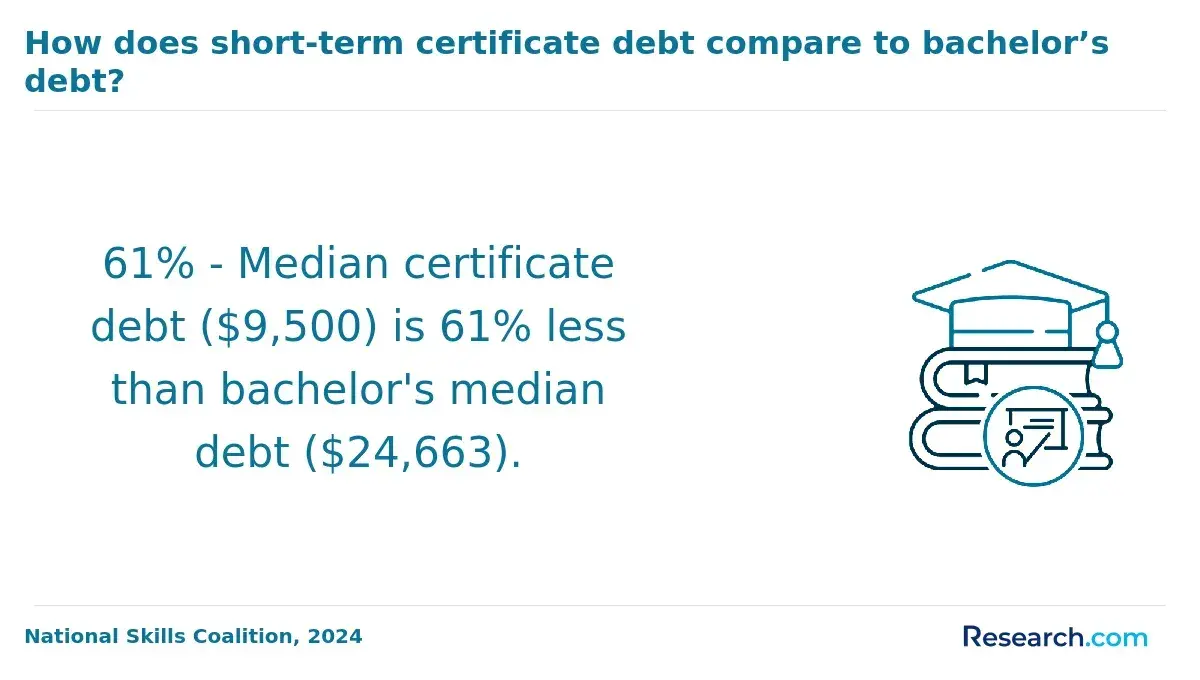
The cheapest online science master's program is not identified by the lowest per-credit figure. Calculate total direct cost from the number of credits required for graduation, then add mandatory charges that cannot be avoided. A 30-credit program at $500 per credit has estimated base tuition of $15,000; a 36-credit program at the same rate has estimated base tuition of $18,000 before fees.
National Center for Education Statistics reporting for the 2023-24 academic year shows meaningful average graduate tuition-and-fee differences between public and private nonprofit institutions. Those national averages are useful context, but they are not price quotes for a particular online science MS. Program length, institutional policy, and mandatory charges can move an individual program far above or below the average.
Use this worksheet structure for each finalist. It prevents an advertised tuition rate from masking costs that must be paid to earn the degree.
| Cost item | Calculation | What to verify |
| Base tuition | Required credits × applicable per-credit rate | Whether the rate is universal, resident-only, or subject to a surcharge |
| Mandatory institutional fees | Per-credit, per-course, or per-term charges | Online learning, technology, distance education, student services, and records fees |
| Program-specific charges | Required charges tied to the degree | Laboratory kits, software, exams, background checks, thesis, capstone, or graduation fees |
| Travel and residency costs | Transportation, lodging, meals, and missed work if required | Campus intensives, fieldwork, internships, clinicals, or proctored exams |
| Estimated aid and employer support | Grants, scholarships, benefits, and eligible reimbursement | Eligibility, annual limits, grade requirements, and reimbursement timing |
| Estimated net cost | Total required costs − nonrepayable aid − confirmed employer support | Whether loans are being treated separately from discounts or aid |
Separate net cost from borrowing. A federal loan can make enrollment possible, but it does not lower the program's price; it shifts payment and may add interest. If two programs have similar net costs, compare graduation requirements, curriculum, student services, and career alignment rather than choosing only by the smaller sticker price.
Ask the bursar or program office whether tuition is locked for continuing students, whether rates change annually, and whether part-time students pay additional term-based fees. These answers matter especially when a program is designed to take more than two years.
Do Online Science Master's Students Have to Establish Residency to Receive the Lowest Tuition Rate?
Usually, no - if the program explicitly publishes a universal online rate or says that all distance learners pay the same tuition regardless of residency. In that model, your home state does not determine the tuition rate. However, you still must meet admissions standards, state-authorization rules, and any program-specific eligibility requirements.
Residency may matter when the university applies its normal resident and nonresident graduate rates to online courses. It can also matter for state-funded scholarships, institutional grants, some assistantships, and eligibility classifications unrelated to the online tuition rate.
Before assuming you need to move, ask these focused questions. They will reveal whether residency is relevant to cost, aid, or simply campus enrollment policy.
- Does this exact online science master's charge one rate for all U.S. students?
- Is the published rate guaranteed for students living outside the university's state?
- Does a residency waiver require a separate application, minimum course load, or annual renewal?
- Are any scholarships, assistantships, or state grants restricted to residents?
- Can students in my state enroll in this program under the university's state-authorization approval?
Establishing residency is rarely a quick tuition strategy. States commonly use their own residency standards, and moving can create housing, employment, tax, and opportunity costs. For a fully online degree with a confirmed residency-neutral rate, relocation generally provides no tuition advantage.
Do not rely on a university-wide residency page alone. Online graduate programs may follow separate rules, and some science degrees include hybrid components that change the applicable rate.
How Do Public and Private Universities Compare on the Cost of an Online Science Master's Degree?
Public universities can be especially competitive for residents and for out-of-state online students when they use a universal online rate. Private nonprofit universities often charge one tuition rate nationally, which can make their pricing easier to predict. Neither sector is automatically cheaper, more flexible, or academically stronger for every science specialization.
For perspective, NCES reported lower average graduate tuition and fees at public institutions than at private nonprofit institutions in 2023-24. That broad pattern is useful for setting expectations, but it does not account for online-only pricing, institutional aid, required credits, or program-specific fees. A private nonprofit school may be the lower-total-cost choice if it offers a shorter curriculum, a tuition guarantee, or significant aid.
This side-by-side comparison highlights where value differences usually arise.
| Factor | Public university pattern | Private nonprofit university pattern | Decision implication |
| Tuition structure | May distinguish resident, nonresident, and online rates | Often uses one national rate | Out-of-state students should compare the exact online rate, not institutional reputation for low tuition |
| Institutional aid | Can include state-linked aid with residency limits | May offer institutional scholarships to a broader geographic pool | Compare aid letters and renewal conditions |
| Program schedule | May follow traditional academic terms | May use accelerated sessions designed for professionals | Evaluate workload and total fees, not speed alone |
| Research access | May offer extensive research infrastructure | Varies by institution and field | Research-focused students should review faculty, thesis options, and lab expectations |
Private institutions can be nonprofit, and public institutions can charge high nonresident rates; these labels do not determine value. Compare whether the program is a professional MS designed for applied advancement, an academic or research MS, a generalist curriculum, or a specialized program with a concentration.
If your interests cross science and construction, curriculum alignment matters more than a broad degree label. Students moving toward project, operations, or infrastructure roles may find that best construction management schools offer a more direct professional pathway than a general science master's.
Can Financial Aid Reduce the Cost of a Cheap Online Science Master's Program?
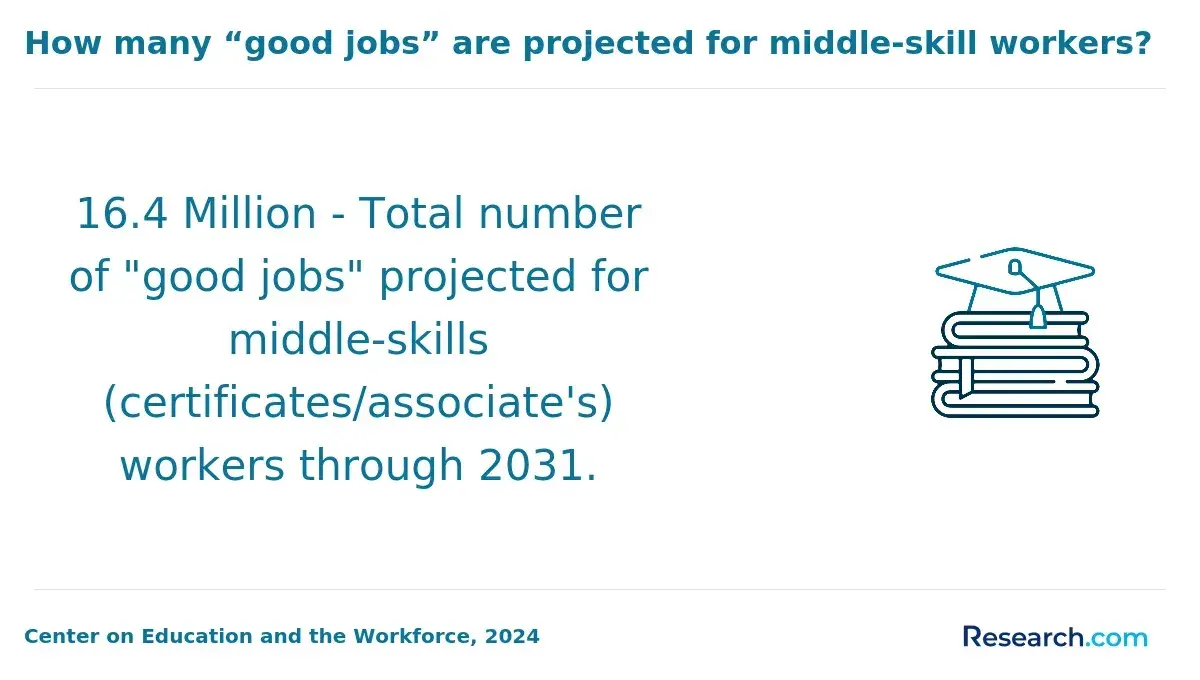
Yes. Financial aid can reduce your out-of-pocket cost, but the type of aid determines whether it truly lowers the price. Scholarships, grants, tuition discounts, and employer contributions reduce what you must pay. Loans provide financing and should be evaluated as debt rather than as a discount.
Eligible graduate students may use federal Direct Unsubsidized Loans and, when needed and approved, Grad PLUS Loans. Federal Student Aid rules and annual borrowing limits can change, and eligibility depends on factors such as enrollment, satisfactory academic progress, citizenship or eligible noncitizen status, and the school's participation in federal aid programs. Submit the FAFSA early enough for the institution to prepare an aid offer.
Build an aid plan in this order so that you prioritize money that does not need to be repaid.
- Complete the FAFSA and the university's scholarship application requirements by their deadlines.
- Ask whether online graduate students qualify for institutional scholarships, departmental awards, research support, or payment plans.
- Review employer tuition assistance rules, including eligible schools, annual caps, grade requirements, repayment obligations, and reimbursement timing.
- Subtract confirmed grants, scholarships, and employer support from the total required cost.
- Borrow only after calculating the remaining gap and considering the payment amount after graduation.
Employer benefits can materially change the comparison between two similarly priced programs. A slightly higher-cost program may have a lower net price if it is eligible for your employer's reimbursement plan, but confirm that the degree, course delivery, grades, and expenses qualify before enrolling.
Readers exploring other graduate helping professions can compare tuition and aid policies through this guide to cheap online MSW programs. Social work programs may have practicum and licensing-related costs that are not typical of a nonclinical science MS.
How Do Program Format and Completion Time Affect the Cost of an Online Science Master's Degree?
Format affects both direct and indirect costs. Fully online asynchronous programs can reduce commuting and allow students to retain full-time employment, while synchronous classes may offer real-time interaction but require a fixed schedule. Hybrid science programs can add travel expenses for laboratory work, field courses, capstones, orientation, or short campus residencies.
Completion time also affects what you pay. An accelerated program can reduce the number of terms in which you pay recurring fees and may help you reach a career goal sooner. Yet accelerated courses demand more weekly study time, may limit the ability to work, and can make it difficult to recover from a failed or withdrawn course. A traditional part-time sequence may cost more in term fees but be more sustainable for working adults.
Review the delivery model alongside the academic design. The following distinctions are especially important in science programs because hands-on and research requirements can vary widely.
| Format or design | Potential cost advantage | Potential cost risk | Who it may fit |
| Fully online, asynchronous | May minimize travel and support continued employment | May require self-directed scheduling and remote-proctoring costs | Working adults needing location flexibility |
| Fully online, synchronous | May provide structured faculty and peer access | Fixed meeting times can affect work schedules | Students who benefit from live instruction |
| Hybrid or low-residency | Can provide laboratory, field, or networking access | Travel, lodging, and time away from work can raise total cost | Students needing hands-on experiences |
| Thesis or research track | May support doctoral preparation or research-focused goals | Can require a longer timeline or specialized expenses | Students pursuing research careers or doctoral study |
| Non-thesis capstone track | Often offers a defined professional completion path | Capstone fees or project requirements may apply | Professionals seeking applied advancement |
Before choosing an accelerated option, request a sample course sequence and estimate the weekly workload. Faster is financially useful only when you can complete the courses successfully without reducing income or taking on avoidable repeat-course costs.
How Much Can Transfer Credits Reduce the Cost of an Online Science Master's Degree?
Transfer credits can reduce tuition only when a program accepts prior graduate-level coursework and applies it to required degree credits. Policies vary widely: some science master's programs accept a limited number of equivalent credits, while others require all or nearly all coursework to be completed at the awarding institution.
The savings calculation is straightforward. If a program accepts 6 applicable credits and charges $600 per credit, the potential base-tuition reduction is $3,600. That is not a guarantee of savings, because transferred courses must usually meet grade, recency, equivalency, and accreditation standards, and they may not replace specialized core requirements.
Ask for a preliminary transfer review before assuming prior coursework will count. A useful request includes official transcripts, catalog descriptions, syllabi, credit hours, final grades, and the course term. Keep in mind that an admission offer does not necessarily equal a formal transfer-credit award.
Do not choose a program only because it advertises generous transfer credit. Check whether the accepted courses shorten time to completion, whether the remaining curriculum supports your goal, and whether credits will be recognized by a future employer, certification body, or doctoral program.
Applicants whose previous education is in developmental or behavioral science should confirm disciplinary fit rather than assuming that a psychology credential substitutes for laboratory or quantitative prerequisites. A master's in child psychology online can be a better-aligned choice for careers focused on child and adolescent development.
Is a Cheap Online Science Master's Degree Worth the Cost for Career Advancement?
A low-cost online science master's can be worthwhile when it builds skills that your target role values, meets an employer's educational expectations, and leaves you with manageable borrowing. It is less compelling when the degree is too general for the career change you want, lacks needed technical coursework, or does not meet a licensing, certification, research, or doctoral-admission requirement.
Science master's graduates pursue different outcomes depending on the specialization. Applied data and computational programs can support work with analysis, modeling, databases, and scientific software.
Environmental and biological programs may support laboratory, field, regulatory, quality, research, or sustainability roles. Health-science programs may support administration, informatics, research coordination, or other nonclinical paths. Responsibilities and hiring standards vary by employer, so review job postings in your target location before selecting electives.
The U.S. Bureau of Labor Statistics projects faster-than-average growth for several science and technology occupations over the 2023-33 period, but a degree alone does not determine hiring or pay. Use occupational outlook data as labor-market context, then compare it with the skills, portfolio work, internships, research experience, and geographic requirements of roles you actually intend to pursue.
Evaluate return on investment with a practical comparison: estimate your net program cost, expected borrowing, likely time away from work, and the career benefit the program is designed to support.
A more expensive accredited degree may be justified if it provides specialized training, a required practicum, stronger research access, employer-recognized preparation, or an alumni network relevant to your career. Conversely, a low-cost generalist program may be the better choice when you only need graduate-level scientific training for advancement with your current employer.
For readers who need a faster, lower-commitment route into a new skill area, compare the degree against 6-month certificate programs. A certificate may be appropriate for a targeted skill upgrade, while a master's is more suitable when employers, advancement pathways, or academic goals specifically require graduate education.
How Should Students Compare the Cheapest Accredited Online Science Master's Programs?
Compare programs in a consistent order: eligibility, accreditation, total cost, curriculum, delivery requirements, and career fit. This approach keeps a low advertised tuition rate from dominating a decision that should also account for quality, convenience, and long-term usefulness.
Create a shortlist of programs that serve students in your state and offer your intended specialization. Then use this comparison sequence before applying.
- Confirm that the university is institutionally accredited and that any programmatic accreditation or licensure alignment you need is present.
- Verify that the exact online science master's has no out-of-state surcharge and obtain the applicable tuition rate for your anticipated start term.
- Calculate base tuition from required credits, then add every mandatory per-credit, per-course, and per-term fee.
- Identify travel, software, laboratory, capstone, thesis, practicum, and graduation costs that may not appear in general tuition tables.
- Compare program design, including generalist versus specialized coursework, thesis versus non-thesis options, live versus asynchronous classes, and required campus experiences.
- Request a transfer-credit evaluation and compare the number of credits that will actually apply to graduation.
- Estimate net cost after confirmed scholarships, grants, employer assistance, and realistic financing options.
- Check target job postings, certification requirements, and doctoral-admission prerequisites to ensure the curriculum supports your intended outcome.
The strongest choice is usually not the school with the lowest price on a search result. It is the accredited program with the lowest realistic net cost that also delivers the right concentration, schedule, academic support, and career relevance for you. Save screenshots or PDFs of tuition and policy pages, because rates and eligibility terms can change between application and enrollment.
Other Things You Should Know About Science
An MS typically emphasizes scientific, technical, quantitative, laboratory, or research methods, while an MA may place more emphasis on theory, communication, policy, or interdisciplinary study. Titles vary by institution, so compare required courses, research expectations, and outcomes instead of relying on the degree abbreviation alone.
Many programs have made the GRE optional or do not require it, but requirements vary by university, specialization, and applicant background. Check the current program admissions page and ask whether a strong quantitative record, prerequisite courses, professional experience, or another item is required in place of test scores.
Employer evaluation usually depends more on the accredited institution, relevant skills, coursework, projects, research experience, and your ability to perform the role than on delivery format alone. Review whether the university awards the same degree for online and campus study and whether the curriculum includes the tools used in your target field.
It can, particularly when the program includes rigorous methods coursework, research opportunities, faculty mentorship, and a thesis or substantial research project. Doctoral admissions are competitive and vary by discipline, so prospective PhD applicants should confirm prerequisite courses and research expectations with target doctoral programs before enrolling.
References
- College Graduation Rates and How ACE Compares | ACE Blog https://ace.edu/blog/college-graduation-rates-and-how-ace-compares/
- 2025 Most Affordable Online Master's Programs https://www.onlineu.com/most-affordable-colleges/masters-degrees
- Average Cost of a Master's Degree: 2025 Analysis https://educationdata.org/average-cost-of-a-masters-degree
- What is the Cost of an Online Master's Degree in 2024? https://www.onlinemastersdegrees.org/student-resources/online-masters-cost/
- 11 tuition-free universities in the US for master's degrees https://studyinternational.com/news/tuition-free-universities-in-the-us/
- Accredited Online Master's Degree Programs at CSU Global | Colorado State University Global https://csuglobal.edu/academic-programs/graduate-degrees