2027 Cheapest Accredited Online Communication Disorders Master's Programs With Flat-Rate Tuition: Costs per Term and Total Degree Estimates

Co-Founder and Chief Data Scientist
A low advertised term price can be misleading when an online communication disorders master's requires clinical placements, prerequisite coursework, or an extra enrollment period. This matters because speech-language pathologists had a median annual wage of $89,290 in 2023, according to the U.S. Bureau of Labor Statistics, while entry into clinical practice usually requires a qualifying graduate degree and licensure.
This guide explains how flat-rate tuition works, how to estimate a full degree cost, and how to identify the program that best fits your licensure and budget goals.
Key Things You Should Know
- Flat-rate tuition is cheapest only when you take enough credits each billed term to use the included enrollment level; a lower term price can cost more if the program takes additional terms.
- For clinical speech-language pathology preparation, confirm programmatic accreditation, supervised clinical requirements, and state licensure eligibility before comparing tuition; price alone does not establish career eligibility.
- Estimate total cost as required paid terms multiplied by the published term charge, then add mandatory fees, clinical travel, technology, books, and any prerequisite coursework that is billed separately.
What Does Flat-Rate Tuition Mean for an Online Communication Disorders Master's Program?
Flat-rate tuition is a fixed charge for a defined enrollment period, such as a semester, quarter, or subscription term, rather than a separate charge for every credit. In a communication disorders master's program, the rate may cover a full-time credit range, a set number of courses, or all coursework attempted during a term. It does not automatically mean unlimited credits, unlimited time, or that clinical expenses are included.
This pricing model is most useful for students who can follow the school's intended full-time sequence. A student who pays the same amount for 9 credits and 12 credits receives a lower effective price per credit at 12 credits, provided both loads are permitted and academically manageable.
Communication disorders is a broad academic area that can include speech-language pathology, audiology, speech science, language development, swallowing disorders, and related research. Students seeking speech-language pathologist licensure should distinguish a general online communication disorders degree from a clinical graduate program designed to meet professional preparation requirements. Many online programs use distance coursework but still require in-person practicum, observation, or clinical placements.
Before treating a tuition offer as flat-rate, ask the admissions or bursar office to state the answer in writing to these questions:
- What exact tuition amount applies to each term, and does residency affect it?
- What is the minimum and maximum credit load covered by the rate?
- Are clinical practicum, summer enrollment, prerequisites, and repeated courses included?
- How many billed terms does the published plan of study require for a student entering with all prerequisites completed?
- Which fees are charged every term or separately for clinical education?
Students considering other health-profession pathways should also recognize that program pace and licensing rules vary substantially. For example, an medical assistant accelerated program has a much shorter training structure and should not be used as a cost benchmark for a clinical graduate degree.
How Much Does a Flat-Rate Online Communication Disorders Master's Program Cost Per Term?
There is no single reliable nationwide flat-rate price for online communication disorders master's programs. Schools may publish tuition by credit, by semester, by cohort, or by an all-inclusive program total, and rates can change by academic year. The practical answer is to compare each school's net required term charge: tuition plus unavoidable institutional fees for the same enrollment period.
The table below shows how to calculate the effective price per credit from a school's published flat rate. These are formulas, not quoted university prices, and they help prevent a term charge from being compared without considering the credits it covers.
| Published term charge | Credits taken in the term | Effective tuition per credit | What it indicates |
| $T | 6 | $T ÷ 6 | May be expensive if the flat rate was designed for full-time enrollment |
| $T | 9 | $T ÷ 9 | Useful comparison point for a typical graduate load |
| $T | 12 | $T ÷ 12 | Lowest effective rate only if 12 credits are allowed and sustainable |
Ask for a current written cost sheet that separates tuition from fees. A program that lists one figure for "online tuition" may still bill clinical-course fees, distance-learning fees, student-service fees, or graduation fees elsewhere.
Also verify the academic calendar. A school using shorter sessions can look inexpensive per session while requiring more billed sessions over the degree. Compare equivalent units: total required tuition for the complete degree, not a semester price against a quarter price.
How Much Does an Online Communication Disorders Master's Degree Cost in Total With Flat-Rate Tuition?
Total tuition depends on the number of billed terms needed to complete required credits, clinical experiences, capstone work, and any prerequisites. The basic calculation is: flat-rate tuition per term × required paid terms. Add mandatory recurring and one-time costs separately rather than assuming they are inside the advertised rate.
This planning table shows why a seemingly low term price is not enough to identify the cheapest degree. Replace the variables with each institution's published figures and use the school's recommended course sequence.
| Cost component | Calculation | Why it matters |
| Base tuition | Term tuition × required paid terms | Core comparison figure for flat-rate programs |
| Recurring required fees | Fee per term × required paid terms | Can materially change the cost of longer programs |
| One-time required fees | Application, graduation, onboarding, or clinical charges | Often omitted from headline tuition |
| Clinical and travel expenses | Estimated placement travel, background checks, supplies, and insurance | May vary by location and placement assignment |
| Total education budget | All rows combined | More useful than tuition alone for borrowing decisions |
For a speech-language pathology path, the lowest total tuition is not necessarily the best financial choice if it does not support the clinical education, accreditation, or licensure route you need. A lower-cost academic communication disorders degree may be appropriate for research, education, administration, or related fields, but it may not qualify a graduate for clinical practice.
Students comparing nursing progression options can see a similar distinction between published price and degree fit in an ADN to BSN pathway, where prior education and required credits can substantially affect the final bill.
Course load determines whether a flat-rate model creates savings. If the university charges the same amount across a defined full-time range, taking more approved credits in that range reduces the effective price per credit and can reduce the number of paid terms. Taking a part-time load may produce the opposite result: the student pays the full term rate but uses fewer included credits.
Clinical communication disorders curricula can limit acceleration. Courses may be sequenced, offered only once per year, tied to supervised practice, or subject to minimum grade and progression standards. A student cannot assume that open seats or personal availability will allow required courses to be compressed.
Use the school's curriculum map to test three realistic scenarios before enrolling:
- Map required courses, credits, practicum, and capstone requirements across the standard sequence.
- Identify the maximum credit load that the program permits without special approval and confirm which required courses are actually available in the same term.
- Calculate paid terms under the standard and accelerated paths, then compare total tuition and fees rather than effective cost per credit alone.
A full-time schedule may not be the best value if it causes poor academic performance, a dropped course, or delayed clinical progression. Students balancing employment, caregiving, or placement travel should favor the fastest realistic pace, not the theoretical maximum.
Flat-rate tuition can be cheaper than per-credit tuition when the student consistently takes the credit load covered by the rate and completes the program in the planned number of terms. Per-credit pricing can be cheaper for students who need only a few courses, are completing prerequisites, must study part time, or have transfer credit that leaves too little coursework to use a full-time flat rate efficiently.
The comparison below uses variables so readers can apply current, school-specific pricing without relying on stale or incomplete advertised numbers.
| Pricing model | Total-cost formula | Usually best for | Main risk |
| Flat rate | Term price × number of paid terms | Students able to sustain the included full-time load | Paying for unused capacity or an extra term |
| Per credit | Price per credit × required credits | Part-time students and those with limited remaining coursework | Higher total price for a full clinical curriculum |
| All-inclusive cohort price | Published program price plus excluded expenses | Students who want predictable tuition | Assuming extensions, repeats, or fees are included |
Compare only programs with a similar outcome. A clinical master's intended to support speech-language pathology licensure is not interchangeable with a nonclinical communication disorders master's, even if the latter has a lower per-credit price. Confirm whether the program's accreditation and curriculum match your intended state's licensing rules.
Cost comparisons are also more meaningful when students compare programs at the same educational level. An online ASN programs search, for example, concerns entry-level nursing preparation rather than the graduate clinical and practicum structure of communication disorders education.
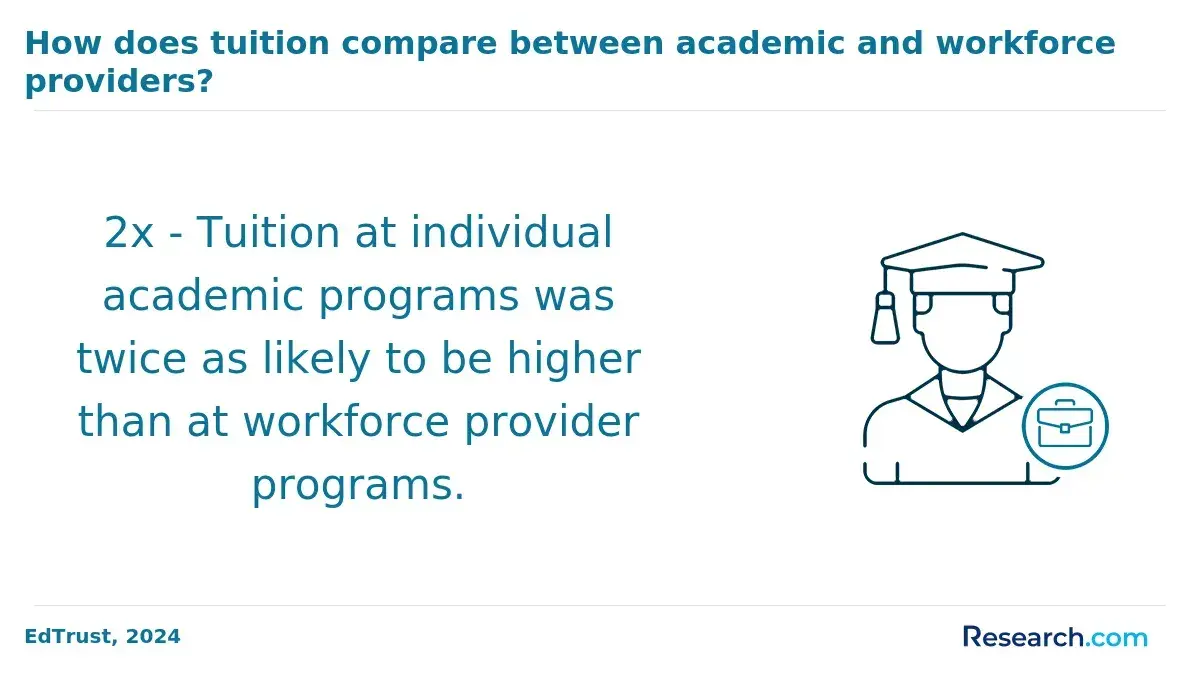
Flat-rate tuition generally covers instruction, not every cost of participation. Online delivery can reduce commuting to campus, but communication disorders students may still have local clinical-placement travel, technology, compliance, and professional expenses. Schools differ widely in which items are mandatory and whether they are billed directly by the university.
Review the following categories line by line in the program's current tuition and clinical-placement materials. They are the most common sources of a gap between advertised tuition and a student's actual budget.
- University, technology, distance-learning, student-service, and course-material fees
- Clinical onboarding costs such as background checks, drug screening, immunizations, liability insurance, and fingerprinting where required
- Travel, parking, lodging, and lost work time associated with practicum or internship sites
- Required assessment tools, headsets, software, textbooks, professional memberships, and graduation charges
- Costs for repeated courses, delayed practicum, leaves of absence, or enrollment beyond the published sequence
Do not borrow based solely on tuition. Build a separate conservative allowance for variable clinical costs, especially if the institution cannot guarantee a placement near your home. Ask whether students arrange placements, whether placements may require travel, and what happens financially if a site is unavailable or a placement must be repeated.
Accelerated study can lower total tuition only when it eliminates one or more billed flat-rate terms. It may also reduce the time during which a student pays recurring fees or forgoes earnings for school-related commitments. It does not automatically lower costs if the program charges by credit, requires the same number of sessions regardless of pace, or bills an additional premium for overload enrollment.
Acceleration is often constrained in clinical graduate education because foundational courses, assessment coursework, and practicum may need to occur in a prescribed order. Students entering without prerequisite courses in areas such as phonetics, anatomy, language development, or statistics may need additional preparation before beginning graduate clinical coursework.
Before choosing an accelerated plan, verify these practical conditions:
- All prerequisite coursework has been accepted in writing and will not add pre-enrollment terms.
- The program permits the intended course load and offers required courses in the same term.
- Clinical hours, supervisor availability, and placement requirements can be completed on the faster timeline.
- Financial aid enrollment rules and employer reimbursement timing still work at the accelerated pace.
- The total saved tuition exceeds any overload, travel, childcare, or lost-income costs created by the faster schedule.
Acceleration is common in some health professions but remains program-specific. Readers exploring a different professional doctorate can compare format questions through accelerated PharmD programs; that option has separate pharmacy accreditation and licensure requirements.
Financial aid and employer support can reduce the amount a student pays from current income, but loans do not reduce the underlying program price. Eligible U.S. students may use federal aid depending on program participation, enrollment status, satisfactory academic progress, and other individual eligibility rules. Institutional scholarships, state programs, workforce grants, and external awards may also be available, but amounts and renewal conditions vary.
Employer tuition assistance can be particularly relevant for school employees, healthcare workers, rehabilitation staff, and individuals already working in related support roles. Confirm whether the employer reimburses after course completion, requires a minimum grade, limits eligible institutions or degree types, or requires continued employment after reimbursement.
Use this sequence to compare offers without overstating aid:
- Calculate the complete published cost before scholarships, including expected clinical and recurring expenses.
- Separate grants and scholarships from federal or private loans, because borrowed funds must generally be repaid.
- Ask the financial-aid office how a part-time term, summer term, or accelerated load affects eligibility.
- Obtain employer reimbursement rules in writing and check whether repayment is required if you leave the employer.
- Recalculate the remaining out-of-pocket and borrowing amount for each program using only aid you are reasonably eligible to receive.
Students interested in counseling-focused graduate study can also review cost and program-fit considerations in an online PhD counseling option, though doctoral counseling pathways have different outcomes and professional requirements.
An extra term is one of the largest financial risks in a flat-rate program because it can trigger another full tuition charge even when only one course, a practicum, or a capstone remains. The impact is especially significant when the program bills a standard rate regardless of remaining credits.
Enrollment breaks can also affect cohort progression, clinical placement timing, financial-aid eligibility, tuition rate locks, and access to courses that are offered infrequently. Some schools permit a leave and return to the same curriculum; others require students to rejoin a later cohort, meet newer requirements, or pay the then-current tuition rate.
Ask each program to explain its policy for the situations most likely to create an added term:
- Withdrawing from or failing a required course
- Delaying a clinical placement or needing additional clinical experience
- Taking a leave for health, family, employment, or military reasons
- Completing all coursework but needing extra time for a capstone or comprehensive requirement
- Changing from full-time to part-time enrollment
Use a contingency budget equal to at least one additional billed term plus likely recurring fees. This is not a prediction that a delay will occur; it is a realistic way to compare risk between a low-term-price program with rigid sequencing and a slightly higher-priced program with stronger scheduling flexibility.
How Should Students Choose the Best-Value Flat-Rate Online Communication Disorders Master's Program?
The best-value program is the one that meets your professional goal at the lowest credible total cost and completion risk - not simply the one with the smallest advertised term charge. For aspiring speech-language pathologists, first screen for the academic and clinical preparation needed for the state where you expect to seek licensure. Then compare the remaining eligible options using the same assumptions about credits, terms, fees, and clinical travel.
This comparison framework identifies the factors that should carry the most weight in a flat-rate decision.
| Decision factor | What to verify | Why it affects value |
| Professional fit | Program accreditation, clinical curriculum, and state licensure alignment | A lower cost has limited value if the degree does not support the intended career path |
| Required paid terms | Published plan of study, summer requirements, and sequencing | Determines the core flat-rate tuition total |
| Included enrollment | Minimum and maximum credits or courses covered per term | Shows whether your planned load uses the flat rate efficiently |
| Clinical logistics | Placement support, travel expectations, and delay policy | Can add direct expenses and completion risk |
| Net price | Grants, scholarships, employer support, and borrowing needs | Shows the likely financing burden after nonloan aid |
| Flexibility | Part-time options, leaves, course availability, and transfer-credit policy | May prevent an expensive extra term |
Applicants commonly make three mistakes: assuming "online" means no in-person clinical obligations, comparing only tuition per term, and treating all accreditation as interchangeable. Avoid them by requesting a term-by-term degree plan, a full fee schedule, and written confirmation of how the curriculum relates to your intended credential and state requirements.
Admissions requirements commonly include a bachelor's degree, transcripts, prerequisite coursework, recommendations, a statement of purpose, and minimum academic standards, although exact requirements differ by school. Applicants without a communication disorders background should ask whether prerequisites are included in the graduate price, may be transferred, or must be completed separately.
As a final decision step, make a one-page comparison for each finalist: quoted tuition per term, included credits, required terms, mandatory fees, estimated clinical costs, aid assumptions, and the cost of one extra term. The school that remains affordable under that conservative scenario is usually a stronger value than one that appears cheapest only under a perfect schedule.
Other Things You Should Know About Communication Disorders
Career options depend on the curriculum and credentials. A clinically qualifying speech-language pathology master's may support the pathway toward supervised practice, certification, and state licensure. Nonclinical programs may be better suited to research, education, advocacy, administration, or related support roles, depending on the employer and the graduate's prior preparation.
No. Online delivery does not determine licensure eligibility. Verify the program's accreditation status, clinical education structure, supervised-practice requirements, and the rules of the state where you plan to work. State boards, not marketing language, determine licensure requirements.
Usually not. Coursework may be online, but clinical education commonly requires supervised experiences with clients in approved settings. Telepractice may be part of training when permitted, yet it does not eliminate program-specific supervision, competency, and placement requirements.
It can be a sound investment when the degree is required for your intended role, the program supports the necessary credential path, and the total cost fits a realistic repayment plan. Compare total borrowing, completion risk, expected work setting, and licensure outcomes rather than relying only on a salary figure or a low advertised tuition rate.
- Speech-Language Pathology, M.S. - Brooklyn College https://www.brooklyn.edu/academics/programs/speech-language-pathology-ms/
- Why Is Accreditation Important? | ACE Blog https://ace.edu/blog/why-is-accreditation-important/
- Communication Sciences & Disorders, MS https://catalog.longwood.edu/preview_program.php
- What's the Deal with Accreditation? https://nursingcas.org/career-insights/blog/whats-the-deal-with-accreditation
- SECTION 3: PROFESSIONAL PRACTICE - CACREP https://www.cacrep.org/section-3-professional-practice/
- 2025 Most Affordable Online Speech Pathology Master's Degrees https://www.onlineu.com/most-affordable-colleges/speech-pathology-masters-degrees