2027 Chain of Custody vs Routine Specimen Handling: Nursing Documentation Concepts
Audited and Verified:
Our Editorial and Data Verification Process
Research.com uses government datasets, official education statistics and primary institutional information to support its career and degree guides. Our review process checks factual accuracy, occupational definitions, source dates and the requirements associated with the credentials discussed.
How This Article Was Fact-Checked
Our editorial team verifies salary estimates, employment projections, education requirements and program information against original data providers and official organizations. Salary figures are checked against the relevant occupational definitions and reporting periods. Information about licensure, accreditation and required in-person training is reviewed separately.
Fact-checked and verified on:

Co-Founder and Chief Data Scientist
A specimen can be properly collected for clinical testing yet lack the documentation needed for an investigation or legal proceeding. Nursing students and early-career nurses need to recognize that difference before accepting a collection assignment. This guide explains routine handling versus chain of custody, the decisions that trigger a specialized process, and the collection, transfer, and documentation habits that protect specimen integrity. It also shows where classroom learning ends and supervised, setting-specific competency begins.
Key Things You Should Know
- Routine handling supports accurate clinical testing; chain of custody additionally documents possession, transfers, and evidence security under an applicable protocol.
- Use the required patient-identification process - commonly two identifiers - and document each custody change when a formal chain is required; an ordinary EHR transport entry may not suffice.
- No particular nursing degree substitutes for authorization, training, and demonstrated competence in a forensic or regulated collection procedure.
What Is the Difference Between Chain of Custody and Routine Specimen Handling?
Routine specimen handling connects the right patient, order, container, collection method, and time to a clinically usable laboratory result. Chain of custody adds an accountable record of who controlled a specimen or evidence item from collection through every handoff, together with required security measures. Both processes protect integrity, but they answer different questions: "Can the laboratory test this specimen reliably?" and "Can its identity and custody history be established?"
This comparison helps students recognize why correct bedside labeling alone may not complete a forensic collection.
| Documentation feature | Routine clinical specimen | Specimen requiring chain of custody |
| Primary purpose | Support diagnosis, treatment, or monitoring | Support testing while preserving an accountable evidence history |
| Identity and collection record | Patient identifiers, order, specimen, collection details, and required collector information | Those details plus the identifiers and collection records required by the evidence protocol |
| Movement after collection | Transport and laboratory receipt under clinical workflow | Documented releases and receipts by authorized custodians under prescribed security procedures |
| Applicable rules | Laboratory, infection-prevention, and facility procedures | Those procedures plus the governing forensic, employer, agency, or legal protocol |
An RN completing a degree may deepen documentation and quality-improvement knowledge, but flexible BSN completion routes for licensed RNs do not themselves teach or authorize a particular evidence-collection procedure. The collection assignment still depends on workplace training and policy.
When Does a Nursing Specimen Require Chain-of-Custody Documentation?
Use a formal chain when the applicable collection protocol requires one - not merely because a specimen might later be discussed in court. Examples can include sexual-assault forensic evidence, certain law-enforcement blood or urine collections, and regulated workplace drug testing. The required collector, consent or legal authority, kit, seals, forms, and recipients differ across these situations.
A clinical toxicology test ordered to guide care is not automatically a law-enforcement or employment test. If a request is unclear, confirm its purpose with the ordering clinician and the designated laboratory, forensic team, or supervisor before collecting. Follow facility policy and applicable law for patient consent, privacy, and any request from law enforcement; do not treat an officer's presence as a substitute for those checks.
Specialty education serves different purposes. For example, postgraduate PMHNP certificate comparisons concern psychiatric advanced-practice preparation, not qualification to collect sexual-assault evidence. A nurse considering forensic work should ask about the relevant examiner training and supervised experience instead.
What Steps Are Required for Accurate Specimen Collection and Documentation?
The sequence below is a learning framework, not a replacement for the current order, laboratory instructions, evidence kit, institutional policy, or clinical supervision. Requirements can change with the specimen and the reason for collection.
- Confirm the purpose and authority for collection, the order or request, consent requirements, and whether a formal chain-of-custody protocol applies.
- Identify the patient using the required identifiers; compare the order and supplies, and address discrepancies before collection.
- Prepare the specified container or kit and use the required infection-prevention and collection procedure within your authorized role.
- Label and document at the point of collection as required, including specimen type, date and time, collector identity, and any protocol-specific information.
- Secure, store, and route the specimen under its temperature, packaging, sealing, and transfer instructions; record custody handoffs when required.
Students should practice recognizing a missing order, wrong container, or mismatched identifier as a reason to pause and escalate - not as a documentation problem to fix afterward. When evaluating entry-level programs through nursing school eligibility comparisons, ask separately how the program teaches identification, specimen documentation, and supervised clinical skills; ease of admission does not establish competency.
For a formal chain, use the prescribed custody form or validated electronic workflow. Identify the item and its seal or unique identifier as required; record the releasing and receiving persons, the date and time, and any other required location or condition details. Each person should complete the required acknowledgment at the actual handoff. A routine EHR note that says "sent to lab" may document clinical transport without establishing who accepted custody.
Keep the clinical record and evidence record accurate and consistent, while following policy on where each belongs. Do not copy protected patient information onto an evidence label unless the protocol requires it. If a receiver is unavailable, a seal appears disturbed, or a handoff was missed, secure the item as directed and promptly notify the designated supervisor or evidence custodian. Document what is known; never invent a signature or time.
Advanced education is not a substitute for this workflow. Nurses comparing ADN-to-MSN nursing programs should distinguish an academic progression goal from the employer's immediate requirements for handling and transferring evidence.
Errors fall into two related groups: problems that make a specimen unreliable for testing and gaps that make its identity or custody difficult to establish. A chain-of-custody form cannot repair a specimen collected into the wrong container; a usable specimen cannot repair an undocumented required transfer.
During practice and supervised work, watch especially for these preventable failures:
- Patient, order, or label mismatches; labeling away from the collection site; or missing collection details.
- Wrong containers, contamination, unsuitable storage, transport delays, or failure to follow kit instructions.
- Missing or incorrect seals, unauthorized access, gaps between custodians, or after-the-fact entries presented as contemporaneous records.
- Using a clinical collection process when a different forensic or regulated process was required.
Report and document a discrepancy under policy rather than silently relabeling, resealing, or reconstructing events. Additional academic study - including fast-track DNP study options - does not correct an individual custody gap; prompt escalation and an honest record are the relevant response.
Prelicensure programs typically connect patient identification, infection prevention, specimen collection, and accurate charting to laboratory practice, simulation, and supervised clinical care. Students may be assessed on whether they verify an order, label correctly, communicate a discrepancy, and document their own actions. A classroom explanation or successful simulation does not by itself establish readiness for independent forensic collection.
Legal and ethical teaching may address objective charting, consent, confidentiality, and preservation of evidence. The exact forensic content varies by program and clinical placement. Ask faculty which skills are observed in practice, who evaluates them, and whether a clinical site offers supervised exposure to evidence procedures. Do not assume that completing a general nursing course meets an employer's forensic competency check.
For an experienced RN interested in teaching these topics, lower-tuition BSN-to-MSN education options may be relevant to an educator goal. They remain a separate decision from learning a site's current collection protocol.
There is no single "chain-of-custody nurse" license. A nurse must hold the license required for the nursing role, work within applicable scope and employer policy, and demonstrate any additional collection competency the setting requires. Some regulated collections use trained collectors who need not be nurses; other tasks, including particular clinical assessments or procedures, may require a licensed clinician or specialized examiner.
For a student, the practical sequence is nursing-program completion, eligibility for the applicable licensing examination, state licensure, and then employer orientation and procedure-specific validation. These are distinct milestones. Nurses interested in sexual-assault examination should check local examiner training, supervision, and any jurisdictional or employer requirements rather than assuming an RN license alone is enough.
Similarly, accelerated FNP education comparisons address an advanced-practice role, not a shortcut to evidence-collection authorization. Choose further education for the role you intend to practice.
Online lectures can teach specimen terminology, documentation rules, and decisions about escalation. Physical collection, labeling, sealing, and handoff skills still need appropriate supplies, observation, and feedback through campus labs, simulation, or approved clinical placements. A campus-based program also needs adequate supervised opportunities; delivery format alone does not prove skill.
Before enrolling, request the actual lab and clinical schedule, required travel or campus visits, placement arrangements, and the method used to assess specimen skills. Online coursework may be asynchronous while simulations and clinical shifts have fixed times. If your goal is a specialty role, verify who arranges its clinical learning separately: preceptor-provided FNP program comparisons, for example, address a different kind of supervised placement than prelicensure specimen practice.
Check three different things for a prospective prelicensure program: the institution's accreditation, the nursing program's accreditation where applicable, and the state board's approval or recognition for the intended licensure pathway. Ask the school how it confirms clinical-site eligibility and evaluates hands-on competencies. These checks address educational quality and licensure preparation; none certifies a graduate to use every employer's forensic kit.
At the clinical site, verify the current laboratory or evidence-collection procedure, approved collectors, kit instructions, documentation system, and escalation contact. For a regulated testing program, its governing rules may add requirements beyond ordinary hospital policy. A student comparing specialized graduate pathways, such as online MSN-PMHNP completion timelines, should verify that program's own accreditation and clinical requirements rather than applying a general specimen-handling checklist to an unrelated credential.
What Career Outcomes, Salaries, and Job Outlook Apply to Nursing Graduates?
Specimen collection is generally a responsibility within a role, not a separate nursing occupation with its own national wage series. New graduates may encounter routine collection in hospital or ambulatory work after orientation; forensic examination and regulated collections can require additional training, supervised practice, and employer authorization. Compare openings by their actual duties, on-call expectations, orientation, and evidence-handling support.
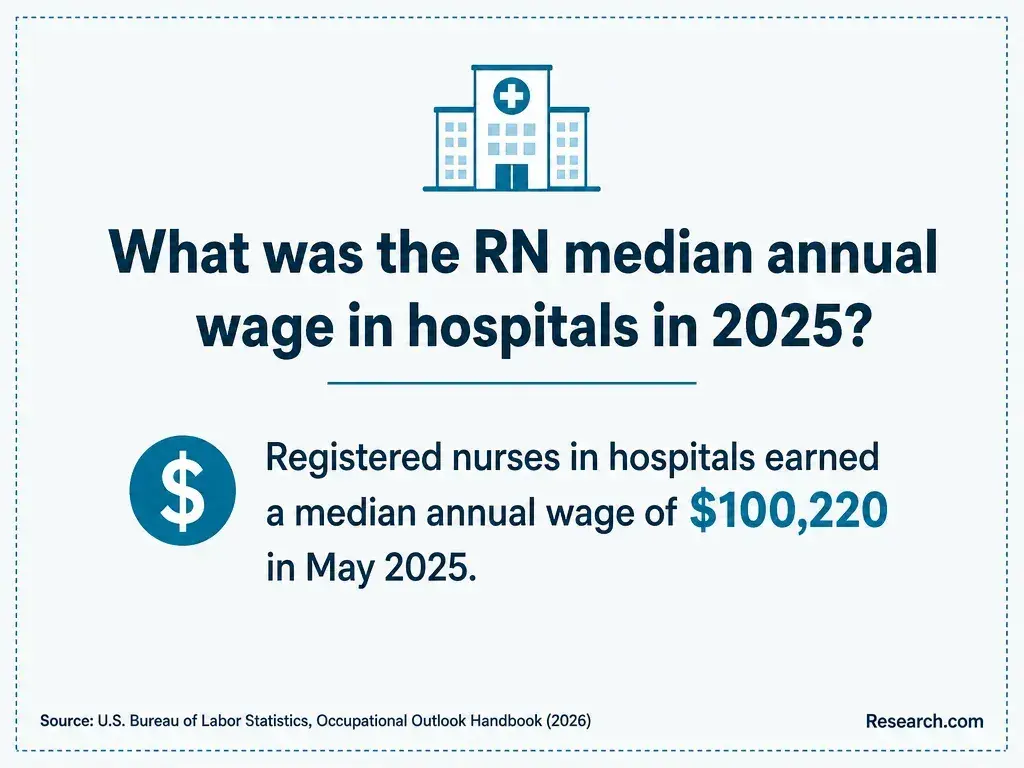
The U.S. Bureau of Labor Statistics publishes wages and employment projections for occupations such as registered nurses, not a pay premium for chain-of-custody documentation or a guaranteed salary for graduates. Use the latest occupation-specific figures as broad labor-market context, then compare local postings for the license and experience you hold. A nurse considering cost-focused online psychiatric NP options is evaluating a different role and educational investment; its potential earnings should not be attributed to specimen-handling skills.
Other Things You Should Know About Nursing
Only when the applicable clinical or forensic protocol authorizes it. Use approved equipment and storage; a personal phone can create privacy and evidence-security problems.
No. Storage requirements depend on the test, container, and evidence kit. Follow the current laboratory or kit instructions rather than applying one rule to every specimen.
Pause, address the patient's wishes and immediate care needs, and follow the consent and escalation process that applies in your jurisdiction and setting. Do not assume consent to medical care includes consent to every evidence procedure.
Use a blank form or an approved, clearly simulated example. Do not include patient identifiers, actual evidence records, or confidential employer material without explicit authorization.
- Patient Identification Techniques - Approaches, Implications, and Findings - PMC https://pmc.ncbi.nlm.nih.gov/articles/PMC7442501/
- Archived | A Chain of Custody: The Typical Checklist | National Institute of Justice https://nij.ojp.gov/nij-hosted-online-training-courses/law-101-legal-guide-forensic-expert/sources-scientific-evidence/testing-or-evaluating-evidence-and-writing-reports/chain-custody-typical-checklist
- Pre-analytical pitfalls: Missing and mislabeled specimens | ahrq.gov https://psnet.ahrq.gov/web-mm/pre-analytical-pitfalls-missing-and-mislabeled-specimens
- Chain of Custody - StatPearls - NCBI Bookshelf - NIH https://www.ncbi.nlm.nih.gov/books/NBK551677/
- Chain of Custody; Retention of Specimen and Test Results. | Library of Maryland Regulations https://regs.maryland.gov/us/md/exec/comar/17.04.09.05
- 10 CFR § 26.159 - Assuring specimen security, chain of custody, and preservation. | LII / Legal Information Institute https://www.law.cornell.edu/cfr/text/10/26.159
- Specimen Ownership and Authorized Agents | usdtl.com https://www.usdtl.com/about/specimen-ownership-and-authorized-agents/
- The Chain of Custody in the Era of Modern Forensics | mdpi.com https://www.mdpi.com/2227-9032/11/5/634
- Chain of custody drug testing - Insights https://news.mayocliniclabs.com/therapeutics/clinical-and-forensic-toxicology/chain-of-custody-drug-testing/
- Chain of Custody in Forensic Science | CASRAI https://casrai.org/guides/chain-of-custody-forensic-science