2027 Case Management vs Utilization Review Nursing: Daily Work, Schedules, and Career Fit
Audited and Verified:
Our Editorial and Data Verification Process
Research.com uses government datasets, official education statistics and primary institutional information to support its career and degree guides. Our review process checks factual accuracy, occupational definitions, source dates and the requirements associated with the credentials discussed.
How This Article Was Fact-Checked
Our editorial team verifies salary estimates, employment projections, education requirements and program information against original data providers and official organizations. Salary figures are checked against the relevant occupational definitions and reporting periods. Information about licensure, accreditation and required in-person training is reviewed separately.
Fact-checked and verified on:

Co-Founder and Chief Data Scientist
For an RN considering a move away from continuous bedside care, case management and utilization review can look similar in a job search but feel different on the job. One centers on coordinating a person's care across settings; the other centers on whether documented services meet coverage or medical-necessity criteria. That distinction affects your daily contacts, deadlines, schedule, and training needs.
This guide compares the work and shows experienced nurses - and newer nurses planning ahead - what to check before applying or paying for another credential.
Key Things You Should Know
- Case management follows the care journey; utilization review evaluates documented services against applicable criteria. Some employers combine both functions in one RN position.
- Neither role has a universal specialty-degree requirement. An active RN license and relevant clinical experience usually matter more than an additional degree; exact hiring and certification rules vary.
- Do not assume a desk job means a predictable day. Hospital discharge deadlines and payer review queues can both create time pressure; national RN wage data do not isolate either specialty.
What is the difference between case management and utilization review nursing?
Case management nursing coordinates care, services, and transitions for patients with needs that may extend beyond one visit. Utilization review (UR) nursing examines clinical documentation and applies an organization's criteria and payer rules to assess the appropriateness of services, such as an inpatient stay or continued treatment. UR is often called utilization management; job titles and the division of work vary by employer.
This comparison shows the primary question each function answers. Read the job description closely: a hospital "case manager" may also perform reviews, while a payer "care manager" may have a substantial coordination caseload.
| Work dimension | Case management RN | Utilization review RN |
| Primary question | What does this patient need for a safe, workable next step in care? | Does the documented service meet the applicable review criteria? |
| Typical contacts | Patients, families, clinicians, social workers, and service providers | Clinicians, documentation teams, payer staff, and physician reviewers |
| Typical output | Care or discharge plan, referrals, follow-up, and documented barriers | Review record, status recommendation, request for more information, or escalation |
| Common pressure | Resolving barriers while care needs and discharge plans change | Meeting review deadlines with complete, accurate documentation |
Neither job is an advanced practice role merely because it involves complex decisions. For example, understanding practice requirements in leadership DNP programs may help an RN considering a separate leadership goal, but a DNP is not the default route into either job.
What does a case management nurse do each day?
A hospital case manager may review new admissions, join interdisciplinary rounds, identify discharge barriers, discuss options with patients and families, coordinate with social work, and document the plan. An ambulatory or health-plan case manager may instead spend more time on outreach, chronic-condition follow-up, referrals, and connecting people with available services. The work requires clinical judgment, but also listening, negotiation, and knowledge of what services can actually be arranged.
The most consequential part of a day is often a mismatch between a proposed plan and a patient's circumstances: for instance, a recommended service may be unavailable, unaffordable, or unsuitable for the person's support at home. The nurse identifies and escalates the problem rather than assuming that placing a referral completes the transition. Case managers must document accurately, protect patient information, and work within organizational and professional scope.
Arranging patient services is different from arranging a student's supervised clinical education. FNP programs with organized preceptor resources address an advanced practice training issue, not an ordinary qualification for case management.
What does a utilization review nurse do each day?
A UR nurse typically works through assigned cases in an electronic queue. The nurse reviews orders, progress notes, treatment plans, and other relevant records; applies the employer's approved criteria and payer requirements; requests missing information when appropriate; and documents the review and its timing. Depending on the setting, cases may involve admission status, continued stay, procedures, or post-service review.
UR is not simply checking boxes. The nurse must recognize when the record does not clearly support a conclusion and follow the required escalation process. The employer's policies determine which decisions an RN may make and which require a physician or other authorized reviewer. A coverage determination is also distinct from the treating clinician's judgment about what care to recommend.
Strong candidates usually bring experience interpreting clinical records and communicating precise findings without overstating what the documentation proves. Accelerated FNP education comparisons address a different goal: preparation for an advanced practice role, not UR onboarding.
RN-designated case management and UR positions require an active RN license in the jurisdiction or jurisdictions relevant to the work. Employers commonly seek clinical experience because both roles depend on understanding treatment, documentation, and transitions in real care settings. Some prefer a BSN, while others consider ADN-prepared RNs with appropriate experience. Check each posting rather than treating a degree preference as a universal licensing rule.
For a student or new graduate, the realistic sequence is nursing education, eligibility to take the NCLEX-RN, state licensure, clinical orientation, and experience before applying for many specialty positions. Graduation alone is not a license, and clinical coursework alone may not establish the independent judgment an employer expects. A nurse changing specialties should ask how long orientation lasts, who reviews early cases, and how competence is assessed.
If you do not yet hold an RN license, compare prelicensure routes rather than enrolling in a postlicensure management degree. A guide to accelerated BSN admission accessibility can be a starting point for applicants with a prior non-nursing bachelor's degree; confirm each program's prerequisites, state approval, and eligibility requirements directly.
Both fields can offer weekday roles, but neither guarantees them. The setting and the employer's coverage model matter more than the title. This table identifies schedule patterns worth testing in an interview, not promises about a particular vacancy.
| Setting | Schedule pattern to investigate | Likely source of time pressure |
| Hospital case management | Day shifts are common; weekend or holiday rotation may be required | Rounds, discharge timing, placement availability, and changing patient needs |
| Ambulatory or health-plan case management | Often business hours; outreach hours and caseload expectations vary | Contact targets, follow-up deadlines, and complex coordination |
| Hospital or payer UR | Often scheduled review hours; some teams cover weekends or extended hours | Review queues, submission deadlines, and requests for missing documentation |
Ask whether the position is remote, hybrid, or site-based; how weekends are staffed; whether work must be finished before sign-off; and how cases are reassigned during absences. Remote work removes a commute, not deadlines or privacy requirements. If you plan to study while working, even exploring accelerated family NP certificates after a master's calls for a separate check of clinical placement and live-session commitments; do not infer study time from a job's advertised hours.
Prelicensure ADN and BSN programs prepare students for the RN licensure pathway, not for immediate independent case management or UR practice. Their coursework in assessment, clinical judgment, communication, and documentation provides a foundation; employer training and relevant clinical work develop the setting-specific skills. A BSN may help meet a particular employer's preference, but it is not a substitute for learning discharge workflows, coverage rules, or review criteria.
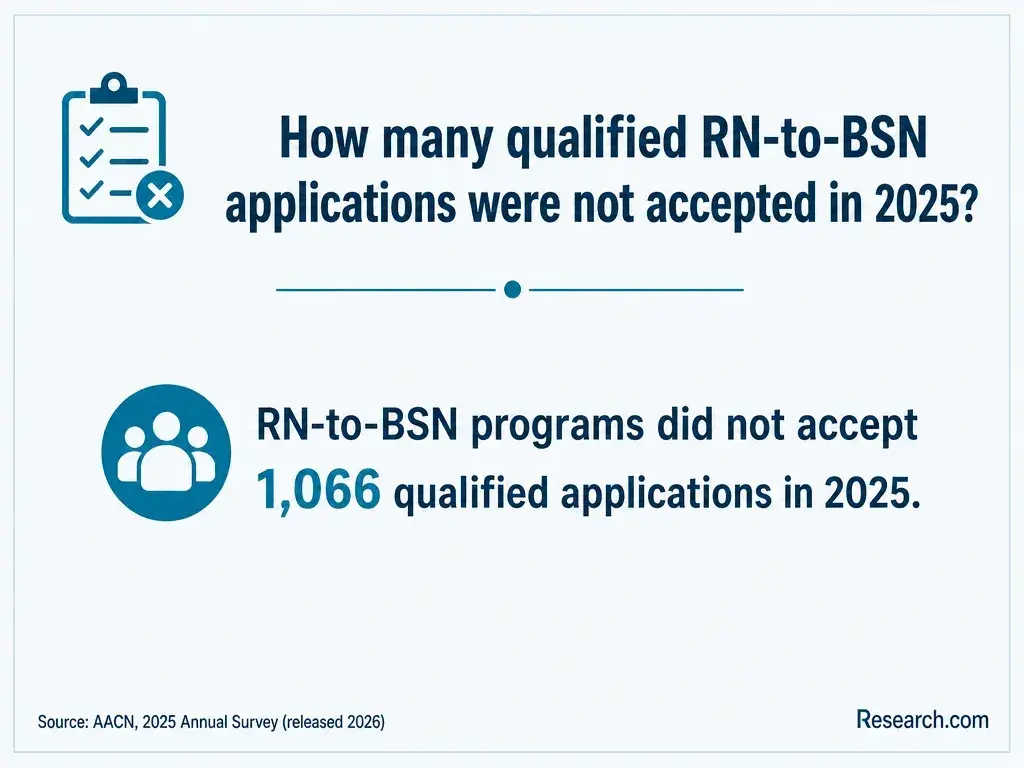
For an ADN-prepared, already-licensed RN, an RN-to-BSN may be worth considering if target postings consistently prefer a bachelor's degree or the employer offers tuition assistance. When comparing programs, examine total cost, scheduling, and required learning activities. RN-to-BSN study without added bedside rotations may be relevant, but verify the school's actual projects, practice experiences, and attendance requirements.
An MSN in leadership or care coordination can support a later management goal. It is generally unnecessary just to test your fit for an entry-level case management or UR opening. Start with local job requirements and available employer training before committing to graduate tuition.
Certification can demonstrate developed specialty knowledge, but it does not replace an RN license, employer orientation, or documented competence. For case management, employers may recognize the Certified Case Manager (CCM) credential awarded by the Commission for Case Manager Certification or the Accredited Case Manager (ACM) credential awarded by the American Case Management Association. Their eligibility routes differ; review the current official requirements against your education, professional background, and qualifying work before paying an application fee.
UR postings may name a case management credential, an employer-preferred utilization management credential, or no certification at all. Compare the exact credential named in your target postings, its awarding body, eligibility rules, examination, renewal obligations, and employer support. A course completion certificate is not the same thing as professional certification.
Graduate study answers a different question. ADN-prepared RN graduate study options may help someone pursuing a degree-based advancement goal, but an MSN does not automatically confer CCM, ACM, or UR competency.
There is no single defensible national median for "case management nurse" versus "utilization review nurse." The U.S. Bureau of Labor Statistics reports wages for the broader registered nurse occupation, not separate national wage series for these two job titles. An RN-wide median can provide background, but it cannot tell you whether a particular case management or UR offer pays more.
Compare actual offers on base pay, hours, overtime eligibility, weekend differentials, bonuses, benefits, and any commuting or home-office costs. A higher annual salary may reflect more hours or less favorable benefits. Also ask whether an employer pays for certification, continuing education, or an RN-to-BSN; do not assume a credential triggers a raise.
Keep comparisons within the same career path. Lower-tuition advanced practice nursing programs involve different education costs and job responsibilities, so projected NP earnings are not a sound estimate of the return on a case management or UR transition.
Case management RNs work in hospitals, ambulatory practices, health plans, home-based care organizations, and other coordinated-care settings. UR RNs work for hospitals, insurers, and organizations that conduct reviews. Related moves may include complex care management, clinical documentation work, appeals, quality improvement, team leadership, or utilization management supervision. Each move has its own hiring requirements.
Advancement is easier to evaluate by responsibility than by title alone. Ask whether a proposed role adds staff supervision, difficult-case consultation, policy development, or performance reporting - and what training and authority accompany those tasks. Clinical credibility matters, but experience in one workflow does not automatically establish competence in another.
An RN seeking a substantially different role, such as psychiatric advanced practice, should evaluate that transition separately. Comparing psychiatric NP program costs is relevant to that distinct educational decision, not to ordinary progression within case management or UR.
Which nursing path best fits your skills and career goals?
Choose case management if you want sustained patient or family contact, can coordinate across professions, and find satisfaction in resolving practical barriers - even when the available options are imperfect. Choose UR if you enjoy close reading of clinical records, applying criteria consistently, writing concise rationales, and working through a queue with defined deadlines. If both appeal to you, a combined hospital role may offer a way to learn which work you prefer, provided its orientation covers both functions.
Before accepting an offer, ask to meet someone doing the job and request concrete answers about caseload or review volume, decision authority, escalation support, orientation, quality measures, and weekend coverage. An experienced bedside RN may need targeted workflow training rather than another degree. A newer RN may benefit more from supervised clinical experience and mentoring before seeking a specialty desk role.
Do not use graduate admission as a proxy for career fit. Even exploring less competitive DNP admissions does not answer whether you would rather coordinate patient care or evaluate documentation every day. Test the work and its requirements first.
Other Things You Should Know About Nursing
Not necessarily. A UR nurse's authority depends on the employer's process and applicable rules. The nurse may document a review, seek more information, or refer a case to an authorized decision-maker; ask the employer exactly who makes adverse determinations.
Do not assume so. License requirements can depend on where the patient is located, the work performed, and the employer's policies. Confirm the jurisdictions the role covers and the applicable licensing rules before working remotely.
Ask your employer about an approved shadow day or an informational meeting with the case management or UR team. Discuss representative workflows and measures without accessing records you are not authorized to view.
Software can organize records, criteria, and queues, but it does not remove the need to recognize missing context, document accurately, communicate with clinicians, and escalate cases under employer policy. Ask prospective employers how they validate technology-assisted work.
- Case Management - StatPearls - NCBI Bookshelf https://www.ncbi.nlm.nih.gov/books/NBK562214/
- Implementation of nursing case management to improve community access to care: A scoping review - PMC https://pmc.ncbi.nlm.nih.gov/articles/PMC10353612/
- Flexible Schedules | U.S. Department of Labor https://www.dol.gov/general/topic/workhours/flexibleschedules
- Communication Strategies | Health Literacy https://www.cdc.gov/health-literacy/php/research-summaries/communication-strategies.html
- Effective Communication in Nursing for Better Patient Care | Nevada State University https://nevadastate.edu/son/rn-bsn/why-effective-communication-in-nursing-leads-to-better-patient-care/
- Career Tracks - Human Resources - UC Riverside https://hr.ucr.edu/total-compensation/career-tracks
- What are the different types of nursing certifications? | Capella University https://www.capella.edu/blog/nursing/what-are-the-different-types-of-nursing-certifications/
- The Importance of Nursing Certifications Explained | American College of Education https://ace.edu/blog/the-importance-of-nursing-certifications-for-career-advancement/
- Utilization Review Nurse vs Case Manager: Which Should You Hire? | America's Health Insurance Plans https://careercenter.ahip.org/career-resources/hiring-guides-4/utilization-review-nurse-vs-case-manager-which-should-you-hire-45
- Utilization Management vs. Case Management: What's the Difference? - Shearwater Health https://shearwaterhealth.com/the-differences-between-utilization-management-and-case-management/